Showing posts with label Yule log. Show all posts

Sunday, 26 June 2022

Yule log in English tradition

Have you cut your Yule log yet?


"The ancient fire-festival of the winter solstice...has survived...in the custom of the Yule log...[once]...widespread in Europe, it seems to have flourished especially in England, France, and among the South Slavs"...From "The Golden Bough"... 

I wrote about South Slavic Yule log customs in my posts "Badnjak" and "First footer"...

I wrote about old French Yule log customs in my post "La buche de noel"...

In this post I will write about Yule log customs from England:

Robert Chambers, in his 1864 work, "Book of Days" notes that "one of popular observances belonging to Christmas is more especially derived from the worship of our pagan ancestors: the burning of the Yule log."

Clement A. Miles in Christmas in "Ritual and Tradition" published in 1912, says: 

"...within the memory of many [Yule log] was a very essential element in the [Christmas] celebration...not just for warmth, but as possessing...magical properties..."

"In some remote corners of England it probably lingers yet. English customs, they can hardly be better introduced than in Robert Herrick's words:  


"We may note especially that the [Yule log] must be kindled with last year's brand; here there is a distinct suggestion that the lighting of the log at Christmas is a shrunken remnant of the keeping up of a perpetual fire..."

Another tradition and its origin are thus described by Sir Laurence Gomme in "Folk Lore Relics of Early Village Life"...

"From there being an ever-burning fire, it has come to be that the fire must not be allowed to be extinguished on the last day of the old year, so that the old year's fire may last into the new year"...

"In Lanarkshire it is considered unlucky to give out a light to any one on the morning of the new year, and...if the house-fire has been allowed to become extinguished recourse must be had to the embers of the village fire [on New Year's Eve a great public bonfire is made]"...

J. Ashton, in "A righte Merrie Christmasse!!" says: "In the north of England...[over Christmas] it was useless to ask a neighbour for light, so frightfully unlucky was it to allow any light to leave the house between Christmas Eve and New Year's Day"...

Georgina F. Jackson say in "Shropshire Folk-Lore: A Sheaf of Gleanings": 

"In Shropshire the idea is extended even to ashes, which must not be thrown out of the house on Christmas Day, 'for fear of throwing them in Our Saviour's face'"...

"Perhaps such superstitions may originally have had to do with dread that the 'luck' of the family, the house spirit...might be carried away with the gift of fire from the hearth"...

"In the 1880s there were still many West Shropshire people who could remember seeing the Christmas Brand drawn by horses to the farmhouse door, and placed at the back of the wide open hearth, where the flame was made up in front of it"...

"The embers, says one informant, were raked up to it every night, and it was carefully tended that it might not go out during  the whole season, during which time no light might either be struck, given, or borrowed"...

"At Cleobury Mortimer in the south-east of the county the silence of the bells during 'the Christmas' points to a time when fires might not be extinguished during that season"...

In 1849 "Notes and Queries" George Bell says: "The place of the Yule log in Devonshire is taken by the "ashen faggot" (sticks of ash fastened together by ashen bands), still burnt in many a farm on Christmas Eve...

In 1740 "Observations on Popular Antiquities", Henry Bourne writes: "Our Fore-Fathers lit up Candles of an uncommon Size, which were called Christmas-Candles, and layed a Log of Wood upon the Fire, which they termed a Yule-Clog, or Christmas-Block"...
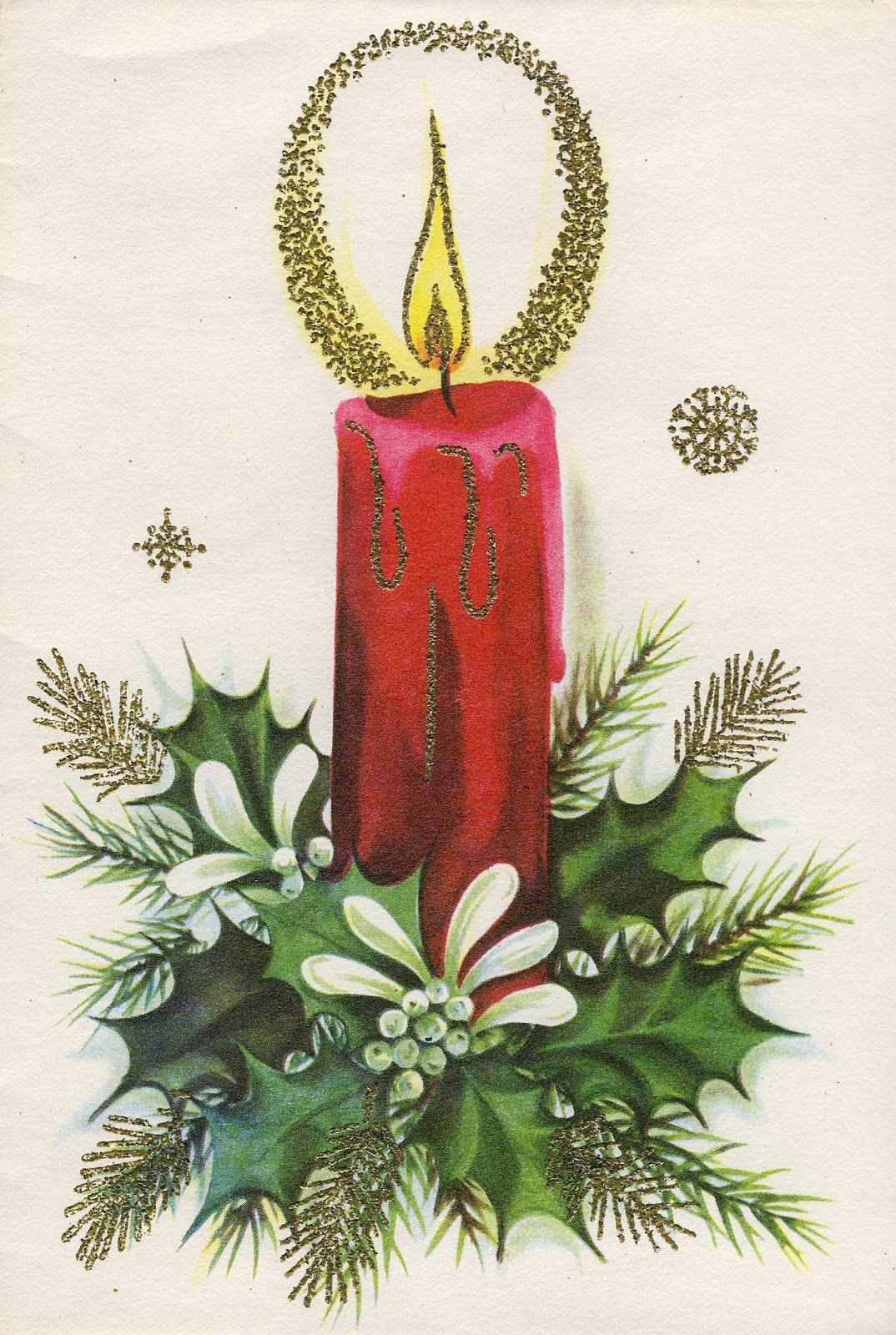
"The Yule-Clog therefore...seems to have been used, as an Emblem of the return of the Sun, and the lengthening of the Days. For as both December and January were called Guili or Yule, upon Account of the Sun's Returning, and the Increase of the Days"...

"So, I am apt to believe, the Log has had the Name of the Yule-Log, from its being burnt as an Emblem of the returning Sun, and the Increase of its Light and Heat"...

H. J Rose says in 1923 "Folklore Scraps": "In the last generation the Yule log was still burned, and a piece of it saved to light the next year's log"...

In the 1790 "The Gentleman's Magazine", we can read that: "In England the Yule log was often supplemented or replaced by a great candle"...

"At Ripon in the eighteenth century the chandlers sent their customers large candles on Christmas Eve, and the coopers, logs of wood"...

And finally: In 1841 "Medii Aevi Kalendarium", Hampson says: "Candle that is lighted on Christmas Day must be so large as to burn from the time of its ignition to the close of the day, otherwise it will portend evil to the family for the ensuing year"...

So basically Christmas candle is just a Yule log in disguise...

Anyway, may your fire burn bright...

Merry Christmas eve to all who celebrate Christmas tomorrow...

Thursday, 26 December 2019

Sun stones

These are drawings of some of hundreds of "sun stones" found in Late Neolithic Vasagård archaeological site located on the southern side of the island of Bornholm, Denmark...


Pic: https://www.sciencealert.com


Vasagård is a complex religious site consisting of a dolmen and a passage grave and causewayed enclosures dated from between 3500 BC to 2700 BC...


Pic: http://bornholmsecrets.com

As amazing as these sun discs are, to me even more amazing are other pieces of shale which depicted what looks like grain fields...


Pic: https://www.sciencealert.com

Pic: https://www.sciencealert.com

Pic: https://www.sciencealert.com


You can read more about these stones in "Recent finds of Neolithic miniature rock art on the island of Bornholm – including topographic motifs" by Flemming Kaul, Jens Andresen and Michael S. Thorsen

It is a distinct possibility that these stones were a kind of prayer stones. They were found in ditches containing broken pottery, burned bones...Indicating that they were ritually deposited...


You can see more excavation pictures on this Facebook page.

But why did people make these stones? And why were they ritually deposited in the rings of ditches that surround the sacred enclosure? And why were they made and ritually deposited specifically during the period between 2900BC-2700BC?

Maybe this can point us to one possible explanation. The Greenland Ice Cores provide a temperature record for the last 5,000 years. The below chart was found on some climate change website which seems not to be online any more and which stated that the chart was "drawn based on the raw data from the Grootes, P.M. et al. 1993, Nature vol. 366, pp. 552-4"... 


Look at this chart of polar temperatures...Look at the period between 3000BC and 2500BC...The temperatures are rapidly dropping...This is not a very good thing for grain farmers in the north of Europe...

Now compare this with Early medieval cooling and the Little ice age. Both catastrophic weather event which froze the north of Europe...Did this happen around 2900BC too?


Were sun and field stones part of the rituals in which people prayed to the sun to shine again and heat their frozen fields? I think that's quite possible...

To see how bad that sudden drop in temperature could have been, can be seen from the effect early medieval cooling period had on Scandinavia: "The long, harsh Fimbul winter is not a myth. Probably half of Norway and Sweden’s population died. Researchers now know more and more about the catastrophic year of 536."

That my hunch about the weather change being the trigger for the appearance of the sun and field stones is probably correct can be seen by the fact that at around 2800 BC there is a sudden change in religious practices...

Old enclosures, which were aligned with solstices, were filled in and curious "woodhenges" appear... 


Pic: https://ifrglobal.org

Archaeologists say that "something happened" which caused this change. That "something" could be the fact that the sun lost its power...

To understand what was happening at Vasagård between 2900BC and 2700BC we need to look at another archaeological site from Bornholm from the same period where sun stones were also found. Rispebjerg. 


Pic: http://bornholmsecrets.com


The site looks almost identical in its layout to Vasagard. The fenced area originates from the Funnel Beaker Culture, 2900-2700 BC...

Apart form slate sun discs, several clay sun discs were found in both Vasagård and Rispebjerg. The clay disk to the far left is from Vasagård - the other clay slices are all found at Rispebjerg...These were definitely amulets designed to face forward (hence two string holes)...


Five "woodhenges" were discovered at the site. This is the excavation plan of one of the woodhenges. In addition to the circular post-built plant, two rows of smaller posts lead into the woodhenge...


Pic: www.naturstyrelsen.dk


A colonnade entrance? 

Around the excavated wood hinges on Rispebjerg, burned clay layers were found, which looked like they had fallen from the sky. This was interpreted as the remains of a fallen clay-clad platforms which were supported by the posts of the "woodhenges"... This would make posts leading to the "woodhenge" being the support for the stairwell leading to the platform...


Pic: www.naturstyrelsen.dk

These platforms probably held sacred sacrificial fires were cattle were sacrificed, as is evident by many burned cattle bones found in centres of "woodhenges"...

These structures intended to "raise the fire towards the sky" could be another proof that people at that time tried desperately to rekindle the sun...

The wood henges seem to have been built, then destroyed. In Rispebjerg, the entire ornamented sun disc, burnt flint axes, clay vessels and burnt animal bones from ritual meals were placed in post holes of destroyed "woodhenges"...


Pic: www.naturstyrelsen.dk

Maybe this is where (when) we need to look for the origin of the Yule log ceremonies... People's fear that sun's fire will be extinguished unless humans helped to preserve it was real... And probably triggered by the real event of sun getting cold...

Interestingly if we look at the list of weather events, we find something called "The Piora Oscillation". This was an abrupt cold and wet period generally dated to the period of c. 3200-2800. It was "wetter in Europe and drier elsewhere"...

So the climate didn't just get colder it got wetter. What is interesting is that one of the "offerings" found in Bornholm "woodhenges" were burned flint axes...


When flint is heated it explodes with loud bangs. Archaeologists are saying these were kind of Neolithic firecrackers 🙂 If you think that modern bangers are dangerous think again. Imagine exploding flint axes spirting razor sharp flakes everywhere...


Pic: www.naturstyrelsen.dk

Strangely, flint is not found on the Island of Bornholm. The nearest sources of flint to Bornholm are over 100 kilometres away. Across the sea.


Pic: www.naturstyrelsen.dk

Which means that these were extremely precious objects which were not lightly chucked into fire. 

By the way the same burned flint axes were found in Vasagård too...

So why did these people make flint axe bangers? Was it just for show?

What I find super interesting is that flint axes were by Slavs connected with Perun, the thunder god. Slavs believed that they were petrified lightning bolts...

I always thought that this linking of flint axes to Thunder god was a recent development. I proposed that it was not any stone axes which were believed to be petrified lighting bolts. It was specifically flint axes  I explained this link through the fact that flint was once used for creating sparks for kindling fire...It was a source of man made lighting. Hence the belief that flint was a petrified, solidified lightning...But from this exploding axes ritual, I now believe that this link between flint, and specifically flint axes and Thunder god originated in Neolithic...

Exploding flint axes all of a sudden make a lot of sense as part of religious ceremony during catastrophic cold and wet weather event in Middle Neolithic...

It is funny that it is only Slavs who preserved this link between flint axes and their thunder god, Perun...

I talked about this link in my post "Axe of Martin"...

Add to this all the burned cattle bones found in "woodhenges" and "cattle sacrifices" (killing, roasting and eating of bulls) which Slavs performed to Perun...As part of harvest ceremonies...

Another ancient religious belief (ceremony) preserved by Slavs???

This is all very peculiar...

The article talking about Rispebjerg.

Tuesday, 24 December 2019

La bûche de Noël

Yule log rituals were between 12th and 19th century the most important part of Christmas celebration in France. Pic: "Tradition of the Great Christmas log. Drawing by Léon Lhermitte printed in Le Monde from the 1st of January 1884... 


The whole family went to to the woods to cut the Yule log. It had to be a big thick oak or beach trunk that could burn for 12 days (from Christmas to Kings) without going out...

After choosing and cutting the Yule log, it was decorated with leaves and ribbons and carried home. There it was blessed by the head of the family and then lit by the youngest and the oldest in the household...

The Yule log had to burn continuously for 12 days and all the ashes and charcoals were carefully kept and then ceremonially deposited somewhere on the family land...

These ashes and charcoals from the old Yule log were then brought in next year and placed on the floor of the fireplace before new Yule log was brought in and lit. This was symbolically connecting the old and the new solar year, the old and the new fire of the sun...

If a family didn't have their own forest where they could cut their own Yule log, they were given Yule log by their neighbours...

As soon as the night fell, people took great care to extinguish their hearths, then went to the church to light torches from the fire that burned in the church. A priest blessed the torches and people then brought this blessed fire home to rekindle the house hearths...

In some parts of France, like Berry, charcoals from the #Yule log were kept under the bed of the oldest male in the family. During thunderstorms, a bit was thrown into the fire "and that was enough to protect the family from thunder"...

This is very interesting. In Berry the Yule log had to be oak, the tree of the thunder gods. Which would explain why Yule log charcoals would protect from thunder. This belief that the Yule log charcoal protected from thunder was recored by P. Sébillot in his 1886 "Coutumes populaires de la Haute-Bretagne". He says that: "In Brittany the tison de Noël (Yule log) is a protection against lightning and its ashes are put in wells to keep the water good...

In some parts of France, wine was poured over the Yule log before it was lit, and fruit and nuts were placed next to it...The same kind of sacrifices to the Yule log were recorded in Serbia...

You can read about Serbian Yule log customs in my posts "Badnjak" and "First footer"

Frederic Mistral (1830–1914), Occitan writer and lexicographer of the Occitan language, who received the 1904 Nobel Prize in Literature talks about Yule log customs from his childhood in his Memoirs:


W. Mannhardt, in his book “Der Baumkultus der Germanen und ihrer Nachbarstämme” printed in 1875 says this about Yule log customs from France:


I particularly like the magic use of the Yule log charcoal and ash. It shows that this custom has pre-Christian root...The Yule (Oak) log was "Sky god materialised". Serbs definitely saw Yule log as such and directly addressed the log and asked it for protection and help...

It is funny that today most French people don't know anything about this...

Anyway, I wish everyone who celebrate Christmas Eve today bright burning Yule log. May next year bring you and your family prosperity, luck, happiness and health...


Saturday, 21 December 2019

Young god

Solar rider from a Celtic coin...


In Slavic mythology, Svetovid was associated with a white horse, which was kept in his temples and used for divination...In this article I will talk about a Serbian ritual song which talks about solar rider and Christmas...

"Dodaj meni hladne vode, Koledo Koledo, Da kupamo, okupamo mladog boga, tog Božića Svarožića… Konjic mu je jarko sunce, bojni doro ognjeviti"

"Pass me cold water, o Koledo, to bath the young god, Božića Svarožić... His horse is the bright sun, a flaming war steed"

This is a Serbian ritual "Christmas song" recorded in Bosnia by Milojević in 1869. In it the narrator asks Koledo for water. Koledo is winter solstice. The end of the old Kolo (wheel, Solar wheel, solar year) and the beginning of the new Kolo (wheel, Solar wheel, solar year)...

The water is needed to bath "the young god" who is called Božić. In Serbian the word "Bog" means god and the ending "ić" means small, young.  So Božić literally means young god, but also it means Christmas...So far so Christian...🙂

But the young god Božić is also called Svarožić (young Svarog). Triglav (Dabog), Serbian supreme deity, consisted of Svetovid, Perun, Svarog. Svetovid represented Sun, Perun represented Thunder and Svarog represented Fire. I talked about Triglav in my post "Triglav, Trojan, Trinity, Trimurti, Agni"

So Svarožić (the other name of the young god) means "young fire". This "young fire" is the fire of the sun, which is rekindled on the day of the winter solstice, the day when the new sun is born and the new solar year, new "kolo" starts...

The main ritual performed over Christmas (Solstice) is "lighting the Yule log in the evening, keeping it burning through the longest night, and then making it spark in the morning". 

Watching over Christmas (Solstice) fire, Serbia


I talked about this in my posts "Badnjak" and "First footer"

In this way people helped "preserving sun's fire", "rekindling of the fire of the new sun"...This was not just symbolic action. People believed that "all fire is one" and that if their fire was kept burning, the sun's fire would be kept burning through the longest night...


This equates Svarožić (young fire) with Jarilo (young sun) who is born during the longest night...Svarožić is Jarilo's fire. Jarilo's name comes from "jar' which means both young and fiery, raging...It is his fire which grows ever stronger and warmer which brings spring...

That Svarožić (young fire) is Jarilo (young sun) can be seen from the second verse which says that Svarožić rides on the bright sun, which is his flaming war horse...He is the Solar rider... 

Depiction of the solar rider from Bosnia from my post "The horseman"


Christmas is coming, get your Badnjaks (Yule logs) ready...🙂

Sunday, 6 January 2019

Badnjak

A young oak covered in golden leaves is the traditional Christmas tree in Serbia. Felling, bringing in, and burning of "badnjak" (as Christmas tree is called in Serbian) are surrounded by elaborate rituals and are the central part of the Serbian Christmas


The cutting of "badnjak", young oak tree used as a Christmas tree in Serbia, was accompanied by elaborate rituals which directly linked the oak with the sun and fertility and identify the oak tree as the earthly seat of the sky god.


"Good morning and happy Christmas Eve to you, o Holy Badnjak. I have come to take you to my home, to be my faithful helper to every progress and improvement, in the house, i the pen, in the field, and in every place" Part of the Oak cutting ceremony.

According to the old tradition, Badnjak (Yule log) is cut early on Christmas Eve, before sunrise. When the head of the household finds a suitable tree, a young straight oak full of golden leaves, he stands in front of it facing east. This shows that the Badnjak oak is directly connected with the sun and the solar cult. The head of the household then throws some wheat at the Badnjak as a sacrifice. This shows that the Badnjak oak is also directly linked to the grain agriculture which is directly dependent on the sun...After throwing grain at the tree, the head of the household greets it with the words "Good morning and happy Christmas Eve to you". He then says the prayer, makes the sign of the cross and kisses the tree. The tree is sometimes addressed as "Holy Badnjak". The head of the household may also explain to the tree why it will be cut: "I have come to you to take you to my home, to be my faithful helper to every progress and improvement, in the house, i the pen, in the field, and in every place". The fact that the Badnjak Oak is directly addressed, and it is addressed as a being of power, shows that the oak tree was itself regarded as sacred or even as a deity in its own right. The head of the household then cuts the tree slantwise on its eastern side, using an axe. Some men put their gloves on before they cut the tree, and from that moment on, never touch Badnjak with their bare hands. The tree once cut should fall to the east, unhindered by surrounding trees. It must not be left half-cut as then it will curse the house and the man who cut it. In some regions, if the tree is not cut down after the third blow of the axe, then it must be pulled and twisted until its trunk breaks. The resulting Badnjak has a so called "beard", the part of the trunk at which it broke off from the base of the tree. This is considered a good luck. In Šumadija, half of the circular loaf of bread, which is especially made for this purpose, is left on the stump, the other half being eaten on the way home...This is the second wheat sacrifice made to the Badnjak, and another indication of the direct link between Badnjak and grain agriculture...In some regions, the stump is covered with moss and dry leaves, and it is visited again in the spring. The stump sprouting through the cover is an omen of good luck and prosperity...

Series of pictures showing the ritual cutting of Badnjak in Leskovac, southern Serbia. Source Youtube video

1. Finding young oak


2. Saying prayer


3. Sharing bread with the oak


4. Sharing brandy with the oak


5. Addressing oak: "O Badnjak, Dadnjak our happy (lucky) cousin"


6. Kissing of the oak


7. Cutting of the oak


 8. Carrying


Once in the home, the badnjak (Serbian Yule log) is leaned vertically against the house where it spends the day. In parts of eastern Serbia and Kosovo the badnjak is wrapped in a man's or a boy's shirt swaddled like a baby. 


The Badnjak (Serbian Yule log) is brought into the house after dark on Christmas Eve.


Generally each family cuts only one Badnjak (Yule log). But in some areas one Badnjak is cut per male member of the family and in some areas one Badnjak is cut for men one for women and one for children..


Immediately after the badnjak has been brought in, or immediately before in some places, an armful of straw is spread over the floor. A handful of nuts and dried fruit is strewn over the straw for the children and one nut is put in every corner for the dead.


At the same time, all sharp metal objects are removed from the house, probably because they attract lightning. Bringing oak into the house probably means that Perun the thunder god is also invited into the house, oak being the holy tree of the thunder good Perun.


The Christmas eve dinner in Serbia was in the past always eaten on the floor. It was not a meal eaten only by the living members of the family, but by all the dead ancestors as well.


The culmination of the Badnjak (Yule log) ceremonies is its ceremonial placing on the fireplace and its burning. 


After the Badnjak (Serbian Yule log, usually a young oak log) is placed on the fireplace, it is kissed and offered various food sacrifices


The head of the household pours some wine and throws some wheat grains on the burning Badnjak (Serbian Yule log) while saying "Hail Badnjak! I give you wheat and wine, and you give me every good thing and peace!" 


Once placed on the fireplace, it is imperative that Yule logs burn all through the Christmas Night, or bad luck would befall the family. Watching over Yule logs (Badnjaks), 1937 village Stragari, Jasenica, Central Serbia.


The Badnjak (Serbian Yule log) ceremonies finish on the Christmas Morning, when "Položajnik" (The first footer) visits the house and performs fire striking divination ritual. 


 You can read more about the first footer tradition in Serbia (and other parts of Europe) in my post "First footer".