Showing posts with label Serbian calendar. Show all posts

Saturday, 4 March 2023

Parilia

Happy Parilia (or Palilia) - This Roman festival, held on 21st April, cleansed shepherds & sheep, honouring the god of shepherds & sheep, Pales. A bonfire was built, with the shepherd and sheep jumping through the flames to be cleansed. The painting by Joseph-Benoît Suvée reimagines the festival

I find it interesting that the Romans didn't know who or what Pales was...But, considering that Ovid says that Parilia predates the founding of Rome, Pales and related rituals are of Pre Roman and most likely of Non Roman origin...

I don't know who or what Pales was either. But I would like here to add few bits of information that might help someone, some day, solve this mystery 🙂 First let's have a look at the Parilia ceremony:

"...After the sheep pen had been decorated with green branches and a wreath draped on the gate, the remainder of the ceremony took place in this sequence..."

"...At the first sign of daylight, the shepherd would purify the sheep: by sweeping the pen and then constructing a bonfire...the shepherd would jump through this flame, dragging his sheep along with him...Offerings of bread and milk were then presented to Pales..."

"...After these offerings, the shepherd would wet his hands with dew, face the east, and repeat a prayer four times...requesting Pales’s protection of the shepherd and the flock..."

"...The final portion of the rural festival made use of the beverage burranica, a combination of milk and sapa (boiled wine). After consumption of this beverage, the shepherd would leap through the fire three times, bringing an end to the ceremony..."

So...21st of April is very close to the 1st of May...Which was in some parts of the world known as Beltane (Bealtaine)...The day that marked the beginning of the Celtic summer (May-Oct), half of the year dominated by the sun...


On Beltane, in Scotland, they purified the sheep and cattle by walking them between two fires derived from single ritually kindled fire...I talked about this in my post "Beltane purification ceremony"...

And they did the same thing in Ireland on the same day...I talked about this in my post "The City"...

21st of April is very close to the 23rd of April, St George's day...And in the past in the Balkans, at the dawn of the St George's day, two fires were lit between which people and domestic animals (sheep and cattle) walked "for protection from diseases and snakes"...

St George being Christianised old Slavic sun god Jarilo (The Brightly Burning one), and snake being the solar animal which follows sun everywhere, it is obvious why people performed snake protection rituals on the day of the sun...

But there is something really interesting about when we celebrate St George and St Michael...The dragon killers...They mark the beginning and the end of the "Old Summer", the domain of the sun, the domain of the dragon...I talked about that in my post "Dragon always gets killed"...


BTW, in the old Serbian calendar, solar year is also divided into summer and autumn...Where summer starts with summer St Georges day, and winter starts with Winter St Georges day...

Summer George icon. 

Winter George icon.

So the fire purification on the day (around) the beginning of the summer...The season ruled by the Jarilo, the "Brightly Burning One"...The one who "pali" (lights up fires)...

It is interesting that in the past, in the Balkans, on the morning of St George's day kids were woken up by being swished with nettles, "to be healthy"...

Nettle sting feels like burning, and the expression in Serbian for being stung by nettles is "ožariti se" (to be burned)...

In the past, in Skopska Crna Gora region of Macedonia, women swept their houses with nettles early in the morning on St George's day, "to sweep all bad things out of the house, because everything runs away from nettles"...From: Ѓурѓовденски обичаи (1956) which sadly isn't available on Youtube any more...

There is an expression in Serbian "on žari i pali" which means "he burns and lights up fires"...Jarilo, Žarilo, Palilo...The Burning Sun of summer...

Shepherd kids making flower wreaths in the spring, most likely for Djurdjevdan (St George's day)...


From the description of the Parilia ritual:

"...After the sheep pen had been decorated with green branches and a wreath draped on the gate..."

In Serbia, on the St George's day people put wild flower and medicinal herbs wreaths on house gates for good luck and health...

I talked about St George (Jarilo) as the sheep and shepherds god in my posts "April" and "Aries must die"...

From the description of the Parilia ritual: "...Offerings of bread and milk were then presented to Pales..."

St George's day rituals involving bread and milk from Serbia: 

This is "kravaj" (pronounced kravay), a ritual bread made in Serbia. It was in the past used during "premlaz", the ritual first milking of the year which is always done the day before St George's day and which marks the beginning of the milking season...I talked about this in my post "Aries must die"...

From the description of the Parilia ritual: "...After these offerings, the shepherd would wet his hands with dew, face the east...pray..."

Just in case you wondered who the shepherd was praying to facing east at dawn...The sun...god..who "pali" (burns)...

Oh, and why would he "wet his hands with dew" before praying?

Well in places where people believed in purification by fire at the beginning of summer, they also believed in purification by dew at the beginning of summer...

This is one custom that I only read about before. On the morning of St George's day, girls would go to fields to wash their faces in dew, so that they are beautiful all year round. Recorded in Skopska Crna Gora region of Macedonia. From: Ѓурѓовденски обичаи (1956) which sadly isn't available on Youtube any more...


But this ritual was widespread among Serbs too, where dew bathing was done on the so called "herb Friday", the last Friday before St George's day. And the Irish did it too, on Beltane morning...Just another indication what St George's day is...I talked about this in my post "Morning dew"...

Interestingly, the same ritual is performed in Latvia on Jāņi day (summer solstice). Girls wash their faces with the morning dew, so their face will always be white and beautiful"...Great example how ritual dates change because of climate...I talked about this in my post "Jani"...

And that's it from me for today...After all this, I still don't know who Pales was...But I could guess...🙂 Especially after I recently found out that one of the names of the Mesopotamian god of death, Nergal, the personification of the destructive, burning sun of the late summer, was "Palil"...I talked about this in my post "Palil"...

To read more about ancient animal and plant calendar markers, start here…then check the rest of the blog posts related to animal calendar markers I still didn't add to this page, and finally check my twitter threads I still didn't convert to blog post...I am 9 months behind now...

Tuesday, 10 November 2020

Bleeding for Martin

Cockerel standing on top of the sun gate, on the border between the darkness and light, between the land of the dead (where sun spends night) and the land of the living (where sun spends day). Medieval (?) standing stone, Bosnia...


In the old Irish calendar, the solar year was divided into two parts: the dark part (Nov-Apr) and the light part (May-Oct). The day that marked the end of the light part of the year and the beginning of the dark part of the year was the first of November. Samhain...


But because in the Irish calendar the day started at sunset, Samhain is celebrated  at the sunset of the October 31, on Halloween...And just like the day started with the evening, in the Irish calendar, year started with the beginning of the dark period, on Samhain...

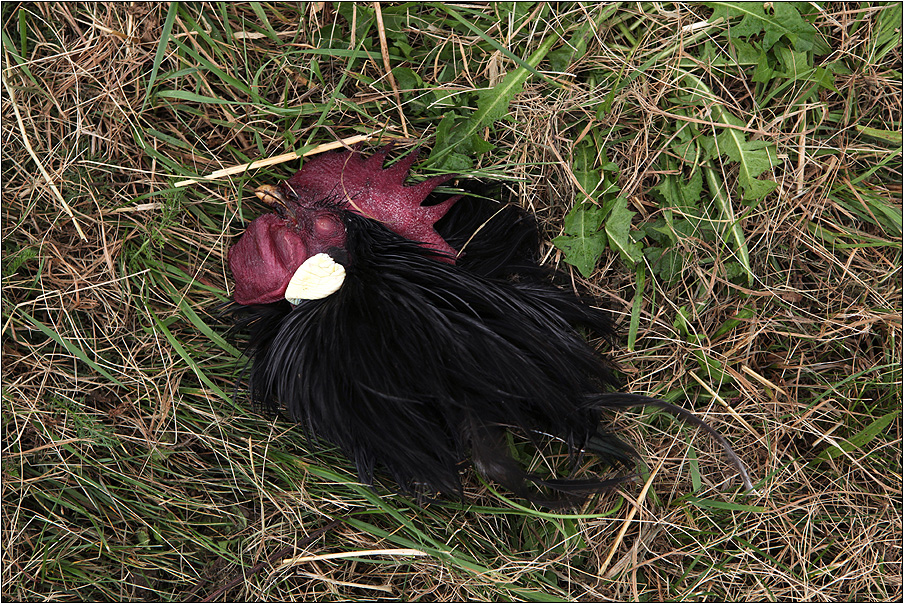
Now until very recently, in Ireland, the practice in many places was to kill a cockerel on "Ould Halloweve" night, the night prior to St. Martin ’s feast day on the 11th of November.

The date for "Ould Halloweve", or old Halloween, came about as a result of the removal of ten days from the calendar when the Gregorian calendar replaced the Julian in 1582...

Here is the interesting bit. The killing of the cockerel was known as "the bleeding". The bleeding was done by cutting the neck, or more usually by slitting the head of the bird along the comb and then hanging it to allow the blood to fall on the ground or to be gathered in a jar...

The blood was then sprinkled in all four corners of the house (kitchen if house had more than one room) and across the main threshold, in the belief that this protected the home from evil or "bad luck".

When the blood was not sprinkled in this manner it was daubed in the shape of a cross on the front and back doors while saying, "I shed this blood in honour of God and St. Martin to bring us safe from all illnesses and disease during the year"...

The rest of the blood was collected and used to make a Sign of the Cross on the residents foreheads, again as a protective talisman.

So this was not just "killing of a cockerel to make dinner". This was a blood sacrifice. That this is the case can be seen from the ethnographic data collected around Ireland in the 1930's. I particularly love this story from county Kerry:

So it seems that "the bleeding" was an obligatory blood sacrifice. It was strictly observed that bleeding must be done between Nov. 1st and the eve of the feast, or on the Vigil, as it was said: Martin will accept before his feast but not after it".

But blood sacrifice to whom? To St Martin? Well, no, of course not. To the dead? Samhain eve, Halloweve, Halloween, was in the Irish tradition the day of the dead...

Irish believed that on that night, the barrier between our world and the world of the dead became so thin, that the dead could come back to our world.

And the dead looooove blood. It's their favourite drink, because it makes them feel alive again...I wrote about this in my post "Blood red vine" in which I talked about why red vine is used in mortuary rituals... 

That this is indeed the case can be seen from the identical ritual which is performed on St Mrata's day in Serbia. In Serbia Samhain was replaced by two Holy Days: Mitrovdan (St Martin's day) and Mratindan (St Mrata's) day.

Both days mark the beginning of winter and the beginning of the dark part of the year, as the Old Serbian calendar, just like the old Irish calendar, divided the solar year into the dark part (Nov - Apr) and the light part (May - Nov). 


More about this in my post "Two Crosses".

And on the day of St Mrata, Serbs used to slaughter a cockerel on the house doorstep. 

After the cockerel is slaughtered, a hair from every animal in the household is placed in its beak.

The beak is then tied with a red thread and is hanged over the door or is buried under the doorstep to protect the house and its animals from the evil spirits. The wings and sometimes the head were hanged on the cauldron chain over the fire. I talked about this in my post "Verige".

Both the door and particularly the doorstep and the fire place are in Serbian tradition closely linked with the cult of the dead and are places believed to be inhabited by the spirits of the dead ancestors.

So slaughtering the cockerel on the doorstep is literal blood sacrifice to the dead on their altar. This is the equivalent of the Irish custom of marking the doors with sacrificed cockerel's blood.

Burying the cockerel's head under the doorstep with the hairs of all the animals from the household is clearly a panspermia (mixed sacrifice), a type of sacrifice which was in Serbia offered to family ancestors and to the ancestor of all Serbs, Giving God, Dabog...

The fact that the sacrifice was given to the hearth is the equivalent to the Irish sprinkling cockerels blood only in the room with the hearth. But what about the Irish custom of sprinkling the cockerel's blood in the corners?

Well in Serbian mythology, corners are also seen as places where ancestors gather. During Christmas dinner, which was in Serbia seen as "meal eaten together with the ancestors", walnuts, symbol of fertility was thrown into each corner of the house, for the dead...

Now here is something very interesting. Serbian ancestral deity Dabog has another name: Hromi Daba. In several of my posts I talked about the similarities between the Serbian Hromi Daba and the Irish Chrom Dubh...

One of the similarities is that both gods were in the past offered Human Sacrifices...On Samhain...As thanksgiving for the bountiful harvest which had just finished...

Now remember that in Serbian mythology, cockerel sacrifice is a replacement for a human sacrifice...Particularly when it comes to agricultural rituals. I talked about this in my post "Cock bashing"...


And knowing that St Martin's day is just another Christianised Samhain, when we "bleed cockerel for Martin" who are we sacrificing really and to whom?

Friday, 10 April 2020

Transfiguration

"The Transfiguration Cathedral in Pereslavl, Russia" by Anastasia Usvayskaya. The cathedral was built by the Grand Duke Yuri Dolgoruky in 1152.


The transfiguration of Jesus is one of the "miracles" of Christianity and reffers to the moment when Christ's "true nature" was revealed to his disciples. The event happen on top of Mt Tabor and was witnessed by Peter, James and John. It was described in gospels like this:


This is an Icon from The Transfiguration Cathedral in Pereslavl, depicting the moment when "Christ's true nature shone out of him like the sun"...


The Feast of Transfiguration has been celebrated in the Eastern Orthodox church since at least the 6th century, It is celebrated on the 6th of August. Why on this date?

The beginning of August marks the end of summer and the beginning of autumn. This change is marked by the Day of St Elijah the Thunderer. He brings the first autumn rains and cooling of the northern hemisphere. Which is why Serbs say that "From St Elijah, sun becomes ever dearer"

This is the time of the year when a major shift in the balance of power in the Sun-Earth system takes place. The power and influence of the sun (Yang) is at its maximum and starts to decrease. The power and influence of earth (Yin) is at its minimum and starts to increase...


I talked about this in detail in my post "Yin and Yang".

So there is definite change in nature in the Northern Hemisphere that starts at the beginning of August...Maybe this is the reason why it is then that we celebrate the feast of Transfiguration?

By the way, it turns out that the arrival of the St Elijah's thundering chariots corresponds with a natural phenomenon which was only discovered very recently: the yearly maximum of the bouncing of the solar winds off the tops of the clouds...


I talked about this in my post "The thundering sun god".

Interestingly, Elijah, who is in Serbian folklore both Perun (Thunder god) and Veles (Sun god), basically old Sky God, Dabog, is present at Jesus's transfiguration...

In Serbia people believed that the Feast of Transfiguration is "Dan kada se preobražava i voda i gora" (The day when both water and forest are "changing")...

The usual explanation for this belief is that it comes from the fact that at the beginning of August leaves on trees start getting yellow and water in rivers and lakes starts getting cooler...

But there is another interesting scientific discovery which shows that the beginning of August is the time when water changes in another, less obvious way...

According to the Serbian folk calendar, the year only had two seasons. White, Warm part, between St George's Day (start of May) and St Mitar's day (start of October). And Dark, Cold part, between St Mitar's day (start of November) and St George's day (start of May). I talked about this in my post "Two crosses". 


The Feast of Transfiguration which is celebrated at the beginning of August, falls right in the middle of the old Serbian White, Warm half of the year (today end of summer beginning of autumn)...

Recent study by the Belgrade school of mereorology has shown that the rainwater in Serbia is getting more acidic between St George's day and The Feast of Transfiguration (summer) and is getting less acidic from The Feast of Transfiguration to St Mitar's day...

The water indeed "changes", gets "transfigured" around the beginning of August.

I wanted to check if this was just a local fluke. What I found is that this annual fluctuation of the rainwater ph value has been observed in other parts of Europe too...

Diagram showing annual fluctuation of rainwater acidity from Portugal. From: "pH of rainwater in Coimbra, Portugal: the seasonal variation" by J. S. Branco & S. J. Formosinho


Diagram showing annual fluctuation of rainwater acidity from France. From: "Cadmium contamination of three bivalve species (oysters, cockles and clams) in Nord Médoc salt marshes (Gironde estuary, France): Geochemical survey and metal bioaccumulation kinetics"


If anyone has any links to similar studies from around Europe, please let me know.

Anyway, I think that this is seriously cool stuff...

Another coincidence most likely...not. :)

Just found this out. 

Yearly UV radiation in the US


Yearly UV radiation in the UK


I want to thank to my farmer friend who alerted me to this. You can see that the amount of UV radiation starts to drop jus before the transfiguration...

Are theses things linked?

PS:

If it rained on Maundy Thursday (Thursday before Easter) people used to run out with pots and pans to catch it. When bottled it would last for a year and a little used in preparing bread would stop the dough being heavy...


I wonder how much this has to do with Christ and how much has to do with the PH of rain water,  which is in late spring approaching it's lowest yearly value...Acidic water (low PH) helps bread rise... 🙂

Wednesday, 5 February 2020

Axe of Martin

Willibrord  (658 – 739 AD) was a Northumbrian missionary saint, known as the "Apostle to the Frisians" in the modern Netherlands. He became the first Bishop of Utrecht...


Bede says: "Pepin gave Willibrord a place for his episcopal see in his famous castle, which, in the ancient language of those people (who originally built it), is called Wiltaburg (the town of the Wilti), but in the French tongue Utrecht..."

Wilti, of Wiltzi were a West Slavic tribe. During the time of Charlemagne, Wilti were in alliance with the Saxons, fighting against the Franks who were allied with another Slavic tribe, Obodriti...

You can read more about Slavs among Anglo Saxons in my post which talks about the 1906 book "Origin of the Anglo – Saxon race" by Thomas William Shore...

Now this is very interesting. Here is why:

The Museum Catharijneconvent in Utrecht has a relic in its collection which is called "the hammer of St. Martin of Tours". It was made in the 13th or 14th century from a late Bronze Age stone axe from ca. 1,000 - 700 BC, though the dating is uncertain...


It is interesting Slavs believed that Perun's lightning bolts were made of stone... According to folk beliefs, prehistoric stone axes found in the ground were remains of these weapons...

As bishop, Martin set to enthusiastically destroy pagan temples, altars and sculptures. And to cut holy trees. I love how in this story from St Martin's biography, people who stood and watched Martin destroy an ancient temple, revolted when he decided to cut an ancient holy tree.

Saint Martin's day, Martinmas, is the alleged Funeral day of Saint Martin. It is celebrated on November 11 each year....

Interestingly, Saint Martin's day is also known as "Ould Halloweve" or "Old Halloween"... This came about as a result of the removal of ten days from the calendar when the Gregorian calendar replaced the Julian in 1582...

Now, Halloween is the old Celtic Samhain, which was celebrated on the 1st of November. That day marks the end of Autumn... The beginning of autumn Lughnasa, which is celebrated on the 1st of August...


You can read more about the parallels between Celtic and Serbian calendars in my post "Two crosses

Again interestingly 🙂 Celtic calendar is also Serbian calendar. Where we find Lughnasa in Celtic calendar, we find St Elijah day in Serbian calendar, also known as Perun day...


You can read more about the link between St Elijah the Thunderer and Perun in my posts "The thundering sun god" and "Alidjun".

Perun's symbol was an axe. Like this one I talked about in my post "The axe of Perun". 


And I believe that the axe of Perun was originally a stone axe...Just like St Martin's axe...

Have you ever thought why? Lightning was the original source of fire. Which is why fire was "the property of gods"...And not just any gods. Thunder gods. Like Perun. Now neolithic stone axes (not all of them, but a lot of them) were made of flint. And flint can be used for making sparks which can can be used for lighting fire. These sparks are miniature human made lightnings...So if humans can make small lightning with flint, gods probably also use flint for making big lightning...Hence stone axes (or hammers) becoming the weapons of thunder gods, and being viewed as "petrified lightning bolts"...

As I said, Autumn, season brought by axe wielding Slavic thunder god Perun, ends on Samhain, Old Halloween...The day of the funeral of the axe wielding Saint Martin...What a coincidence...

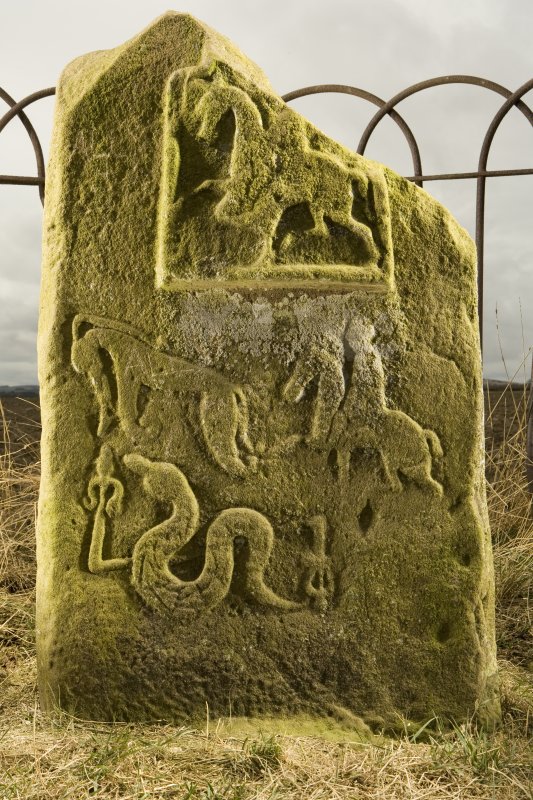
And according to Scotish (Pictish?) lore, St Martin was, just like Perun, a "Dragon (Serpent) killer"...I talked about this in my post "Balluderon stone"...


As I said in this post: 

Dragon killing is done by Perun. It is him who inflicts the deadly wound with his thunderbolt (spear, arrow, axe, club)... But Dragons are "nasty beasts" 🙂 and they don't die easily...So it is at the end of autumn that they finally go "to the land of the dead"...By "coincidence" the same time when the sun goes to the "land of the dead" too...

The end of autumn, the end of harvest, Samhain, Halloween, Martinmas, Mratinci was the day when our ancestors made thanks giving blood sacrifices to their ancestors and their ancestral deity, Irish to Dagda (Chrom Dubh) and Serbs (Slavs) to Dabog (Hromi Daba)...I talked about this in my post "Thanksgiving". 

This practice of blood letting at the end of autumn, was preserved to this day by the Irish and the Serbs. It is done on Martinmas in Ireland and Mratinci in Serbia. More about that soon. Watch this space :)

Tuesday, 14 January 2020

Two Georges

In Gaelic calendar, year was divided into two parts: the light (hot) part, which started on Bealtaine (1st of May) and ended on Samhain (31st of October), and the dark (cold) part, which started on Samhain (31st of October), and ended on Bealtaine (1st of May)

Interestingly, the same division of the year exists in Serbian calendar, where the light (hot) part starts on St George's day and ends on St Mitar's day and the dark (cold) part starts on St Mitar's day and ends on St George's day...I talked about this in my post "Two Crosses".


St George's day is celebrated on the 23rd of April, just few days before the beginning of summer (6th of May, mid point between Spring Equinox and Summer Solstice)...This day is said to commemorate the day of execution of St George. Icons made for this day depict St George on a horse with a spear killing the Dragon...


In Serbia, there is another St George's day which is celebrated on the 3rd of November. Just before the beginning of winter (5th of November, mid point between Autumn Equinox and Winter Solstice). This day is said to commemorate the consecration of the church in Lydda, built by Constantine the Great, which housed the relics of the Saint George...Icons made for this day depict St George standing with a spear...


It is interesting that these two St George's days mark the beginning and the end of the white (hot) part of the year dominated by the sun...When we know that St George is Christianised Jarilo, Slavic sun god...


In Slavic mythology snake is the symbol of the sun, sun's heat. Snakes come to the surface during white, hot part of the year. During the summer, the hottest part of the year, sun's heat becomes destructive. This is burning sun is symbolically represented as a dragon breathing fire. 

As I said I always found it very funny that the Sun God Jarilo, whose name means Brightly Burning, Raging one, Who is the Dragon, was replaced by St George, Dragon killer. And that St George kills the Dragon on the day which is in Gaelic calendar known as Bealtaine (The day of the brightly burning fire). The day when people light up bonfires to mark the beginning of Summer, the hottest part of the year. The day when sun snake turns into a sun Dragon. 

St George also kills himself (Jarilo, Dragon) on the day when he was apparently executed according to Christian cannon...

All very strange and coincidental...

In the past in Serbia, the St George's day marking the beginning of summer, was the day by which the flocks were brought up to the highland pastures. And the St George's day, marking the beginning of winter, was the day by which the flocks were brought down from the highland pastures...

Which is why St George is the patron saint of shepherds...I talked about many interesting Serbian rituals related to sheep performed on the St George's day marking the beginning of summer in my post "Aries must die".

By the way, there is another Sun god which is also a Shepherd god...

Apollo...


Apollo who is Greek Jarilo...

Just in case people still wonder whether Apollo was originally Shepherd God who acquired attributes of a Sun god. It was probably the opposite...