Showing posts with label Neolithic Serbia. Show all posts

Saturday, 14 May 2022

Vinča bread

One of several similar cult models of a loaf of bread, from the Neolithic Vinča culture. This one was found at Banjica-Usek archaeological site in Belgrade, capital of Serbia, and was dated to 4500 BC. Length 18 cm, width 6 cm. Collection of Belgrade City Museum...

Here is another one...
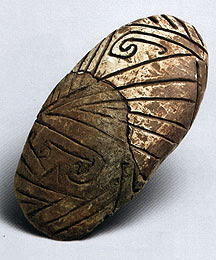


Another Vinča culture votive bread...This one could have found its way to Ireland...


From this post ritual hiding behind giant breads and about Neolithic Newgrange temple from Ireland and a very strange similarity between its entrance stone and this votive bread...


Einkorn and emmer wheat were an important part of the diet of ancient Vinča-culture. Cereals were ground using small quern-stones and the flour was made into dough which was then baked in ovens found in every Vinča house...

Photograph of the excavation of the Vinča Belo Brdo site, showing archaeologist Miloje Vasić standing next to a clay oven "in situ" and local villagers employed as excavators standing in the background. Early 20th c.  

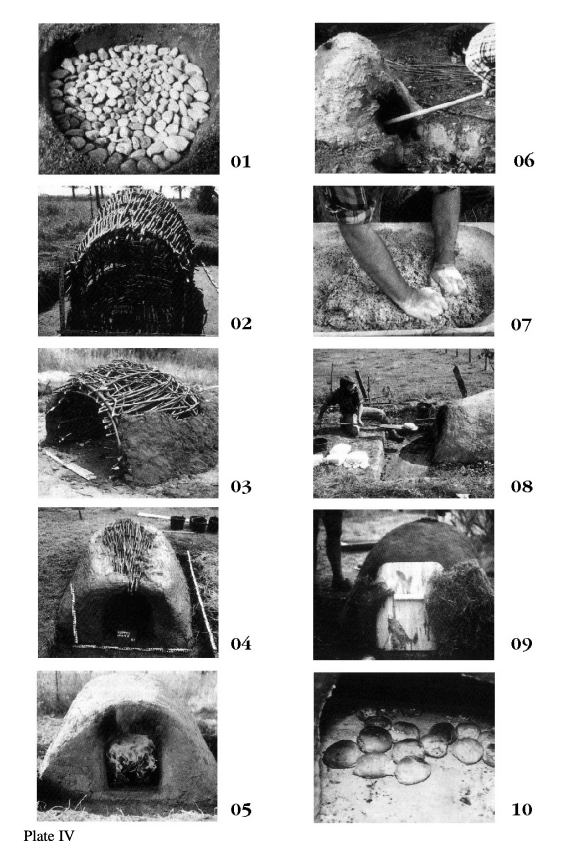
Are you an experimental archaeology fan? Do you want to know how to make Neolithic Vinča culture style bread oven? And Bake bread in it? If you are any of the above, then this paper entitled "Late Neolithic ovens in central Balkans region" is a must... 
This is Pločnik archaeological site in Toplica District, Serbia. The 120 hectare settlement was built by people of the Neolithic Vinča culture around 5500 BCE and was used for 800 years, until it was destroyed by fire in 4700 BC... 

Local archaeologists reconstructed several houses and created a small replica neolithic village... 

The houses are equipped with the replicas of furniture, figurines and bread ovens found during the excavation... 

Local archaeologists use the archaeo village to run educational programs for kids. During one of these programs kids were thought how to make bread "neolithic style"...


Kids absolutely love kneading dough and making flat bread patties...


These are then placed in clay ovens, baked and then eaten by children themselves...


BTW, Vinča culture guys inherited their obsession with bread from the ancestral Starčevo culture. These where the guys who adopted grain agriculture, originally developed in the climate of the fertile crescent, for the European climate...

I wrote and article about one of their sites, Blagotin, where a temple dedicated to grain was found with many votive clay grain seeds...

Tuesday, 2 June 2020

First toast

The Baden culture, c. 3600–2800 BC, a Chalcolithic culture from Central and Southeast Europe (Czech Republic, Hungary, Poland, Slovakia, Serbia, Romania, Austria), could be the culture which started the production and ritual drinking of alcohol in Continental Europe...


At least this is what Miloš Spasić from Belgrade City Museum claims in his article "The first toast: the story of Baden culture cups from Belgrade City Museum"

He bases his argument on the fact that Baden culture archaeological sites are the first sites where we find sets of drinking cups, all made identically, found together with pitchers...


His explanation is that these were alcohol drinking sets used for communal feast ...

The making and communal consumption of alcohol is just one of the things Baden culture is credited with. The other are the initial use of dairy products, domestication of the horse, introduction of animal-drawn carts, various innovations grain agriculture and textile production.

That making and consumption of alcohol was a complete cultural shift can be seen from this map of Eneolithic sites in Belgrade area. Vinca culture, technically advanced civilisation in every respect, no drinking cups. Baden culture, equally advanced, drinking cups everywhere...


The mystery is what alcohol was made and consumed by the Baden people?

Wine? Not likely due to Central European climate. Wild grapes grow much better in hotter areas further down south and east...But still a possibility, and one that the author of this article prefers...


Beer? We know that Baden people were grain farmers. So it is very likely that they did make beer. The author of this article discounts this as "the primitive beer is drank through straws from pitchers and not from cups"...Well not necessarily...You can drink it from cups too...

This is boza, a primitive malt drink (ale) made by fermenting various wheat, millet or barley. It is not filtered which is why it has a thick consistency. It has a low alcohol content (around 1%), and a slightly acidic sweet flavour. And as you can see it is drank from cups and glasses... 


For those interested in primitive beer (ale) making, here is an article I wrote few years ago...

Another possibility is Kumis, a fermented dairy product traditionally made from mare's milk with between 0.7 and 2.5% alcohol...If Baden people domesticated horses and made dairy products, they could have also stumbled across Kumis while fermenting mare milk? This is kumis drinking set from Kazakhstan. Looks familiar? 


So what was the drink of choice at Baden culture parties?

Well you know what they say: it's not what you're drinking it's who you drink it with...