Showing posts with label Early agriculture. Show all posts

Thursday, 27 January 2022

Tartaria tablets

Tărtăria tablets are three clay tablets discovered in a Vinča-Turdaș culture settlement near the village of Tărtăria in Romania...
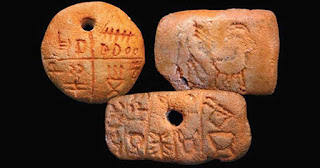
The tablets were discovered in a sacrificial pit with many other clay objects and human bones. The radio carbon dating of the bones produced the dates 6310 ± 65 yr BP (calibrated 5370-5140 BC)... 
The reason why these tablets are so important is that they contain the Vinča (Old European) symbols


But on Tărtăria tablets they are engraved in such a way as to imply that these symbols can be interpreted as groups...Like a script??? Script which predates Sumerian proto-writing by thousands of years...

By the way, Tărtăria tablets are not the only objects where we find these symbols engraved in sequences...Hence the proposal that this is indeed a kind of script...

Which is why everyone is so edgy about this and why so many people put so much effort into discrediting these tablets...Surely it can't be that proto-writing originated in the Balkans...

And "if" indeed these "so called" Vinča symbols are genuine, "they are surely a local isolated development and have nothing to do with the development of writing in Mesopotamia"..."The similarities are purely coincidental"...

Those who still see Sumerian culture as an isolate without any external influences won't like this post from my blog, or any of the other blog posts linked from it...

But here I would like to pour some really really cold water on the "who invented the first symbolic script" debate...I would like to look closely at one of the Tărtăria tablets. Not one of the two "cool" ones with holes, which seem to have been made to be used together...
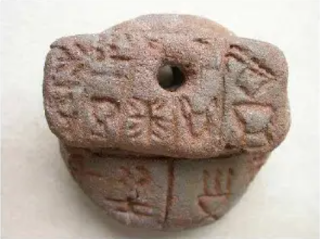
I would like to look at the often ignored third tablet...This one...And I would like to say this: O MY GOD!!! How could I have been so blind!
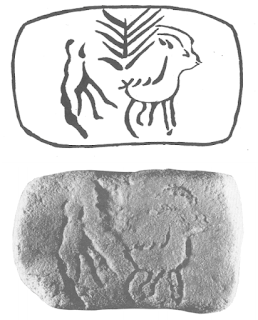
What I think is depicted on this tablet is from right to left: 1. Ibex goat 

2. Grain

3. A person who looks like he is bent forward...like as if he is working the land...maybe planting grain???

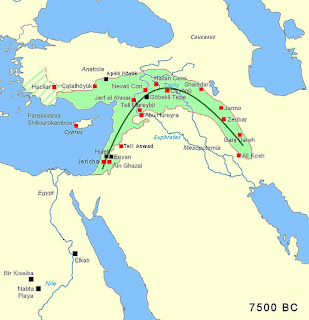
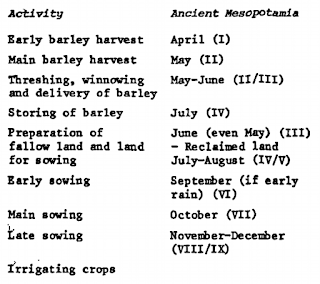
Now if this tablet was found anywhere within the fertile Early Neolithic Fertile Crescent, I would have immediately interpret this tablet like this: When Ibex start to mate, and the first rains arrive, plough and sow your grain...

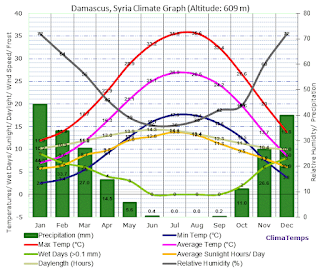
Because in Fertile Crescent the climatic year is divided into two halves: dry and hot, summer (May-Oct) and wet and cool, winter (Nov-Apr). 

And the beginning of the rainy season coincides with the beginning of the mating season of the Ibex goats (Goats of rain). 
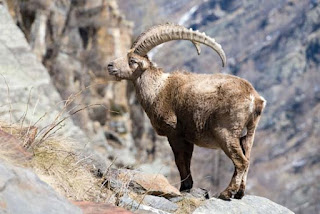


It is because of this link between Ibex goats, rain, and agriculture, that Ibex is the most depicted thing on early decorated objects from this region...You can read about "The Goat of Rain" (Ibex) in my posts "Goat carrier", "Rain and flood", "Queen Puabi's cylinder seal"...and many others...

One other thing happens in Fertile Crescent, when ibex goats start to mate and when first rains arrive...It's time to plough the land and plant grain. 

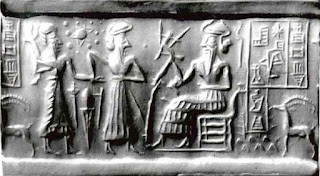
Storm (rain) god Ninurta, was, in the earliest records, also agriculture god...Whose symbol was the the plough...Which he gave to the people...Here is a god (Ninurta) giving plough to the people...With goat of rain next to the throne...
So is this what this Tărtăria tablet means? Plant your grain when Ibex goats mate?

That's amazing!!! Now did Ibex goats ever live in Romania? I don't know. The only info I could find about Ibex goats in South Eastern Europe, is this article "Past and present distribution of the genus Capra in Greece", and in it we can read that: "...The Alpine ibex Capra ibex and the wild goat Capra aegagrus are the only caprids known to have existed in the Balkan Peninsula, from where it disappeared after 5600 BC due to hunting..."

The Tartaria tablets, which are dated to calibrated 5370-5140 BC were made from a small quantity of clay and a lot of sand. According to geological analysis, the sand in the tablet has crystals of quartz typical of the mountain 20-25km west of Tărtăria and very well known in Neolithic times for the gold mines...

So the tablets were most likely made in Romania...So I wonder if the above paper is wrong, and Ibex goats actually still lived in the Balkans at the time when these tablets were made?

The winter grain planting in the Balkans happens in October. I don't know when the ibex root took place in the Balkans. In Most of their range, Ibex goats start mating in Oct/Nov. So it is possible that in the south eastern Balkans their mating season also started during that time of the year. which would have made them a good animal calendar marker for grain planting season, just like in Fertile Crescent.


But, maybe, as someone suggested, the animal depicted on the Tartaria tablet is not an Ibex goat, but a Deer, Deer mating season is October, ideal period for planting wheat in south Eastern Europe...

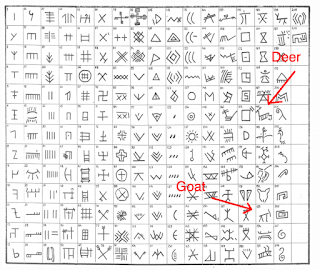
Maybe, except the animal depicted on the Tartaria tablet looks much more like depictions of an Ibex...And we find both deer and goat among Vinča (Old European) symbols...
The thing is, the Early Balkan farmers could have found other animal calendar markers that correspond to the main events of the grain agriculture season...Deer would fit. If they were planting grain in autumn...Deer mandibles, like these ones, were found at the bottom of the sacrificial pit of the 7th millennium grain temple in Blagotin...Why? Deer must have been in some way linked to the agricultural cult.
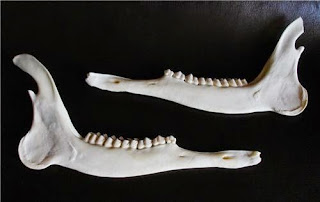
I wrote about it in my post "Blagotin" where I pointed at the fact that deer mandibles and wood/antler + flint imitations of deer mandibles were used as sickles by Neolithic farmers...
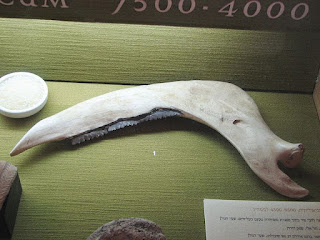
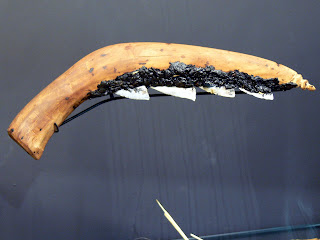
So it is possible that deer replaced goat as calendar marker for grain planting season in the Balkans...The thing is that some archaeologists believe the early Balkan farmers grew spring grain varieties, which are planted after the first spring floods...In Apr...I talked about this in my post "How to kill a witch"...Interestingly, this is the time when deer shed their antlers


Not something that you could miss easily if you were a hunter gatherer turned farmer...
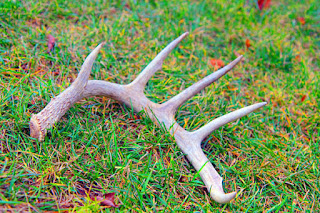


So it is possible that deer was used as an animal calendar marker for planting, both winter and spring grain...

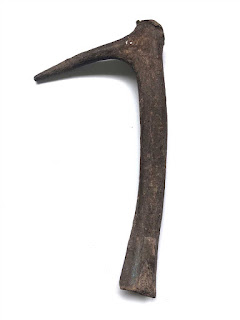
It gets better. Antler pick was used in both farming and mining as early as the Neolithic period. In farming it was used for making furrows for planting grain...

So let me see

1. You find a deer antler shed by a red deer (Mar-May)

2. You make a pick out of it

3. You use it to make a furrow and plant your grain in Apr

4. You use a sickle made out of a deer mandible to harvest your grain

Interesting...

But there is another possibility. That Tartaria tablets were not actually made in the Balkans, but somewhere in Western Asia. 

Did the Neolithic farmers arrive all in one "package tour"? Or did they, like all the immigrants anywhere do, keep coming and going between "the old home" and the "new home". Bringing relatives to "see the Balkans, the land of opportunities"...

Were these artefacts brought to Europe from Western Asia, where Ibex goats still live today? And where during the Neolithic, Ibex was the number one animal calendar marker, linked with agriculture? 

The fact that we find artefacts depicting Ibex goats in huge amounts everywhere in the Neolithic Fertile Crescent, whereas we only find few isolated depictions of Ibex goats in the Neolithic South Eastern Europe, leads me to believe that these were isolated imports...

It is possible that these tablets are much older than calibrated 5370-5140 BC, and they were used during the time when Ibex goats still lived in the Balkans...And were passed as a treasured heirloom from generation to generation... 

By the time they were deposited in the grave where they were found, they were possibly completely meaningless if there were no Ibexes living and mating in South Eastern Europe, around the time when you were supposed to plant your grain...

Oh yeah, I forgot another possible explanation. This one favoured by most archaeologists. 

This is just meaningless bunch of scribbles without an explanation...

Thursday, 11 November 2021

Lions with grain tails

A while back I wrote an article about the Khafajeh vase, which was made in Iran in the mid 3rd mil. BC by the people of the Jiroft culture...It is still one of the most amazing animal calendars I have seen so far...


This particular scene depicts the driest and hottest part of the year in the Jiroft County, located in the Kerman Province of the South-Eastern Iran...Jul/Aug...Leo...


This is symbolised by the person holding two snakes (symbols of sun's heat) standing between two lions (in Leo)...

This "person" is the sun god, the same dude depicted on this Bactrian seal from the same period. I talked about this in my post "Bactrian snakes and dragons"...

What I didn't notice at the time when I wrote my article were the tips of the lions' tails. They end in what looks like wheat ears...Why? Is this significant?


Well, in my post "Shamash young and old" I talked about young and old sun god Utu/Shamash from Mesopotamian mythology...

He is most often depicted as a man with heat rays radiating from his shoulders...See here, Shamash standing in a dried up canal during the hottest and driest part of the year, Jul/Aug, in Leo, holding a reed cutting knife (that is the best time to cut reeds for making houses and boats)...In Leo is again depicted as "between the lions"...I talked about this in my post "Canals"...


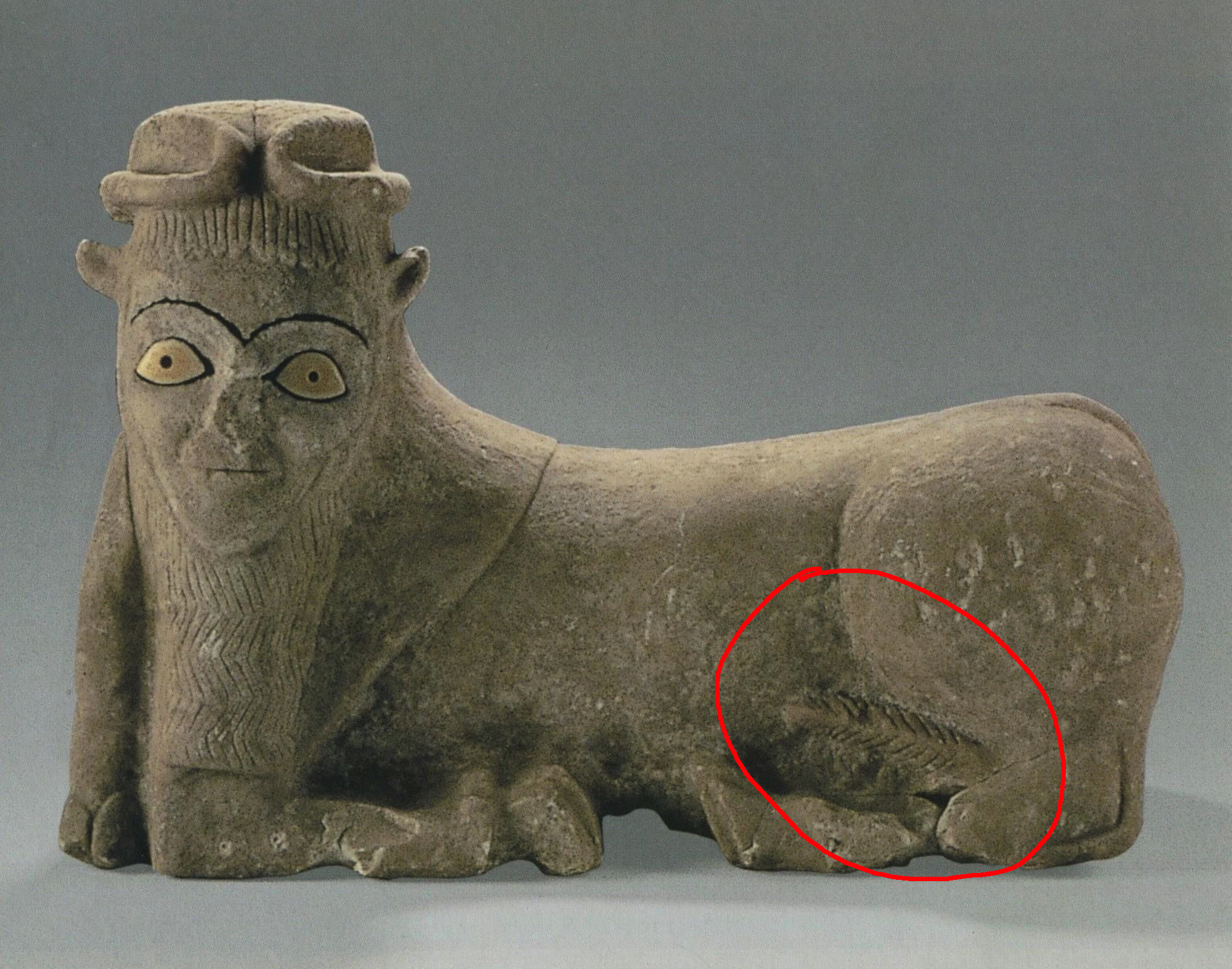
But Utu/Shamash is often depicted as a bull with human face and long flowing beard...

Sometimes Utu/Shamash is depicted as a bull with human face and a long flowing beard having his butt chewed by a winged lion...This is because summer, symbolised by a bull, ends in Leo...I talked about this in my post "Butt chewing"...

Here is another one of those depictions of the sun god Utu/Shamash as a bull with human face and a long flowing beard. But this time he also has a tail that ends in a ear of wheat...Why? Is this significant?

Well it is. Utu/Shamash is depicted as a bull, cause summer starts in Apr/May, in Taurus, the time when Wild Eurasian Cattle begin to calve...I talked about this in my posts "Dairy farming seal", "Green pastures" and many others...Summer as a season is most often symbolised by a bull too...I talked about this in my post "Symbols of the seasons"...

This is also the time of the peak flood of the Tigris and Euphrates, which is caused by the snowmelt on the mountains that feed these two great rivers, which is in turn caused by the sun, Utu/Shamash...Hence golden bull (sun metal) with blue lapis (water stone) beard 

Apr/May, Taurus, is also the time when the grain harvest  begins in Mesopotamia...Hence bulls and grain...And bulls with grain tails...I talked abut this in my posts "Bulls and grain bowls" and "How grain came to Sumer"

But what does this have to do with the lions with grain tails from the Jiroft vase? Well...

I googled Iran grain harvest season and (eventually) found this: "wheat harvest season is approximately 4.5 months in Iran starting in early April up to mid-August, depending on the region and it's local climate"...

According to this paper about the affect of the global warming on grain agriculture in Iran, "...most of the wheat in Iran is cultivated in October and harvested in July..."

Finally I found this: "KERMAN, Aug. 13 (MNA) – Farmers of Deh Ziyar village in Kerman province, harvest wheat using traditional methods"... 


Basically they are harvesting grain in Leo...

Is Jul/Aug really grain harvest season in Kerman province? Is this why lions on this vase made by the people of the Jiroft culture from the Kerman province of Iran have tails that end in grain ears?

PS: I just looked at the pictures of the wheat being harvested in Kerman province. It looks like one of the old wheat types, emmer, durum, which are both awned (with bristles). 

Durum wheat is the predominant wheat type grown in the Middle East. And it is traditionally a "spring wheat" which is sown in Feb/Mar and harvested in Jul/Aug. It has lower yields, thick husks, long bristles and is resistant to high temperatures...

It fits...

Sunday, 20 June 2021

Dairy farming seal

Cylinder seal, c.3200-3000 B.C. Late Uruk-Jemdet Nasr period. Official description:

In the lower field of this seal appear three reed cattle byres (cow sheds). Each byre is surmounted by three reed pillars topped by rings, a motif that has been suggested as symbolizing a male god, perhaps Dumuzi... (question here: why?)

Within the huts calves or vessels appear alternately; from the sides come calves that drink out of a vessel between them. Above each pair of animals another small calf appears. A herd of enormous cattle moves in the upper field...

This is a very interesting seal. First I think that it is a calendar marker. The cattle are the wild eurasian cattle, aurochs, which start calving in Apr/May. This is what the original Taurus animal calendar marker marked...

I talked about this in my post "Ram and bull"...

This is a super important part of the year in Mesopotamia. The peak of the water levels of Tigris and Euphrates. The annual flood...Which was believed to be caused by Enki, the god of fresh water...

Water level charts:

Tigris

Euphrates

Which is why, in "Enki and the world order" we read: "...Father Enki...he stood up full of lust like a rampant bull, lifted his penis, ejaculated and filled the Tigris with flowing water. He was like a wild cow mooing for its young in the wild grass..." 

I talked about this in my post "Shamash young and old"...

The houses depicted on the seal are the houses of the so called Marsh Arabs...The annual flood which coincides with the beginning of the aurochs calving season used to turn the central Mesopotamia into this 

I talked about this in my post "Enki's little boat"...

You can see cattle, sheep and goats inside of pens, enclosures, located next to houses...Not inside of the houses...Which makes me doubt whether the buildings depicted on the seal are indeed cattle byres...

So what is depicted on this seal?

What is very interesting is that one of them is full of calves and the other one is full of ceramic vessels...What could this mean?

Is it possible that this is a very early depiction of butter production? Like humans, cows only produce milk after they have given birth...Almost all calves are separated from cows within hours or days of birth, so that they don't drink all the milk the cows produce...

So if you want to milk the cows, you would take the calves away from their mothers, and put them into a separate object, a calves shed. You would then milk the cows, take part of the milk for yourself and give part of it to the calves...

This would explain that only calves are depicted in the so called cattle byres. And this would also explain why the calves are drinking out of vessels...But what about the pots? Well, I think they could be butter churns and butter storage vessels...

Exactly that is depicted on the frieze from the temple at Ubaid, near Ur, in southern Mesopotamia. Dating from ca. 2,500 B.C., this frieze has been cited as "the earliest absolute evidence for the use of milk"...


Here is the same scene drawn, so you can see the details more clearly. The drawing is from this interesting paper: "Cows, milk and religion: the use of dairy produce in early societies"... 

Top row shows cows being milked with their calves tied around their necks...

Bottom row shows calves in their separate shed, separated from their mothers, who are now milked for their milk, which is then turned into butter, by the man in the middle...

Cows, milk and religion: "Milk quickly turned sour in the hot climate of Early Mesopotamia and as a consequence appears not to have been consumed to any great extent by adults. It was fed to young babies [and calves]...but was mainly processed to make butter and cheese"...

"The early texts indicate that Sumerian butter and cheese were made from soured milk...The fact that the early sources note that the butter was poured and stored in similar vessels to other liquids indicates that butter was clarified to form ghee"...

"Butter would first have been produced in solid form and then boiled in order to remove the water content. It is the water in solid butter that causes it to turn rancid but conversion to ghee increases its life for up to a year"...

"Ghee would have had similar uses to olive oil, the latter being little used in early Mesopotamia...Ghee also had non-culinary uses. One Ur III (2112-2004 BC) text indicates that it was used for sealing the hulls of boats"...

So that would explain the scene depicted on the original seal. In the left house we see amphoras for storing ghee on the left and butter churns on the right. And in the right house we see calves...Calves which drink from the same vessels...Indicating they are drinking milk...

This is super cool. Why? Cows, milk and religion: "The evidence for "dairying" in Mesopotamia...are virtually

absent from Uruk IV (3200-3100 BC) texts but become plentiful during the Uruk III (3100-3000BC). This may indicate an expansion in the use of dairy produce at this time"

The original seal is from 3200-3000 BC...So from the time of the sudden arrival of dairying to Mesopotamia...So this could actually be the oldest depiction of a dairying scene found in Mesopotamia, predating the Ubaid frieze by half a millennium...

Where did dairying arrive from so suddenly? In this article "Milk, butter, cheese" I talked about early butter churns from Neolithic Levant, Anatolia and Central Europe...Things that looked like this:

These vessels were filled with milk from the top, then hanged from a tree or a tripod and swung to shake the milk inside the vessel and separate butter from milk liquid...

These ceramic butter churns were clay versions of much older sheep (or goat) skin churns, like this one on the picture, which were still used by Beduins, Arabs, Kurds and Iranians until the 20th century...

Cows, milk and religion: "[according to the early textual and graphic depictions]...the butter was churned in earthenware vessels...the skin bags used for butter making are rarely mentioned in the early Sumerian texts"...

That is very interesting...The butter churn depicted on the Ubaid frieze looks very much like this: traditional Indian butter churn...

Why? Did dairying arrive to Mesopotamia from the east and not from the west?

Cows, milk and religion: "[After suddenly appearing during 3100-3000BC]...records of dairy produce tend to decline from the Old Babylonian period (2000-1600BC) onwards and are rare in Babylonian or Assyrian sources"...

Why? Is this sudden appearance and disappearance of the dairying records in some way linked to sudden appearance and disappearance of dairy liking people?

Cows, milk and religion: "Cattle, however, were not kept primarily for their milk and their main role appears to be the provision of traction. Old Babylonian texts record a price of 7 ⅔ shekels for a fully grown milking cow, compared with 12 shekels for a draft ox"...

But that was after the decline of dairying in Mesopotamia...Very strange...To me anyway...

To read more about ancient animal and plant calendar markers, start here…then check the rest of the blog posts related to animal calendar markers I still didn't add to this page, and finally check my twitter threads I still didn't convert to blog post...I am 9 months behind now...