Showing posts with label Calf mythology. Show all posts

Monday, 28 April 2025

By the blood of the Lamb

"...And [after a long battle] they overcame him [the dragon] by the blood of the Lamb..."

What does this verse from the Apocalypse Chapter 12 mean?

Let's start here: When a lamb is decorated like this in Serbia, it means that it's destined to be sacrificed to St George on St George's day...Aries must die so Taurus can begin...Lamb sacrificed to a Calf...I talked about this in my post "Aries must die"...

Recently I did the analysis of the Apocalypse story where I used animal calendar markers to show that the story is just a symbolic calendar. You can read full analysis in my post "Apocalypse"...
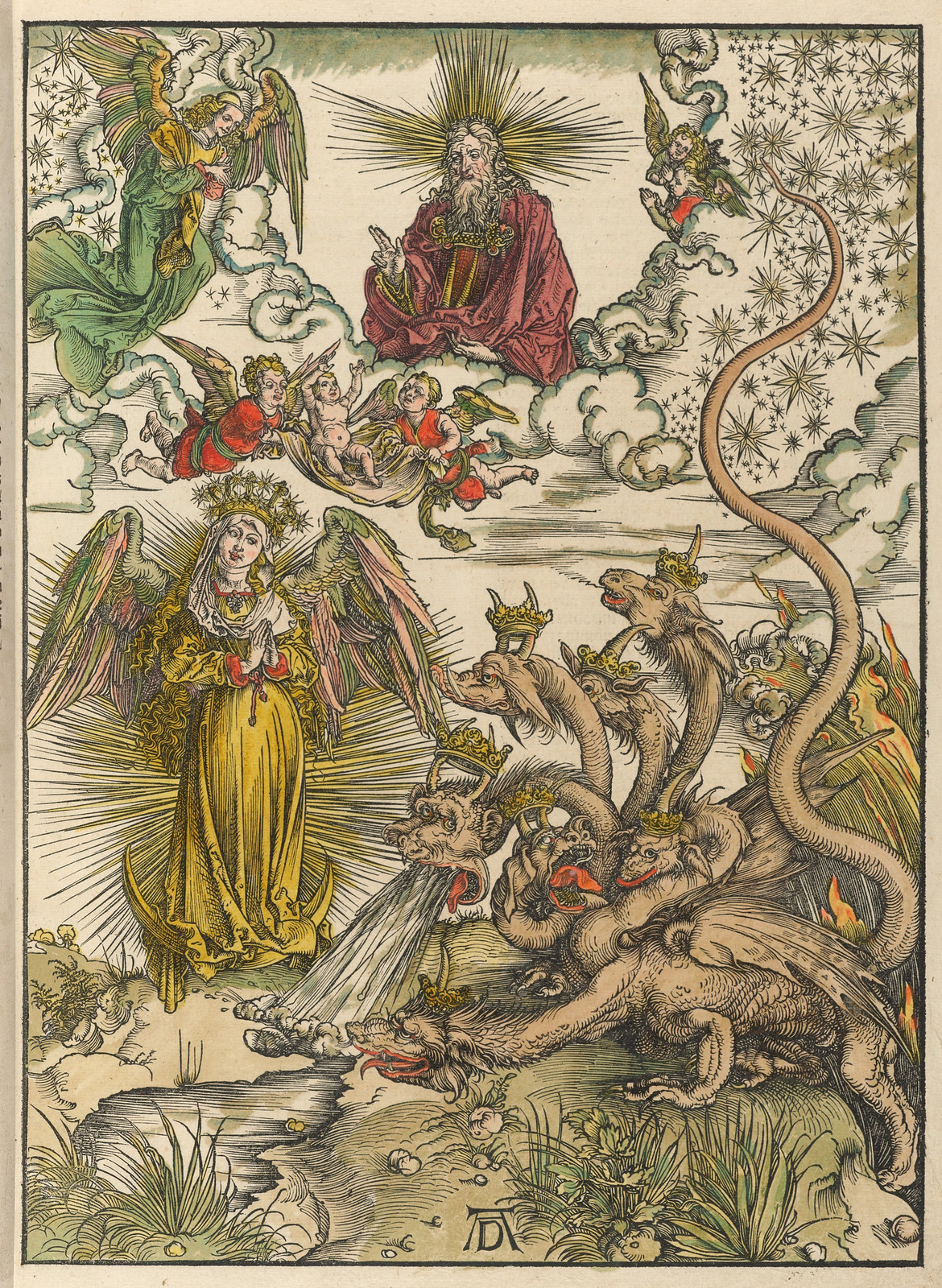
In this post I proposed that the 7 headed dragon was the personification of the 7 months of Sumerian summer, the season dominated by the sun which "steals water and causes drought"...

I talked about the meaning of fire breathing dragons in many of my posts...

Which is why local dragon (dragon = symbol of summer) depicted on this 3rd millennium BC seal from Tell Asmar, had seven snake heads (snake = symbols of sun's heat)...The dragon has lion body, because Jul/Aug, Leo, is the hottest and driest time of the year in Mesopotamia, the time of the fire breathing dragon (burning sun of the later summer) who steals water and causes drought...Oh, and look, we also have dragon killer(s) and the princess (Lady?) standing under a star 🙂 I talked about this in my post "Seven headed dragon"...


In my post about the Apocalypse, I proposed that "The Woman Clothed in Light" that dragon is pestering is Inanna/Ishtar as Sirius. 

Here is Inanna/Ishtar, deified Sirius, which rises with the sun (morning star) in Leo, Jul/Aug, the hottest time of the year. Which is why she is depicted standing on a lion with the sun above lion's head and is known as "The Lioness of heaven"...
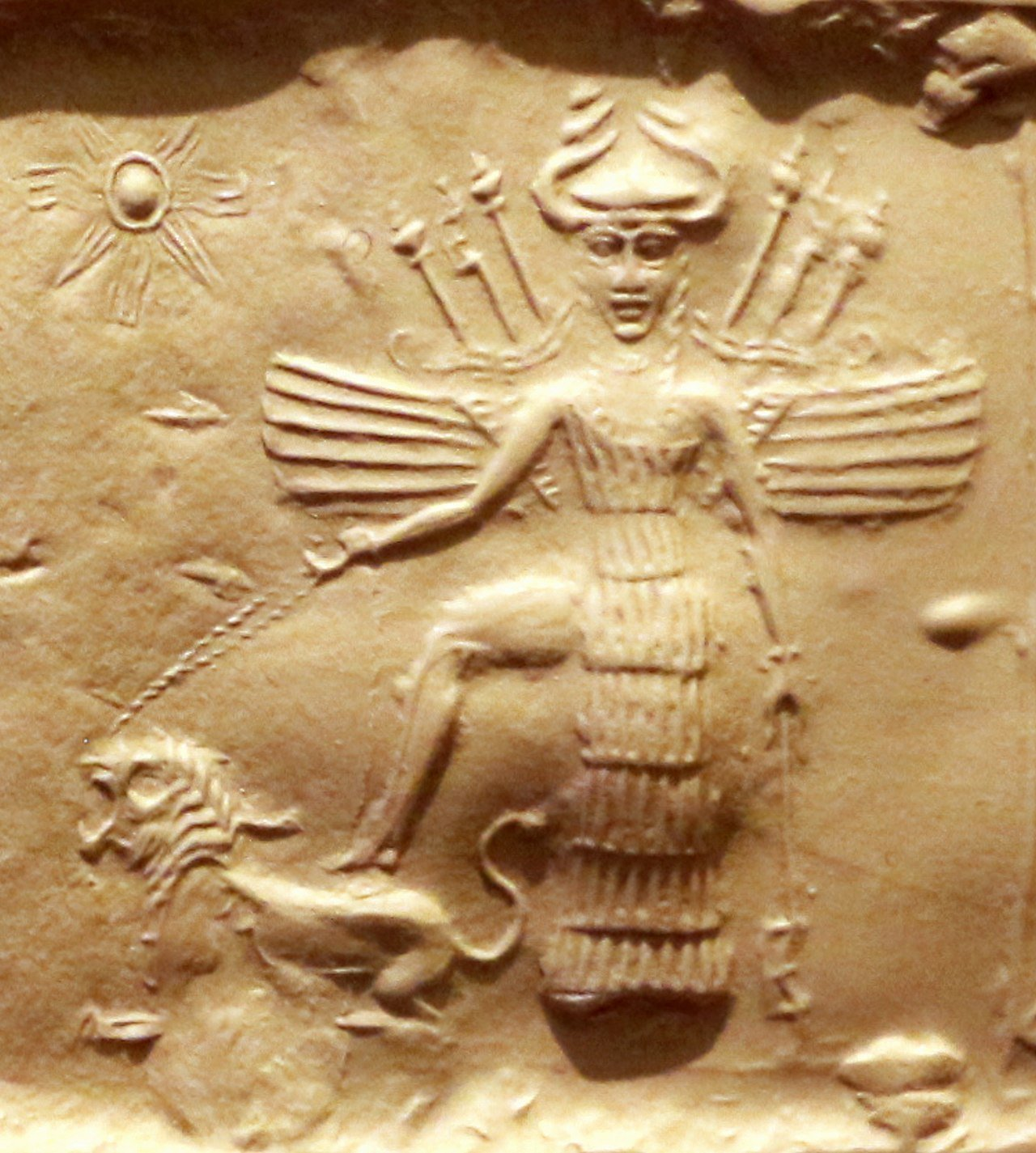
I talked about Inanna/Ishtar as Sirius in many of my posts and I explained in detail why I believe this is the case based on all the written and symbolic evidence we have...

BTW, Inanna/Ishtar is the princess/lady standing under the star facing the seven headed dragon on the Tell Asmar seal...

But Inanna is also deified (fertile) Mother Earth, Mother of grain...In "The Courtship of Inanna and Dumuzi" we read:

As for me, Inanna,

Who will plow my vulva?

Who will plow my high field?

Before my lord, Dumuzi,

...

I poured out grain before him,

I poured out grain before my womb...

I talked about the "Mother of grain" in many of my posts. This is a good one to start with: "Mother of grain from Mari" in which I analyse this alabaster stele from Mari dated to the 3rd millennium BC.

So if the dragon that steals water gets defeated, then his defeat would mean that the stolen water is released back to earth...

To understand what this means in Mesopotamia, where this story originates, we need to take a look at the climate chart of the region:


Levant has pretty much the same climate:
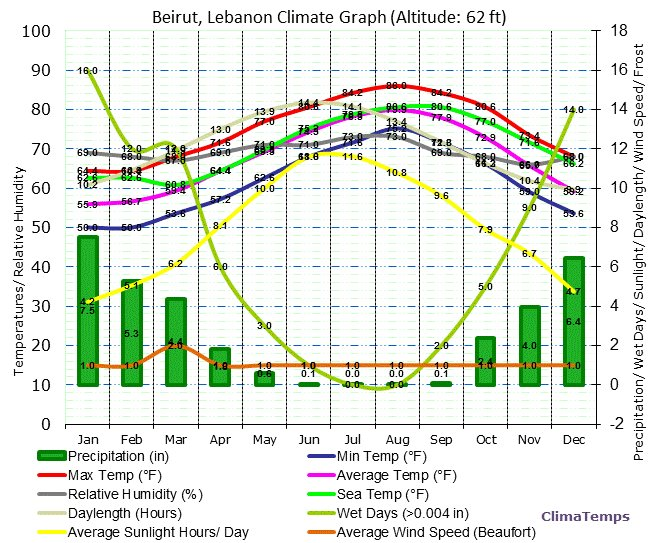

You can see that the climatic year is divided into hot dry summer (Apr/May-Oct/Nov) and cool wet winter (Oct/Nov-Apr/May):

In the Apocalypse Chapter 12 we read that "...The woman was given...wings of a great eagle, so that she might fly...and escape the dragon..." 

The Sumerian summer Apr/May-Oct/Nov ends in Oct/Nov when the rains arrive...

Rains brought by the rain god, who was in Mesopotamia originally imagined as huge black eagle. I talked about this in my post about this mad Kassite seal, where we see two headed eagle spewing water. I talked about this in my post "Kassite seal with Apkallu"...
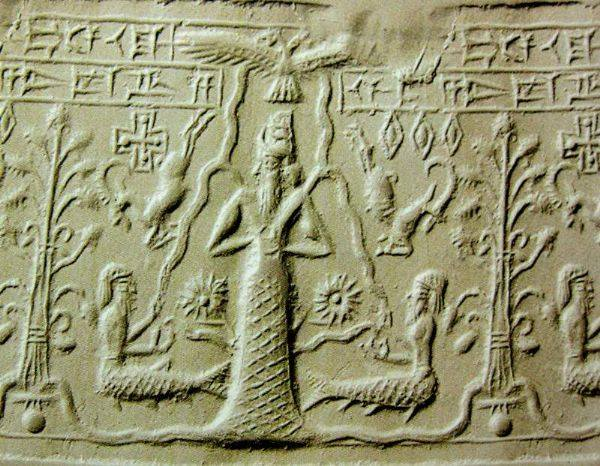
BTW, double headed Eagle/Vulture here, is the animal calendar marker for the beginning of the vulture mating season, Oct/Nov. When Eagles/Vultures dance over the mountains 


Dancing here is synchronised flying


Which from the ground looks like this


I talked about this first in my post "Double headed eagle" and then in my post "Eagle dance"...

But the fight continues until: "...[after a long battle] they overcame him [the dragon] by the blood of the Lamb..."

What does this mean?

Now remember my post "Goatfish"? 

Goatfish, the sacred animal of Enki, the Sumerian god of fresh water, is a complex animal calendar marker for the wet half of the year in Mesopotamia...Between the mating season of wild goats and the mating season of giant Mesopotamian carps...
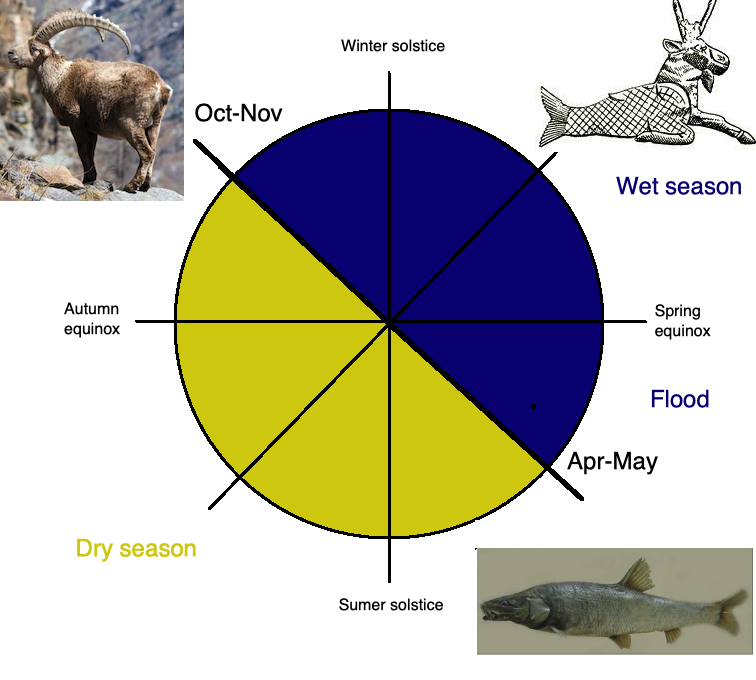


There is another version of the goatfish. 


Oooook...And this means what?

Towards the end of the wet period, Oct/Nov-Apr/May, in Mar/Apr, close to the fish tail of the goatfish, we find Aries, Ram...

Animal calendar marker that marks the end of the lambing season of the wild and domestic sheep...And the beginning of the milking season...Very important time of the year...I talked about the origin of Aries in my post "Aries must die"... 


Great, but why is Ram combined with Goat-Fish, symbol of wet season? Because it is "during the sheep lambing season" Feb/Mar/Apr, that the snowmelt suddenly intensifies in mountains surrounding Mesopotamia...


And the water level in Mesopotamian rivers suddenly starts to rise...


So we have Goat (Oct/Nov) -- Ram (Mar/Apr) -- Fish,Carp (Apr/May)...


And it is this sudden surge in snowmelt discharge during Mar/Apr, Aries that makes the water level in Mesopotamian rivers suddenly rise...And peak in Apr/May, in Taurus, causing the Annual Tigris and Euphrates flood...

BTW, Taurus here is The Old Taurus, the animal calendar marker for the beginning of the calving season of wild eurasian cattle...

I talked about this in many of my posts, like "Cow and calf ivory", "Foundation peg of the goddess Nanshe", "Elamite water bull", "Human bull hybrid", "White calf", "Calydonian boar"...


So it is much more appropriate to mark Apr/May, Taurus, with a calf, just like it is more much more appropriate to mark Mar/Apr, Aries, with a lamb...I talked about this in my post "Maran"...

Anyway, in "Enki and the world order" we read that:

"Enki placed in charge of the whole of heaven and earth the hero, the youth Utu (Shamash), the bull standing triumphantly, audaciously, majestically...the great herald in the east of holy An...with a lapis-lazuli beard, rising from the horizon..."

It is the rising elevation of the sun that causes the snowmelt which feeds Tigris and Euphrates which causes the flood in Taurus. 

So golden bull's head (sun) with lapis beard (flowing water)  


BTW, in "Enki and the world order" we also read:

"...Father Enki...he stood up full of lust like a rampant bull, lifted his penis, ejaculated and filled the Tigris [and Euphrates] with flowing water. He was like a wild cow mooing for its young in the wild grass..." Some scene 🙂

So Bull Utu (sun) melts snow and Bull Enki (source of Tigris and Euphrates) fills the rivers in Taurus, when "wild cows are mooing for their young in the wild grass"...

I talked about this in my posts "Shamash young and old", "When Utu steps up to heaven", "Problems of Abzu", "But chewing"...

BTW, in Serbia, St George's day which marks the end of Aries beginning of Taurus, is the time when shepherds sacrifice lambs to St George...Remember, the lamb (Aries, Mar/Apr, End of lambing season, End of spring) has to die (end) so that calf can be born (Taurus, Apr/May, Beginning of the calving season, Beginning of summer)...I talked about this in my post "Aries must die"...

Interestingly, in the past, during spring droughts, Serbs used to go to mountain lakes to pray for rain to "a dragon living in the lake who swallowed the rain"...They also sacrificed a lamb to the dragon...The same sacrifice they made to St George, the dragon killer...I talked about this in my post "Dragon that stole rain"...

Anyway...What about the serpent? "...And the serpent cast out of his mouth, after the woman, water, as it were a river: that he might cause her to be carried away..."

First, snake is a solar animal, pretty much a universal symbol of the sun's heat. Snakes follow sun everywhere. They are in our world when sun is in our world (day, summer) and in the underworld when the sun is in the underworld (night, winter)...I talked about this in many of my posts. For instance "Snake god from Hatra"...

And as I said, it is the sun's heat that melts the snow...

Second, snake mating season, when snakes intertwine, starts in Apr/May, the time of the peak snowmelt runoff, and the peak discharge of the rivers in the Tigris/Euphrates system...

Which is why in the Deliver Me from Evil: Mesopotamian Incantations, 2500-1500 BC, By Graham Cunningham, we can read that in the Earliest Sumerian texts, Enki, the god of sweet flowing water and the source of Tigris and Euphrates, was associated with poisonous snakes...And was depicted as a god with the snake body. Like on this Elamite seal from the 3rd millennium BC, currently in the Isreal Museum, Jerusalem...


And again, Utu, Sun, Serpent, Dragon, melts the snow (releases the stolen water) and Enki, Serpent, Dragon, Abzu, source of Tigris and Euphrates, pours this water into Tigris and Euphrates...During snake mating season...

Interesting...Right?

To read more about ancient animal and plant calendar markers, start here…Then check my twitter threads I still didn't convert to blog post...I am way way behind... 

Sunday, 24 November 2024

Inanna in Egypt

Inanna in Egypt? Hmmm...


Recently, I discovered that Inanna was "associated with cattle and particularly calves"...Here is a depiction of the Inanna's "nuptial hut" as a calving hut, on a carved stone vase from  Khafajah. Pic from "The Three Faces of Inanna: an Approach to her Polysemic Figure in her descent to the Netherworld."

One of Inanna's appellations was "wild cow", and wild cows start calving in Apr/May, the time of the year marked by Taurus, the animal calendar marker which today means Bull, but which originally most likely meant Calf...


"...you were a baby, Assurbanipal, when you sat in the lap of the Queen of Nineveh (Ishtar/Inanna). Her four teats are placed in your mouth [Ishtar/Inanna is often pictured as a wild cow, so four teats are normal for her]..."

Inanna was also associated with grain and grain harvest.


This is Inanna speaking:

"Before my lord, Dumuzi,

I placed grain before him,

I poured out grain before him,

I poured out grain before my womb..."

Mother of grain...Link between female fertility and earth/grain field fertility...

Some posts about the symbol for grain and the Mother of grain in Neolithic Europe, Central Asia, Mesopotamia, Iran, Levant: "Mother of grain", "Altyn Tepe mother of grain", "A person in a little boat", "Sabi Abyad venus", "Hathor grain pendants"...


Apr/May, Taurus, is also the time when the water levels in Tigris and Euphrates peak. The time of the annual flood, and it is this flood that makes the land fertile...


Which is why Mesopotamian sun god Utu/Shamash was depicted as a golden bull (Sun in Taurus) with flowing lapis lazuli (flowing water) beard...

I talked about this in many of my posts. Like: "Lyres of Ur", "Shamash young and old", "When Utu steps up into heaven", "Butt chewing", "Maran"...

This is also the time when Sirius, the true star of Inanna (Elaborated on this in my post "Inanna and Sukaletuda") is last seen in the night sky, just before the sunset. Between Apr/May and Jul/Aug, Sirius is in the sky during the day, with the sun, and therefore invisible...

Sirius reappears in the night sky, just before dawn, in Jul/Aug...This is Ishtar, the destructive form of Inanna...

For those who will say "Ishtar was the morning star", yes she was, in Leo (Jul/Aug), when Sirius rose in the morning before the sun...Which is why Ishtar stands on a lion (with sun above the lion) and is known as "The Lioness of heaven"...

Destructive why? Cause of the Mesopotamian climate and the hydrology of Tigris and Euphrates. Jul/August is not just the hottest and the driest time of the year, but this is also the time when the two great rivers have the lowest water levels...

Sun God Utu/Shamash with sun (heat) rays emanating from his shoulders, standing in in an empty canal, in Leo (between the lions), the hottest, driest time of the year in Mesopotamia, and the time when canals were repaired, holding reed cutting knife...I talked about this in my post "Canals"...

The destructive sun in Leo is also symbolically depicted like this


Nergal, the deified destructive "burning" sun, was depicted as a lion man, because Jul/Aug, Leo, is the hottest and driest part of the year in Mesopotamia...


Talked abut him in my posts "Winged superhuman hero", "Lord of the flies"...

So here we have the same goddess with two faces, life giving (holy cow, Inanna, good) and life taking (holy lioness, Ishtar, bad)...And this switch can be perfectly explained through the Mesopotamian climate and Tigris and Euphrates hydrology...

And interestingly, we find the same thing in Ancient Egypt. A goddess with two faces, life giving (holy cow, Hathor) and life taking (holy lioness, Sekhmet)...I talked about this in my post "Holy cow"... 

Except, this switch can't be explained through the Egyptian climate and Nile hydrology...

The holy cow, the life giving Hathor, linked to water, grain, milk (calving), and her symbolism is easy to explain...


I talked a lot about it in "Holy cow" "White calf" "Cow and calf ivory", "Lotus and papyrus"

Hathor marks the "return of waters of the Nile".

The holy lioness, the life taking Sekhmet not so easy...Actually it is impossible to explain this switch in Egypt. Lioness should be a super positive, life giving goddess, because it is Leo, Jul/Aug, when the Nile flood peaks...

I already started wondering about the lion mythology in Egypt, and whether it originated in Mesopotamia in my posts "Sphinx" and "Giza lioness", "Sirius the mother of Venus"...

In there I explained why Atum, the Creator God of Egyptian world, created himself as a lion (Leo, Jul/Aug), after emerging from the primordial (read annual) flood (starts in Leo, Jul/Aug), the flood which makes land fertile without which there would be no Egypt...

I then talked about the Egyptian holy lioness, the precursor of the Sphinx, which again fits into the whole "lion(ness) good in Egypt"...

But for some reason, while writing these articles, I completely forgot about the murderous, destructive, Sekhmet...

"Cow good - Lioness bad" makes a lot of sense in Mesopotamia. 

"Cow good - Lioness great" would make a lot of sense in Egypt.

But...

What do you think?

To read more about ancient animal and plant calendar markers, start here…Then check my twitter threads I still didn't convert to blog post...I am way way behind...

Wednesday, 21 February 2024

Feast plaque from Louvre

Another amazing object I discovered during the 5 hour long stroll I took with my son through the Mesopotamian section of the Louvre museum last weekend. 

Perforated votive limestone plaque, Mesopotamia (where?), ca. 2700-2650BC...Currently kept in Louvre...

The official description: 

"...decoration is arranged in three registers. 

A banquet scene occupies the first register...

In the second register, a stag and ox are placed on either side of the central perforation. 

A banquet scene in a boat occupies the third register..."

So what's so amazing about this?

First amazing thing is that the museum curators didn't identify the two animals depicted between the two banquet scenes correctly. 

The animal on the left is not a stag. It's an ibex goat. And the animal on the right is not an ox. It's a calf...

VERY VERY IMPORTANT...How can you expect to correctly interpret what is depicted on this object, if you don't identify the correctly what is actually depicted on it. 

Oh wait, they never attempted to interpret what was depicted on this object...

So let me try to do it...

But really, this object is amazing because it connects three other objects I talked about earlier, and basically links all the symbols depicted on these objects together...

First object is this perforated votive limestone plaque, from the same period (and most likely the same area) as our original votive limestone plaque. I talked about it in my post "Green pastures"...


It too depicts a banquet scene in its top register. The other two registers depict two ibex goats and two calves, two very important animal calendar markers used extensively in Mesopotamia...

According to the paper "God or worshiper", the first "banquet" scene actually depicts worshipers in front of Abu the god of green pastures, and his consort, goddess of fertility...But this paper says nothing about goats and calves...

What goat and bull calf depict are beginning and end of the fertile, bountiful, time of the year in Mesopotamia, the cool, wet half, winter, which starts in Oct/Nov (ibex goats mating) and ends in Apr/May (auroch cattle calving). The time of plenty, the party time...


I talked about ibex goat as an animal calendar marker in many posts, such as, "Problems with Abzu", "Relief from Dur Sharrukin", "Goatfish", "Flamingos from Susa", "Goat carrier", "Iranian goat of rain", "Strider", "A vessel from Tepe Hissar"... 

I talked about bull/calf as an animal calendar marker in many posts, such as, "Foundation peg of the goddess Nanshe", "Cow and calf ivory", "Butt chewing", "Bulls and grain bowls", "How grain came to Sumer", "Bull leaping in Syria"...

Anyway, the second object is this seal, dated to 2300–2150BC, depicting Enki, god of fresh water and the annual flood, in a boat. 


In my article "Enki's little boat", I explained why Enki's boat is actually the symbol for the annual flood. 

The third object is this seal, from the same period as he previous one, also depicting Enki's flood boat, but this time, above the boat we have an ibex goat and an auroch bull...


In my article "Rain and flood" I explained the relationship between these two animal calendar markers and the annual flood. 

"By hand Winter guided the spring floods, the abundance and life of the Land..." 

This is climate chart for Southern Mesopotamia...


Winter, cool, wet, fertile half of the year in Mesopotamia starts in Oct/Nov (ibex goats mating) and ends in Apr/May (auroch cattle calving)

And as I said, this last votive plaque links all these objects and the symbols depicted on them together. 

Top: God of green pasture and goddess of fertility?

Middle: animal calendar markers marking the beginning and end of winter

Bottom: Enki, God of annual flood in his procession boat. Enki who was also known as Goat of Abzu and Bull of Abzu...And of course before me, no one knew why...Sad...I know I am not that smart...I talked about this procession boat in my post "Problems of the Abzu"...

All having a splendid party, party, party time...Between goat and bull calf...

To read more about ancient animal and plant calendar markers, start here…then check the rest of the blog posts related to animal calendar markers I still didn't add to this page, and finally check my twitter threads I still didn't convert to blog post...I am 9 months behind now...