Showing posts with label Sekhmet. Show all posts

Sunday, 24 November 2024

Inanna in Egypt

Inanna in Egypt? Hmmm...


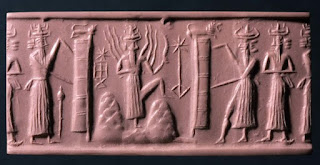
Recently, I discovered that Inanna was "associated with cattle and particularly calves"...Here is a depiction of the Inanna's "nuptial hut" as a calving hut, on a carved stone vase from  Khafajah. Pic from "The Three Faces of Inanna: an Approach to her Polysemic Figure in her descent to the Netherworld."

One of Inanna's appellations was "wild cow", and wild cows start calving in Apr/May, the time of the year marked by Taurus, the animal calendar marker which today means Bull, but which originally most likely meant Calf...


"...you were a baby, Assurbanipal, when you sat in the lap of the Queen of Nineveh (Ishtar/Inanna). Her four teats are placed in your mouth [Ishtar/Inanna is often pictured as a wild cow, so four teats are normal for her]..."

Inanna was also associated with grain and grain harvest.


This is Inanna speaking:

"Before my lord, Dumuzi,

I placed grain before him,

I poured out grain before him,

I poured out grain before my womb..."

Mother of grain...Link between female fertility and earth/grain field fertility...

Some posts about the symbol for grain and the Mother of grain in Neolithic Europe, Central Asia, Mesopotamia, Iran, Levant: "Mother of grain", "Altyn Tepe mother of grain", "A person in a little boat", "Sabi Abyad venus", "Hathor grain pendants"...


Apr/May, Taurus, is also the time when the water levels in Tigris and Euphrates peak. The time of the annual flood, and it is this flood that makes the land fertile...


Which is why Mesopotamian sun god Utu/Shamash was depicted as a golden bull (Sun in Taurus) with flowing lapis lazuli (flowing water) beard...

I talked about this in many of my posts. Like: "Lyres of Ur", "Shamash young and old", "When Utu steps up into heaven", "Butt chewing", "Maran"...

This is also the time when Sirius, the true star of Inanna (Elaborated on this in my post "Inanna and Sukaletuda") is last seen in the night sky, just before the sunset. Between Apr/May and Jul/Aug, Sirius is in the sky during the day, with the sun, and therefore invisible...

Sirius reappears in the night sky, just before dawn, in Jul/Aug...This is Ishtar, the destructive form of Inanna...

For those who will say "Ishtar was the morning star", yes she was, in Leo (Jul/Aug), when Sirius rose in the morning before the sun...Which is why Ishtar stands on a lion (with sun above the lion) and is known as "The Lioness of heaven"...

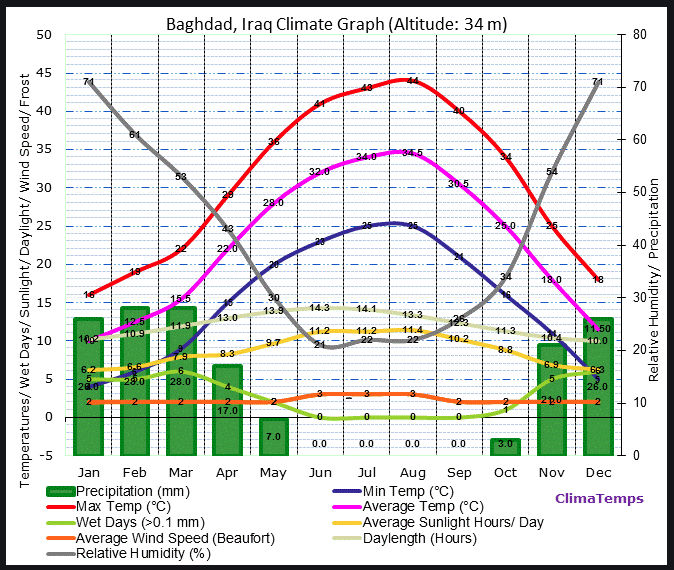
Destructive why? Cause of the Mesopotamian climate and the hydrology of Tigris and Euphrates. Jul/August is not just the hottest and the driest time of the year, but this is also the time when the two great rivers have the lowest water levels...

Sun God Utu/Shamash with sun (heat) rays emanating from his shoulders, standing in in an empty canal, in Leo (between the lions), the hottest, driest time of the year in Mesopotamia, and the time when canals were repaired, holding reed cutting knife...I talked about this in my post "Canals"...

The destructive sun in Leo is also symbolically depicted like this


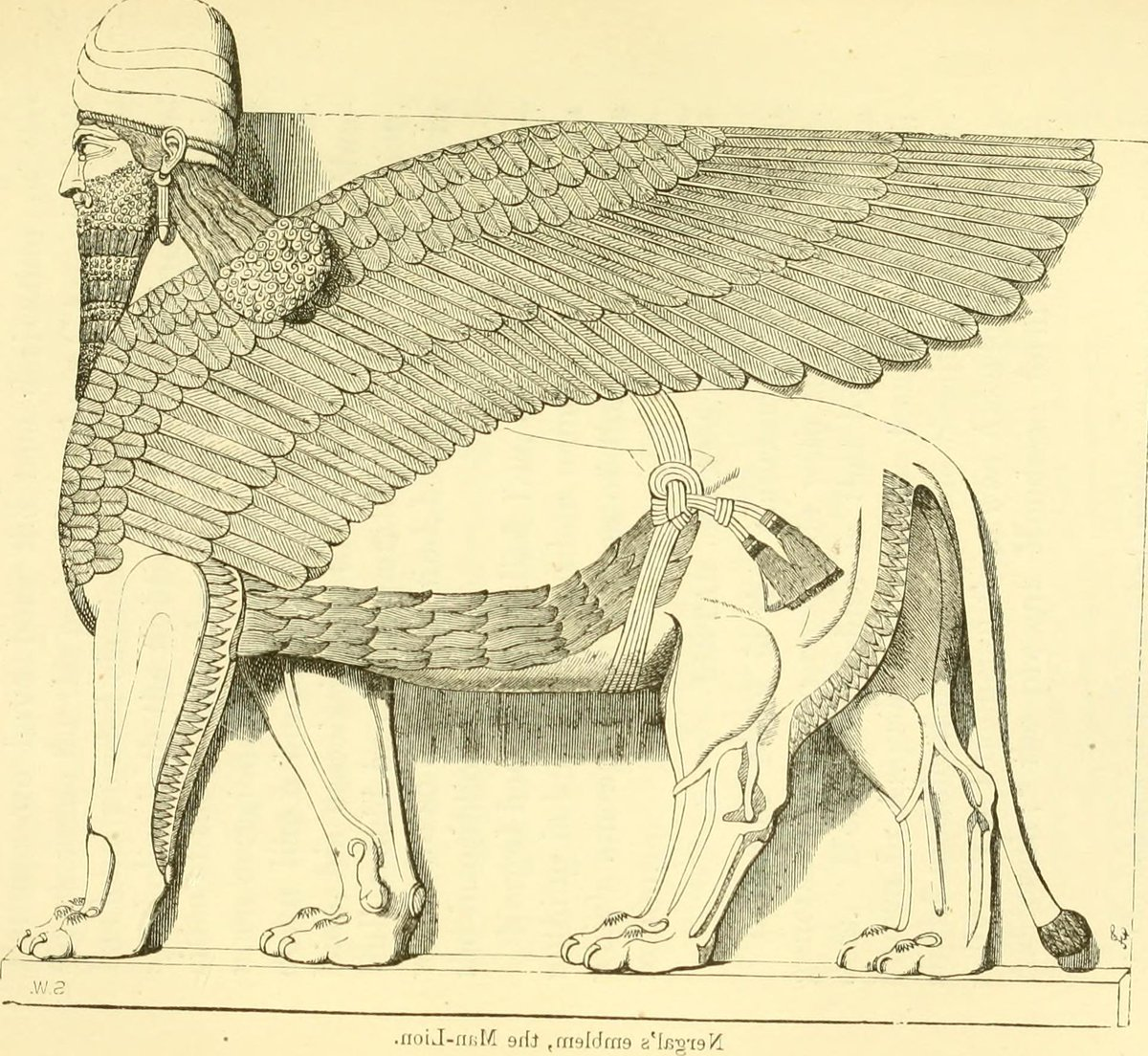
Nergal, the deified destructive "burning" sun, was depicted as a lion man, because Jul/Aug, Leo, is the hottest and driest part of the year in Mesopotamia...


Talked abut him in my posts "Winged superhuman hero", "Lord of the flies"...

So here we have the same goddess with two faces, life giving (holy cow, Inanna, good) and life taking (holy lioness, Ishtar, bad)...And this switch can be perfectly explained through the Mesopotamian climate and Tigris and Euphrates hydrology...

And interestingly, we find the same thing in Ancient Egypt. A goddess with two faces, life giving (holy cow, Hathor) and life taking (holy lioness, Sekhmet)...I talked about this in my post "Holy cow"... 

Except, this switch can't be explained through the Egyptian climate and Nile hydrology...

The holy cow, the life giving Hathor, linked to water, grain, milk (calving), and her symbolism is easy to explain...


I talked a lot about it in "Holy cow" "White calf" "Cow and calf ivory", "Lotus and papyrus"

Hathor marks the "return of waters of the Nile".

The holy lioness, the life taking Sekhmet not so easy...Actually it is impossible to explain this switch in Egypt. Lioness should be a super positive, life giving goddess, because it is Leo, Jul/Aug, when the Nile flood peaks...

I already started wondering about the lion mythology in Egypt, and whether it originated in Mesopotamia in my posts "Sphinx" and "Giza lioness", "Sirius the mother of Venus"...

In there I explained why Atum, the Creator God of Egyptian world, created himself as a lion (Leo, Jul/Aug), after emerging from the primordial (read annual) flood (starts in Leo, Jul/Aug), the flood which makes land fertile without which there would be no Egypt...

I then talked about the Egyptian holy lioness, the precursor of the Sphinx, which again fits into the whole "lion(ness) good in Egypt"...

But for some reason, while writing these articles, I completely forgot about the murderous, destructive, Sekhmet...

"Cow good - Lioness bad" makes a lot of sense in Mesopotamia. 

"Cow good - Lioness great" would make a lot of sense in Egypt.

But...

What do you think?

To read more about ancient animal and plant calendar markers, start here…Then check my twitter threads I still didn't convert to blog post...I am way way behind...

Friday, 17 May 2024

Sphinx

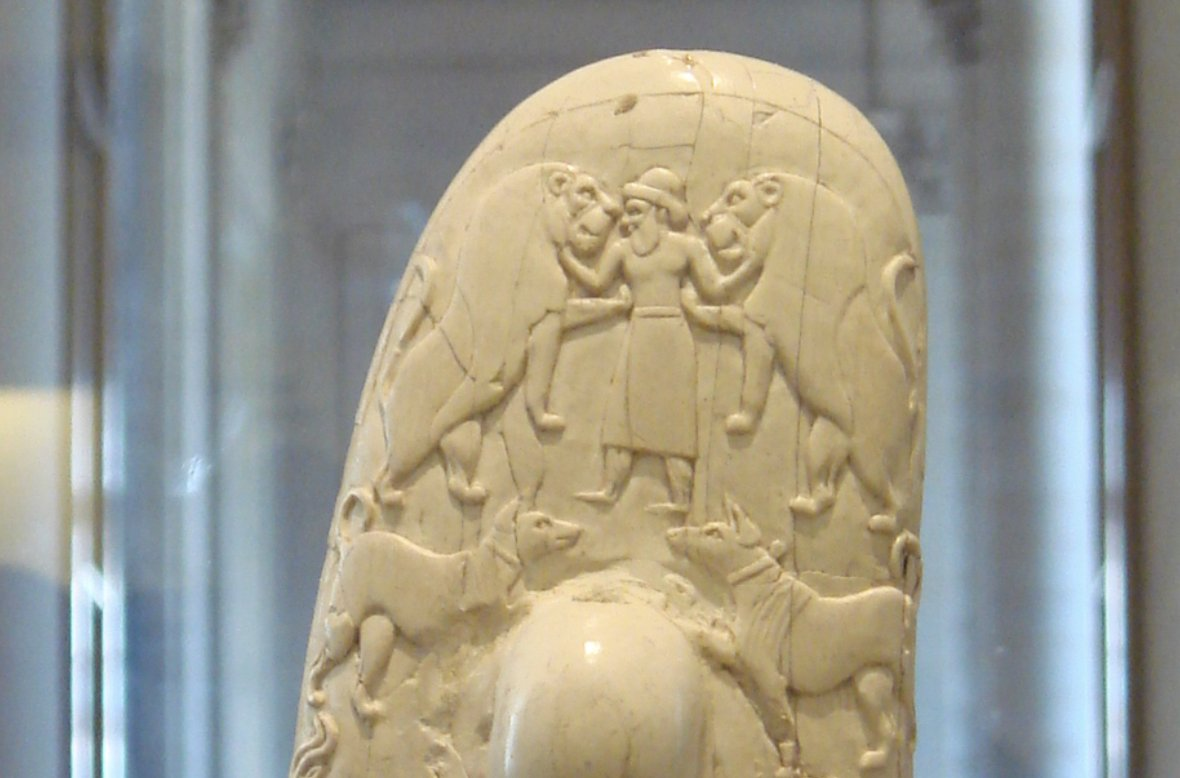
This 2,800 year old ivory was recently discovered in the old Hittite capital Hattusa, Turkey. According to excavation director Prof. Dr. Andreas Schachner, the engraving depicts "a Sphinx, a Lion, and two Trees of Life" and is a unique find.

That's it. That's it?

We don't know:

1. Where was this piece made?

2. What is the meaning of the depicted scene?

So...Let me try to propose the answers to these questions...

I never actually thought about the sphinx symbol before. Crazy I know. But better ever than never 🙂

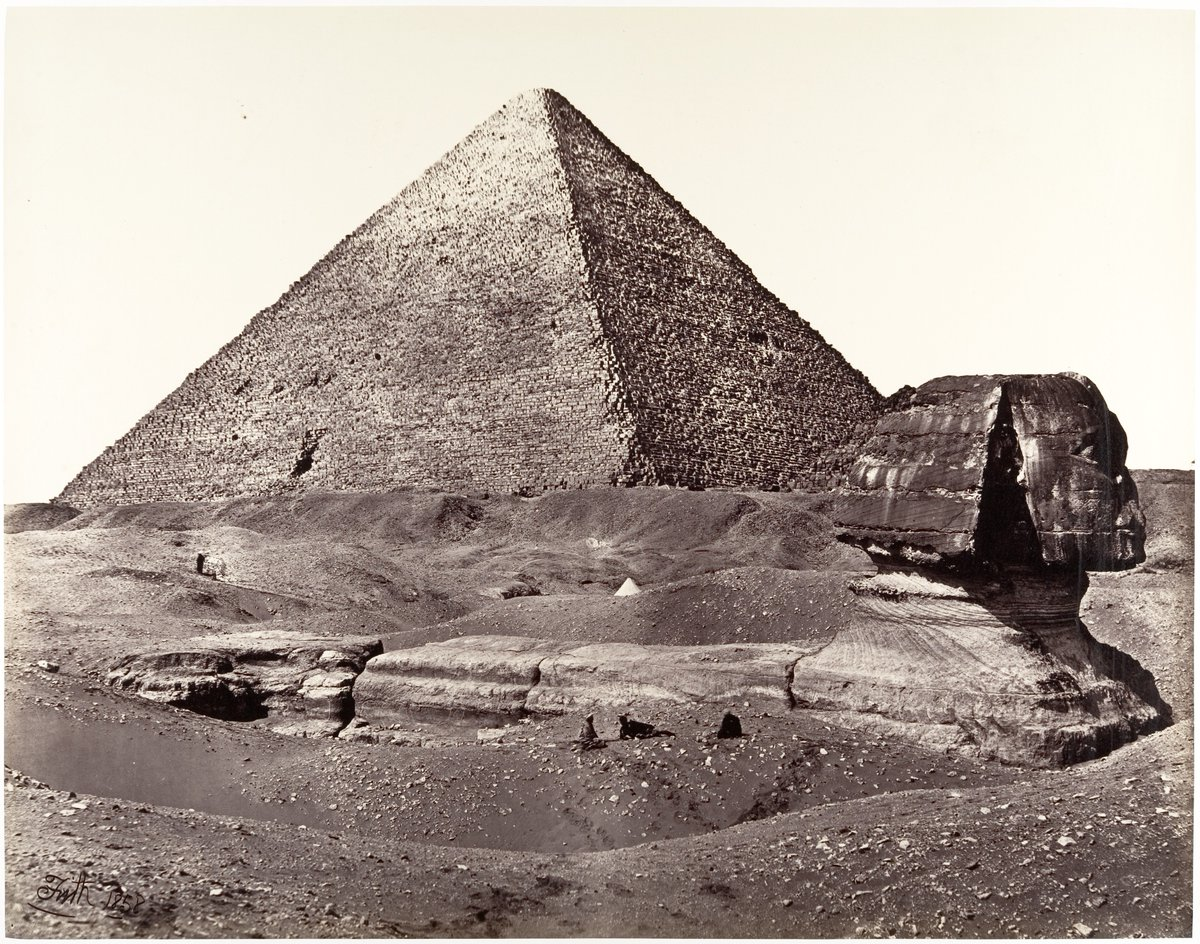
The oldest, largest and most famous sphinx is the Great Sphinx of Giza, situated on the Giza Plateau adjacent to the Great Pyramids of Giza on the west bank of the Nile River.


The Great Sphinx, which has a body of a lion and a man's face, was built around 2500BC by the Pharaoh Khafre of the 4th dynasty and it is believed that Sphinx face is that of the Pharaoh Khafre...

The Sphinx faces east. And right under its feet, archaeologists have discovered the oldest Ancient Egyptian solar temple, where the sun was worshipped as Khepri, the rising sun, Ra, the midday sun, and Atum, the setting sun. 


According to "The Sun Temples of the Vth Dynasty: A Reassessment", during the Old Kingdom, "kingship assumed a solar trait which culminated with the building of the Giza Sun Temple, a place devoted to the celebration of...solar nature of the pharaoh who represented the only link between gods and people..."

Now, knowing this, it is very interesting that the Great Sphinx which stands over the sun temple, has a face of the Pharaoh Khafre, whose name means "He appears as Ra (Sun god)".

I would say that this was done to explicitly identify Pharaoh Khafre as the Living Sun God.

This would answer, apparently still unanswered, question: what was the original symbolic meaning of the Sphinx?

Common opinion is that Sphinx symbolises human triumph over wild nature.

But Egyptologist Alan Gardiner suggested that the Egyptian phrase, "shesep ankh Atum" (Living Image of Atum), which was associated with sphinxes, signified the pharaoh in the form of the primeval sun and creator god Atum.

In the Heliopolitan creation myth, Atum was the first god. Some say that he was the primordial mound which emerged from the primordial waters. Others say that he created himself as the first thing on the primordial mound after it emerged from the primordial waters.

Apparently, Pyramid Texts, Coffin Texts and the Book of the Dead state that "lion emerged from the primeval mass within the primeval waters before all other animals, and mankind". 

Which would imply, as the Egyptologist Karol Mysliwiec pointed out, that it was Atum himself who appeared on earth as a lion. Hence Sphinx, a lion man, as the Living Image of Pharaoh as Atum...

Interesting, right?

But why did Atum appear as a lion? No one knows...Well actually I know...Animal calendar markers...

This is annual Nile flow rate chart. You can see that the flow peaks in Jul/Aug (Leo) resulting in the annual flood...


During the sunniest, hottest time of the year in Egypt (Cairo climate chart). And because it is the annual Nile flood that makes the life in Egypt possible, we have the Sun (god) being the creator of life...

Now in my post "Beautiful boy", about Nefertem, the Egyptian Beautiful Boy, originally a lotus flower at the creation of the world, who had arisen from the primal waters, I explained why I think that when Egyptians talk about "primal waters" or "primordial waters" from which their world emerged, they actually mean "annual Nile flood" without which Egypt wouldn't exist...

So Atum appearing out of the "primordial waters" as a lion just means fertile land appears out of the Annual Nile flood which starts in Jul/Aug, in Leo...

And because the Pharaoh is the "living life giving sun god", we end up with a Sphinx, a lion man, sun (god) in Leo...

BTW, this is also the time when the the god Osiris, the personification of the fertile black soil, gets resurrected, after being killed by god Set, the personification of the infertile red (desert) soil

In Egypt, agriculture depended not on rain, but on the annual Nile flood. And who was the god directly linked to the annual Nile flood that created the black (fertile) soil? Osiris. I talked about this in my post "Holy carp"...

Osiris with wheat growing from his body. From the coffin of Nespawershepi.

And because Osiris is "an ideal Pharaoh", and because Osiris likes wearing a false beard, Pharaohs wore false beards...I talked about this in my post "The beard of Osiris"...

Figurine of a bearded man by the Naqada I culture, 3800–3500 BC, from Upper Egypt...

But I am digressing...

Jul/Aug is marked with animal calendar markers Leo (Lion) because this is when Eurasian lions main mating season used to start...It originally had nothing to do with constellations...

Asiatic lions mating season started in Jul/Aug and spanned the whole of Autumn (Aug/Sep/Oct)...

In the "THE ASIATIC LION: A study of ecology and behaviour" by Paul Joslin we can read that based on the observation of the large number of wild lions, the mating season of the Asiatic lions starts in August and lasts until October. 


Which is why autumn starts in Leo (Jul/Aug). And why lion is the symbol of autumn...I talked about this in my post "Symbols of the seasons"...

Now here is a very interesting fact: Now extinct, North African lions have a completely different mating season from Eurasian lions. They mated in January...I talked about this in my post "Barebery lion", about this Roman mosaic, 2nd century AD, Tunisia, depicting Dionysus riding a lion...Great example how different reproductive cycles of different subspecies of the same animal, in this case Eurasian lion and African Barbery lion, change the meaning of the lion symbol.

This means that unless Eurasian lions once lived in Egypt, Ancient Egyptians could not have developed Leo animal calendar marker for Jul/Aug by observing local lions behaviour.

So what does this mean? It means that this animal calendar marker and the associate mythology was imported into Egypt from somewhere else, from a place where local lions did start mating in Jul/Aug...

That place is Mesopotamia...And guess who we find in Mesopotamia?

Nergal, the deified destructive "burning" sun, was depicted as a lion man, because Jul/Aug, Leo, is the hottest and driest part of the year in Mesopotamia...Talked abut him in my post "Winged superhuman hero"...

Well lion-man otherwise known as Sphinx...Except, because of the different hydrological situation, Jul/Aug is not just the hottest and driest time of the year, but also the beginning of the time period with the lowest water level in Tigris and Euphrates. The real time of death...

A lot has been written about Egypt - Mesopotamia relations Mesopotamians had a huge genetic and cultural influence on Early Egypt. Even I wrote about it in my post "Markhor goat from Naqada"...

Anyway, guess what's depicted on one of the most "Mesopotamian" objects found in Egypt, the so called "Gebel el-Arak Knife", Dated 3300–3200 BC, and found in Abydos, Egypt?

"King as master of animals fighting two lions" 🙂

This is kind of true. The king (dressed like early Mesopotamian Uruk culture kings) is depicted "in Leo" (between the lions)...

The most important duty of Mesopotamian kings was to oversee the building and maintaining of irrigation canals and dams.

Sun God Utu/Shamash with sun (heat) rays emanating from his shoulders, standing in in an empty canal, in Leo (between the lions), the hottest, driest time of the year in Mesopotamia, and the time when canals were repaired, holding reed cutting knife...I talked about this in my post "Canals"...

It was irrigation which made grain agriculture possible in Mesopotamia and helped people defeat the destructive sun in Leo...Hence...

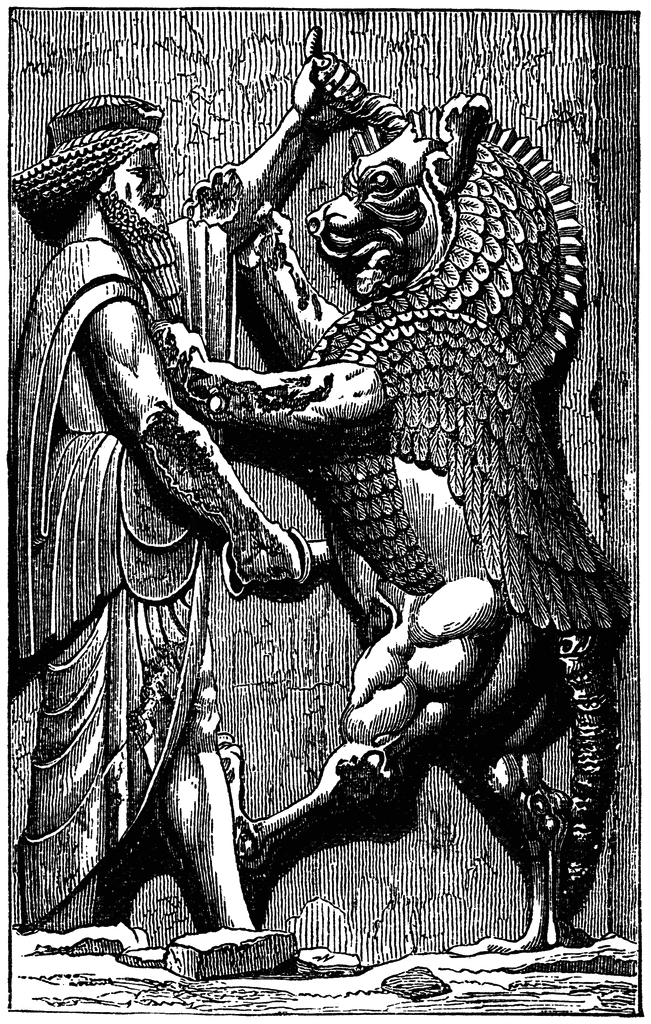
Why were Persian kings so obsessed with killing lions? Well they were't really killing lions. They were symbolically killing dry season...Which starts in Apr/May, Bull, peaks in Jul/Aug, Leo and ends in Oct/Nov, Scorpio/Eagle...I talked about this in my post "King killing Angra Mainyu".

As I already said, because of the different hydrology, in Egypt, the time between the lions, Jul/Aug, Leo, was not the time of drought, death, but the time of flood, life. Hence pharaoh was eventually depicted not fighting the lions, but being a lion...A Sphinx...

Which I why I think that Gebel el-Arak Knife and other depictions of kings fighting lions were made under the direct cultural influence from Mesopotamia, and predate the development of the local Egyptian "good lion-sun god =  lion-pharaoh cult"...

BTW, in Mesopotamia the sun god was also the giver of life...But it was the sun in Taurus, the time when water levels peak in Tigris and Euphrates.

Mesopotamian god Utu/Shamash was depicted as a golden bull (Sun in Taurus) with flowing lapis lazuli beard (flowing water)...

Cause flood arrives there in Taurus...

I talked about this in many of my posts. For instance "Butt chewing"...

I talked about Shamash (sun) and his link to annual Tigris and Euphrates flood and Ankh in my post "Sun god tablet" in which I present detailed analysis of this 860BC-850BC Middle Babylonian limestone tablet known as "Sun god tablet"...

But I am digressing again...

Now, if lions in Egypt had a different mating season from the Eurasian lions, how did Mesopotamian people who arrived and settled in Egypt know that the annual Nile flood starts in Jul/Aug, Leo...

Enter Sirius, the one star that every old civilisation seem to have known, worshiped, tracked and used as a calendar marker.

During the time when Mesopotamian and Egyptian   mythologies were formed, Sirius rose with the sun in Jul/Aug, in Leo, when Eurasian lions began their mating season...Hence in Mesopotamia we have a goddess of war and destruction associated with lions...

For those who will say "Ishtar was the morning star", yes she was, in Leo (Jul/Aug), when Sirius rose in the morning before the sun...Which is why Ishtar stands on a lion (with Shamash sun cross above the lion) and is known as "The Lioness of heaven"...

I know, I know, everyone believes that the star of Inanna/Ishtar was Venus. In my post "Inanna and Shukeletuda", through analysis of this famous poem, I explain in detail why I believe that this is in fact wrong...And why the star of Inanna/Ishtar is in fact Sirius...

In Egypt, Jul/Aug, Leo, is also the time of the "Eyes of Ra", murderous lioness war goddesses, like Sekhmet...I talked about this in my posts "Holy cow" and "Baboon"...

In Mesopotamia, the heliacal rising of Sirius marked the lowest water level in the Tigris and Euphrates rivers, the beginning of drought...It also marked the arrival of Nergal, the lion-god, the sun god of death...

In Egypt, the heliacal rising of Sirius marked highest water level in the Nile river, the beginning of the annual flood...It also marked the arrival of Atum/Ra, the lion-god, the sun god of life...

BTW...When our mythologies were made out of animal calendar markers, Sirius, the Dog Star rose with the sun in Jul/Aug, when mating season of the old dog breeds began...


I talked about the dog star in Egypt in my post "Dog days"...

I talked about the dog star in Mesopotamia in my post "Tishtrya"...

I talked about the dog star in India in my post "The bitch of gods"...

Why is this important? Cause on the Gebel el-Arak Knife, the king is standing not just between two lions (in Jul/Aug, Leo), he is also standing between two dogs (In Jul/Aug, Dog days)...When Dog Star Sirius (the eye of Ra???) rises with the sun (Ra)...

Sooooo...

Back to our original Hittite engraving...Well it makes the link between Sphinx and lion (Leo) obvious. In case this is still not obvious...

Hittite relief sculpted orthostat stone panel of Herald's Wall Basalt, Karkamıs, (Kargamıs), Carchemish (Karkemish), 900-700 B.C. Chimera. Anatolian Civilisations Museum, Ankara, Turkey.

I think that it was made under Egyptian influence, as in Egypt and not Mesopotamia lions (and lion-men, Sphixes) bring life (Trees of life)...

But the Spinx depicted on the engraving has wings, which Egyptian lion-man does't have, but Mesopotamian lion-man (Nergal) has...


So I wonder if this piece was made during the time when Mesopotamians ruled Egypt? Which is basically the exact time to which this Hattusa engraved ivory was dated to...And which is why we see Mesopotamian lion-man with attached Egyptian symbolism?

Anyway, that's it for today. Hope you enjoyed this. To read more about ancient animal and plant calendar markers, start here…then check the rest of the blog posts related to animal calendar markers I still didn't add to this page, and finally check my twitter threads I still didn't convert to blog post...I am 9 months behind now...

PS: It just occurred to me that the later Greek Female Sphinx as murderous keeper of secrets, could just be Sirius, "The Lioness of Heaven", "The Eye of Ra" under another name and guise...I might write another thread about this at some later stage...

Saturday, 7 March 2020

Holy cow


Hathor was a major goddess in ancient Egyptian religion who played a wide variety of roles: sky goddess, sun goddess, fertility goddess, love, sex, motherhood goddess.

I would argue that all these Hathor attributes obscure her original and main function: she was Egypt's mother goddess...

And in this article I would like to explain why...

Hathor was given the epithets "mistress of the sky" and was said to dwell in the sky with Ra and other sun deities. Egyptians thought of the sky as a body of water through which the sun god sailed, and they connected it with the waters from which, according to their creation myths, the sun emerged at the beginning of time. To understand what the Egyptian mean when they said sky, you need to look at this picture. It shows how ancient Hebrews saw the universe as a stone built structure with the stone flat Earth as the base and the stone Heavenly dome as the roof. I talked about this more in my post "Etemenanki"


And all around this dome world lied primordial waters which were also the source of all the water inside the dome, the water in oceans, seas, lakes and rivers.

River Nile for instance...The life giving river Nile...

This heavenly mother goddess was often represented as a cow.

Hathor and Mehet-Weret were both thought of as the cow who birthed the sun god and placed him between her horns. Like Nut, Hathor was said to give birth to the sun god each dawn.

She was one of many goddesses to take the role of the Eye of Ra, a feminine personification of the disk of the sun and an extension of Ra's own power. This circle, the symbol of the sun, Ra, is usually interpreted to mean sun disc, but I believe that it actually means sun circle, solar year, the manifestation of the Ra's power on earth...


That I am correct can be seen from the fact that this symbol, known as "sun hieroglyph" is used in the Ancient Egyptian language hieroglyphs as a determinative to refer to events of time, for example when referring to '"day xx" (of month yy'). For example, in the 24th century BC Palermo Stone, the sun hieroglyph is used to identify dates, or specific "day-events", ..."day of ....".

This is the only explanation why someone like Hathor or Mut, the mother goddesses of Egypt, would play the role of "the Eye of Ra"...Because it it not really an eye at all...

Ra was sometimes portrayed inside the disk. This is because he is born, lives and dies within the solar year, which starts and ends at Winter Solstice...Like every other sun god everywhere...

Hathor's seemingly contradictory roles as mother, wife, and daughter of Ra doesn't reflect the daily cycle of the sun, as this symbolic relationship is usually interpreted. It represents the yearly cycle of the sun, the solar year. In it the Mother goddess, Mother Earth goes through the phases of young spring earth, mature summer autumn earth and old winter earth which gives birth to the young spring earth...And these three phases of the Mother Earth are all linked to the sun which also goest through its year cycle...And because the sun and earth cycles are out of sync, as I explained this in detail in my post "Two crosses" we have this situation:

1. Old, Winter Earth (November, December, January)  gives birth to young sun on Midwinter, Winter Solstice
2. Young sun then gives birth to Young, Spring Earth (February, March, April)
3. Young Sun marries Young Earth at the beginning of Summer and they are married through summer and autumn (May, June, July, August, September, October)
4. The Sun dies during the Winter, only to be reborn on Winter solstice....

For Egyptians though, Mother Earth wasn't an abstract term and it certainly didn't encompass the whole planet Earth. For the Ancient Egyptians, Mother Earth was the River Nile and its banks and most importantly it delta...Why? Have a look at this image...The green blue water lily flower like shape is the Nile, the land of life...The yellow emptiness around it is the desert. The land of death...


And the only reason why life flourished along the Nile River was the River itself. And its yearly inundation...So when Egyptians talked about the Mother Earth, they actually meant the land along the river Nile which is annually flooded by the the river...

And I believe that it is this life giving flood that Ancient Egyptians symbolically represented with Hathor.

To understand what I am talking about, we need to talk Hathor and her association with the primeval divine cow Mehet-Weret, another "sky goddess" whose name means "Great Flood" and who was thought to bring the inundation of the Nile River which fertilised the land...Kind of obvious right there???

Mehet-Weret was depicted as a cow "carrying sun between her horns". This is Mehet-Weret from the tomb of Tutankhamun...


Mehet-Weret who was primarily known as being the “Celestial Cow”, had no independent cult of her own. It is presumed that Hathor absorbed most of her attributes as early as the Old Kingdom, as many references of the two as identical are found in Pyramid and Coffin Texts...

So why cow and why sun disc between the horns? Where have we heard the expression "celestial cow" before? Well in Slavic myth about Veles (The Dragon, Summer Drought) who steals Perun's (Thunder, Rain God) "celestial cows" (Rain Clouds). Perun kills Veles, gets his "celestial cows" back. Drought is over. Rains returns...

Celestial cows are rain clouds...Which can be seen from the fact that Hathor as Hesat, white cow, arrives carrying tray of food on her head and with her udders spilling milk on the earth

Now Mehet-Weret is goddess who causes the annual Nile River flood. The flooding of the Nile is the result of the yearly monsoon which lasts between Mar/Apr and Jul/Aug 


causing enormous precipitations on the Ethiopian Highlands...


This rain causes the nile water flow rate and water level to start rising from May/Jun


And interestingly, the exact period when the monsoon rains start, the rains which will become the great Nile flood, is marked by Taurus (bull) zodiac sign (21 April – 21 May)...


Why? Because this was the time when the wild Auroch cattle main calving season started. I talked about this in my post "Ram and bull".  And in this post I also asked whether this sign should be called Bull or Cow and Calf???

So Hathor, The Heavenly Cow, who is also Mehet-Weret, The Great Flood arrives during the time when Wild Cows start giving birth to their calves and start producing milk...Interestingly, Hathor was said to be a Wild Cow...Crazy, right?

And look at this:

In "The Pleiades: the celestial herd of ancient timekeepers" by Amelia Sparavigna we read that:

"In the ancient Egypt Seven Goddesses, represented by seven cows, composed the celestial herd that provides the nourishment to her worshippers. This herd is observed in the sky as a group of stars, the Pleiades, close to Aldebaran, the main star in the Taurus constellation...."

How cool is this? A herd of heavenly cows coming out of Taurus...

Hathor was also closely associated with Hesat, another ancient Egyptian goddess in the form of a cow. Hesat was usually shown as a pure white cow carrying a tray of food on her head as her udders flow with milk.

Well that is as good a depiction of the effect of the monsoon on Egypt as I could imagine...

Hesat was in turn connected with Mnevis, the living bull god worshipped at Heliopolis, and the mothers of Mnevis bulls were buried in a cemetery dedicated to Hesat.

Bull is a symbol of summer, summer which starts in Taurus and lasts until Leo. This is what Mnevis bulls represented. And now that we know that summer starts during the wild cattle calving period, it is no surprise that Hesat, and through her Hathor, were linked to the mothers of the holy Mnevis bulls...

This is also one of the reasons why Hathor carries the sun disc between her horns. Because Taurus (Bull in Latin), more correctly Vacca (Cow in Latin) marks the beginning of Summer. Taurus (Vacca) literally brings summer between his (her) horns...


That Hathor and Mehet-Weret were one and the same can best be seen from the fact that they were depicted in identical way: 

They are both depicted as lying cow, with golden face. She is wearing a menat about her neck. Menat was also another name for Hathor, and was used as rattle by Hathor priestesses during religious ceremonies...


The holy cow also has a flail rising from her back. A flail is an agricultural tool used for threshing, the process of separating grains from their husks. It is usually made from two or more large sticks attached by a short chain; one stick is held and swung, causing the other (the swipple) to strike a pile of grain, loosening the husks.


In ancient Egypt, the flail, with the shepherd crook, was a symbol associated with the pharaoh. It is hypothesised that these two symbols represent pharaoh's ability to provide food for his people...


She sits on a rectangular dais representing the heavenly floodwaters. Between her horns is the sun disc representative of the sun-god Ra.

Mehet-Weret


Hathor


So why was Hathor/Mehet-Weret depicted with a threshing tool rising from her back?

Harvest time in the Nile River Valley occurred between April and June, depending on the weather. The harvest preceded the wet summer season when the river floods from June through October.

Sooo, the beginning of the Monsoon, the arrival of the Heavenly Cow, falls in the middle of the main harvest period symbolised by the flail...

That Hathor is intrinsically linked to the part of the solar year marked by Taurus, can be seen from her two sacred plants: papyrus and sycamore.

Papyrus


The Ritual of Plucking Papyrus for Hathor appears to be an invocation, offering and pacification ritual. The ritual has extremely early origins and may have become a ritualised form of the simple act of picking flowers as votive offerings. Unlike many of Hathor’s festivals and rituals, the Ritual of Plucking Papyrus for Hathor was not centred around a temple. The gifting of plants and flowers were common offering to Hathor, and papyrus plants in particular symbolised life, joy and renewal and when shaken a papyrus plant produces a soft rattling sound. This is the depiction of the ritual:


The shaken papyrus plant may have been an original inspiration for the sistrum, or the sistrum was used to mimic the sound of the papyrus plant. Interestingly, the name of the papyrus plucking ritual, comes from the root "sšš" which means "rattling". Systrums were used to pacify the goddess.

This link was pretty explicitly depicted on this relief chalice rim fragment with a wedjat frieze and below that a Hathor sistrum head emerging from papyrus plants, ca. 1070–712 B.C. Currently in the Met Museus...


And on this wall painting showing a sistrum with papyrus flowers growing out of it, from the KV1 tomb of the Twentieth Dynasty pharaoh Ramesses VII...


This is an image from the South Wall of the Vestibule of the Small Temple at Abu Simbel. It shaws Hathor "The Great Wild Cow" emerging from the papyrus and something that looks like a flowing water???


So why was papyrus so important? Have a look at this: Monthly variations in mean height (cm), density, number of sprouts/m2 and number of flowering cilms/m2 of Cyperus papyrus for both natural and managed stands. From "Ecology and biomass production of Cyperus papyrus L. on the Nile bank at Damietta, Egypt" by Mamdouh S. Serag

It seems that if you wanted to go plucking papyrus flowers, the best time to do it was during Taurus (April-May), right at the time of the beginning of the monsoon which creates the inundation, the great flood, Mehet-Weret, Hathor...

Sycamore


The ancient Egyptian Tree of Life was the Ficus Sycomoros, a Sycamore fig.

Egyptians considered the fig a delicacy. The fruit gained popularity in ancient Egypt as it grew all over the countryside. Its abundance made it a staple food in ancient Egypt along with foods such as garlic, olives and bread.

The tree and its fruit was particularly sacred within the Cult of Hathor. Tomb paintings often show Hathor either standing on a sycamore tree full of fruit, or actually being the tree, the tree trunk where her legs should be and all the fruit bearing branches actually grow out of her. And she is always depicted holding a tray of bread and pouring water from a jug...


In "The Sacred Tree or the tree in religion and myth" published by J. H. Philpot in 1897 we read that:

"Amongst the ancient Egyptians, whose “exuberant piety” required, according to M. Maspero, “an actual rabble of gods” to satisfy it, trees were enthusiastically worshipped, side by side with other objects, as the homes of various divinities. The splendid green sycamores, which flourish here and there as though by miracle on the edge of the cultivated land, their rootlets bathed by the leakage of the Nile, were accounted divine and earnestly worshipped by Egyptians of every rank, in the belief that they were animated by spirits, who on occasion could emerge from them. They were habitually honoured with fruit offerings, and the charitable found an outlet for their benevolence in daily replenishing the water-jars placed beneath them for the use of the passer-by, who in his turn would express his gratitude for the boon by reciting a prayer to the deity of the tree. The most famous of these sycamores—the sycamore of the South—was regarded as the living body of Hāthor upon earth; and the tree at Metairieh, commonly called the Tree of the Virgin, is probably the successor of a sacred tree of Heliopolis, in which a goddess, perhaps Hāthor, was worshipped. The district around Memphis was known as the Land of the Sycamore, and contained several trees generally believed to be inhabited by detached doubles of Nu̔ît and Hāthor."

Now why was sycamore fig the Egyptian tree of life and why was it sacred to Hathor? 

Sycamore could grow some distance from the Nile, at the edge of the desert, but only in places where its roots could tap into underground water sources. And considering that in Egypt water = life, a tree that can find water in a desert was definitely going to be linked to Hathor, the goddess of the "Heavenly and Earthly" waters...

The tree that produces huge amount of fruit was definitely going to be linked to Hathor, the goddess of fertility. 

But here is the main reason why Sycamore was Hathor's sacred tree, or why Hathor was the lady of the Sycamore:

In the "Plant Inventory, Issues 41-50, By United States. Agricultural Research Service. Plant Science Research Division, page 22" published in 1914 we read that:

"Sycamore has three main harvests: May, June, August/September"

Egyptian farmers divided their year into three seasons, based on the cycles of the Nile River:

Akhet - the inundation (June-September): The Flooding Season.
No farming was done at this time, as all the fields were flooded. Instead, many farmers worked for the pharaoh (king), building pyramids or temples. Some of the time was spent mending their tools and looking after animals.

Peret (October-February): The Growing Season.
In October the floodwaters receded, leaving behind a layer of rich, black soil. This fertile soil was then ploughed and seeded.

Shemu (March-May): The Harvesting Season.
The fully grown crops had to be cut down (harvested) and removed before the Nile flooded again. It was also the time to repair the canals ready for the next flood.

So basically, the sacred tree of Hathor, was full of orange-red ripe fruit from May, beginning of monsoon which was the source of the great flood, until September, the end of the great flood...

I mean, this tree was The Great Flood tree, Hathor's tree, true and true...Hathor as a sycamore tree full of fruit bringing water and bread... 

But Hathor was not all sweetness and spice...

As the Eye of Ra, she protected the sun god from his enemies and was often represented as a uraeus, or rearing cobra, or as a lioness.

As I explained in many posts already, like "The enemy of the sun", the snake represents the Sun's heat.


The sun's heat is the strongest at the end of summer beginning of autumn, in Leo...This is the time of the destructive sun, and the core of the Egyptian legend about Apep, the serpent of chaos. I wrote about this in my post "Apep".

If there was one force Egyptians were scared shitless of, it was the sun. Because they remember the paradise that was green Sahara, before the sun dried it and turned it into a lifeless desert. Which is why they worshipped it, built temples to it, sacrificed to it, and called it Ra...And prayed to it to not do the same thing to the last place where life still flourished in the desert: the Nile valley...

Well, it wasn't actually Ra that kept the Egyptians alive in the desert. It was his "consort", Hathor. Every year, during the hottest part of the year, May - September, the part of the year completely dominated by the destructive sun, Ra, during the time without a drop of rain, Hathor, the Mother Goddess, the Heavenly Cow, would miraculously fill Nile with water of life...


Ra, like every "benevolent" ruler let Hathor take care of people and "rejoiced"...But once Ra got pissed off with people. And when Ra gets pissed off with people, he, like any other "benevolent" ruler, turn into a homicidal vengeful maniac...So he used his "Eye of Ra", Hathor, to punish people. He turned life giving Cow goddess Hathor into murderous Lioness goddess Sekhmet and unleashed her on the world...


Who was Sekhmet?

Sekhmet was the Egyptian goddess of the sun, war, destruction, plagues... She was one of the oldest deities and one of the most powerful. As a sun goddess, she was connected with the scorching, searing and burning heat of the sun. In this aspect, she was known by another name, Nesert that literally means flame. Which is why she was depicted as a woman with the head of a lioness wearing a sun disc circled by a cobra on her head. The hottest part of the solar year in the northern hemispher is the end of summer beginning of autumn, end of July beginning of August, the period marked by the zodiac sign of Leo, Lion.

As we have seen, Ra used her as his weapon against humanity. The Book of the Heavenly Cow (2040-1782 BCE) tells us that Sekhmet "killed everyone she found, toppled their cities, crushed their homes and tore up their fields and gardens"...It is her "lust for blood" that gave Sekhmet her title "The Scarlet Lady" and which is why she was often portrayed wearing a red dress...

What does this story about Sekhmet punishing people actually mean?

Hathor, the Heavenly Cow, represents the moment when the monsoon kickstarts the Nile flood at the beginning of summer, in Taurus.
Sekhmet, the Heavenly Lioness, represents the moment when the full blown flood reaches the Nile delta, in Leo.

Normal flood is life giving. It irrigates the land along the Nile and fertilises it at the same time by dumping loads of silt on it...
Flood which is smaller than normal, means the fields will be less fertile, the grain yields will be lower and the people will suffer from hunger...
But the flood which is a lot bigger than normal, will roll down the Nile valley during Leo like an crazed Lioness "killing everyone, toppling the cities, crushing homes and tearing up the fields and gardens"...

According to the Book of the Heavenly Cow, at first Ra was pleased with the destruction caused by the Eye of Ra. But then he gets persuaded by other gods, who are afraid that if everyone dies, they will not get their sacrifices, that people suffered enough. So, Ra orders that beer be dyed red (!!!) and poured out over the land. The murderous Lioness Sekhmet drinks the beer, mistaking it for blood, and in her inebriated state reverts to being the benign and beautiful Cow Hathor. Festivals during the inundation incorporated drink, music, and dance as a way to appease Hathor and stop her from turning int Sekhmet.

Now interestingly, the water of the annual inundation of the Nile are usually coloured reddish brownish by sediment. And sometimes it can turn really really red and can turn Nile into a river of blood...Like this...


If this extremely red flood was also extremely high destructive flood, this could create as story of blood thirsty Eye of Ra out to destroy the mankind...

Knowing that Sekhmet was the protector of the sun god Ra, it is not surprising that she was closely associated with the pharaoh and his kingship and was believed to protect the pharaoh during war as the warrior goddess.

As we saw, Sekhmet was Hathor's alter ego. Which makes it obvious why she was depicted holding the ankh – the symbol of life (Sekhmet is Hathor in Leo, the time of maximum flood) or papyrus sceptre (Hathor comes forth during the papyrus flowering season, in Taurus).

Sekhmet was associated with another feline and leonine goddess: Bastet.

Bastet was originally a fierce lioness warrior goddess of the sun worshiped throughout most of ancient Egyptian history (just like Sekhmet), but later she was changed into the cat goddess. She was also seen as defender of the king, and consequently of the sun god, Ra and was associated with the Eye of Ra (just like Sekhmet). She also had horrifying sounding epithets like "The Female Devourer" and "The Tearer" due to her destructive second nature. She was also known as "The Lady Of The Flame" (just like Sekhmet)...

Interestingly it is Bastet who was depicted as fighting the evil snake named Apep, an enemy of Ra. Remember my post about Apep and the Lion killing serpent of summer?


Bastet was also the Egyptian goddess of home, fire, sunrise, music, dance, pleasure as well as sexuality, fertility, family, pregnant women and children (just like Hathor). She was sometimes depicted holding a ceremonial sistrum in one hand and menat embellished with a lioness head (both holy instruments of Hathor).

She was seen as The Sacred Cat and Egyptians placed a high regard for cats because of her. Any crimes made against cats were considered very severe and very unlucky.

She is one of the most well-loved goddesses of Egypt; especially Lower Egypt.  Many temples and statues were built to her honor by her cult following in the cities of Memphis, Heliopolis, and Herakliopolis. However, of all the cities, none could surpass the reverence she received in the city of Busbastis near the Delta, which was named after her. Every year, in the months of April and May (Taurus, the time when Hathor brings forth the monsoon), the historian Herodotus noted that her yearly festivals drew some 700,000 people in huge ships singing songs and dancing as they head to the city. Prodigious amounts of wine were drunk in these festivals. Upon reaching Bubastis, great sacrifices were made.

Why? So that the Lioness turns into a Cat...And doesn't go rampaging and destroying everything during Leo...

But an extremely high flood is only one way in which life bringing Cow Hathor can turn into life taking Lioness...Extremely low flood, or no flood is another way...Which can happen if for every reason the monsoon which feeds the flood didn't come...Which can happen during catastrophic weather events...

Believe or not we have another story, the myth of the Distant Goddess, from the Late and Ptolemaic periods which talks exactly about one such event. In it we read that "

"...the Eye of Ra, Hathor, rebels against Ra's control and rampages freely in a foreign land: Libya west of Egypt or Nubia (!!!) to the south. Weakened by the loss of his Eye, Ra sends another god, such as Thoth, to bring her back to him. Once pacified, the goddess returns to become the consort of the sun god..."

What does this mean? Have a look at this map:


The Nile enters Egypt from Nubia. The source of the Nile for the Egyptians was "somewhere in Nubia, or beyond Nubia". So in the above story, it was most likely originally Nubia, where Hathor "rampaged" while refusing "to release her milk"...Basically no flood came from Nubia and that happened because no monsoon came to the Ethiopian highlands...And if this happened for several years in a row, like 100 years in a row, that would have disastrous consequences for the Egyptian civilisation. Like it could lead to the collapse of the Old Kingdom... We now know that one such catastrophic weather event coincided with the collapse of the Old Kingdom. Scientists don't call it a rampaging rebellious cow. They call it "4.2 kiloyear event". Here is the map of the effect of this event which lasted for 100 yeas around 2200 BC. In Egypt it caused aridification, which was the consequence of the failing monsoon...


Interestingly, there is actually another goddess, another Eye of Ra, who also rebelled against Ra, left Egypt and rampaged in Nubia...This goddess is also another lioness goddess: Tefnut.


And believe or not, Tefnut is a deity of moisture, moist air, dew and rain in Ancient Egyptian religion. Her name literally translates as "That Water"...She is the twin sister and consort of the air god Shu...What do you get when you marry rain and air? Monsoon which feeds the Nile flood...Why is she a Lioness goddess? Because the flood, the result of her marriage with Shu, peaks during and after the period of solar year marked with Leo...

In the earlier Pyramid Texts she is said to produce pure waters from her vagina...Do we need any more clues to decipher the true identity of Tefnut?

During the 18th and 19th Dynasties, particularly during the Amarna period, Tefnut was depicted in human form wearing a low flat headdress, topped with sprouting plants (because she is the monsoon, the bringer of life). Akhenaten's mother, Tiye was depicted wearing a similar headdress, and identifying with Hathor-Tefnut.

Tefnut, who was the daughter of Ra, escaped to Nubia in a rage, jealous of her grandchildren's higher worship. There, Tefnut, the angry lioness, became the terror of the neighbourhood, attacking both men and animals. She blew smoke and fire from her nostrils and eyes and fed on the flesh and blood of her victims.

Ra missed his daughter and so he sent Shu and Thoth as his emissaries to ask her to return home.

Thoth, disguised as baboon (!!!) found her first and tried to persuade her that Egypt was a much civilised place than the wild of the Nubian desert. In Egypt, he said , her worshipers would serve up to her on altars the game Tefnut was now having to run down and kill for herself. He described the festivals and joy that characterised Egypt and generally made the case for a superior life there. Then her husband, twin brother Shu came and it was him who finally persuaded Tefnut to go (back) to Egypt.

Tefnut's return trip became a triumphant progress through the Egyptian villages. The goddess was accompanied by Nubian musicians, clowns, and baboons; the people turned out to rejoice in her presence, and wild drunkenness accompanied the festivals in her honor. As Tefnut progressed through the villages, Tefnut lost her ferocity and became much kinder and gentler.

I mean this is pretty much self explanatory :)

Forget about Thoth and his yapping about civilisation and such crap. That did nothing. It was the baboon costume :) that did it...Here is Thoth as a baboon, 1800 BC...


This is not just any baboon. Hamadryas baboon. From Ethiopian highlands. The same place where monsoon (Tefnut-moisture + Shu-wind) causes enormous precipitations between May and August. Which is the source of the great flood, which is the source of life. Guess what? Hamdryas baboon mating habits are really interesting. Hamadryas baboons don't have a breeding mating season. Instead, they breed year-round with peak a period, occurring in May-July...At the exact time when the monsoon arrives...So you could say that Hamadryas baboon "brings forth Tefnut (moisture, rain)". Well actually it's her "husband" Shu (wind) which brings her, but the baboon "persuades" her...And so the "moisture from the wind", otherwise known as monsoon, falls on the Ethiopian highlands, and from there it enters Nubia and from there it becomes "Tefnut's return trip became a triumphant progress through the Egyptian villages. During which goddess was accompanied by Nubian musicians, clowns, and baboons (!!!)"...

I think this is totally mind blowing. For so many reasons. When I first learned about the Egyptian civilisation, I immediately become puzzled by all the "primitive" animal gods...Why would someone like Egyptians consider baboons, cows, lions, hawks...sacred. Well now I know. Now I also know that these are not gods. They are deified calendar markers...These animals are only sacred because they mark significant moments on the Solar year which are related to the behaviour of the only two real Egyptian deities: Father Sun (Sky) and Mother Earth (Nile)...So how did we end up with all this crazy gods and goddesses? Well possibly because time passed, people died, cultures mixed, the original meaning of the symbols made by the villagers were forgotten by people who lived in cities and have lost contact with nature...And also don't forget the priests. The priests who lived quite well on peddling more and more amazing stories about gods and goddess who need to be appeased by more and more sacrifices, bigger and bigger temples and more and more donations to the priests...

The main question to me though is: has anyone before me seen this??? And if not, why not? And if not, what is the effect this article is going to have on the Egyptology? None probably...