How to depict "Mother Earth", more specifically "Mother of Grain"? Like a voluptuous woman (Mother) whose vulva (where new life come from) is horizontal (like Earth, Field) with horizontal lines (furrows) with plant (Grain) growing out of them...
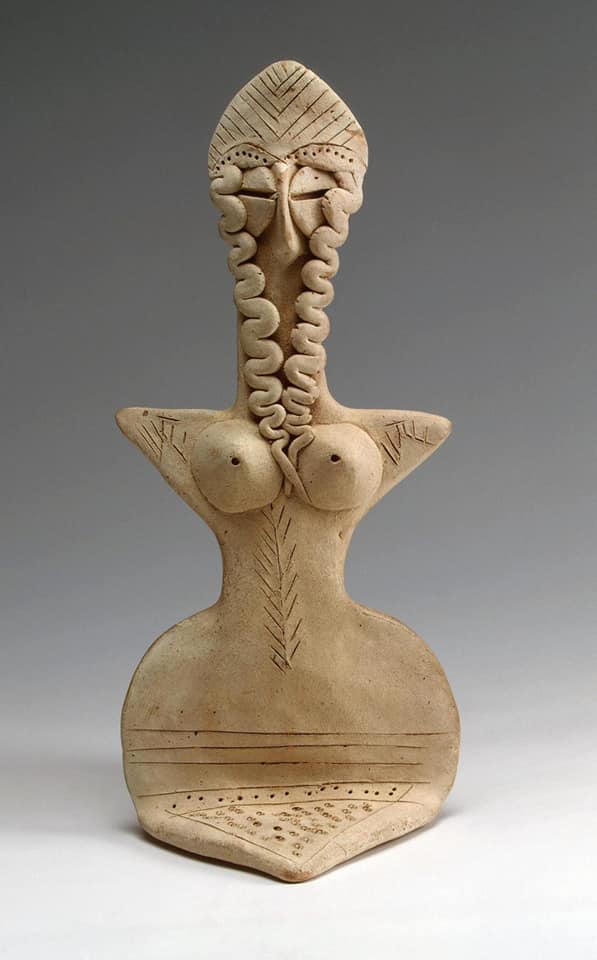
This statuette is from Алтын-Депе (Altyn Tepe), Turkmen "Golden Hill", a Bronze Age (BMAC) archaeological site in Turkmenistan, inhabited from c. 3200 to 2000 BC...
How do we know that this is grain?
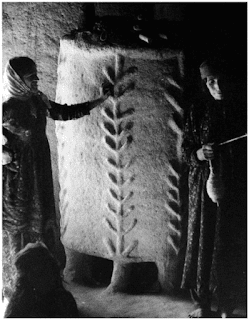
That this is indeed symbol for grain, can be seen from the fact that the same symbol was put on grain granaries in Kurdistan until 20th century. Aliabad women standing beside a grain bin, Iranian Kurdistan...From "Home is where we keep our food: The origins of agriculture and Late Pre-Pottery Neolithic food storage". Very important image, as it confirms that this design pattern, found on pottery and figurines since the Earliest Neolithic all over Eurasia, means "grain"...
This is an article about the same kind of "Mother of Grain" figurines from Neolithic Balkans...MOTHER Earth...The symbolic link between women and earth depicted on this Early Vinča Culture terracotta figurine from Jela, Iron Gate region of the Danube, Serbia, c. 5200 BC, H. 5.3 cm, which has a branching plant (grain) growing out of the womb...

Here is the same idea in Neolithic Levant. What is the best way to symbolically depict "Mother Earth"?
Well, place mountains, plants and animals between wide open eyes and vulva...Simple...
Decorated bone depicting slightly bewildered "Mother Earth", 6th - 5th millennium BC, Hagoshrim, Southern Levant.

You can read about it in my article "Eyes"...
Similar thing from Neolithic Iraq. Figurine of a nude woman form Yarim Tepe, 5000-4000 BC. Iraq Museum...

But this gets better and better...Here are two more similar figurines from the same area.

I love the hairstyle...The two wavy "plaits" (?)...Strangely like the symbol for flowing water...Rivers?
There are actually two rivers, flowing parallel to each other in Central Asia...Amu Darya and Syr Darya...
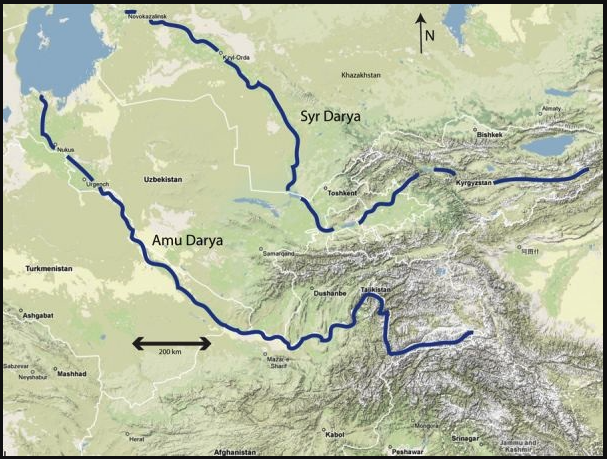
They flow from tall Hindu Kush and Pamir mountains...And are fed primarily by the snowmelt...And make the area around them and especially between them fertile...

I talked about this in my article about the "Tulip goddess"...
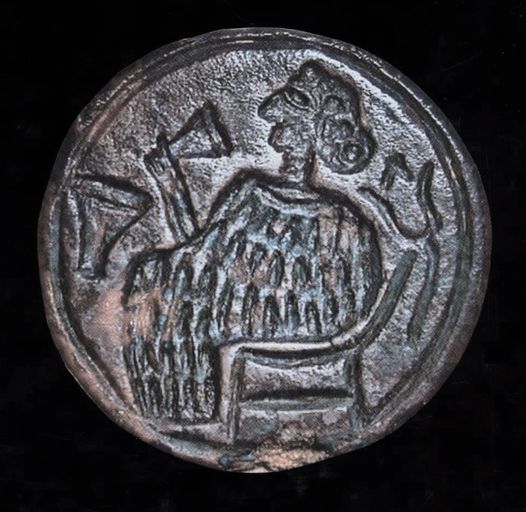
Seated female figure (goddess? ) drinking out of a goblet - next to a tulip, bronze seal, late 3rd - early 2nd millennium BC, (BMAC), Afghanistan. Currently in a Private collection Linenthal, San Francisco.
Here are the original figurine's front and back

Is this a mountain depicted on the Goddess's back? So is the Mother Goddess also "The Mountain Goddess"? Are her two plaits the two great Central Asian rivers? With the fertile area between them?

This would make this BMAC figurine the equivalent of this Mesopotamian figurine, also depicting two rivers coming down from the mountains and the fertile land between them...
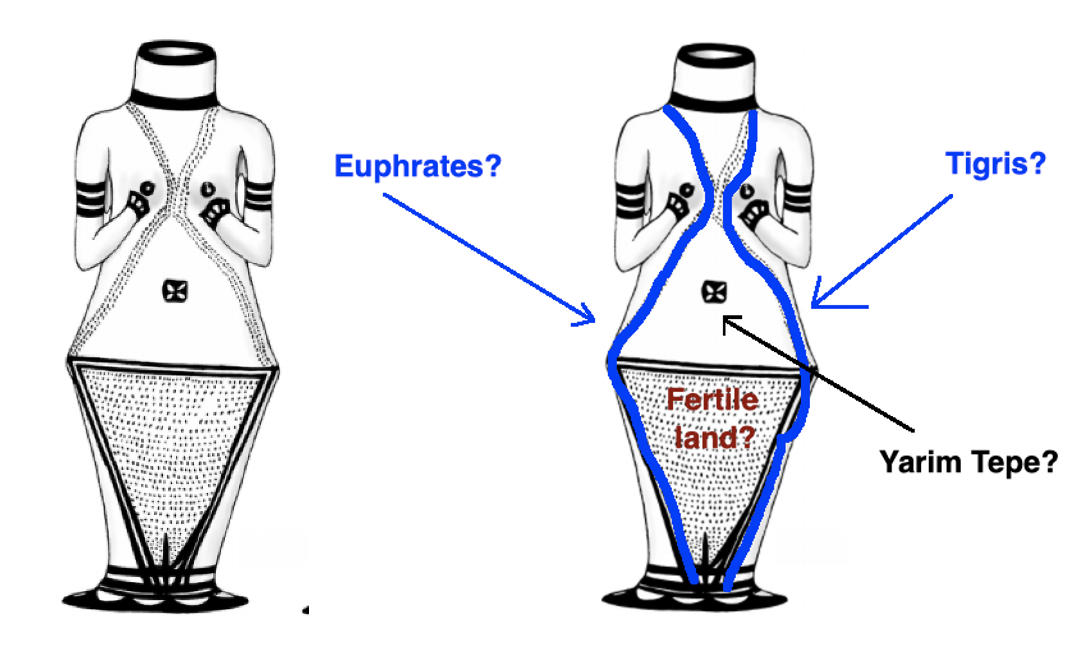
Same Mother Earth Goddess, just different mountains, rivers and fertile land...


