Showing posts with label Bull fights. Show all posts

Sunday, 5 December 2021

Solar bull

Sumerian lapis lazuli amulet of a bull, early dynastic iii period, 2650-2350 b.c. the reclining bull with bearded human head, curved horns...Sold by Christies...
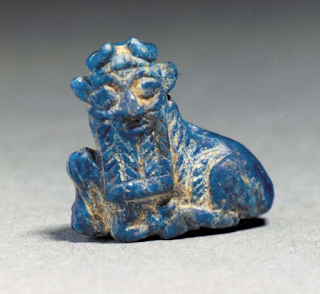
Who's this guy?

Well, Utu / Shamash, the sun god...

Every spring, the sun god Utu / Shamash climbs the holy mountain (Abzu) to free Enki / Ea, the god of sweet water from his icy prison...I talked about this in my post "Shamash young and old"...
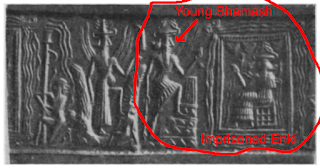
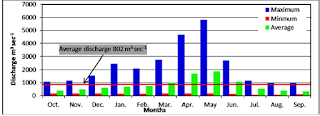
This freeing of Enki is an euphemism for snowmelt, in the mountains north and East of Mesopotamia, which are the source of Tigris and Euphrates. Snowmelt contributes more than 70% to the annual water flow of these great rivers. And this water flow peaks at the beginning of summer, Apr/May in Taurus...
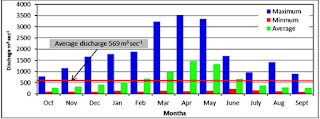
Tigris annual flow chart:


Euphrates annual flow chart:

Which is why Shamash is depicted as a golden bull with long flowing "lapis lazuli" (water) beard...
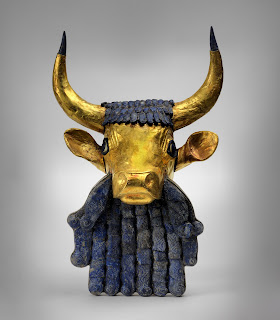

Or as a lapis bull with human head...

"Enki placed in charge of the whole of heaven and earth the hero, the youth Utu (Shamash), the bull standing triumphantly, audaciously, majestically...the great herald in the east of holy An...with a lapis-lazuli beard, rising from the horizon..." 
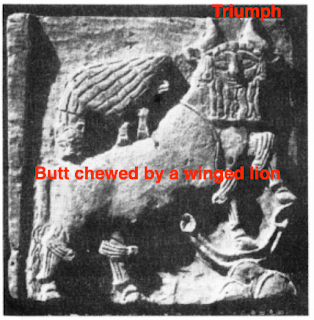
Do you want to know why there is a winged lion chewing on the butt of Utu / Shamash? I talked about this in my post "Butt chewing"...

Anyway, we can see that in Mesopotamia bull with a human face and beard was a solar symbol...

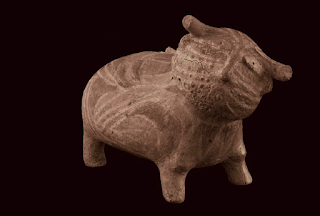
What is amazing is that few thousand years earlier in the Balkans we find this guy...

Oh hello there, gorgeous 🙂 A Neolithic bull with human face and beard from Bulgaria...Karanovo Culture, 5th mill. BC...
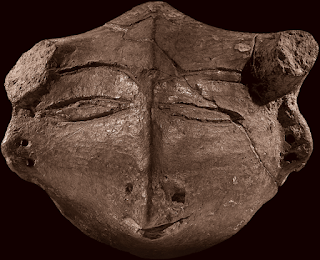
Another neolithic depiction of a bull man from Bulgaria...Tell Rousse, 5th mill. BC...


This version of the bull man seem to have been popular across Neolithic Central Europe...

This 7,000-year-old ceramic horned face pot shard, was discovered in Poland. The object was found during the excavation of the Early Neolithic site in Biskupice, southeast of Krakow... 


Now we don't know if this bull man was also a solar bull, like the Mesopotamian one...

But we know that until recently bull was seen as a solar animal in the Balkans...

In Serbia and Bulgaria there are legends about monstrous bulls who lived in lakes and to whom local people sacrificed young girls...Anyone reminded of any famous legends? 

And around one lake in Serbia, there are two versions of the same legend, one talking about a bull living in the lake, and one talking about a dragon living the lake...I talked about this in my post "Water bull"...
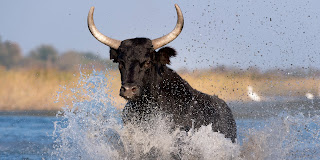
Sooo???

Now we know that dragon of a fire breathing variety, is a symbol of the summer, and particularly the end of summer, Jul/Aug, the hottest and (usually) driest part of the year, the time of droughts...Dragon was used as symbol for dry hot part of the year in Eurasia since Neolithic until today...I talked about this in many of my posts, for instance "Dragon who stole rain", "Seven headed dragon", "Winged superhuman hero", "Is that you Gilgamesh"...
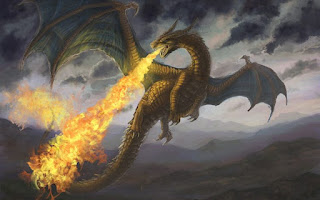
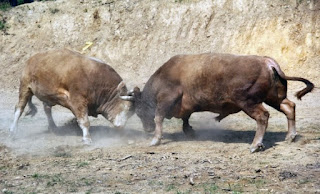
Summer which starts in Taurus, Bull...Hence the equating of bull and dragon in this Serbian legend...Which would make bull a solar animal too...

In my post Re'em, about the origin of a unicorn, I mention this Serbian riddle:

Q: "I slaughtered a bull behind one hill and the blood spurted from behind another" 

A: Sun, setting in the west and rising in the east

Another example of the deep link between bull and sun in Serbian culture...

I talked about the killing of the bull of summer, which was once performed in the Balkans as a sacrifice to Perun, the thunder god, on the fist day of autumn, in my post "Alidjun"...On the first Sunday (!) in August, local people also organise bull fights...Interestingly, this is also when in the past Auroch bulls used to start their mating fights...I talked about this in my post "Ram and Bull"...


How old are these Balkan legends and rituals? 

Monday, 13 September 2021

Thunder poppies

In England, poppies were sometimes called “thunder flowers” because picking them was believed to trigger lightning... 

Beginnen donderwolken op te doemen, stook dan vlug uw donderbloemen (When clouds with thunder approach, burn then your poppies fast) - Dutch saying

In Flanders the local name for common (field, corn) poppies is "donderblomme", literally "thunder flower". In Wallonia this becomes "tonnoire", after "tonnerre" (thunder)...

In the past, people used to gather red poppy flowers and make bouquets from them. These bouquets were then brought to the church where they were blessed by a priest...

When a thunderstorm approached, people would burn the poppies on the altar of the church to ward of the damaging thunderstorm...

Why?

Poppies start flowering May. Which is the beginning of the thunderstorm season in continental Europe...And flower until the thunderstorm season is over. These pictures  show thunderstorm frequency in Europe per month...

What is interesting is that the beginning of May, the beginning of summer, is when wild Eurasian cattle, Aurochs, used to start calving. It is also interesting that the beginning of Aug, the end of summer, is when wild Eurasian cattle, Aurochs, used to start their mating...

I talked about this in my post "Ram and bull"...

Which is why bull was the symbol of summer...


I talked about this in my post "Symbols of the seasons"...

You can read more about the origin of zodiac symbols and their link to the annual lifecycles of the animals used as symbols in my posts about zodiac signs which are linked to this page about "Zodiac"...

Anyway, if you look at the above thunderstorm distribution map, you can see that thunderstorm season in continental Europe starts in May and ends in Aug...

And interestingly, it is in August that Serbs celebrated the victory of Perun (Slavic thunder god) over Veles (The great snake, Dragon, Symbol of drought)...They battled all summer (summer being the hottest part of the year and also the part of the year with most thunderstorms)...

And guess what Serbs did to celebrate that victory which falls at the beginning of the mating season of Aurochs, which was characterized by wild bull fights for females? Serbs organized (and still do) bull fights


I talked about this in my post "Alidjun"...

Oh and guess what else they do to celebrate the victory of the Thunder god, at the end of summer, which is symbolized by a bull? They kill and sacrifice a bull...


I talked about this in my post "Bull of Grom Div"...

This link between poppies (bulls) and thunder (gods) is not only a European thing...

Beginning of May falls in the middle of Taurus...Anatolian thunder god arriving on a bull and holding a trident as a symbol of thunder. Why? Because Taurus is the peak of the thunderstorm season in Anatolia...

I talked about this in my post about "Uluçinar stelae".

And sometimes the god standing on a bull is even carrying poppies...

I talked about this in my post "Poppy god"...

Thursday, 1 April 2021

Zodiac killer

Elamite seal. Iran. From "The Elamite Cylinder Seal Corpus, c. 3500–1000 BC" by Karen Jane Gardon.

Soooo What's this all about?

Top row:

Autumn (symbolised by a lion) follows summer (symbolised by a bull)...This is the moment in time that this seal marks. This is why we have a lion chasing bull and  the cross in the upper panel...I talked about the symbols of the seasons in this post...

So what about the bottom row with two bulls facing each other? 

Based on the horn shape and no hump, these are bulls of the Eurasian wild cattle, aurochs...

Beginning of August, the end of summer, beginning of autumn, is also when Eurasian wild cattle, aurochs used to mate...During this time auroch bulls fought (faced) each other for females...I talked about the reproductive cycle of aurochs in my post "Ram and bull"....

By the way, this is also the time when Eurasian lions main mating season started too...I talked about this in my post "Musth"...

This is the hottest part of the year in the northern hemisphere, which is why this is the day of Helios...In the Balkans this is the day of St Elijah the Thunderer, the Thundering Sun...

Why Thundering Sun? I talked about the "weird" link between the sun and thunder god in my post about Croesus and Apollo, The thundering Sun...

The reason why we have Thundering Sun God is easy to see from this chart of thunderstorm frequency in Europe...

Interestingly, in Bosnia, on the day of Thundering Sun, the day that marks the end of summer beginning of autumn, the day when aurochs used to fight, people sacrifice bulls and hold bull fights...I talk about this in my post "Alidjun"

So it seems that both the upper and the lower panel of this seal point at the same moment in the Solar year...The moment when the lion (autumn) catches up with the bull (summer) and when bulls fight...

What does this have to do with Europe? Well the key for deciphering images like this one is found in, of all places, Balkan Slavic folklore, remnants of mythologies and religions of ancient people which mixed in the Balkans, and which are preserved to this day by Slavic peasants.

It was the parallels between the bull cult found in Serbia and the bull cult found in Ireland that made me think: "we are dealing with something ancient here"... and led me to deciphering of the first animal calendar marker: bull...

After that I started looking at other well known animal calendar markers, collectively known as Zodiac...And what I found was that they all mark mating or birthing seasons of animals in question...In Europe...I talked about this in the articles linked to this page about "Zodiac"....

After this I started looking at Ancient Eurasian and North African mythologies which were full of animal images...All the ones I touched so far, turn out to also be calendar markers derived from the behavior of animals in question...

It seems that mythologies were built around ancient agricultural calendar, which probably has the common root in the fertile crescent, 15,000-10,000 BC...And which used animal calendar markers to mark different parts of the solar year, important for early farmers...

This same symbolic system was then used throughout the ancient world as the agriculture spread...The mythologies developed around it are full of "monsters made up of different animal parts", "gods with animal heads or bodies", "masters of animals" and "mysterious animal images"...

Which no one understands any more...Well...Maybe we can now understand these crazy bits of our common heritage a bit better...

There is just one problem...

The problem is that "there is nothing mysterious or holy or enlightening or mind blowing" at the bottom of the rabbit hole...

There is no all powerful wizard behind the curtain holding a magic wand looking up at the stars and constellations...Just a sweaty peasant holding a plough and looking up at the sky wandering if the Sky God will be cruel or merciful this year...

Not something you can make a career of "speculating what mystery lies behind"...

I was already told by some people that "when they see that my article is about calendar they just skip it"...

Because it's boring...

The best comment I got so far was that I was a "Zodiac killer"...Cause I killed the mystery that zodiac held for so many people and turned it into an agricultural calendar...

To read more about ancient animal and plant calendar markers, start here…then check the rest of the blog posts related to animal calendar markers I still didn't add to this page, and finally check my twitter threads I still didn't convert to blog post...I am 9 months behind now...

Wednesday, 27 August 2014

Bó - Vo

Táin Bó Cúailnge, "the driving-off of cows of Cooley", commonly known as The Cattle Raid of Cooley or The Táin, is a legendary tale from early Irish literature, often considered an epic, although it is written primarily in prose rather than verse. It tells of a war against Ulster by the Connacht queen Medb and her husband Ailill, who intend to steal the stud bull Donn Cuailnge, opposed only by the teenage Ulster hero Cú Chulainn.

Traditionally set in the 1st century AD in an essentially pre-Christian heroic age, the Táin is the central text of a group of tales known as the Ulster Cycle. It survives in three written versions or "recensions" in manuscripts of the 12th and later centuries, the first a compilation largely written in Old Irish, the second a more consistent work in Middle Irish, and the third an Early Modern Irish version.

The story begins with Ailill and Medb comparing their respective wealths and find that the only thing that distinguishes them is Ailill's possession of the phenomenally fertile bull Finnbhennach, who had been born into Medb's herd but scorned being owned by a woman so decided to transfer himself to Ailill's. Medb determines to get the equally potent Donn Cuailnge from Cooley to equal her wealth with her husband. She successfully negotiates with the bull's owner, Dáire mac Fiachna, to rent the animal for a year until her messengers, drunk, reveal that they would have taken the bull by force even if they had not been allowed to borrow it. The deal breaks down, and Medb raises an army, including Ulster exiles led by Fergus mac Róich and other allies, and sets out to capture Donn Cuailnge.

The men of Ulster are disabled by an apparent illness and can not fight. The only person fit to defend Ulster is seventeen-year-old Cú Chulainn, and he lets the army take Ulster by surprise because he's off on a tryst when he should be watching the border. Cú Chulainn, assisted by his charioteer Láeg, wages a guerrilla campaign against the advancing army, then halts it by invoking the right of single combat at fords, defeating champion after champion in a stand-off lasting months. However, he is unable to prevent Medb from capturing the bull.

After a particularly arduous combat he is visited by Lugh, who reveals himself to be Cú Chulainn's father. Lugh puts Cú Chulainn to sleep for three days while he works his healing arts on him. While Cú Chulainn sleeps the youth corps of Ulster come to his aid but are all slaughtered. When Cú Chulainn wakes he undergoes a spectacular ríastrad or "distortion", in which his body twists in its skin and he becomes an unrecognisable monster who knows neither friend nor foe. He makes a bloody assault on the Connacht camp and avenges the youth corps sixfold.

After this extraordinary incident, the sequence of single combats resumes, although on several occasions Medb breaks the agreement by sending several men against him at once. When Fergus, his foster-father, is sent to fight him, Cú Chulainn agrees to yield to him on the condition that Fergus yields the next time they meet. Finally there is a physically and emotionally gruelling three-day duel between the hero and his foster-brother and best friend, Ferdiad. Cú Chulainn wins, killing Ferdiad.

Eventually the debilitated Ulstermen start to rouse, one by one at first, then en masse, and the final battle begins. To begin with Cú Chulainn sits it out, recovering from his wounds. Finally, Cú Chulainn enters the fray and confronts Fergus, who makes good on his promise and yields to him, pulling his forces off the field. Connacht's other allies panic and Medb is forced to retreat. She does, however, manage to bring Donn Cuailnge back to Connacht, where the bull fights Finnbhennach, kills him, but is mortally wounded, and wanders around Ireland creating placenames before finally returning home to die of exhaustion.


Táin bó Cúalnge, in its chapter entitled "The battle of the bulls", tells a story about the battle of the bulls:
As regards Medb, it is related here : She suffered not the hosts to disperse forthwith, but she gathered the men of Erin and led them forth to Cruachan to behold the battle of the bulls and in what manner they would part from one another. For during the while the battle was being fought, the Brown Bull of Cualnge with fifty heifers in his company had been brought to Cruachan.
As regards the Brown Bull of Cualnge, it is now recounted in this place : When he saw the beautiful, strange land, he sent forth his three bellowing calls aloud. And Finnbennach Ai (' the Whitehorned of Ai ') heard him. Now no male beast durst send forth a low that was louder than a moo in compare with him within the four fords of all Ai, Ath Moga and Ath Coltna, Ath SHssen and Ath Bercha. And the Whitehorned lifted his head with fierce anger at the bellowing of the Brown of Cualnge,and he hastened to Cruachan to look for the Brown Bull of Cualnge.
It was then the men of Erin debated who would be fitted to witness the fight of the bulls. They all agreed that it should be Bricriu son of Carbad that were fitted for that office.For, a year before this tale of the Cualnge Cattle-raid, Bricriu had gone from the one province into the other to make a request of Fergus. And Fergus had retained him with him waiting for his treasures and goods. And a quarrel arose between him and Fergus at a game of chess." And he spake evil words to Fergus. Fergus smote him with his fist and with the chess-man that was in his hand, so that he drave the chessman into his head and broke a bone in his head. Whilst the men of Erin were on the foray of the Tain, all that time Bricriu was being cured at Cruachan. And the day they returned from the expedition was the day Bricriu rose. He came with the rest to witness the battle of the bulls. And this is why they selected Bricriu, for that Bricriu was no fairer to his friend than to his foe. " Come, ye men of Erin ! " cried Bricriu ; " permit me to judge the fight of the bulls, for it is I shall most truly recount their tale and their deeds afterwards." And he was brought before the men of Erin to a gap whence to view the bulls.
So they drove the Brown Bull the morning of the fight till he met the Whitehorned at Tarbga in the plain of Ai: orTarbguba (' Bull-groan '), or Tarbgleo (* Bull-fight '); Roi Dedond was the first name of that hill. Every one that had hved through the battle cared for naught else than to see the combat of the two bulls.
Each of the bulls sighted the other and there was a pawing and digging up of the ground in their frenzy there, and they tossed the earth over them. They threw up the earth over their withers and shoulders, and their eyes blazed red in their heads like firm balls of fire, "and their sides bent like mighty boars on a hill. Their cheeks and their nostrils swelled like smith's bellows in a forge. And each of them gave a resounding, deadly blow to the other. Each of them began to hole and to gore, to endeavour to slaughter and demolish the other. Then the Whitehorned of Ai visited his wrath upon the Brown Bull of Cualnge for the evil of his ways and his doings, and he drave a horn into his side and visited his angry rage upon him. Then they directed their headlong course to where Bricriu was, so that the hoofs of the bulls drove him a man's cubit deep into the ground after his destruction. Hence, this is the Tragical Death of Bricriu son of Carbad.
Cormac Conlongas son of Conchobar saw that, and the force of affection arose in him, and he laid hold of a spearshaft that filled his grasp, and gave three blows to the Brown Bull of Cualnge from ear to tail, so that it broke on his thick hide from ear to rump." No wonderful, lasting treasure was this precious prize for us," said Cormac, " that cannot defend himself against a stirk of his own age!" The Brown Bull of Cualnge heard this — for he had human understanding" — and he turned upon the Whitehorned. Thereupon the Brown of Cualnge became infuriated, and he described a very circle of rage around the Whitehorned, and he rushed at him, so that he broke his lower leg with the shock.* And thereafter they continued to strike at each other for a long while and great space of time, and so long as the day lasted they watched the contest of the bulls till night fell on the men of Erin. And when night had fallen, all that the men of Erin could hear was the bellowing and roaring. That night the bulls coursed over the greater part of all Erin. "For every spot in Erin wherein is a * Bulls' Ditch,' or a ' Bulls' Gap,' or a ' Bulls' Fen,' or a ' Bulls' Loch,' or a ' Bulls' Rath,' or a ' Bulls' Back,' it is from them those places are named.
It is interesting that in Irish word "" means cow, not a bull. The word for bull in Irish is "tarbh". If we look at the etymology of the words for cattle in the Indoeuropean languages we see that there is s sharp split between the languages in which the word for cattle has the root "k(g)a(o)w" and the languages where the word for cattle has the root "b(v)o". The languages where words for cattle have the root "b(v)o":

Italic: 

  • Oscan: buv-
  • Umbrian: bum (acc.sg.)
  • Volscian: bim < *būm (acc.sg.)
  • Latin: bōs (loanword from Sabellic, the expected latin form being *ūs/*vōs)

Celtic: 

  • Old Irish: bó
  • Irish: bó
  • Manx: booa
  • Scottish Gaelic: bò
  • Middle Welsh: bu "oxen"
  • Brythonic: *boukkā
  • Breton: buoc'h
  • Cornish: bugh
  • Welsh: buwch

Hellenic:

  • Ancient Greek: βοῦς (boûs)


What is very interesting is that Slavic languages are not included in the list of where words for cattle have the root "b(v)o". But in Slavic languages we have words "vo", "vol", "vul" which mean ox. Please note that in western Slavic languages the word becomes "vul" which in Germanic languages then becomes "bulo" and eventually bull in English. In South Slavic languages we also have word "bik" which means bull but also a word "bak" with the same meaning. This is the equivalent of the English buck.

But in South Slavic languages we also have these words:

bo - stab (like with a horn)
bosti - to stab
bod - something pointy, hitting something with something pointy, stabbing. A hole creating by hitting something with something pointy, by stabbing (like with a horn). A bayonet, dagger. A point in a game (meaning you nailed it, you stabbed it. Old games were all about stabbing and shooting things into things). Stabbing pain.
bodlja - prick, spine, thorn
bodva - trident
bodul - Vlah, Morlak, highlander, Celt. Vlah was one of the names used for Serbs in medieval time
bodimice - go head first (literally with your horns first). Stab with the point of the knife. Steep downward direction.
bodrosts - courage, vigor (full of energy and bravery like a young man with erection or a bull)
ubod - stab, prick, sting
bodež - dagger, knife, any stabbing weapon
uboj - wound
ubojica - killer
ubojstvo - murder
boj - battle (where people are stabbed)
bojovnik, bojnik, vojnik - solder (someone who stabs)
bojna, vojna, vojska - military
bojati se - be afraid
boja - color, maybe from blood which appears when you get stabbed (bo)
bol - pain, what you feel when you get stabbed (bo)

Irish:

baol - Danger
baolach - Dangerous

These two Irish words come from Old Irish báegul (unguarded condition, danger, hazard, vulnerability; chance, taking by surprise, inflicting an injury...By stabbing?) Where does this Old Irish word come from? Is it possible that it is related to South Slavic bo (stab), boj (stabbing, battle) and bol (pain)...


Bud, Bod is an old Irish, old Celtic word for penis. Bud meaning penis was an Irish slang word brought to America where became a root for word Buddy meaning friend. Buddy is an Irish Gaelic word, which comes from the Irish expression, a vuddy, or a bhodaigh, which means something like "pal." The root of the word bhodaigh is strangely, "bod", which is the Irish word for penis, and pronounced like bud. Word "bodach" means a uncouth or aggressive man or boy but also a strong, lusty youth, meaning someone with constant erection, someone always ready to prick with his bod...The dictionary of early Irish gives us "bot" as an old Irish word for penis. Proto Celtic dictionary gives us "*butto-" as a word for penis. 

Now have a look at these Serbian words:

bo - to stab, make a hole
bod - stab, prick
butati - stick, stuff something into something else, like a penis into vagina
budžiti - stick something into something tight, like a penis into vagina
budža - knobstick, but also anything that sticks out, that can be stuck into something else. Also someone important, someone who is sticking out...

Here is a picture of a knobstick (budža):


The Noric language, or Eastern Celtic, is an unclassified Continental Celtic language. It is attested in only two fragmentary inscriptions from the Roman province of Noricum (one in Grafenstein, Austria, the other in Ptuj, Slovenia), which do not provide enough information for any conclusions about the nature of the language to be drawn. However, the language was probably similar to the other Celtic languages near to it, such as Gaulish. Due to the scanty evidence it is unknown when it became extinct.

The Ptuj inscription, discovered in 1894, is written right to left in a northern Italic alphabet and reads:

"ARTEBUDZBROGDUI”

This is interpreted as two personal names: Artebudz [son] of Brogduos. The name Artebudz may mean "bear penis" (compare Welsh arth "bear" and Irish bod "penis")...

Or "budz" could be Serbian "budža" meaning penis but also a battle club or an important person??? 

Interestingly Irish etymology for the word "bod" says that it comes from: 
Middle Irish bot (“tail; membrum virile”), from Proto-Celtic *buzdos (“tail, penis”), perhaps from Proto-Indo-European *gwosdʰos (“piece of wood”).
First I have to say that the etymology from the root "bo", "bod" meaning to stab, something pointy used for stabbing, poking, seems a lot more plausible. In Serbian, the word for extremity, anything sticking out of the body, like a leg or an arm or a penis is "ud". The extremity used for "pricking", sticking (stabbing) into something (vagina) would be bud = boud = bo + ud = stab, prick + extremity = penis. Also horn is an euphemism for erect penis. In English we say someone is "horny" when they are aroused...Horned animals are symbol of virility. Piece of wood isn't in any way related to virility and can not be the root for the word for penis. 

But what is even more interesting is that in Serbian word "buzdovan" means battle club exactly like budža...Both words also mean penis and someone important, who sticks out. 

By the way here is another word for penis that is the same in "Celtic" and Serbian. Proto Celtic dictionary gives us "*muto" as words for penis. In Serbian word is mudo means di*k. Word "muda" means balls, testicles. According to the linguists, the words for genitals are some of the oldest and most conservative words. They point to a very old link between Serbs and the Irish. 

In Irish we also have the word "bodalach" which means big ungainly young person, lusty youth, lusty foolish woman. In Serbian we have a word "budala" which means a fool, a youth who thinks with his "bod". 

The thing is that all the Irish words are a derivative words. The roots for all the above Irish words have been preserved in Serbian. How is this possible? 

And for the end, here are two more Serbian "bod" words: bodenje, bodljavina both meaning a bull fight.

Bullfights in Serbia and in Bosnia are an ancient tradition preserved to the present time by the Serbian highland population. Unlike its Spanish counterpart, the Bosnian bullfight does not involve humans as active participants and does not result in the death of the bulls. These fights are duels between the bulls themselves. Fights happen in an open field, as each bull tries to chase its opponent away from a loosely defined pitch.
These fights are an extension of natural fights for dominance that occur between male animals of many species in the wild. Fatalities are almost nonexistent, as animals fight within the limit of their natural instincts: When a bull is losing badly, he'll back down.
Bullfights of this sort are organized in many places in western Bosnia and the neighboring Croatian regions of Lika and the Dalmatian Littoral. Arguably the most famous, however, is the so-called Corrida of Grmeč, or Grmečka Korida in Serbian. 
Grmeč is a mountain in the extreme west of Bosnia. The area is in the the I2a haplogroup epicenter. I2a is the the haplogroup found to be higher in the old Ulster and Connacht. The name is of recent origin and is a version of a Spanish word.  The original Serbian name for the event is "bodljavina" meaning fight with stabbing. The event itself is of ancient origin. Records show the annual bullfights go back for over 230 years but that is just the first time the event was recorded. No one really knows how old the tradition is. 
The bullfights are organized on every first Sunday in August. Before the Balkan wars of the 1990s, the venue of the Grmeč event was on Medjedje Brdo (Bear hill) near Sanski Most. But the community of Sanski Most was destroyed by the wars and most of the Serbs from that area have been either killed or expelled, and the fights have been moved to the village of Oštra Luka, part of a Serbian territory of Republika Srbska.
Bullfights attract thousands of spectators each year, mainly locals and their visiting relatives, but also increasingly curiosity seekers from other places. They are accompanied by a typical country fair, along with barbecues, copious amounts of beer, and folk music. In 2005, the Grmeč event was honored by a postage stamp issued by Republika Srpska (a Serbian entity in Bosnia).

This is a picture from the event now. 


These pictures are from the events held in the 1980s. You can see that Medjedje Brdo is a natural amphitheater perfect for these kind of spectacles.


Some of the old greats. Champion bulls from 1981 and 1973.


Here you can see videos of the actual bull fights:

Bull fight 1
Bull fight 2
Bull fight 3

How is it possible that this ancient ritual, described in the old Irish epic Táin Bó Cúailnge, has been preserved by the Serbs? 

One of the most interesting things about these ancient Serbian bull fights, is that they are organized on the first Sunday in August, which is in Ireland known as Crom Dubh Sunday. Crom Dubh was an ancient Irish god who could take the shape of a bull. I believe that originally these bull fights were organized on the 2nd of August, the day of Perun, Thundering sun Ilios, who is also Triglav, Dabog, Hromi Daba, Serbian equivalent of Crom Dubh. Perun's sacred animal was a bull and bull was the sacrificial animal killed and roasted on the Perun day.

Each year, the Swiss canton of Valais hosts a series of cow fights known as combats de reines ("queen fights"), which began in the 1920s and has drawn as many as 50,000 spectators in a year. The winner is called La Reine des Reines ("the queen of queens") and increases dramatically in value. At the end of the year, a grand final is held in Aproz, where the six best from seven districts do battle in six weight categories. 


Cows naturally fight to determine dominance in the herd, and this is the behaviour that is exploited in cow fighting, using cows from the local Herens breed. With their horns blunted, the fights are mainly a pushing contest. Any cow that backs down from a fight is eliminated until one cow is left standing in the ring. 

bull fight 1

I am not sure how old this tradition is and was it only formalized in the 1920s. I would appreciate any information that would clarify this issue. 


In Portugal we have the same type of bull fights called "chega de bois" or "chega de touros".


On the Portuguese web page about this tradition you can read that: "We are unable to determine the origin of the ritual of bull fights, so we are assuming it is connected to the belief that Dionysus , god of vegetation and crops, could take the physical form of the bull as a symbolic representation of masculinity and bravery". I think that now we know the origin of these bull fights and which god they are dedicated to. The god of grain, Crom Dubh, Hromi Daba, Grom Div, the thunder giant, the god of weather and therefore grain...

What is very interesting is that this is the area of Portugal where on the old maps we find the "Celtic" tribe called Seurbi. The Seurbi were an ancient Celtic tribe of Gallaecia, living in the north of modern Portugal, in the province of Minho, between the rivers Cávado and Lima (or even reaching the river Minho). Are Seurbi Serbs? Serbs are after all the people whose ancestral deity is Dabog Hromi Daba, Crom Dubh, Grom Div....

I will talk more about Crom Dubh and the bull in my next post.