Showing posts with label Naqada. Show all posts

Sunday, 28 January 2024

The beard of Osiris

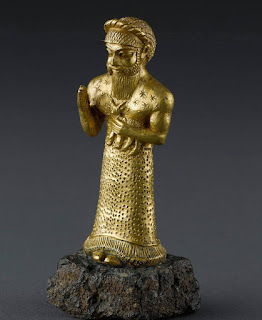
Figurine of a bearded man by the Naqada I culture, 3800–3500 BC, from Upper Egypt. Pic by Rama.

Today I came across this article "Heliopolis and the Solar Cult in the Third Millennium BC"

In it I read about the "Souls of Heliopolis", "Souls of Hierakonpolis" and Pharaohs as great prophets, great seers, who received their sacred knowledge and legitimacy from their ancestors...all the way to the procreator god..."

And this got me thinking: Was ancestral worship at the core of the early Ancient Egyptian religion? Is this why Pharaohs wore false beards?

Apparently, Pharaohs (divine rulers) wore false beards to signify their status as a living gods. 

And not any god. Osiris. In ancient Egypt, Osiris was considered as being the perfect example for pharaohs...

Thus, in order to get closer to and bond with the perfect pharaoh Osiris, his pharaonic successors wore a false beard to imitate his appearance. But Osiris didn't actually have a real beard himself...

Osiris, wore a false beard in his role as ruler of underworld while he judged the dead. Apparently, he wore the false beard "as a symbol of his great wisdom"...

Why would a beard be a symbol of great wisdom? Cause beard is a symbol of an elder, an ancestor...Someone of a great age with great experience and hence knowledge, wisdom...

The older you were, the wiser you became...And longer your beard grew...

And then you died and went to the underworld. So the underworld was full of dead ancestors with long beards...

So Osiris wearing a false beard while judging the dead, was symbolically proclaiming the judgement of the ancestors...Cause it was really the ancestors who judged their descendants...And gave them what they deserved...

Remember this?

"...humiliation of the Hittite kingdom is the result of the fact that the Hittites have forgotten to respect the sacred bond with their dead..." - Last Hittite king Suppiluliuma II.  I talked about this in my post "House of bones"...

Statue of Suppiluliuma II, Hatay Archeology Museum, with a pretty depressed looking expression on his face...

In the above post, I proposed that what caused the demise of the Hittites was a severe multiyear drought, and that to understand why Suppiluliuma II talked about the dead, we need to look at the beliefs of Serbs and other Balkan Slavs. In the Balkans people believed that if the dead were not given water, they would drink it from the clouds, and would cause drought. You can read more about the eternal thirst of the dead in my post "Thirst"

Romans linked rain, and agriculture, with the will of the dead too...You can read more about this in my post "Lapis Manalis" about the Roman agricultural rituals which link the (thirsty) dead living under (holy) stones, rain and agricultural fertility...

It turns out, that I was right. According to this recent article from Nature, "Severe multi-year drought coincided with Hittite collapse around 1198–1196 BC"...

In Egypt, agriculture depended not on rain, but on the annual Nile flood. And who was the god directly linked to the annual Nile flood that created the black (fertile) soil? Osiris. 

Osiris with wheat growing from his body. From the coffin of Nespawershepi.

I talked about the link between annual Nile flood, fertile black soil and Osiris in my post "Holy carp"...

Osiris the Perfect Pharaoh. He who made the land fertile and who liked to wear a false beard, pretending to be symbolic ancestor...Did Ancient Egyptians also have in their religion the link between the dead and water and fertility? I think so...

Osiris, who was thus emulated by the Pharaohs who wore a false beard to pretend to be Osiris (who wore a false beard to pretend to be an ancestor 🙂)...

What was the most important role of a Pharaoh? To feed his people of course...

BTW, this is Diduch (Grandfather, Ancestor), depicted as a sheaf of grain, to symbolically show the link between the dead and the grain fertility...I talked about this in my post "Diduch"

This was fun 🙂 What do you think?

I want to thank my friend @another_barbara for this great insightful comment:

I've been thinking about the things you posted since last night. People "planted" their dead in the soil that fed them, scatter their ashes into life giving rivers or seas that provided for them...

Friday, 24 December 2021

Flamingos from Susa

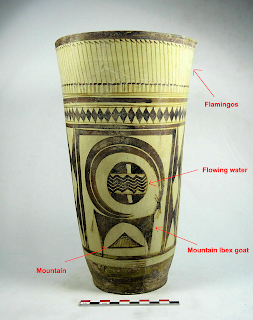
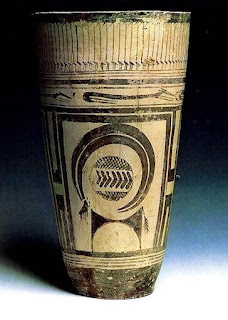
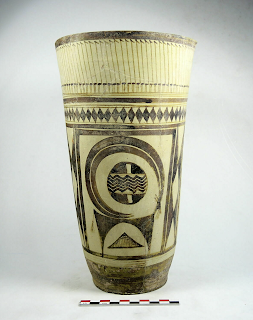
This beautiful vase is not a Modern Art Masterpiece...It is almost 6000 years old, and is currently kept in Louvre, Paris in the "Département des Antiquités orientales"...

It was made between 4000BC and 3000BC by the people who lived in Susa, South Western Iran...


I don't know if you can see what is actually depicted on this vase, cause of amazingly stylised drawing style...So Here is the same vase with annotations...


The goat depicted in the centre of the vase is our old friend, Ibex goat, The Goat of Rain...


The most depicted animal (calendar marker) in Iran...I talked about it in my post "Iranian goat of rain"...

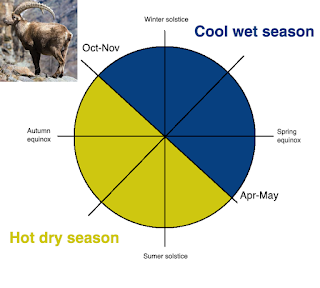
Why was Ibex goat so important to ancient Iranians? Cause the beginning of the mating season of Ibex goats in this part of the world, Oct/Nov, coincides with the arrival of life giving rains, and with the beginning of the cool, wet half of the year...


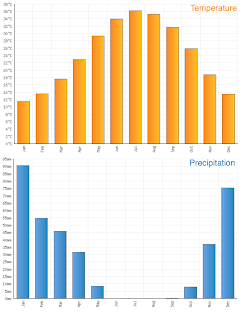
Susa climate

Goats were so symbolically powerful, that kings, when they wanted to look really important, depicted themselves carrying baby goats...

I talked about this in my post "Goat carrier"...Follow the links in the article to read more about the the Goat of Rain...

So, Goat of Rain, animal calendar marker for Oct/Nov...

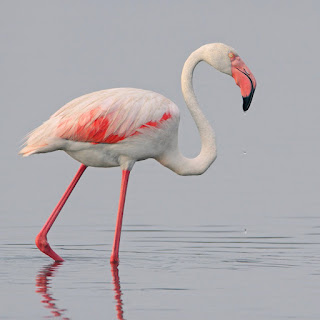
What about flamingos? This is Greater Flamingo

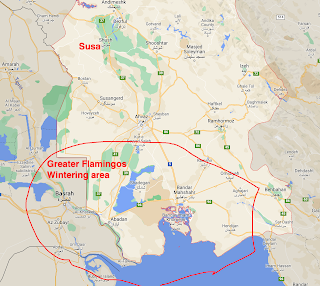
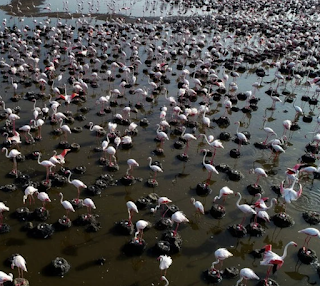
And in Oct/Nov, at the same time when The Goat of Rain starts mating, huge flocks of Greater Flamingos arrive from their northern breeding grounds in Central Asia, to their wintering grounds in the warm Southern Mesopotamian marshes...

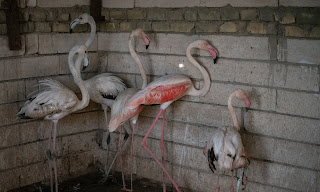
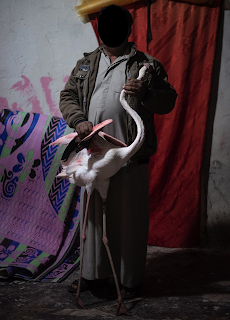
Unfortunately, not for much longer...Thousands are caught every year by poachers in both Iraq and Iran and are sold either "alive, to people who want to decorate their gardens with living Flamingos" or "dead, to people who like eating roast Flamingos"...

Two articles about migratory bird (and flamingo) poaching in: Iraq and Iran...

Now Susa is located in Khuzestan Province. 

When I started looking at the flamingos in Khuzestan, the first article that I came across was this one that talks about a mating colony of Greater Flamingos in Khuzestan Shadegan Ponds...

Flamingos mate there between April and August...So that screws up the interpretation of the Susa vase flamingos as animal calendar marker for Oct/Nov...

Maybe ibex mating season marks the beginning and flamingo mating season marks the end of the cool wet half of the year???


Well...

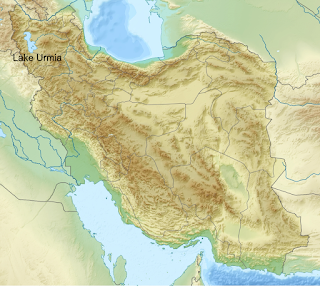
The problem is that all the papers about Flamingos in Iran are citing Lake Urmia as the main Greater Flamingo nesting ground in Iran...


For instance, in "Flamingos" By Janet Kear, Nicole Duplaix-Hall we can read that:

"Lake Rezaiyeh (Urmia) is the main Greater Flamingos breeding ground...Southern marshes (including Khuzestan Shadegan marshes) wintering grounds..."

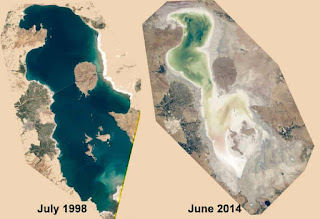
The problem is that the lake Urmia has all but disappeared over last 20 years...

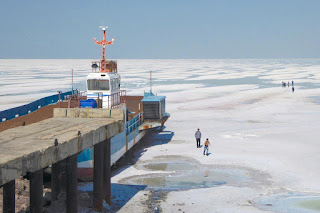
It almost completely dried out...

Which means that the Iranian Greater Flamingos had to find some other place to nest...Or die out...

The 2017 "Birds of Iran: Annotated Checklist of the Species and Subspecies" by Abolghasem Khaleghizadeh, Kees Roselaar, Derek A. Scott, Mohammad Tohidifar, Jiří Mlíkovský, Michael Blair & Pavel Kvartalnov, says:

"Greater Flamingo: Formerly an abundant breeding bird at Lake Urumiyeh, Azarbaijan...common winter visitor to...Khuzestan and entire south coast..."

But:

"recently found breeding in...Khuzestan (at Shadegan)"

So it seems that the birds now nesting in Khuzestan have moved there after their native habitats in Central Asia (listed in "Zoogeographical results of the bicentennial study of the northern part of the asian population of Phoenicopterus roseus" by Boris Yu. Kassal) and the ones in Northern Iran were destroyed...

And that at the time when the Susa vase was made, all the Greater Flamingos found in the Southern Marshes near Susa were winter visitors arriving in huge flocks when Goats of Rain started to mate, in Oct/Nov...

But I might be wrong...BTW this is just one of many vases from the same period depicting Goats and Flamingos...


Most likely not by accident...

BTW, at the same time when people form Susa, Iran, made their Ibex - Flamingos vases, someone in Naqada, Egypt, made this...Looks familiar?

I talked about this in my post "Markhor goat from Naqada"...


Tuesday, 13 July 2021

Markhor goat in Naqada

Ceramic vase - Naqada II, Egyptian Predynastic period 3500 BC. Dim 8,5x7,6 cm. Currently in: Museo Arqueologico Nacional, Madrid, Spain...


Officially depicts a hunting scene...

Have you seen this article called "Nahal Mishmar hoard"? About the treasure throve of bronze objects found at Nahal Mishmar in Israel and dated 4000-3500 BC. 


One of the artifacts found in the treasure is this beautiful staff...

It is topped with the 4 small heads of Ibex goats 

surrounding the big central head of a Markhor goat 

Now Ibex goats are found in Levant. And there they are a symbol of the rainy season, which starts when ibex goats start to mate, in Oct/Nov...Like on this depiction of the mother goddess from Revadim...


The problem is that Markhor goats don't live in Levant. They live in Central Asia, Iran, Iraq, Pakistan...Where they are a symbol of the rainy season, interchangeable with Ibex goat. Because both of their mating seasons start in Oct/Nov, when rains arrive...

I talked about this in my post "Goat in a tree"

So while researching Nahal Mishmar hoard, I proposed that the it must have been made by someone from that part of the world, Central Asia, Iran, Iraq, Pakistan. Cause only they could have seen Markhor goats and had it associated with Ibex goats as a symbol...

It turned out Nahal Mishmar treasure is believed to be made by immigrants from Iran. Because of genetics of the people who made the treasure...And the similarities of artifacts from both areas...

Now the makers of the Nahal Mishmar treasure were expelled by the locals...Those the locals couldn't kill. I thought they went back north to Iran. But what if they went the other way...Down south...To Egypt...

Who else could have made a vase with Markhor goats and Ibexes prancing around the mountains?

By the way, Ibex goats live in Egypt. It is the subspecies known as Nubian Ibex. And Nubian Ibex mating season is from October to December...

Guess what happens in Naqada in October? Rains arrive...

So I think that Ibex was depicted on the above vase for a reason. It is another example of Ibex goat being used as a calendar marker that means: rains arrive when Ibex goats start to mate...

Just like in Levant, Mesopotamia, Arabia, Central Asia, Iran...Amazing...

So I think that  the guy with huge erection standing in the middle of mating Ibex and Bezoar goats is not a hunter. I mean he is unarmed which is usually a dead giveaway for "not a hunter". He is most likely a fertility symbol, fertility god, possibly rain god...

By the way this vase is not an exception. Markhor goats are found on other Naqada vases too. Like this one. Again no explanation how come this goat is here, in Egypt...


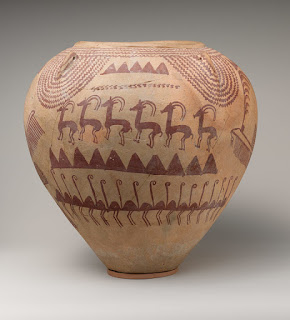
Ibex goats are also found all over predynastic artifacts. Here is another vase from Naqada II period. Dated to 3500BC.

It depicts Ibex goats...And Flamingos. 

Why flamingos? Because breeding season of Greater Flamingo, the subspecies found in Egypt, is "Erratic, depending on the rains, but mainly November-February"...Ha!

As a comparison, here is a vase from Susa, Iran, dated to 4000BC...

In its center is a huge Ibex. Its horns surround what looks like a furrow with a plant, most likely grain. Rains make plants grow. And they start falling when Ibexes start mating...It is also "after the first rains" that fields are ploughed and grain is sown...Important!!!

The Susa vase also depicts pile of flamingoes...Flamingoes which arrive to Iran every November from Central Asia, to spend the winter...Interesting...Right?

Guess what happens in Egypt during the Ibex and Flamingos mating? Well grain is planted...The flood has ended, the soil was fertilized, and it's time to plough and plant grain while the first rain is falling...

What is amazing is that once we understand why these animals are depicted on the ancient artifacts, we can then detect anomalies in distribution of these artifacts: pieces that are found in the areas where the animals depicted don't exist...

Or the depicted scene put together makes no sense...When compared with the local climate...Which are all indicators of the foreign influence and possible migrations which brought these influences...

Like these vases. 

Or this for instance

I talked about this in my post "An Ki = Ankh"


PS: Is it possible that the animal with the spiral horns is Kudu antelope? They lived in the North Africa, Levant and Arabia in the early and middle Holocene...Well at least this is what the authors of this paper think the animals with spiral horns depicted on the petroglyphs were...But were they Kudu's or Markhor goats? When did Kudus disappear from these areas? Were they still around in the 4th millennium BC? Did immigrants who came to Egypt from Mesopotamia bring Markhor goats with them? Via Arabia and Levant?

Monday, 1 February 2021

Mummies

WTF. How did I not know about this???

Left, an incised figurine from Draguşeni, Cucuteni phase A (late 6th millennium BC)

Right,  a reconstruction of the pattern of body wrapping

Left, an incised figurine from Draguşeni, Cucuteni tradition phase A (late 6th millennium BC)

Right, reconstruction of the pattern of body wrapping


Now Cucuteni/Trypillia (Tripolye) culture, was a Neolithic–Eneolithic archaeological culture (c. 5500 to 2750 BCE) of Eastern Europe which covered huge territory (350,000 km2) in today's Romania, Moldova and Ukraine..


The above two pics of the figurines depicting bodies wrapped in bandages, are just some of the illustrations from the article "Ritual Technology: An Experimental Approach to Cucuteni-Tripolye Chalcolithic Figurines"

In it we read that: 

An argument in favor of the funerary model was the unusual anatomical details of the human body: the emphasised shoulders, the absence of arms and the superposition of the legs (modeled as the twisted ends of the conical feet)...

All traits which can be observed on the mummified bodies or the skeletons enveloped in vegetal or textile bandages like those in the early Cernica Chalcolithic cemetery, dated to the Boian culture tradition (5th millennium BC). 

I couldn't find any article about this cemetery which mentions textile bandages...If anyone has any link to an article in any language that talks about it, please post it in the comment here...

Now these figurines of course look like Egyptian mummies...

And the oldest Egyptian mummy which was embalmed and wrapped in bandages, is this one:

It dates to dates to 3700-3500 BC. It was discovered near the southern city of Gebelein in a cemetery belonging to the Pre Dynastic Naqada II culture...

This mummy, kept in the Turin museum, which was until recently thought to have been naturally mummified by the desert conditions, turned out to have been embalmed in natural resin and wrapped in linen...You can read more about it in this article on Live science...

Apparently, the mummification of the pharaohs started around 2800BC. It was an expensive process only available to the elite... So who was the above guy who was mummified 1000 years earlier in Gebelein?

That is quite amazing...Right? 

6th millennium BC - Balkans, Cucuteni culture figurines wrapped in bandages (?)

5th millennium BC - Balkans, Boian culture burials with bodies wrapped in bandages (?)

4th millennium BC - Egypt, Naqada culture, Pre Dynastic period burial with body wrapped in bandages

3rd millennium BC - Egyp, Dynastic period burials with bodies wrapped in bandages

Any link Between Balkans and Egypt here? Well maybe this article about "The sun on top of the Pyramid" might be interesting...Pic: Summer solstice sunrise over Treskavica hill, Balkans...People who lived under this hill moved from the Balkans to Sahara while it was still green...