Showing posts with label Koleda. Show all posts

Saturday, 11 March 2023

Koloocheh

These are Koloocheh (Persian کلوچه) or Koleecheh (Persian کلیچه ) - golden round cookies decorated with spirals and made for Perisan new year. 

The name of these cookies comes from Middle Persian "kulachag" (round bun). Further etymology is unknown... 

Hmmm...Maybe...

In Slavic languages any round (originally ceremonial) bread or cake was called "kolač" (pronounced kolach).

Serbian Christmas and Slava "kolač" examples...

The word "kolač" comes "kolo" (wheel, spinning circle). Hence "kolo" also being the name for the Slavic ceremonial circular dance...I talked about this in my post "Oro" and "Shield of Achiles"...

Fresco from the 14th century Serbian Lesnovo monastery, today located in Macedonia.


So the word "kolač" does mean "round, circular" bread, cake...But the name has additional meaning of "spinning, turning, rotating"...

Ceremonial cakes are rotated 3 times "s leva na desno" (from left to right), by the family members, before they are broken and eaten...

Turning "from left to right" is also known as "sunwise" and was apparently a big thing in the past...Cause that's the way sun moves across the sky...I talked about this in my post "Sunwise"...

Now it is interesting that the Iranian Koloocheh/Koleecheh cookies are made with spirals...Which are a symbol of rotation...

They are also made as ritual cookies for New Year...The day when the old solar year ends and new solar year begins...Now Slavs imagined solar year as an ever spinning solar wheel (kolo)...

The Slavic name of the old "New Year" celebration, Winter Solstice celebration, was Koljada, Koleda, Kolenda...It marked the end of one and the beginning of another spin of the solar wheel...Kalendar...🙂

Remember this post, "Janus", about Janus and Juno and wheels within wheels? 


Or this post, "Young god", about the Serbian folk song celebrating the birth of the New Sun (God) or New Solar Year: "Pass me cold water, o Koledo, to bath the young god, Božića Svarožić...His horse is the bright sun, a flaming war steed"...


Or this post, "The end of time", about the Koledari, traditional Slavic carol singers who went from house to house during Koleda (Originally Winter Solstice, but now Christmas) singing ritual songs celebrating the immanent brith of the new god (once new Sun God, now Son of God)...

But look a this...This is one of the traditional Koleda (Christmas, Winter Solstice, New Solar Year) ritual breads from Bulgaria...Looks familiar? 

Also some Serbian votive breads were actually made in a shape of "kolo" (wheel). Serbian Votive bread (kovrtanj, kolač, kravaj).  

The word "kovrtanj" most likely comes from "kolo" (wheel) + "vrt" (spin)...We find the same word in Russian kovriga (коврига) meaning "round bread", which was mentioned in the Primary Chronicle under year 1074. Funnily enough, according to the linguists, "its ultimate etymological origin is uncertain"...How about Ko(lo)+vr(t)+ga = wheel+spin+it???

On Xmas morning the bread was brought to the threshing floor, pulled on the central stake, and then the father and the children would walk on hay, around the stake, holding onto the bread... 

You know, threshing floors, circular platforms with the central pole...


Where grain was threshed by waling around the and around the central pole

I talked about this in my post "God's threshing floor"...

Threshing floor which was in the past used as a solar observatory, with the central pole serving as a "gnomon"...


Threshing floor on top of which, for some weird reason, the First Temple was built. The First Temple, which according to the Josiah, Jews worshiped the Sun God...I talked about this in my posts "Boaz and Jachin", "The sun god from the First Temple" and "The tree of light (life)"...

But I am digressing...

These Serbian "wheel breads" (kolač, kovrtanj, vrtanek) were also used as part of the first footer (Christmas, New Year) rituals in Serbia and Bulgaria...

If the first footer was a man, kovrtanj was placed on man's head. 

I used AI to enhance this image

If the first footer was a bull, kovrtanj was placed on bull's horns...If anyone knows of a picture of a bull with kovrtanj on his horn, please post the link in the comments, so I can add it to the article. 

I used AI go generate this image


I talked about this in my post "First-footer"...

And in Bulgaria, In return for good wishes, the Koledari Carol Singer, receive gifts of food and ritual ring-shaped breads, "Коледно колаче" (Koledno kolache) meaning little Christmas circular bread or "кравай". 

Which they string on the wooden sticks they carry with them...

Pic from "Българска Етнография" by Николай Колев

These breads were often made by the young women in the family...Some kind of symbolism here, wheel breads and sticks...

So we have all these Slavic words with the root "kolo" (wheel) used for ritual circular breads, ritual circular dances, new year rituals...

And yet...

According to linguists: 

The similarity of Slavic "kolač" to Middle Persian "kulachag" (small, round bun) and Ancient Greek "κολλύρα" (koloura) (loaf of bread) may be coincidental as it is difficult to explain through usual models of inheritance and borrowing...

BTW, the Ancient Greek "κολλύρα", from which modern Greek "κουλούρι" (kuluri) is believed to be "of Pre Greek origin"...

I know, difficult, difficult...Not difficult to explain...Difficult to accept...That all these ancient Non Slavic words for round breads have the root in Slavic "kolo" (circle, wheel)...

BTW, in Turkey, this type of wheel bread is called simit. 

The word simit comes from Arabic samīd (سميد) "white bread" or "fine flour". Ceremonial breads were in the past the only breads made from white flour...

Another name for these breads in Turkish is gevrek meaning "crisp", and this word in a form of "djevrek" is now used for these wheel breads in all the Slavic Balkan lands, thanks to multi century Ottoman Turkish cultural influence...

What is very interesting is that simit/gevrek only became a thing in Ottoman Empire since the 16h century...It was most likely a Slavic cultural import... 

I forgot the most important bit. The recipes 🙂

Recipe for Koloocheh, Recipe for Koledno kolache, Recipe for Kovrtanj

Friday, 24 February 2023

Party

Winter Solstice Celebration, by the Latvian painter Evalds Dajevskis, Acrylic, 1989...

The traditional masked characters dancing in the room are all symbols of death and resurrection  of nature...

stork

bear

goat

white horse

death, the dead

bride

sheaf of wheat

Ever wondered why these characters? Well, because they all represent the idea of death and resurrection...

Stork:

Storks are migratory birds, which disappear in the autumn and reappear in the spring...Slavs believed that in autumn, migratory birds followed the sun to Iriy, the land of the dead...And that they came back from Iriy to our world in spring, again following the sun...

In pre-Christian times, Slavs believed that souls of their dead entered birds and through birds entered heaven, Iriy. So feeding birds with grain during  winter was basically a form of feeding the ancestors, sacrificing to the ancestors...

Slavs also believed that migratory birds brought the souls back from Iriy, so they can be (re)born as people...And so the belief that storks brought babies...

I talked about this in my posts "Leto", "Julenek", "Nav", "Bird wedding", "Inviting spring"...

So stork = death - resurrection...

Bear:

Bear goes underground, underworld (to hibernation) in the autumn and comes out from the underground, underworld, in the spring, with cubs...

So Bear = death - resurrection...

I talked about this in my post "Bear dancers", about a winter ritual bear dance from Romania. 

During which:

Bear dances (spring, summer, autumn)

Bear falls cause a demon took over him (winter) 

Bear is killed and bled to let the demon out (hibernation. death-rebirth)

Bear gets up and dances again (spring, summer...) 

Bears also danced during the winter in Russia, during Koliada, Christmas (Winter Solstice processions)...

Goat: 

Ibex goats mate during the winter, with the peak in midwinter, Winter Solstice. The mating season is marked by vicious male goat fights, which from the distance look like a dance...

This is why ibex goat is the symbol of winter throughout its range. Hence Slavic Christmas carol goat mask...

In Slavic lands the carollers performed ritualistic dance which showed the goat dying and then being brought back to life...You can read more about this in my post "Krampus"...


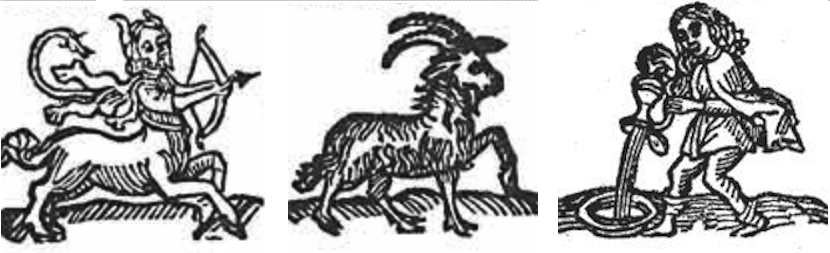
This basically depicts the winter zodiac:

Sagittarius (start of winter), Capricorn (mid winter), Aquarius (end of winter, snowmelt)...

Hunter, (almost) kills the goat, from whose blood spring spring flowers...The meaning of these symbols was preserved in Slovenian legends. You can read about this in my post "Trentar", "Zlatorog"...

So Goat = death - resurrection...

Oh look, goat, bear and stork dancing together in Russia...

Horse:

Horse fertility is governed by the sunlight, meaning horses are most fertile on summer solstice, peak fertile time of the year...Which is why horse is one of the main solar symbols and symbols of summer...I talked about this in my posts "Trojan horse", "Archaic rider", "Hayagriva", "Shamash playing with solar horse", "Goddess on a horse", "Longma"...

A dead horse would then be a good symbol for...Winter and Winter Solstice of course... The day when the sun is reborn...I talked about this in my post "Gray mare"...

So Horse = death - resurrection 

Sheaf of wheat:

In the autumn, grain dies and gets buried (sown)...It then gets resurrected (sprouts) over winter and spring and grows into new grain...

So Grain = death - resurrection

The last sheaf of grain represents the living "sprit of grain"...I talked about this in my posts "Diduch", "Julenek", "Corn dolly"...

Which is why sheafs of grain dance around Europe every winter. I talked about this in my post "Walking sheafs of wheat"...

Winter was in Continental Europe seen as the time of death. The nature died at the beginning of winter, when the sun went to the land of the dead...The nature got resurrected at the end of winter when the sun returned from the land of the dead...

While in the land of the dead, sun had a lot of time to chat with the dead. And, Slavs believed, it was the dead ancestors which were remembered by the living, that "put the good word in for the living" and were the source of the prosperity of their descendants...

I talked about this in my several of my posts: "Diduch", "Lapis manalis", "White feast"...

The dead ancestors also visited their descendants during the winter (the scull guys behind St Nick). St Nick is telling the kids that they should be good Christians...The reason why kids are not looking at St Nick, is cause they are staring at St Nicks gang of the dead ancestors standing behind him, ready to take bad Christians away...Somewhere in Austria...I talked about this in my post "Little Christmas"...

The ancestors expected to be wined and dined by them and shown the good time during winter parties...Or else...In some parts of Serbia, on Christmas Eve people used to take a table laid with food on the doorstep of the house and would invite the dead to the feast in the same way... I talked about this in my post "Wolf feast"...

The people on this picture from Moldova are "Koledari", Slavic masked "Christmas" carollers. The man with the blackened face, representing dead ancestor, holds ritual solar bread called kolač or kovrtanj (wheel). Slavs believed that all good comes from ancestors...

So The Dead = death - resurrection

The Bride:

The Bride is the hag (winter earth) which magically gets transformed into the maiden (spring earth)...

A girl dressed as a faceless "bride", who brings presents (and good luck) to Sorbian families on the last Wednesday before Christmas (originally probably on Winter Solstice day). I wrote about it in my post "Bescherkind"...

In Scotland a special folk dance commemorates the death of "The old woman of the mill dust" and the marriage of her daughter....

"Bablji mlin", meaning "Granny's mill" scene, Slovenia. An old hag is being milled, and thus transformed, into a young maiden. Winter being transformed into Spring...In this depiction of the rebirth scene, the granny is being pushed into a mill by a goat...I talked about this in my post "Bablji mlin"....

At Imbolc, the first day of Spring according to Gaelic calendar, St Bride's "bannock" or "bonnach" was baked and given to the young girls as a blessing. One was also left outside as a gift for St Bride when she passed in the night to bless all the homes...I talked about this in my post "Bannock"...

Here is the "bride" representing St Bride (Brigid), made out of the butter churn on Imbolc, the day that marks the beginning of spring...

Slavs call the day that marks the beginning of spring, "Maslenitsa" (butter festival)...Oh, and on Maslenitsa, they hold a festival that celebrates the death (end) of the old hag (winter earth), and the arrival of the young bride (spring earth). During the festival, people parade the effigies of Marzana (goddess of death and winter) which are dressed in white, like brides (or snow maidens)...

Add to this the Snow-White story, where a young maiden gets killed by her own mother by a poisoned apple, only to get resurrected by a young prince to whom she then gets married...I talked about this in post "Snow-white"...

So The Bride = death - resurrection

Ready for the party?

To read more about ancient animal and plant calendar markers, start here…then check the rest of the blog posts related to animal calendar markers I still didn't add to this page, and finally check my twitter threads I still didn't convert to blog post...I am 9 months behind now...

Sunday, 22 December 2019

The end of time

Image of the Virgin Mary, nursing the Infant Jesus from the Catacomb of Priscilla in Rome. It was dated to the late 2nd century AD. This is earliest known image of Mary and the Infant Jesus. The figure at the left appears to be the prophet Balaam pointing to a star. 


There is a very interesting Serbian (And Bulgarian) Koledar song which starts like this:

Serbian:

"Замучи се божја мајка,
Од Игњата до бадњака,
Да роди Божића"

Bulgarian:

"Замъчи се Божа̀ майка,
от Игнажден до Коледа,
да си роди Млада Бо̀га."

"God's mother laboured
From St Ignatius to Christmas (Koleda)
To give birth to Young God"

Koledari are traditional Slavic carol singers who went from house to house during Koleda (Originally Winter Solstice, bot now Christmas) singing ritual songs celebrating the immanent brith of the new god (once new Sun God, now Son of God)...

I talked about one of these traditional Serbian Winter Solstice songs in my post "Young God".

Here I would like to talk about the reason why in Serbia, Koledari went out and sang their songs 5 days before Christmas...

The reason why Koleda, the day that marks the end of "kolo" (wheel), the end of solar wheel, the end of solar year is marked 5 days before Christmas (25th of December) is simple: it is the 20th of December, the Winter Solstice eve. Right? I don't think so. That's too simple 🙂...

In the mind of Serbian peasants, Christmas was Winter Solstice day and Christmas Eve was The Eve of Winter Solstice. So why did they then sing Koleda songs five days before Christmas? 

To understand this, we need to understand how our ancestors measured time. They used days, moons and suns. The Moon takes 27.3 days to orbit Earth, but the period from full moon to full moon is 29.5 days. Or approximately 30 whole days. 


Year has full 12 moons. The last full moon of the solar year ends on the 30X12=360th day. What is left are 5 "extra" days. Five days which lay outside of the "calendar" (koledar?). Five "dead days" as they are called in Serbia. 

Which is why the mother of god goes into labour on that day, labours for 5 days, and only gives birth to the new Sun God (Son of God), new solar year, on Christmas (Winter solstice) day.

I talked about this in my post "Calendar". 

What is interesting is that in Bulgaria, this day, the end of the last full moon, 20th of December,  is called "Nov Dan" (New Day) and all the rituals performed on this day are the rituals related to the beginning of the new year, the birth of new sun...This is the day when the first footer ceremony is performed, the ceremony which is in Serbia performed on Christmas Day. I talk about this ceremony in my post "First footer".

Bulgarians count the "dead days" from that day and call them "dirty days"...I think that this is later change. Normal counting of time would start on winter solstice, would go through 12 moons X 30 days each, and would end 5 days before new winter solstice...

On this day, the "end of calendar" day for Serbs and the "beginning of calendar" day for Bulgarians, Serbs and Bulgarians celebrate St Ignatius who is also known as "Ignatius Nurono" (The fire bearer).  I find it very interesting that the saint that marks the time when rekindling of the Sun's fire begins is called Ignatius, from Serbian "Oganj", Latin "Ignis", Sanskrit "Agni" all meaning Fire...

I talked about the yule fire ceremonies in Serbia in my post "Badnjak".

Another funny thing about St Ignatius is that he is also known as "Ignátios ho Theophóros" (God bearer, God carrier). In Serbia they say "because he carried god across frozen river". Which is very good description of what happens during sun's winter journeying through 5 dead days outside of calendar. St Ignatius (20th of December) comes before Winter Solstice (25th of December). It and symbolically "holds the new baby god" in his hands. Interestingly Christianity inverted this into "When Ignatius was a kid, Christ held him in his hands and blessed him". Which makes no sense. 

But what is most interesting is what you get when you put the two St Ignatius's nicknames together:

God bearer = Fire bearer...

As I said in my post "Young God", the young god whose birth Serbs celebrate in their Koledar songs is Svarožić. Svarožić, whose name means "young fire". This "young fire" is the fire of the sun, which is rekindled on the day of the winter solstice, the day when the new sun is born and the new solar year, new "kolo" starts...

St Ignatius who is both "God bearer" and "Fire bearer" is just another pointer to the true identity of the Young god who is born on "Christmas" (Winter Solstice) day: New sun...

This is all of course just a coincidence...

Saturday, 21 December 2019

Young god

Solar rider from a Celtic coin...


In Slavic mythology, Svetovid was associated with a white horse, which was kept in his temples and used for divination...In this article I will talk about a Serbian ritual song which talks about solar rider and Christmas...

"Dodaj meni hladne vode, Koledo Koledo, Da kupamo, okupamo mladog boga, tog Božića Svarožića… Konjic mu je jarko sunce, bojni doro ognjeviti"

"Pass me cold water, o Koledo, to bath the young god, Božića Svarožić... His horse is the bright sun, a flaming war steed"

This is a Serbian ritual "Christmas song" recorded in Bosnia by Milojević in 1869. In it the narrator asks Koledo for water. Koledo is winter solstice. The end of the old Kolo (wheel, Solar wheel, solar year) and the beginning of the new Kolo (wheel, Solar wheel, solar year)...

The water is needed to bath "the young god" who is called Božić. In Serbian the word "Bog" means god and the ending "ić" means small, young.  So Božić literally means young god, but also it means Christmas...So far so Christian...🙂

But the young god Božić is also called Svarožić (young Svarog). Triglav (Dabog), Serbian supreme deity, consisted of Svetovid, Perun, Svarog. Svetovid represented Sun, Perun represented Thunder and Svarog represented Fire. I talked about Triglav in my post "Triglav, Trojan, Trinity, Trimurti, Agni"

So Svarožić (the other name of the young god) means "young fire". This "young fire" is the fire of the sun, which is rekindled on the day of the winter solstice, the day when the new sun is born and the new solar year, new "kolo" starts...

The main ritual performed over Christmas (Solstice) is "lighting the Yule log in the evening, keeping it burning through the longest night, and then making it spark in the morning". 

Watching over Christmas (Solstice) fire, Serbia


I talked about this in my posts "Badnjak" and "First footer"

In this way people helped "preserving sun's fire", "rekindling of the fire of the new sun"...This was not just symbolic action. People believed that "all fire is one" and that if their fire was kept burning, the sun's fire would be kept burning through the longest night...


This equates Svarožić (young fire) with Jarilo (young sun) who is born during the longest night...Svarožić is Jarilo's fire. Jarilo's name comes from "jar' which means both young and fiery, raging...It is his fire which grows ever stronger and warmer which brings spring...

That Svarožić (young fire) is Jarilo (young sun) can be seen from the second verse which says that Svarožić rides on the bright sun, which is his flaming war horse...He is the Solar rider... 

Depiction of the solar rider from Bosnia from my post "The horseman"


Christmas is coming, get your Badnjaks (Yule logs) ready...🙂