Tuesday, 16 February 2016

Dún Ailinne

In my post about the etymology of the word Alps I talked about the Gaelic word "ail" meaning stone, rock, cliff. This post is about a place whose name is derived from the word "ail": Dun Ailinne.

Dún Ailinne is an ancient ceremonial site on the hill of Cnoc Ailinne in County Kildare, Ireland. It is southwest of Kilcullen, near the N78 road to Athy. 


The site is circular, about 13 ha (32 ac) in area, ringed by an earth bank and ditch (or "henge"). As with most henges, the ditch is on the inside, meaning that it was likely to have been symbolic rather than defensive. It is believed that Dún Ailinne was a royal centre and inaugural or ceremonial site for the Kings of Leinster. In terms of its ritual use, the internal structures and layout, and its location and association, is similar to the other royal sites of Tara, Navan Fort and Rathcroghan. Indications of earliest use are from the Neolithic period, but the main activity there was during the Iron Age. It does not seem to have been dwelt in year-round, but was instead mostly used for short-term activity, including ritual. It seems to have been occupied during the Spring/Summer months and there is evidence of cooking, which include a great deal of bone from cows, sheep, pigs, deer and horses. In 1968 a caesium magnetometer survey and a resistivity survey was undertaken that highlighted an area in the low mound, later revealed as areas of intense burning. A La Tène style sword and Roman bronze fibulae have also been found at the site. The artefacts suggested intense activity in the Iron Age and/or Early Medieval period that disturbed a Neolithic occupation phase. While it figures in some early historical references, Dún Ailinne was mostly abandoned about the time the nearby early Christian settlement at Old Kilcullen was established in the 6th century.

This is a drawing showing the results of the geophisical survey of the site. You can see various overlapping features dating to different time periods. 


The images below show a time-lapse sequence of the summer solstice sunset as observed from Dún Ailinne. You can see that the sun touches the top of the Dunmurry hill, and it then proceeds to slide down the side of it, until it finally disappears behind the hill.


What is interesting is that right in front of the Dunmurry hill lies the Long hill, an elongated hill aligned roughly East-West and orientated on a slight E-SE to W-NW axis. On top of that hill lies the Long hill cursus.


Cursus was a name given by early British archaeologists such as William Stukeley to the large parallel lengths of banks with external ditches which they thought were early Roman athletic courses, hence the Latin name cursus, meaning "course". Cursus monuments are now understood to be Neolithic structures and represent some of the oldest prehistoric monumental structures of the British Isles. Long hill Cursos is by some believed to be approximately 1.5km. long and almost 100m. wide, but it is more likely for it to have been just over a kilometre long and approximately 50 metres wide. The OSI map also records clusters of barrows at each end of the Cursus - Cluster 'E' at the W-NW end and Cluster 'F' at the E-SE end (Ref. Pádraig Clancy's study of the ancient monuments of the Curragh).

If we extend the side of the Dunmurry hill along which the sun slides on the eve of the Summer solstice, it touches the east - south east end of the Long hill cursus, while the vertical going through the top of the Dunmurry hill touches the west - north west end of the Long hill cursus.


It seems that the Long hill cursus was deliberately built to create the sacred triangle visible from the Dún Ailinne. In which case Dún Ailinne was not just any ceremonial site but a solar observatory and solar temple. I already wrote about ancient henge solar observatories and solar temples in my post about Henges - Rondel enclosures. The henge was dug to mark the solar observation circle and there was probably a tall stake or a tall standing stone standing somewhere inside the henge circle working as a gnomon. The shaddow cast by the gnomon stone at sunrise was used to determine the exact date. The fact the sun also performed the gliding, or rolling down the Dunmurry hill on the eve of the summer solstice, just made the Dún Ailinne more special. Is there a proof that there was once such a standing stone in Dún Ailinne? There is.

A verse in the Dindsenchas mentions how Dún Ailinne/Alend acquired its name:

Three mighty men made essays of trenchings,
Burech, Fiach, and Aururas:
it is they who without flagging (clear fact!)
dug the rampart of Alend.

Buirech cast from him straightway
across the rampart(no weakling he!) -
a stone he cast from his spear-arm;
and that is the ail in Alend.

This seems to suggest that Buirech placed the Ail (Stone) standing upright on a mound, inside the henge (trenching) that sat at the summit of the Cnoc Ailinne.

Today you will see three very large boulders on the summit, two look like limestone boulders (although it's possible they're both very weathered granite) and an elongated white granite boulder. John O'Donovan's survey of Dún Ailinne in 1837 records only "two rough mountain boulders of considerable size. One of these might be the Ail mentioned in the Dindseanchus as placed in the mound by the hero Buirech......". O'Donovan also records a scattering of stone debris on the summit which he interpreted as a "fort.......much effaced", but Estyn Evans suggests this scatter of stone and the large boulders may have been the remnants of a Neolithic/Early Bronze Age cairn. I would say that the scattering of stones and the remaining boulders are all parts of the original gigantic standing stone after which the Dún Ailinne got its name, and which was deliberately destroyed, possibly during the early Christianization of Ireland and maybe even later.

The images below show the large boulders that now sit on the summit of Dún Ailinne.There'sisible line of drill holes in the large elongated white granite boulder. You can clearly see weathering on one side,but the opposite side shows areas which look significantly fresher,which could suggest it was deliberately broken in recent times. Was this boulder part of a much larger monolith?


Is this what Dún Ailinne might have looked like once?


In Gaelic the word "dún" doesn't only mean military fortification. It means to shut, to close, to enclose, enclosure, fort, fortress, place of refuge, haven, haven for ships, residence, house, promontory fort, bluff...So any enclosed place probably including henge.

In Gaelic the word "ail" means stone, rock.

And in Gaelic the word "linn" means time, period, generation, course.

If there is a possibility that Dún Ailinne was once used as a solar observatory, solar calendar, with the central rock pillar (ail) inside of a henge (dún) and which was used to determine the day of the Summer solstice, the beginning of the solar year, the beginning of a new solar cycle, the new "time period" (linn) is it possible that the name Dún Ailinne actually means "The enclosure of the time stone", the solar calendar?

I would like to thank "bonedigger" for all his great work in exploring Irish megalithic sites and drawing public attention to their possible astronomical features. 

1. Dún Ailinne's Role in Folklore, Myth, and the Sacred Landscape
2. Dún Ailinne, Knockaulin Td and 2. Glebe North Td, Co. Kildare E79 - Unpublished excavations

Monday, 15 February 2016

Alps

The Alps (Italian: Alpi; French: Alpes; German: Alpen; Slovene: Alpe) are the highest and most extensive mountain range system that lies entirely in Europe, stretching approximately 1,200 kilometers (750 mi) across eight Alpine countries: Austria, France, Germany, Italy, Liechtenstein, Monaco, Switzerland and Slovenia. 


But these are not the only Alps in Europe. In The Balkans we find Dinaric mountains known also as Dinaric Alps. This mountain range stretches along the Eastern Adriatic coast across Albania, Serbia, Montenegro, Bosnia, Croatia and Slovenia. The highest peaks of the whole range are in the southern end which lies in Montenegro, Serbia and Albania. 


The English word alps comes from the Latin alpes which comes from Latin albus ‎meaning white. Latin albus, is said to come from Proto-Italic *alβos meaning white.

The official etymology says that we don't really know where the original word comes from.

Basically we have two theories.

First theory proposes a Proto-Indo-European root for the word Alps. It says that the Proto-Italic *alβos is derived from Proto-Indo-European *h₂élbʰos, *álbʰos, *albʰós ‎meaning white. Cognates include Umbrian ‎alfu meaning white, Ancient Greek ἀλφός ‎(alphós) meaning whiteness, white leprosy and Hittite alpas meaning cloud.

Second theory proposes non-Indo-European origin. According to the English Etymological Dictionary, the Latin Alpes might possibly derive from a pre-Indo-European word *alb "hill, mountain". This theory then proceeds to propose that this supposed  pre-Indo-European word is the root of many Albania mountain areas: Balkan Albania, Caucasus Albania and Scottish Albania (Alban). 

I would like to propose another theory: The word Alps comes from Gaelic and means "white stones, white cliffs, white peaks".

The first clue that the word Alps could be of a Gaelic (Celtic) origin can be found in a comment made by Maurus Servius Honoratus, a late fourth-century and early fifth-century grammarian, who in his time had a reputation of being the most learned man of his generation in Italy. He said in his commentary on Virgil (A. X 13) that: "all high mountains are called Alpes by Celts".

The second clue is the fact that in Latin the word "albus" is used primarily to mean "white" that is dull or matte which would mean more grayish white than bright shining white.

The third clue is the fact that in Ancient Greek the word ἀλφός ‎(alphós) means whiteness, white leprosy, lichen white, again grayish white, not bright shining white.


The fourth clue is that the German word Alp or Alm (meaning "seasonal high mountain pasture", from Old High German alpa, alba) was originally identical to the name of the Alps (German Alpen) itself.

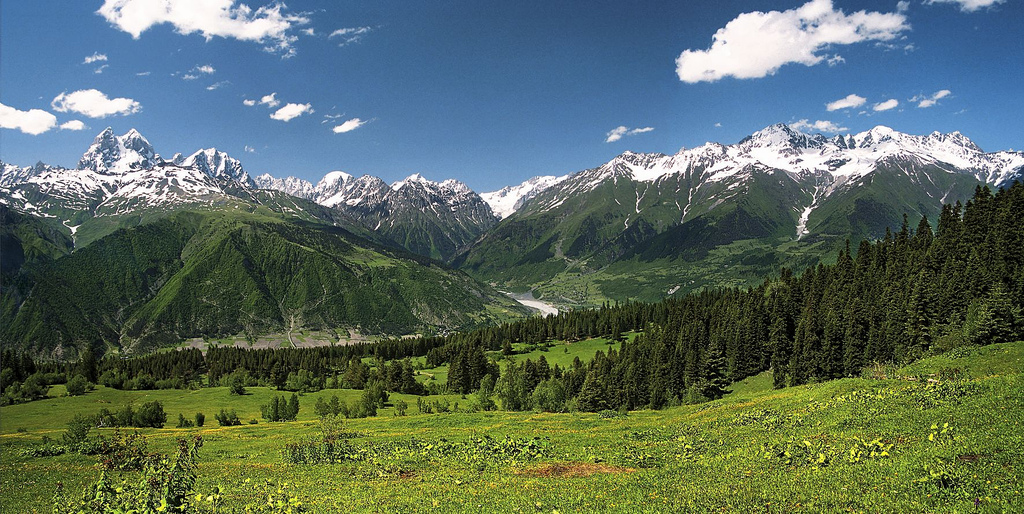
Have a look at these two pictures.

Alps (grayish white rocks towering over green high mountain pastures)


Dinaric mountains (Alps) (grayish white rocks towering over green high mountain pastures)


So what does this have to do with Gaelic?

In Gaelic we have this cluster based on the root word ail - stone, rock:

aill, -e, pl. id., and ailltreacha (Aran), f., a cliff, a rock; cf., an Áill, the "Naul" Co. Dublin (also faill, f., bárr na faille, the top of the cliff).
ailleort - high-rocked; from ail, rock
aill-bhruachach - having steep or rocky brinks. 
ailleadóir- cliff-climber.
ailbhinn - flint, precipice; from ail - rock.

From the same root ail - large stone, rock we have this word:


ailp, pl. alpa - a protuberance, a huge lump, a high mountain; a stout person

In Gaelic we also have this word:

bán - white which comes from Proto-Indo-European "bʰeh₂-" meaning - "white", "shining"

From these two words ail and bán we can make the construct: 

ail bán - alban - rock white - white rocks, white peaks, high mountains

What is also very interesting is that in Irish  the word "ailbh" means "flock, heard, drove".... Is this word derived from the fact that flocks, herds were driven up to the mountain pastures, ailban, alpen, alps, every summer? This is a high mountain pasture from Slovenian Alps.


In A.D. 875 Scotland was still known under its Roman name: Caledonia. Caledonia was in turn divided among the following lands: the Kingdom of Alban, the Northern Islands, and the Borders, which include the Kingdom of Strathclyde, Galloway, and the northern portions of the Kingdom of Northumbria. 


The kingdom of Alban lied mostly along the great Grampian Mountains. These are highland pastures lying under the great Grampian Mountains:


This is a picture of the highland pastures under the Matterhorn peak, Valais Alps, Switzerland.


Do you see any similarity? High pastures with grayish white rocky peaks?

Alba is the Scottish Gaelic name (Pronounced Alpa) for Scotland. It is cognate to Alba (gen. Albann, dat. Albainn) in Irish and Nalbin in Manx, the two other Goidelic Insular Celtic languages, as well as words in the Brythonic Insular Celtic languages of Cornish (Alban) and Welsh (Yr Alban) that also, in modern practice, are the Goidelic and Brythonic names for Scotland; although in the past they were names for Britain as a whole, related to the Brythonic name Albion. The term first appears in classical texts as Ἀλβίων Albíon or Ἀλουΐων Alouíon (in Ptolemy's writings in Greek), later as Albion in Latin documents. Historically, the term refers to Britain as a whole. Is this name derived from the appearance of the white cliff of Dover, which is the first thing anyone crossing the Channel and approaching Britain would see? So when Gaels first approached Britain, and they was the white cliffs, they would have probably named the land they were about to land on "ail bán" = white cliff land. And if later a Greek traveller crossing into britain asked the Gaelic speaking natives what was the name of this new land (pointing at the white cliffs), they would probably tell him "ail bán" = white cliff? And hey presto, we have a name for this new land of white cliffs...(Thank you Tim for pointing this to me)


Gaelic speakers in Scotland used Alba (dative Albainn, genitive Albann, now obsolete) as the name given to the former kingdom of the Picts which lied along the Great Grampian Mountains, which is full of white greyish white rocky peaks covered in snow. Did the name originally just mean "white peaks", "the land of white peaks"? Not too many of those in Ireland, so it must have been some sight for the invading Gaels. So a fitting name for the new foreign land...

In the High Medieval period Alban became re-Latinized as "Albania". This latter word was employed mainly by Celto-Latin writers, and most famously by Geoffrey of Monmouth. It was this word which passed into Middle English as Albany, although very rarely was this used for the Kingdom of Scotland, but rather for the notional Duchy of Albany.
So is Gaelic ail bán - Alban - rock white - white rocks the root of the word Alpen, Alp? What is the relationship of this phrase and the Latin albus, Ancient Greek ἀλφός ‎(alphós) and Hittite alpas? Are they related at all? Is the Gaelic phrase the root of all these other words? Or is all this just a coincidence?

Is it possible that by the early Iron Age, the expression "ail bán", or some of the dialectal versions of this expression, entered Ancient Greek and Latin from Gaelic, or some other dialect of Celtic languages, in the meaning of white cliffs, white rocks, white peaks? And is it possible that this is why Greeks and Romans named the region lying along the Greater Caucaus - Albania?

Caucasian Albania (Latin: Albānia, Greek: Ἀλβανία, Albanía, in Old Armenian: Աղուանք Ałuankʿ (Aguank), Parthian: Ardhan, Middle Persian: Arran; Georgian: რანი, Rani); is a name for the historical region of the eastern Caucasus, that existed on the territory of present-day republic of Azerbaijan (where both of its capitals were located) and partially southern Dagestan. The territory lies on the southern part of the Greater Caucasus range.


Caucasian mountains (grayish white rocks towering over green high mountain pastures)


-ia is a word-forming element in names of countries, diseases, flowers, from Latin and Greek -ia, which forms abstract nouns of feminine gender. In paraphernalia, Mammalia, etc. it represents the Latin and Greek plural suffix of nouns in -ium or -ion. 

So Albania is Alban + ia = ail + ban + ia = the land, country of white clifs, white peaks = Greater Caucasus

And it is the same with the Balkan Albania, which only appeared in records in Early Medieval time. The highest peaks of the Dinaric range are found in its southern part which lies in Montenegro, Serbia and Albania. Viewed from the coast, you see giant rocky peaks covered with snow looming over green pastures. So was Albania used here just as a name for the land of white cliffs, white peaks?


Let me know what you think about all this. 


Saturday, 13 February 2016

Lasta


If you have ever looked up during the summer months, you probably would have seen swallows zooming around chasing insects. This is a great video showing swallows in flight. 

Swallows flying

Swallows are a group of birds in the family Hirundinidae that are characterized by their adaptation to aerial feeding. They generally forage for prey that is flying, but they will on occasion snap prey off branches or on the ground. The flight may be fast and involve a rapid succession of turns and banks when actively chasing fast moving prey; less agile prey may be caught with a slower more leisurely flight that includes flying in circles and bursts of flapping mixed with gliding. Swallows have evolved these highly acrobatic flying skills to capture some of nature’s most elusive prey: flies. According to the scientists who studied their flying abilities, "swallows are the absolute extreme when it comes to flight performance. They're at the cutting edge for what can happen with an avian body plan in terms of flight."

So if you had to use one word to describe swallows in a way to distinguish them instantly from all the other birds, that word would probably be "fast".

Now here is a funny thing. 

In Serbian the word for swallow is "lasta" and "lastavica". Official etymology says that this word comes from Proto-Slavic *lasta. Cognates include:  Church Slavonic: ластунъ, ластуна, ластовица, Russian: ла́стка, ла́стовка, ла́стушка, ла́стица, Ukrainian: ластови́ця, ла́стiвка, Bulgarian: ла́стовица, ла́ставица, Slovenian: lástovica, lástovka, Czech: lаštоviсе, Slovakian: lastovička, Polish: łastówka, łastawka, Lusatian Serbian: łаstоjса, Polabian: lostövéica.

The meaning of the Proto-Slavic *lasta is not given. 

In Irish, one of the lesser known meanings of the word "lasta" is "to move at high speed"...

So... Is this the root of all the Slavic words for swallow, "the bird that moves at high speed"? Or did this (obscure) word in Irish meaning "moving at high speed" come from Slavic word for swallow?

One more interesting thing. In many Slavic languages, including Serbian, there are two words for swallow: "lasta" and "lastavica". Lasta means fast. But where does the "vic" (pronounced vits) comes from. Well it could be a diminutive. But there is also another possibility. 

These are three videos in which you can clearly hear the sounds swallows make. It sounds like: 

vicviccvicvic....

Sound of swallows 1
Sound of swallows 2
Sound of swallows 3

So lastavica is lasta (fast moving bird) which says "vic"...

Interesting don't you think? And the most interesting is the question: where and when did this borrowing occur? Considering that the word lasta is present in all the Slavic languages, the borrowing, if the word was borrowed from Gaelic to Slavic languages, had to occur during the Iron or Bronze Age. But where? Central Europe? Balkans? And if the word was borrowed from Slavic languages into Gaelic, when and where did this happen? 

Lots to think about :)

Wednesday, 3 February 2016

Owls

These first six pictures are prosopomorphic (face like) lids from Vinča culture (6th - 5th millennium BC). 


National Museum of Serbia has this to say about these artifacts: 

"Prosopomorphic lids are common in the entire territory of the Vinča culture and are all very similar. Most are of cylindrical shape and have prominent horn-like lugs, a molded nose, conspicuously marked eyes and varied decoration. This type of vessels represents a specific form of Vinča ware and had a double function. It was used as a cover for amphorae with a cylindrical neck. Its other and much more important function was to protect the contents of the vessel from evil spells and unknown powers. The most expressive details on the face are the eyes, which attract particular attention. They are associated with the so-called "mystical eyes", to which special significance was attached. It is a widespread belief that the eyes are "the mirror of the human soul", and that they can also be wicked and capable of casting evil spells. They often have the power to avert negative magic power from the individual or the community, so that they assume an apotropaic function. In addition, the eyes possess the power of constant observation, wakefulness, control, surveillance of the behavior of people, and in this way they have an influence on their magic beliefs and religion. Finally, prosopomorphic lids may represent a mask which has the magic power to protect the ordinary human being or the priest-wizard from the unbounded energy of the deity before which he appears. As such, they cannot be considered in isolation from the other Vinča sculptures, altars and cult objects, for they are all associated with the religious rituals and beliefs of prehistoric communities."

Basically no one knows what these things are and what they represent. This is how they were used: 


This next picture is a picture of the Eurasian eagle-owl...


Do you see any similarity?

Owls are one of the oldest species of vertebrate animal in existence, fossils have been found dating back 60 million years, showing the bird to have changed very little in that time. 

Throughout the history of mankind, the owl has featured significantly in mythology & folklore. They are one of the few birds that have been found in prehistoric cave paintings. This is an engraving of an owl from the the Chauvet-Pont-d'Arc Cave in southern France. The cave has the earliest known and best preserved figurative cave paintings. The dates of the paintings have been a matter of dispute but a study published in 2012 supports placing the art in the Aurignacian period, approximately 32,000–30,000 BP. 

The Owl has been engraved by using a tool on the soft surface of the rock, once this surface had been prepared and scraped clean.


The intriguing aspect of the Owl is that it is depicted with its head seen from the front but its body from the back. It may well be the earliest representation of the birds unique ability to turn its head through 180 degrees, an ability which many cultures associate with supernatural powers.

Owls have been both revered & feared throughout many civilizations from ancient to more recent times. It is probably their ability to see in the darkness that inspired people to associate owls with both prophetic wisdom and particularly the visions of doom and death. In most parts of the world the owl cry heard in or near a home usually meant impending death, sickness, or other misfortune. They are also widely believed to represent the souls of people who have died or that they carry the souls of people to the underworld. 

So, what do you think? Are the above lids representations of owl heads? And if so, what did these lids cover? What did Vinčans associate owls with? 

Monday, 1 February 2016

Stones with narrow bottomed bowls

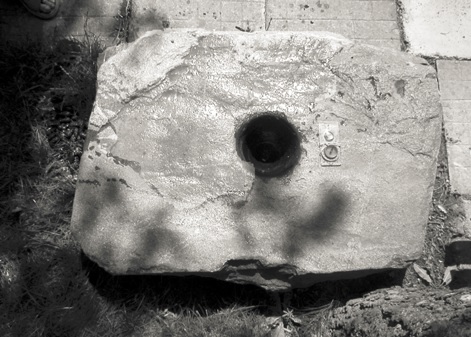
In my post about bullaun stones, the ancient grinding stones, I mentioned that these types of stones are also found in the South Eastern Baltic are. This is one of many old hollowed stones from the Baltic. They are called bowl stones and are, like in Ireland and in Slavic countries, regarded as sacred. The place where the stone is located is used as a place of worship. The diameter of this stone is about 60 cm and a depth - about 15 cm. In the past people considered the accumulated water as sacred and thought that it had healing properties. In the past the stone used to be called the stone of god.


You can see many more of these stones if you run this search. Here are some of them. This one is called "Lielais Daviņu Akmens" which means great stone of giving, offering, great altar. It seems that the stone was linked to harvest rituals.


This stone stands on a hill, where an old oak forest grew until the seventeenth century. The hill was a site of a pagan temple. 


For information about these stones in English look at the pages 27 - 33 of the book "Studies into the Balts’ Sacred Places".

I was just made aware of an article about an interesting half-made bowl-stone from Baltic region. On its top part there's a circular groove of a similar size as the usual bowls on other stones, as if someone had intended to gouge out a bowl there too but stopped half way through the process of gouging the hole. 


We can deduce though that this is how these bowl stones were actually made from their name in Lithuanian. Lithuanian word for bowl is dubuo, dubeni akameni...These words come from Slavic root dub meaning wood, oak but also to gouge. This second meaning comes from the time when utensils were made by gouging bowl like holes in pieces of wood and later stone. In Southern Slavic languages Dubiti means to gouge and Dubeni, Dubeno means gouged, with a gouged hole, bowl in it...Dubeni kameni in South Slavic languages means gouged stones, bowl stones...

But there is a special kind of these bowl stones which are found in the South Eastern Baltic that fall into a class of their own. These are so called "stones with narrow bottomed bowls". 


There are all together 250 narrow-bottomed bowls, but it is quite possible that more once existed, but were destroyed. Majority of these stones are concentrated in two areas: Central and Northern Lithuania / Central Latvia and in Eastern Lithuania. Only a couple of such stones were found in Samogitia.

Historical and archaeological records show that the stones with narrow bottomed bowls are very similar in dimensions and shape, regardless of the area in which they were found. The dimension homogeneity is quite stunning. Processed or unprocessed, the size of the stones varies only slightly. 


They are only in exceptional cases smaller than 60 x 70 cm and never exceed 100 x 120 cm. Stones thickness (height) is also very similar and varies between 25 - 35 cm. Several stones found in-situ protrude above the ground plane from 5 - 15 cm. The diameter of the upper part the bowl is rarely less than 15 - 16 cm and is never more than 23 - 24 cm. The bowls dept varies between 9 and 21 cm.


The stones are usually found on farms: near houses, barns and cattle sheds or inside them, quite often at the base of the building. Often there are 2 to 3 or even 4 to 5 stones with narrow bottomed bowls preserved in every village, for example Montviliskis, Vaiduloniai, Vileikiai. Today most of these stones are used as decorations. Sometimes these stones are used in churches for storing holy water, like in Dotnuva. But it seems that they were once used as corner stones, usually placed under the northern or north western corner of the house. 

Up until the seventeenth century it was customary to build wooden buildings without diging foundations. A layer of stones was placed on the ground and then the wooden house frame was built on top of it. Corner stones were the most important of all as they were placed under the main four supporting vertical beams. The bowl in the corner stone was usually oriented towards the inner side of building. 


The archaeological investigation which was carried near 9 of these stones dated them to the period 16th - 17th century. However, excavation near the Montviliskis stone uncovered two holes of about one meter in diameter full of ashes, cattle bones and potsherds dated to 2nd millennium AD as well as potsherds from the period 16th - 18th century. The bones were all of young animals, indicating that they were sacrificed in a "first fruits" kind of sacrificial fertility ceremony.

There are ethnographic records from Lithuania which show that in the past, when the corner stones were placed in the ground, a special blessing and sacrifice ceremony was performed.  The hole in which the corner stone was to bi placed was dug first. Then the owner of the house would step into the hole and would drink some vodka and then all the workers working on the house would do the same and then they would share some food and continue working. The corner stones were marked with wax crosses and money was placed next to or under them. It was believed that god lived in them. Not only that, but it seems that the stones with narrow bottomed bowls were used as family altars.

At the beginning of the 17th century Jesuits described the stones with narrow bottomed bowls calling them "Deiviu akmenys" meaning "Goddess stones".
The report  from the 1600 says: In stores big stones are kept. They are dug into the ground, with the flat faced facing up. They are covered with straw. They are called "Deyves" (Goddesses) and are faithfully worshiped as the protectors of cereal and cattle.
The report from 1605 says: Some very uneducated village people due to our efforts got rid of the bad habit of worshiping one stone which they thought to be the god of granary, fruitfulness and happiness of home.

Even though it is not specifically stated that the sacred stones were "bowled", there is much in common between the stones described by Jesuits and stones with narrow bottomed bowls: their location in farm buildings, the fact that the top face of the stone was flat, the stones had the function of the cereal, cattle, happiness provider.

There are legends about the stones with narrow bottomed bowls which state that in the old times they were used as mortar stones for milling, grating or pounding. In Veriskiai, the local legends states that the stone was used by the Devil to grind tobacco.

Some stories preserved by old people talk about holy water being stored in the stones and that before that people used to pour milk into the hole for the grass snake, the houses snake, the incarnation of the house protector spirit in Balto Slavic religion.

In the 17th century Jesuits recorded the existence of a god called "Pagirinis", meaning "The one who lives under the quern, under the mortar stone" basically "The one who lives under the stone with narrow bottomed bowl". Knowing this it seems that the most probable function of the stones was as an altar to the god (goddess) protector of home. Another 17th century Jesuit report states that the god "Pagirinis" sometimes comes out of his corner in a shape of a grass snake, but that it spend most of his time buried in the soil, which is kept in a clay or wooden dish or without a dish under the quern (mortar stone, the stone with the narrow bottomed hole).

So this is very interesting. We have:

1. a corner stone
2. which is shaped like an ancient mortar stone
3. which was used as a fertility cult altar.
4. which is referred to as a "Goddesses stone"
5. which is the home of the male deity whose name means "The one who lives under the quern, under the mortar stone"

In some parts of Serbia the " thick wall" made of stone which supports the house is called Baba.


In Bulgaria thick logs which are put under log cabin corners to support the house are called "bа́bka". This gives additional meaning to the Serbian proverb that says that "the house stands on a woman". I wrote about it in the post "Baba - the main column, pole that supports the house". It seems that baba was any supporting structure on which the house stood. 

In Serbian and in other Slavic languages the word Baba also means wich, goddess,  and not just any goddess, the Mother Earth. So it is not surprising that the above corner stones from Lithuania were called "Goddesses" stone. They are basically Baba's stone, as Baba, Mother Earth,  was the fertility goddess to which Lithuanians prayed to. Interestingly

The name of the male deity which is believed to live under the corner stone in Lithuania shows that that these stones were once actually used as grinding stones, as I postulated in my post about bullaun stones.

The fact that the mortar grinding stone was used as a fertility altar dedicated to the Mother Earth is not surprising at all either. A hole in the ground is where the plant seed is planted. A hole (vagina) in the lying woman is where human seed is planted. So a horizontal lying stone with a hole (mortar) is already suggestive enough. Mortar grinding stone and pestle even more. So much so that the mortar and pestle became the symbol of male and female genitalia in Hinduism (Yoni and Lingam).

This is a so called "wet" grinder mortar and pestle from India from this great blog post about making stone ground chutney


And this is Yoni and Lingam 


The union of sky and earth produces (releases) cereal seeds which are then poured into the mortar and pounded into flour with pestle in a motion which greatly resembles coital movement of penis (Lingam) inside vagina (Yoni) which produces (releases) human seeds which are poured into the vagina.... Do you see the link here? The fact that in the Baltic tradition milk was poured into bowl of the corner stone "for the snake to eat" confirms this, milk being symbolic replacement for sperm, milky white liquid containing human seeds. Once the cereal seeds are pounded into the flour flour is made into bread which is bake inside the bread oven which looks like the belly of a pregnant woman. And that bread oven is in Serbia called baba. Ovens were in old Slavic houses placed in north-eastern or north-western corner, just like the Goddess stones. 


The belief that the house protector snake lives in the house foundation does not only exist in the Baltic countries. It is wide spread in Slavic countries and it exist in Serbia too. In Serbia the house protector snake is believe to live in the house heart (stone oven) or the house foundations (the layer of stones which supports the wooden house frame, corner stones originally). It is believed that this snake is the spirit of the founder of the family, some other very distinguished ancestor, or the first male ancestor who died in the house. Either way this snake is the symbol of the male ancestor, just like Lingam. So we have a mortar stone (Yoni) which houses (in a bowl) snake (Lingam)...

And this is it, the story about Lithuanian co called "stones with narrow bottomed bowls". I hope you enjoyed it. Until the next time, stay happy.

References

"Aukštaitiški aukurai" by Vykintas Vaitkevičius
"Studies into the Balts’ Sacred Places" by Vykintas Vaitkevičius
"Pojmovnik Srpske kulture - baba" - Etnografski institut SANU