Showing posts with label ethnography. Show all posts

Thursday, 5 December 2019

Katun

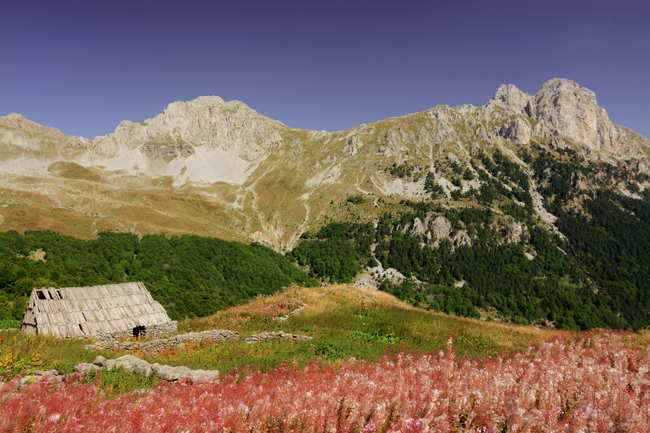
Orlovačko jezero, Zelengora, Bosnia. Highland pastures like these were in the past used by shepherds to graze their flocks during summer months. 


During the summer shepherds lived in camps called "katun" in shacks which had stone base, wooden log cabin or double and wattle walls and roofs either constructed from wooden panels or thatch. 

This is another "katun" shepherd summer camp from Bosnia. This one is next to the Prokoško Lake under Vranica Mountain. Apparently these and many other katun huts are now rented to hikers...


Flocks were moved to the highland pastures around Djudjevdan (St George's day, beginning of May, beginning of summer) and were moved down from the highlands around Mitrovdan (St Demetrios day, beginning of November, beginning of winter). These two dates separated the Solar year into two parts: White part (summer) between Djurdjevdan and Mitrovdan and Black part (Winter) between Mitrovdan and Djurdjevdan. This is the same year division also found in Gaelic calendar...

You can read about this calendar in my post "Two crosses"

This is a great recent picture of one of the "katun" shepherd summer huts from Montenegro. Incredible place... 


Another, now abandoned "katun" shepherd summer hut from Montenegro. Kuči mountains, Montenegro. 


In Serbia these shepherds huts are called bačija. 

This is one of the bačija  shepherd huts from Rudno on mountain Golija in Serbia. 


Here is another one from mountain Kopaonik, Serbia


And another one from Pester highlands in Serbia


Friday, 22 November 2019

Rings


In the village Postenje, in Azbukovica, highland area in western Serbia, women used to wear a ring for every son they had. Each son had his own finger with a single ring on it. 

If one of her sons died, she would put the ring on the finger of one of her still living sons...If the woman then had another son, she would leave the dead son's ring where it was, and would put a new ring on an empty finger for her new son...

When an old woman died, she was buried with all her rings. But if a young woman died, all her "son" rings were taken off her fingers before her burial...

The rings are kept by the dead woman's husband until he finds a new bride that he wants to marry. Then a very interesting ritual is performed with them...

The a new bride is chosen, "widows from the village" take the dead woman's "son rings", chose one, and "cary it around the bride". After that they give it to the dead woman's husband to look at his new bride through it. This seals their future marriage...

Does anyone know of any similar custom? It is absolutely fascinating. The ethnographer that recorded it in 1921 thought that this custom was once widespread...

From the "Journal of the Ethnographic museum in Belgrade, book 1", published in 1926. Link here, Serbian, Cyrilic

Sunday, 8 September 2019

Donja Dolina

Helmet (6th. c. BC) from Sisak, Croatia found in Illyrian warrior grave. Prior to the arrival of the Romans, who gave it the Latin name Siscia, the region was Celtic and Illyrian and the city there was named Segestica or Segesta


Similar helmet, also dated to 7th-6th c BC, was found in 1896, by Ilija Knežević, a peasant from the village of Donja Dolina (Lower valley) located further downstream on Sava river in Bosnia

The discovery of this second helmet led to the discovery of a very important prehistoric industrial and trading centre, which was continuously inhabited from the second half of the second millennium BC until the Roman times.

The Donja Dolina site is located on the right bank of the river Sava, near marshy area full of fish, surrounded by big forests full of game and on the land which is ideal for agriculture. 50km southwest are mountains full of iron ore. Ideal settlement for an Iron Age community


Interestingly, the old Iron Age settlements (there were two, an older and newer one), which were abandoned 2000 years earlier, were found in areas known locally as Velika i Mala Gradina (Big and Small ruined city)...


The old, Late Bronze Age settlement was built on land. But right about the time when the place was settled (1300-1200 BC), a sudden catastrophic climate change made climate much wetter and colder.


This diagram is from my post about ancient salt extraction techniques

The cold and wet period, which increased the river water level, caused frequent floods, made land even more marshy and pretty much completely wiped out agriculture in the area, culminated around 850 BC.

It is around 800 BC when people finally abandoned land life and started living in houses on stilts. The image by Igor Ilijev from his upcoming book about Donja Dolina.


The excavations started in 1896. The settlement was exceptionally well preserved because of the fact that it was covered by thick layers od mud. Pic 1: support substructure. Pic 2: stairs going down to the water level


A very interesting burials were discovered in the settlement. 8 people were buried in wooden coffins in the ground between the stakes which supported the house platforms. None of the people buried under the settlement were warriors


Most of the people were buried in cemeteries located near the settlement. They were either cremated and urns (pic) were placed in shallow graves or their bodies were placed in the ground either directly or in wooden coffins


Most burials had no grave goods apart from food vessels (bowls and cups). These are particularly beautiful examples


However hight status individuals were buried with jewellery, armour and lots of additional grave goods (multiple ceramic vessels). This is a grave of a high status woman buried with her jewellery


Warrior graves contained weapons and food and drink vessels. Here are contents of three warrior graves all dated to 7th-6th c BC. From: The Forgotten Graves from Donja Dolina 


The Donja Dolina was an important trading centre. Goods from as far as Greece in the south, Italy in the west, Bulgaria in the east and Baltic in the north were found in the graves belonging to the people from settlement


The settlement was also an important metallurgical centre. This fibula mould found in one of the graves is of a type found only in Italy at the time, suggesting that this was a grave of an immigrant metalworker


Among many items produced in the Donja Dolina Iron Age settlement, I particularly like this type of bracelets. Are they unique? Anyone seen anything similar from the period 800-400 BC?

Another interesting type of objects found in Donja Dolina Iron Age settlement were bronze "ornamental rods". Up to 10cm long, they are found in graves as components of the funerary ornaments. Anything similar anywhere else? Meaning?

Here is a complete inventory of one of the warrior graves where these ornamental rods (also classified as staffs, even though they are only 10cm long) were found


Most helmets found in the Donja Dolina 7th-6th c BC graves, were made in Macedonia where they were found in princely graves. At that time in Greece, they are found only in sanctuaries, linked with the territory of ancient Macedonia

Among the scattered finds from the cemetery, these two peculiarly shaped clay objects stroke my attention. The size of the objects is less than 10cm. Use unknown. Any ideas? Stamps of sort? For bread maybe?


Another type of objects without good explanation are these sandstone prisms with swastikas engraved on the top and bottom.


Another interesting swastika design was reconstructed from several fragments found at the site


The results of the excavations, were published by Ćiro Truhelka in 1904 in "Der vorgeschichtliche Pfahlbau im Savebette bei Donja Dolina

I like this stamp issued by Bosna i Hercegovina - Republika Srpska (Bosnia and Herzegovina - Serbian Republic), showing weapons found in Donja Dolina site


To me the most interesting finds from Donja Dolina Iron Age archaeological site are boats. This is the biggest one, 12 meter long oak dugout, currently in Zemaljski muzej Bosne I Hercegovine, Sarajevo


And this is the photo from 1901 showing the lifting of the boat from the site. Were boats like this one used during the early Iron Age for trade transport along Sava river?


And this is the picture showing the smallest boat found in the Early Iron Age settlement Donja Dolina in Bosnia, a miniature model of an oak dugout. Several are found in every house in the settlement. Toys? Or???


What is interesting is that almost identical boats were still used in Donja Dolina in the early 20th century. In the book "Vremeplov: Narodno ribarstvo u Bosni I Hercegovini" we find this fishing boat


I particularly like this picture from the book about the folk fishing from Bosnia, showing three types of dugout boats from Donja Dolina: a) male, b) female, c) front male back female...

The dugout boats are not the only thing which has been in continuous use since the early Iron Age in Donja Dolina. These are stilt houses in which people lived in Donja Dolina in the early 20th c


And finally here is my favourite picture. Women from Donja Dolina, in a "female" boat, coming back home from a bridal party. This could easily be a scene from the Iron Age Donja Dolina...


In the end, here is the link to the report about Donja Dolina Archaeological site published by the commission for preservation of national monuments from Bosnia and Hercegovina from which I translated some excerpts for this post.  

Wednesday, 16 January 2019

New house

In the past in Serbia, during the building of a house people performed many rituals designed to insure success of the building process and subsequent survival of the house and happiness of the house inhabitants. 


A place for a new house was chosen carefully. In Central Serbia, it was believed that the best place to build the house on was the one which a flock of sheep chose as it's resting place. 


Before the new house was built, four rocks were placed on the ground where the house corners were supposed to stand in the evening. If in the morning bugs were found under the rocks, the house would stand in that place for a long time.


One more ritual performed to determine if the place for the house was chosen correctly involved placing a glass of water or wine in the middle of plot in the evening. If in the morning "something alive" was found drowned in the glass, the place was chosen correctly. 


Finally, the testing of whether a location was good for building a house included the rolling of  bread. In Levač and Temnić, if the rolled bread fell on “its head”, it was considered that the location was advantageous for building a new house...


Every new build required a blood sacrifice. Before the building started, a lamb or a cockerel was slaughtered on the foundation stone. The head of the animal was built into the wall, and the meat was roasted and eaten by the family and the workers.


It was believed that someone from the family will soon die after they move into the new house, because every house wants to have its protective spirit, which is the spirit of the first person to die in the house.  

To prevent this from happening, during the move, people made sure that a rooster was the first to cross the doorstep of the new house. This was done so that the rooster would "drive the evils spirits out". 


But straight after the rooster entered the house, he caught and was then killed on the doorstep, (the seat of the dead) by the man of the house...


Cockerel's blood was then sprinkled on the outside walls and into all four corners of the house, and his head was buried under the fireplace, the seat of the domestic cult.

What is very interesting here is that there are many indications that sacrificing a cockerel was among serbs a replacement for a human sacrifice...I talked about this in my post "Cock bashing" and "The third death"...

People avoided walking by a building site of a new house, because it was believed that the builders would build person's shadow into the house walls, to create a protective house spirit. The owner of the shadow would then soon die and become the house spirit. 


This is probably a remnant of the old custom to build people alive into the house walls or foundations. Serbian epic poetry is full of stories about this ritual which was used "when fairies would not allow a town, bridge, church..." to be built. I talked about this in my post "Blood and mortar"...


When the foundation was dug, a handful of grains, a few coins and a piece of frankincense were placed in each corner of the house, so that "the people in the house always had enough bread and money". Frankincense protected the house from vampires.


Moving into the new house was also full of special rituals. 

It was believed that the best time to move into the new house was on the days of the full moon. 


The fireplace was considered to be the heart of the house. If a family was moving from an old, still existing, house into a new house, a fire from the old fireplace had to be brought into the new fireplace, to ensure the continuation of the family.


If it was not possible to bring the fire from the old house, a brand new "live" fire (need fire) had to be kindled "in the old way", by "rubbing wood on wood", using fire drill or fire saw. These kind of fires were believed to have magical properties.


The sourdough starter, was by Serbs possibly associated with the (protective) ancestor (spirit). Maybe because the starter was passed from generation to generation...This could be why Serbs believe that when moving from an old house to a new house, the starter in the old house should be destroyed and a new starter should be made for the new house...


After the fire was lit, new bread was made. This new bread was then broken and eaten by the members of the family dipped into salt, a traditional welcome offering. After that all the other things are brought in. 


The last thing the family needed to do to "put roots down" in the new house was to plant a fruit tree next to the house, which had to be done by the man of the house not later than one year after the family moved in.