Showing posts with label animal symbolism. Show all posts

Tuesday, 16 August 2022

Griffin vs Black Grouse

This amazing Scythian artefact, dated to the period 4th–3rd c. BC is a perfect illustration of everything I hate about the way artefacts with the depictions of animals are treated by (most) archaeologists and pretty much everyone else...

Here comes the rant: πŸ™‚

When I first saw this artefact, it had this English description: "A reconstruction of a leather flask found in one of the Pazyryk burials. Based on excavations by S. I. Rudenko...It is decorated with two identical images showing a griffin fighting a black grouse"...

"a griffin fighting a black grouse"???

I spent good few minutes eyeballing the photographs, trying to see either 

a Scythian griffin 


or 

a black grouse

After I failed to see either, I decided to see if I can find original Russian description of the image...

Sure enough I found one here. In Russian, the description says "Ρ„ΠΈΠ³ΡƒΡ€Ρ‹ Π³Ρ€ΠΈΡ„ΠΎΠ², ΡΡ…Π²Π°Ρ‚ΠΈΠ²ΡˆΠΈΡ… когтями Ρ‚Π΅Ρ‚Π΅Ρ€Π΅Π²ΠΎΠ²" meaning "depictions of vultures grabbing black grouses with their talons" πŸ™‚ Russian word "Π³Ρ€ΠΈΡ„" meaning vulture, not griffin... 🀦‍♂️

Ok...Hmmmm...Again...Eyeballing, eyeballing...The image on the Pazyryk flask clearly depicts two raptors with huge beaks and talons fighting each other...But are they really "Π³Ρ€ΠΈΡ„", vulture though? Possibly...But there is no effing way one of the birds is a black grouse...

I mean, don't get me wrong. Black grouses are not pacifist, at least when it comes to getting laid...They fight viciously to determine who gets the girls  https://forestryandland.gov.scot/blog/black-grouse-mating

But neither one of the two depicted fighting birds looks like any either a 

Black grouse

or 

Western grouse

the two big grouses from Central Asia...

Seriously, WTF is wrong with people writing these artefact descriptions...

And so, I started searching for raptors of Central Asia...The three biggest raptor species found in Souther Siberia are in order of size Steppe Eagle, Golden Eagle and Cinereous Vulture...


Steppe eagles fight all the time...


Golden eagles fight all the time...

Cinereous Vultures fight all the time...


So are both fighting birds depicted on the Scythian flask of the same species? Hmmm...The bottom bird has some lumpy thing on its neck...

None of the eagles have anything like that...But the vulture has tufts of feathers on its neck that look just like that lump...

So is one of the birds depicted on the Pazyryk flask a Cinereous Vulture and the other one an eagle? And if so which eagle? The two birds depicted on the flask look similar in size, with the top one (eagle) slightly smaller then the bottom one (Vulture)...

Of the above two eagle species, only Golden eagle is similar in size with the Cinereous Vulture...And a fight between a Golden eagle and a Cinereous Vulture was actually captured on a film...An in this film, Vulture wins...You can see the video here...

Oh and here is a still image from the video where we can see the vulture "tuft" that looks like a lump...

So have we determined the actual identity of the two fighting birds depicted on the Pazyryk flask? Well...As I was finishing this article I came across this article which says that until recently, White tailed eagles also lived in Southern Siberia...

And White tailed eagles fight all the time...And are known to steal food from other birds...So...πŸ™‚

And, White tailed eagles are even bigger than Golden eagles...

So they would be perfectly capable of taking on a Cinereous Vulture...

So...Anyway, do you know what was found in this Scythian flask? Hemp seeds. According to Herodotus, the Scythians threw hemp seeds on hot stones, inhaled narcotic smoke and "rejoiced loudly" πŸ™‚ 

And so let's all rejoice at the end of this article which, I hope, was fun...

Thursday, 23 December 2021

Inviting spring

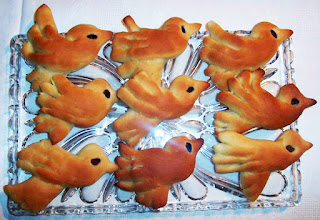
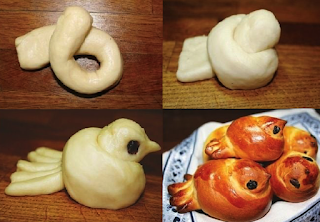
There are special kind of bird shaped buns baked by Eastern Slavs as part of the "inviting spring" rituals which were traditionally performed in March every year.  They are called "ΠΆΠ°Π²ΠΎΡ€ΠΎΠ½ΠΊΠΈ, zhavoronki" (larks) or "ΠΊΡƒΠ»ΠΈΠΊΠΈ/kuliki" (sandpipers) ...

These cookies were baked in March for the first (1st of March), second (9th of March) and third (March 22 or 25th) calling (inviting) of spring...I guess one can get pretty impatient waiting for spring to arrive...πŸ™‚

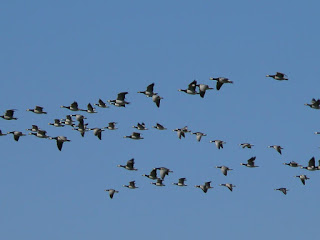
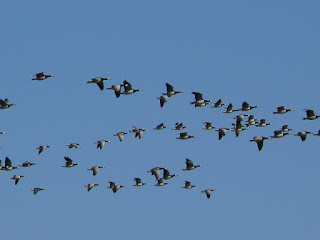
People believed that larks and sandpipers arrived “carrying spring on their wings” and “leading other migratory birds behind them”. And the arrival of migratory birds was a sure sign of coming spring. And an extremely important event in Slavic tradition...I talked about this in my post "Leto"...


Remember, Slavs believed that every autumn, migratory birds took away the sun to Iriy, Slavic Otherworld, World of the Dead, where he spent winter. And that every spring, migratory birds brought the sun back into our world...

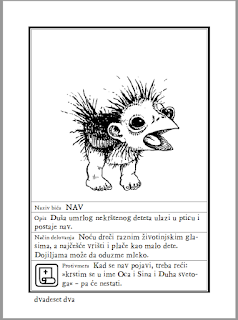
But Slavs also believed that migratory birds also brought souls from Iriy. Souls which were ready to be reborn...I talked about this in my post "Nav"...

Here is how you can make two main types of bird buns, the flying one and the sitting one...


Anyway, once made, the "larks" and "sandpipers" buns were placed on the windowsill, but most were given to children who ran around with them pretending that the birds were flying, all along shouting and calling spring to come...

Some children stuck their "bird" bun on long rods and waved them high in the air pretending that the birds were flying. Some other children threw the "bird" buns in the air trying to make them “fly” as high as possible. Some carried the "bird" buns on their heads...

The kids tried to bring their "bird" buns to "the high places": tops of hills, trees, rooftops, haystacks, fences...Children played with their "larks" all day and ate them in the evening, but some bird buns were left on the high places as offerings...

In some areas the kids would eat the bodies of their bird buns, but the heads were fed to the cattle "before they were taken out to graze in the fields for the first time"...This again seems to have been a ritual offering, a sacrifice of sorts "for good weather"...

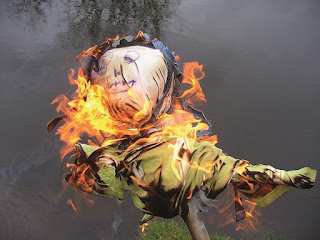
Some bird buns were left on a patch where all snow melted. And some were thrown into a river...Remember snow melt is another sure sign of the departing winter (Morana/Marzana, the Old Hag Earth) and arriving spring (Vesna, the Young Maiden Earth)...

Which is why Slavs burn the effigies of winter or drown them or both...To be sure to be sure...But also heating of the earth causes snow to melt and the rivers to swell with the snowmelt...I talked about this in my posts "Gryla", "Baba's day"...

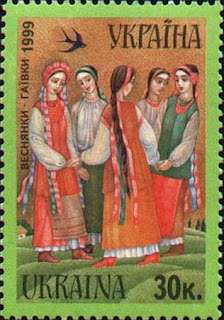
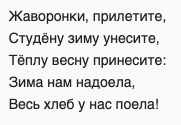
Apart from children, young unmarried women also played a major role in "calling of spring" rituals. They were the ones who sang "ВСснянки / Vesnyanki" (Spring songs)...

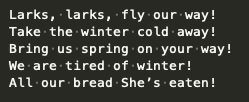
Like this one. And do you see how the end of bread (flour) is linked with the departure of winter and the arrival of spring?


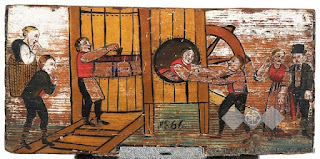
That's interesting...Because it explains the "magical transformation of an old woman into a young maiden through milling" images from Slovenia...

I talked about this in my post "Grandmother's mill"


And in my post "Old woman of the mill dust" about a very similar folk tradition from Ireland...

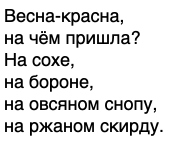
Here is another Vesnyanka (Spring song). This one directly linked with grain agriculture too...


I don't get this Red Spring thing though...Was this once ВСсна ΠšΡ€Π°ΡΠΈΠ²Π°Ρ (beautiful spring)??? Or is red = hot?

Anyway, in some areas, women baked rye bread and then went out of the village, to the fields, orchards, meadows... There they bowed to earth, threw the bread on the ground and exclaimed: "Here is, Mother Spring, some rye bread for you"...

Again, this is a ritual sacrifice of bread to the mother of bread...And it is performed by a woman...In Slavic tradition (and not just Slavic) Earth fertility and female fertility was directly linked...I talked about this in my post "Walking sheafs of wheat", "Wheat wreath", "Corn dolly"...

This pre Christian Slavic celebration of the end of winter and the beginning of spring was later incorporated into Christianity and is now seen as part of "Π‘ΠΎΡ€ΠΎΠΊΠΈ / Soroki" (Forty Martyrs of Sebaste)  for some weird reason... 

Here you can find the recipe and the instructional video for these beautiful bird buns (with English subtitle)... 

More about spring and birds in Slavic folklore can be found in these posts: "Partridge",  "Tetjorki", "Swallows", "Bird wedding", "Leto", "Radegast", "Cock bashing"...

Monday, 3 May 2021

Killing of the bull of heaven

Assyrian cylinder impression, MS 1989, SchΓΈyen Collection, Norway, depicting Enkidu and Gilgamesh killing the Heavenly Bull...


The interesting bit is here: Epic of Gilgamesh, Table VI, 140-149.

Enkidu stalked and hunted down the Bull of Heaven.
He grasped it by the thick of its tail
and held onto it with both his hands,
while Gilgamesh, like an expert butcher,
boldly and surely approached the Bull of Heaven.
Between the nape, the horns, and... he thrust his sword.
After they had killed the Bull of Heaven,
they ripped out its heart and presented it to Shamash.
They withdrew bowing down humbly to Shamash.
 
This is actually very interesting. 

Bull is the ancient symbol of summer (May, Jun, Jul), the period which starts in Taurus...


I talked about this in my post "Symbols of the seasons"...

By the way, summer is symbolised by a bull, because both calving (begins in Apr/May) and mating (begins in Jul/Aug) of Wild Eurasian cattle takes place during the summer, May to August...I talked about this in my post "Ram and bull"...

Taurus (Apr/May), the period when wild Eurasian cattle start their calving season, was extremely important time of the year for the people of Ancient Mesopotamia. This is when the water levels of Tigris and Euphrates peaked...

Tigris


Euphrates

So to the people of the Ancient Mesopotamia, it sure looked like it was the sun, Shamash, who released Enki, the sweet water, at the beginning of summer, in Taurus...

I talked about this in my post "Shamash young and old"...

Which is why Shamash is depicted as a golden bull with long flowing "lapis lazuli" (water) beard...

And why, in "Enki and the world order" we read: "...Father Enki...he stood up full of lust like a rampant bull, lifted his penis, ejaculated and filled the Tigris with flowing water. He was like a wild cow mooing for its young in the wild grass..."

The moment of Enki's ejaculation, the moment of his climax, the moment of the peak water levels in the rivers he fills with his heavenly semen, is also the moment when "wild cows moo for their young in the wild grass"...In Taurus...

Taurus was also the beginning of the grain harvest in Mesopotamia...

Which is why Shamash/Utu is also depicted as a bull with a tail made of wheat...


Both the flood and the grain harvest end with the summer, in Jul/Aug. So killing of the bull symbolically represent end of summer symbolised by a bull...As well as the end of the harvest and the end of the period of water abundance. And the beginning of drought...

This killing of the bull is usually done by a lion...


This is a symbolic depiction of the end of summer, which begins in Taurus (Apr/May) and ends in Leo (Jul/Aug)

And, Leo is a solar year calendar marker which marks the beginning of the main mating season of the Eurasian lions. 

Leo is the hottest and driest part of the year in Mesopotamia. The time of maximum heat, maximum drought. 


The throne of Shamash, the sun god. When he is the most powerful...Here is Shamash standing "between the lions" (in Leo), in an empty irrigation canal, at the moment of maximum heat and drought, when he is most powerful...


But here the killing is done by Gilgamesh and Enkidu. On behalf of the Shamash in Leo...

So our two "heroes" kill the bull of heaven (season), rip its heart (water, grain???) and present it to Shamash...Summer, the season of the bull ends. Autumn, the season of the lion begins...

Oh and guess who is there too, "standing on a lion" (in Leo): Ishtar, who started the whole thing


Sirius starts rising with the sun (is a "morning star") in Leo...

Saturday, 27 February 2021

Pillar 43

While we are talking about GΓΆbekli Tepe, I would like to just ask few questions about the "famous" pillar 43,   Otherwise known as "scorpion and vultures pillar". I would add "and bags, don't forget the bags"...

Is this a random collection of images or???

In my article about the "Four living creatures" I explained that scorpio is the only Zodiac sign which has its double: eagle (actually a vulture and you will see soon why).


I have shown in my articles about zodiac signs that they are actually all solar calendar markers, marking the part of the solar year when the animal in question has its mating or birthing season. An obvious annual event which you can't miss...

That this use of animals as solar calendar markers predates Greek Zodiac by thousands of years, and was ubiquitous all over Eurasia and North Africa, and used in the same way since Neolithic, I have shown in my articles about animal calendar markers...

Interestingly, both animals depicted on the pillar 43, vultures and scorpion, were used in Middle East and Central Asia as calendar markers to mark the beginning of the rain season. Why?

In the area of Gobekli tepe the solar year is divided into two seasons, dry season (end of May to start of October) and rain wet season (end of October to start of May). And in places with this kind of climate, the arrival of life giving rain is the most important calendar event.

Vultures begin their mating season when the first rains arrive, November. 

And you can't miss it, because they start their mad areal synchronised displays:


I talked about this in my article "Double headed eagle"...

Scorpions hide when the temperature gets too low. Which in the area of GΓΆbekli Tepe is also when the first rains arrive, November. And you can't miss this because they disappear from the fields, where it's cold and wet, and appear in your houses, where it's warm and dry

I talked about this in my post "Dilmun goats seal"...

So both scorpion and vultures being depicted on the pillar 43 could mean: when rains arrive...

Cool, I can hear people say, but maybe just a coincidence. How do you explain the bags?

Well, scorpion was used in Mesopotamia (just down the road from Gobekli tepe) as calendar marker to mark the beginning of the grain sowing season. 

Sowing of grains was done after the first rains, when the scorpions disappear. I talked about this in my articles "Sowing" and "7 stars of scorpio"...

After the furrow is made, the seeds are planted into the furrow. Now how did these early sowers bring the seeds to the field? Most likely in a basket...or a bag...with a handle...

Like this one carried by the sower walking next to the plow on this Mesopotamian seal.

Or like this one seen carried by the sower walking behind the plow on this Egyptian mural.

Or like this one carried by the sower on this European Medieval drawing.

I Mean this is the same thing, just the basket is replaced by a "bag" or a bib...

Or like this one carried by the sower on this Van Gough painting...

And so on and so forth...

I know others asked this question before, but here it is again: I wonder if the "basket" like objects found depicted all over Mesopotamia were possibly actually just baskets. Full of grain seeds used for planting new grain.

If you think about it, the mental jump from "eat all the seeds you collect" to "save some of these seeds to plant them so they will grow into plants that will produce more seeds next year" was huge. I mean this was a paradigm shift of the highest order...

The faith placed in these seeds was huge. The expectation from these seeds was huge. We know, from ethnographic records, that these seeds were treated in a special way, that special rituals were performed with them, that blood sacrifices were offered to them...

All in hope that these seeds will take, sprout, grow, ripen and eventually, after a whole solar year has passed, yield more seeds then were originally in the basket...That is a lot of anxious waiting and hoping and praying...So much, you could make a religion out of it πŸ™‚

Considering all this, is it possible that the seed basket was also seen and treated in a special way? Is it possible that this basket of seeds for sowing became a symbol of the new "agri" culture? Not sure...

Anyway, I just find it interesting that we find all these symbols linked to grain sowing together on one stone in Gobekli tepe. By the way, is that a hand poking into the middle "bag" (basket)? Like as if to take something, I don't know, maybe seeds, out of it? It's not clear...

PS: The other day I saw this interview with Dr. Lee Clare, the head of fieldwork and research coordinator for the German Archaeological Institute (DAI) project at the GΓΆbekli Tepe. In it he explains that the grains found in GΓΆbekli Tepe were wild grains. 

My opinion is that this doesn't preclude the possibility that the people from GΓΆbekli Tepe culture, who actively collected the wild grain seeds for food, actually planted them too. As I said, if this happened, this would be a huge paradigm shift which could have led to eventual domestication of wild grains...

But can't prove whether they did or didn't do that. 

Also, Dr. Lee Clare thinks that these were not bags at all, but actual depictions of houses with roofs. Which is also possible...

To read more about ancient animal and plant calendar markers, start here…then check the rest of the blog posts related to animal calendar markers I still didn't add to this page, and finally check my twitter threads I still didn't convert to blog post...I am 9 months behind now...