Showing posts with label Scythian archaeology. Show all posts

Friday, 14 October 2022

When fishes swim up Danube

Vettersfelde treasure, 6th c. BC golden hoard found in Witaszkowo, Poland in 1882, decorated in the "steppe animal style", and believed to be "of Scythian origin"...You can read my analysis of this treasure in my post "Vettersfelde treasure"...


In this article I disputed the Scythian origin of these objects, and instead proposed that they were made by settled fishermen communities somewhere in the Black or Azov Sea area...Reason? Fishes depicted all over these objects...Not something steppe nomads would care about...

I then proposed that these objects were most likely looted by Scythians and somehow eventually ended up in Poland...

But that's not the important part. The important part is the meaning of all these animal symbols in combination with fishes...

You can see that both main objects contain the same three central animal groups: 

1. leopard killing boar

2. lion killing deer

3. fishes


Because boar mate during winter, and leopard mate at the end of winter beginning of spring, leopard killing boar means beginning of spring, Jan/Feb...


Because lions mate during autumn, and deer mate at the end of autumn, lion killing deer means end of autumn, Oct/Nov...


So what about the fish then? At the time when I wrote the original article I was aware that the biggest migratory fish in Central Europe, sturgeon, starts its upstream spawning migration in Feb/Mar, in Pisces🙂...

So I concluded that the meaning of these animal calendars is: Sturgeons, very important source food in the past, start migrating upstream (fishing season begins) after autumn and winter have passed, in the spring, in Pisces...I talked about pisces as a marker for salmon upstream migration in European rivers in my post "Fishes"...I talked about the importance of sturgeons as a food source for the people living along Danube river since Mesolithic in my post "Mesolithic sturgeon fishermen"... 

But the other day i came across this paper about the seasonal migrations of sweet water fish in Danube river, and I realised that I was only partially right...

Sturgeons indeed start their upstream migration in Feb/Mar, but the peak is in Apr/May...And they are not the only fish that seasonally migrate up the Danube river. Carp and shad also seasonally migrate upstream, also peaking in Apr/May...
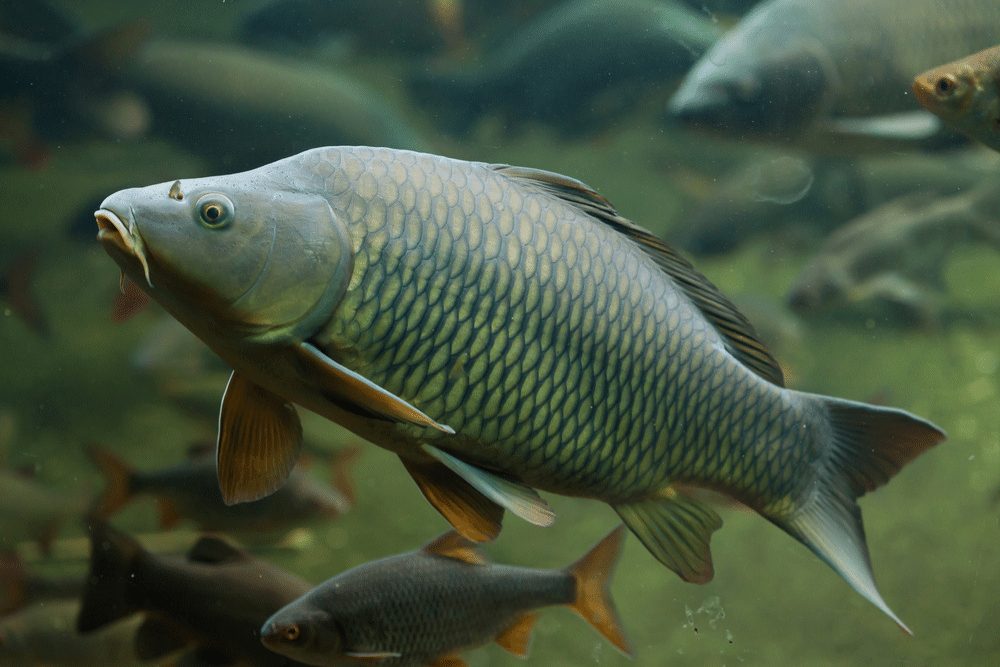
The fish migration season (and fishing season) begins in Feb/Mar and ends in Jul/Aug/Sep...

Sooooo...knowing this, the meaning of the main "animal - fish" calendar form the Vettersfelde treasure is:

The fish migration season (and fishing season) begins after leopard kills boar (Jan/Feb) and ends before lion kills deer (Oct/Nov)...

To read more about ancient animal and plant calendar markers, start here…then check the rest of the blog posts related to animal calendar markers I still didn't add to this page, and finally check my twitter threads I still didn't convert to blog post...I am 9 months behind now...

Tuesday, 16 August 2022

Griffin vs Black Grouse

This amazing Scythian artefact, dated to the period 4th–3rd c. BC is a perfect illustration of everything I hate about the way artefacts with the depictions of animals are treated by (most) archaeologists and pretty much everyone else...

Here comes the rant: 🙂

When I first saw this artefact, it had this English description: "A reconstruction of a leather flask found in one of the Pazyryk burials. Based on excavations by S. I. Rudenko...It is decorated with two identical images showing a griffin fighting a black grouse"...

"a griffin fighting a black grouse"???

I spent good few minutes eyeballing the photographs, trying to see either 

a Scythian griffin 


or 

a black grouse

After I failed to see either, I decided to see if I can find original Russian description of the image...

Sure enough I found one here. In Russian, the description says "фигуры грифов, схвативших когтями тетеревов" meaning "depictions of vultures grabbing black grouses with their talons" 🙂 Russian word "гриф" meaning vulture, not griffin... 🤦‍♂️

Ok...Hmmmm...Again...Eyeballing, eyeballing...The image on the Pazyryk flask clearly depicts two raptors with huge beaks and talons fighting each other...But are they really "гриф", vulture though? Possibly...But there is no effing way one of the birds is a black grouse...

I mean, don't get me wrong. Black grouses are not pacifist, at least when it comes to getting laid...They fight viciously to determine who gets the girls  https://forestryandland.gov.scot/blog/black-grouse-mating

But neither one of the two depicted fighting birds looks like any either a 

Black grouse

or 

Western grouse

the two big grouses from Central Asia...

Seriously, WTF is wrong with people writing these artefact descriptions...

And so, I started searching for raptors of Central Asia...The three biggest raptor species found in Souther Siberia are in order of size Steppe Eagle, Golden Eagle and Cinereous Vulture...


Steppe eagles fight all the time...


Golden eagles fight all the time...

Cinereous Vultures fight all the time...


So are both fighting birds depicted on the Scythian flask of the same species? Hmmm...The bottom bird has some lumpy thing on its neck...

None of the eagles have anything like that...But the vulture has tufts of feathers on its neck that look just like that lump...

So is one of the birds depicted on the Pazyryk flask a Cinereous Vulture and the other one an eagle? And if so which eagle? The two birds depicted on the flask look similar in size, with the top one (eagle) slightly smaller then the bottom one (Vulture)...

Of the above two eagle species, only Golden eagle is similar in size with the Cinereous Vulture...And a fight between a Golden eagle and a Cinereous Vulture was actually captured on a film...An in this film, Vulture wins...You can see the video here...

Oh and here is a still image from the video where we can see the vulture "tuft" that looks like a lump...

So have we determined the actual identity of the two fighting birds depicted on the Pazyryk flask? Well...As I was finishing this article I came across this article which says that until recently, White tailed eagles also lived in Southern Siberia...

And White tailed eagles fight all the time...And are known to steal food from other birds...So...🙂

And, White tailed eagles are even bigger than Golden eagles...

So they would be perfectly capable of taking on a Cinereous Vulture...

So...Anyway, do you know what was found in this Scythian flask? Hemp seeds. According to Herodotus, the Scythians threw hemp seeds on hot stones, inhaled narcotic smoke and "rejoiced loudly" 🙂 

And so let's all rejoice at the end of this article which, I hope, was fun...