Saturday, 15 February 2020

Musth

This is a very very interesting Indus Valley civilisation artefact. Official description: "TPlano convex molded tablet showing a female deity battling two tigers and standing above an elephant. A single Indus script depicting a spoked wheel is above the head of the deity"...


The interpretations of this artefact which are put forward all pretty much sum up to "We have no idea what we are looking at"...

So I would like to put forward my interpretation of this image to see if it makes sense to you guys...

First I would like to remind you of my article about the Assumption of Mary. In it I talked about all Eurasian and North African goddesses which either sit or stand on a lion, or arrive in a cart pulled by lions, or sit on a throne between lions...

In Serbia this goddess is preserved as St "Ognjena Marija" (Fiery Mary).


Middle of Leo, the moment of maximum heat in the northern hemisphere, is in Serbia known as St Elijah's day. St Elijah, the saint that "gets so angry at the world that he is about to burn it to cinder.


 Except he doesn't, because he is calmed by his wife Ognjena Marija (Fiery Mary)...The Lion (Leo) Lady...


I talked about Serbian Middle of August mythology in my posts "The thundering sun god", "Alidjun", "Ognjena Marija"

I proposed that all these images represent one thing: Virgo which starts when Leo ends...Mary. Fiery Mary...

The image of a woman standing or sitting between two lions specifically marks the moment when the Earth starts to increase its influence in the Sun-Earth system and the beginning of the cooling of the northern hemisphere. This happens in the middle of Leo...I talked about this in my post "Two Crosses"

The middle of Leo is difficult to represent visually. You can do it by depicting the woman as standing on the middle part of the lion's back, or standing or sitting between two lions...Which is exactly what we find...

Sun in the middle of Leo is on this illustration from a 17th century Persian Manuscript represented as a sun sitting between two lions.


So the woman standing between two lions (not tigers) on the Harrapan seal represents middle of Leo and the beginning of the cooling of the area of India and Pakistan where Indus River civilisation once flourished (Area 1 on the below map)...


The average temperature all over India starts dropping in the middle of Leo (July-August). The same is true for northwestern part...


Why is the "Goddess" standing on an elephant? Every year, during mating season, Asian elephant bulls develop a physiological condition called "musth"...


Musth occurs at the same time every year and peaks during wet season, monsoon season. And that season starts in June and ends in September. And yes, it peaks during Leo (July-August). Here is the precipitation for northwestern India....


Climate details for Indian subcontinent can be found in this article.

So the image depicted on the Indus Valley seal means: When Elephants go into mating season, in the middle of Leo, Earth will start to cool down, and Lady, Virgo, Yin, Mother Earth aspect of nature will start taking over...I talked about the Earth - Sun system in my post "Yin and Yang".


And the Lady is not standing between two lions for no reason either. Mating season of Asiatic lions starts in August, in Leo...


I talked about this in my post "Entemena vase". 

And what comes after Leo? Virgo of course...The lady that likes "riding on lions" or "riding on carts pulled by lions", or "standing between the lions"...

What about the "Indus Valley script symbol" above the scene? Well, middle of August, middle of Leo, is in Serbia known as day of Perun, the day of the thunder god. The bringer of rain. The scene on the seal depicts "middle of Leo, maximum heat, maximum rain"...And the wheel...


Interestingly, Serbian ritual folk songs talk about "Serbian old country, India". I talked about this in my post "Triglav, Trojan, Trinity, Trimurti"...

O yeah. Did you know that Indra, Hindu thunder god, arrives on Airavata, a white elephant which is also called "Abhra-Matanga" meaning "elephant of the clouds", "Naga-Malla" meaning "the fighting elephant" and "Arkasodara" meaning "brother of the sun"...


Interesting, right?

Wednesday, 5 February 2020

Axe of Martin

Willibrord  (658 – 739 AD) was a Northumbrian missionary saint, known as the "Apostle to the Frisians" in the modern Netherlands. He became the first Bishop of Utrecht...


Bede says: "Pepin gave Willibrord a place for his episcopal see in his famous castle, which, in the ancient language of those people (who originally built it), is called Wiltaburg (the town of the Wilti), but in the French tongue Utrecht..."

Wilti, of Wiltzi were a West Slavic tribe. During the time of Charlemagne, Wilti were in alliance with the Saxons, fighting against the Franks who were allied with another Slavic tribe, Obodriti...

You can read more about Slavs among Anglo Saxons in my post which talks about the 1906 book "Origin of the Anglo – Saxon race" by Thomas William Shore...

Now this is very interesting. Here is why:

The Museum Catharijneconvent in Utrecht has a relic in its collection which is called "the hammer of St. Martin of Tours". It was made in the 13th or 14th century from a late Bronze Age stone axe from ca. 1,000 - 700 BC, though the dating is uncertain...


It is interesting Slavs believed that Perun's lightning bolts were made of stone... According to folk beliefs, prehistoric stone axes found in the ground were remains of these weapons...

As bishop, Martin set to enthusiastically destroy pagan temples, altars and sculptures. And to cut holy trees. I love how in this story from St Martin's biography, people who stood and watched Martin destroy an ancient temple, revolted when he decided to cut an ancient holy tree.

Saint Martin's day, Martinmas, is the alleged Funeral day of Saint Martin. It is celebrated on November 11 each year....

Interestingly, Saint Martin's day is also known as "Ould Halloweve" or "Old Halloween"... This came about as a result of the removal of ten days from the calendar when the Gregorian calendar replaced the Julian in 1582...

Now, Halloween is the old Celtic Samhain, which was celebrated on the 1st of November. That day marks the end of Autumn... The beginning of autumn Lughnasa, which is celebrated on the 1st of August...


You can read more about the parallels between Celtic and Serbian calendars in my post "Two crosses

Again interestingly 🙂 Celtic calendar is also Serbian calendar. Where we find Lughnasa in Celtic calendar, we find St Elijah day in Serbian calendar, also known as Perun day...


You can read more about the link between St Elijah the Thunderer and Perun in my posts "The thundering sun god" and "Alidjun".

Perun's symbol was an axe. Like this one I talked about in my post "The axe of Perun". 


And I believe that the axe of Perun was originally a stone axe...Just like St Martin's axe...

Have you ever thought why? Lightning was the original source of fire. Which is why fire was "the property of gods"...And not just any gods. Thunder gods. Like Perun. Now neolithic stone axes (not all of them, but a lot of them) were made of flint. And flint can be used for making sparks which can can be used for lighting fire. These sparks are miniature human made lightnings...So if humans can make small lightning with flint, gods probably also use flint for making big lightning...Hence stone axes (or hammers) becoming the weapons of thunder gods, and being viewed as "petrified lightning bolts"...

As I said, Autumn, season brought by axe wielding Slavic thunder god Perun, ends on Samhain, Old Halloween...The day of the funeral of the axe wielding Saint Martin...What a coincidence...

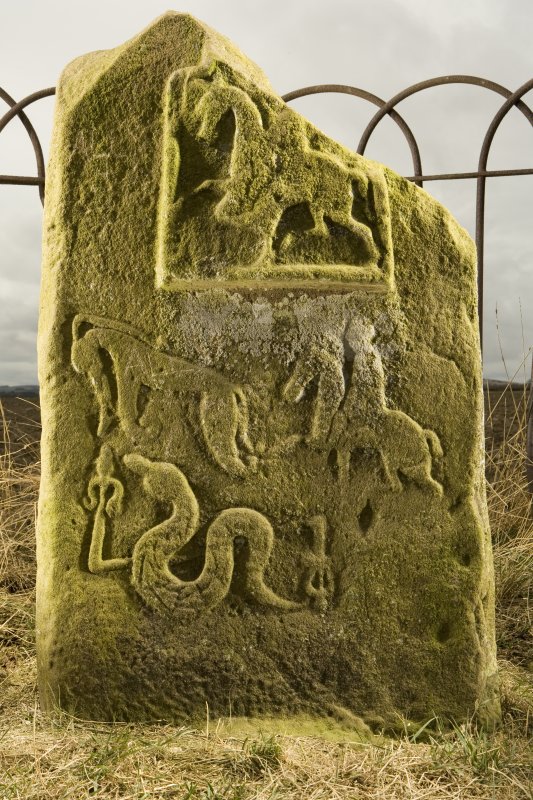
And according to Scotish (Pictish?) lore, St Martin was, just like Perun, a "Dragon (Serpent) killer"...I talked about this in my post "Balluderon stone"...


As I said in this post: 

Dragon killing is done by Perun. It is him who inflicts the deadly wound with his thunderbolt (spear, arrow, axe, club)... But Dragons are "nasty beasts" 🙂 and they don't die easily...So it is at the end of autumn that they finally go "to the land of the dead"...By "coincidence" the same time when the sun goes to the "land of the dead" too...

The end of autumn, the end of harvest, Samhain, Halloween, Martinmas, Mratinci was the day when our ancestors made thanks giving blood sacrifices to their ancestors and their ancestral deity, Irish to Dagda (Chrom Dubh) and Serbs (Slavs) to Dabog (Hromi Daba)...I talked about this in my post "Thanksgiving". 

This practice of blood letting at the end of autumn, was preserved to this day by the Irish and the Serbs. It is done on Martinmas in Ireland and Mratinci in Serbia. More about that soon. Watch this space :)

Thursday, 30 January 2020

Grýla

This is Grýla, the Icelandic Christmas witch. She lives in a cave in Iceland’s hinterlands, from where she attacks nearby townships, snatches up misbehaving children, and turns them into delicious stew....


Grýla did not get connected to Christmas until around the early 19th c. when poems began to associate her with the holiday...

Prior to that, she was "really a personification of the winter and the darkness and the snow getting closer and taking over the land again. Not only did she represent winter, she was seen as actually controlling the landscape"...

This is very interesting. In Slavic languages, the word Baba today primarily means grandmother. But it also used to mean mother, midwife, and Mother Earth. I talked about this in my post about "Baba's day" which is the celebration of midwives from Bulgaria... 


As Mother Earth, Baba primarily meant winter earth, the time of complete domination of Earth over Sun in the Earth (Yin) - Sun (Yang) system which produces life. The time of the year dominated by Yin aspects (Dark, Cold, Wet). More about it in my post "Yin and Yang"...

What is interesting about this Icelandic legend is that it directly states that "Baba" (Grandmother) Grýla not only "brings cold and winter" but that she "shapes the landscape". She is Earth...Mother Earth...The same beliefs are found in the Balkans...

In the Balkans shepherds used to pray to stones and particularly rocky crags for good weather. These stones were known as Baba (Mother Earth) stones. Interestingly a lot of these stones are now incorporated into chapels dedicated to Mother Mary. I talked about this in my post "Shepherds chapels from Velebit"... 


In Slavic countries people performed megalithic (stone raising) rituals intended to manipulate weather. These were accompanied with prayers to Dabog, Sky Father, but the medium used was rock, body of Dajbaba, Earth Mother. I talked about these rituals in my post "Weather stones"...


The direct link between Mother Earth, Stone (rock), cold is particularly strong in the Balkans. In Serbia the word baba used to also mean stone, rock. Rocky mountain tops are often called Baba as are exposed outcrops of bedrock...Like this one from Slovenia...


In Croatian and Serbian folklore "baba" (Grandmother) is directly linked to winter, cold, damp:

baba (grandmother) - late snow which falls in spring
babura (grandmother) - hail, ice that falls from the sky
babura (grandmother) - dark sky with drizzle
baba (grandmother) - changeable weather at the beginning of March when snow is likely to fall
bаbini dni (grandmother's days) babini jаrci, kozlići (grandmother's goats) pozаjmenci (borrowed days), ukovi (noise, storm, wind) - cold stormy snowy days in March or April
baba Marta (grandmother Marta, March) - Month of March which can have very changeable weather with snow
babina nedelja (grandmother's week) - the last week in March
baba Korizma - lent, seven weeks of great spring fasting
baba Korizma - a man dressed as a woman representing winter during the Bele Poklade (lent) carnival 
bаbin kut, budžаk (grandmother's corner) - the north west part of the sky from which storms and cold weather come
babje, bablje, bа̏bаčko leto (grandmother's summer) - late hot days in the autumn, indian summer

In Polish folklore we find

babinmróz (grandmother's frost) - October frost
"baba chłóduna (grandmother cold) is sitting somewhere on an oak tree, incubating eggs, and until they hatch, the drought will continue" - when drought lasts too long

In the Polish Carpathians we find

"the baba (grandmother) is already frozen" - the mountain tops are covered with frost or the first snow

In Bulgarian folklore we find 

babin proso (grandmother's millet) - hailstone 
baba Marta (grandmother Marta, March) - a mythical figure who brings with her the end of the cold winter and the beginning of the spring. Celebrated on the March the 1st.

In Romania, where Serbs once lived in huge numbers, we find

babe (grandmothers) - first 9 days of March when snow can fall again
baba Dochia (grandmother Dochia) - an old woman who insults (teases) the month of March either by badmouthing Him or by going up to the mountain with a herd of sheep or goats (way before she should, in May). March then steals frosty days from February to punish her. See "babini jarci" (grandmother's goats) and "pozаjmenci" (borrowed days), both meaning "cold stormy snowy days in March or April" from Serbian folklore... 

Among Kashubians in the Carpathian mountians we find

old baba (grandmother) - rain
"the old baba (grandmother) went to dance" - when the weather suddenly changes and it starts to snow

The reason why Baba (Mother Earth) was identified with rocks is because everything above rocks, everything alive, plants, animals, humans... was seen as "what Mother Earth gave birth to"...

This is Babno polje (Grandmother's field), a valley in Slovenia. This is the coldest place in Slovenia...


Babinjača (Grandmother's place), Pešter (Sjenica). Pester is the largest plateau (1150m on 63km²) in the Balkan Peninsula and one of the largest in Europe. The area of Sjenica (Babinjača) is the place where the lowest temperatures in Serbia are recorded every winter...


Bjelašnica, Babin do (Grandmother's valley). The area experiences some of the lowest winter temperatures in Bosnia, down to -41 °C. Also known as Mokra gora (Wet mountain, forest)...


All of these places were called Baba's place deliberately because they were the coldest spots...

The Cold old hag, Winter Earth, gets transformed into Hot young maiden, Spring Earth, with the arrival of her future husband, young Sun. Just in time, as all the last year's wheat was used up. Milling grandmother into maiden, Slovenia...I talked about this in my post "Babji mlin"...


Baba (Old Hag, Winter Earth) is found all over Europe under different guises.

In Gaelic lands of Ireland and Scotland she is Cailleach...

In Italy she is Befana...

In the mountains of Central Europe she is Perchta to Germans or Peruehty to Slavs...

In the North of Germany and in Scandinavia she is "Mother Holle (Hulda) or "Old Mother Frost"

Mother Holle is very interesting indeed. Marija Gimbutas thought that Holle was originally an ancient Germanic supreme goddess who predated most of the Germanic pantheon. She was right about Holle being old Mother Goddess. Not right about her being in any way exclusively Germanic

Officially, the name is thought to originate from German "huld" (gracious, friendly, sympathetic, grateful), Middle High German "hulde", Old High German "huldī" (friendliness). Weird root for the name of the Old Hag, right?

Then we read this: The name "Hludana" is found in five Latin inscriptions: three from lower Rhine, one from Münstereifel, one from Beetgum, Frisia, all dating from 197 AD-235 AD. Many attempts have been made to interpret this name...How about "hladna" Slavic for she who is cold?

That would be the perfect root for The Old Hag Winter, right? But who would be speaking Slavic languages in parts of Germany occupied by Romans in the 2nd and 3rd century AD??? Well Slavs of course, but that completely contradicts the official history of Europe...

In Slavic countries she is Baba Marta. Normally this is believed to mean Grandmother March, as in month of March. But why would Slavs name the Old Hag Winter Earth using Roman month name, which by the way was in many Slavic lands the first month of Spring?

The original Slavic name for the Old Hag Winter Earth was Baba Mora, Baba Morana. Name Mora, Morana is based on the root "mor". This root is found in most Serbian words with diminishing, reducing, negative meaning...Morana was also Slavic goddess of death...

The word "mori" means "kills", so Morana is literally "She who kills". The word "mraz" (moroz) means "frost" so Marzanna is literally the frosty, the cold one. They both come from the same root "mor"...

And it is Morana (Morena, Marzanna) whose effigies are made at the beginning of every Spring, and 
are then burned or drowned (or both, to be sure to be sure 🙂). This is done to make sure winter doesn't return. Burning - warming of Mother Earth, Drowning - showing of Mother Earth


Gaels also used to ceremonially burn the Old Winter, Cailleach.


That Morana and Baba are one and the same can be seen from rituals preserved in South of Serbia and Bulgaria, performed during "Babinden" (Grandmother's day), the annual celebrations of "birth givers"...

In Bulgaria, the climactic moment of the day is the ritual bathing of the midwife in the river or a well. Actually ritual drowning.


This custom was until the 1980s preserved in the village of Dikanci, in Gora region in South of Serbia.


I will finish this post with this Roman mosaic depicting The Spirit of winter...

Sunday, 26 January 2020

Enemy of the sun


Snake is in Slavic mythology described as "the enemy of the sun". As the protector of the sun, who saves the sun from the snake, we often find swallow.

In Serbia people believe that swallow saved the sun when snake tried to swallow it. In Bosnia people believe that the swallow hid one quarter of the sun under it's wing, to protect it from the snake. In Dalmatia people believe that once there were three or four suns in the sky and that the snake ate all but one, which swallow hid under its wing. Two "blind suns" which can sometimes be seen in the sky together with our normal sun are the ones which the snake ate. The one that heats us is the one that the swallow hid under its wing. The same legend exists in Montenegro where people believe that a huge dragon once sucked in two out of three suns which once existed. Dragon is just an old snake according to Slavic folklore.  


I talked more about the actual meaning of this legend in my post "Three suns".

There is also a story that once there were 9 rays on the sun, but that snake ate (sucked, drank) all but one. In Bulgaria people say that once snake bit the sun in the eyes when it bent down to drink water. Another version of this story says that the sun used to have two or more eyes, but that the snake "sucked" them all out.

Bulgarians believe that the sun celebrates the killing of snakes, because the snake sucked out one of sun's eyes. In Montenegro people say that every time a snake is killed, the sun happily exclaims "A dragon was killed".

Bulgarians believe that snakes eyes have magic affect on the sun. They say that the sun can't set unless the snake looks at it. In Poland people say that the sun would stop shining if the snake looked at it. This is because the snake's eyes can suck all sun's strength out. 

In Bosnia people believe that snake gets more poisonous if it often looks at the sun. The most poisonous are the snakes that look at the sun for nine days. God forbade snakes to look at the sun longer than nine days a year. A lot less poisonous are the snakes which look at the sun only six days a year. And even less poisonous are the ones which only look at the sun for three days a year. 9 days - 9 sunny months of the year comprising spring, summer, autumn? 

Ukrainians have a legend about a dragon which feeds on the sun, which is why the sun gets smaller and weaker as the year progresses. In Belarus people believe that snakes, while lying outside and sunbathing, actually sucking the sun's strength out, and that this is why the sun gets smaller and smaller as the summer progresses. You can again see the equating of snakes and dragons, who are just old snakes... The sun replenishes its strength during the winter when snakes are under the ground. 

This is why one should always kill a snake, or they will multiply so much that they will completely destroy the sun. 


The dead snake should be buried or hid in the deep shade so that sun doesn't see it. If the snake is not buried the sun will start to shine weakly and will start hiding behind the clouds, because it can't look at it's dead earthly enemy. The sun won't shine on a man who doesn't kill a snake for three days. People in Ukraine also believe that a dead snake should be hidden in a shade or buried so that it doesn't harm the sun in some way. Polish people believe that a dead snake should always be buried so that the sun can't see it. If the sun sees a dead snake it might get extinguished. Also if the sun sees a dead snake it will get sick and turn red. The sun will get sick and start crying, because the snake is poisonous. The setting sun is red if it had seen a dead snake which wasn't buried. If a live snake comes out of its hole to sunbath, the sun will get sick and get pale. In Pomerania people believe that snakes actually don't like looking at the sun. If a snake is lying still, staring at the sun, has gone mad.

There is also a belief, which is found in all Slavic countries from Baltic to Balkans, that if you kill a snake, it will twitch and jump around, even if you chop it in bits, until the sun sets.

In Bulgaria people believe that the snake bite wound should be exposed to the sun. In Poland people believe that the person who was bitten by a snake should be outside, in the sun, or he will get sick.

People in Ukraine and Poland believe that snakes once had wings and flew in the sky. But the sun burned their wings and they fell on the ground. 

There is a Polish legend that says that the solar eclipse happens because a dragon covers the sun with its body. 


There is also a Polish fairy tale it is a twelve headed snake which causes solar eclipse. Again we have equating of snakes and dragons. The motif of a dragon swallowing the sun can be found in all Slavic countries.

From all this we can see that snakes are symbol of sun's heat and dragons (old snakes) are symbol of late summer (old) sun's heat. 

Saturday, 25 January 2020

Dragon who stole rain

In the past, during spring droughts, Serbs used to go to mountain lakes and pray for rain on their shores "to a dragon living in the lake who swallowed the rain"...


Procession lead by a man holding a cross would walk around the lake, after which the cross was throwh into the lake...As a sacrifice to the dragon...

These kind of ritual prayers used to be organised in many mountains like Stars Vlah, Mokra, Vinik, Bjelasica...

Rain swallowing, drought causing dragon is a common theme in Slavic folklore...And when a hero kills such a dragon by cutting his head(s) off (the only way to kill a dragon by the way), "rivers (of fertility) flow from each of his necks"...

We even know the name of the dragon to whom Serbs prayed for rain. Jarilo, Slavic sun god, whose name means "The brightly burning one", "The scorcher". He represents the sun's heat...Sun's heat which is life bringing in spring and life destroying in summer...

His symbol is snake, also symbol of sun's heat, because snakes only come out during warm part of the year. I talked about the snake as the symbol of the sun's heat in my article "Enemy of the sun" and "Chthonic animal". During the hottest period of the year, summer, snake turns into dragon, fire breathing, drought causing monster...The scorcher...Jarilo...

That Dragon is directly linked to the sun, is the sun, can be seen from Serbian folklore where "Sun ray calls Dragon his brother" and where "Dragon marries Sun's sister"...

We know this because when spring droughts come, Serbs, both Christian and Muslim living on mountains Šara and Korab, used to come together on the lakeshore on St George's day, old Jarilo's day, and sacrifice a ram whose blood was let flow into the lake. For the dragon...Jarilo...

Sacrificing a lamb on St George's day was a must for every Serbian family. This was originally blood sacrifice to Jarilo, the Dragon. Even after Jarilo was Christianised into St George, and became the Dragon killer, Serbs continued with their annual sacrifices...

Summer, time of scorching heat, time of the dragon, starts in Taurus (bull of summer). And for Taurus to start, Aries (ram of spring) needs to end (die)...I talked about this in my post "Aries must die". 


In the lakeside ritual killing of rams during droughts, on St George's day, Serbs explicitly equated St George, Jarilo with the Dragon...

Christian and Muslim Serbs also sacrificed young girls at the lake under Trojan fortress on Pešter highland...I talked about this in my post "Water bull"...

"According to the local legends, there once was a lake below the peak. The lake was a home to a three headed (!) dragon, or a water bull...Every year the local people sacrificed a young girl to the monster, so that it would leave them in peace. One year, it was Serbian king's daughter's turn to be sacrificed. But at the last moment, a knight, St George, arrived, killed the monster and saved the girl.

Interestingly, at the bottom of the Trojan peak lies Djurdjevica well (St George's well). This well is holly to both Christians and Muslims who live in the area, and they gather around every year on St George's day, to celebrate the Saint's day together..."

This legend equates dragon with the bull, the symbol of summer. Bull is the symbol of summer because summer starts in Taurus, bull... 


Source for the lakeside rain rituals: "Srpski Mitoloski Recnik - Grupa Autora"

PS:

Long ago, drought hit Kingsteignton in Devon.

There was not even enough water to baptise a baby.

The villagers sacrificed a ram in the dry bed of a stream. Water burst forth.

Ever since, the good folk of Kingsteignton have roasted a ram at Whitsuntide amidst much revelling...


Wednesday, 22 January 2020

Herald of spring

At the Minoan site of Akrotiri, which was devastated by the Thera eruption in the mid-second millennium BCE, the Minoan ‘Spring Fresco’ (c. 1600 BCE) features blooming lilies and dancing swallows...


Hesiod (c. 700 BCE), one of the earliest Greek poets, believed that swallows proclaimed spring. This drawing, copied from an Attic red figure vase (c. 510 BCE), shows three men looking at a swallow and cheering: "Look, a swallow. It must be spring!"...


The people of Rhodes particularly loved the swallow; you were considered lucky if a swallow nested in your house... Terracotta scent bottle found in Kameiros, Rhodian, c. 610–550 BCE...


Athenaeus of Naucratis (3rd c. CE) writes that in ancient times, after the first swallow was spotted, the Rhodians would hold a festival. The only other festival celebrating the return of the migratory birds (that I know of) is recorded in Macedonia...I talked about this in my post "Leto".


During the festival the Rhodian children would sing:

He comes! He comes! Who loves to hear
Soft sunny hours, and seasons fair:
The swallow hither comes to rest
His sable wing and snowy breast.

The children then ran to different houses and "played the swallow", demanding food...

This Rhodian "obsession" with swallows is interesting. They are also the only Classical Greeks who were "obsessed" with Helios, at the time when "no cultured Greek would worship him"...The Colossus of Rhodes was a statue of Helios...


Helios is usually depicted as a handsome young man crowned with the shining aureole of the Sun, who drove the chariot of the Sun across the sky...Homer described Helios as a god "who gives joy to mortals"...So he was the young sun, the bringer of Spring...


The swallows announced the arrival of Helios, the bringer of spring. Passage from Greek Magical Papyri says of Helios, "the earth flourished when you shone forth and made the plants fruitful when you laughed, and brought to life the living creatures when you permitted."...

Just like in Slavic mythology, where the return of the migratory birds announced the arrival of the young sun Jarilo, the bringer of spring...It is his return from the land of the dead which was celebrated by the spring festivals across Europe...

The word for swallow in Ancient Greek was χελιδών (/kʰhttp://e.liː.dɔ̌ːn/ → /xe.liˈðon/ → /çe.liˈðon/). This was also a name of a constellation, which is today part of the Pisces (fishes)...

This constellation was called swallow: "...in consequence of the entrance of the sun into this constellation, when the swallow appeared in Greece as the herald of Spring..." Pisces: 19 February – 21 March, just before Spring equinox...From: "Astronomia"

At this time, at the beginning of the Spring, the constellation swallow rises at twilight, just before the sun, Helios, to announce his arrival. Very poetic indeed. Interestingly, swallow was in Ancient Greece associated not just with spring but with the time just before dawn...


So here is another example of constellation named after an animal, which marks a significant yearly reoccurring event from this animal's lifecycle. In this case return of swallows. Just like all the animal constellations from the Zodiac. 


More in my posts about zodiac signs.

Slavs also venerated swallows as solar animals. 

You can read about slavic swallow folklore in my post "Swallows". 

There is even a legend that says that if it wasn't for swallow the sun would not be shining in the sky...


You can read more about this in my post "Three suns".

Great web page about the Cultural responses to the migration of the swallows.