Sunday, 9 June 2024

Theseus

This is one of the most amazing objects I have seen in a long while...Roman sarcophagus depicting the legend of Ariadne, Theseus and Minotaur. Found at Capranica, near Rome, dated 130-150AD. Currently in Met Museum...

Why is this object so amazing?

Well, because, through animal and plant calendar markers, it shows us what the legend of Ariadne, Theseus and Minotaur actually means...

But to see this, we first have to correct one error that the carvers of the sarcophagus have made...

Here is the beginning of the description from the Met page and the error:

"On the lid...winged erotes drive chariots drawn by animals associated with the four seasons: bears with spring, lions with summer, bulls with fall, and boars with winter" 

Hmmmmmmm...

Bull has always been associated with summer (May/Jun/Jul). Summer even starts in Taurus...

Taurus, an ancient animal calendar marker marking the beginning of the calving season of Eurasian wild cattle...I talked about this in many of my posts, like "Cow and calf ivory", "Lotus and papyrus", "Bull carrying grannary", "Foundation peg of the goddess nanshe", "Cypriot stamp seals with cow and calf"...

Lion has always been associated with autumn (Aug/Sep/Oct). Autumn even starts in Leo...Leo, an ancient animal calendar marker marking the beginning of the mating season of Eurasian lions...I talked about this in many of my posts, like "Sphinx", "Origin of griffins", "Two lions killing bull", "Lions of Delos", "Angra Mainyu"...

Well, saying this, if lion is depicted on its own, without a bull, it does represent old summer, the hot half of the year. Particularly if it's paired with an animal that represents old winter, the cold half of the year, like a boar. I talked about this in my post "Admetus"...


But if a lion is depicted with a bull, the bull is always the symbol for summer, and lion is always the symbol for autumn. And lion killing bull is the symbol for Jul/Aug, when autumn (lion) ends (kills) summer (bull). Like on this coin from Cilicia, dated to 361-334BC

I talked about this in many of my posts, like "Mystery seal", "Two lions killing bull", "Lion killing bull under date palm"...

As a matter of fact, once we swap the places taken by bulls and lions, every animal on the lid is an animal calendar marker, marking the mating or birthing season of the depicted animal, chronologically from left to right:

Leopard, mating Jan/Feb. A well known animal calendar marker for the end of winter, beginning of spring. I talked about this in many of my post, like "Oldest narrative scene", "Vessel from Tepe Hissar", "Harness ring from Luristan", "Elamite copper bowl", "Patera of Rennes", "Lod mosaic", "Leopard", "Furious maenad", "Maenads with hare", "Thyrsus", "Woman and pitcher"...

Bear, emerging from hibernation with cubs, Feb/Mar. A well known animal calendar marker for spring. I talked about it in these two articles "Overpowering" and "Khafajeh vase"

Then we have bull, Apr/May, which is, as I explained above, a well known symbol for summer. 

And lion, Jul/Aug, which is, as I explained above, a well known symbol of autumn.

I talked about symbols of the seasons in my post "Symbols of the seasons"...
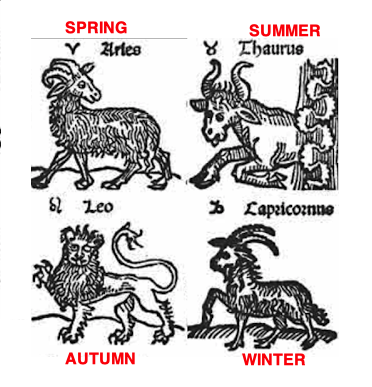
Then we have wild boar, mating Nov/Dec/Jan. A well known symbol for winter. I talked about this in many of my posts, like "Wolf vs snake", "Sirens", "Vettersfelde treasure", "Summer and winter BMAC seals", "Roast pig for Christmas", "Calydonian boar", "Abduction of Persephone", "Double headed eagle"...

And finally Ibex goat, mating Nov/Dec/Jan. Also a well known symbol for winter. I talked about symbolism of ibex goats in many of my posts, like "Pitys", "Goat in European culture", "Patera of Rennes", "The tree of life/light", "Lachish animal calendar", "Feast plaque from Louvre", "Green pastures", "Problems with Abzu", "Relief from Dur Sharrukin", "Goatfish", "Flamingos from Susa", "Goat carrier", "Iranian goat of rain", "Strider", "A vessel from Tepe Hissar"...

Between bull and lion is a date palm tree. This is very important for determining where this iconography comes from...Because it is in Mesopotamia that date harvest season starts at the end of summer (bull) and beginning of autumn (lion)...I talked about this in many of my posts, like "Date beer", "Lion killing bull under palm tree", "Adda seal"


Here is the sarcophagus lid with the corrected order of animals:

Now that we know that this front, from left to right depicts a solar year (spring, summer, autumn, winter) let's have a look at the front of the sarcophagus:

"On the front, four erotes bear seasonal garlands composed of flowers, wheat, grapes, pomegranates, and laurel."

No link between the plants and seasons of course. So here it is:

Flowers - flowers bloom in spring (kind of obvious 🙂)

Wheat - wheat is harvested in summer

Grapes - grapes are harvested in autumn

Pomegranates - pomegranates are harvested in winter

But what about laurels?

Until today, I didn't know that laurel berries are also harvested during the winter, in November...They're high in lauric acid, a potent antiseptic, and berry oil has historically been used a such...But I would expect to see some berries depicted among the leaves here and there.

So I thought that maybe these could be olive leaves, considering that olives are harvested in winter, starting from November...But I would expect to see some olives depicted among the leaves here and there.

Eventually I thought that these could be pinecones, also harvested during the winter, starting from November...But again I would expect to see small cones depicted on an evergreen branch here and there...

So the jury is out on this one, but regardless, any of them is a good plant calendar marker for winter...

So here is the sarcophagus with all the animal calendar markers ordered correctly and linked to seasons and all the plant calendar markers linked to seasons:

Now question: Why are Erotes depicted riding all these animal calendar markers and holding garlands of all the plant calendar markers? 

Cause of sex...Eros is sex personified. Human, animal, plant...And sex produces babies and fruit...

And all these animal calendar markers mark either mating or birthing season of the depicted animals. And all the plant calendar markers mark either flowering or ripening and harvesting seasons of the depicted plants...

But all of this I talked about before. To read more about ancient animal and plant calendar markers, start here…then check the rest of the blog posts related to animal calendar markers I still didn't add to this page, and finally check my twitter threads I still didn't convert to blog post...I am way behind now...

Finally...The big moment...The story of Ariadne, Theseus and Minotaur, how it is laid on top of this depiction of a solar year. Here is the description from the Met:

"Between the swags are three episodes from the myth of the Greek hero Theseus: 

1. Ariadne giving a thread to Theseus at the entrance to the labyrinth. 

2. Theseus slaying the Minotaur.

3. Ariadne abandoned on the island of Naxos, where she will be awakened by Dionysos and become his bride".

Now, I don't know if this is a coincidence, but Theseus kills Minotaur, The Bull-Man, right under the palm tree, which marks Jul/Aug, the end of summer symbolised by a bull...Basically the death of the Bull of summer...

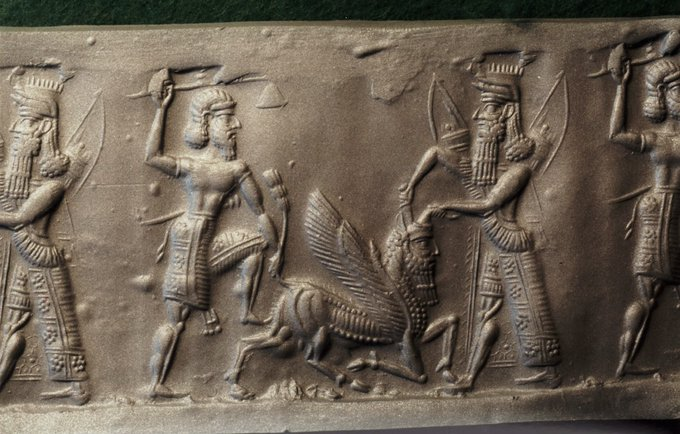
Usually depicted as Lion (autumn) killing Bull (summer)

Also known as Killing of the Bull of Heaven...I already talked about it in these posts: "Killing of the bull of heaven", "Is that you Gilgamesh", "Assyrian winged dragon", "Winged superhuman hero", "Mystery seal", "Under the blazing Sun Sirius"...
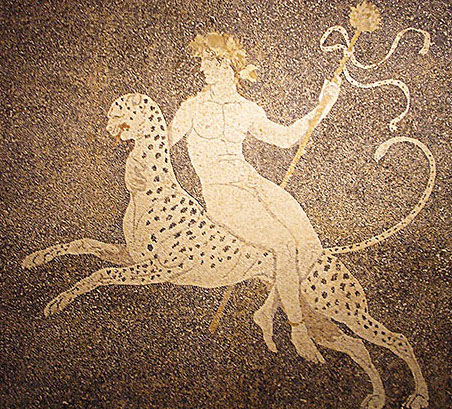
Let me answer my own question: I don't think that any of this is a coincidence...I mean the abandonment of Ariadne is depicted under the beginning of winter...At the time when Dionysus, the winter sun, arrives...Dionysus and Ariadne, Rhodes, 4th c BC, currently in the Louvre...

Few articles about the Dionysus, maenads and thyrsus and the significance of floral and faunal symbols associated with them and their link with winter: "Leopard", "Furious maenad", "Maenads with hare", "Thyrsus", "Woman and pitcher", "Patera of Rennes", "Lod mosaic"...
Knowing now how the Theseus legend is linked to the calendar, I would then venture to say that the 7 girls and 7 boys, sacrificed to Minotaur, are Pleiades...In Greek mythology they are known as 7 sisters. In Slavic mythology they are known as 7 brothers...So that fits...

The heliacal rising of pleiades, during the Greek Bronze and Early Iron Age, fell in Apr/May...In Taurus...So every year, 7 sisters/brothers, rose with the sun, and were swallowed by the summer sun at the beginning of the summer, symbolised by a bull...Swallowed by Taurus...

Theseus meets Ariadne, when he arrives to Crete as one of the sacrificial victims...The moment the sacrificial victims (7 brothers/sisters = Pleiades) enter the labyrinth, is the end of spring, beginning of summer (Apr/May)...In Taurus...

So Ariadne gives Theseus the sword with which he kills Minotaur during spring...Before he enters the labyrinth at the beginning of summer, Apr/May, in Taurus...Which is exactly where this scene is depicted on the sarcophagus...

So here is the story of Ariadne, Theseus and Minotaur with annotations...

I don't know how many times I asked this, but HOW AMAZING IS THIS??? There is no way in hell, that this is a coincidence...Whoever made this sarcophagus in the 2nd century AD was transmitting ancient knowledge, albeit a slightly garbled version of it...VERY OLD!!!

And this secret message remained hidden, in plain sight, until today...Well maybe someone else already figured all this out before me, and if so, please let me know...

That's it for tonight. My wife is nagging me to go to bed. Sweet dreams folks 🙂

PS: Just thought of something. In the story about Theseus, he: 

spring (seduces Ariadne)

summer (wonders around the labyrinth and kills Minotaur)

winter (abandons Ariadne to Dionysus)

What happened during autumn?

autumn (sailing away)...

Autumn starts in Jul/Aug...And according to Hesiod: 

"Fifty days after the solstice, 

when the season of wearisome heat is come to an end, 

is the right (best) time for men to go sailing"
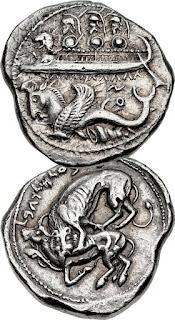

I talked about this in my post "Trojan horse" and "Tetradrachm from Byblos"...

So that's that. I will finish this post with this coin from Cnossos (500—431 BC) with representation of Minotaur on the averse side and cross-shaped labyrinth on the reverse side with the sun in its centre. Remember summer, the sun dominated part of the year, starts in Taurus...I talked about the "solar bull" in many of my posts, like "Solar bull", "Menorah from Nippur", "Human bull hybrid", "Maran", "Theseus ring"...


Saturday, 8 June 2024

Eagle killing hare

Silver Coin from Ancient Elis, Peloponnese. ca. 421-365 BC.

Obverse: An eagle killing a wild hare

Reverse: FA. Vertically standing stylized winged lightning bolt in an olive wreath.

Why eagle killing hare? Well here's something I learned today:

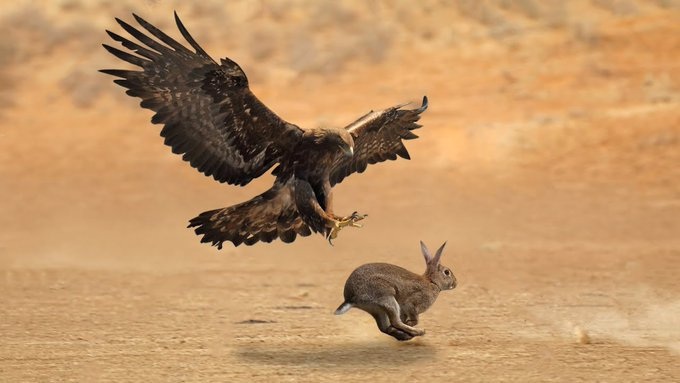
Apparently of all the eagles that live in Greece the biggest hare killers are golden eagles, whose favourite food are hares...

Interestingly, the breeding season of both golden eagles and hares overlap, meaning they are identical animal calendar markers. 

Golden eagle mating season is Mar/Apr. It is marked by  mad mating ritual flights, known as the sky dance...After which, they do the...you know...

The female lays 1-3 eggs. The incubation period is 41-45 days. This means that the hungry golden eagle chicks are born in Apr/May. They stay in the nest and are fed by their parents (baby hares, their favourite) for about 65 days...

Wild hare mating season is Mar/Apr. It is marked by mad mating (not ritual, real 🙂) fights between an unwilling female and a very very very much willing male... After which, if the male is lucky (or good enough fighter), they do the...you know...

The female gets pregnant with 3 or more babies. The gestation period is 41 to 42 days. Baby hares leave their hole within a week...Which means that from Apr/May the fields are full of baby hares, the favourite food of baby golden eagles... 

So if you were from Ancient Elis, the best time to see golden eagle killing hare scene was during the summer, starting from Apr/May until Jul/Aug...Which is the peak thunderstorm season in Peloponnese... 

Here is another coin from Elis, Peloponnese,  ca. 450-440 BC. 

Obverse: Eagle flying, grasping snake with its talons and its beak. 

Reverse: F–A. Thunderbolt with volutes above and wings below

Interesting. Why eagle killing snake?

Believe or not 🙂 this is another animal calendar marker for the thunderstorm season, Apr/May -  Sep/Oct, which is the only time when migratory snake eagles can be seen in Greece hunting snakes... 

I explained it all in this article "Eagle snake struggle".

It is interesting that both of these coins were issued by the same Ancient Greek city state. Deliberate use of animal calendar markers for thunderstorm season?

BTW, I was just reminded of this: Hittite imperial eagle...

The meaning of which we have just discovered, I think...

Two headed eagle normally means eagle mating/nesting season. 

Two hares (two of any animal) means hare mating/birthing season.

Look at the Hittite land in Anatolia in Apr/May...

PS: I talked about the meaning of two headed birds in these articles:

Archaeologists, anthropologists, art historians...studying ancient artefacts depicting animals, are still not sure what these animal symbols mean. And non of them thought to look at the depicted animal's lifecycle for clues...Bactria, 2500-1500BC. I talked about this in my post "Double headed eagle"...

Once I realised that the double headed eagle (vulture) marks Old World Vultures mating season, I checked if the double headed eagles (vultures) symbols from Central America had the same meaning (Vulture mating season). They do...I talked about this in my post "Golden eagles from Costa Rica"...

If double headed eagle (vulture) had the same meaning in different, completely unrelated cultures on different continents and different ages, I wondered if any double headed bird symbol would have the same meaning. Like this one from Easter Island. It does...I talked about this in my post "Birdman from Easter Island"...


To read more about ancient animal and plant calendar markers, which were the key to deciphering all this, start here…then check the rest of the blog posts related to animal calendar markers I still didn't add to this page, and finally check my twitter threads I still didn't convert to blog post...I am 9 months behind now...

Gotland sun stone with horses and ibexes

 Sun-wheel stone, Gotland, 6th century AD, Fornsal Museum, Visby


It is one of several so called "sun stones". 

I already talked about this one here 


And I talked about this one here

And I talked about this one here

Anyway, the horses are depicted facing each other, fighting for the right to mate...

The horse fertility is governed by the sunlight and peaks on summer solstice. Hence solar horses all over Eurasia...

Articles about solar horse (equid):

Iran "Water carrier equid", "Dioscuri plate from Iran"

Mesopotamia "Shamash playing with the solar horse", "Sun god from Tell Brak"

India "Hayagriva"

China "Longma", "Three legged crow", "Mythical beast from Xian"

Levant "Alexamenos graffito", "Goddess on a horse", "Unicorn"

Europe "Archaic rider", "Beotian solar pyxis", "Pegasus and chimera", "King John", "The horseman"

Which is why horses are an animal calendar marker for summer, and summer solstice. Horse is hidden among zodiac symbols as The Devine Horse Twins...Dioscuri...


I talked about this in my posts "Hayagriva", "Dioscuri plate from Iran"...

So that's horses. What about ibex goats? 

Across their range, ibex goats start mating in Oct/Nov...At the beginning of winter...And they announce that to the world by loudly banging their heads...Not something you can easily miss...


I talked about symbolism of ibex goats in many of my posts, like 

Europe:

"Pitys", "Goat in European culture", "Patera of Rennes"... 

Levant:

"The tree of life/light", "Lachish animal calendar"...

Mesopotamia:

"Feast plaque from Louvre", "Green pastures", "Problems with Abzu", "Relief from Dur Sharrukin", "Goatfish"...

Iran: 

"Flamingos from Susa", "Goat carrier", "Iranian goat of rain", "Strider", "A vessel from Tepe Hissar"...

Their mating season peaks around winter solstice. Which is why ibex goat became animal calendar marker for winter, and winter solstice. Which is why in zodiac we find Capricorn marking the winter solstice...

So on this sun stone we have opposite animal calendar markers marking opposite times of the year, goat marking winter solstice and horse marking summer solstice...I think this is quite cool...


To read more about ancient animal and plant calendar markers, which were the key to deciphering all this, start here…then check the rest of the blog posts related to animal calendar markers I still didn't add to this page, and finally check my twitter threads I still didn't convert to blog post...I am 9 months behind now...

Thursday, 6 June 2024

Gotland sun stone with Dioscuri

 A beautiful picture stone from Gotland, ca 6th century AD. 


It is one of several so called "sun stones". 

I already talked about this one here 


And I talked about this one here

Anyway, the horses are depicted facing each other, fighting for the right to mate...

The horse fertility is governed by the sunlight and peaks on summer solstice. Hence solar horses all over Eurasia...

Articles about solar horse (equid):

Iran "Water carrier equid", "Dioscuri plate from Iran"

Mesopotamia "Shamash playing with the solar horse", "Sun god from Tell Brak"

India "Hayagriva"

China "Longma", "Three legged crow", "Mythical beast from Xian"

Levant "Alexamenos graffito", "Goddess on a horse", "Unicorn"

Europe "Archaic rider", "Beotian solar pyxis", "Pegasus and chimera", "King John", "The horseman"


Guess what zodiac symbol marks the summer solstice? The twins...More precisely, Devine Horse Twins...Dioscuri...


I talked about this in my posts "Hayagriva", "Dioscuri plate from Iran"...

So both the two horses and the two warriors (twins) mark Summer solstice...

To read more about ancient animal and plant calendar markers, which were the key to deciphering all this, start here…then check the rest of the blog posts related to animal calendar markers I still didn't add to this page, and finally check my twitter threads I still didn't convert to blog post...I am 9 months behind now...

Wednesday, 5 June 2024

Sawing the old hag

A while back @another_barbara posted this 1865 beehive panel image with this description: An interesting Shrovetide tradition from Slovenija "babo žagajo" (sawing of an old woman). 

The other day wanted to write an article about this custom, and while looking around the net for more info on the subject, I came across 1960 paper by Niko Kuret "BABO ŽAGAJO, Slovenske oblike pozabljenega obredja in njegove Evropske paralele".

In which he presents all the different versions (he knew of) of the "SAWING OF THE OLD WOMAN" ritual found in Slovenian lands, and its European parallels...

Here I will translate the most interesting bits from this paper, and will then give my interpretation of the ritual.

Here we go:

In 1791, Anton Tomaž Linhart, in his "Attempt at a history of Corniola and the other southern Slavs of Austria, vol 2" mentioned a "ridiculous legend", which in the middle of Lent circulates among the people, and especially among the children: 

In the past, during Lent, people used to lead an old woman out of the village and cut her in half. Considering that this legend was widely known and was everywhere the same, Linhart concluded that this was a "rituals" which was once really performed.

Ethnographic data collected in Slovenian villages in the second half of the 19th century confirmed that this ritual indeed still took place every Lent. And Niko Kuret states that the ritual was still performed in some villages in the second half of the 20th century.

Except "the old woman" was not really an old woman, but an effigy of an old woman made of wood and straw and dressed in old women's clothes, that was cut in half, often on bridges, over running water, or next to running water, and the parts were then thrown into the water...

In the area between Bohinj and the eastern half of the Karavanke mountains, a log or a board with a drawing of a old woman was sawn instead of a wood and straw effigy. 

In Carinthia, the hag was represented by a rope/thread which was cut in half...

Finally, in many places in Slovenia, the ritual cutting of the old woman eventually turned into a prank that people played with kids. They would send them somewhere to watch the cutting of the old woman which never actually took place. And they would miss lunch 🙂.

That's Slovenia covered. You can find a lot more details in the paper. The rest are examples of the same custom recorded in Italy, France, Spain, Portugal and Switzerland, organised by the specific subtype of the ritual and then the country.

As we can read in the 1983 book "I giorni del sacro" by Franco Cardini, "The burnings and/or sawings of "Vecchie" or "La Bianca" or "La Monaca" occurred almost everywhere in Italy"...

In some places, like in Florence, or in Reggio Emilia, the people first accused the old woman of everything that was wrong in the city, then she was put on a trial, condemned and then sawed in half. In some other places, like in Feltre, after she "made a will".

In some other parts of Italy, like in Campagna and Sicily, they hid a blood-filled bladder inside the doll and secretly cut it open during the sawing action. In the Ampezzan area, the effigy was stuffed with sawdust which represented blood of the wooden effigy.

A special form of the "Saw the old woman" custom, recorded in Tuscany in the 15th century. There they filled the old woman effigy with dried fruit, sweets and other goodies, which are removed from it during sawing and children, sometimes even adults, fought for them.

In Faenza, the old woman effigy, was decorated with necklaces and earrings made of dried figs, dried plums and chestnuts. The local children made rag dolls, stuffed them with dried fruit, carried them through the streets and shouted: "Sega la vecia!" (Saw the old woman).

Sawing of an effigy of an old woman (La Vieille) was also found in France. In the south, in Labastide-du-Vert, they dressed an effigy in a woman's dress and put an apron on her. They put it on a woodcutter's horse and sawed it. 

Everyone around was cheering and singing along: "Pauvre grand'mère! On scie grand'mère ! Adieu, grand'mère" (Poor old woman! We're sawing old woman! Farewell, old woman)... 

Around Quercy in the South of France, group of boys masked as "woodcutters" dressed a thin log in old female clothes and drove the "old woman" through the village streets. Finally they would stop on the village square and would start sawing the old woman in half. 

While sawing they sang: 

Resseguen la vielha, la vielha. Resseguen la vielha, aneit. Adiu paura minina, tu morés recegada, quai malur ! Tant milhor ! éra sorciera, zo méritava ben (Ocitan)

We saw the old woman, the old woman. We're sawing the old lady today! Goodbye poor grandmother, you die sawn, what a misfortune! So much the better ! She was a witch, she deserved it (English)

The same rituals are found in Switzerland where the straw effigy of an old woman being sawn is called "la bagorda" (the ugly one). In Oberland they keep old, useless lumberjack saws in some places and bring them out once a year, for "raz'g'a la vela" (sawing of the old woman). 

On the evening before Shrove Wednesday, when it gets dark, two boys would take this saw and would go through the village and would slide it back and forth across corner stones of several houses (sometimes specifically houses with young girls), with lots of noise and sparks... 

During the middle of the Lent, a hostile mood is unleashed towards old women in general, and sometimes especially towards a certain old woman in the locality in particular. 

Thus, in Marche, Italy, groups of boys noisily knock on the door of an elderly woman who has been chosen as the target of folk satire, calling her by name and shaming her. 

They carry a doll with them, dressed in such a way that it resembles the unfortunate victim. The doll is then sawn in half in front of the victim's house "amidst the revelry and jokes".

In Berry, France, on Mid-Lent Wednesday, 10 to 12 year old children roam the streets. With wooden sabers in their hands, they chase old women if they meet them and even try to break into houses where they know an old woman lives. 

Then they knead the image of the old woman out of clay and cut it into pieces with their wooden sabers, which they then throw into the nearby river. 

In the Gers region of Southern France, a song was sung before Shrove Tuesday: "Aux jeunes il faut des souliers, aux vieilles des coups de pied" (Young people need shoes, old people need kicks)..." 

The song has several such shameful couplets, each of which is followed by the refrain: "On scier a les vieilles, cette année, on sciera les vieilles!" (We saw the old ones, this year, we will saw the old ones!) 

In Barcelona, on Mid-Lent Sunday, groups of boys walk through the streets carrying a saw and a log. They sing that they are looking for the oldest woman in the city, so that they can saw her in two. At last they act as if they have found her and saw the log in two.

In Portugal, in the Lisbon, children arm themselves with pots and spoons. They greet every old woman with an infernal roar; they even throw stones behind her. The custom is called "Serra a Velha" (Saw an old woman). 

Elsewhere they gather in front of the door of the house where they know that an old woman live, and shout that her last hour is approaching, that she should make a will and pray for repentance. 

One of the boys then starts sawing a large piece of bark, while the others sing in between: "Oh, how long I've been sawing, but I don't see sawing! Either the saw is lousy or the old woman has too hard skin." 

In the eastern regions of Portugal, one of the singers represents an old woman who cries and wails, makes ridiculous requests to her neighbors, and in between confesses all her sins and finally imitates dying with a noise while the saw penetrates through the bark. 

In Porto, until recently, every year an effigy of an old woman was carried around town and placed at the door of the oldest woman. Later, they took the effigy to the main square, sawed her there, and finally burned her.

In Napoli the boys cut saws from cloth, whitewashed them with chalk and beat people with them on the back so that they could recognize the saw print on the dress.

In Piedmont (Turin) they sold wooden saws during Lent, later also saws made of chocolate. Boys carried giant lumberjack saws with them and threatened passers-by with them.

In Savoy, in Saint-Jean-de-Maurienne, they used to cut large saws out of paper and hang them on the people's backs ; they were called "rosses-vieilles" (worthless old women). Also in Switzerland, on Shrove Tuesday, children play with wooden saws.  

And, just like in Slovenia, in the other above countries the ritual cutting of the old woman finally turned into a prank that people played with kids. They would send them somewhere to watch the cutting of the old woman which never actually took place. And they would miss lunch 🙂.

So what's this all about? The most common explanation is that people symbolically cut lent (fasting) in half. Remember this article about the seven legged "Old Grandma Lent"? 


Apparently in the past, when it was the fourth Sunday of Lent, the figure was also cut from top to bottom, "as a sign of entering the second half of the Lent", a custom that gave the figure the name "sa Jaia Serrada".

Niko Kuret uses this to conclude that the old woman sawn during mid lent is a representation of the lent itself But why would lent be personified as an old woman? But where does all the hatred of that old woman comes from, which even leads to symbolic executions? 

Apparently, according to Niko Kuret, this comes from the hatred people felt towards the custom of lent which was imposed on them by the Catholic Church, and all the hatred was was actually concealed anti church sentiment...

Eeee...I doubt this is it...

The first explanation for this strange custom was proposed by W. Mannhardt in his 1874 "Wald Und Feldkulte Der Baumkultus Der Germanen Und Ihrer Nachbarstämme" where he tried to fit the sawing of the old woman into his theory about vegetation demons.  The sawing of the the old woman was to him the destruction of the vegetation demon of the previous year, i.e. a ritual of a primitive agrarian society. 

The vegetation demon is sentenced to death, and then killed — sawn, burned, hanged, buried, thrown into the water. Mannhardt does not say where the origin of the custom of the old woman being sawn originates. 

He does wonder if, considering the North-Western Mediterranean distribution of the custom, the custom has a possible Roman origin. The fact that "winter" is a feminine noun could be a clue pointing at that direction.    

But unfortunately we don't find any traces of any ritual killing of female representation of winter in Ancient Rome. Apart from maybe Anna Perenna, known from Ovid. 

Romans wrote that Anna Perenna was celebrated by the plebs, who made offerings to her so "that the circle of the year may be completed happily". On the 15th of March, beginning of the new agricultural year, her statue was ceremonially thrown into the Tiber river during.

So she could have been a representation of the "old year", but really, I wonder if she alone could have been a source of all the "killing of the old woman" rituals, which all took place at the end of winter, beginning of spring, which is when Lent takes place.

We find these rituals not just in Mediterranean, but also in Slavic countries, where people actually preserved the original meaning of this ritual: killing of winter, who was represented as the old hag, the winter earth, known as Morana (the one who kills) and Marzana (the one who freezes). 

And during the Lent, her effigies are carried around, burned (heating up of the earth) and then thrown into running water (snow melt resulting from heating up of the earth)...I talked about this in my posts "To kill a witch" and "Gryla"...

The snowmelt is in the sawing of the old woman ritual represented by the blood of the sawn old woman, and by the custom of sawing the effigy on bridges and throwing the sawn halves of the effigy into running water...

Interestingly, K. Wlislocki reports on the sawing of grandmother among the "Gypsies" in Germany in his 1891 "Volksglaube und religioser Brauch der Zigeuner". 

He says that "they made the old woman out of straw and first beat her with sticks on Palm Sunday, after which the undressed boy and girl sawed her, burned her, and threw the ashes into the water". 

He also says that "the ritual was performed in honor of the "shadow queen", a demon who torments people (gypsies) during the winter months with hunger, disease and death, disappears in the spring and returns with the winter". 

This is why on the Original Slovenian depiction of the ritual killing of winter, you see one group of people standing next to the head (start of winter) who are all despairing, and the other group of people standing next to the legs (end of winter) who are all rejoicing..."

One of the reason why the old hag is cut, like the firewood, is because firewood is prepared in the autumn to last until spring...By the end of winter, almost all firewood is spent, and this is another way to symbolically depict the end of winter...Or at least a hope for its end.

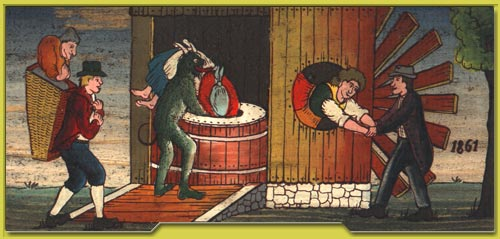
The meaning of this ritual cutting of the old hag is the same as the meaning of the milling of the old hag, also recorded in Slovenia and depicted on another old beehive panel...By the end of winter, the grain stores are getting empty...

"Bablji mlin", meaning "Granny's mill" scene, Slovenia. An old hag is being milled, and thus transformed, into a young maiden. Winter being transformed into Spring...I talked about this in my post "Babji mlin"...


Interestingly, in this version, it's Krampus, anthropomorphised ibex goat, symbol of winter, that does the milling...I talked about this in my post "Krampus"...

BTW, this link between the end of grain and and of winter is spelled out in this Eastern Slavic ritual song was sang by young unmarried women as part of "calling the spring" rituals

Larks, larks, fly away

Take the winter cold away

Bring us spring on your way

We are tired of winter

All our bread she has eaten

I talked about it in my post "Inviting spring"...
We have an obscure version of this ritual in Scotland too, in a Gaelic folk song "The old woman of mill dust". I talked about this in this post.


That the sawing of the old woman is indeed killing of winter can be seen from the fact that in some areas of Italy the effigy of the old woman was filled with fruit and nuts, which were released (grow, become available) when the old woman (winter) gets killed (ends)...

And the reason why this is done in the middle of Lent is because Lent marks the end of winter and beginning of spring...When all the firewood, grain and other food is almost all used up, and it's the last time for the winter to end...Which is why all these magic rituals are performed: to help bring the end (death) of winter (ugly old hag)... 

So that's that. I don't think that the root of the "sawing of the old hag" custom is Roman. I think it is part of the pre Roman, possibly Europe wide agricultural ritual for marking the end (death) of winter (old hag)...

It just so happens (again, no idea why), that the actual explanation of the custom is preserved the best in Slavic folklore...Maybe Slavs are just extremely culturally conservative. 

What do you think? Do you have any info about this or similar custom from any other country?

Old Grandma Lent

Traditional seven legs bread doll known as "Pippia a setti cambas" "bambola a sette gambe". Baked at the beginning of Lent. Every week a leg is removed to measure the time remaining to Easter. Settimo San Pietro. Cagliari, Italy...

Apparently in the south of Italy, in Abruzzi, Puglia, Calabria, Naples, Irpinia, people used to make seven legged dolls, whose legs were ripped out one every week of the Lent to count time to Easter.

Anyone has any links to pics of these dolls?

In Spain these became female contours cut out of paper with seven legs, one leg again being ripped every Sunday of the Lent. They were/still are known as "Doña Cuaresma". In Catalonia they were/still are known as "La Vella Quaresma"...
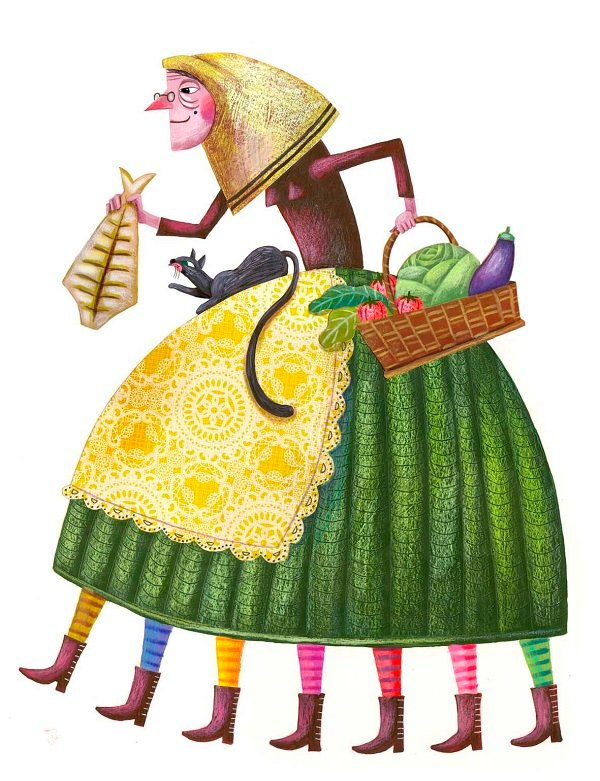

In Greece we find Kyra Sarakosti, Mrs Lent, again with seven legs, and again one leg is pulled every week of Lent. In some parts of Greece, the last leg, is hidden inside the Easter bread. The lucky person who finds Kyra Sarakosti's last leg, is considered blessed.

In some parts of the Mediterranean, the Grandmother Lent is a doll with 7 feathers stuck inside of her or inside a potato or orange attached to the doll. One feather is then pulled out every week. Like this one from Calabria...

In Montenegro we find Baba Korizma, the Granny Lent, who walks with seven sticks, throwing away one for every week of Lent...She also eats naughty children, allegedly...

Same custom is apparently also found in France and Switzerland. Anyone has any pics, info about this?