Showing posts with label Ibex mythology. Show all posts

Tuesday, 1 September 2026

Shard from Mehrgarh

A ceramic fragment, found in Mehrgarh, Indus Valley, Pakistan. The fragment was found in the layer IV, dated to around 2800BC. I want to thank Gabriella Brusa-Zappellini for posting the pic...

The fragment is decorated with depictions of:

Horned animals: Ibex goats, Goitered gazelles

Birds: Old world vultures

Gabriella Brusa-Zappellini says that this fragment closely resembles the earliest stamps from Dilmun adds that "this testifies once again to the close ties between the regions of the Persian Gulf and Indus Valley...

I would suggest that this ceramic fragment most likely comes from Persian gulf. Why? Because of the climate in Persian gulf and the annual lifecycle of the depicted animals and how they correspond to one another...

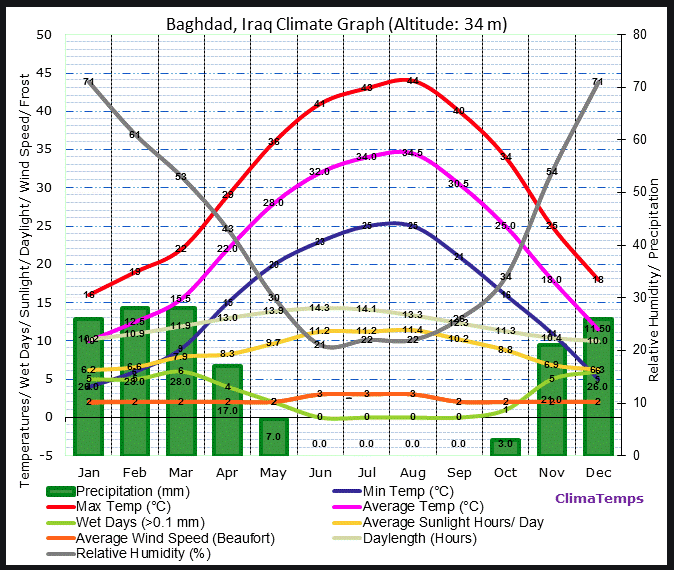
This is climate in Dilmun (today Bahrain). 

You can see that the climatic year is divided into hot, dry summer (Apr/May-Oct/Nov) and cool, wet winter (Oct/Nov-Apr/May)...

This is more or less the same climate we find in the rest of the Persian Gulf and Mesopotamia...

It just so happens that Ibex goats, Goitered gazelles and Old wold vultures all begin to mate at the beginning of the cool/wet season in this part of the world. Making them animal calendar markers for rain season...A very important event in this part of the world...

So I don't think finding these three animals depicted together like this is random...You can read a lot more about these animal calendar markers and their link with rain/snow and water in general in my post "Kassite seal with Apkallu", in which I give symbolic analysis of this amazing Kassite seal (18th-12th centuries BC) from Syria. National Museum of Damascus. 


That's it. To read more about ancient animal and plant calendar markers, start here…Then check my twitter threads I still didn't convert to blog post...I am way way behind...

Sunday, 30 August 2026

Ibex cup from Susa

Cup with zoomorphic handle in a shape of an Ibex, wild goat. Discovered in Susa, Iran and dated to 2100-1550 BC. Currently in Louvre... 

On the back of the cup are two Ibex, wild goats, carved in bas-relief, kneeling on either side of a (palm) tree, and forming the palm tree branches with their horns...

This back "decoration" is very interesting indeed. Palm tree was the symbol for the "Tree of Life" in the region where this cup was found...The fact that the Ibex goats were positioned in such a way as to form the branches of the "Tree of Life" is not accidental...

In the region where this cup was found, the climatic year is divided into hot, dry summer and cool, wet winter.


The rain season starts in Oct/Nov, which coincides with the beginning of the mating season of Ibex, wild goats...Mating season which is marked by vicious male goat fights...

This is why Ibex, wild goat, became a symbol of the cool, wet half of the year...And life that the rain that falls during the wet season makes possible...Hence, Ibex, wild goat, symbolically forming the branches of the "Tree of Life" with their horns...

The same symbolism can be found in Iran 2500 years later. Two Sassanian wall relief slabs dated to the 5th-6th c. AD, depicting rampant ibex goats flanking "the tree of life"...


I talked about this in my post "Sassanian goats with the tree of life"...

I talked about the significance of ibex goats in the mythology of Susa in my posts "Jackals from Susa" and "Flamingoes from Susa" in which I provide symbolic analysis of these two super cool vessels made between 4200BC and 3500BC...


I also talked about Ibex mythology in Eurasia in many of my other posts...

That's it. To read more about ancient animal and plant calendar markers, start here…Then check my twitter threads I still didn't convert to blog post...I am way way behind...

Saturday, 10 May 2025

Rhubarb and Ibex

3rd mill BC cup made in Western Iran, by the people of the Jiroft culture. According to this paper by Maryam Rezghirad from the University of Tehran, "It depicts ibex goats and a tree of life". Here are some interesting excerpts from the text:

I'll answer all of the questions at the end.

Quote: According to "The History of Iran in Achaemenid Period (From the History Collection of Cambridge)" by Gershevitch: "This animal (Ibex) was once worshiped as the incarnation of human and herd fertility...

Me: Why?

Quote: Motifs of the goat have long been a symbol of water, rain, abundance and guardian of the moon... 

Me: Why?

Quote: According to "The Concepts of the Mithras and Moon in Pre-Historical Potteries" by Abdollahian: "Horned animals such as Ibex are the symbol of fertility due to their horns’ resemblance of the crescent"... 

Me: Why is moon linked with fertility?

Quote: "Zoroastians" by Mazdapour: "When the first people Mashya and Mashyana had grown out of a rhubarb plant, ibex protected them and suckled them. For this reason, the goat is the symbol of fertility and growth".

Me: Why rhubarb and Ibex? 

Answers:

To understand any of this, we need to look at the climate in Iran and Mesopotamia, the annual variation of the angle of the crescent moon in the sky over Mespotamia and Iran, annual lifecycle of Ibex goats and rhubarb. Don't forget rhubarb...

In Iran/Mesopotamia, rains arrive when Ibex goats begin to mate, in Oct/Nov...


The ibex mating season is marked by wild male goat head banging, the sound of which can be heard from miles away...Not something you would easily miss if you lived in the area...

As I said once before, all our mythologies are the result of the fact that people are very good at noticing patterns in nature while simultaneously being very bad at distinguishing between correlation and causation 🙂

In Iran and Mesopotamia the fact that the beginning of the ibex goats mating season announced the beginning of the rain season resulted in ibex goat becoming "symbol of water, rain, abundance...and fertility"...

Ibex became "Goat of rain"...Which is, to me, best depicted on this 5000-4000BC vessel from Tepe Hissar, Northeastern Iran...I talked about this in my post "Vessel from Tepe Hissar"...


I talked about symbolism of ibex goats as animal calendar markers for winter/rain season in many of my posts, like 

Europe:

"Pitys", "Goat in European culture", "Patera of Rennes"... 

Levant:

"The tree of life/light", "Lachish animal calendar"...

Mesopotamia:

"Feast plaque from Louvre", "Green pastures", "Problems with Abzu", "Relief from Dur Sharrukin", "Goatfish"...

Iran: 

"Flamingos from Susa", "Goat carrier", "Iranian goat of rain", "Strider", "A vessel from Tepe Hissar"...

And it is that rain, that supports (the tree) of life...Hence goats and trees of life for everyone in Eastern Mediterranean, Levant, Mesopotamia, Iran, Central Asia...The same climate, the same ibex annual lifecycle, the same mythology...I talked about this in my post "Bactrian Bronze Age menorah", in which I talked about this cool Bactrian bronze stamp, dated to 2400BC-1600BC...

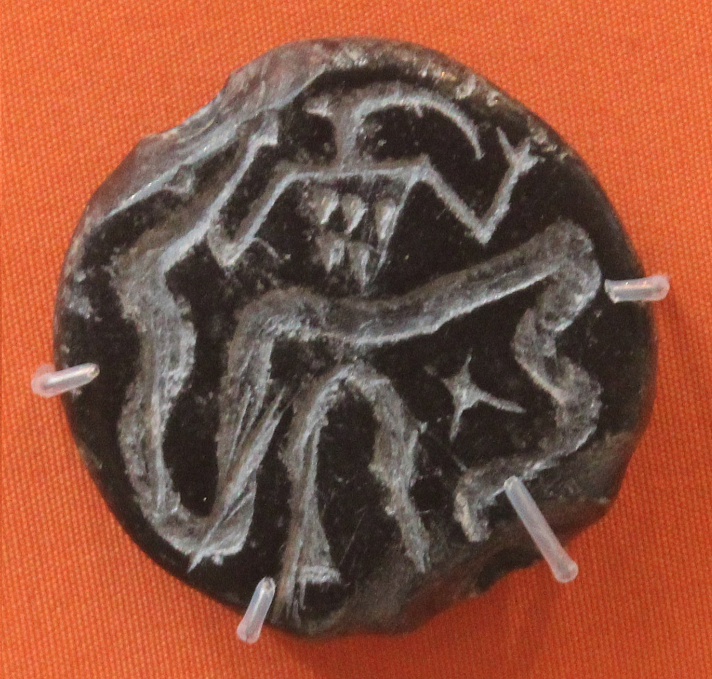
It was in Iran where we find the earliest transition from Goat of rain to God of rain...Through a goat man...I talked about this in my post "Master of animals from Tepe Giyan", in which I talked about this cool "Master of Animals" stamp seal from Tepe Giyan, Iran, dated to 5000-4000 BC, and depicting the eternal struggle between the rain goat and the sun serpent/dragon...

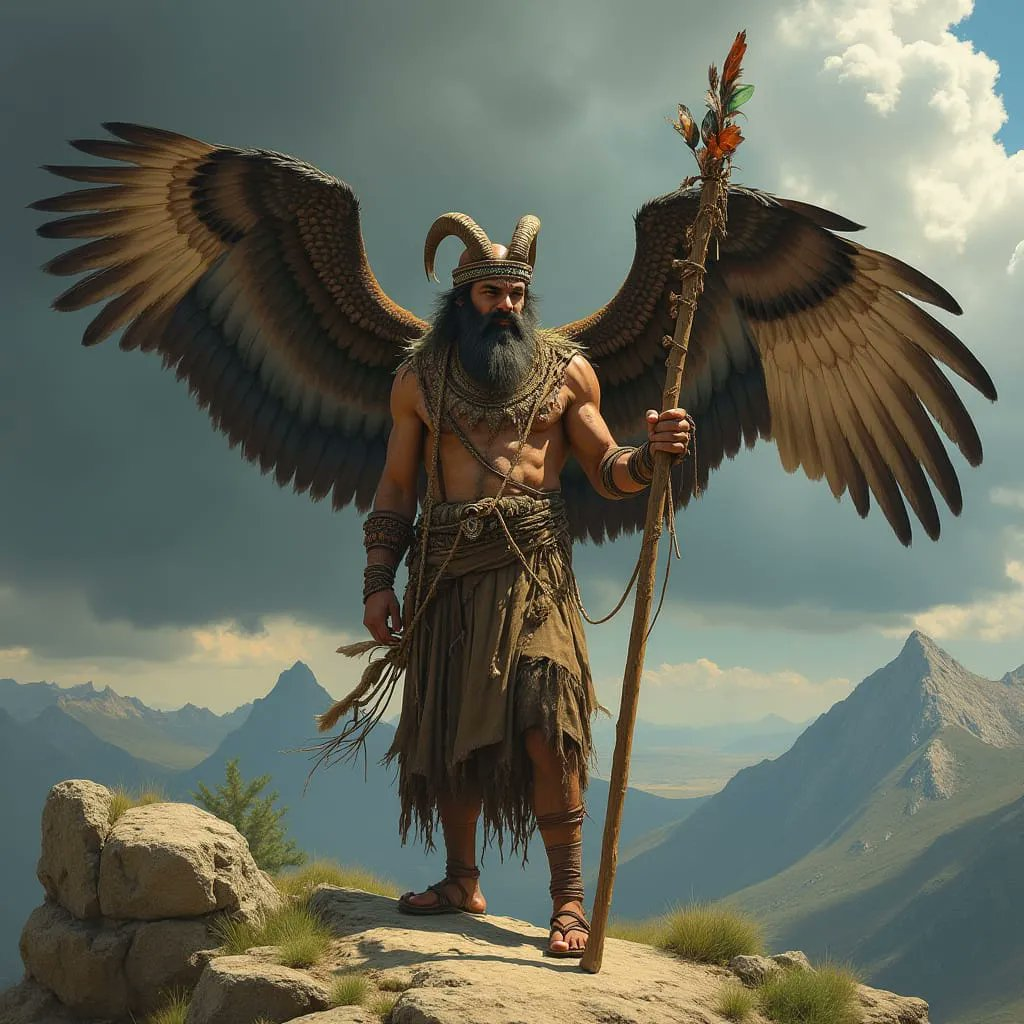
Actually this transformation of the goat of rain into god of rain started much earlier, most likely in the 9th millennium BC...I talked about this in my post "Zawi Chemi Shanidar"... 

What about the link between the rain, fertility, moon and ibex goats? 

To understand this, we need to know that this rain, fertile moon, is not just any moon. Its the upward pointing crescent moon. Crescent moon points upwards only during the wet half of the year...

Which is why it became the symbol of the moon god Nana/Sin. The most important god in Mesopotamia...Also linked with rain, water and fertility...

I talked about this here in my post "Moon god Nana/Sin" in which I analysed this cool Old Akkadian Cylinder Seal, dated to 2294-2270 BC...

And so winter Ibex goat brings rain and winter moon catches it...Rain which makes plants grow...As depicted on this Sassanian gem stone...

Finally, rhubarb...According to this article the wild rhubarb grows in Iran between Apr/May and May/Jun. 


When it is picked by the locals and turned into delicious food, like "Khoresh-e Rivas" – Lamb Rhubarb Stew. Here's the recipe...

Now the wild rhubarb picking season coincides with the end of the rain season, and with the beginning of the ibex birthing season (Oct/Nov + 160 days gestation)...

Which means that the first mortals born out of the rhubarb plant could indeed be suckled by lactating ibex goats...

Fun...

That's it. To read more about ancient animal and plant calendar markers, start here…Then check my twitter threads I still didn't convert to blog post...I am way way behind...

Sunday, 8 December 2024

Rainbows and peacocks

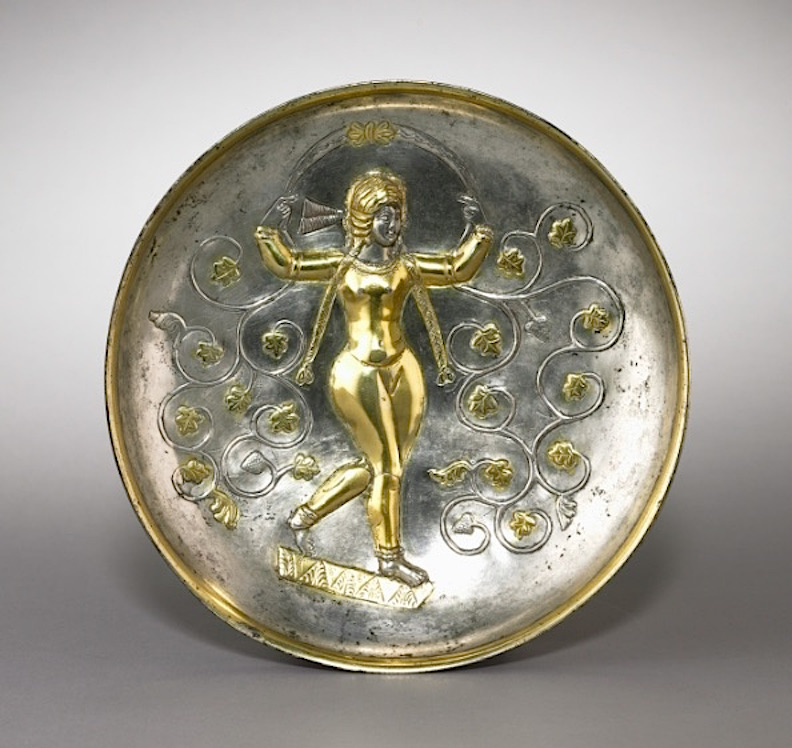
A Sassanian dish, 400-600AD, Iran, Currently in Al Thani collection...

What is exactly depicted here? Some would say just an exotic dancer. I think that this is a depiction of the goddess Anahita, Zoroastrian goddess of water and fertility...

I already talked about Anahita in my post "Anahita" about this Sassanian dish, which again depicts her "holding a scarf above her head"...

In that article, I proposed that the scarf is symbolic depiction of a rainbow. 

Rainbow which is in Iran only seen during the rain season, which in most of Iran is Oct/Nov - Apr/May...


I also proposed that this is the tree of life that is depicted growing out of her scarf (rainbow) because it is the rainbow creating rain that is the source of life in Iran...

I then backed my claim by this other Sassanian dish which depicts the same tree of life, this time without Anahita as it's source, but instead flanked by two ibex goats, the goats of rain...

Ibex goats are animal calendar marker for the Oct/Nov, the beginning of the rain season in Iran, because Oct/Nov is when ibex goats start mating in Iran, mating which is characterised by vicious male goat fights...

I talked about symbolism of ibex goats in many of my posts, like 

Europe:

"Pitys", "Goat in European culture", "Patera of Rennes"... 

Levant:

"The tree of life/light", "Lachish animal calendar"...

Mesopotamia:

"Feast plaque from Louvre", "Green pastures", "Problems with Abzu", "Relief from Dur Sharrukin", "Goatfish"...

Iran: 

"Flamingos from Susa", "Goat carrier", "Iranian goat of rain", "Strider", "A vessel from Tepe Hissar"...

Above the goats, we can see some birds: 

Male and female peafowl

Male and female pheasants 

Why?

Well because both of these bird species start their mating season in Mar/Apr...

And this is important why?

Well, because all that rain (and snow) that falls during the cool wet season cause the water flow of the rivers in Iran to suddenly start increasing in Mar/Apr which leads to the floods in Apr/May/Jun...

Flow chart for the Zayandehrud River that flows through Isfahan. It suddenly increases in Mar/Apr. 

And here is Aries Ram, with blue (water) horns, lying in water...Describing exactly what is happening in Mar/Apr...In Aries...

Talked about it in my post "Sagittarius from Isfahan", about an amazing 14th c. Isfahan zodiac... 

Floods that Anahita as the goddess of water was also linked to...

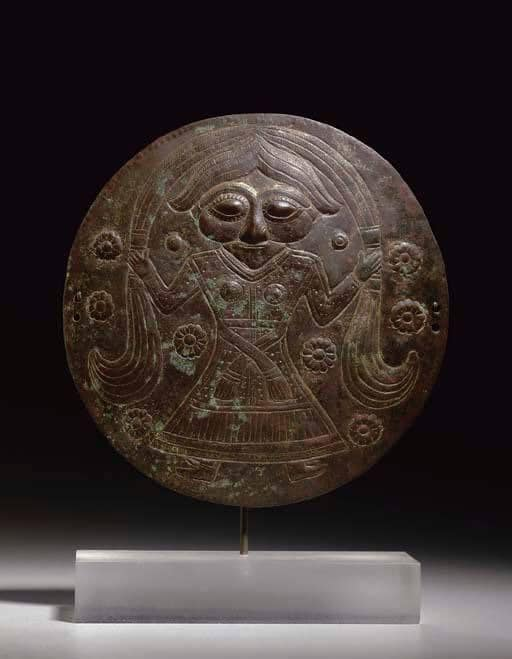
We find Anahita with rainbow in Iron Age Iran...Bronze disc from Luristan, Western Iran. 8th century BC depicting a goddess holding a scarf (rainbow) above here head...

And in Bronze Age Iran...Chlorite carved flask, Jiroft culture, Western Iran, 3rd millennium BC depicting a goddess holding a rainbow above here head...

I talked about this in my post "Jiroft flood vase"...

Here is the whole flood vase design:

Bronze Age Anahita? Goddess of water? Standing on bulls...

In Taurus? Apr/May? The time of the annual flood? It seems like this is what is depicted here, considering that the goddess is holding a water scarf (rainbow) and the same water is depicted flowing out of bulls heads...

I talked about the link between bulls and annual flood in Iranian art in my post "Dedicated to Inshushinak", about this 3200 years old Elamite ceremonial silver pouring vessel with handle and double spout in the form of two bulls...

So peacocks and pheasants start mating right at the time when the water levels in Iranian rivers start to rise...

This is why, on our original Al Thani dish, Anahita is holding a scarf with the peacock feathers "eyes" designs above her head, and is flanked by two peacocks...

BTW, in India, where peacocks come from, they breed during the monsoon season, and are believed to "call the rain to come"...

I talked about this in my post "Makara", about the mount of the old monsoon god Varuna, who was mainly just imagined as a crocodile, but was sometimes imagined as a complex "creature" (animal calendar marker), with a peacock tail...

BTW, do you see the star and the moon next to the Bronze Age Anahita? 

That's symbol of Sirius..The original star of Inanna/Ishtar, before Venus took over...

I talked about this takeover in my post "Sirius the mother of Venus"... 

I explained why, based on Sumerian Inanna mythology, only Sirius could have been the original star of Inanna/Ishtar in my posts: "Inanna and Sukaletuda", "The brightest star"...

The brightest star which is visible in winter sky over Iran together with the winter moon...

I talked about the winter wet moon in my post "Moon god Nana/Sin"...

Sirius disappears from the night sky in Apr/May...The time of the fertility bringing annual flood...The emptying of the winter moon...Which is why we find this symbol right next to Bronze Age Anahita holding a rainbow...And which is why in the Sumerian epic "Inana and Å ukaletuda" we read that Inana "stretched herself like a rainbow across the sky, and reached thereby as far as the earth"...

Cause Bronze Age Anahita was the same goddess as Bronze age Inanna/Ishtar...

It seems that I am not the only one linking Inanna/Ishtar with Anahita. I recently came across this article which actually explores the possibility that Anahita could actually be Inanna/Ishtar in disguise...

To read more about ancient animal and plant calendar markers, start here…Then check my twitter threads I still didn't convert to blog post...I am way way behind...