Showing posts with label flood. Show all posts

Saturday, 17 May 2025

Golden men

One of two golden men with large erect penises found in the settlement of Tell el-Farcha, located in the Nile Delta, Egypt, and dated to c. 3000 BC...Pic from this article...

This is the second, smaller figurine...

The figurines had a core made of probably wood, which was then covered with thin gold foil, which was fastened by golden rivets, 4 mm long and 1 mm in diameter. Whoever made these figurines was a seriously good goldsmith...

The archaeologists who found these figurines believe that "It is possible that the golden figurines, depict...a Predynastic ruler...and his son"...

I have to disagree with this. I believe that they depict a god (not sure which one) linked to the sun and the flood...

The reason why I believe this is because figurines were made of gold (sun), had huge penis (fertility), and had eyes made of lapis-lazuli (water)...And in Egypt, the flood which makes the land fertile arrives during the sunniest and hottest time of the year (Jul/Aug)...

But that's just my opinion...BTW...lapis lazuli used for the eyes of the golden figurines was was imported from the area of today’s Afghanistan!!! How cool is this? 3000 BC...

Mesopotamian god Utu/Shamash was depicted as a golden bull (Sun in Taurus) with flowing lapis lazuli beard (flowing water)...This object was found in Ur and dates to 2450 BC. It is currently in the Pen Museum...


Why lapis lazuli beard on the solar bull? Cause flood, caused by the snowmelt in the North-Eastern Mountains, caused by sun's heat, arrives there in Taurus...

I talked about this in my posts: "Solar bull", "Water bull",  "Bactrian snakes and dragons", "Shamash young and old", "Butt chewing", "When Utu steps up into heaven", "Maran", "Sun god tablet", "Gisgis relief", "Lyres of Ur"... 

Hmmmm....

Osiris and Horus, Father and Son?

I talked about Osiris and its link to flood in my posts "Braided beard" and the "Beard of Osiris"...

That's it. To read more about ancient animal and plant calendar markers, start here…Then check my twitter threads I still didn't convert to blog post...I am way way behind...

Sunday, 8 December 2024

Rainbows and peacocks

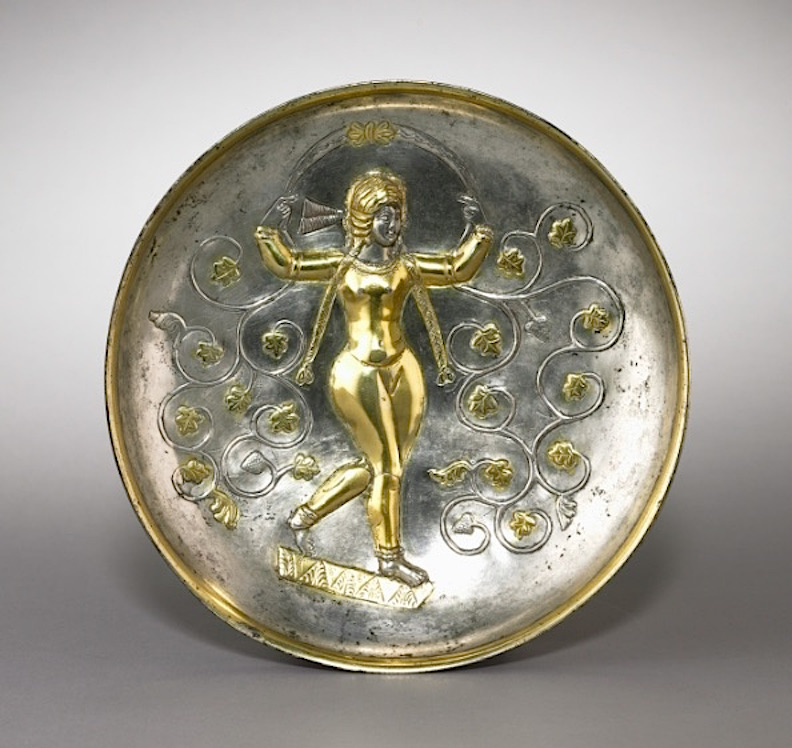
A Sassanian dish, 400-600AD, Iran, Currently in Al Thani collection...

What is exactly depicted here? Some would say just an exotic dancer. I think that this is a depiction of the goddess Anahita, Zoroastrian goddess of water and fertility...

I already talked about Anahita in my post "Anahita" about this Sassanian dish, which again depicts her "holding a scarf above her head"...

In that article, I proposed that the scarf is symbolic depiction of a rainbow. 

Rainbow which is in Iran only seen during the rain season, which in most of Iran is Oct/Nov - Apr/May...


I also proposed that this is the tree of life that is depicted growing out of her scarf (rainbow) because it is the rainbow creating rain that is the source of life in Iran...

I then backed my claim by this other Sassanian dish which depicts the same tree of life, this time without Anahita as it's source, but instead flanked by two ibex goats, the goats of rain...

Ibex goats are animal calendar marker for the Oct/Nov, the beginning of the rain season in Iran, because Oct/Nov is when ibex goats start mating in Iran, mating which is characterised by vicious male goat fights...

I talked about symbolism of ibex goats in many of my posts, like 

Europe:

"Pitys", "Goat in European culture", "Patera of Rennes"... 

Levant:

"The tree of life/light", "Lachish animal calendar"...

Mesopotamia:

"Feast plaque from Louvre", "Green pastures", "Problems with Abzu", "Relief from Dur Sharrukin", "Goatfish"...

Iran: 

"Flamingos from Susa", "Goat carrier", "Iranian goat of rain", "Strider", "A vessel from Tepe Hissar"...

Above the goats, we can see some birds: 

Male and female peafowl

Male and female pheasants 

Why?

Well because both of these bird species start their mating season in Mar/Apr...

And this is important why?

Well, because all that rain (and snow) that falls during the cool wet season cause the water flow of the rivers in Iran to suddenly start increasing in Mar/Apr which leads to the floods in Apr/May/Jun...

Flow chart for the Zayandehrud River that flows through Isfahan. It suddenly increases in Mar/Apr. 

And here is Aries Ram, with blue (water) horns, lying in water...Describing exactly what is happening in Mar/Apr...In Aries...

Talked about it in my post "Sagittarius from Isfahan", about an amazing 14th c. Isfahan zodiac... 

Floods that Anahita as the goddess of water was also linked to...

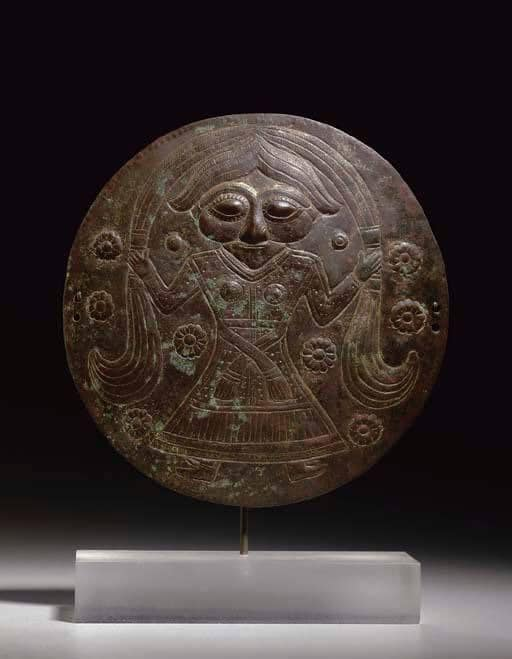
We find Anahita with rainbow in Iron Age Iran...Bronze disc from Luristan, Western Iran. 8th century BC depicting a goddess holding a scarf (rainbow) above here head...

And in Bronze Age Iran...Chlorite carved flask, Jiroft culture, Western Iran, 3rd millennium BC depicting a goddess holding a rainbow above here head...

I talked about this in my post "Jiroft flood vase"...

Here is the whole flood vase design:

Bronze Age Anahita? Goddess of water? Standing on bulls...

In Taurus? Apr/May? The time of the annual flood? It seems like this is what is depicted here, considering that the goddess is holding a water scarf (rainbow) and the same water is depicted flowing out of bulls heads...

I talked about the link between bulls and annual flood in Iranian art in my post "Dedicated to Inshushinak", about this 3200 years old Elamite ceremonial silver pouring vessel with handle and double spout in the form of two bulls...

So peacocks and pheasants start mating right at the time when the water levels in Iranian rivers start to rise...

This is why, on our original Al Thani dish, Anahita is holding a scarf with the peacock feathers "eyes" designs above her head, and is flanked by two peacocks...

BTW, in India, where peacocks come from, they breed during the monsoon season, and are believed to "call the rain to come"...

I talked about this in my post "Makara", about the mount of the old monsoon god Varuna, who was mainly just imagined as a crocodile, but was sometimes imagined as a complex "creature" (animal calendar marker), with a peacock tail...

BTW, do you see the star and the moon next to the Bronze Age Anahita? 

That's symbol of Sirius..The original star of Inanna/Ishtar, before Venus took over...

I talked about this takeover in my post "Sirius the mother of Venus"... 

I explained why, based on Sumerian Inanna mythology, only Sirius could have been the original star of Inanna/Ishtar in my posts: "Inanna and Sukaletuda", "The brightest star"...

The brightest star which is visible in winter sky over Iran together with the winter moon...

I talked about the winter wet moon in my post "Moon god Nana/Sin"...

Sirius disappears from the night sky in Apr/May...The time of the fertility bringing annual flood...The emptying of the winter moon...Which is why we find this symbol right next to Bronze Age Anahita holding a rainbow...And which is why in the Sumerian epic "Inana and Šukaletuda" we read that Inana "stretched herself like a rainbow across the sky, and reached thereby as far as the earth"...

Cause Bronze Age Anahita was the same goddess as Bronze age Inanna/Ishtar...

It seems that I am not the only one linking Inanna/Ishtar with Anahita. I recently came across this article which actually explores the possibility that Anahita could actually be Inanna/Ishtar in disguise...

To read more about ancient animal and plant calendar markers, start here…Then check my twitter threads I still didn't convert to blog post...I am way way behind...

Sunday, 6 June 2021

Rain and flood


Sumerian, Early Dynastic seal, from Ur. Source: L. Legrain, Archaic Seal-Impressions, New York, 1936 (Ur Excavations III), plate 28, 492.

Description: Crescent-shaped boat with two boatmen equipped with round paddles...That's it...

That's it? Of course not...


As I explained in my article "Shamash young and old", Enki is the god of the source of fresh water...And the god of flood...Annual flood of the Tigris and Euphrates. Which is why he is depicted with two streams of water full of fish (rivers) coming out of him...


Enki is standing on the bull, because the annual flood peaks in Apr/May. Annual flow charts:

Tigris

Euphrates


In Taurus...


But this taurus has nothing to do with stars. This is an ancient animal calendar marker which marks the time when wild Auroch cattle start to calve...I talked about this in this post "Ram and bull". 

Here is the original Taurus marker from Tell Barak, Syria...


BTW, on the above image of Enki standing on a bull, with streams of water pouring out him, we can also see an eagle descending from above to land upon Enki's outstretched right arm...Eagle with a snake in its beak...

This is another animal calendar marker that marks the beginning of the annual flood...This eagle is Short-toed Snake-eagle (Circaetus gallicus) is found throughout the Mediterranean basin, into Russia and the Middle East, and parts of Asia...


And here is the important bit: This eagle is a summer visitor to Northern Iraq where it nests in Apr/May. In Taurus...At the peak of Enki's flood...Hence eagle with the snake in its beak landing on the hand of the good of flood, who is standing on a bull...

So back to the flood...The time of the flood is when large tracts of Mesopotamia used to be submerged, making boats the only viable means of transport...So Enki, the god of flood, in a boat...


This is also the main boat transport season in the area. You can read more about it in Marsh Dwellers of the Euphrates Delta...

The time of the flood is when large tracts of Mesopotamia used to be submerged, making boats the only viable means of transport...So Enki, the god of flood, in a boat...

Flood...Hence central zigzag line, symbolizing flowing water...

But what about the two animals above? The first one, leading, is Ibex goat. The second one, following, is an Auroch bull...Does that mean anything? Of course it does. (BTW Aurochs are extinct 🙁 so instead a cool looking Spanish bull acting as a stunt double 🙂)


The climatic year in Mesopotamia is divided into two halves: summer, hot and dry half (Apr/May-Oct/Nov) and winter, cool and wet half (Oct/Nov-Apr/May)...


The two most important natural events in Mesopotamia are the arrival of the rains, end of hot dry season / start of cool, wet season (Oct/Nov). And the arrival of the flood (peak Tigris, Euphrates water levels), at the end of cool wet season / start of hot dry season (Apr/May)...

The arrival of the rains coincides with the beginning of the mating season of the wild Ibex goats (Oct/Nov). And the arrival of the flood (peak water level in Tigris and Euphrates) coincides with the beginning of the calving season of the wild Auroch cattle (Apr/May)...


It is the rain (and snow) season, Winter, which lasts between the mating of the wild goats and the calving of the wild cattle that is the source of the Enki's flood...

The "Debate between Winter and Summer" says exactly that: "By hand Winter guided the spring floods, the abundance and life of the Land, down from the edge of the hills. He set his foot upon the Tigris and Euphrates like a big bull and released them into the fields"...

And so finally, this is what the original seal depicts, in full:

Rain (and snow) during the cool wet season, which starts in (leading) goat and ends in (following) bull, is the source of the flowing water in Tigris and Euphrates (zigzag line) and Enki's flood (boat)...

Do you think someone is going to update the description of this seal after this? I doubt it...

To read more about ancient animal and plant calendar markers, start here…then check the rest of the blog posts related to animal calendar markers I still didn't add to this page, and finally check my twitter threads I still didn't convert to blog post...I am 9 months behind now...

Thursday, 3 June 2021

Enki's little boat

The boat journey of the god Enki (cylinder seal impression, ca. 2300–2150 BCE). Source: W. H. Ward, The Seal Cylinders of Western Asia...

There is a very strange part in the Mesopotamian poem called "Gilgameš, Enkidu and the nether world"...

It goes like this: 

"...When he set sail...when Enki set sail for the nether world, against the lord a storm...arose...The waves at the bow of the boat rose to devour the lord like wolves and the waves at the stern of the boat were attacking Enki like a lion..."

So first, why would Enki be going to the netherworld? On a boat? And is the choice of animals, to which the waves are compared, significant? Let me see I can find answers to these questions...

As I explained in my article "Shamash young and old", Enki is the god of the source of fresh water...And the god of flood...Annual flood of the Tigris and Euphrates. Which is why he is depicted with two streams of water full of fish (rivers) coming out of him...


The water levels of Tigris and Euphrates start rising sharply in Jan/Feb, at the beginning of spring, peak in Apr/May, at the end of spring, beginning of summer, and then start falling sharply until Jul/Aug, the end of summer...

Annual flow charts:

Tigris

Euphrates


Oh, by the way, Enki is standing on the bull, because the annual flood peaks in Apr/May...The time when wild Eurasian cattle start to calve...Which is marked by Taurus...An ancient animal calendar marker. Which had originally nothing to do with stars...I talked about this in my article "Ram and bull"


The time of the flood is when large tracts of Mesopotamia used to be submerged, making boats the only viable means of transport...So Enki, the god of flood, in a boat...


The climatic year in Mesopotamia is divided into two halves: summer, hot and dry half (Apr/May-Oct/Nov) and winter, cool and wet half (Oct/Nov-Apr/May)...

The end of the flood, Jul/Aug, Leo, is the hottest and driest part of the hot and dry half of the year. The lair of the fire breathing dragons...Depicted as winged lions...I talked about this in my article "Is that you Gilgamesh"...


These winged lions were most likely derived from lions with sun heat waves radiating from their back...Basically symbolically saying: dragon is the sun in Leo, the hottest, driest part of the year...I talked about this in my article "Nude winged hero dominating snakes"...

Sometimes the dragons were depicted as beasts with lion's body and 7 snake heads...Snake is the symbol of sun's heat...And there are 7 of them, because old Sumerian summer (🙂), hot dry season, had 7 months. So dragon = hot dry season...I talked about this in my article "Seven headed dragon"...

Leo, the hottest, driest part of the year, is is also where we find Nergal...The god of death, and the husband of Ereshkigal, the goddess of the underworld...Standing on a lion, holding lion scepter, being a lion...Or being a winged lion, dragon...I talked about this in my article "Winged super human hero"...

Nergal is standing at the gates of hell...The hottest and driest part of the year, when nature dies...And this is exactly where the annual flood, Enki, is going...This is the end of Enki's journey...The end of the annual flood...

But what about the wolf and lion attacking the two opposite ends of Enki's boat...

Eurasian wolves main mating season starts in Jan...At the beginning of the annual flood...

Eurasian lions main mating season starts in Aug...At the end of the annual flood...


So the wolf and lion would be at the opposite ends of the Enki's boat...Of Enki's flood...Which starts when wolves mate, peaks when aurochs calve and ends when lions mate...


Oh, did I say that in the same chapter of the "Gilgameš, Enkidu and the nether world" we also read that "The keel (middle) of Enki's little boat was trembling as if it were being butted by turtles" 🙂

Guess when the terrible Mesopotamian turtles, you know that ones that Enki "unleashed" against Ninurta  mate? In Apr/May, middle, peak of the flood...I talked about this in my article "Ninurta and the turtle"...

BTW, that star, above the end of the Enki's boat...That's Sirius, which rises with the sun, the destructive, deadly sun in Leo...Nergal...At the gates of hell...At the end of Enki's boat journey...At the end of his boat...

Sirius, rising before the sun, pretending to be "the morning star"... Otherwise known as Inanna/Ishtar "The queen of heaven"...The one that poses on the lion...In Leo...

I talked about this in my article "Ninshubur"...

So here you go...Hope you enjoyed this...I will get back to Nergal standing at the gates of hell in my next thread...Until then, as a Henry Miller once said: "drink cold, piss warm"...🙂

To read more about ancient animal and plant calendar markers, start here…then check the rest of the blog posts related to animal calendar markers I still didn't add to this page, and finally check my twitter threads I still didn't convert to blog post...I am 9 months behind now...