Showing posts with label Bronze Age archaeology. Show all posts

Monday, 25 October 2021

Tarim basin baby bottle

This infant died when he or she was less than a year old. Dark blue stones covered its eyes, and red woolen yarn was inserted into its nostrils. The infant was buried with a cow horn tip and a bottle made from a sheep’s udder...


This well-preserved infant mummy, was discovered in the cemetery of the Qizilchoqa settlement about 60 km west of Qumul (Hami), an important, old Silk Road town in the far eastern portion of the region. It was dated to ca. 1200 BC...


More info in the "Ancient mummies of the Tarim Basin" and "The mummies of East Central Asia"

It is one of hundreds of Bronze and Iron Age caucasian (European) mummies discovered in deserts along the Silk Road in Central Asia and Northern China...

Now, these are ceramic decorated horns found in infant graves of the Central European Bronze Age Encrusted Pottery culture (2000-1500BC). 

I talked about them in my post "Baby milk horns"...

Why were these horns placed in infant graves? To provide them with drink in the otherworld...How do we know this?

We know this because Encrusted Pottery culture people buried their dead with age appropriate "grave goods": big ceramic pots for adults, small ceramic pots for children and ceramic horns for babies...

I talked about this in my post "One for the road"...

And because of the ancient belief that the otherworld is "a thirsty place"...And because in Central Europe, making sure the dead have enough water in the otherworld is still seen as an imperative... I talked about this in my post "Thirst"...

Have you ever thought about how did our ancestors arrive to the idea that the otherworld was a thirsty place? Or maybe it is better to ask where and when did our ancestors arrive at the idea that the otherworld was a thirsty place?

I am thinking...

Tuesday, 2 March 2021

Double spiral

Here is something interesting. Bronze double-spiral pendant, found on Timpone della Motta, 8th c. BC.  Oenotrian settlement, Calabria, Italy...


Where does this type of pendant originate?

Well, you can find this kind of jewelry in Proto Villanovan Italy of late bronze (1300-750BC)...


I know that we find these pendants in Serbia around 1500BC. 

I wrote about them in my post about Kličevac idol. Does anyone know of any earlier examples from Europe? Here is why I'm asking:

Today I came across something very surprising...This:

These are the same double spiral pendants made by the people of the Fatyanovo–Balanovo culture, which was a Chalcolithic and early Bronze Age culture which flourished in the forests of Russia from c. 2900 to 2050 BC...

Who were these guys? Study from July 2020, examined 24 individuals of the Fatyanovo culture. All 14 samples belonged to Y-haplogroup R1a-M417. 

Six samples could be further specified to haplogroup R1a2-Z93, today prevalent in Central Asia and South Asia rather than in Europe...

But they originally came from Europe. From Central Europe to be more precise. As r1b Yamna people slowly migrated westward through the southern steppe and along Danube river, R1a Corded Ware people migrated eastward through northern forests...

Now double spiral pendant wearing Fatyanovo culture ended 500 years before we find the first double spiral pendant in the Balkans...What is the link? This is a very peculiar design...

Was there a back migration westward of the spiral making R1a people? Anyone knows anything about this? Any info would be greatly appreciated...I am working on something else, and don't have time to investigate this further myself...There are only so many hours in a day...

Sunday, 28 February 2021

Baal from Cornwall

Bronze figure of god Baal dated to 14th-12th c. BC,  found in Ras Shamra (ancient Ugarit), located in today's Syria. 

In simple terms, bronze is the mixture of two metals: 

copper


and tin

When the Bronze Age arrived to the Eastern Mediterranean, the copper-rich region was able to quickly source copper at mines like Timna...

But where tin came from has been a lingering mystery for scholars. A new paper from an international team of researchers proposes a surprisingly faraway source,  Cornwall and Devon...


In a paper "Isotope systematics and chemical composition of tin ingots from Mochlos (Crete) and other Late Bronze Age sites in the eastern Mediterranean Sea: An ultimate key to tin provenance?" published in June , the authors analyze 27 tin ingots, or blocks, from five sites bordering the eastern Mediterranean Sea. 


Now this is very interesting indeed. The strong connection between Eastern Mediterranean and British Isles during the 2nd millennium BC could bring back the cultural diffusion theory as the explanation for all the similarities between far flung Bronze Age cultures...

Like for instance why the "Celtic" (actually specifically Insular Celtic) year has two seasons: winter (Nov-Apr) and summer (May-Oct). Climatically this makes no sense in Ireland and Britain. But it makes a lot of sense in Levant, where the climatic year is divided into two seasons: winter, wet and cool season (Nov - Apr) and summer, dry and hot season (May - Oct)...


We shouldn't really be surprised that there was a maritime link between Britain and Eastern Mediterranean during the late early 2nd millennium BC....The Irish Annals, oral histories written down in early medieval time, talk about the first metalworkers arrived to Ireland during mid 3rd millennium BC, from Black Sea, via Mediterranean, by boat...

And opened the oldest copper mine in Ireland, Ross Island copper mine, the remains of which are still visible very near to the place where the Irish Annals say these foreign metalworkers landed...

I talked about this in my post "Ór - Ireland's Gold"...More about Eastern Mediterranean - Irish links during the early Copper Age can be found in these articles about "Montenegrian tumuluses"...

And we have even earlier evidence that Mediterranean seafaring mining prospectors, which mined, sailed and traded all over Mediterranean seas during Neolithic, also landed in Ireland, during the late 4th millennium BC...

So the maritime link between the British Isles and Mediterranean was in existence for thousands of years before the first tin mine was opened in Cornwall...The cultural exchange that happened along this trading route is very difficult to measure as yet...But it could account for a lot of "coincidental cultural similarities", "parallel independent cultural developments"...

Saturday, 27 February 2021

Until all this sh*t blows over

Bronze sickle, hollow axe and spearhead, late Bronze age – early Iron age, around 1200-900 years BC, part of hoard of metal objects found in Serbia. Collection of National Museum of Serbia in Belgrade...

Hoards of bronze objects are very common finds from the period of transition from Bronze to Iron age in the Balkans, and they contain variety of metal objects, weapons, tools and jewellery...

They are considered to be wealth deposits hidden from the dangers of war, hoards containing objects belonging to an entire community or votive hoards with objects pledged to a deity...But there is another explanation...

Balkans was a major metallurgical centre during the late Bronze Age. Metal was mined, smelted and cast into objects destined for the rich Mediterranean market...Which collapsed around 1200...

The metal hoards found in the Balkans almost all date to that period...All this merchandise and no customers...The best thing Balkan metalworkers could do with all this, now worthless stuff, was to burry it "until all this shit blows over"...

Which took few hundred years...By which time iron was all the rage...

BTW, here is an article about the evolution of sickles, from animal jawbones, through animal jawbones with stone teeth and wooden animal jawbone like thingies with stone teeth and stone animal jawbone like thingies to metal animal jawbone like thingies... 


The third death

The clay figurine was perched on shoulder of a woman laid to rest about 4,000 years ago...

The woman was laid to rest on top of a man, lying on her front so that she faced him.  The two of them were wrapped in a cocoon of birch bark, which was set on fire before the burial...

The little statuette had a stripe going along its face, which symbolised a tattoo. It was placed on its tummy, and then its head was broken off and turned upside down so that it ‘looked up’ in a ritual yet unseen by Novosibirsk archeologists...


There was a deepening (slash) in the middle of the clay statuette, which had a bronze plate and also some organic substance inside it. Further chemical tests are needed to establish what exactly was placed inside that deepening.

The bone mask made of a horse vertebrae that covered the statuette’s head depicted a bear’s muzzle, archeologists believe.

"...Interestingly, our anthropologists and genetics found that the Odino people were Mongoloids, yet the face of the figurine had clear Caucasian features. We don’t see the gender of the figurine, which is unusual...' said archaeologists who discovered the figurine...

Here is the best bit 🙂 "Given that the discovery is 4,000 years old, you can imagine how important it is to understand the beliefs of the ancient people populating Siberia" said the archaeologists who discovered the figurine...Well if they only asked the locals...

Apparently, the Chuvash people who live in the area, bury a doll into a grave if two people from the same family suddenly die (close) together. This is done to "fool Death" so that it doesn't take anyone else from the family, as if two die close together another one will follow

What we have hear is the same ritual performed by the people living in the same area for 4000 years...Another proof that folk traditions, beliefs and rituals could be thousands or maybe even tens of thousands of years old...And could help us understand archaeological finds...

The other day I wrote in my article "One for the road" about how Serbian folklore funerary rituals involving water, could help us understand Neolithic, Bronze Age and Iron Age funeral practice of burying ceramic vessels with the dead...

In my article about "Bactrian snakes and dragons" I wrote about how Slavic folklore about snakes and dragons can help us understand the meaning of Bronze Age Bactrian seals...

In my article "House of bones" I talked about how some Serbian beliefs and ritual related to the dead could help us solve a mystery of the missing Hittite royal bones and some weird Assyrian reliefs depicting prisoners being forced to grind the bones of their ancestors... 

The other day, in my article about "Cock bashing" end of harvest ritual in Sorbia, I wrote about how cockerel sacrifice was among Serbs used as a replacement for human sacrifice performed at the end of the harvest...

Also in my post about "New house" I talked about obvious replacement of the human sacrifice with a sacrifice of a cock...

"It was believed that someone from the family will soon die after they move into the new house, because every house wants to have its protective spirit, which is the spirit of the first person to die in the house.  To prevent this from happening, the man of the new house would kill a cockerel on the house doorstep (the seat of the dead) and would sprinkle all four corners of the house with its blood..."

Interestingly, Serbs have identical ritual to the one performed by the Siberian Chuvash people when two members of the family die close together. Except that Serbs then bury "a live cockerel" with the dead "to fool Death" or more precisely "as a replacement for the third death"...

So another proof that cockerel was seen by Serbs as a replacement for people, and another proof that these beliefs and rituals were once (Bronze Age, Neolithic, Even Earlier???) possibly common across Eurasia...

Or maybe we should just dismiss all this as just a coincidence. And we should continue to ignore our folklore and continue to "wonder what could possibly be the belief system of our Bronze Age ancestors"...

Friday, 26 February 2021

Tartan

Archaeologists who examined the decorations on the Bronze Age "Transdanubian encrusted pottery" (2000-1500BC) funerary vessels noticed that a few motifs actually represented parts of the human body, clothes and jewellery found on the figurines from the same area and period...


These decorations repeatedly occur on specific parts of the vessels and in specific combinations, which correspond to the position of the body parts...

I talked about the fact that the actual jewelry depicted on the Central European Bronze Age idols was found in graves of the same culture which made these idols in my post "Klicevo idol"...


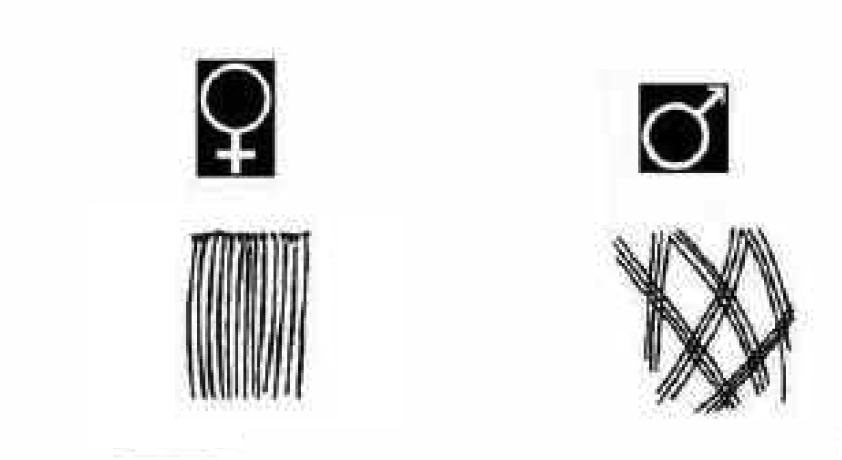
Certain motifs were related to the sex of the buried person and only appeared on the funerary vessel placed in the graves of the persons of that sex. Most interesting are these two patterns which appear on the bottom part of the vessel corresponding to the figurine legs...

Now what we see on the left is, I think, schematic depiction of the string skirt, like the one found in the grave of the so called "Egtved girl" who died and was buried in Denmark (far away from the lower Carpathians) around 1350BC... 


Here is the reconstruction

I talked about this in my post "Egtved girl"...

But what about the "male" motif? Are we here looking at the schematic depiction of tartan? We know people of that time were perfectly able to make tartan...How do we know this? Because of this:

This piece of tartan was found on one of the Indoeuropean mummies from Tarim basin, northern China, dated to about 1200BC...

But do we have any proof that tartan was worn by men in Europe of that time? Weeeell we actually do...Remember the so called "The Griffin Warrior", a person buried in the Bronze Age, Mycenaean shaft tomb dating to around 1450 BC? 

And remember the so called "Combat agate" found in his grave, which depicts a battle scene in which a Minoan warrior is kicking the crap out of Mycenaeans? 


Here is the drawing of the scene, on which you can see the details much better:

Well, both Mycenaeans depicted on that gem wear kilts made of tartan... 

I talked about this in my post "Legendary battle"...

But wait. We are here talking about the funerary pottery found in Carpathian basin in Hungary...Does that mean that the people living between 1500BC and 1200BC from Balkans to Baltic, from Europe to China, were the same people, or did they just all follow the same fashion???

Sources about the Encrusted Pottery culture vessels:

1. The chronology and meaning of the Transdanubian encrusted pottery decoration

2. Middle Bronze Age Encrusted Pottery in western Hungary

Wednesday, 24 February 2021

One for the road

This is really cool. The people of the Bronze Age Encrusted Pottery Culture (Middle Bronze Age, 2000-1500BC) from the Carpathian basin, buried children with miniature versions of the pottery with which the adults were buried. Pic: pottery from children graves (L) vs pottery from adult graves (R)


This was also observed when remains of adults were found in the same grave. For instance, the remains of a child and of an adult male were found in the same grave, and their vessels could be clearly separated on the basis of their size and differing decoration....

Furthermore, vessels accompanying children showed differences according to age at death, since small, horn-shaped vessels (baby horns) typically occurred in graves of infants. 

I talked about these baby rhyta here in my post "Baby (milk) horns"...

Now the reason why this is soooooo cool, is because it explains why these vessels were buried with the dead...To provide them with the food (or drink) for their trip to the other world... I proposed that these vessels originally contained drink in my post "Thirst"...More about insatiable thirst and hunger of the dead in my post "Blood red wine"...

Oh and remember goat Amaltheia ("Nourishing Goddess"), who fed baby Zeus with her milk? And then he "accidentally broke off one of her horns", which then became "cornucopia", the horn which had "the divine power to provide unending nourishment"...I talked about this in my post "Cornucopia"...

Well this whole link between goats, thunder gods and abundance originates from the fact that Ibex goat mating season in Crete coincides with the beginning of the rain season. And it is rain that bring fertility and abundance...

I talked about this in my post "Goat riding thundergods"

If horn vessels were buried with infants, this means that what was contained inside of the funeral vessels was drink. Because it is impossible to feed infants using horns. Unless you fed them milk...

How would you use these baby horns? Just like you would use gunpowder horns like this one. 

You cut the tip off. You close the hole with your finger. You fill the horn with water, milk, soup...You stick the horn tip into the baby's mouth and voila...Suck suck suck...

This basically proves my hypothesis, which I based on ethnographic data, that the funerary vessels found in Neolithic, Bronze age and Iron age burials were buried full of drink...Most likely just water...Cause the otherworld is a thirsty place...

But that would mean that the same beliefs and the same rituals related to the departure of the dead have survived in Europe since Neolithic...How interesting...But not surprising...At least not to me...

Baby (milk) horns

Among the ceramic finds from the cemetery of the Bronze Age Encrusted Pottery culture at Bonyhád in Hungary, archaeologists have found many ceramic "drinking horn" vessels, like this one, in the graves of infants...

This may suggest that the drinking horns functioned as special items used for the nutrition of children, i.e. like contemporary baby-bottles, or possibly they were related to customs related to birth and new life...

The location of Bonyhád inside of the Encrusted Pottery Culture territory in the Carpathian Basin. 


From "The chronology and meaning of the Transdanubian encrusted pottery decoration"

What did the kids doing from these horns? Milk? Quite possibly, considering that Central Europe was where milk tolerance seem to have developed, and where we find Copper age and Bronze Age ceramic butter churns and Neolithic, Copper Age and Bronze Age cheese strainers...I talked about this in my post "Milk Butter Cheese"... 

Saturday, 24 October 2020

Not so mobile riders


Yamnaya invasion never happened??? 

Summary of the new paper just released: "...findings imply that Caucasian communities were not highly mobile and did not undertake large-scale migrations...during 4th and 3rd millennium BCE..."!!!

The research team analysed the isotopic composition of carbon and nitrogen in bone collagen from the skeletal remains of 150 people, taken from eight sites. The finds date back to a period from about 5000 to about 500 BCE...

In addition, the scientists compared this data with the isotope ratios in the bone collagen of 50 animals, as well as with the local vegetation of that time. The isotope ratios in bone collagen reflect the isotope ratios in the main foodstuffs that a person eats...

As it turns out, the diets of these groups were mainly based on the foodstuffs within the landscapes where their remains were found...

"The communities apparently remained within their respective ecological areas and did not switch between the steppes, forest steppes or higher regions," explains Sandra Pichler from the Department of Environmental Sciences at the University of Basel, co-author of the study...

So, this means, that there was no "fast, mass migration", otherwise known as "the invasion of mounted steppe warriors" of Europe by Yamnaya (R1b) people during early Bronze Age...

Here is the paper: "Diet and subsistence in Bronze Age pastoral communities from the southern Russian steppes and the North Caucasus"

Now this directly contradicts things like "...Corded Ware people carried mostly Western Steppe Herder (WSH) ancestry and were closely related to the people of the Yamnaya culture, documenting a massive migration into the heartland of Europe from its eastern periphery, the Eurasian steppes..."

The above interpretation of the genetic links between Corded Ware and Yamnaya has already been questioned by archaeologists as being too simple, as it ignores the complex processes involved in archaeological explanations. Now the archaeologists have data to completely destroy the above interpretation. If there was an influx of Yamnaya into Corded ware culture, it was more of a slow diffusion through the steppe / forest boundary, rather than through massive fast migration...

I never really bought into this Yamnaya invasion theory. Because of some practical reasons. 

This is currently accepted map of the westward migration of R1b into Europe...From this great page about R1b on Eurpedia


This map seems logical. We are talking about horse riding, wagon pulling, herding warrior tribes from the steppe. It would indeed be the most logical for them to move over land, and if possible over grassland...

But moving into Europe that way on horse back and oxen pulled carts would have been very difficult if not impossible. Europe is predominantly mountainous country, so not suitable for large horse back - oxen cart migration...

If you are lagging your whole belonging on horse back - oxen cart, there are basically only two possible ways into Europe from the Yamna homeland:

But the northern route is blocked by giant forests which once covered most of what is today Poland, Northern Ukraine and East Germany.

This would have made the migration down the southern route the most likely. But if you follow that route you eventually get stuck in Hungarian, Slovakian planes, surrounded by high wooded mountains. Where you have to dismount if you want to go any further...

That I am not the first to notice this "one way street into Europe from the steppe" can be seen from this map from "The genetic and cultural barrier of the Pontic-Caspian steppe – forest-steppe ecotone":

The map description: Typical migration routes through European steppes and forest-steppes. Red line represents the persistent cultural and genetic barrier, with the latest evolution in steppe region represented by the shift from dashed line to the north. Arrows show the most common population movements. 

So again, right into the Danube catchment area of Central Europe. 

So the migration of the steppe R1b westward did happen. Just not as an invasion of the hordes of horse riding, Kurgan building warriors, which suddenly burst out of the steppe and wiped out the old Europe...The crossing of the steppe / forest barrier requires a change in lifestyle and adaptation to the new environment. Which takes time and is easiest to achieve through mixing with the local forest population, which already posses the necessary knowhow...

Anyway, this is a completely new study, just released, who knows...I am very curious to see what the archaeological community is going to say about it...

Saturday, 26 September 2020

Ashkelon invasion

This is a transcript made by the archaeologist Georges Perrot, of the Luwian inscription engraved on the 3,200-year-old, 29-metre-long limestone frieze which was discovered in Turkey in the 19th c. The stone with the original inscription was later destroyed...

This inscription is the longest known hieroglyphic inscription from the Bronze Age. When the text was eventually translated, it turned out to be a story about the "Sea People" naval expedition to Ashkelon in modern-day Israel (Illustration: Sea People by Giuseppi Rava)

The inscription tells the story of King Kupantakuruntas, who became king of Mira and ‘guardian of Troy’ after his father Mashuittas’s death, and was the brains behind the capturing of Ashkelon and turning it into a major army and navy base...You can read more about it in Rediscovered Luwian Hieroglyphic Inscriptions from Western Asia Minor...

Now recent genetic study "Genetic History of the Near East (Iron & Classical Ages)" - Haber at al. 2020 has shown that at that exact time the area around Ashkelon had a large influx of "Southern European and Western Anatolian DNA"...

You can read more about it in "A Genetic History of the Near East from an aDNA Time Course Sampling Eight Points in the Past 4,000 Years"

The important bit is that authors of the study say that "...according to ancient Egyptian texts and archaeology, the Sea Peoples conquered the Levant but failed to conquer Egypt. Therefore, we tested whether the Eurasian gene flow to Lebanon during the Iron Age had also reached ancient Egypt."

"The results of the measurement of the Steppe ancestry in both regions suggests that...either ancient Egypt did not receive the Eurasian gene flow that the Levant received during the Iron Age or that the Eurasian ancestry was replaced in Egypt later..."

Which matches the historical records from the area...

Saturday, 27 June 2020

Nahal Mishmar hoard

In 1961, an extraordinary treasure was found in a cave in Israel. Hidden in a natural crevice and wrapped in a straw mat, the hoard contained 442 different objects: 429 of copper, six of hematite, one of stone, five of hippopotamus ivory, and one of elephant ivory


The incredibly elaborate metal objects were made with a copper containing a high percentage of arsenic (4–12%), basically arsenic bronze. Radiocarbon dating of the mat in which objects were wrapped showed that they were made between 4000 and 3500 BC...


The round knobs are usually said to be mace heads, but there is no evidence that any of them was ever used in combat...


The same goes for the so called "battle maces" or "sceptres" of "staffs"...No one really know what these were or what they were used for. Some had traces of wood in the holes, suggesting that they were stuck on poles...


But some, like this this one with a face (cute 😊) were definitely ceremonial objects. Unless these guys took "head butting" to another level 🙂


And there is no way that this amazing one topped with 4 horned animals with straight horns and 1 animal with spiral horns head was a weapon. It had to be a ceremonial object of some sort...


This is actually one of the most amazing objects I have ever seen...

10 of these cylindrical objects were also found in the hoard. The interpretations go from "crowns" to "stands for vessels with pointed bottoms". This one might have been used as a stand, but what a waste of a precious metal, when the same can be made from clay...


But some of these cylindrical objects were definitely not pointy bottom vessel stands...Like this one...Topped with birds and some strange structures with pointy horns attached to them...


So what are we to make of this. Items in the hoard were made by the people of the Ghassulian culture, a sedentary farming, metal working culture, which suddenly appeared "from somewhere up north" and settled in the area between 4500 and 3500 BC. 

They lived in villages and cultivated olives, grapes and grain...These are bedrock mortars used by Ghassulians for grinding grain...


They also built temples. Like this one known as Ein Gedi temple, literally "temple of the spring of the goat"...Located near an Ein Gedi oases bordering the Dead Sea...


You can read more about this in "Temples in the Ghassulian Culture: Terminology and social implications" by Milena Gosic

The bronze hoard was found in a cavern located on the nearly inaccessible slopes of Nahal Mishmar, a seasonal stream that flows into the Dead Sea. 12 km. from the Ein Gedi temple...


The remains of over 20 individuals were also found in the caves. Their lives ended in these caves under tragic circumstances which is indicated by the fact they had numerous injuries and that the wrappings were stained with blood...

They were members of the "foreign" "northern" Ghassulian population who were most likely attacked by the locals, their neighbours. They fled, hurriedly collecting and bringing with them their most valuable possessions, probably the temple relics...

Now what is interesting is that these Ghassulian guys seem to have been obsessed with horned animals with straight pointy horns. I believe that these were depictions of Ibex goats...

Here is another ceremonial axe, mace, staff (???) from the Nahal Mishmar hoard with two horned animals with straight pointy horns...


Which animals are these? 

I believe that these are Ibex (Bezoar) goats...


Why would these guys be so into Ibex (Bezoar) goats? 

Well, like all the farmers, Ghassulians were super dependant on rain...Especially because they lived in one of the driest places on Earth...Dead Sea...And there the rains arrive at the end of October beginning of November...


And guess what happens every year at the same time? Ibex (Bezoar) goats start mating...The beginning of the Ibex (Bezoar) goats elaborate mating rituals involving dancing and vicious fighting, was the signal that the rains are on their way...


Again, in Israel, like in Crete, Cyprus, Lebanon, Turkey, Syria, Iraq, Iran, Pakistan, Arabia...In all the places where rains arrive in November, we find Ibex (Bezoar) as the holy animal depicted in sacred art by farmers, praying for rain. And looking at Ibex (Bezoar) to tell them when it will come...

Now I will go back to my favourite object, the goats staff...


The four Ibex (Bezoar) goats on sides are not what the makers of this object wanted the viewers to have their attention focused on. It is the weird spiral horned goat in the centre...

I checked around and found that there is one animal with spiral horns which once lived in Levant: Addax


Now if the spiral horns animal depicted on the staff is Addax, we can finish this article right here...Addax has no distinct mating season...Which one of the reasons why I don't think that it is Addax which is taking the central stage on this amazing Ghassulians staff...

I think the spiral horns animal depicted on the staff is Markhor goat


Why would this guy be depicted on the stuff? Surely not because it looks cool (not that he doesn't). Markhor is depicted on the staff because Markhor mating season also starts in November...At the beginning of the rain season...

So here we have double animal symbol pointing to the same, extremely important annual event in Levant: the beginning of the rain season...

So all the goats depicted on this staff are directly linked with the arrival of rain, heavenly water...The most important event in the agricultural calendar of the people who built the temple of Ein Gedi (the spring of the goat). "Which was apparently linked to water warship"...

Did the people who prayed in Ein Gedi temple pray to the holy goat, the goat of rain? I already asked this question half jokingly when I talked about Ibex goat in Greek mythology...

But seriously now...

There is something very very interesting about this depiction of the Markhor goat on this Ghassulian staff...Markhor goats don't and as far as I know, never did live in Levant...They live in Central Asia...

Which means that the makers of the staff could not have seen a Markhor. Nor could they have observed Markhor's mating habits and linked them to the arrival of rainy season...

So does this mean that I was wrong and that the Ghassulians did indeed depict an Addax on the staff and not a Markhor? 

Well, I still think I am right and that the mysterious animal with spiral horns depicted on this staff is indeed a Markhor goat...And that the makers of the staff could have seen it and observed its behaviour for long enough period to link it to the beginning of the rain season...

But not in Levant...

The Ghassulians did come from "somewhere up north"...

How far up north...

Maybe as far as Elam? Or even Central Asia?

I will here propose that the staff was made by someone who came to Levant from Iran or Central Asia, or the staff was made in Iran or Central Asia...

And here is why I am so confident I am right...

This is the "Statuette of a bearded man". Elamite, 3rd millennium B.C.E. Height: 11.5 cm. Forughi Collection, Tehran...


Look at the "crown" he is wearing...Looks familiar? 


How many other similar objects do we know of?

But this presents us with another very very big problem...

The Nahal Mishmar hoard was dated to between 4000 and 3500 BC...Almost a 1000 years earlier than the above Elamite statue...

If the man depicted on this statue is indeed wearing one of "crowns" found in Nahal Mishmar hoard, and we know (believe) that the Ghassulians were immigrants from "up north" then is the dating of these artefacts correct?

Or did Ghassulians leave Levant and go back north, all the way to Elam?

Hmmmmm.....

PS:

I sent my article to Alla Yaroshevich from the Israel Antiquities Authority to get her opinion...

She sent me the link to this article published in 2018:


The article gives the analysis of the genetic data obtained from the remains found in the cave, which contained the Nahal Mishmar hoard...And this is the conclusion:

The Chalcolithic period in the Levant witnessed major cultural transformations in virtually all areas of culture, including craft production, mortuary and ritual practices, settlement patterns, and iconographic and symbolic expression. 

The current study provides insight into a long-standing debate in the prehistory of the Levant, implying that the emergence of the Chalcolithic material culture was associated with population movement and turnover.

We find that the individuals buried in Peqi’in Cave represent a relatively genetically homogenous population. This homogeneity is evident not only in the genome-wide analyses (half of the people burried in the cave had blue eye gene, and all had pale skin gene) but also in the fact that most of the male individuals (nine out of ten) belong to the Y-chromosome haplogroup T. This finding contrasts with both earlier (Neolithic and Epipaleolithic) Levantine populations, which were dominated by haplogroup E24, and later Bronze Age individuals, all of whom belonged to haplogroup J24,26.

The presence of Iran_ChL-related ancestry in Levan chalcoithic population – but not in the earlier Levant_N – suggests a history of spread into the Levant of peoples related to Iranian agriculturalists, which must have occurred at least by the time of the Chalcolithic. The Anatolian_N component present in the Levant_ChL but not in the Levant_BA_South sample suggests that there was also a separate spread of Anatolian-related people into the region. The Levant_BA_South population may thus represent a remnant of a population that formed after an initial spread of Iran_ChL-related ancestry into the Levant that was not affected by the spread of an Anatolia_N-related population, or perhaps a reintroduction of a population without Anatolia_N-related ancestry to the region. 

These genetic results have striking correlates to material culture changes in the archaeological record. The archaeological finds at Peqi’in Cave share distinctive characteristics with other Chalcolithic sites, both to the north and south, including secondary burial in ossuaries with iconographic and geometric designs. It has been suggested that some Late Chalcolithic burial customs, artifacts and motifs may have had their origin in earlier Neolithic traditions in Anatolia and northern Mesopotamia. Some of the artistic expressions have been related to finds and ideas and to later religious concepts such as the gods Inanna and Dumuzi from these more northern regions. The knowledge and resources required to produce metallurgical artifacts in the Levant have also been hypothesized to come from the north.

Our finding of genetic discontinuity between the Chalcolithic and Early Bronze Age periods also resonates with aspects of the archeological record marked by dramatic changes in settlement patterns, large-scale abandonment of sites, many fewer items with symbolic meaning, and shifts in burial practices, including the disappearance of secondary burial in ossuaries. This supports the view that profound cultural upheaval, leading to the extinction of populations, was associated with the collapse of the Chalcolithic culture in this region.

This paper, which I didn't know about when I proposed that the people who made the objects from Nahal Mishmar hoard came from Iran, basically confirms my hypothesis...

Genetics confirms symbolic analysis...

How cool is this?