Showing posts with label Bronze Age Central Asia. Show all posts

Monday, 25 October 2021

Tarim basin baby bottle

This infant died when he or she was less than a year old. Dark blue stones covered its eyes, and red woolen yarn was inserted into its nostrils. The infant was buried with a cow horn tip and a bottle made from a sheep’s udder...


This well-preserved infant mummy, was discovered in the cemetery of the Qizilchoqa settlement about 60 km west of Qumul (Hami), an important, old Silk Road town in the far eastern portion of the region. It was dated to ca. 1200 BC...


More info in the "Ancient mummies of the Tarim Basin" and "The mummies of East Central Asia"

It is one of hundreds of Bronze and Iron Age caucasian (European) mummies discovered in deserts along the Silk Road in Central Asia and Northern China...

Now, these are ceramic decorated horns found in infant graves of the Central European Bronze Age Encrusted Pottery culture (2000-1500BC). 

I talked about them in my post "Baby milk horns"...

Why were these horns placed in infant graves? To provide them with drink in the otherworld...How do we know this?

We know this because Encrusted Pottery culture people buried their dead with age appropriate "grave goods": big ceramic pots for adults, small ceramic pots for children and ceramic horns for babies...

I talked about this in my post "One for the road"...

And because of the ancient belief that the otherworld is "a thirsty place"...And because in Central Europe, making sure the dead have enough water in the otherworld is still seen as an imperative... I talked about this in my post "Thirst"...

Have you ever thought about how did our ancestors arrive to the idea that the otherworld was a thirsty place? Or maybe it is better to ask where and when did our ancestors arrive at the idea that the otherworld was a thirsty place?

I am thinking...

Friday, 26 February 2021

Tartan

Archaeologists who examined the decorations on the Bronze Age "Transdanubian encrusted pottery" (2000-1500BC) funerary vessels noticed that a few motifs actually represented parts of the human body, clothes and jewellery found on the figurines from the same area and period...


These decorations repeatedly occur on specific parts of the vessels and in specific combinations, which correspond to the position of the body parts...

I talked about the fact that the actual jewelry depicted on the Central European Bronze Age idols was found in graves of the same culture which made these idols in my post "Klicevo idol"...


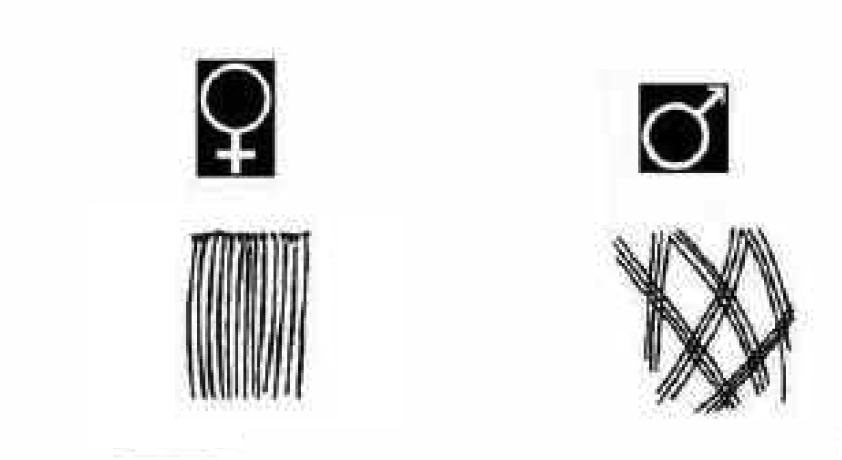
Certain motifs were related to the sex of the buried person and only appeared on the funerary vessel placed in the graves of the persons of that sex. Most interesting are these two patterns which appear on the bottom part of the vessel corresponding to the figurine legs...

Now what we see on the left is, I think, schematic depiction of the string skirt, like the one found in the grave of the so called "Egtved girl" who died and was buried in Denmark (far away from the lower Carpathians) around 1350BC... 


Here is the reconstruction

I talked about this in my post "Egtved girl"...

But what about the "male" motif? Are we here looking at the schematic depiction of tartan? We know people of that time were perfectly able to make tartan...How do we know this? Because of this:

This piece of tartan was found on one of the Indoeuropean mummies from Tarim basin, northern China, dated to about 1200BC...

But do we have any proof that tartan was worn by men in Europe of that time? Weeeell we actually do...Remember the so called "The Griffin Warrior", a person buried in the Bronze Age, Mycenaean shaft tomb dating to around 1450 BC? 

And remember the so called "Combat agate" found in his grave, which depicts a battle scene in which a Minoan warrior is kicking the crap out of Mycenaeans? 


Here is the drawing of the scene, on which you can see the details much better:

Well, both Mycenaeans depicted on that gem wear kilts made of tartan... 

I talked about this in my post "Legendary battle"...

But wait. We are here talking about the funerary pottery found in Carpathian basin in Hungary...Does that mean that the people living between 1500BC and 1200BC from Balkans to Baltic, from Europe to China, were the same people, or did they just all follow the same fashion???

Sources about the Encrusted Pottery culture vessels:

1. The chronology and meaning of the Transdanubian encrusted pottery decoration

2. Middle Bronze Age Encrusted Pottery in western Hungary

Sunday, 27 December 2020

Giant eagle dude with mouflons

In 2011, this beautiful object was sold for 97,000 pounds sterling...A Bactrian gold stamp seal, c. 2200-1900 BC...


Official description: "...central figure of a winged giant, with muscular human torso and legs, the head and talons of an eagle, wearing a short open tunic with wide belt, and a pendant necklace, grasping in each hand an inverted ibex..."

What the heck is the meaning of this scene? Here is the stamp print which makes the scene depicted on the stamp much clearer...

Well to understand this, we need to first identify the two animals the "winged giant" is holding in his hands. They are not Ibex goats...They are not goats at all. They are wild sheep. Mouflons...

Look at the horns...

Bezoar goat, native to Bactria. 

Mouflon sheep, native to Bactria...

But I am just being picky...It actually makes no difference whether these are Bezoars or Mouflons, from the point of view of understanding this scene...

This is because both species have the same mating season, which starts in Oct-Nov, at the beginning of the rain season in Bactria...And the beginning of winter...


You can see that in Bactria, the climatic year is roughly divided into hot and dry and cool and wet parts

Both animals were used in Eurasia as animal calendar markers marking the beginning of the rain season and the beginning of winter...The rejuvenation of nature...Like on this vase design from Jiroft culture, just a bit down south from Bactria...

Both animals mating season last throughout the winter, Nov-Dec-Jan...Which is also the time when local vultures have their mating season....

Which is why vulture, and more specifically, a vulture dude, like our winged giant, became a symbol of the rain season...Basically the vulture (eagle) dude is the rain god...I talked about this in my post "Eagle calendar markers"...

Here is another Bactrian seal, with the same eagle dude, this time actually holding two Bezoar goats...Just so you see that Bezoars and Mouflons are actually interchangeable as calendar markers...

I talked about this seal in my post "Fluffy"...

And here is the same eagle dude, this time with two heads, on an axe head from Bactia...

I talked about this amazing artefact in my post "Double headed eagle"...

Why two heads? Because the main vulture mating ritual is the synchronized flying...


Which from the ground looks like this: A double headed eagle...

So...Another very very cool example of animal calendar markers, which are found all over Eurasia and North Africa...

To read more about ancient animal and plant calendar markers, start here…then check the rest of the blog posts related to animal calendar markers I still didn't add to this page, and finally check my twitter threads I still didn't convert to blog post...I am 9 months behind now...

Friday, 10 July 2020

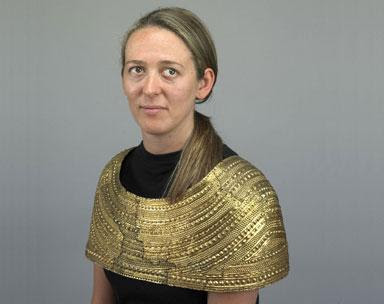
Mold cape


It is thought to have formed part of a ceremonial dress and was worn like this... 


Nothing like this has been found anywhere else in the world...

And then we have this: Figurine from Central Mesopotamia, possibly Eshnunna, 2000-1800BC 


And finally we have these: 


Anthropo-zoomorphic (???) female figurine, terracotta, 3500-3000BC, Quetta, Beluchistan (Pakistan)...


Hmmm...