Tuesday, 17 December 2019

Verige

In this article I will continue my story about the cult of hearth among the Serbs which I started in my post "Fire goddess" and continued in my post "Bride and the hearth". Here I will talk about the cult of "verige" (hearth chain on which cauldron is hang over the hearth).


Herodotus says that:

"...whenever the king of the Scythians falls sick...this is because such and such a man...has forsworn himself by the king's hearth..."

Pic: Pontic Scythian coin from "The coins of the Scythian kings"


Herodotus then says that:

"...for when the Scythians will swear their mightiest oath, it is by the king's hearth that their custom is to swear most solemnly..."


Herodotus says:

"Scythians regard Hestia, goddess of the hearth, to be their Mother Goddess their Queen."

So oath made before the hearth was oath made before Hestia


In "The mirror of Herodotus" François Hartog asks how is it possible that nomadic Scythians worship Hestia, the goddess of the central, immovable, eternal hearth whose fire should never be extinguished?

Interestingly Ossetians, who are regarded as descendants of Scythians, "hold hearth to be the holiest place: the most solemn oath is sworn by the hearth, while holding onto the iron chain hanging above it which holds the cauldron".


This chain actually had its own deity: Safa (Сафа), God of the hearth chain. He was the most important domestic deity of Ossetians.

Interestingly, among Serbs, who also regard the hearth as the holiest place in the house, the hearth chain which holds the cauldron is also considered to be one of the holiest things...

There is a Serbian legend that says that once "verige" (Serbian name for hearth chain) hang from the sky, and that people made oaths holding onto this holy chain...

There is a Serbian legend that says that once "verige" (Serbian name for hearth chain) hang from the sky, and that people made oaths holding onto this holy chain...

This legend also says that if the person holding onto holy verige  (hearth chain) swore a false oath, it would pull the perpetrator towards the sky and expose him and his lie...

One other "coincidence" is that while Ossetians have Safa (Сафа), God of the hearth chain, in Serbian tradition verige (hearth chain) is directly linked to St Sava, Patron saint of Serbia...

St Sava inherited most of the prerogatives of the old Serbian supreme (Sky) god Dabog. Hearth chain which symbolically connects the house hearth, the centre of the house, the centre of the family's world, with the sky, could then be personification of Dabog...

That verige (hearth chain) was by Serbs originally seen as the personification of the sky god, can be seen from the fact that verige was taken out into the fields to magically protect them from hailstorms...

Hearth chain has its own "red letter" day, Časne verige (Holy chains), which is in some parts of Serbia the main holy day. If you wear clothes made on that day "you will be killed by lightning" (because you disrespect the Sky god on his holy day by working)...

One other thing shows that verige (hearth chain) was seen as an object directly linked to Sky God. In Serbian folklore, Thunder God Perun was the one who punished "perjurers (people who swear false oaths), as well as all people who were evil..."

So were Scythians, who were as Herodotus says, swearing oaths before "tas basileias histias" (Royal hearths), swearing oaths before Hestia or Zeus? Judging by Osetian and Serbian tradition most likely Zeus...

One other proof that Serbs linked verige (hearth chain) with sky god is the fact that in spring they decorated verige with nettles to protect house from being struck by lightning. Nettles was believed to ward off lightning...


But this is not the end of the story about holy verige (hearth chains)

In Serbia, when shepherds lost their sheep in the mountain, they ritually tied "verige" (chain on which cauldron is hang over the hearth). 


This was done to "close wolf's jaws" and protect the sheep...


Another ritual that was performed "to close wolf's jaws" and protect the flocks involved tying red yarn around "verige" (chain on which cauldron is hang over the hearth) at Christmas...


The day of St Mrata, 24th of November, marks the end of 9 days known in Serbia as "Mratinci", Mrata's days of "wolf days". St Mrata was by Serbs considered to be "protector of wolves".


Serbs believed that on his day, St Mrata decides which sinners should be punished by sending wolves to attack their flocks during the winter.


On his day in Serbia people performed a very interesting ritual involving "verige" (hearth chain) which was according to people performed "so that wolves wouldn't kill sheep"...

A black cockerel was slaughtered on the house doorstep. After the cockerel is slaughtered, a hair from every animal in the household is placed in its beak. The beak is then tied with a red thread and is hanged over the door or is buried under the doorstep to protect the house and its animals from the evil spirits. The wings are hanged on the chain hanging from the ceiling and on which the cauldron hangs. Or the head with the hairs was hang on the chain. Both the door and particularly the doorstep and the fire place are in Serbian tradition closely linked with the cult of the dead and are places believed to be inhabited by the spirits of the dead ancestors.


This is clearly a panspermia (mixed sacrifice), a type of sacrifice which was in Serbia offered to family ancestors and to the ancestor of all Serbs, Giving God, Dabog

Serbians saw Dabog as "lame wolf shepherd", the protector of wolves and the ruler of the underworld. But they also saw him as the Sun god...I wrote about this in my post "Day Star".

Serbs also believed that wolf was their totem animal, into which the spirits of their dead ancestors reincarnated...Serbs organised the same sacrificial feasts for wolves and the dead. 

In some parts of Serbia, on Christmas Eve people used to take a table laid with food on the doorstep of the house and would then ask wolves to come to the feast. In other parts of Serbia they would invite the dead to the feast in the same way.


I wrote about this in my post "Wolf feast".

In some parts of Montenegro Serbs used to place verige (hearth chain) on the dead before burial. Originally verige could have been tied around the dead just like in Serbian wolf rituals...

So it seems that verige (hearth chain) was personification of Dabog the wolf shepherd and that this is why the sacrifices were made to the chain on the day of St Mrata, the saint protector of wolves

As I already said I believe that verige were personification of Perun. 

Rooster is Perun's bird and was in Serbia sacrificed on Perun's day. So is sacrificing cockerel to verige a sign that verige were symbol of Perun?

I wrote about this link between Perun and Cockerel in my posts "Alidjun" and "Cockerel and lion".

But, it is possible that verge have even more complex symbolic meaning. 

Dabog, Serbian supreme deity was also known as Triglav (Tree headed). His heads were: Perun (Thunder), Svetovid (Sun), Svarog (Fire). 


Verige (hearth chain) connects sun with fire. Sun creates Fire through Lightning. This is the meaning of Triglav, Dabog...


I talked about this in my posts "Triglav", "Thundering sun god" and "Sun thunder fire".

Verige (hearth chain) is the lightning (Perun) from the above picture, but with sun and fire that it connects, verige is also Dabog (Triglav). Which is why sacrifices to verige are both made to Dabog and Perun..

In the end, having one Saint protector of wolves, who tells wolves whom to attack is crazy. But Serbs actually have two such saints: St Mrata and St Sava🙂

St Sava, Celebrated on the 27th of January, is the Patron Saint of Serbia. He has in Serbian folklore "inherited" most of the prerogatives of old Serbian ancestral deity Dabog, including being the wolf shepherd 

And he also inherited verige (hearth chain), the symbol of Dabog. As I said in my original thread about verige, it has it's own red date called "Savine verige" (Sava's verige) or "časne verige" (holy verige) 


Interestingly St Mrata is celebrated just after the beginning of winter and St Sava is celebrated just before the end of winter. So the two "wolf shepherd" saints mark the beginning and the end of winter, the season of the wolf... 


The winter, the time of wolves and wolf shepherds, is also the time of darkness, when sun is in the underworld...When Sun God Dabog becomes Dabog, God of the Underworld... 

Monday, 16 December 2019

Bride and the hearth

Related to this article about Serbian house hearth cult, here is an interesting old Serbian wedding custom, in which the bride severs her link to her mother's hearth and establishes her link to her mother in law's hearth.


Before she leaves her mother's house, the bride asks her mother's hearth for permission to leave it. Serbs believed that house hearth was the seat of the ancestral spirits, so the bride is rally requesting permission from all her ancestors to leave them...

If the house has a centrally built floor hearth, the bride is walked around it 3 times. 


If the fire place is built into a wall, she is spun around in front of it 3 times


She then throws money and food into the fire (sacrifice to the fire and the ancestral spirits), pokes the fire to make sparks fly, and kisses the hearth (fire place) stones, before leaving her mother's house to go to her mother in law's house

When the bride arrives to her mother in law's house, she is greeted by her mother in law who is sitting next to the hearth (fire place), her seat of power and the centre of the house cult that she officiates

There the bride has to repeat the same ritual of walking around the hearth (being spun in front of the fire place), gifting the fire, and the ancestors living under the hearth (fire place) and poking the fire to make sparks.

Bride is asking to be accepted into the new house fire cult, the new ancestral cult. Her mother in law, the mistress of the house, the priestess of the house cult, accepts her in the name of the family in front of the family altar, the hearth (fire place)...

Sunday, 15 December 2019

Fire goddess


Tapati is a Hindu goddess, a  daughter of the sun god Surya. Her name means the "warming", "the hot one", "burning one".  The name comes from PIE root "tp-" meaning warmth, shine. 

Herodotus tells us that Scythians respected one goddess more than any other and called her the queen of gods: Tabiti. This is most likely Tapati...

Herodotus also tells us that Tabiti is actually Hestia, the Greek goddess of the hearth, actually of the hearth fire. Which fits in with the meaning of the Tapati's (Tabiti's) name: warm one, burning one, bright one...

The hearth fire was believed to be directly linked to the sun fire. This can be seen from the Yule log ritual preserved in the Balkans. In it the Yule log (Serbian: Badnjak) was specifically kept burning through "the longest night" so that the fire of the sun doesn't get extinguished...You can read more about this in my post "Badnjak".

Remember originally only Sky god (Sun + Thunder) knew how to make fire. Sun, created Thunder (Lighting) which created fire. By the way this link sun-thunder-fire has been scientifically proven recently. You can read more about it in my post "Sun thunder fire".

This "sacred fire" kindled by Sky God, once found in nature, was brought to the hearth and had to be perpetually kept burning... This ancient memory was preserved in the rituals of eternal flame. Which is what Hestia was. The eternal flame which had to be kept burning...

The tradition of keeping the house hearth fire burning at all times was still one of the main duties of the mistress of the house in Serbian villages in the early 20th century.

Just like in Ancient Greece, accidental or negligent extinction of a domestic hearth-fire represented a failure of domestic and religious care for the family.

Hestia's name means "hearth, altar". And in Serbian houses the hearth was the original altar around which the most important religious ceremonies were performed, officiated by the mistress of the house, the high priestess of the domestic cult, the keeper of the sacred fire.

In Serbia when a family moved house, the new hearth fire was kindled with the flame brought from the old hearth. When a sons built his own house, he kindled the first fire in his new house with the flame brought from his parent's hearth. I wrote about house building rituals in my post "New house".

In Ancient Greece: "...with the establishment of a new colony, flame from Hestia's public hearth in the mother city would be carried to the new settlement...". Do we have the same custom in Ancient Greece with regards to family fire, like in Serbia?

Serbian expression "his hearth was extinguished" is identical to "his line has ended, his family died out"

The hearth fire is here clearly equated with the family. Hence the responsibility for the propagation of both, the hearth fire and the family lied on the mistress of the house...

While keeping the fire burning inside of the hearth, the mistress of the house has to keep fire burning inside of her womb too. As without either of these fires, the house will go dead and cold...

This link between the generative power of the hearth fire and the generative power of the womb fire can be seen in the fact that in some parts of Serbia a bread oven, like this one, is called "Baba" (Mother, Grandmother, Birth giver). 


You can read more about it in my post "Baba - Earthen bread oven".

Only the fire burning inside the woman's womb can transform man's seed into living child. Only the fire burning inside the oven can transform dough into bread. Only the fire burning inside the earth can transform Sun light into Life... Interesting, right?

O and only a female fire burning inside the crucible can transform ore, that a male smith puts into it, into metal. Is this the reason why Irish "hearth fire goddess" Brigid was also the patron of smiths?

This magic transformative power of "female fire" burning inside of the house hearth is what turned difficult to digest raw carcasses into nutritious broths and roasts allowing our ancestors to grow bigger stronger and smarter...

This magic transformative power of "female fire" burning inside of the house hearth is what turned inedible acorns full of poisonous tannins, through leaching and roasting, into nutritious gruels, broths and breads... You can read more about this in my post "Eating acorns". 

This magic transformative power of "female fire" burning inside of the house hearth is what turned inedible grains into porridge and bread...

This magic transformative power of "female fire" burning inside of the house hearth is what turned leaves, root and bark into medicines...

House hearth was the first alchemical laboratory and the house mistress was the first alchemist, preserving and enriching the accumulated knowledge of generations of women who tended the "sacred fire" and used it to make food and medicine...

Is this where the image of an old witch bent over a bubbling cauldron hanged over a house hearth making magic potions comes from? And is it possible that this image was not originally a negative one?


You can read more about this in my post "The skilful one".

Saturday, 14 December 2019

Snow White

Crab apples covered in snow. 


These small wild apples, native to Europe, are truly "the last fruit of autumn" remaining on the branches until well into winter...This image made me think of "The Snow White" fairytale and possible mythological symbolism embedded in this tale...

The short version of the first edition (1812):

A beautiful woman has a magic mirror that tells her every day that she is the most beautiful woman in the world. Then she has a daughter who becomes even more beautiful than her. And so, one day the magic mirror tells her that it is her daughter who is the most beautiful woman in the world. The mother gets so jealous that she orders a hunter to take her daughter to the forest and kill her. Instead of killing the daughter, the hunter releases her. She wonders through the forest and eventually stumbles across 7 dwarfs who let her stay with them. The next day, the mother finds out from the magic mirror that her daughter is still the most beautiful woman in the world, which means that she was not killed by the hunter. So she decides to kill her daughter herself. She has two unsuccessful attempts, until finally disguised as an old woman, she manages to kill her daughter with a poisoned apple. The dwarfs put the daughter into a crystal coffin. She lies there until a prince comes by, sees her, falls in love with her, even though she is dead and takes her to his castle. On the way there she is revived when the bit of the poisonous apple is dislodged from her throat. She marries her prince, happy end.

So in the original story it is the mother and not the step mother who is jealous of the girl and who kills her with the apple...That is very interesting...

Every year, a beautiful mother, disguised as an old woman, kills her even more beautiful daughter with an apple. The dead daughter then lies dead in a "crystal coffin" until a young prince comes by and revives her. Two of them then get married. Except this is not the happy end...

The beautiful daughter becomes a beautiful woman and has even more beautiful daughter, who she kills out of jealousy, with an apple, disguised as an old woman...And so on and so forth...Endlessly, year after year...

What we have here is the story of Earth going through seasons: Spring, Summer, Autumn, Winter, Spring...

Beautiful young Spring Earth becomes bountiful Summer and Autumn Earth. Still beautiful, but in no way as beautiful as the Young Spring Earth...

Because of the cyclical nature of the solar year, Autumn Earth is the mother of Spring Earth of the next solar year. As Autumn ends, and the crab apples are the last fruit left on the trees, Autumn Earth turn into Old Hag Winter Earth, who "kills" her own younger self...

Dead Earth lies in her icy coffin until Young Spring Sun arrives. He sees beautiful Spring Earth under the ice, falls in love with her and revives her (heats up the earth and melts the snow and ice). Spring Earth, marries Spring Sun...

But seasons pass, Spring Earth turns into Summer Earth and then into Autumn Earth and then into Winter Earth...And the story repeats itself...Luckily, every spring, Young Sun arrives to save the day 🙂


Why apple? The falling of crab apples, last fruits, means the end of the fertile part of the year, the end of Living Earth (spring, summer, autumn) and the beginning of the Dead Earth (winter)...Hence the apple given by The Hag, The Winter Earth, is the thing that kills Spring Earth...

Why hunter as the man who should kill the daughter? Because Sagitarius, the Hunter is the first winter month. It marks the beginning of the fur hunting season in Europe...I wrote about it in my post "Hunter".

Almost identical story in verse was published in 1833 by Aleksandr Pushkin. It is called "The Tale of the Dead Princess and the Seven Knights". It was based on stories he heard when he was a kid, the stories which can be found in several Russian folklore collections... 

That this indeed is the story about the death and rebirth of Earth which is going through the seasons can be seen from several other very similar stories preserved around Eurasia....

In the Greek story, the girl is called Myrsina (Myrtle). Myrtle was sacred to Aphrodite, the goddess of love, who was actually personification of Young Earth...


She is not killed by her mother, but by her two sisters. Three sisters are three faces of Mother Earth. In Slavic mythology they are Vesna (Spring Earth), Mokosh (Summer-Autumn Earth) and Morana (Winter Earth)...

The two older sisters are not asking the magic mirror who is the most beautiful. They are asking the sun...With the same result: the youngest one, Myrsina, Aphrodite, Spring Earth is the most beautiful...

The two sisters take Myrsina to the forest themselves, pretending that they are "reburying their mother". They bring with them funeral bread, sweet boiled grain called "Kollyva" and fruit and nuts. All these are in Greece usually prepared for funeral feasts. But in Serbia they are also prepared for Christmas (Winter Solstice) which is as much a celebration of the birth of the new sun as it is a mass for the dead. Dead ancestors and the dead nature...

Myrsina is left alone in the forrest to be eaten by wolves...Wolves are the symbol of winter. In Serbia Winter starts with St Mrata and ends with St Sava, the Wolf saints...

She was told how to escape by trees :) They instruct her to get the funeral bread and roll it down the mountain. Where the bread stops she will find her shelter... Do we need any more fertility symbols?

Myrsina does not stay with 7 dwarfs or seven knights, she stays with 12 months...The full solar year. And she doesn't get killed by an apple. She gets killed by a ring, the full circle, full cycle. In Slavic mythology this is "kolo", wheel, Solar Wheel, Solar Year...

She is placed in a golden casket where she lies dead and beautiful. Enters young prince, who falls in love with the dead girl, takes her ring off and voila! The girl is alive again, they get married etc etc...

Interestingly in Slavic mythology, Spring Sun who revives Spring Earth is called "Jarilo" (pronounced Yarilo). His name means both young, and raging...Jarilo sounds suspiciously similar to Ares (the god of rage), the lover of Aphrodite...

The same story just with a different names was recorded in Albania. Except the girl doesn't end up with 12 months but with 40 thieves...The story is called "The jealous sisters". 

In Armenian version of the story, the girl is called Nourie Hadig, which means "a tiny bit of pomegranate". 


Pomegranate was another plant sacred to Aphrodite, directly linked to her role as Goddess of Fertility, which is the main attribute of the Spring Earth...

This is also plant which Persephone eats in the underworld after she is taken there by Hades...Persephone, Demeter, Hekate from the story about the abduction of Persephone, is the Greek version of Vesna, Mokosh, Morana. I talked about this in my post "The abduction of Persephone"...

The mother (it's the mother again) doesn't ask the mirror or the sun who is the most beautiful woman in the world. She asks the new moon, the symbol of the passing of time...

The evil mother actually orders the father to kill the girl, which he disobeys and lets the girl go. She eventually ends up in a house "with a sleeping prince" 🙂 whom she ends up taking care of for 7 years...

After 7 yeas the prince wakes up, and marries the girl. But then she gets tricked by her Gipsy servant to put on the poisonous ring made by her mother, which kills her. Eventually the ring is removed and the girl gets back to life and so on and so forth... 

Finally there is a story from Italy, where the mother is an innkeeper called Bella Venezia. The daughter escapes and is adopted by 12 robbers who live in a cave which is opened and closed using a secret password 🙂...The mother hires an old witch to kill her daughter, and she does it with a pin...

This part is really interesting. The robbers bury the dead girl in a hollow tree. Clearly a hint and the girl's true identity as the Spring Earth...The rest is the same. Prince finds her while hunting, the pin is removed, she gets back to life, they get married... 

And so the wheel turns, the seasons change...The Spring Earth Vesna (Aphrodite) is lying asleep in her icy coffin waiting for lover Spring Sun Jarilo (Apollo-Ares) to wake her up... In the meantime, make yourself some candy apples. Here is a good recipe 


Saturday, 7 December 2019

Taurides

This is a very interesting vessel from Kizil-Koba settlement, fragment and reconstruction. Kizil-Koba Culture was an archaeological culture that existed in the mountain and foothill regions of the Crimea in the ninth to sixth centuries B.C.

The material similarity between Kizil-Koba culture and Koban culture of the northern Caucasus has led to the supposition that the two were genetically linked and that the Kizil-Koba culture originated in the Caucasus. Kizil-Koba pottery. Probable cheese curd strainer bottom right


The Kizil-Koba culture has been also linked with the Tauri tribes of transhumance shepherds which at the time lived in the mountains of southern Crimea. Map showing Kizil-Koba settlements (circle) and Taurian cemeteries (square).

Kizil-Koba settlements, consisting of pit-houses or aboveground wattle-and-daub houses with numerous grain pits around, had no fortifications. The excavations unearthed bronze decorations, arrowheads, parts of horse harness similar with the artifacts found in Taurian cists.


The Taurian cists were about one meter in diameter, made from four massive stone walls stuck into the ground and a massive cover stone. They were encircled by pebble pavement surrounded by square stone fence


Some necropoleis consisted of a few grave constructions, the other contained tens of cists sometimes located in parallel lines.


Cists were used for multiple burials. It seems that when cist got full, the bones were removed and only skulls kept. One cist in Mal-Muz cemetery contained 68 skulls.  

Kizil-Koba Household pits contained a few dozen artefacts of ill- baked clay including anthropomorphic and zoomorphic figurines,  like these two, probably of cultic nature 


The local population mixed with Greeks who set up colonies along the Crimean coast. Example of this mixing can be seen in the settlement and necropolis of Panskoye, village near Greek Chersonesos 


Herodotus says that "...Tauri...live by plundering and war...they sacrifice their captives...to the Virgin goddess...The Tauri themselves say that this deity to whom they sacrifice is Agamemnon's daughter Iphigenia...."

And this is very very interesting. The Greeks called the Tauric goddess Artemis Tauropolos and also linked it with Iphigeneia, daughter of Agamemnon... 

According to Euripides, the cult of the bloodthirsty Artemis Tauropolos was brought to Greece by Orestes and Iphigenia, who brought a wooden statue of Artemis to Sparta where she was from then on worshiped as Artemis Orthia


The whole story about how Iphigenia finds herself among the Tauri and how and why she gets the Artemis statue from Tauri to Spartans is very strange....

Apparently King Agamemnon accidentally kills a deer in a grove sacred to Artemis and is forced to sacrifice his daughter Iphigenia to the goddess to repay his debt. But goddess changes her mind at the last moment and replaces Iphigenia with a deer which is then killed...

Artemis then transports Iphigenia to Tauris where she becomes the priestess in Taurid Artemis temple, directing human sacrifices...

When her brother Orestes is captured by Taurides and was brought to the temple to be sacrificed to Artemis by Iphigenia, two of them instead steel the statue and run away to Greece. And as I said, according to Euripides, they bring the statue to Sparta...

In Sparta the wooden statue of Artemis becomes the centre of a major cult. During the excavation of the temple, numerous female offering statues were discovered. Possibly symbolic replacement for actual female sacrificial victims??? Or the depictions of the Goddess?


But the Tauride goddess still demanded blood. As described by Plutarch Xenophon Pausanias and Plato, the temple of Artemis was the place where once a year young men were ritually whipped until they bled and the blood sprayed the statue of the goddess


Here is the best bit: During the Roman period, according to Cicero, the ritual became a blood spectacle, sometimes to the death, with spectators from all over the empire 🙂 An amphitheatre had to be built in the 3rd century CE to accommodate the tourists

Bloody Romans 🙂 


Sources:

Thursday, 5 December 2019

Katun

Orlovačko jezero, Zelengora, Bosnia. Highland pastures like these were in the past used by shepherds to graze their flocks during summer months. 


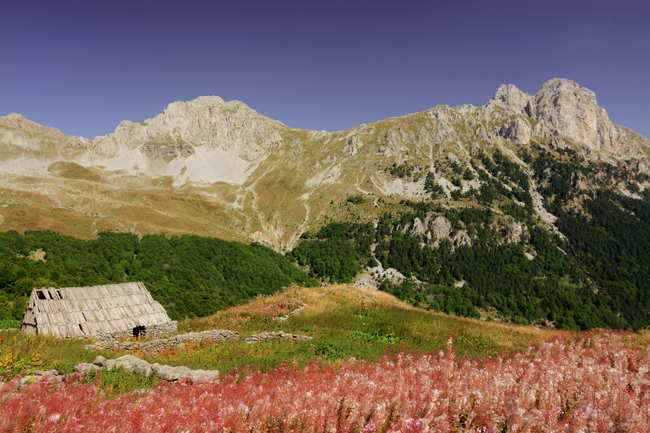
During the summer shepherds lived in camps called "katun" in shacks which had stone base, wooden log cabin or double and wattle walls and roofs either constructed from wooden panels or thatch. 

This is another "katun" shepherd summer camp from Bosnia. This one is next to the Prokoško Lake under Vranica Mountain. Apparently these and many other katun huts are now rented to hikers...


Flocks were moved to the highland pastures around Djudjevdan (St George's day, beginning of May, beginning of summer) and were moved down from the highlands around Mitrovdan (St Demetrios day, beginning of November, beginning of winter). These two dates separated the Solar year into two parts: White part (summer) between Djurdjevdan and Mitrovdan and Black part (Winter) between Mitrovdan and Djurdjevdan. This is the same year division also found in Gaelic calendar...

You can read about this calendar in my post "Two crosses"

This is a great recent picture of one of the "katun" shepherd summer huts from Montenegro. Incredible place... 


Another, now abandoned "katun" shepherd summer hut from Montenegro. Kuči mountains, Montenegro. 


In Serbia these shepherds huts are called bačija. 

This is one of the bačija  shepherd huts from Rudno on mountain Golija in Serbia. 


Here is another one from mountain Kopaonik, Serbia


And another one from Pester highlands in Serbia