Sparta, Sanctuary of Artemis Orthia: Drawing of an archaic carving of a chariot on ivory plaque. The chariot is pulled by winged (solar) horses and is driven by a female (goddess?) charioteer. A lion is depicted lying behind the horses...This is very very interesting...

The "solarness" 🙂 of equids and their link with Sun gods stems from the fact that horse fertility is governed by sunlight...
It starts in Apr/May and peaks on Summer Solstice, and is characterised by wild stallion fights for mares...

Hence we find horse animal calendar marker disguised in our western Zodiac as Dioskuri, divine twin horsemen. The guys who wanted to marry "the daughters of the white horse".
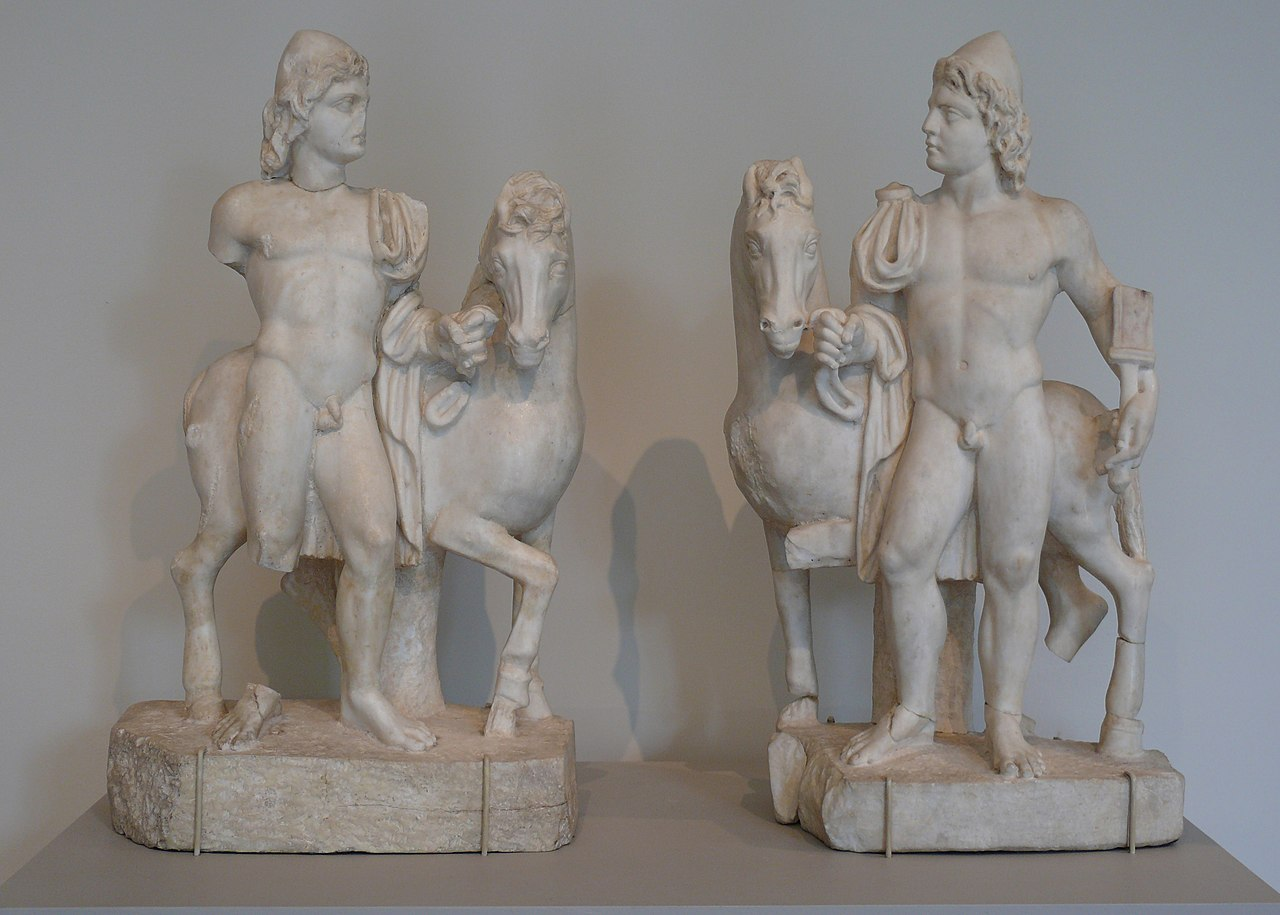
Articles about solar horse (equid):
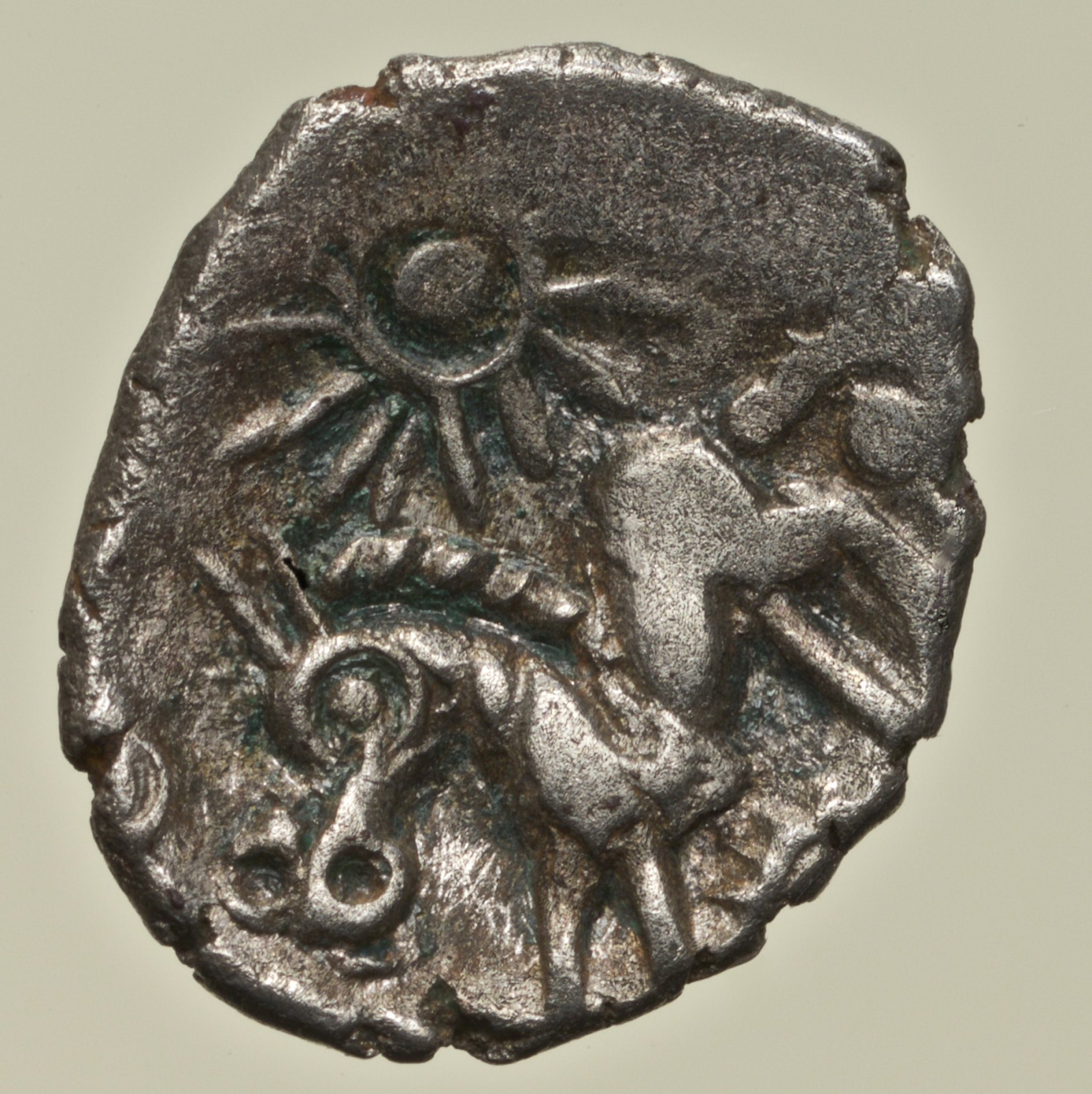
Iran "Water carrier equid", "Dioscuri plate from Iran"
Mesopotamia "Shamash playing with the solar horse", "Sun god from Tell Brak"
India "Hayagriva"
China "Longma", "Three legged crow", "Mythical beast from Xian"
Levant "Alexamenos graffito", "Goddess on a horse", "Unicorn"
Europe "Archaic rider", "Beotian solar pyxis", "Pegasus and chimera", "King John", "The horseman"
The winged (solar) horses from Spartan ivory plaque are the same winged (solar) horses which pull Apollo's chariot on this depiction of "the return of Apollo to Delos from the land of the Hyperboreans".

I talked about it in my post "The return of Apollo to Delos"
They are the same winged (solar) horses which pull Apollo and Artemis chariots on this silver jug from Rogozen Thracian Treasure, dated to the 2nd half of the 4th c. BC.
From my post "Apollo and Artemis from Rogozen jug"...

They are also the same winged (solar) horses depicted on this Iranian plate.
Sasanian plate with youths (Dioskuri) and winged (Solar) horses, marking Summer Solstice, the time when snowmelt, which feeds Iranian rivers, peaks. Ca. 5th–6th century A.D. Currently kept in the Met Museum...I talked about this in my post "Dioscuri plate from Iran"


Bellerophon rode the same winged (solar) horse when he defeat the monstrous Chimera, mythical beast or complex animal calendar marker for "hot dry season", Apr/May (mating of snakes), Jul/Aug (mating of lions), Oct/Nov (mating of goats)? I talked about this in my post "Pegasus and Chimera"...


Hot dry season which is hottest and driest in Jul/Aug, in Leo...This is important...Because of the lion depicted lying behind the horses...To me it looks like as if the scene was structured in such a way as to depict the arrival of the solar chariot in Leo...

And if the charioteer depicted on the ivory plaque is actually Artemis, as I think it is, what does this tell us about the true nature of Artemis? The twin sister of Apollo, the destructive sun (dragon) of Jul/Aug, Leo...The dragon...This dude:
Marble Throne of Apollo, Roman, late 1st c. AD. Currently in the Los Angeles County Museum of Art. Whoever made this, knew who Apollo really was and wanted to show Apollo in his true shape (serpent, dragon), sitting on his throne.
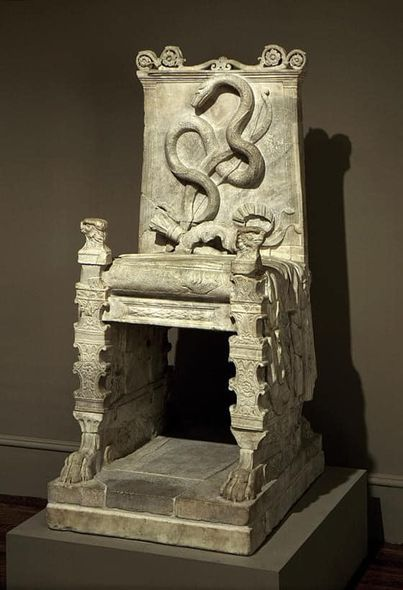
I talked about Apollo, the god of the sun in Leo, Jul/Aug, the Greek equivalent of Mesopotamian Nergal, in this series of posts: "Palil", "Lord of the flies", "Lions of Delos", "Apollo and dolphins", "Marble throne of Apollo", "Apollo and Python", "White raven", "Threshing floor of Apollo", "Apollo the great archer", "Apollo Sminthius"
Artemis, the twin sister of Apollo, the terrifying archer of whom it is said:
"I will remember and not be unmindful of Apollo who shoots afar. As he goes through the house of Zeus, the gods tremble before him and all spring up from their seats when he draws near, as he bends his bright bow..."

Artemis, the feared archer herself, and the girl whom Hera accuses of being "a lioness between women"...Strange...But familiar? At least it should be...Ever heard of the Lioness of heaven? This girl...

I talked about her in my posts "Gisgis relief", "Sirius the mother of Venus", "Apocalypse", "The brightest star", "Inana and Šukaletuda"...
A girl who liked showing off by holding two lions, like on this Ancient Greek jug from Louvre, dated to 560-550 BC...

BTW, between two lions means "In Leo"...
A girl who like riding on lions while holding her deadly bow, at least according to 4th century BC Thracians...This jug from Rogozen Treasure is catalogued in the original exhibition catalogue under "Jug with Goddess Riding a Lioness (155)". Stunning object, obviously depicting some mythological scene. Unfortunately no one seems to have a clue what it means...Artemis?
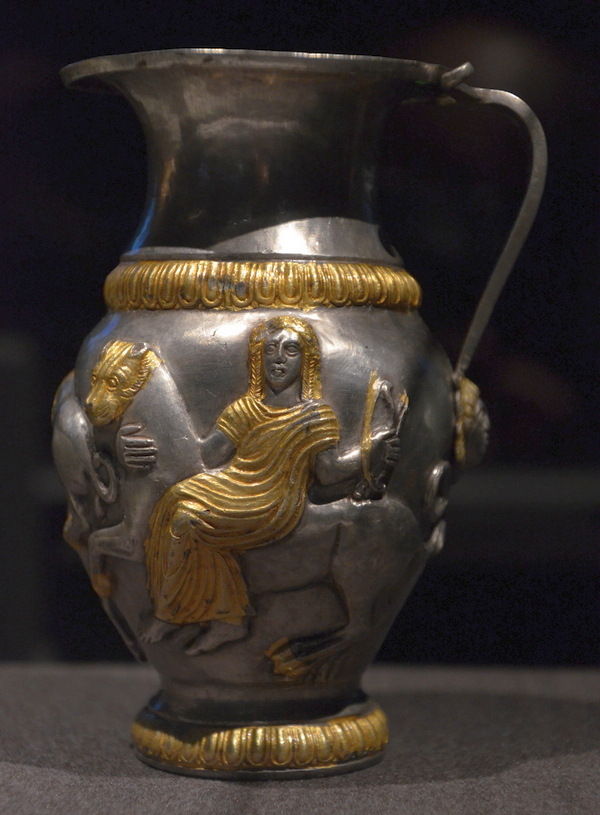
BTW, on a lion also means "In Leo"...
A girl, who is "the only Greek goddess close to the daimons and sometimes is depicted with a Gorgon head, and the Gorgon is her distant ancestor"...This girl:
An archaic Artemis (Gorgon) (around 580 BC), as depicted on a pediment from the temple of Artemis in Corfu, on display at the Archaeological Museum of Corfu...
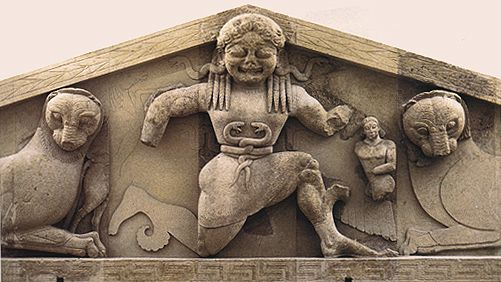
Oh look, again between two lionesses...In Leo!!!
This is all important if you want to know the true identity of Artemis...The true identity which I started uncovering in my post "Apollo the great archer" and am continuing to reveal in this post...
I am seriously beginning to wonder if Ancient Greeks deliberately concealed the actual identities of Apollo and Artemis (Nergal and Ishtar) or if they just had no idea who they worshipped?
To read more about ancient animal and plant calendar markers, start here…Then check my twitter threads I still didn't convert to blog post...I am way way behind...


