Showing posts with label Anahita. Show all posts

Sunday, 8 December 2024

Rainbows and peacocks

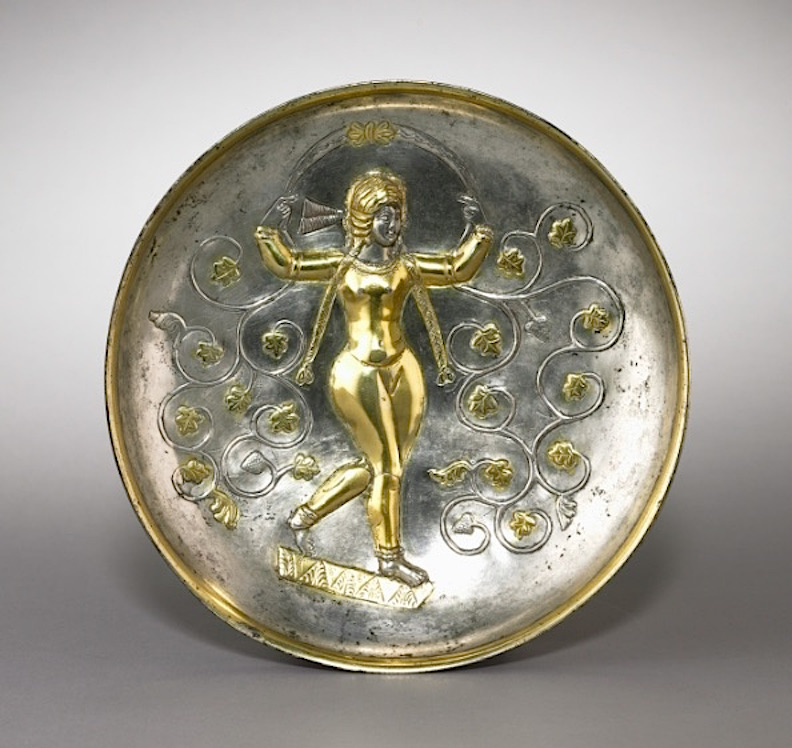
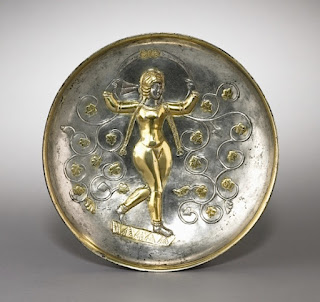
A Sassanian dish, 400-600AD, Iran, Currently in Al Thani collection...

What is exactly depicted here? Some would say just an exotic dancer. I think that this is a depiction of the goddess Anahita, Zoroastrian goddess of water and fertility...

I already talked about Anahita in my post "Anahita" about this Sassanian dish, which again depicts her "holding a scarf above her head"...

In that article, I proposed that the scarf is symbolic depiction of a rainbow. 

Rainbow which is in Iran only seen during the rain season, which in most of Iran is Oct/Nov - Apr/May...


I also proposed that this is the tree of life that is depicted growing out of her scarf (rainbow) because it is the rainbow creating rain that is the source of life in Iran...

I then backed my claim by this other Sassanian dish which depicts the same tree of life, this time without Anahita as it's source, but instead flanked by two ibex goats, the goats of rain...

Ibex goats are animal calendar marker for the Oct/Nov, the beginning of the rain season in Iran, because Oct/Nov is when ibex goats start mating in Iran, mating which is characterised by vicious male goat fights...

I talked about symbolism of ibex goats in many of my posts, like 

Europe:

"Pitys", "Goat in European culture", "Patera of Rennes"... 

Levant:

"The tree of life/light", "Lachish animal calendar"...

Mesopotamia:

"Feast plaque from Louvre", "Green pastures", "Problems with Abzu", "Relief from Dur Sharrukin", "Goatfish"...

Iran: 

"Flamingos from Susa", "Goat carrier", "Iranian goat of rain", "Strider", "A vessel from Tepe Hissar"...

Above the goats, we can see some birds: 

Male and female peafowl

Male and female pheasants 

Why?

Well because both of these bird species start their mating season in Mar/Apr...

And this is important why?

Well, because all that rain (and snow) that falls during the cool wet season cause the water flow of the rivers in Iran to suddenly start increasing in Mar/Apr which leads to the floods in Apr/May/Jun...

Flow chart for the Zayandehrud River that flows through Isfahan. It suddenly increases in Mar/Apr. 

And here is Aries Ram, with blue (water) horns, lying in water...Describing exactly what is happening in Mar/Apr...In Aries...

Talked about it in my post "Sagittarius from Isfahan", about an amazing 14th c. Isfahan zodiac... 

Floods that Anahita as the goddess of water was also linked to...

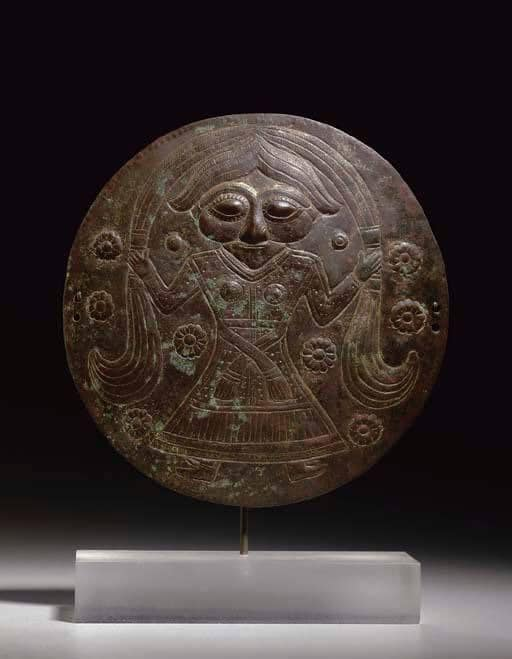
We find Anahita with rainbow in Iron Age Iran...Bronze disc from Luristan, Western Iran. 8th century BC depicting a goddess holding a scarf (rainbow) above here head...

And in Bronze Age Iran...Chlorite carved flask, Jiroft culture, Western Iran, 3rd millennium BC depicting a goddess holding a rainbow above here head...

I talked about this in my post "Jiroft flood vase"...

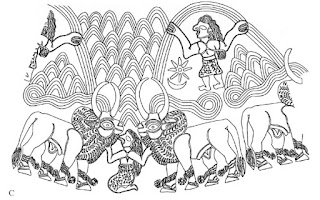
Here is the whole flood vase design:

Bronze Age Anahita? Goddess of water? Standing on bulls...

In Taurus? Apr/May? The time of the annual flood? It seems like this is what is depicted here, considering that the goddess is holding a water scarf (rainbow) and the same water is depicted flowing out of bulls heads...

I talked about the link between bulls and annual flood in Iranian art in my post "Dedicated to Inshushinak", about this 3200 years old Elamite ceremonial silver pouring vessel with handle and double spout in the form of two bulls...

So peacocks and pheasants start mating right at the time when the water levels in Iranian rivers start to rise...

This is why, on our original Al Thani dish, Anahita is holding a scarf with the peacock feathers "eyes" designs above her head, and is flanked by two peacocks...

BTW, in India, where peacocks come from, they breed during the monsoon season, and are believed to "call the rain to come"...

I talked about this in my post "Makara", about the mount of the old monsoon god Varuna, who was mainly just imagined as a crocodile, but was sometimes imagined as a complex "creature" (animal calendar marker), with a peacock tail...

BTW, do you see the star and the moon next to the Bronze Age Anahita? 

That's symbol of Sirius..The original star of Inanna/Ishtar, before Venus took over...

I talked about this takeover in my post "Sirius the mother of Venus"... 

I explained why, based on Sumerian Inanna mythology, only Sirius could have been the original star of Inanna/Ishtar in my posts: "Inanna and Sukaletuda", "The brightest star"...

The brightest star which is visible in winter sky over Iran together with the winter moon...

I talked about the winter wet moon in my post "Moon god Nana/Sin"...

Sirius disappears from the night sky in Apr/May...The time of the fertility bringing annual flood...The emptying of the winter moon...Which is why we find this symbol right next to Bronze Age Anahita holding a rainbow...And which is why in the Sumerian epic "Inana and Šukaletuda" we read that Inana "stretched herself like a rainbow across the sky, and reached thereby as far as the earth"...

Cause Bronze Age Anahita was the same goddess as Bronze age Inanna/Ishtar...

It seems that I am not the only one linking Inanna/Ishtar with Anahita. I recently came across this article which actually explores the possibility that Anahita could actually be Inanna/Ishtar in disguise...

To read more about ancient animal and plant calendar markers, start here…Then check my twitter threads I still didn't convert to blog post...I am way way behind...

Sunday, 16 January 2022

Birth giver from Luristan

Luristan bronze disk pin, c. 1500 to 700 BC, showing a woman giving birth while holding her breasts, between 2 gazelles, and among flowers. Louvre museum, Paris. From Iranian province of Luristan...


Archaeologists interpret this image as "depiction of Mother Goddess", basically Mother Earth giving birth to all and providing food for all...And I 100% agree with this...

I think the fact that the Birth Giver is depicted between the two gazelles (Goitered Gazelles to be more precise) and the flowers is the proof that this is indeed Mother Goddess, Mother Earth...

Here is why. This is climate chart for Luristan...You see how the year is divided into hot dry summer (May-Oct) and cool wet winter (Nov-Apr)?

Guess what happens in Oct/Nov? Goitered gazelles start mating...Which is why they are used in this part of the world as animal calendar markers for the beginning of the rain season (winter) and for the whole rain season (winter)

So this image basically means: Mother earth gets fertile and produces life and food because of the rain (and snow) which falls during winter, period between the mating and birthing of Goitered gazelles (gestation period of Goitered gazelles is 5-6 months)...

Here is the same "girl", this time holding a shawl, basically a stylised rainbow...Bronze disc from Luristan, western Iran. 8th century BC...Sold by Christies for 28,000$...

Rainbows are only visible during rain season...And this same symbol for the "moist fertile earth" was used in Iran from Jiroft culture until Sassanian culture...I talked about this in my post "Anahita" and "Jiroft flood vase"...

This link between Mother Earth's fertility and rain, depicted through the image of birth giver surrounded by plant and animal calendar markers for rain season, is what I was talking about in my previous post "Modesty", about the Indian version of this goddess, Lajjā Gaurī...

What is very interesting is that because the climate in Iran and India is different, the animal and plant calendar markers used to link the birth giver with the rain are different...Appropriate for the local climate...

If you are interested in animal (and plant) calendar markers, start here, then check the rest of the blog posts I still didn't add to this jump page (I got lazy after a while), and finally check my twitter threads @serbiaireland I still didn't convert to blog post...I am 11 months behind now...

Thursday, 23 December 2021

Dioscuri plate from Iran

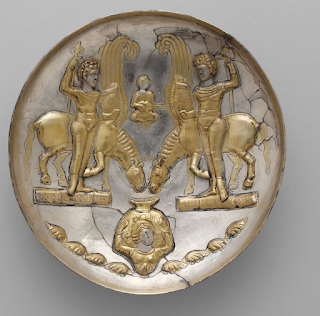
Sasanian plate with youths and winged horses ca. 5th–6th century A.D. Currently kept in the Met Museum...


Official description: 

"Two youths stand on platforms facing one another, each holding a staff and the reins of a winged horse. This is reminiscent of representations of the hero Bellerophon and Pegasus as well as of the Dioskouroi (the divine twins Castor and Pollux)...

Both horses bend their necks down to drink from a large vessel supported by a female figure, who appears in bust form emerging from a frieze of half-palmettes. 

She is most likely either a personification of water or the Iranian river goddess Anahita (This girl. I talked about her in this post)

The scene may have cosmic significance, if indeed the two youths represent the constellation Gemini, called Do Paykar (Two Warriors) in Middle Persian astronomical texts"... 

The end of the official description...

Now this is interesting...Winged horses, winged horses...Have you seen this?

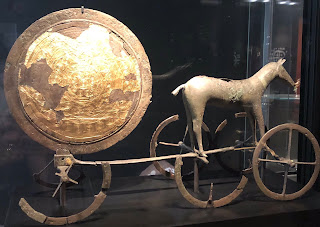
Bronze Age "Sun Chariot" pulled by a horse, Denmark 1400 BC. 

Why are horses so prominent in solar cults?

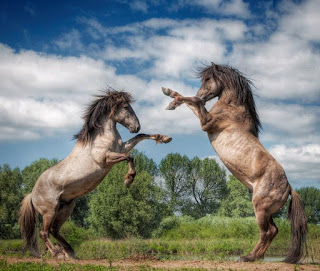
Did you know that horse mating season, which is characterised by vicious stallion fights, is governed by the sun and it peaks on summer solstice. Two horses facing each other as symbols of summer solstice...Hmmmm...

Hence horse pulling sun chariot...I talked about this in my posts "Svetovid", "Trojan horse", "Unicorn", "Re'em"...

So? What does this have to do with this Iranian plate?

Well, have you seen this? 

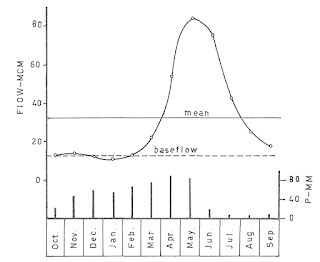
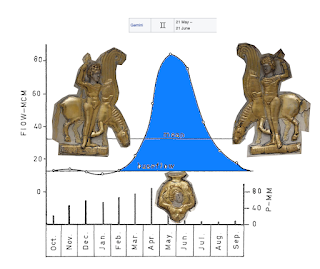
This is the flow chart of the rivers in Western Iran, in the Zagros mountains...The flow is directly dependent on the snowmelt...Which is directly dependent on sun's heat...Symbolised by the horse...Winged horse to make sure we are in heavens...

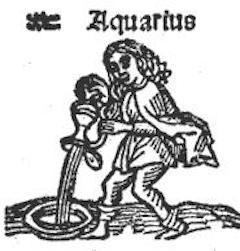
The snowmelt starts at the beginning of Spring (February) which is when the earth starts to warm up...Which is why this part of the Solar year is marked by Aquarius...This is also when the snowmelt starts in Europe by the way...

The snowmelt then sharply increases in Taurus, when we have the annual flood depicted on so many Jiroft culture vessels coming out of bulls...Like this one I talked about in my post "Jiroft flood vase"...


The flood peaks during the part of the year marked by Gemini twins. Coinciding with the most fertile period of the mares and the main mating season of the wild horses...

When Anahita, the goddess of water, fills the rivers to the brim...

Party time? Anyone knows how to play a lute?


PS: Sasanian plate depicting two winged horses in the same drinking position facing the tree of life (?) 🙂, currently in the Arthur M. Sackler Gallery...


Thursday, 11 November 2021

Tulip goddess

Seated female figure (goddess? ) drinking out of a goblet - next to a tulip, bronze seal, late 3rd - early 2nd millennium BC, (BMAC), Afghanistan. Currently in a Private collection Linenthal, San Francisco. 


Just a pretty picture or...? Who is this girl?

Mobile perfume or cosmetic bottle, winged goddess among flowering tulips. Bactrian, the end of the 3rd, beginning of the 2nd millennium BC, Louvre Museum...

Tulips grow wild in Central Asia and bloom in Spring...So who's the goddess? The zigzag and wavy lines at the top usually represent flowing water. So is the goddess somehow linked with the flowing water?

Bactria was centered around the upper reaches of  Amu Darya (Oxus River). This river was fed 


Amu Darya (Oxus River) is partially fed by the rain that falls during the cool, wet half of the year (Oct/Nov-Apr/May)...


Climate Tajikistan

Climate Uzbekistan


Climate Afghanistan


But the majority of the water in the river comes from the snowmelt from the Hindu Kush, Tian Shan and Pamirs mountains. 


Total snow melt contribution is between 65 and 72%...


You can read more about this in "Runoff from glacier ice and seasonal snow in High Asia: separating melt water sources in river flow"

The annual Amu Darya water level chart. 

The water level starts rising sharply in Feb, at the beginning of the snowmelt season. Now you know why Aquarius 🙂 water pourer, is where it is on the zodiac.  

The water flow peaks in May. In Taurus, and then sharply decreases...

This rising of the water level, which enables irrigation and agriculture in the area, happens during the tulip flowering season...So tulips are definitely linked with flowing water...


I talked more about tulips as calendar markers in Bactria in my post "Sumer and winter BMAC seal"...


So who is the goddess? Earth...Mother Earth...Young, virgin, spring earth...Who just had her first period...So let me introduce you to: Aunt Flo...🙂

This could be the same girl. From a Bactrian seal: Mother earth flowering with tulips next to the flowing river. The snake is under ground (cold part of the year) and the Goitered gazelle (whose mating coincides with the beginning of the cool wet season) is looking at the amazing effect of "the rain it has brought"...I talked about this in my post "Fluffy"...

I wander if this girl has anything to do with Iranian Anahita, the goddess of water...Which features on Iranian artifacts since at least Jiroft culture...The Annual water cycle is identical, so...I talked about it in my post "Anahita"...


I think this answers my original question about the identity of the girl with the drinking cup sitting among the flowering tulips...