Showing posts with label Willow folklore. Show all posts

Wednesday, 23 April 2025

Whipping fresco

5th c. BC Etruscan fresco, Tarquinia, Tomb of the whipping...Depicting...Well you can all see the obvious bit that it is depicting...

I will not talk about that. I will talk about the things "hidden in plain view", that most people who look at this fresco don't see 🙂

Do you see the guy on the left who is ... the woman from behind and also whipping her?

What's with the green branches (growing out of) on his head? Are these willow branches? They look like willow twigs to me...

This insignificant detail 🙂 indicates, at least to me, that this is not just a depiction of an ordinary "fun with friends"...I think this is a ritual, a fertility ritual...

Whose traces, a believe, we can still find among Slavs...As part of willow related spring, rebirth (resurrection) of nature, fertility folklore...

Here is why I think that:

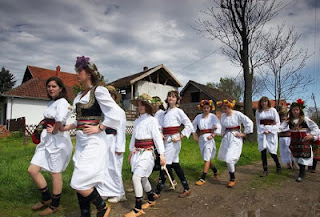
Saturday before Palm Sunday is in Serbia known as Vrbica (Willow day). On that day kids and young women make and wear wreaths made of willow twigs and flowers...

On that day, willow twigs with young leaves and flowers, like these, known in English as Pussy Willow are brought to the church where they are blessed the next day, Palm Sunday, which is in Serbia known as Cveti (Flowers day)...

According to the church, this whole willow business is the consequence of the fact that there are no palms in Serbia, and people replaced palm branches with willow branches...Move on, nothing so see here...

There are few problems with this explanation...

Vrbopuc (Willow burst) is an expression which in Serbia means "part of spring during which willow starts growing new green shoots"...

Vrbopuc is also a term used in Serbia for the period of sudden surge of sexual hormones in teenage boys and girls...

Basically willow was directly linked with human fertility...Which is why in the past in Serbia, girls used to make belts from willow twigs (wrap willow twigs around their bellies), and wear them going to the rivers to perform ritual baths performed during this time...

Among Slavs, willow was directly linked with water, water divination....Dodole, young women which took part in rain bringing magic rituals performed during hot summers also wore willow twig belts...

Mother Earth = Yin = Winter, Cold, Wet, Night, Down = Female fertility

Father Sun (Sky) = Yang = Summer, Hot, Dry, Day, Up = Male fertility

Which is why rain, water magic is female magic...

And which is why willow, the tree which grows next to water, is associated with rain, water and female fertility, female sexuality...

Hence ritual whipping of teenage girls by teenage boys using willow whips, performed in the Czech Republic, Slovakia on Easter Sunday...

The teenage boy first sang a a ritual song about spring, bountifulness and fertility, and "the young woman then turned around and got few whacks on her backside with the willow whip"...

Sounds familiar?

This was done "so girl would be healthy, beautiful and fertile throughout the following year"...They would also splash each other with water...

Cause it is water that makes land fertile...And Slavs directly linked female and land fertility...

I talked about Slavic willow folklore in my post "Willow in Slavic folklore"...

Sooooooooo...What do you think? Just a casual threesome or a fertility ritual?

For those who ask if there is a link to Lupercalia?

These are symbolically similar rituals. During Lupercalia, young men whipped women with sacrificial goat skin thongs. Dead goat was, and still is in Europe, symbol of spring...Goat being the symbol of winter. I talked about this in my posts "The birth of Romulus and Remus", "Goat in European culture"...

That's that. Interesting? I think so. 

To read more about ancient animal and plant calendar markers, start here…Then check my twitter threads I still didn't convert to blog post...I am way way behind... 

Wednesday, 22 February 2023

Willow whistle

Willow whistles and flutes are made in the spring when willow sap rises and loosens the bark...


Because they were easy to make, these flutes and whistles were favourite kids instruments...(Pic The Willow Whistle, 1888, Ellen Day Hale)

Now if you wanted to have a musical child, that can make music and not noise, this is what you were advised to do in 18th century Sweden:

"In the spring fetch water from a stream that flows southwards. The water should be taken where it murmurs the most loudly..." (Pic Kamajokk river Sweden)

"...Then a child's parent should blow into the water with a willow flute that a child had used. The child then has to drink this water for three days on an empty stomach. This would ensure that the child would have a very good ear for music"...

That would also insure that the child's parent would save his/her ears 🙂

This music spell can be found (with loads of other interesting stuff related to ancient European musical instruments) in "Music and sounds in ancient Europe"...

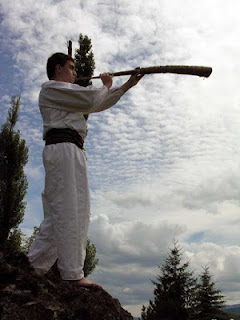
Now there were times when you wanted to make noise and not music with your willow whistles, flutes and trumpets...Like these ones from the Balkans:

During the night before St George's day, in the Balkans, these instruments were blown "to scare witches (winter) away"...

I talked about this in my post "May horns"...

A lot more interesting Slavic willow folklore can be found in my article "Willow in Slavic folklore"...

Sunday, 8 January 2023

Zapis

Excerpt from "Srpski mitološki rečnik" (Serbian mythological dictionary) 

"Holy oak - In the recent past, Kuči (Tribe from Montenegro) did not have a single whole church. The people had no place to gather or perform religious rites..."

"...Feeling the need for a consecrated place they turned to oaks, a practice common among other Serbs and which, in all likelihood, has its origins in a very ancient, pre-Christian veneration of oaks, and trees in general, among the Slavs..."

"...Any large oak growing in a conspicuous place in or near the village became the village temple. The priest performed church rites under it. People gathered around it for village assemblies and celebrations... "

"...The ground around these holy oaks was considered consecrated too, so people buried their dead around some of these holy oaks too...

Cemetery from Gornja Morača region in Montenegro inhabited by Serbs, with an ancient oak growing in its centre. I talked about this in my post "Mountain Serbs from Montenegro"...

"...Even now, very old oaks can be seen growing in many old Kuči cemeteries. And in Kuči villages that do not have their own churches, in the middle of the village there is a consecrated oak, around which stone slabs are arranged for sitting..."

These holy trees were once indeed found in every Serbian village. A large cross, often made of stone, may be erected beside the holy tree, and the surrounding area may be fenced...


The most common name people use for these holy trees, is "zapis" literally "inscription", the name most likely derived from the fact that all these sacred trees were at some stage Christianised by a cross "inscribed", cut into, the tree trunk...

People believed that these trees protected the village on whose land they grew. In settlements without a church, ceremonies such as weddings and baptisms were once conducted under the tree...

Even in villages which had churches, the village church ceremonies, like celebrations of the village Saint, the protector of the village, were held under these holy trees...

Particularly prayers to God for protection against destructive weather conditions were always held under the village holy tree. Interestingly, most of these trees were large oaks, the holy trees of the Slavic Thunder God Perun...

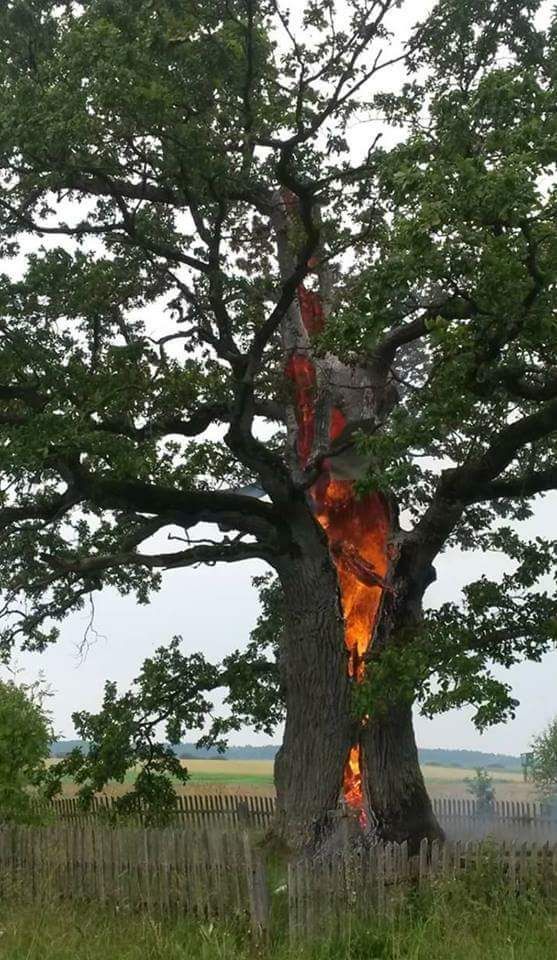
An old oak struck by lightning burning from the inside. For Pomeranian, South Baltic, Slavs, trees struck by lightning have a special status, believed to guard off demonic forces and possess purifying power. This was probably because "Perun, The thunder god, now resided in them"


Some of these hollow oaks were converted to chapels...I talked about this in my post "Oak chapel"...

People firmly believed that a great misfortune will befall anyone that dares fell a zapis (sacred tree). Climbing it, sleeping under it, and picking its fruits and twigs, were also forbidden. Even the branches and fruits that fell from the tree were never collected...

A village may have had more than one zapis: the main one in the settlement or near it, and several others in the village's fields, usually chosen so that they mark the village boundaries...

This was done both to insure magical protection of the village land, but also to protect the village land boundaries from being changed, as there was a taboo about cutting these trees...Hence they preserved borders between villages and peace...

In that way holy trees played the role similar to ancient boundary stakes, which eventually became standing stones and totems. I talked about them in my posts "Stake" and "Colossus"

According to Serbian scholar Veselin Čajkanović, the veneration of the "zapis" holy trees is inherited from the pre-Christian religion of the Serbs, in which it had been used as a temple...

The proof for that can be found in reports left by Christian missionaries in all Slavic land. One of the main accusations against Slavs found in all of them was that "Slavs venerated trees, stones and wells (springs), to which they prayed and sacrificed"...

How the Pagan Slavs saw and respected trees, particularly oak, can be seen from Serbian Yule log rituals, during which an oak tree is addressed as god, prayed to and sacrificed to. In Serbia, when a young oak tree is about to be cut for a Yule log, it is addressed in the way you would address a living god: "Good morning and happy Christmas Eve to you o Holy Badnjak. I have come to take you to my home..."  I talked about this in my post "Badnjak"...

You can find these church reports accusing Slavs of tree worship listed in this article (Serbo-Croatian): "Pogled u Slovensku botaničku mitologiju" (A look at Slavic botanical mythology) 

These church reports also state the measures undertaken to "Christianise" Slavic peasant population, which involved cutting holy trees and groves, with the intention to eradicate the vile tree worship...

This was obviously only partially successful, as you can see from this article... 🙂

Anyway, you might find this article, "The shushing place", interesting...It talks about the most common words for forest in Slavic languages...

You also might find this article, "Lesnik", interesting too. It is discussing how old this tree worship could be. 


You also might find this post, "Hazel", interesting too. It talks about veneration of hazel trees among the Slavs...In some places, they were considered even more sacred than oaks..

And this article, "Willow in Slavic folklore", could be of interest too...

Sunday, 30 January 2022

White feast

Vlasi (mountain shepherds) from Eastern Serbia have a very interesting ritual from the cult of the dead, which is performed on Pentecost, for people who died before Easter...

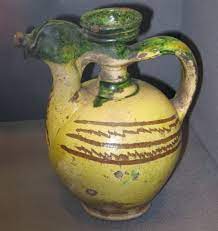
The preparation for the ritual starts on Easter. A virgin girl from the family of the deceased person is tasked with going every morning to the well and fetching water in two jugs, like this one...

These jugs with water are brought home blessed and dedicated to the the deceased with the words "This water is for the deceased...so and so". The jugs are then placed outside of the house next to the house door...

On the day of Pentecost, a special "white" feast (only white food and drink are served) is prepared for the family and friends of the deceased, who come to witness the ritual...

Ritual begins before sunrise. Three women light a candle each. Then, after they bow towards the rising sun, they kneel, kiss the ground, and exclaim this prayer: I pray that the deceased, so and so, is let into the light (sunny) place...

Then the three women drink the water from three glasses and eat some of the white food laid on three plates...The feast then starts and lasts until the sunset...

When the sun sets, the virgin girl that gathered the water from the well, brings some water to all the other houses in the village. The last jug is brought back to the well from which the water is taken and is poured back into the well...

This is really cool on so many levels. 

First I love the fact that the women pray to the sun to let the deceased "into the light place"...Does this mean "let him return, be reborn"? Is this sunny, bright place, our world, the world of living?

Second, why is all that water gathered for the deceased? Well, did you know that in Serbia people believed that droughts could be caused by the angry thirsty ancestors who didn't receive their water libations? I talked about this in my post "Thirst"....


In Serbia, for 40 days after the burial, the family of the deceased used to take water from their well to 40 different houses, different house each day, "for the soul"...

In Stip, Macedonia there is a curse  "May no one bring water for him for the other world"...Some curse...

This belief that "the otherworld was a thirsty place" was widespread and ancient. And was probably the reason why we find "empty" vessels in graves since Neolithic...Were they actually placed into the graves full of water (for the road) which evaporated? I talked about this in my post "One for the road"...


Another interesting thing about this ritual is that all the food and drink had to be white? Why? Is it because white was the color of death? Or because white was the color of light? Not sure what to think here...

Finally the whole water gathering ritual is seriously cool. The water is gathered by "a virgin girl". A girl who had her first period. Whose "water of life has started to flow". Who is full of "life force". But who has not used any of this life force for producing new life yet...

Water is gathered from a spring. Spring water is in Serbia called "živa voda" (live water, water of life) and is believed to have magical properties. It is believed that it can even bring the dead back to life...


The spring water is the menstrual blood of the mother earth...And it is literally "water of life". The water for the ritual is collected during spring time...From virgin Mother Earth...Full of life force, which she still hasn't used this producing new life (crops) yet...

This link between virgin girls, virgin spring earth, water, life and rebirth is what I talked about in my post "Willow in Slavic folklore"

So where's willow here? Well, willow was in the Balkans often planted on graveyards...I didn't understand why, until now...Willow, water, always thirsty dead??? Did people believe that willows attract water? I know they used willow branches for finding water...


Also, in some parts of the Balkans, Ohrid, Macedonia for instance, in the jugs of water "for the dead" which was brought to the graveyard on Pentecost, people always put a green willow twig...

It is interesting that willow, used in fertility rituals, was also used in ancestral, cult of the dead, rituals...Not surprising though...Serbs believed that all the good that comes to them is sent to them by the dead...Their dead ancestors...The thirsty ones...


In return for regular mention, food and drink...I talked about this in my posts "Diduch", "Thirst", "Blood red wine", "Wolf feast", "Tombstones"...

Sources (Serbian)

Vlah custom description: "Namenjivanje za dušu (daće, pomane)" (Offerings "for the soul") - Mira Stevanović

Willow in the cult of the dead: "Rečnik srpskih narodnih verovanja o biljkama" (Dictionary of Serbian folk beliefs about plants) - Veselin Čajkanović

Saturday, 25 December 2021

Willow in Slavic folklore

Today I will talk about willow in Slavic spring fertility rituals, gardening and Cricket the cat 🙂 
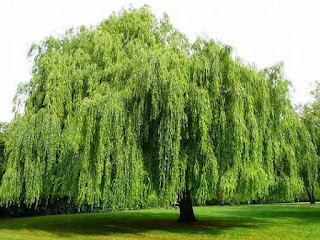
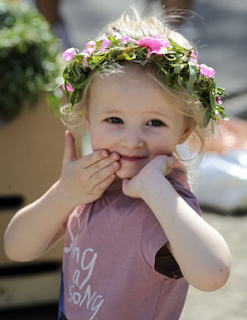
Here we go: Saturday before Palm Sunday is in Serbia known as Vrbica (Willow day). On that day kids and young women make and wear wreaths made of willow twigs and flowers
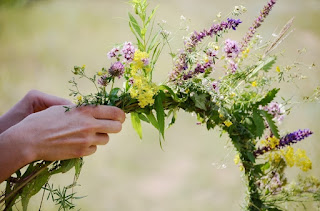

On that day, willow twigs with young leaves and flowers, like these, known in English as Pussy Willow are brought to the church where they are blessed the next day, Palm Sunday, which is in Serbia known as Cveti (Flowers day)...
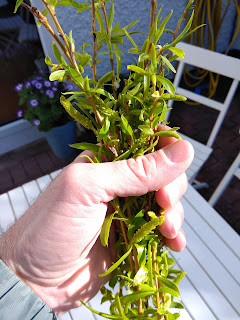
According to the church, this whole willow business is the consequence of the fact that there are no palms in Serbia, and people replaced palm branches with willow branches...Move on, nothing so see here...

There are few problems with this explanation...Vrbopuc (Willow burst) is an expression which in Serbia means "part of spring during which willow starts growing new green shoots"...

In Serbia in the past people believed that during this time of the year women become very horny and very fertile...So this was the best time to make babies...🙂

Vrbopuc is also a term used in Serbia for the period of sudden surge of sexual hormones in teenage boys and girls...

Basically willow was directly linked with human fertility...Which is why in the past in Serbia, girls used to make belts from willow twigs (wrap willow twigs around their bellies), and wear them going to the rivers to perform ritual baths...

This ritual bathing was performed on Cveti (Flowers day) but also on Djurdjevdan (St George's day), the old Yarilo day, the old day of the young sun, the old celebration of the beginning of summer...Known also as Beltane...I talked about this in my post "Aries must die"...

At the same time on St Georges day, while girls were wearing willow belts and bathing, boys and men were blowing into willow horns to "scare the witches away"...I talked about this in my post "May horns"...


It is interesting that this ritual bathing was done before sunrise and willow belt had to be taken off as soon as the sun rose...And that blowing into the willow horns was also done during the night....

I didn't pay much attention to this until I remembered that willow was directly linked with water, water divination....Dodole, young women which took part in rain bringing magic rituals performed during hot summers also wore willow twig belts...

Mother Earth = Yin = Winter, Cold, Wet, Night, Down = Female fertility

Father Sun (Sky) = Yang = Summer, Hot, Dry, Day, Up = Male fertility 

Which is why rain, water magic is female magic...

And which is why willow, the tree which grows next to water, is associated with rain, water and female fertility, female sexuality...Hence ritual whipping of teenage girls by teenage boys using willow whips, performed in the Czech Republic, Slovakia on Easter Sunday...
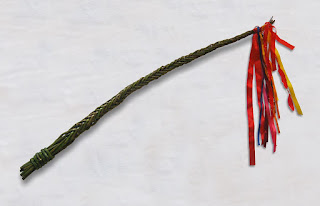


If men arrive at women's houses after 12 o'clock, women throw a bucket of cold water on them. In some regions the men also douse girls with water...

The man first sings a a ritual song about spring, bountifulness and fertility, and the young woman then turns around and gets few whacks on her backside with the willow whip...This was done "so girl would be healthy, beautiful and fertile throughout the following year"...

In Serbia willow was also linked with female coming of age rituals, also performed on Willow day...On that day, young unmarried girls, wearing willow twig belts and willow and flower wreaths walked around the village land and blessed the nature... I talked about this in my post "Flower girls"...


They would first go to a spring where they would sing and dance and would then wish good morning to the spring water. Spring water is in Serbia called "živa voda" (live water, water of life) and is believed to have magic properties...

Spring is seen as a place where fertile Mother Earth releases her "water of life" in the same way that a fertile woman releases her menstrual blood, female "water of life". In this way the spring water is magically linked with the menstrual blood...

So no wonder that the spring is the first stop of the Lazarice group, the group of girls whose "water of life has started to run" (who got their period).  BTW they are called Lazarice "because Willow day is by Christians also known as Lazarus day"...

After this ritual, the girls would go to meadows to pick wild flowers. They would use these flowers to make wreaths which they would wear on their heads during their procession through the village land and the village...

They would then walk through the fields, forests, meadows belonging to the village, and would sing fertility songs wishing nature to be fertile and bountiful....

Young girls, Spring Earth, Female fertility, Earth fertility, water...Willow...

Remember the Pussy Willow 🙂 branches blessed in churches in Serbia the day after Willow day? They are brought home. Some of them are made into a wreath which is placed in the corner with the icon...The rest are used to decorate the house gate, door and windows...

This is done "to protect the home from thunder" because "thunder doesn't hit willow". Willow also "protects against hail"...So willow twigs are used to "threaten the clouds during hail storms"...

That the belief in the link between willow and fertility was once probably Europe wide, can be seen from this English belief: "Striking an animal or a child with a willow twig will stunt their growth!" This is a great example of Christianity at work...

In Serbia it is actually the opposite...On Willow day, children and animals are whipped with willow twigs so they grow like willow and are healthy and fertile...Which is what you would expect after everything I have presented so far...

Willow twigs, particularly the ones cut around St George's day are considered to be most potent when it comes to growing magic...They were cut into bits and mixed with animal food, particularly food given to bulls...

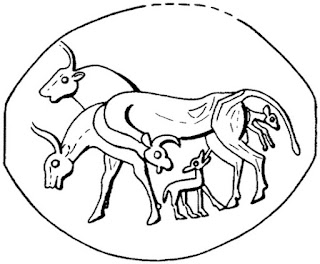
Remember St George's day is the old Beginning of summer celebration, and summer begins in Taurus...Taurus which marks beginning of the calving season of the wild Eurasian cattle...

I talked about this in my posts "Ram and bull", "Symbols of seasons", "Zodiac", "Animal calendar markers", "Seal with narrative scene", "Rain and flood", "Holy cow", "Calydonian boar"

Willow was in the mind of the Slavs definitely linked to growth and fertility...So imagine my surprise when I came across this information: Willow contains two very interesting chemicals: indolebutyric acid (IBA) and salicylic acid (SA)...

Indolebutyric acid (IBA) is a plant hormone that stimulates root growth. It is present in high concentrations in the growing tips of willow branches...

Salicylic acid (SA) is a plant hormone which is involved in the process of “systemic acquired resistance” (SAR) – where an attack on one part of the plant induces a resistance response to pathogens (triggers the plant’s internal defences) in other parts of the plant...

Soooo...The first hormone makes the plant grow...The second hormone makes the the plant healthy...And these hormones can be extracted from the willow shoots and used to help your plants grow and be healthy...

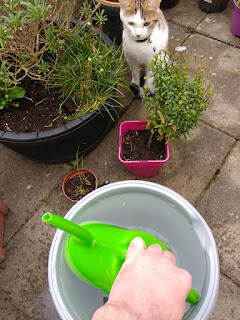
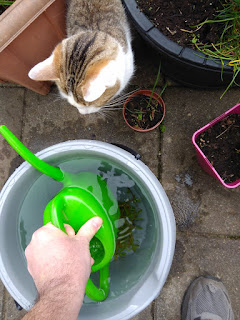
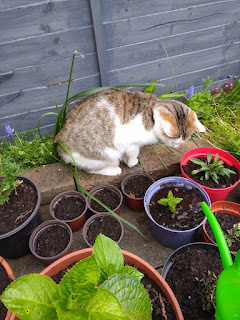
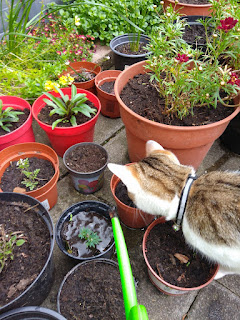
So...I went to the nearest willow, cut some green willow shoots, chop them into small pieces, put them in a bucket of water (under the close supervision of Cricket the cat) and soaked them for a day or two...
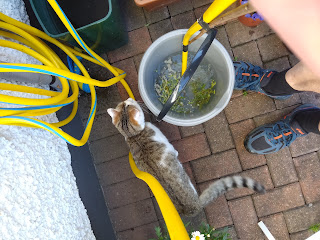
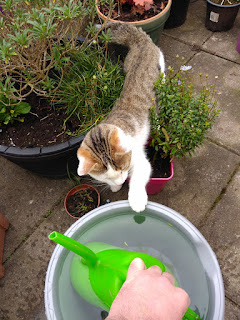
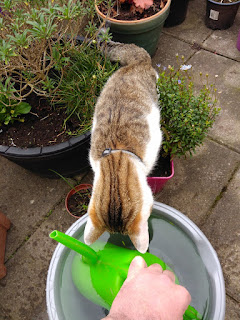
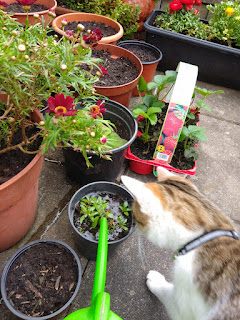
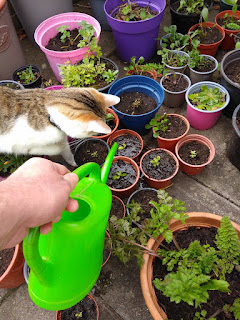
This is me trying to water my plants with my willow water (under the close supervision of Cricket the cat of course)


You missed this pot human...
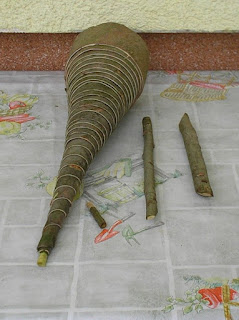
So after successfully making willow water, and all the fun I had watering my plants with Cricket the cat, hopefully my plants will grow like mad and be healthy and fertile...
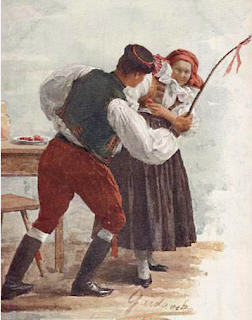
So if you ever wondered why willow was linked with fertility and health...
By the way, did I mention that Cricket the cat is not my cat? It officially belongs to our neighbours who live few houses up behind the wall, but it has recently decided that this is his garden so...