Showing posts with label BMAC. Show all posts

Tuesday, 15 April 2025

Mother of grain from Mari

This alabaster stele [my comment: depicting the Mother of Grain, see more further down the thread], was presented in 2012 catalog of the Phoenix Ancient Art, as a cult plaque originating from the Near East and dating from the beginning of the third millennium BC...
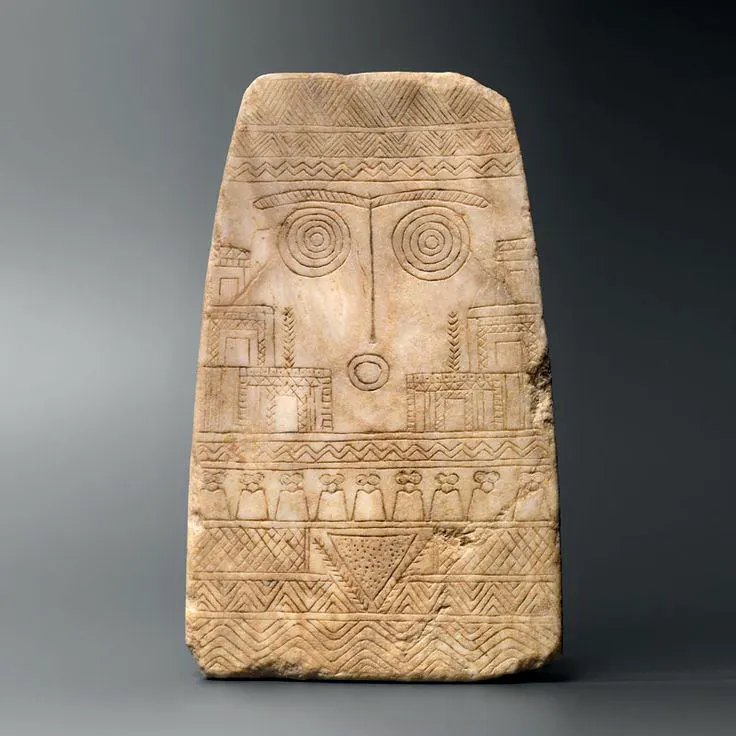
According to Professor Michel Al-Maqdissi, an expert in oriental archaeology at the universities of Damascus and Saint-Joseph des Jésuites in Beirut, this stele almost certainly came from the ancient Mesopotamian city of Mari...

Located in Syria, not far from the Iraqi border, Mari was literally devastated by the wild searches and massive looting that took place before and after Daesh/Isis proclaimed its Islamic caliphate...

The offices of the Phoenix Ancient Art were raided by the customs in 2016 and a number of archaeological objects were seized under the suspicion that they were looted in the Middle East and smuggled into Europe...

The owner of the Phoenix Ancient Art was later sentenced in Switzerland for forging documents in order to disguise the true origin of the artefacts he was selling. You can read more about this here...

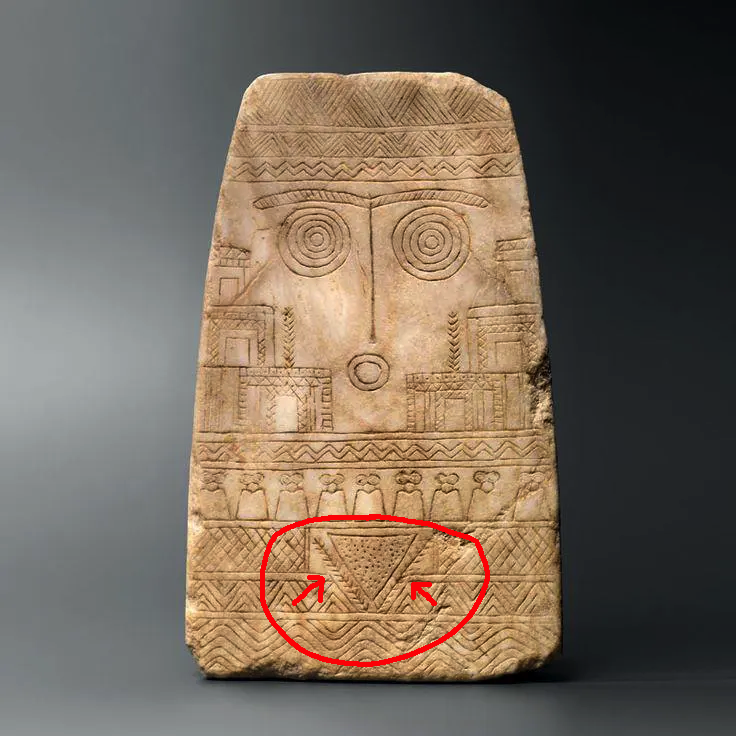
Now the interesting bit. The mother of grain? What the hell is the Mother of Grain? Well she is Mother Earth of course...Our stele from Mari also has eyes and vulva as well as water, plants, buildings and people...

What is the best way to symbolically depict "Mother Earth"? Place moutains, plants and animals between eyes and  a pubic triangle. Decorated bone depicting slightly bewildered "Mother Earth", 6th - 5th millennium BC, Hagoshrim, Southern Levant. From my post "Eyes"...


But Mother of Grain is a special version of Mother Earth. She is the mother earth of the grain farmers...

We know this because the plant depicted on the stele from Mari is grain...

I first talked about Mother of Grain in my post "Mother of grain"...

Mother of grain...Grain seed and vulva symbolism from Vinča, Starčevo and Lepenski vir cultures...Link between female fertility and earth/grain field fertility...

The same symbol, grain growing out of a vulva can be seen on these levantine pendants

Golden pendant with the image of Hathor. From Tel el Adjul. Gaza, middle of the 2nd mill BC. 

Similar pendants with a depiction of grain growing from the vulva. 
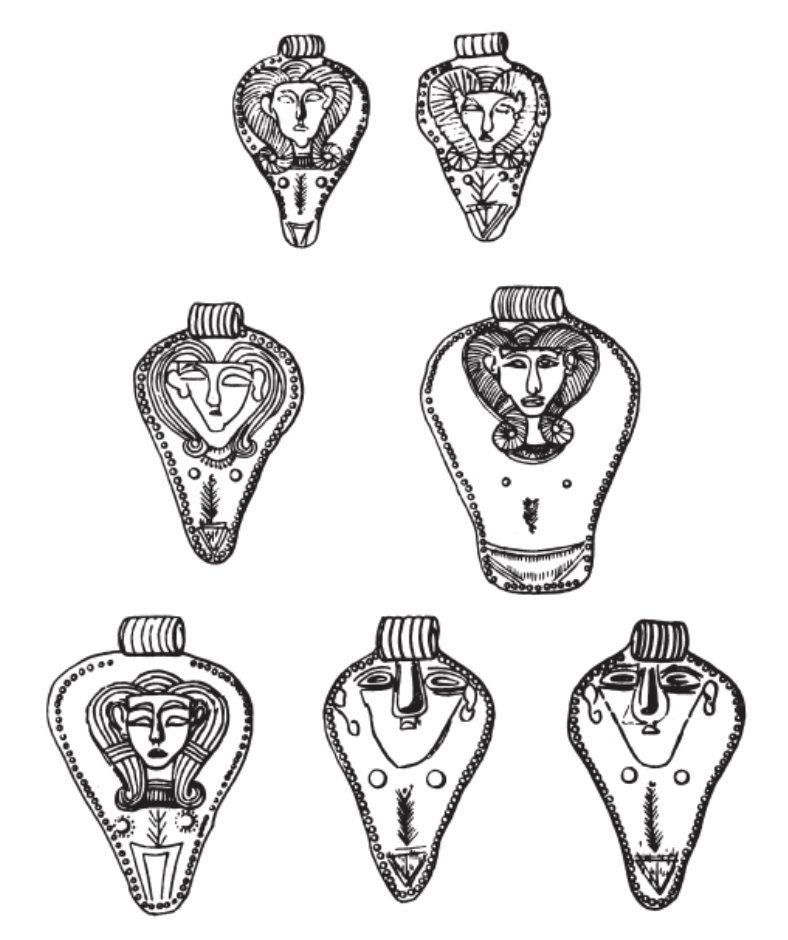
I wrote about them in my post "Hathor grain pendants"...

And then I talked about mother of grain in my post "Sabi Abyad venus"...

A figurine from the Late Neolithic and Early Halaf Village at Sabi Abyad, Northern Syria, part of Fertile Crescent. dated to 7th mill BC...Depicting Mother Earth turning into Mother of Grain...

And then in my post "Altyn Tepe mother of grain"...

How to depict "Mother of Grain"? Like a voluptuous woman (Mother) whose vulva (where new life come from) is horizontal (like Earth, Field) with horizontal lines (furrows) with plant (Grain) growing out of them. Altyn Tepe, BMAC,  3200-2000 BC...  

An I talked about the mother of grain in my post "Mother of grain from Yarim Tepe"...

Figurine of a nude "woman"? Or a depiction of the "Mother of grain"? Yarim Tepe, Iraq. Ubaid period, 5000-4000 BCE. Iraq Museum... Interpretation from: 

And finally i talked about the mother of grain in my post "Arjoune venus"...

An early Halaf culture figurine from the Arjoune site in Syria. It is made from a natural pebble, and it depicts a female form, with large eyes and long hair. And a square pubic area...Grain field?...Mother of grain?  

The Mother of Grain had a name in Mesopotamia: Inanna:

As for me, Inanna,

Who will plow my vulva?

Who will plow my high field?

Before my lord, Dumuzi,

...

I poured out grain before him,

I poured out grain before my womb...


From: "The Courtship of Inanna and Dumuzi"

I talked about Inanna and grain in many of my posts...

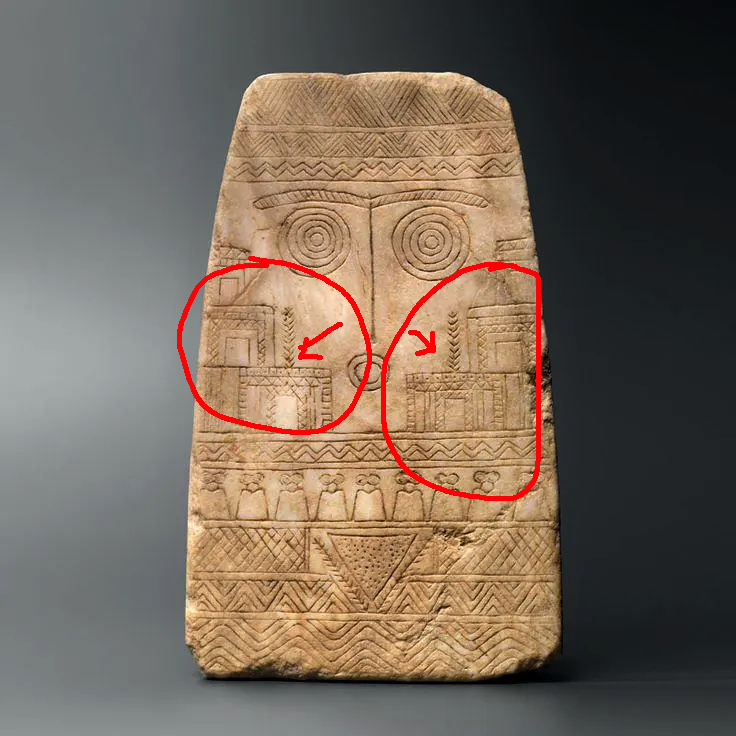
Just as Inanna says herself, we are supposed to see the vulva depicted on the stele from Mari as a grain field. Hence two grain symbols depicted on both sides of it...
We are also supposed to see the buildings as temple granaries, again because of the grain symbols depicted on top of these buildings...
We are also supposed to see this feature as an irrigation canal. People from Mari used canal irrigation extensively...You can read more about it here...

In which case this is feature is supposed to be seen as the Euphrates river...

As for the little minions, they are supposed to be seen as people from Mari...I talked about them in my post "Eye idols from Tell Brak"...

To read more about ancient animal and plant calendar markers, start here…Then check my twitter threads I still didn't convert to blog post...I am way way behind...

Saturday, 6 May 2023

Altyn Tepe Mother of grain

How to depict "Mother Earth", more specifically "Mother of Grain"? Like a voluptuous woman (Mother) whose vulva (where new life come from) is horizontal (like Earth, Field) with horizontal lines (furrows) with plant (Grain) growing out of them...

This statuette is from Алтын-Депе (Altyn Tepe), Turkmen "Golden Hill", a Bronze Age (BMAC) archaeological site in Turkmenistan, inhabited from c. 3200 to 2000 BC...

How do we know that this is grain?

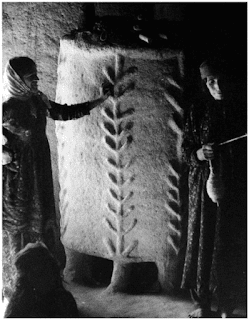
That this is indeed symbol for grain, can be seen from the fact that the same symbol was put on grain granaries in Kurdistan until 20th century. Aliabad women standing beside a grain bin, Iranian Kurdistan...From "Home is where we keep our food: The origins of agriculture and Late Pre-Pottery Neolithic food storage". Very important image, as it confirms that this design pattern, found on pottery and figurines since the Earliest Neolithic all over Eurasia, means "grain"... 

This is an article about the same kind of "Mother of Grain" figurines from Neolithic Balkans...MOTHER Earth...The symbolic link between women and earth depicted on this Early Vinča Culture terracotta figurine from Jela, Iron Gate region of the Danube, Serbia, c. 5200 BC, H. 5.3 cm, which has a branching plant (grain) growing out of the womb...


Here is the same idea in Neolithic Levant. What is the best way to symbolically depict "Mother Earth"? 

Well, place mountains, plants and animals between wide open eyes and vulva...Simple...

Decorated bone depicting slightly bewildered "Mother Earth", 6th - 5th millennium BC, Hagoshrim, Southern Levant.

You can read about it in my article "Eyes"...

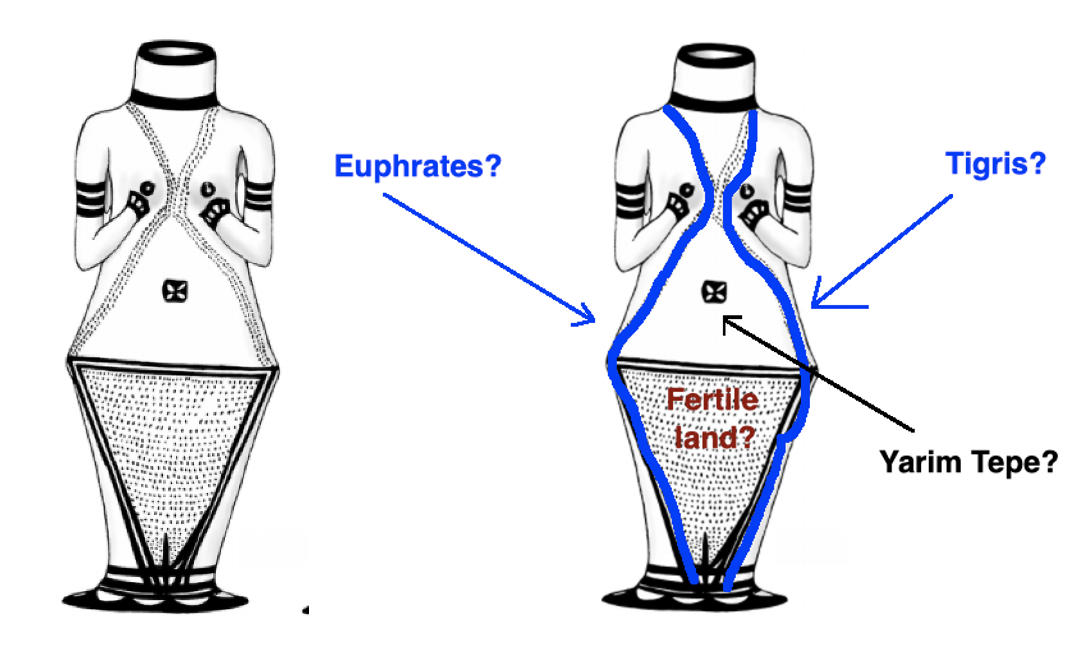
Similar thing from Neolithic Iraq. Figurine of a nude woman form Yarim Tepe, 5000-4000 BC. Iraq Museum...

You can read about this in my article "Mother of grain from Yarim Tepe"...

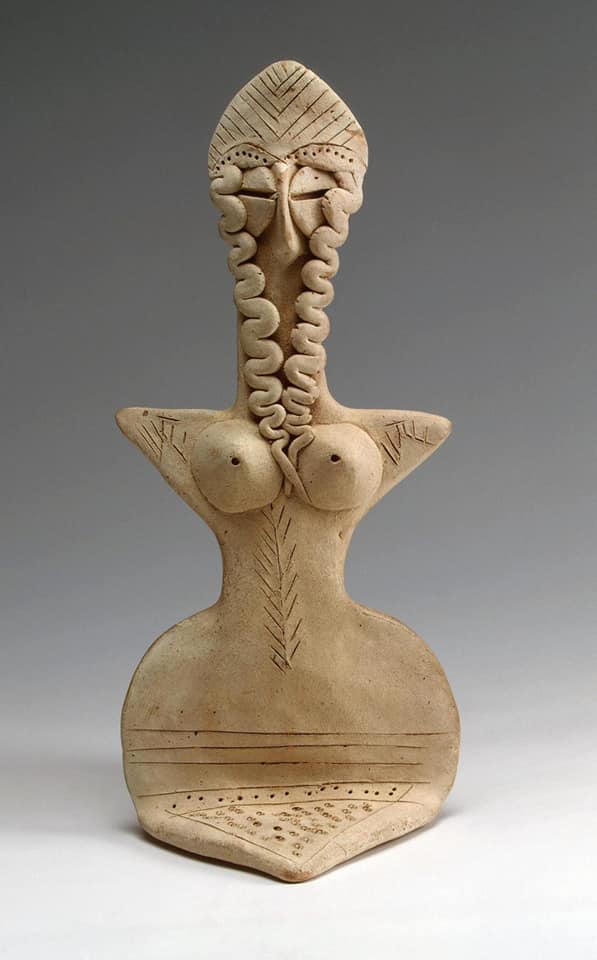
But this gets better and better...Here are two more similar figurines from the same area. 

I love the hairstyle...The two wavy "plaits" (?)...Strangely like the symbol for flowing water...Rivers?

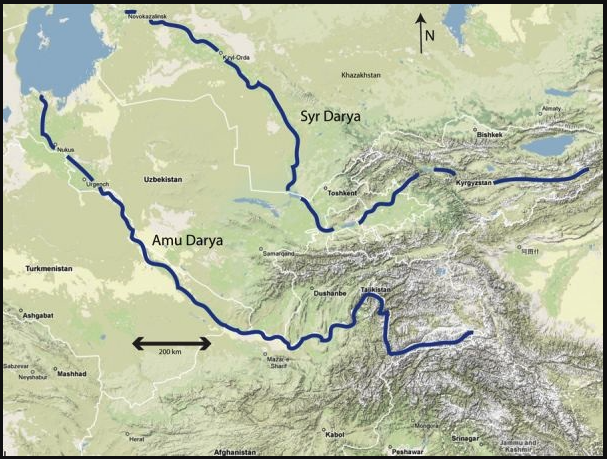
There are actually two rivers, flowing parallel to each other in Central Asia...Amu Darya and Syr Darya...

They flow from tall Hindu Kush and Pamir mountains...And are fed primarily by the snowmelt...And make the area around them and especially between them fertile...

I talked about this in my article about the "Tulip goddess"...

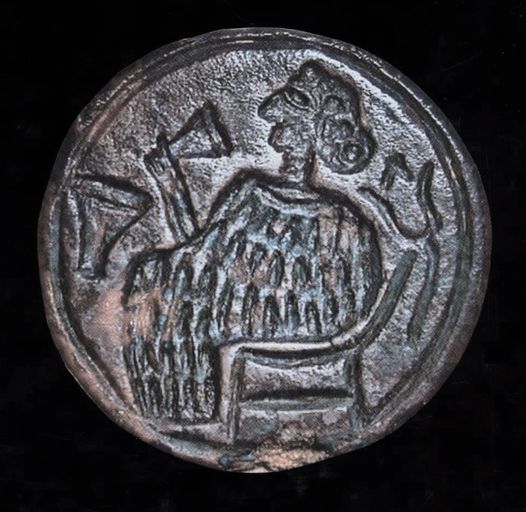
Seated female figure (goddess? ) drinking out of a goblet - next to a tulip, bronze seal, late 3rd - early 2nd millennium BC, (BMAC), Afghanistan. Currently in a Private collection Linenthal, San Francisco. 

Here are the original figurine's front and back

Is this a mountain depicted on the Goddess's back? So is the Mother Goddess also "The Mountain Goddess"? Are her two plaits the two great Central Asian rivers? With the fertile area between them?

This would make this BMAC figurine the equivalent of this Mesopotamian figurine, also depicting two rivers coming down from the mountains and the fertile land between them...

Same Mother Earth Goddess, just different mountains, rivers and fertile land...

Sunday, 22 May 2022

Snake hiding behind a tree

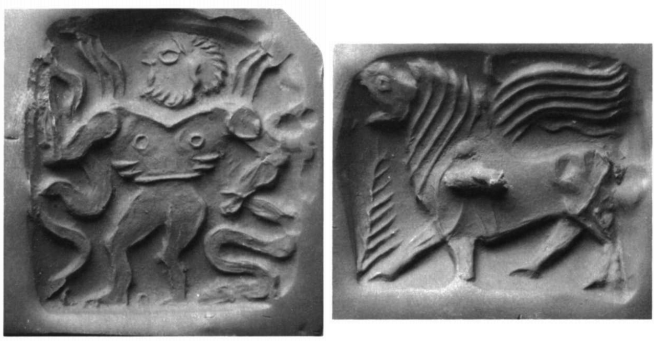
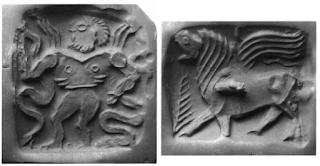
Double-sided stamp seal: snake behind tree; winged dragon, ca. late 3rd–early 2nd millennium B.C. Bactria-Margiana. Currently in the Met Museum...

I just love this: "snake behind tree" 🙂 "winged dragon" 🙂 What is actually depicted on this seal?

First the "winged dragon"...It is actually winged lion, the symbol of the hot dry half of the year (Apr/May-Oct/Nov) in Central Asia. 

I talked about this in my post "Lion radiating heat", "Summer and winter BMAC seal", "Nude winged hero dominating snakes"...


And the extreme heat of the hottest part of the year in the Northern Hemisphere, in Jul/Aug, Leo...

Now "snake"...Snake is the symbol of sun's heat...Snakes are the only true solar animals. They are in our world when sun is in our world (day and hot part of the year) and they are in the underworld when sun is in the underworld (night and cold part of the year)...

I talked about this in my posts "Bactrian snakes and dragons", "Enemy of the sun", "Chthonic animal", "Letnitsa treasure",  "Wolf and snake"...

That snake as a symbol is directly linked to the sun, can be seen from this Bactrian seal: 

Sun god, with a cool hairdo and with sun heat rays coming out of his shoulders, just like Sumerian Utu and Akkadian Shamash. And snakes instead of hands...And a snake belt...Just so we all know that snake is a solar animal...

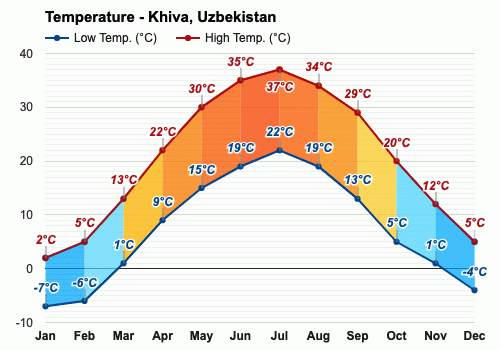
Snakes hibernate during the cold part of the year and come out only when the ground and air get sufficiently warm...Over 60 degrees° Fahrenheit (16° C)...Which in the area of the old Bactria is Apr/May...


And that is the exact same time when wild alliums start to bloom in Central Asia...Like these, Allium karataviense Regel...

Plant data from "Medicinal Plants of Central Asia: Uzbekistan and Kyrgyzstan"

There are many other wild alliums found in the area of old Bactria. 

Like 

Yellow Allium Obliquum

Purple Allium Przewalskianum. 

They all flower during the hot part of the year...You can find the list of (all?) of them here (search for Central Asia) https://pacificbulbsociety.org/pbswiki/index.php/AllAlliums

Alliums have always been used in Central Asia as food (Source Edible Alliums of Uzbekistan) and as medicines (Source Wild Allium species (Alliaceae) used in folk medicine of Tajikistan and Uzbekistan)

Why do I think this is a flower and not a tree? Cause wild flowers appear as calendar markers on other Bactrian artifacts...

I talked about this in my post "Tulip goddess" about this mobile perfume or cosmetic bottle depicting a winged goddess among flowering tulips. Bactrian, the end of the 3rd, beginning of the 2nd millennium BC, Louvre Museum...


The "allium" leaves on the seal don't match the true allium leaves. That made me wonder if I identified the flower correctly as allium. But you can see that the leaves on tulips depictions are also cerated and don't really match the actual leaves. So I am sticking with it 🙂

Unless one of you has a better match? Anyway, as a calendar marker, flowering of the first alliums and the emergence of the first snakes from hibernation marks the time of the winged dragons (lions)...Hot part of the year...

To read more about ancient animal and plant calendar markers, start here…then check the rest of the blog posts related to animal calendar markers I still didn't add to this page, and finally check my twitter threads I still didn't convert to blog post...I am 9 months behind now...

Saturday, 4 December 2021

Admetus

Apollo mounting a chariot drawn by lions and boars, accompanied by Hermes and two women...


This is a flattened out decoration from this Ancient Greek, Attic black-figure Lekythos, dated to ca. 500-490 BC, and currently kept at the Yale University Art Gallery.

The depicted scene is from the legend of how Admetus got to win the hand of Alcestis. Which goes like this:

"When Apollo was sentenced to a year of servitude to a mortal, as a punishment for killing Delphyne, the monstrous serpent (dragon) from Delphi, the god was sent to serve as a herdsman at the home of Admetus, the king of Pherae in Thessaly...

Admetus was famed for his hospitality and justice and treated Apollo very well. In return, Apollo made all the cows bear twins while he served as his cowherd. But more importantly, Apollo also helped Admetus to get the girl. Alcestis...

Alcestis was the daughter of Pelias, king of Iolcus. She was so popular, that her father Pelias, bored with constant procession of suitors, set an apparently impossible task for those who wanted the hand of his daughter: they must yoke a boar and a lion to a chariot...

Of course Admetus also fancied Alcestis. So he asked Apollo for help. Apollo said "No bother!", and yoked the animals to the chariot. Admetus jumped on it, drove to Iolcus, waved at Pelias and said: I came for the girl! (while winking at Alcestis)...Happy End...(well for a while)

So how come no one but Apollo could yoke boar and lion to a chariot? I mean is it important that it was Apollo who did "the impossible thing", or could any other god have done it?"

I think that this is another example of a clever animal calendar marker allegory...Involving boar, symbol of winter and lion, symbol of summer...


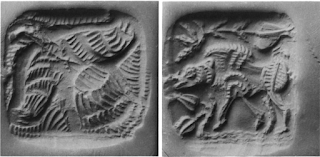
We find the same animals used symbolically in the same way on these two Bactrian seals:


I talked about them my article "Bactrian summer and winter seals", where I explained how boar and lion, became calendar markers for winter and summer...

Being symbols of winter and summer, the two opposite "old seasons of the oldest calendars", boar and lion can never be "yoked together"...Except by the Sun god...After all, winter and summer are just two halves of the same solar year...

Thursday, 11 November 2021

Lions with grain tails

A while back I wrote an article about the Khafajeh vase, which was made in Iran in the mid 3rd mil. BC by the people of the Jiroft culture...It is still one of the most amazing animal calendars I have seen so far...


This particular scene depicts the driest and hottest part of the year in the Jiroft County, located in the Kerman Province of the South-Eastern Iran...Jul/Aug...Leo...


This is symbolised by the person holding two snakes (symbols of sun's heat) standing between two lions (in Leo)...

This "person" is the sun god, the same dude depicted on this Bactrian seal from the same period. I talked about this in my post "Bactrian snakes and dragons"...

What I didn't notice at the time when I wrote my article were the tips of the lions' tails. They end in what looks like wheat ears...Why? Is this significant?


Well, in my post "Shamash young and old" I talked about young and old sun god Utu/Shamash from Mesopotamian mythology...

He is most often depicted as a man with heat rays radiating from his shoulders...See here, Shamash standing in a dried up canal during the hottest and driest part of the year, Jul/Aug, in Leo, holding a reed cutting knife (that is the best time to cut reeds for making houses and boats)...In Leo is again depicted as "between the lions"...I talked about this in my post "Canals"...


But Utu/Shamash is often depicted as a bull with human face and long flowing beard...

Sometimes Utu/Shamash is depicted as a bull with human face and a long flowing beard having his butt chewed by a winged lion...This is because summer, symbolised by a bull, ends in Leo...I talked about this in my post "Butt chewing"...

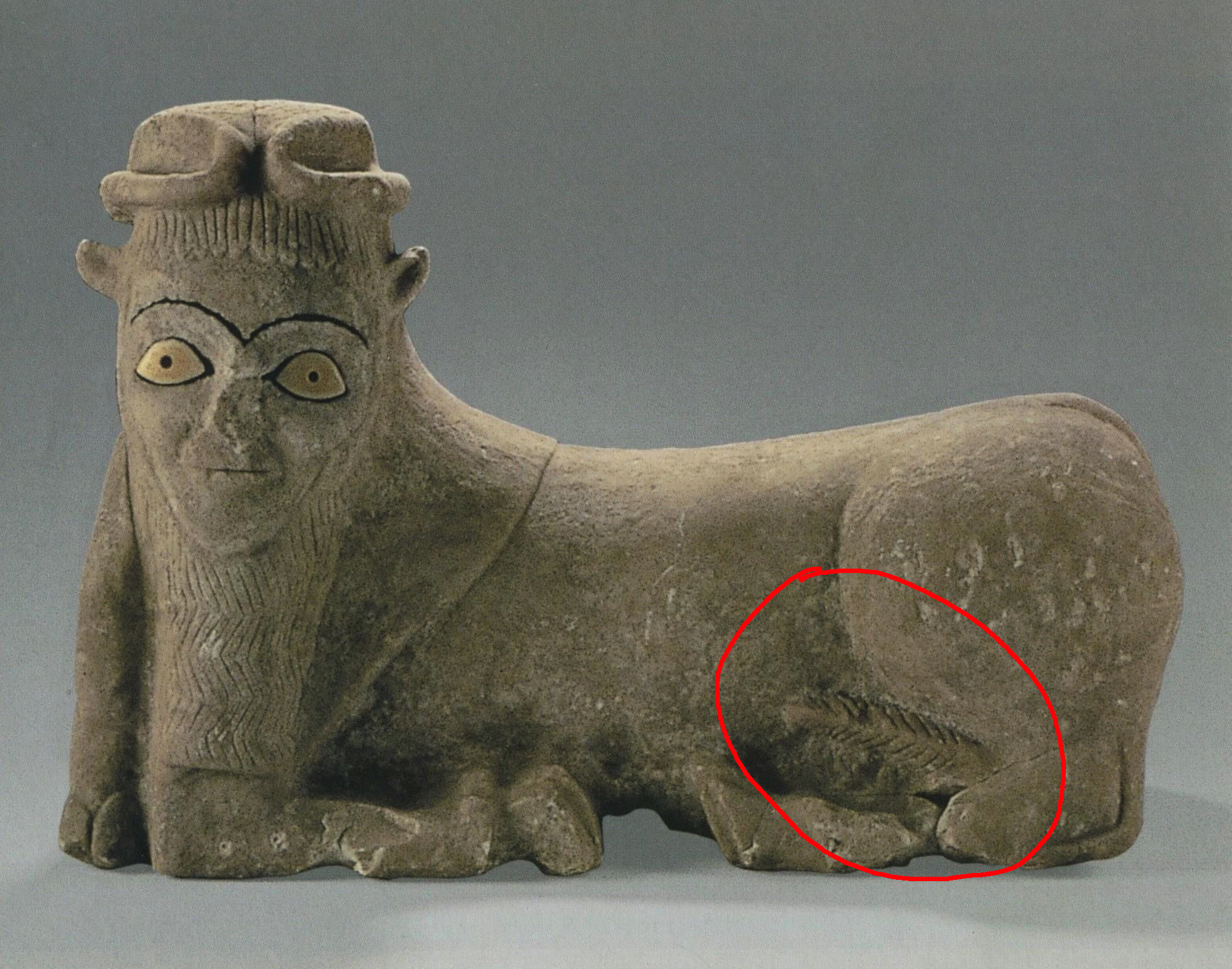
Here is another one of those depictions of the sun god Utu/Shamash as a bull with human face and a long flowing beard. But this time he also has a tail that ends in a ear of wheat...Why? Is this significant?

Well it is. Utu/Shamash is depicted as a bull, cause summer starts in Apr/May, in Taurus, the time when Wild Eurasian Cattle begin to calve...I talked about this in my posts "Dairy farming seal", "Green pastures" and many others...Summer as a season is most often symbolised by a bull too...I talked about this in my post "Symbols of the seasons"...

This is also the time of the peak flood of the Tigris and Euphrates, which is caused by the snowmelt on the mountains that feed these two great rivers, which is in turn caused by the sun, Utu/Shamash...Hence golden bull (sun metal) with blue lapis (water stone) beard 

Apr/May, Taurus, is also the time when the grain harvest  begins in Mesopotamia...Hence bulls and grain...And bulls with grain tails...I talked abut this in my posts "Bulls and grain bowls" and "How grain came to Sumer"

But what does this have to do with the lions with grain tails from the Jiroft vase? Well...

I googled Iran grain harvest season and (eventually) found this: "wheat harvest season is approximately 4.5 months in Iran starting in early April up to mid-August, depending on the region and it's local climate"...

According to this paper about the affect of the global warming on grain agriculture in Iran, "...most of the wheat in Iran is cultivated in October and harvested in July..."

Finally I found this: "KERMAN, Aug. 13 (MNA) – Farmers of Deh Ziyar village in Kerman province, harvest wheat using traditional methods"... 


Basically they are harvesting grain in Leo...

Is Jul/Aug really grain harvest season in Kerman province? Is this why lions on this vase made by the people of the Jiroft culture from the Kerman province of Iran have tails that end in grain ears?

PS: I just looked at the pictures of the wheat being harvested in Kerman province. It looks like one of the old wheat types, emmer, durum, which are both awned (with bristles). 

Durum wheat is the predominant wheat type grown in the Middle East. And it is traditionally a "spring wheat" which is sown in Feb/Mar and harvested in Jul/Aug. It has lower yields, thick husks, long bristles and is resistant to high temperatures...

It fits...