Showing posts sorted by relevance for query lambing. Sort by date Show all posts

Monday, 16 May 2016

Ram and Bull

This is zodiac


Have you ever wondered why Aries (Ram) and Taurus (Bull) astrological signs are where they are on a solar circle? 

Aries (Ram) 21 March – 20 April


Taurus (Bull) 21 April – 21 May 


I can hear everyone say: "Because the constellations in the sky at that time look like ram and bull"!

Well wait till you hear this. 

The mouflon is a subspecies group of the wild sheep (Ovis orientalis). Populations of the wild sheep can be partitioned into the mouflons (orientalis group) and the urials (vignei group). The mouflon is thought to be one of the two ancestors for all modern domestic sheep breeds.


The aurochs, also urus, ure (Bos primigenius), is an extinct type of large wild cattle that inhabited Europe, Asia and North Africa. It is the ancestor of domestic cattle. The species survived in Europe until the last recorded aurochs died in the Jaktorów Forest, Poland in 1627.


In the article "The Corsican Mouflon - and the EU Life Nature scheme" we read that the main lambing season for European wild mouflon, starts in March and lasts until May. 
In the article "Characteristic activity patterns of female mouflons (Ovis orientalis musimon) in the lambing period" we read that the wild European mouflon were monitored during their lambing season between the 1st of March to the 20th of April.

This means that the wild sheep main lambing season in Europe ended during the time of Aries (Ram or is it maybe Lamb) zodiac sign 21 March – 20 April. 

In the book "Ecology, Evolution and Behaviour of Wild Cattle: Implications for Conservation" by  Mario Melletti, James Burton we read that the main calving season for European wild bison starts in May with 80% of calves being born by the end of July and the rest being born by the end of September.
In the article "Strontium isotope tracing in animal teeth at the Neanderthal site of Les Pradelles, Charante, France. " by Tegan Kelly we read that wild aurochs calving occured in May-June. 

This means that the wild cattle main calving season in Europe started during the time of Taurus (Bull or is it maybe Calf) zodiac sign 21 April – 21 May.

Interestingly, in "Agroecological Practices For Sustainable Agriculture: Principles ...
edited" by Wezel Alexander and in "Ecology, Evolution and Behaviour of Wild Cattle: Implications for Conservation" by  Mario Melletti, James Burton we can read that the main aurochs mating season was most likely July to September. 

So summer, the part of the year symbolised by a bull starts with wild cattle calving and ends with wild cattle mating...

17th of May 2026. Today I came across this paper: "Diverse prehistoric cattle husbandry strategies in the forests of Central Europe" which talks about Early Neolithic cattle farmers in Europe, and in it there is this image showing "A model of Early European Farmer cattle herding and diet across the annual seasons, represented by the trees"...Interesting...


Today, lambing season starts in January and lasts until April and calving season is all year round, but this is not a natural thing. We people changed the natural cycles of animals through domestication because it suited us. But even today, with domesticated sheep, Aries is an important animal calendar marker. It marks the end of lambing season and the beginning of the milking season. I talked about this in my post "Aries must die"....

The first lunisolar calendars were created by our henge building Central European ancestors 7000 years ago. The reason for the creation of the lunisolar calendar is because it allows a reliable way of marking cyclical yearly events that happen in nature, particularly the events linked with agriculture. To be able to do this you need a static point on a solar circle, a point within the solar year, that you can reliably determine and which doesn't change. Once people were able to precisely determine the winter or summer solstice, they had that static point on the solar circle, and now they could plot all natural events that occur during the yearly cycle. 

I am sure that they soon noticed that the lambing season and the calving season always happens at the same time and they simply marked these periods with a lamb and a calf. And hey presto, Aries and Taurus were born...

I can hear you asking: "What about the stars"?

Well I believe that constellations were added much much later. But basically, when the constellations were chosen, they were chosen to look like already existing zodiac signs of Ram and Bull, and not the other way round. And when I say look like, I mean vaguely, very vaguely look like (or not at all) look like... :)

Here is the constellation of Aries:


Here is the constellation of Taurus:


See what I mean?

Neat don't you think? What do you think?

Friday, 3 March 2023

April

Happy 1st of April. Part of a mosaic pavement with the personification of the month of April as a man carrying a lamb. Early 6th century AD, Stone and marble, 1.23 ×1.10 m. From Thebes...

1st of April marks the middle of Aries...Aries originally had nothing to do with stars...It marked the end of the lambing season of the Eurasian wild sheep. I talked about it in my article "Ram and bull"...


Also, in the past in Bosnia, Serbs used to "let rams jump the ewes" on Lučindan (St Luke's day, 31st of Oct)...


With sheep gestation period of around 152 days, this means that the lambs were born right in the middle of Aries (March 21 – April 19)...

Basically they continued to follow the natural mating birthing cycle of wild sheep...

Just like Taurus originally had nothing to do with stars. Taurus marked the beginning of the calving of the Eurasian wild cattle. I talked about that in the same article "Ram and bull"...


After sheep domestication, Aries started marking the end of the lambing and the beginning of the milking season of domesticated sheep...A very important annual event which was in Serbia marked by the ritual first milking...I talked about this in my post "Aries must die"...

This is what is marked by St George's day. This day marks the end of the old winter (Oct/Nov-Apr/May) and the beginning of the old summer (Apr/May-Oct/Nov)...The end of lambing and beginning of miling season. And the driving of the flocks to the highland pastures...

Article about Torine katun (highland shepherds camps) used by local people from Montenegro since Neolithic... 

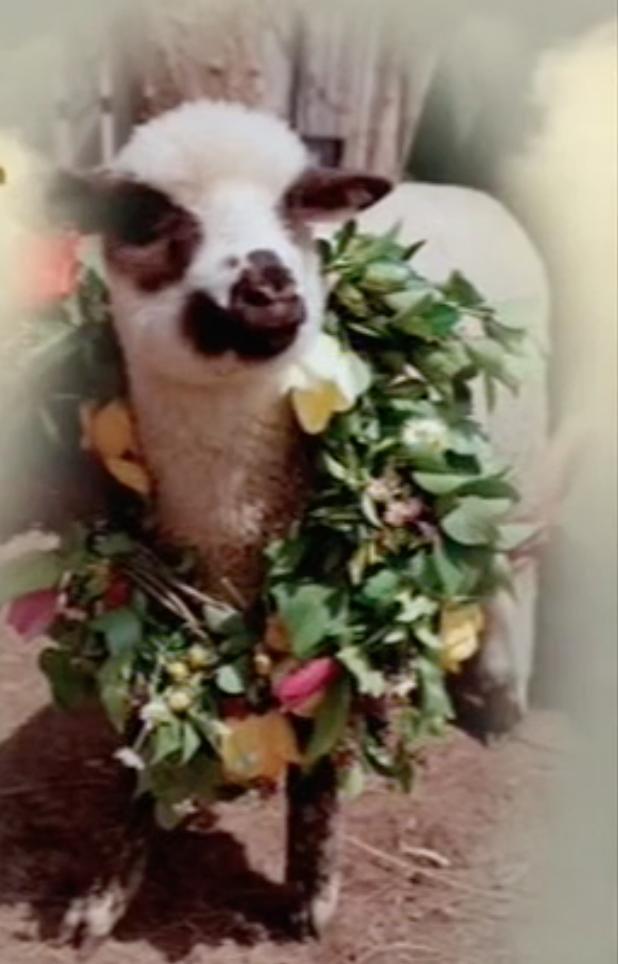
When a lamb is decorated like this in Serbia, it means that it's destined to be sacrificed to St George...Aries must die so Taurus can begin...Lamb sacrificed to a Calf...I talked about this in my post "Aries must die"...

In Serbia, St George is just a Christianised Jarilo, The Sun God, whose name means "The brightly burning one". Jarilo, The Burning Sun, The Dragon...Who became The Dragon Killer...I talked about this in my post "Letnitsa treasure"... 

So question: Is good shepherd the Sun God, bringing Aries (marks the end of the lambing season of the wild Eurasian sheep) to be sacrificed to Taurus (marks the start of the calving season of the wild Eurasian cattle)...Spring in Aries ends, Summer in Taurus begins...


Oh and don't forget this: The most ancient depiction of Archaic Greek Hermes is this bronze from the 6th century BC. Hermes Kriophoros is wearing a tunic with belt and zig-zag pattern, has wings on his legs, and is bearing a ram...God born in Apr/May carrying a ram?


Just a progression of the sun year from Lamb (Spring) into Calf (summer)...I talked about this in my posts "
Symbols of the seasons" and "Four living creatures"...


Which is why Pig (winter) is followed by Sheep (Spring) is followed by Bull (Summer) in Roman suovetaurilia...Animal calendar markers aligned in one of the most sacred and traditional rites of Roman religion. I talked about this in my post "Suovetaurilia"...


Finally, you might find this interesting too: In Levant, the time between the sowing and harvesting of grain spans 7 months. The seal of the last, 7th, grain container is opened in Aries which marks the end of the lambing season of wild sheep. Lamb opening 7th seal? Sounds familiar... I talked about this in my post "Seven seals"...


To read more about ancient animal and plant calendar markers, start here…then check the rest of the blog posts related to animal calendar markers I still didn't add to this page, and finally check my twitter threads I still didn't convert to blog post...I am 9 months behind now...

Monday, 21 April 2025

The birth of Romulus and Remus

Roman Republic, Didrachm, 269BC Apparently, today (April 21) is Rome's birthday...Roman historians dated the city's foundation by Romulus (plus/minus Remus) to c. 750BC, and Plutarch reckoned that Romulus and Remus were born c. 771 BC. But in what month? Let's find out...

The legend:

Romulus and Remus were born in Alba Longa. Their mother, Rhea Silvia, a vestal virgin, was impregnated by the God Mars, when he visited her in a sacred grove dedicated to him...

Rhea Silvia was the daughter of the former king of Alba Longa, Numitor, who was overthrown by his brother Amulius. Seeing Romulus and Remus as a threat to his rule, Amulius, took the kids from Rhea Silvia and ordered a servant to kill them by throwing them into the Tiber River...

But the servant took pity on the twins and instead of throwing them into the river, he placed the twins into a basket and put the basket into the River Tiber, and the river carried the boys to safety...

The river god Tibernus ensured the safety of the twins by calming the river, and causing their basket to catch in the roots of a fig tree which grew at the base of the Palatine Hill in the Velabrum swamp...

The twins were then discovered by a she-wolf (Lupa), who had just lost her cubs. She lived in a cave near the fig, which is today known as the Lupercal. She suckled the twins and they were also fed by a woodpecker...

Eventually, Romulus and Remus were discovered and adopted by a shepherd called Faustulus...

The rest is boring stuff, murders, rapes, wars and other "glorious" stuff...I will leave that to historians and Rome "enthusiasts"...

So...Where do we start? I think with the she-wolf (Lupa). She just lost her cubs...and was still lactating...which means that Romulus and Remus were born during the Italian wolf birthing season...Or just before it...Which is when?

Well, it turns out that the Italian wolf, a special subspecies of the wolf family, begins to mate in the middle of Feb...Right around the time of the very important Roman fertility festival Lupercalia (wolf festival)...

The sacred rites performed during Lupercalia were centred around the Lupercal cave...Yup, the one where she-wolf Lupa lived...And the wild fig-tree to which Romulus and Remus were brought by the divine intervention of the river-god Tiberinus...

Interestingly, some Roman sources name the wild fig tree caprificus, literally "goat fig". 

Why is this interesting? 

Cause the main sacrificial right performed during Lupercalia was a sacrifice of goats at the Lupercal altar by Luperci, Wolf Priests...

After the blood sacrifice, two Luperci had their foreheads anointed with blood from the sacrificial knife, which was then wiped clean with wool soaked in milk, after which they were expected to laugh...

The sacrificial feast followed, after which the Luperci cut thongs (known as februa, hence February) from the flayed goat skin, and ran with these, naked, along the old Palatine boundary, laughing and striking those they met with goat skin thongs...

Plutarch writes that "Many women of rank also purposely get in their way, and like children at school present their hands to be struck, believing that the pregnant will thus be helped in delivery, and the barren to pregnancy"...

Luperci then returned to the Lupercal cave...

So...What's all this about? Remember that Ibex (wild) goats were in Europe used as animal calendar markers for winter (Nov,Dec,Jan)...Because their mating season starts in Oct/Nov...

Article "Goat in European culture", about Ibex goat as an animal calendar marker imbedded in in European cultures and mythologies...

Winter finishes in Jan, and spring starts in Jan/Feb...Right when Italian wolves start mating in Feb/Mar...And when Luperci, wolf priests (spring) kill goats (winter) and use goat skin thongs as magic fertility instruments...

Because in continental Europe nature dies at the beginning of winter, and gets resurrected at the end of winter, and because winter is the season of the goat, the goat has to die, so nature can get resurrected...

Article "Krampus", explaining the link between Mountain Ibex Goats, #Capricorn zodiac sign, #Yule Goat, #Krampus and all the other Christmas related goat characters and masks:


You might like this too: Describe winter zodiac poetically 🙂


A hunter chases an ibex with gold horns up the mountain. At the summit he shoots the goat. The goat is bleeding and dying. But a magic flower grows out of its blood. Goat eats the flower, gets revived and runs away. I talked about this in my articles "Zlatorog-Goldhorn" and "Trentar"...

After the goat was killed by Wolf priests, the sacrificial knife  was cleaned by milk and wool...Feb is the the time when sheep start lambing and lactating...

The sheep stop lambing and the milking season starts in Mar/Apr, in Aries...

When a lamb is decorated like this in Serbia, it means that it's destined to be sacrificed to St George...Aries must die so Taurus can begin...Spring is sacrificed to summer... 

Also the lambing season is over and the milking season begins. From my article "Aries must die"...

The killing of a dog, together with goats, was a sacrifice to wolves, so that they spare the flocks...

BTW, dog mating season is opposite to wolf mating season...They are opposite calendar markers...Natural antagonists...

When our mythologies were made out of animal calendar markers, Sirius, the Dog Star rose with the sun in Jul/Aug, when mating season of the old dog breeds began...

Egypt: Article about "Dog days"...

Mesopotamia: Article about "Tishtrya"...

India: Article about "The bitch of the gods"...

Anyway, back to Romulus and Remus...The Italian wolf mating season spans Feb/Mar. The gestation lasts 2 months...Which means that the Italian wolf cubs are born in in Arp/May...

And so, Romulus and Remus could have been born in Mar/Apr (Aries) possibly in Mar, the month of their father Mars...But then they would have been a month old before they were thrown into Tiber...

Could that be the case?

I think that Amulius decided to kill Romulus and Remus as soon as he found out they were born...Which means that they were probably born in Apr/May...

Look at this. This is flood chart of the river Tiber. You can see that the floods almost completely subside by Apr/May...Remember that Tibernus "calmed the waters of Tiber down to ensure safety of the twins"...

And then he delivered the basket with the boys to the roots of a wild fig...Where they were "cradled in the shade of the fig branches". Fig trees are deciduous, dropping their leaves in late fall and leafing out again in early spring...

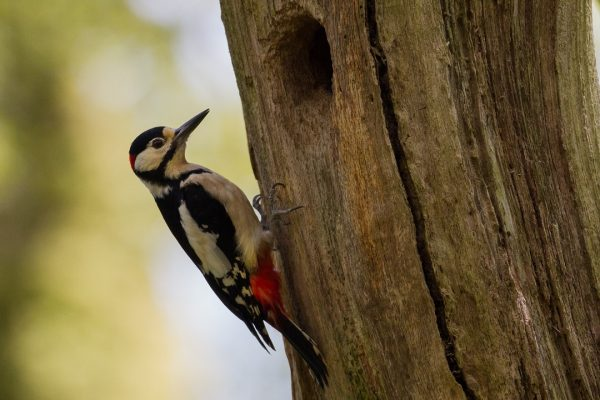
So when are fig leaves fully grown in the area around Rome? Finally, while Lupa was breastfeeding the twins, "woodpeckers were bringing them food too"...Woodpecker was the sacred bird of Mars, the father of Romulus and Remus...

And 4 main woodpecker species in Italy (The great and lesser spotted woodpeckers, Green and Black woodpecker) are nesting in Apr/May...Right on time to feed Romulus and Remus...


The two wolf boys were then found and adopted by Faustulus, the shepherd, and were brought up as shepherds...Interesting...Apr/May is when shepherds take their sheep to the highland pastures...I talked about this in my article "Aries must die"...


Sooooo....Apr/May? Guess what happens in Apr/May? More precisely on the 21st of Apr? The Rome was founded...By Romulus (plus/minus Remus)...

Oh and this is when the flocks are purified during Palilia (Parilia) ceremony...

Palilia (Parilia), the Roman festival, held on 21st April, cleansed shepherds & sheep, honouring the god of shepherds & sheep, Pales. Interestingly, Romans didn't really know who Pales was...So in this article I tried to uncover Pales's the secret identity 🙂 I talked about this in my article "Parilia"...


That's that. Interesting? I think so. 

To read more about ancient animal and plant calendar markers, start here…Then check my twitter threads I still didn't convert to blog post...I am way way behind... 

Wednesday, 23 September 2026

Khwarrah

Elamite bronze shield centerpiece, or umbo, dated to 1400 B.C. – 1000 B.C. Recently sold by baidun.com

It is decorated with a ring of wild sheep ewes surrounding a smaller circle of wild sheep rams, interspersed with stylised plants...

Is this just a meaningless decoration? I don't think so. I will explain why in this article...

To figure this out we need to look at the climatic year in Iran and the annual life cycle of the wild sheep in the same area...

This is the climate chart for Susa, the capital of the Ancient Elam. We can see that the climatic year was divided into hot/dry half (Apr/May - Oct/Nov) and cool/wet half (Oct/Nov - Apr/May)...

The beginning of the rain season (Oct/Nov), the most important annual climatic event in this part of the world, coincides with the beginning of the mating season of wild sheep...

The mating season, which overlaps with the rain season, is the only time of the year when male and female wild sheep are seen mixed together. They normally live in separate single sex groups...

So I think that our Elamite bronze shield centrepiece depicts the start of the wild sheep mating season, which announces the arrival of rain season, which triggers mass germination of native grasses and wild flora across the plains and lower Zagros foothills of ancient Elam...

I already talked about Ram as an animal calendar marker for the beginning of the rain season in my 2020 post Giant eagle dude with mouflons about this mad object which was in 2011 sold for 97,000 pounds sterling...

A Bactrian gold stamp seal, c. 2200-1900 BC...

Depicting (official description): "...central figure of a winged giant, with muscular human torso and legs, the head and talons of an eagle, wearing a short open tunic with wide belt, and a pendant necklace, grasping in each hand an inverted ibex (my comment: this actually a mouflon/wild sheep)..."

Again, to understand what this object symbolically represent, we need to know that Griffon Vulture mating season, marked by synchronous flying aerial displays, also overlaps with the wild sheep mating season and the rain season...

Which means that this object again symbolically depicts the deified rain season animal calendar markers...

Fused into a proto-god of rain...

BTW, ibex (wild goat) and mouflon (wild sheep) are identical calendar markers. This is because they both start their mating season in Oct/Nov, at the start of the rain season in Iran. I talked about this originally in my post Grazing horned animals about one of the most common designs found on Bronze Age Jiroft culture vessels from Halil River catchment area in Iran: "horned animals grazing on green shoots"...

I think that it is because Ibex goat is much bigger and more imposing (and it makes a lot louder noise during mating fights) that Ibex became the most often used animal calendar marker for the beginning of the rain season in Iran. 

Here we see prancing (fighting) male Ibex goats flanking the tree of life. This is because the rain these fights announce is what supports (the tree of) life in Iran...I talked about it in my post Sassanian goats with tree of life...

Then, because people are very good at noticing patterns in nature and very bad at distinguishing between correlation and causation, ibex got turned into the "Goat of Rain", goat which brings rain. This is the root of all our religions...Then, because it is easier to pray to a human than to a goat, the "Goat of Rain" got turned into a God of Rain with goat horns...And eventually...into a fully human rain god associated with Ibex goats...  

I talked about this in many of my Blog articles and X threads. You can start here if you are interested. An article Kuseh gardani about 

"Kuseh" (Goat God of Rain turned Devil of Drought) 

An echo of the Elamite bronze idol of a (goat-) man with large ibex horns, 3rd-2nd millennium BC...

Now remember the eagle dude with mouflons? There are also identical depictions of an eagle dude with ibexes. From Bactria. End of the 3rd beginning of the 2nd millennium BC Bactrian seal showing an eagle dude holding "winged" ibex goats...

I talked about this symbolic link in Bactrian culture in my post Fluffy...

Recent archaeological data from Zawi Chemi Shanidar, Iran indicates that this symbolic link between vultures and ibexes/mouflons most likely originated in the 9th millennium BC Iran...

And that this is also the most likely place and time where and when vulture and ibex animal calendar markers for rain season got deified and turned into god of rain. 

I talked about this in my post Zawi chemi shanidar...

Anyway, another reason why ibex/goat became main animal calendar marker for the beginning of the rain season, is because mouflon/ram eventually became more associated with Mar/Apr, the end of the lambing and the beginning of the milking season...

Throughout Eurasia, 

Ram, marks lambing of Eurasian wild sheep 

Bull, marks calving of Eurasian wild cattle 

Lion, marks mating of Eurasian lions 

Goat, marks mating of Eurasian wild goats 

I originally talked about this in my post Symbols of the seasons...

In Iran Ram (Feb/Mar/Apr), also marks the snowmelt season which kickstarts the flood season...The second most important annual climatic event in this part of the world...

Hence Ram (Aries) depicted lying in water from the "Zodiac from Isfahan". I talked about it in my post Sagittarius from Isfahan...

BTW, Ram marks the same thing here: Ever seen this symbol? It consists of a goatfish, which on its back, close to its tail, has a pedestal with a ram's head...

Apparently, no one really knows what it means...

Well, let's see if Animal Calendar Markers can solve this "mystery" 🙂. 

So we have

Goat (Oct/Nov, beginning of the mating of wild goats and the beginning of the rain season)

Ram (Feb/Mar/Apr, the lambing season and the snowmelt season which kickstarts the flood season)

Fish,Carp (Apr/May, the beginning of the giang carp mating migration season, the end of the rain season, the peak of the flood season)...

You can fing the full analysis in Goatfish with ram head...

Anyway, the fact that Aries is the time when the flood waters start to rise, is also the reason why the final words spoken by Kay Khosrow, a legendary king of Iran at the end of  Shahnameh, The Iranian Book of Kings are: "The whole world is my kingdom. All is mine from Pisces to Taurus"...This basically means "in Aries"...Which is why "The Ruller of Aries" was established title of supreme power in Iran...And why on this 6th or early 7th c. AD Sassanian silver bowl the king is depicted seated on the ram throne. 

I talk about this in these two posts: Kay Khosrow and Eyeballs platter...

Now a while back I wrote this post Ram with royal ribbon about 400–699 AD Sassanian silver plate originally from Iran, currently in the Museum of Fine Arts, Boston, USA. In it I postulated that this is not just a ram, but that, because of the fact that it is wearing a royal ribbon, it is the deified animal calendar marker for the snowmelt season which kickstarts the flood season and the symbol of Iranian royal power...

At that time I didn't know that 

"In ancient Iranian tradition, khwarrah (also spelled farrah or farr) was the divine, luminous aura that gave a monarch the legitimate right to rule. Zoroastrian texts and legends heavily associate this divine entity with Ram. According to the Sasanian epic "The Book of the Deeds of Ardashir", khwarrah appeared to the empire’s founder Ardashir I as a magnificent ram running alongside his horse, guiding and securing his absolute triumph. 

Incorporating ram's horns into royal headwear visually broadcasted that the ruler possessed this divine favour...

You can read more about this here...

Interesting...

It is the "rising" spring sun that causes the spring snowmelt, which fills the rivers and caused the annual flood which makes land fertile...And through this "grace" makes life possible in Mesopotamia and Iran. 

I talked about this in my post When Utu steps up into heaven...

Which is why Sun god Shamash was in Mesopotamia (and most likely Elam) seen as the source of (water of) life...And why Shamash is depicted here holding the original An-Ki (Father-Mother) Ankh - Life symbol...

I talk about this in my post Sun god tablet...

BTW, the stick represents earth (original square) and string/circle represents sky/sun (original compasses)...

Considering that khwarrah is symbolically represented by a ram, the symbol of spring, the snowmelt season, and that "The Ruller of Aries" was established title of supreme power in Iran, I wonder if the sun was "the divine, luminous aura that gave a monarch the legitimate right to rule"???

I want to thank @dalaygiz for this contribution: The term xwarrah / farr, ‘(royal) glory’ derives from the same root as Av. hvar-, which is where we also get Av. hvarə-xšaēta, ‘radiant sun’. Originally from PIIr. *suHar-, ‘sun’. Similarly the farr is associated with blazing, fiery or solar imagery...

And is khwarrah, the solar aura, what is symbolically represented by the "Ring of Power" that Ahura Mazda gives to kings to legitimise their rule? Like here on the famous relief from Taqe Bostan where the recepient of the diving grace is king Ardashir II...

I talk about this ring in my post The ear ring of god...

Oh, look who is behind the king, with a radiant halo, shining "like the sun"? Mithra...

I talk about Mithra and the Sun in my post Mehr...

And it is believed that khwarrah Ring of Power is the same ring that we see on the faravahar, the best-known symbol from ancient Persia, being held by the figure (thought to be Ahura Mazda) depicted riding on a winged sun disc...

I mean that ring can only be the symbol of the sun disc...They are depicted in identical manner...

BTW, Remember the Bronze Age eagle/vulture dudes holding ibexes/rams that I talked about earlier and explained what they symbolically represented? 3000 years later, we find Sasanian seals depicting a creature with the body of a bird (I would say a eagle/vulture) and the head of a ram, in the Berlin Museum and the British Museum collections... 

Pic from Catalogue of the Western Asiatic seals in the British Museum. Stamp seals.

And no one knows what this means...Apparently...

Oh, and check this out. Stucco decoration from the Sasanian palace at Kish (Iraq). Depicting a winged Ram with the royal ribbon...

The Field Museum of Natural History. After: Kröger 2006: fig.

Just like the eagle/vulture dude holding ibexes/rams, and just like the eagle/vulture with ram head, this is a complex deified animal calendar marker for the cool/wet half of the year, between the start of mating (Oct/Nov) and end of lambing (Apr/May) of wild sheep. The time when vultures also nest...

Pic from The Beribboned Ram in Sasanian Art and Its Possible Religious Associations...

What does the shape of the wings remind you of? I'll talk about this next...

As I said already, khwarrah (also spelled farrah or farr) was the divine, luminous aura that gave a monarch the legitimate right to rule which manifested itself as a divine Ram.

So, incorporating ram's horns into royal headwear visually broadcasted that the ruler possessed this divine favour...

For Sasanian queens, like Yazdan-Friy Shapur depicted here, the Ram carried an additional layer of divine association. 

Scholars point out that isolated or ribboned rams in Sasanian art were symbols which were also linked to Anahita, the Zoroastrian goddess of water and fertility. 

"By wearing a horn-adorned headdress, a banbishn (queen) closely aligned herself with the ultimate feminine divine power protecting the empire". 

You can read more about this in The Beribboned Ram in Sasanian Art and Its Possible Religious Associations...

See the Tree of Life growing between Ram's horns???

I already talked about Anahita in several of my articles. Like this one, Rainbows and peacocks, about this Sassanian dish, 400-600AD, Iran, Currently in Al Thani collection, which depicts goddess Anahita, Zoroastrian goddess of water and fertility, holding a rainbow, and surrounded by peacocks, the rain birds...

In this same article I also talk about the origin of this goddess in (at least) 3rd millennium BC Elam, where we find her also linked to (holding a) rainbow, the annual flood, wet moon (upward pointing crescent moon)...and Sirius...The original star of Inanna/Ishtar/Asherah/Anahita...

I talked about why Sirius was the original "star" of Inanna/Ishtar/Asherah/Anahita in many of my articles. You can start with: Sirius mother of venus, Inana and Sukaletuda, The brightest star, Inanna in Egypt, Temple of Isis on Philae Island, Apocalypse, Whore of Babylon, Dog coin...

I talk about the Wet Moon and why Moon Gods were so important in places where winter is the rainy part of the year, like Mesopotamia, Iran, Levant, Northern Arabia in many of my posts...

In short, during the winter/spring, the ecliptic plane intersects the western horizon at its steepest, most vertical angle at sunset. Because a waxing crescent Moon follows right behind the Sun along this steep line, it sits directly above the Sun. This makes the crescent look like a upright bowl (the "wet moon which catches the rain") that sinks straight down into the horizon...

Now look at these Sassanian seals: 

L: Spread wings above the head of the Ram with the Tree of Life growing from the Ram's head between the wings...while a star and a crescent are depicted on the left. 

R: Beribboned Ram’s head with wings in the place of horns supporting the star and crescent

Pic from Sasanidische Siegelsteine de P. Horn et G. Steindorf revisité...

No one knows what this symbols represent...Well...

This brings me to this small lapis lazuli disc, dated to 2100-1900 BC, Trans-Elamite period, from Southeastern Iran. Currently in Louvre...

See the "Wet Moon", "The Star of Inanna" above the goddess drinking (water?) from the drinking cup?

I provide full symbolic analysis of this amazing artefact in this post A toast to Inanna...

Now the drinking cup brings us to this:

Seated female figure (goddess? ) drinking out of a goblet - next to a tulip, bronze seal, late 3rd - early 2nd mill BC, (BMAC), Afghanistan. Currently in a Private collection Linenthal, San Francisco. Tulips are another, this time plant, calendar marker for snowmelt/flood season...I talked about this in my post Tulip goddess...

Guess when the peak Tulip season is? Mar/Apr...Aries...

So I wonder if these Bronze Age Bactrian goddesses are also a version of Anahita/Inanna?

And this brings me back to the Elamite bronze shield centrepiece that started this post, and the fact that the plants depicted between rams look very much like flowering tulips...

I want to thank @IboGulsen for pointing this to me in his comment...

One other thing that just occurred to me: Mar/Apr (Aries) was, across the eastern Mediterranean and Near East, Mesopotamia, Iran...the time when the annual military season started...

One of the main reasons is that Mar/Apr was just before the start of the grain/vegetables harvest season, which means the invading armies would have food waiting for them in the areas they are invading (at that time armies ate mostly what they foraged)...

Which adds another symbolic layer to the Sacred Ram, the symbol of Khwarrah that gave Sassanian monarchs the legitimate right to rule....

Plate with Bahram II out on a Hunt, Iran, Sassanid, 4th – early 5th c. AD. Discovered as part of a hoard in Perm province in 1893. Entered the Hermitage in 1894...

Oh and BTW, king, wearing ram horns (ram is a symbol, animal calendar marker, for spring) is killing a wild boar (boar is a symbol, animal calendar marker, for winter)...

To read more about ancient animal and plant calendar markers, start here…Then check my twitter threads I still didn't convert to blog post...I am way way behind...