Wednesday, 22 July 2020

Nakovana

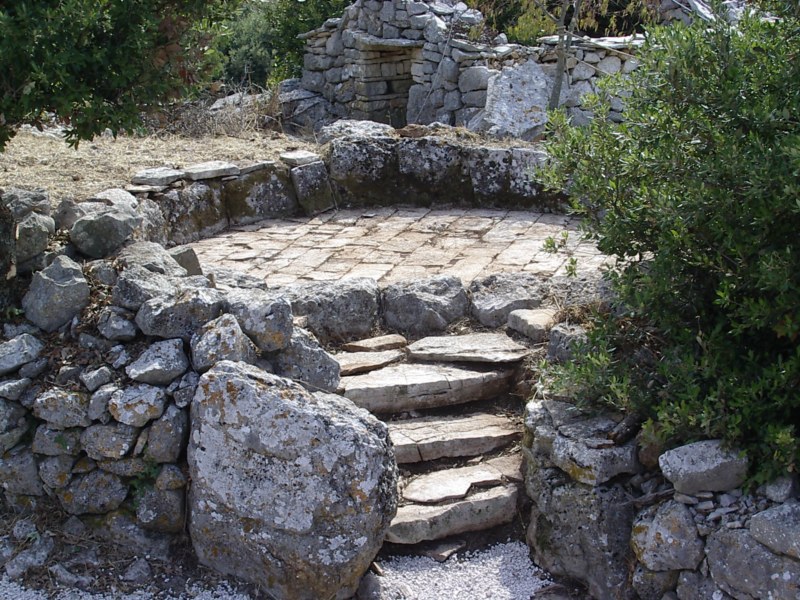
This is the abandoned Nakovana village located near the tip of the Pelješac Peninsula in Southern Dalmatia, Croatia...


The name Nakovana is related to the Slavic word "nakovanj", meaning "anvil", most likely because of the shape of this nearby hill. It is known today locally as Grad (City), because of the ruins of a huge Illyrian fortress which once stood on its top...


The fortress was destroyed during the Octavian's Illyrian campaign which lasted 8 years, from 35 to 27 BC, and encompassed almost the entire eastern Adriatic and much of its hinterland...

During the first year of operations, the Roman army massacred the native populations of the islands of Korčula and Mljet. Historical sources do not say whether the Illyrians on the Pelješac peninsula met the same faith...

But the archaeological survey of the region found virtually no traces of occupation during the Early Imperial or Late Roman periods. This is an unusual situation in Dalmatia, where those periods often account for the bulk of archaeological remains...

Most likely, the conquering Romans could not tolerate a native stronghold at such a key strategic position and they most likely destroyed it and turned the surrounding area into a wasteland. The local population was either exterminated or expelled...

How important Nakovana fort was during the Illyrian times can be seen from the fact that over 50 stone tumuli (cairns) are strewn over the fields surrounding the fort. Like the one on this picture shown with the Grad fortress in the background...


These are burials of important people, most likely the aristocracy of the era and the time - the people who built and lived in the Grad fortress. None of the tumuli have been excavated so far...

You have probably never heard of Nakovana before...Unless you are an archaeologist with an interest in Dalmatian prehistory...But you should have. And the fact that Nakovana is not famous world wide beggars belief...

The reason why Nakovana should be famous is not because of its Illyrian fortress and its tumuli...It is because of this cave that lies near the fortress. 


It is the same cave I talked about in my article about the Neolithic maritime trade...


The reason why Nakovana should be famous is not (just) because the lithics found in the cave's front chamber are the proof of the maritime trade network which existed for thousands of years in the South of the Adriatic Sea...

The reason why Nakovana should be famous was discovered in the cave's second chamber which was deliberately sealed, probably immediately before or after the Illyrian fortress Grad was destroyed by the Romans...


This is how the archaeologists who discovered this hidden chamber described the event:


And what they discovered in the hidden chamber is this: A large gleaming white stalagmite in a shape of a phallus...


The stalagmite sits on top of a series of superimposed prehistoric layers, the earliest being from Early Copper Age and dated to the mid-fourth millennium BC. A direct radiocarbon date on the base of the stalagmite suggests that it began to grow about 3600 years ago...


The floor of the chamber was strewn with broken high quality pottery, mostly drinking cups, mostly imported and mostly Greek, broken and deposited there as sacrifice...


The fact that the pottery was Greek made, doesn't mean that Greeks deposited there. Some of the cairns surrounding the Grad fortress, were looted in the past. What remains in and around them shows that the character of the funerary rite is unquestionably Illyrian...

The people were buried with locally made Iron Age jewellery, handmade pottery, and fairly often, fragments of fine Hellenistic ceramic vessels, identical to those from the cave...

Illyrians were famous maritime traders and pirates and they pretty much controlled the southern Adriatic for hundreds of years...

And the Nakovana Grad fortress controlled one of the most strategically important points, the entrance into the Neretva river which was the entrance into the Balkan hinterland...


Which is the reason why the Romans eventually wiped them out...

By the way, were Illyrians the descendants of the people who controlled the Southern Adriatic since Neolithic??? Just putting this out there for people to think about it...

The broken pottery was deposited around the stalagmite, showing that it was the centre of the cultic activities in the cave. The earliest pottery shards deposited next to the stalagmite date to the 4th century BC, around the time of the Alexander the Great...

Now this is very very interesting...

If I didn't tell you where this cave was, you would be forgiven to think that this was a Siva lingam cave temple located somewhere in India...

I wonder if this Illyrian sanctuary predates or postdates Alexander's Indian campaign and who was celebrated in a shape of a lingam in this cave???

The archaeologists who excavated the cave say Silvanus, Pan...

Hmm...Possibly...

Believe or not, as impressive as this phallus looks like :)  this is not the most amazing thing found in the hidden chamber of the Nakovana cave...The most amazing thing was found among the rubble deposited around it...

Among hundreds of pottery shards, archaeologists have also found several pieces of ivory with engraved astrological signs, which once formed part of an astrologer's horoscope board...The oldest so far found horoscope in the world...


I am here talking about Greek horoscopic astrology, which is believed to have been invented in late Ptolemaic Egypt, in the 2nd or early 1st c. BC...

Now we know that the Nakovana cave was sealed around 35BC. So the horoscope board deposited next to the stalagmite must have been made before that. Radiocarbon dating actually points to much earlier date...

The age obtained by the accelerator mass spectrometry is 2217±21 B.P. The calibrated range of two standard deviations is the period between 375 and 204 BC, with an asymmetrical probability distribution leaning towards the 3rd c. BC...

In plain English, the animal from which the ivory was obtained was killed in the 3rd century BC...

Archaeologists who discovered this amazing artefact say: "It is believed horoscope was invented in Egypt, late 2nd, early 1st c. BC. Therefore, the Nakovana zodiac could not have been made before the 2nd c. BC (probably not much before 100 BC), meaning that the ivory used to make it was at least hundred years old"...

Now I don't know for how long a piece of ivory is usually left lying around before it is cut and carved into sellable objects, but I don't think it was left to "age" for over 100 years...

Why playing it down? "It is believed (!!!) that horoscope was invented in Egypt in late 2nd, early 1st c. BC"...What if it wasn't? What if it was invented somewhere else? Earlier? And brought to Egypt from there?


I have been writing about zodiac for a while...One of the things that I have discovered is that zodiac signs, as they are positioned in this "Ptolemaic Greek zodiac" mark the annual lifecycle events of the depicted animals in Europe. You can read about this in this series of articles about Zodiac signs (work in progress)...

As if someone observed the significant annual behavior (mating and birthing) of the animals in Europe, and derived the zodiac signs from that behavior: Pisces - mating season of Europan salmon, Cancer - mating season of Atlantic crabs and European crayfish, Taurus - calving season of European Aurochs...

By the way, I am here talking about the horoscope zodiac circle the way we know it today. Not animal solar calendar markers found in many cultures in Eurasia and North Africa over last 10,000 years. I wrote about those extensively too. You can read about this in this series of articles about Solar calendar markers (work in progress)...

Do you see now why I think that it is completely unbelievable that Nakovana is not a famous archaeological site? 

Sources

Text and images:

Tuesday, 21 July 2020

Neolithic seafarers

This is Pelješac peninsula on Croatia’s Dalmatian coast. 


In one of the caves near the tip of the peninsula, archaeologists have discovered prehistoric cultural deposits, about 4 meters thick, covering the entire local post-Mesolithic sequence...

Eleven occupation phases and sub phases span 6,000 years, from the Early Neolithic to the Illyrian Iron Age...

You can read about the lithic finds from Pelješac peninsula in the article "Lithic artifacts from nakovana (Pelješac): Continuity and change from early neolithic until the end of prehistory" by S. Forenbaher and Zlatko Perhoč

Among many lithics found in the cave, a few were made from glossy and semi-translucent black obsidian...
The analysis of the obsidian has determined that it came from the Gabellotto Gorge area of the island of Lipari, just above Sicily...


This in itself is amazing...How the hell did Lipari obsidian end up on Pelješac in Neolithic??? But there is more...All other lithics from the cave were made of non local cherts...


The analysis of the material showed that it came from the mines located in Gargano Peninsula in Apulia region. 


Most of the blades were imported from Gargano as finished products...And it seems that the inhabitants of Southern Dalmatia continued acquiring chert tools from the Gargano peninsula for over five thousand years, from Early Neolithic until Late Bronze Age, if not even later. This is quite astonishing...It points to the existence of a highly developed lithic industry which produced enough stone tools for both local and oversees market....

How were stone tools from Lipari and Gargano transported to Dalmatia? Everything points to a well established long running maritime trade route between Sicily, Apulia and Dalmatia...

Ernestine S. Elster from the University of California, Los Angeles talks about the possibility of the existence of a Neolithic "network of seamen and miners" in her article "Scaloria Cave: Found, Lost, and Found Again", about Scaloria Cave located near the Gargano chert mines.

She says that it was this "network" which "brought Gargano flint to Scaloria and the Tavoliere in Apulia and further afield, to the Adriatic Tremiti island of San Domino and the island of Hvar in Dalmatia". We now know that this trade route went further south east to Pelješac peninsula...

How far south east did this trade network reach? Well at least as far south east as the source of the coarse impressed wares from the Early Greek Neolithic sites, which were found in Apulian Neolithic sites...


Who ran this maritime trade network during Neolithic and Chalcolithic? Who were these Neolithic seafarers? 

Not everyone can make sea going vessels and not everyone can successfully sail these vessels across the sea and back...Both of these skills are highly complex and usually passed through families, clans, tribes which is why, by the time we end up in the Bronze Age, we have seafaring nations...

Whoever they were, their trading network covered not just the seas east of Sicily, but also the seas west of Sicily...

How do we know this? Because of the fact that at the same time when chert from Gargano and obsidian from Lipari were traded in Dalmatia, amber from Sicily was traded in Spain...


Also in the article "Sardinian Obsidian Circulation and Early Maritime Navigation in the Neolithic as Shown Through Social Network Analysis" Kyle Freund and Zack Batist also talk about developed mining/seafaring network which produced and transported obsidian from Sardinia to Italy and France where it was exchanged ("sold"???) for thousands of years, between the 6th and 4th millennium BC...


The same guys?
 
There is a high possibility that here we are talking about highly specialised mining and maritime trading societies who worked for profit...Although what they could have exchanged their stones and amber for is a big question...

What is really important is that here we now have a trade network which covered the North Mediterranean during Neolithic, Copper, Bronze and Iron age, connecting Balkans, Sicily and Iberia...And predating Phoenicians and Minoans by few thousand years...

In my series of articles about Montenegrine tumuli, I showed that archaeological finds from both Montenegro (just south of Pelješac peninsula) and Ireland, point at a strange link between Copper age Montenegro and Ireland, and indicate that the copper age could have been brought to Ireland by people who arrived there from Montenegro...


And guess what: the Irish legends, which were first time written down during early medieval time, say that the first farmers, miners and metalworkers arrived to Ireland by sea from the Balkans, via Sicily and Iberia...

This voyage, according to the Irish Annals, took place during the 3rd millennium BC...Of course every historian and archaeologist in the world dismissed these legends as "pseudo history"...No one was able for such maritime voyage at that time...Hmmm.....


Sunday, 19 July 2020

Diadem of the Queen Puabi

This beautiful object is the so called "diadem of the Queen Puabi".


It was found together with huge number of other precious objects in a tomb of Puabi, Sumerian queen (or priestess) who lived and died in Ur around 2600BC... 

The diadem is made from a belt constructed from thousands of tiny lapis lazuli beads, on to which 4 pairs of golden animals (sheep, gazelles (goats), deers, cattle) and various plants (apples, dates) were attached...


Queen Puabi's grave was discovered by the British archaeologist Leonard Woolley who excavated it between 1922 and 1934.  When Woolley discovered thousands of pieces of jewellery next to the head of Queen Puabi, he assumed they formed a single piece...

So he recreated one piece of jewellery that he identified as a diadem. During exhibition preparation, the curators realised that instead of one unified piece of jewellery, the components of the “diadem” were, in fact, as many as five individual pieces, part of an ensemble...


This was especially obvious from the different types of bale (the hollow form through which string passes). The animals, and plants of various kinds were originally suspended from strings of lapis beads that made up necklaces and bracelets for the queen...

And here I would like to propose that whoever finally assembled this lapis lazuli - gold diadem (Woolley or someone else), made a mistake and didn't put the animals in the correct order...🙂 

I know, I am a stickler for animal ordering...

The order of animals on the reconstructed diadem is gazelles/goats-cattle-deer-sheep...I think that the actual order should be sheep-cattle-deer-gazelles/goats...

Eeee why exactly? (I can hear you ask)

This order corresponds with the symbolic link between the quadrupeds and the seasons: 

sheep-spring
cattle-summer
deer-autumn
goat/gazelle winter


I talked about this symbolic link in my article about the Symbols of the season...Particular animal is associated with a particular season because a reproductive cycle event (mating or birth giving) of that animal happens during that season

sheep-spring (lambing of wild sheep)
cattle-summer (calving of wild cattle)
deer-autumn (mating of wild deer)
goat/gazelle winter (mating of wild goats)

The gazelle (Goitered gazelle to be more precise) has the same mating season as the Bezoar goat (Oct/Nov to Jan), making them interchangeable symbols of winter. I talked about this in my post about the "Pissing gazelle" 🙂 

They are even sometimes depicted together to reinforce the meaning...


So, I think that this diadem is quite remarkable indeed. It shows that indeed these animals were not put on that diadem randomly, but were meant to represent the solar year of four seasons...It just needs to be reassembled correctly  🙂


Pissing gazelles

This is a wall painting from a provincial palace on the Assyrian borderlands, c. 9th - 7th century BC, depicting a "demigod holding animals that urinate on him to purify him". OMG...This thread is about why I love this image and why I hate the proposed explanation for it...


First why I love this image. I saw it for the first time today and I couldn't believe what I was looking at: probably the earliest depiction of the phrase "It's pissing rain" 🙂

The reason why I believe that what is symbolically depicted on this image is "the arrival of the rain season" is because of the pissing animals the "demigod" is holding. They are most likely Bezoar goats, the Levantine and Mesopotamian "Goats of Rain"... I talked about the link between Bezoar goats and rain in Mesopotamia in my post "Queen Puabi's seal

Their mating season starts at the same time when the rain season starts in Levant and Mesopotamia, which is why they were linked with the rain cult through out the region...

Of course we can't be sure that the animals are indeed Bezoars because unfortunately we can't see their heads. But we can see their bodies and the only two animals which fit the anatomy of the depicted animals are Bezoar ibex and Fallow deer...

Why I think the animal is not the Fallow deer is because of the tail. Fallow deer have longer tails than the ones depicted on the wall painting while the Bezoar tails match depiction exactly...


But maybe I am wrong...

So this is why I love the image.

And  why I hate the original proposed explanation...

"Purifying by piss"??? 

Purifying by rain conjured by the "Goat of rain" makes much more sense to me...

But as I said already, I could be wrong...

PS: I was wrong 🙂

I might have misidentified the pissing animals, but I was right about the meaning of the scene. When I first proposed my interpretation of the image, I was told that maybe another animal could have been doing the pissing: Goitered gazelle...


Goitered gazelle, found in Georgia, Azerbaijan, Iran, parts of Iraq and Pakistan, Afghanistan, Tajikistan, Kyrgyzstan, Uzbekistan, Turkmenistan, Kazakhstan, China and Mongolia. Mating in early winter, when rains arrive...At the same time as Bezoar goat.  And it has the same tail as Bezoar goat...

And believe or not, it seems that Goitered gazelle is as frequently depicted on Mesopotamian seals as Bezoar, and sometimes they are depicted together. Like on this seal on which a winged goddess standing between two Bezoar goats and holding two Goitered gazelles. 


I believe Inanna at the moment when she descends into Abzu, the source of all fresh water, basically at the beginning of the winter rain season, which starts when both Bezoar goats and Goitered gazelles start their mating season...

The rain which brings life to Mesopotamia, symbolised by then Palm Tree, the Mesopotamian Tree of Life.

So...All hail the urinating Goat/Gazelle!!!

PS: Is that winter moon sticking out of the shoulders of the "Demigod" that enjoys golden showers? You know how sickle moon points up during winter, which is why it is a symbol for winter? The time when the "gazelles" are pissing rain...You can read more about the winter moon in my post "Eagle dance" about this amazing early 2nd millennium BC seal from Syria...

Saturday, 18 July 2020

Bannock

In the past, at Imbolc, the first day of Spring according to Gaelic calendar, St Bride's "bannock" or "bonnach" was baked and given to the young girls as a blessing. One was also left outside as a gift for St Bride when she passed in the night to bless all the homes...


In Scotland bannocks were made for Bannock Nicht (aka Shrove Tuesday) from oatmeal, egg, and salt, with the liquid for the mixture being either beef broth or milk. They were called Sautie Bannocks because of the fact that they were baked in the fire and were covered in soot...

Sautie Bannock was made by a single girl who was not allowed to speak. The other girls would try to tease her into speaking. A silver ring was worked into the dough. The cooked bannock was shared amongst the unmarried women and the one who found the ring would get married next...

Bannock or pan bread (pan cake) is the oldest type of bread. The first bread was probably a result of a lucky accident in which a thick porridge dripped on hot hearth stone and was transformed into tasty crispy crust...


Irish and Scottish bannocks are made by virgin unmarried girls. At the beginning of Spring...To mark the arrival of Bride (Biddy), virgin Spring Earth...And these round pan breads, pan cakes when cut into slices look like a shining sun...Interesting...


Even more interesting is that in Scotland bannocks are made not on Imbolc, the first day of Spring according to the Gaelic calendar, but on Pancake Tuesday....At the same time when Slavs celebrate their ancient pan cake (pan bread) festival Maslenitsa (the original Pancake Tuesday)...When they bake and eat round yellow pancakes. Which symbolise the sun...


O yeah and Slavs like eating these sun shaped cakes while burning the effigies of Morena, Marzana (Winter Hag)...


I talked abut this in my article "Gryla"...

This is what these pancakes symbolise: the return of the Sun God Jarilo from the Otherworld which transforms the Ugly Old Barren Hag Winter Earth (Cailleach in Ireland and Morana or Marzana in Slavic countries) into a Beautiful Young Fertile Maiden Spring Earth (Brigid, Bride, Biddy in Ireland and Vesna in Slavic countries)...By warming her up...

Ever wandered why Brigid, who is celebrated at the beginning of spring, is "the fire maiden"? 

Blessed fire from the tinder fungus

There is an interesting Easter Friday custom in Slovenia called "strašenje Boga" (scaring God). It involves people piling up old wooden objects in front of the church, and beating them with poles making as much noise as possible, until the objects are broken to bits... 


The wood was then used on Easter Saturday morning for lighting the sacred Need fire. In some parts of Slovenia, every house would bring their own log which was placed in the pile. In Carinthia, the priest collected old, removed wooden crosses and wreaths from graves and carried them in a pile. 

The once all the wood was piled up, fire was kindled using iron and flint. The priest would then bless the fire and this, now sacred new fire, was used to light up the new fire in all the village house hearths. 


The house hearth fire was considered sacred in Slovenia and was always kept burning by the housewife. In the evening it was not extinguished. In the evening, the housewife covered the embers with ashes, and in the morning she blew into the embers and started the fire again. The only time the fire was extinguished was on Good Friday, when the hearth was cleaned and prepared for the arrival of the new fire which was brought from the sacred blessed fire lit up in front of the church... 


Now the fire was brought from the church to each house by one of the boys from the house using tinder fungus. 


It is so called because in the past people used it to "cary fire" from one place to the other. Once lit, it will not burn but smoulder for a long time allowing fire to be preserved and transported over long distances...


As soon as the fire was blessed, boys would rush towards the fire with a tinder fungus stuck on a long stick. They all wanted to be the first to catch the fire and the first to bring it to their house...The kids had to be careful not to let the fire be extinguished nor to let it flare up, as either would prevent them from actually reaching the house with a fire still burning in the fungus. If any burning bit fell off the fungus, it had to be thrown into a green wheat or barley field. 


Once the boys reached their houses, they had to give the burning tinder to their mothers, so that they can start the new yearly house fire. 


Last year's Palm Sunday spring greenery bundle called "butarica" was ceremonially placed on the new fire and burned. Pic: people bringing "butarice" to the church to be blessed...


It was believed that starting a house fire with the blessed fire from the communal bonfire would protect the house from fire...

After their house fire was rekindled, the boys would run through the village announcing this to everyone else... 

Not all of the tinder fungus was used for lighting the house fire. A piece of burning tinder fungus had to be thrown into every field and meadow so it will be blessed too and would yield well that year. This ceremony was also performed by children...

This is very very interesting. 

Ethnographer dr. Niko Kuret says that "The blessing of the fire ceremony was probably the remnant of some pagan spring ritual dedicated to fire"...

Ha!

I wonder what ceremony could that be? Does this has anything to do with Jarilo, Slavic young sun god, whose name means "The Brightly Burning one"? 

Is the new sacred fire, lit on Easter Saturday, symbolic representation of Jarilo's fire, young sun's fire? 

I think so...

It is Jarilo's return from "the Otherworld" (winter) which brings spring and makes the land green again. Jarilo's name also means "The Green one". It is his brightly burning "sacred fire" that melts the snow, ends infertile white winter and starts fertile green spring...

I think that this is why the bits of sacred fire are thrown into fields. Fields are symbolically blessed, by Jarilo, The Brightly Burning One, The Young Sun god, who is represented by the "sacred bonfire"...

Finally two questions:

Which god is being frightened by banging wood in front of the church? Jarilo? Or...? 
And why are crosses burned in the so obviously pagan sacred fire ceremony?

Illustrations: Maxim Gaspari. Text describing the ceremony from "Blessed fire from the tinder fungus" and "Easter customs in Slovenia"

PS: This is of course just one of many similar fire rituals performed at the end of winter beginning of spring or at the beginning of summer throughout Europe...All basically celebrating the return of the sun and the rebirth of nature...