Tuesday, 27 February 2024

Goatfish with ram head

Have you ever seen this symbol? It consists of a goatfish, which on its back, close to its tail, has a pedestal with a ram's head...

What does this mean? Apparently, no one really knows. 

Well, let's see if Animal Calendar Markers can help us solve this "mystery"

This symbol is found on several Mesopotamian Kudurru boundary stones. This particular example is from the Stele of Marduk-apla-iddina which records the grant to Marduk-apla-iddina I  (ca 1171-1159 BC) by Kassite king of Babylon, Meli-Shipak II (ca. 1186–1172 BC )


Anyway...Remember my post "Goatfish", about the meaning of the symbol of Goatfish? Symbol for the wet season in Mesopotamia, which starts with rain, when ibex goats mate (Oct/Nov), and ends with flood, when carps mate (Apr/May)...


This is why Goat-Fish is the symbol of Enki/Ea, the god of fresh water and the annual flood, who is sometimes depicted standing on Goat-Fish...


Now towards the end of the wet period, Oct/Nov-Apr/May, in Mar/Apr, close to the fish tail of the goatfish, we find Aries, Ram...

Animal calendar marker that marks the end of the lambing season of the wild and domestic sheep...And the beginning of the milking season...Very important time of the year...I talked about the origin of Aries in my post "Aries must die"... 


Great, but why is Ram combined with Goat-Fish, symbol of wet season? Because it is "during the sheep lambing season" Feb/Mar/Apr, that the snowmelt suddenly intensifies in mountains surrounding Mesopotamia...


And the water level in Mesopotamian rivers suddenly starts to rise...


So we have Goat (Oct/Nov) -- Ram (Mar/Apr) -- Fish,Carp (Apr/May)...


Makes sense?

PS: To see that I am not seeing things, actually, that I am seeing things the way the ancient Mesopotamians and Iranians saw them, check my post about Islamic zodiac from Isfahan. Here is the relevant bit: 

The combination of the snowmelt and rainfall results in sudden increase of the Zayandehrud river water level starting in Mar/Apr...In Aries...The also the rainiest time of the year in Isfahan...

Monthly flow chart for the Zayandehrud River, from the paper "An overview of the hydrology of the Zayandeh Rud Basin

Aries ram, depicted as a wild sheep, mouflon, with blue (water like) horns, lying in water...Describing exactly what is happening in Isfahan in Mar/Apr...In Aries...


To read more about ancient animal and plant calendar markers, start here…then check the rest of the blog posts related to animal calendar markers I still didn't add to this page, and finally check my twitter threads I still didn't convert to blog post...I am 9 months behind now...

Saturday, 24 February 2024

Kambala

"Achaemenid (?) cylinder seal, 5th c. BC, depicting a squatting female (?) figure holding a pair of long horned cattle (?) by the tips of the horns; between the cattle a vase with water and plants coming from the top".

Full analysis:

First, I don't think this is a female figure...Judging my the big boner and the big muscles, this is a male figure...

Second, I don't think these animals are cattle...Judging by the horns, these are wild water buffaloes...


Third, I don't think this is an Achaemenid cylinder seal. I don't think Persians depicted naked heroes on their seals...So hmmm, hmmm and hmmm about the description. 

But there is something really interesting about the scene depicted on this seal: a man riding two buffaloes...

The same scene can be seen every year in the southwestern Indian state of Karnataka...

I am talking about Kambala, the annual buffalo race which takes place between Nov and Mar...  

I think that the race most likely originally only took place in Nov, because this is the time right after the kharif rice harvest season, and just before the rabi rice plowing and planting season...Check the rice agricultural calendar for India...

BTW, If you are wandering what kharif and rabi seasons are, check this article out...

Depiction of the Kharif (wet) season (May to November)  and the Rabi (dry) season (November to May) through animal and plant calendar markers on an Indus Valley civilisation vase...I talked about this in my post "Kharif and Rabi season"...

Interestingly, the water buffalo is an ideal animal calendar marker for marking the end of the kharif (wet) season and rabi (dry) season. This is because buffaloes are seasonal breeders in most of their range, and typically bread starting from Oct/Nov...


It is the wet season that brings life and prosperity to India, which are in Indian mythology attributed to devas. This is why buffalo, the animal calendar marker which marks the beginning of the dry season, became  "buffalo demon", the enemy of devas...I talked about this in my post "Proto Durga" about this clay tablet from Harappa with a "narrative scene"...

Now if we look at the climate in Mesopotamia, where our buffalo rider seal was made. 


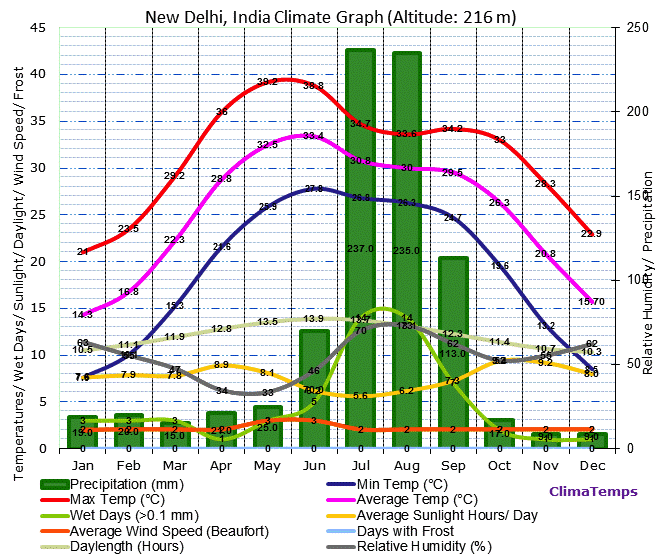
We can see that the climate there is the opposite of the climate in India...

Because water buffalos mating season starts in Oct/Nov, at the start of the rain season, buffalos are on Mesopotamian seals used as animal calendar markers for the beginning of the wet season...

And are depicted drinking from a jar overflowing with water. I talked about this scene in my post "Buffalo licking jar" in which I analysed this Akkadian cylinder seal from the 3rd millennium BC...

BTW, it is the similarity between this Akkadian seal and the original buffalo rider seal, that makes me doubt very much if the original seal is Achaemenid seal at all...

The jar the buffalos are drinking from is the same jar held by Enki/Ea, the god (of the) the source of the rivers Tigris and Euphrates. It symbolically represents Abzu, the source of Tigris and Euphrates...Which is said to be (where) Enki (resides)...

And that source are the mountains north and east of Mesopotamia...Check this article and the linked articles for more info about Enki, who is (in) Abzu, the source of all sweet water...

Why did so many Mesopotamian "Supreme" gods have an attribute "The Great Mountain"? Cause they all wanted to be Enki...But there is only one Enki, who is (in) Abzu, "place that is a big mountain"...All the others are just imposters...I talked about this in my post "The great imposter"

Back to buffalo as an animal calendar marker. The calendar marker is derived from the time buffalos mate. Which is always at the same time, from Oct/Nov. But because of the opposite climates in Mesopotamia and India, opposite mythological meanings got associated with buffalos...

So, Zoroaster said that "daevas" were "wrong" or "false" gods that should be rejected...Were Iranian "daevas" actually Indian "devas"? And if so, what could have turned devas (good guys) into daevas (bad guys)??? Well, the opposite climate of course...I talked about this in my post "Devas vs Daevas"...


Finally, lets get back to our original seal. 

And the comment from @another_barbaraThe buffalos are in fact standing on a muddy field - just like the etymology of the word kambala says. Kambala is derived from 'Kampa-Kala ' the word 'Kampa' is related slushy, muddy field...And the fields get slushy, muddy in Mesopotamia when the rains arrive...In Oct/Nov...When buffalos start to mate...

To read more about ancient animal and plant calendar markers, start here…then check the rest of the blog posts related to animal calendar markers I still didn't add to this page, and finally check my twitter threads I still didn't convert to blog post...I am 9 months behind now...

Friday, 23 February 2024

Two lions killing bull

Pre-Achaemenid Silver Compound Zoomorphic Vessel. Silver, 8th-6th c. BC. Currently in the Miho Museum, Japan

This unusual vessel features a pair of rampant lions, interlocked forelegs on each other's shoulders, standing on a prone bull...

The lion that treads on the bull's head has a round opening in the back of its snarling mouth that serves as a spout. The second lion has a small circular hole in its head through which the vessel can be filled. This hole was once sealed with a now missing stopper...

Wow...Really cool...But what does this all mean? The museum page says: "The absence of any clear religious imagery suggests that this object has a political or dynastic symbolism"....I would beg to differ...🙂

Bull and Lion are two of the 4 most common symbols of the seasons:

Ram, marks lambing of Eurasian wild sheep

Bull, marks calving of Eurasian wild cattle

Lion, marks mating of Eurasian lions

Goat, marks mating of Eurasian wild goats

I talked about this in my post "Symbols of the seasons"...

Taurus (Apr/May), originally had nothing to do with stars. It is the ancient animal calendar marker marking the beginning of the calving season of the Wild Eurasian cattle...I talked about it in these (and many other) articles:  "Ram and bull" "Cow and calf ivory"...

Leo (Jul/Aug), originally had nothing to do with stars either. It is the ancient animal calendar marker marking the beginning of the mating season of the Asiatic lions. I talked about this in these (and many other) articles: "Lion radiating heat", "Mahishasuramardini"...

And here is something interesting that I only found out today: As opposed to the African lions, who live in mixed male female groups, Asiatic male lions live separately, in groups of (mostly) two, and they only mix with females during mating season. You can read about it in this Nature article...

Lion killing bull is an ancient (religious) symbol...More precisely, ancient deified calendar marker for the end of Jul, beginning of Aug. When autumn (Aug/Sep/Oct, starts in Leo, Jul/Aug) ends (Kills) summer (May/Jun/Jul, starts in Taurus, Apr/May)...

Silver vessel in the form of a lion killing a bull. Western Iran, 7th-6th c. BC. Exhibition "Splendours of the Ancient East: Antiquities from the Al-Sabah collection"...

We find this scene depicted throughout the part of Eurasia where Asiatic (actually Eurasian) lions once lived. So what is so amazing about Jul/Aug that it's animal calendar marker deserved to be deified? Check these two charts. What happens in Jul/Aug?


This is Nergal, the deified destructive "burning" sun, was depicted as a lion man, because Jul/Aug, Leo, is the hottest and driest part of the year in Mesopotamia...Talked abut him in my post "Winged superhuman hero"...

That lion killing bull was a calendar marker became crystal clear to me when I saw this: composite Bull-Lion, bronze, Iran, 1500-1000 BC. Currently in the Cleveland Art Museum. The meaning of this object is unknown. It is presumed that it has served as an object of worship in a temple or shrine...I talked about this object in my post "Bull lion"...

Worship of who? Shamash (Sun) of course...As Nergal, in Jul/Aug, the point when summer (bull) and autumn (lion) meet (one body with two heads)... 

Now what is interesting is that for later Achaemenid Persians, Nergal, The Lion Man, became "Angra Mainyu", The Devil...I talked about this in my post "Angra Mainyu"

Which had to be killed...

Why were Persian kings so obsessed with killing lions? Well they were't really killing lions. They were symbolically killing dry season...Which starts in Apr/May, Bull, peaks in Jul/Aug, Leo and ends in Oct/Nov, Scorpio/Eagle...I talked about it in my post "King killing Angra Mainyu".


You can read more about the religious symbolism of the Lion killing Bull scene in these articles:

"Mystery seal", "Cypriot stamp seal with cow and calf", "Black basalt stone of Esarhaddon", "Angra Mainyu", "Bull leaping in Syria", "Lion killing bull under date palm", "Butt chewing"

And so...Just another lion killing bull scene, with a twist? 

To read more about ancient animal and plant calendar markers, start here…then check the rest of the blog posts related to animal calendar markers I still didn't add to this page, and finally check my twitter threads I still didn't convert to blog post...I am 9 months behind now...

Wednesday, 21 February 2024

Basalt water basin from Assur

God of fresh water and annual flood Ea/Enki flanked by fish-cloaked Apkallus. Part of the 7th century BC basalt water basin from Assur, Iraq. Pergamon Museum, Germany...


Ea/Enki is often depicted as the source of the two great rivers, Tigris and Euphrates, which either flow out of his shoulders, or out of a cup that he holds in his hands...Enki is (in) Abzu, The Northern mountains/highlands, the source of Tigris and Euphrates...

I love the fact that on the relief from the water basin from Assur, the water is depicted flowing out of the "jugs" in the sky (rain), into the "jug" held by Enki/Ea (Abzu, mountains/highlands which are source of Tigris and Euphrates) and then out of it as two great rivers...

What about the fish dudes?

Fish are often depicted swimming towards Enki. I talked about this in my posts "Adda seal", "Goatfish", "Utu and Enki"...

These are giant Mesopotamian carps, migratory fish which migrate upstream, towards Enki who is (in) Abzu, the source of Tigris and Euphrates, for spawning during the flood...Hence the expression "carp flood" found in Mesopotamian texts...


These were then seen as Enki's messengers, and on the Stella of the Vultures, we can read that they were "sent with messages to Enki"...You can read about this in my post "Goatfish".

These giant fish were eventually turned into Apkallu, which are on the Assur basin seen "facing" Enki. Apkallu were seen as proxies through whom Enki, the god of wisdom and civilisation, established civilisation in Lower Mesopotamia...Basically Neolithic settlers from Anatolia...I talked about them in my post "Apkallu"...
 

So that wasn't so difficult to understand, right? Well if you know what animal calendar markers are and how to interpret them...

Oh and what about the things Apkallu are holding in their hands? They are buckets. Containing "holy" water. Which is then sprinkled by Apkallu using a pine cone.  

Pine cone is a plant calendar marker for Oct/Nov. Because this is when pine nut harvest starts in Eastern Mediterranean and Western Asia...


Pine nut harvest season

Oct/Nov is also when the rain (holy water) season starts in Eastern Mediterranean and Western Asia...Including Mesopotamia...


Sprinkling of holy water (usually on a tree of life) from the water bucket then becomes extremely symbolically important...

To read more about ancient animal and plant calendar markers, start here…then check the rest of the blog posts related to animal calendar markers I still didn't add to this page, and finally check my twitter threads I still didn't convert to blog post...I am 9 months behind now...

Feast plaque from Louvre

Another amazing object I discovered during the 5 hour long stroll I took with my son through the Mesopotamian section of the Louvre museum last weekend. 

Perforated votive limestone plaque, Mesopotamia (where?), ca. 2700-2650BC...Currently kept in Louvre...

The official description: 

"...decoration is arranged in three registers. 

A banquet scene occupies the first register...

In the second register, a stag and ox are placed on either side of the central perforation. 

A banquet scene in a boat occupies the third register..."

So what's so amazing about this?

First amazing thing is that the museum curators didn't identify the two animals depicted between the two banquet scenes correctly. 

The animal on the left is not a stag. It's an ibex goat. And the animal on the right is not an ox. It's a calf...

VERY VERY IMPORTANT...How can you expect to correctly interpret what is depicted on this object, if you don't identify the correctly what is actually depicted on it. 

Oh wait, they never attempted to interpret what was depicted on this object...

So let me try to do it...

But really, this object is amazing because it connects three other objects I talked about earlier, and basically links all the symbols depicted on these objects together...

First object is this perforated votive limestone plaque, from the same period (and most likely the same area) as our original votive limestone plaque. I talked about it in my post "Green pastures"...


It too depicts a banquet scene in its top register. The other two registers depict two ibex goats and two calves, two very important animal calendar markers used extensively in Mesopotamia...

According to the paper "God or worshiper", the first "banquet" scene actually depicts worshipers in front of Abu the god of green pastures, and his consort, goddess of fertility...But this paper says nothing about goats and calves...

What goat and bull calf depict are beginning and end of the fertile, bountiful, time of the year in Mesopotamia, the cool, wet half, winter, which starts in Oct/Nov (ibex goats mating) and ends in Apr/May (auroch cattle calving). The time of plenty, the party time...


I talked about ibex goat as an animal calendar marker in many posts, such as, "Problems with Abzu", "Relief from Dur Sharrukin", "Goatfish", "Flamingos from Susa", "Goat carrier", "Iranian goat of rain", "Strider", "A vessel from Tepe Hissar"... 

I talked about bull/calf as an animal calendar marker in many posts, such as, "Foundation peg of the goddess Nanshe", "Cow and calf ivory", "Butt chewing", "Bulls and grain bowls", "How grain came to Sumer", "Bull leaping in Syria"...

Anyway, the second object is this seal, dated to 2300–2150BC, depicting Enki, god of fresh water and the annual flood, in a boat. 


In my article "Enki's little boat", I explained why Enki's boat is actually the symbol for the annual flood. 

The third object is this seal, from the same period as he previous one, also depicting Enki's flood boat, but this time, above the boat we have an ibex goat and an auroch bull...


In my article "Rain and flood" I explained the relationship between these two animal calendar markers and the annual flood. 

"By hand Winter guided the spring floods, the abundance and life of the Land..." 

This is climate chart for Southern Mesopotamia...


Winter, cool, wet, fertile half of the year in Mesopotamia starts in Oct/Nov (ibex goats mating) and ends in Apr/May (auroch cattle calving)

And as I said, this last votive plaque links all these objects and the symbols depicted on them together. 

Top: God of green pasture and goddess of fertility?

Middle: animal calendar markers marking the beginning and end of winter

Bottom: Enki, God of annual flood in his procession boat. Enki who was also known as Goat of Abzu and Bull of Abzu...And of course before me, no one knew why...Sad...I know I am not that smart...I talked about this procession boat in my post "Problems of the Abzu"...

All having a splendid party, party, party time...Between goat and bull calf...

PS: I am looking at this plaque for the first time since I wrote the article. There are few things I have learned since. 

What looks like a bull (Sun god Shamash in Taurus) ceremonial lyre is being played cause flood arrives in Apr/May.

A lyre player from "The Standard of Ur", a Sumerian artefact dated to c. 2550 BC. These bull headed lyres were ceremonial instruments. This is obvious from the fact that the Sumerian sign for lyre also means "to praise." 

But praise who? And why? Utu (Shamash) of course. Cause it is the sun's heat that melts the snow on the North-Eastern mountains (Abzu) which causes the annual flood which peaks in Taurus (Apr/May)...


I talk about this in my post "Lyres of Ur"...

There are carps swimming in the direction of the (flood) boat on the votive plaque. The annual flood was known as "The Carp flood", cause during the flood, giant Mesopotamian carp migrate upstream for spawning. 

This is why Ea/Enki was often depicted with streams full of fish swimming towards him.

This is also why Goatfish is the sacred animal of Enki, the Sumerian god of fresh water. Goatfish is a complex animal calendar marker for the wet half of the year in Mesopotamia...Between the mating season of wild goats and the mating season of giant Mesopotamian carps...

I talk about this in my post "Goatfish"...

This is also why we find carp (men), Apkallu, as Ea's/Enki's henchmen/messengers...

I talk about this in several of my posts: "Apkallu", "Basalt water basin from Assur", "Kassite seal with Apkallu"...

To read more about ancient animal and plant calendar markers, start here…then check the rest of the blog posts related to animal calendar markers I still didn't add to this page, and finally check my twitter threads I still didn't convert to blog post...I am 9 months behind now...