Showing posts with label climate. Show all posts

Saturday, 24 February 2024

Kambala

"Achaemenid (?) cylinder seal, 5th c. BC, depicting a squatting female (?) figure holding a pair of long horned cattle (?) by the tips of the horns; between the cattle a vase with water and plants coming from the top".

Full analysis:

First, I don't think this is a female figure...Judging my the big boner and the big muscles, this is a male figure...

Second, I don't think these animals are cattle...Judging by the horns, these are wild water buffaloes...


Third, I don't think this is an Achaemenid cylinder seal. I don't think Persians depicted naked heroes on their seals...So hmmm, hmmm and hmmm about the description. 

But there is something really interesting about the scene depicted on this seal: a man riding two buffaloes...

The same scene can be seen every year in the southwestern Indian state of Karnataka...

I am talking about Kambala, the annual buffalo race which takes place between Nov and Mar...  

I think that the race most likely originally only took place in Nov, because this is the time right after the kharif rice harvest season, and just before the rabi rice plowing and planting season...Check the rice agricultural calendar for India...

BTW, If you are wandering what kharif and rabi seasons are, check this article out...

Depiction of the Kharif (wet) season (May to November)  and the Rabi (dry) season (November to May) through animal and plant calendar markers on an Indus Valley civilisation vase...I talked about this in my post "Kharif and Rabi season"...

Interestingly, the water buffalo is an ideal animal calendar marker for marking the end of the kharif (wet) season and rabi (dry) season. This is because buffaloes are seasonal breeders in most of their range, and typically bread starting from Oct/Nov...


It is the wet season that brings life and prosperity to India, which are in Indian mythology attributed to devas. This is why buffalo, the animal calendar marker which marks the beginning of the dry season, became  "buffalo demon", the enemy of devas...I talked about this in my post "Proto Durga" about this clay tablet from Harappa with a "narrative scene"...

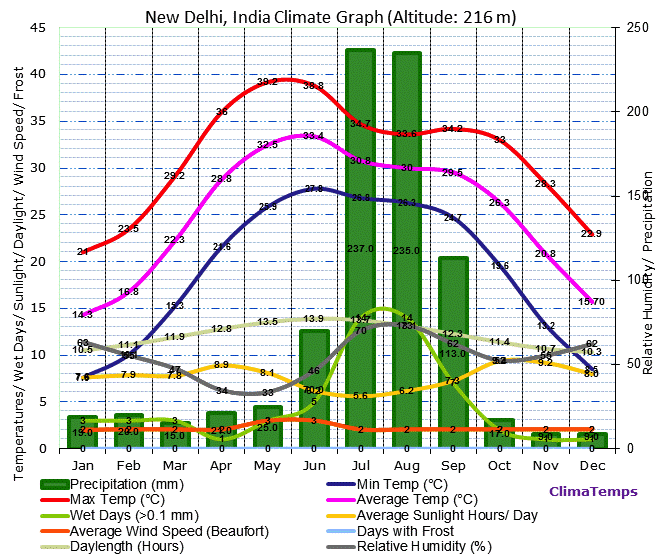
Now if we look at the climate in Mesopotamia, where our buffalo rider seal was made. 


We can see that the climate there is the opposite of the climate in India...

Because water buffalos mating season starts in Oct/Nov, at the start of the rain season, buffalos are on Mesopotamian seals used as animal calendar markers for the beginning of the wet season...

And are depicted drinking from a jar overflowing with water. I talked about this scene in my post "Buffalo licking jar" in which I analysed this Akkadian cylinder seal from the 3rd millennium BC...

BTW, it is the similarity between this Akkadian seal and the original buffalo rider seal, that makes me doubt very much if the original seal is Achaemenid seal at all...

The jar the buffalos are drinking from is the same jar held by Enki/Ea, the god (of the) the source of the rivers Tigris and Euphrates. It symbolically represents Abzu, the source of Tigris and Euphrates...Which is said to be (where) Enki (resides)...

And that source are the mountains north and east of Mesopotamia...Check this article and the linked articles for more info about Enki, who is (in) Abzu, the source of all sweet water...

Why did so many Mesopotamian "Supreme" gods have an attribute "The Great Mountain"? Cause they all wanted to be Enki...But there is only one Enki, who is (in) Abzu, "place that is a big mountain"...All the others are just imposters...I talked about this in my post "The great imposter"

Back to buffalo as an animal calendar marker. The calendar marker is derived from the time buffalos mate. Which is always at the same time, from Oct/Nov. But because of the opposite climates in Mesopotamia and India, opposite mythological meanings got associated with buffalos...

So, Zoroaster said that "daevas" were "wrong" or "false" gods that should be rejected...Were Iranian "daevas" actually Indian "devas"? And if so, what could have turned devas (good guys) into daevas (bad guys)??? Well, the opposite climate of course...I talked about this in my post "Devas vs Daevas"...


Finally, lets get back to our original seal. 

And the comment from @another_barbaraThe buffalos are in fact standing on a muddy field - just like the etymology of the word kambala says. Kambala is derived from 'Kampa-Kala ' the word 'Kampa' is related slushy, muddy field...And the fields get slushy, muddy in Mesopotamia when the rains arrive...In Oct/Nov...When buffalos start to mate...

To read more about ancient animal and plant calendar markers, start here…then check the rest of the blog posts related to animal calendar markers I still didn't add to this page, and finally check my twitter threads I still didn't convert to blog post...I am 9 months behind now...

Saturday, 17 February 2024

River in the sky

The Derveni papyrus is an ancient Greek papyrus roll, dated to 340 BC, containing an allegorical commentary on an Orphic poem, a theogony concerning the birth of the gods, produced in the circle of the philosopher Anaxagoras...

And in it, we find this...

"...It is unclear to the many, but quite clear to those who have correct understanding, that Oceanus is the air and that air is Zeus...But the ignorant ones think that Oceanus is a river, because he adds 'wide-flowing'..."


Eeeee what???? Oceanus, the biggest river, the source of all water, is in the air and is Zeus (rain)???? How can we possibly interpret this???

Well....Ever heard of Atmospheric river?

A giant river, the biggest river on earth, flowing in the sky, with many channels, the source of all the rain and the source of all water in all the earthly rivers...

Some of these channels reaching Europe too...

So is this what the authors of the Derveni papyrus are talking about? If so, and I do think so, then that means that those Orphic dudes knew some serious shit...

Monday, 5 February 2018

Yin and Yang

In Chinese philosophy, yin and yang, literally dark and bright, describe how seemingly opposite or contrary forces may actually be complementary, interconnected, and interdependent in the natural world, and how they may give rise to each other as they interrelate to one another.


Yin is characterized as slow, soft, yielding, diffuse, cold, wet, dark, and passive; and is associated with water, winter, north, earth, the moon, femininity, and nighttime.

Yang, by contrast, is fast, hard, solid, focused, hot, dry, bright, and active; and is associated with fire, sky, summer, the sun, masculinity and daytime.

Duality is found in many belief systems, but yin and yang are parts of a Oneness that is also equated with the Tao. The term "dualistic-monism" or dialectical monism has been coined in an attempt to express this fruitful paradox of simultaneous unity/duality. Yin and yang can be thought of as complementary (rather than opposing) forces that interact to form a dynamic system in which the whole is greater than the assembled parts. Everything has both yin and yang aspects. Either of the two major aspects may manifest more strongly in a particular object, depending on the criterion of the observation. This constant balanced interplay of yin and yang is known as "Taiji". The concept of Taiji is first found in written sources in works of Zou Yan (305 – 240 BC) who was an ancient Chinese philosopher best known as the representative thinker of the Yin and Yang School (or School of Naturalists) during the Hundred Schools of Thought era in Chinese philosophy..

Taiji is graphically represented by the symbol known as "Taijitu" or "Taiji tu" meaning Taiji symbol, which is more commonly known simply as Yin - Yang symbol:


Yin is the black side with the white dot in it, and yang is the white side with the black dot in it.

The oldest preserved drawing of this symbol in China appears in the works of the Song era philosopher Zhou Dunyi (1017–1073 AD), author of the "Taijitu shuo" (Explanation of the Diagram of the Taiji), which became the cornerstone of Neo-Confucianist cosmology. His brief text synthesized aspects of Chinese Buddhism and Taoism with metaphysical discussions in the Yijing. 

What is the origin of this symbol?


In a work entitled "A Geomedical Approach to Chinese Medicine: The Origin of the Yin-Yang Symbol" which was published in 2012 by Stefan Jaeger, we can read that:

The Yin-Yang symbol is tightly connected with the annual cycle of the earth around the sun,and the four seasons resulting from it. Using the gnomon , a pole stuck in the ground the ancient Chinese were able to record precisely the position and the length of the sun’s shadow throughout the solar year.


This enabled them to precisely determine the length of the year, which they found to be about 365.25 days. Furthermore, they divided the circle of the year into segments, including the vernal equinox,autumnal equinox, summer solstice, and winter solstice. In addition, they used concentric circles around the pole, helping them to record the length of the sun’s shadow every day. As a result, they measured the shortest shadow during the summer solstice, and measured the longest shadow during the winter solstice. After connecting the measured points and dimming the part that reaches from summer solstice to winter solstice (Yin), they arrived at a chart like this one:


The resemblance between this chart and the modern Taichi-tu or Yin-Yang symbol is striking. This diagram provides visual evidence that the original Yin-Yang symbol describes the change of a pole’s shadow length during a year. This corresponds well with the meaning of "Taiji" in Chinese which is "Great pole"...

Now this is an amazing explanation for the origin of Taiji. Except that there is one problem with it. The above Taiji like shadow diagram shows the shadow change at the 70° latitude north. Latitude represents the angle from the equator. Now this is the globe with some of the latitudes marked on it.


The Arctic Circle lies at the latitude 66° 33´.


So the only way Ancient Chinese astronomers could have gotten the Taiji like shadow diagram would have been if they had their gnomon stuck into the ground somewhere in northern Siberia. Which is highly unlikely to have happened. If they had their gnomon stuck into the ground anywhere in China, the resulting shadow diagram would have looked something like this:


I mean you can see the resemblance to the Taiji symbol but it is definitely far away from this, shadow diagram at the 70° latitude:

Anyway the thing is, the article is right in one thing:  

The Yin-Yang symbol is tightly connected with the annual cycle of the earth around the sun, and constantly changing daily amount of light and darkness and the effect this change has on Earth's temperature.

In astronomy, axial tilt, also known as obliquity, is the angle between an object's rotational axis and its orbital axis, or, equivalently, the angle between its equatorial plane and orbital plane. Earth currently has an axial tilt of about 23.4°.


Earth's axis remains tilted in the same direction with reference to the background stars throughout a year (regardless of where it is in its orbit). This means that one pole (and the associated hemisphere of Earth) will be directed away from the Sun at one side of the orbit, and half an orbit later (half a year later) this pole will be directed towards the Sun. This is the cause of the lengthening of the day from winter solstice to summer solstice and the shortening of the day from summer solstice to winter solstice. 


Now you would think that the earth's temperature would also increase from winter solstice to summer solstice and decrease from summer solstice to winter solstice. But this is not the case. 

This is Sun's sunlight cross. It marks the transitional points on the sunlight cycle in the northern hemisphere:

1. Winter solstice - the shortest day and the longest night
2. Spring equinox - the equal day and night
3. Summer solstice - the longest day and shortest night
4. Autumn equinox - the equal day and night


This is Earth's, climate, vegetation cross as recorded in Celtic and Serbian calendar. It marks the transitional points of the climatic, vegetative cycle in the northern hemisphere:

Celtic calendar:

1. Imbolc- the beginning of the spring
2. Bealtaine - the beginning of the summer
3. Lughnasa - the beginning of the autumn
4. Samhain - the beginning of the winter


Serbian calendar:

1. St Sava - the beginning of the spring
2. St George - the beginning of the summer
3. St Ilija - the beginning of the autumn
4. St Mitar - the beginning of the winter


As you can see the sun cross and earth cross are out of sync. The earth cross is rotated forward by 45 degrees and the earth circle cardinal points fall right in between the sun circle cardinal points. This is because the earth climatic, vegetative cycle lags behind the solar cycle. 

I talked about this in detail in my post "Two crosses". At the end of that post I drew this diagram showing transformation of Sun's light cycle into Earth's temperature, climatic, vegetative cycle. 

The Sun cross transitions into the Earth cross. This transition is governed by the slow accumulation and release of the heat which is transferred from the Sun to the Earth through sunlight...


This is the never ending wheel of life...

And then two days ago while I was having a discussion about Celtic calendar, I had people say to me:

"How can 1st of February, Imbolc, be the first day of spring? I have foot and a half of snow on the ground all around me and its freezing. This makes no sense..."

I replied that the first day of spring is the first day of spring, not because it is warm, but because it can't get any colder. The 1st of February, actually the 4th of February, the real Imbolc, the mid point between the Winter Solstice and the Spring Equinox, is the coldest part of the year on the northern hemisphere.  This is due to the way the Sun - Earth system works. So even though on the day of the Winter Solstice the days start getting longer, they continue to get colder. Until the 4th of February, the mid point between the Winter Solstice and the Spring Equinox. From that day on, the Earth starts getting warmer.

It is exactly the same on the opposite side of the year. The first day of autumn is the first day of autumn, not because it is cool, but because it can't get any hotter. The 1st of August, actually the 2nd of August, the real Lughnasadh, the mid point between the Summer Solstice and the Autumn Equinox, is the hottest part of the year on the northern hemisphere. This is again due to the way the Sun - Earth system works. So even though on the day of the Sumer Solstice the days start getting shorter, they continue to get wormer. Until the 2nd of August, the mid point between the Summer Solstice and the Autumn Equinox. From that day on, the Earth starts getting cooler.

As I was writing this, something clicked. What I just wrote sounded very familiar. Very very familiar.     

And then something clicked. 

The Yin - Yang diagram.


The winter solstice, the beginning of the lengthening of the day, is the white dot in the middle of the black part of the diagram. It is the seed of light in the middle of the darkest part of the year. But even though the days start lengthening, the weather gets colder until the mid point between the winter solstice and spring equinox. Imbolc, the beginning of the spring and the time of maximum cold...

The summer solstice, the beginning of the shortening of the day, is the black dot in the middle of the white part of the diagram. It is the seed of darkness in the middle of the whitest (lightest, brightest) part of the year. But even though the days start shortening, the weather gets wormer until the mid point between the summer solstice and autumn equinox. Lughnasadh, the beginning of the autumn and the time of maximum heat...

This endless cyclical change of the duration of the day and night is what is seen as the endless cyclical interplay between the light (Yang) and darkness (Yin) which heats (Yang) and cools (Yin) the Earth and creates seasons and makes life possible.

This endless cyclical change is possible because of endless cyclical interplay between Father Sky (Sun) and Mother Earth which is at the core of the old European belief system.

In Serbian tradition the Father Sky and Mother Earth are known as:

Father Sky:

Dajbog - giving god
Djed - grandfather, male ancestor
Triglav - three headed male god. He consisted of Jarilo (sun as a young man), Vid (sun as an adult, husband), Perun (sun as an old man, grandfather).

His characteristics were light, heat, dryness. He dominated the white (light, bright) part of the year and was most powerful in the middle of this period, at the end of the summer and the beginning of autumn which is the hottest and driest period of the year.

Mother Earth:

Dajbaba - giving goddess
Baba - grandmother, female ancestor
Troglava - three headed female goddess. She consisted of Vesna (earth as young girl), Mokoš (earth as an adult woman, wife), Morana (earth as an old woman, witch).

Her characteristics were darkness, cold, wetness. She dominated the dark part of the year and was most powerful in the middle of this period, at the end of the winter and the beginning of spring which is the coldest and wettest part of the year.

At their maximum power, both Father Sky (Sun) and Mother Earth are destructive. The Father Sky (Sun) on his own would turn the world int a dead hot dry desert (pure Yang). The Mother Earth on her own would turn the world into a dead cold wet desert (pure Yin). 

It is the eternal dynamic interplay (Taiji) between the Sky (Sun) - (light, heat, dryness) Yang and the Earth - (darkness, cold, wetness) Yin, the intercourse between the Father Sky (Sun) and Mother Earth, which makes life possible. And this interplay is perfectly depicted by the Taijitu or Yin - Yang diagram.

But is this all just a coincidence? I don't know, but I know that the Yin - Yang (darkness - light) symbol perfectly depicts only one process that I know of: This endless cyclical change of the duration of the day and night which causes endless cyclical change of the heating (Yang) and cooling (Yin) of the Earth. I don't really know any other system which behaves in the way described by the Yin - Yang symbol. Do you? If you do please let me know what that process is.

Very interesting right? 

Well here is something even more interesting. These are two granary "shrines" from Old European Cucuteni–Trypillia culture which thrived between 5200 BC and 3500 BC in Eastern Europe covering the region from the Carpathian Mountains to the Dniester and Dnieper regions, centred on modern-day Moldova and covering substantial parts of western Ukraine and northeastern Romania.


And this is the decoration engraved on the wall of one of these granary "shrines":


Is this the Yin - Yang symbol? And if it is, do you think the ancient Tripillian's tried to depict the same process that I just described? After all, granaries are only full because of the intercourse of the  Mother Earth and Father Sky (Sun), Yin and Yang...And if the Tripillians already invented the Yin - Yang symbol during European Neolithic, is it possible that it was somehow transferred to the East over the following millenniums?

Or maybe this is just a similar looking symbol which has nothing really to do with Yin - Yang symbol?


Friday, 1 January 2016

Partholon and the great flood

Storm Frank causing havoc across the country

This is a headline form one of the Irish newspapers. Storm Frank is the sixth to hit Ireland since the start of the winter. Huge areas or arable land are under water an so are thousands of houses in towns close to coast, rivers and lakes. These are just some of the images that show the extent of devastation caused by the cumulative effect of this winter's bad weather.


I feel so sorry for all the poor people who are currently being literally flooded out of their houses. And this is not the first year that Ireland has been experiencing such bad weather. I think that this is now third or fourth winter in a row that Ireland has been battered by storms and if it continues like this, a lot of areas in Ireland will become unsuitable for human habitation and will have to be evacuated. And there is very little anyone can do....

Looking at the above images reminded me of something I read in the old Irish annals. 

The old Irish annals tell us that the first race that lived in Ireland were Fomorians. Then the flood came. Then, after the flood, came the people of Partholón. 

In the "Annals of four masters" we find these comments regarding the life of Partholon and his people in Ireland:

From the Deluge until Parthalon took possession of Ireland 278 years....

The age of the world, 2520 (2680 BC) Parthalon came into Ireland

The Age of the World, 2545 (2655 BC) Rudhruidhe, son of Parthalon, was drowned in Loch Rudhruidhe, the lake having flowed over him; and from him the lake is called.

The Age of the World, 2546 (2654 BC) An inundation of the sea over the land at Brena in this year, which was the seventh lake eruption that occurred in the time of Parthalon; and this is named Loch Cuan.

The Age of the World, 2820 (2380 BC) Nine thousand of Parthalon's people died in one week on Sean Mhagh Ealta Edair, namely, five thousand men, and four thousand women. Whence is named Taimhleacht Muintire Parthaloin. They had passed three hundred years in Ireland. Ireland was thirty years waste till Nemed's arrival.


The Age of the World, 2850 (2350 BC) Nemed came to Ireland.

Seathrún Céitinn's Foras Feasa ar Érinn says that Patholon arrived to Ireland in 2061 BC, Annals of Four Masters says that they arrived at 2680 BC. So basically Partholon arrived sometimes in the second half of the 3rd millennium. 

It seems that Partholon and his people also perished in another flood 300 years after they arrived to Ireland which was 300 (278) years after the great flood. Maybe this second flood was another local weather event, like what we are seeing this winter in Ireland. But maybe the above descriptions are actually describing "the flood" and the dates and names got somehow mixed up in some of the Irish annals over the millenniums. I believe that the later could be the case considering that the two Irish annals that talk about the arrival of Partholon give drastically different arrival dates. Seathrún Céitinn's Foras Feasa ar Érinn says that Patholon arrived to Ireland in 2061 BC, Annals of Four Masters says that they arrived at 2680 BC. But also because we actually know when the "great flood" actually did hit Ireland. 

In the book "The Secrets of the Irish Landscape" we read that according to the dendrochronological research done in Ireland on Irish bog Oaks in the Lough Neagh area, during the period between 2354 BC and 2345 BC the oaks completely stopped growing and showed bark changes which indicate that they were submerged in water. 


It seems that it started to rain and it didn't stop for 10 years. This probably caused complete collapse of agriculture and famine. And the end of what ever culture existed in Ireland at the time. It is very interesting that the date of this catastrophic weather event falls, according to the Annals or Four Masters, right after the date of the demise of Partholon's people and the date of the arrival of Neimhid. So was this "a flood" or "the flood"?

Believe or not, the Ussher chronology, a chronology of the history of the world, which was written by James Ussher, the Archbishop of Armagh (Church of Ireland) in the 17th-centurygives in its list of dates2348 BC as the date for the biblical flood. This date falls right in the middle of the above major weather event. Ussher claimed that he determined the date of the flood from a literal reading of the Bible. But did he actually use Irish annals instead? And if so did he mistook a local Irish flood for the "biblical" global flood? Is there another record of a great flood that happened around 2348 BC? Well there is actually. 

Ancient Chinese records recorded a "great flood" which occurred at exactly the same time. They say that during the reign of the First Emperor, Yao, who came to the throne in 2357 BC,  there were "huge floods that overtopped the mountains".


The floods started in the 12th year of his reign (2346 BC) and lasted for 9 years. This corresponds almost exactly with the actual dendrochronological records from Ireland.

Now let me make something clear here. One of my friends said in his comment on my article: "there have been innumerable local 'floods' throughout history and pre-history, of course, and they would seem global to those being flooded- but a global flood is a scientifically impossible event. There is simply not enough water on Earth for such a thing to occur, and there never has been."


I actually agree with this. The problem is in what people understand when they read "global flood". The flood can be global if there is a global weather event which causes intensive long term rain which inundates the rivers and lakes. Both Irish, and Chinese sources talk about huge local floods, not global submersion. And for Ireland we actually have dendrochronological records that prove that this actually happened during the period 2354 - 2345 BC. Biblical flood could have been just the description of the same thing in the near east. The weather event was global, and we have proof of this from around the world and we have the records of this event with dating from the Irish and the Chinese annals which correspond to the actual dendrochronological records. So it is possible to have a global weather event which can cause large local floods globally. 

This event was probably caused by the fragmented asteroid or comet impact, which caused a kind of "nuclear winter" which lasted for 9 years. It also caused the emergence of the belief in the stone sky, firmament. I will talk about the belief in the stone sky in one of my next posts.

Anyway back to Irish floods.

Soooo.....

What happened exactly in Ireland around the time of the great flood? 

Well there are two possible scenarios. 

The first scenario is that Partholon and his people did arrive to Ireland in 2680 BC as the Annals of Four Masters says. They spent 300 years in Ireland and perished during the great flood (2354 - 2345 BC). Well maybe not all of them perrished. The Irish annals say that after the people of Partholon died out, Ireland "thirty years waste" until Nemed arrived with his people. Nemed was said to have been the descendant of Tait, Partholon's brother. If the people of Partholon were skilled sailors, miners, metalworkers and traders, they probably kept contact with their old country, probably even regular trade contacts. So maybe when Ireland was devastated during the flood, the refugees from Ireland went back down south, maybe back to Montenegro, or even further back to Pontic region. 

The second scenario is that Partholon and Nemed arrived together, but not in 2680 BC as the Annals of Four Masters says, but in 2061 BC as Seathrún Céitinn's Foras Feasa ar Érinn says. This would then fit the first entry about Partholon: "From the Deluge until Parthalon took possession of Ireland 278 years...."

If "the flood" was in the period 2354 - 2345 BC, then 278 (300) years after "the deluge" is 2076 BC (2054 BC) -  2067 BC (2046 BC) . The date that the Seathrún Céitinn's Foras Feasa ar Érinn gives as the date when Patholon arrived to Ireland, 2061 BC, falls right into this interval. This is very interesting. 


Both scenarios correspond well with the dates of the Montenegrian tumuluses containing the golden cross discs (3000 - 2700 BC) and with the dates of the golden cross discs found in Ireland (2500 - 2200 BC).

So did Partholon arrive to Ireland before or after the great flood? What do you think? The thing is this is not even the most important thing. The most the important thing here is that the Irish annals preserved the date of this flood pretty accurately for almost four and a half thousand years...Think about it. 3500 years of oral history only recorded 1000 years ago...Not myth, history...How many other examples of this do we have around? 

I will talk more about this in my future posts. 

In the meantime I want to recommend the book "Climate Development and History of the North Atlantic Realm" by Gerold Wefer in which he explores these climate events and their causes. It is a very interesting read.