Showing posts with label Achaemenid. Show all posts

Friday, 23 February 2024

Two lions killing bull

Pre-Achaemenid Silver Compound Zoomorphic Vessel. Silver, 8th-6th c. BC. Currently in the Miho Museum, Japan

This unusual vessel features a pair of rampant lions, interlocked forelegs on each other's shoulders, standing on a prone bull...

The lion that treads on the bull's head has a round opening in the back of its snarling mouth that serves as a spout. The second lion has a small circular hole in its head through which the vessel can be filled. This hole was once sealed with a now missing stopper...

Wow...Really cool...But what does this all mean? The museum page says: "The absence of any clear religious imagery suggests that this object has a political or dynastic symbolism"....I would beg to differ...🙂

Bull and Lion are two of the 4 most common symbols of the seasons:

Ram, marks lambing of Eurasian wild sheep

Bull, marks calving of Eurasian wild cattle

Lion, marks mating of Eurasian lions

Goat, marks mating of Eurasian wild goats

I talked about this in my post "Symbols of the seasons"...

Taurus (Apr/May), originally had nothing to do with stars. It is the ancient animal calendar marker marking the beginning of the calving season of the Wild Eurasian cattle...I talked about it in these (and many other) articles:  "Ram and bull" "Cow and calf ivory"...

Leo (Jul/Aug), originally had nothing to do with stars either. It is the ancient animal calendar marker marking the beginning of the mating season of the Asiatic lions. I talked about this in these (and many other) articles: "Lion radiating heat", "Mahishasuramardini"...

And here is something interesting that I only found out today: As opposed to the African lions, who live in mixed male female groups, Asiatic male lions live separately, in groups of (mostly) two, and they only mix with females during mating season. You can read about it in this Nature article...

Lion killing bull is an ancient (religious) symbol...More precisely, ancient deified calendar marker for the end of Jul, beginning of Aug. When autumn (Aug/Sep/Oct, starts in Leo, Jul/Aug) ends (Kills) summer (May/Jun/Jul, starts in Taurus, Apr/May)...

Silver vessel in the form of a lion killing a bull. Western Iran, 7th-6th c. BC. Exhibition "Splendours of the Ancient East: Antiquities from the Al-Sabah collection"...

We find this scene depicted throughout the part of Eurasia where Asiatic (actually Eurasian) lions once lived. So what is so amazing about Jul/Aug that it's animal calendar marker deserved to be deified? Check these two charts. What happens in Jul/Aug?


This is Nergal, the deified destructive "burning" sun, was depicted as a lion man, because Jul/Aug, Leo, is the hottest and driest part of the year in Mesopotamia...Talked abut him in my post "Winged superhuman hero"...

That lion killing bull was a calendar marker became crystal clear to me when I saw this: composite Bull-Lion, bronze, Iran, 1500-1000 BC. Currently in the Cleveland Art Museum. The meaning of this object is unknown. It is presumed that it has served as an object of worship in a temple or shrine...I talked about this object in my post "Bull lion"...

Worship of who? Shamash (Sun) of course...As Nergal, in Jul/Aug, the point when summer (bull) and autumn (lion) meet (one body with two heads)... 

Now what is interesting is that for later Achaemenid Persians, Nergal, The Lion Man, became "Angra Mainyu", The Devil...I talked about this in my post "Angra Mainyu"

Which had to be killed...

Why were Persian kings so obsessed with killing lions? Well they were't really killing lions. They were symbolically killing dry season...Which starts in Apr/May, Bull, peaks in Jul/Aug, Leo and ends in Oct/Nov, Scorpio/Eagle...I talked about it in my post "King killing Angra Mainyu".


You can read more about the religious symbolism of the Lion killing Bull scene in these articles:

"Mystery seal", "Cypriot stamp seal with cow and calf", "Black basalt stone of Esarhaddon", "Angra Mainyu", "Bull leaping in Syria", "Lion killing bull under date palm", "Butt chewing"

And so...Just another lion killing bull scene, with a twist? 

To read more about ancient animal and plant calendar markers, start here…then check the rest of the blog posts related to animal calendar markers I still didn't add to this page, and finally check my twitter threads I still didn't convert to blog post...I am 9 months behind now...

Thursday, 23 December 2021

Dioscuri plate from Iran

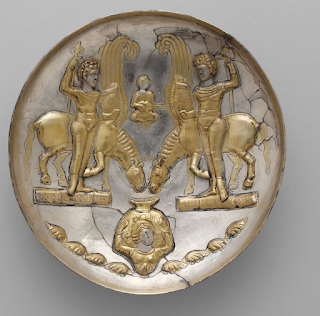
Sasanian plate with youths and winged horses ca. 5th–6th century A.D. Currently kept in the Met Museum...


Official description: 

"Two youths stand on platforms facing one another, each holding a staff and the reins of a winged horse. This is reminiscent of representations of the hero Bellerophon and Pegasus as well as of the Dioskouroi (the divine twins Castor and Pollux)...

Both horses bend their necks down to drink from a large vessel supported by a female figure, who appears in bust form emerging from a frieze of half-palmettes. 

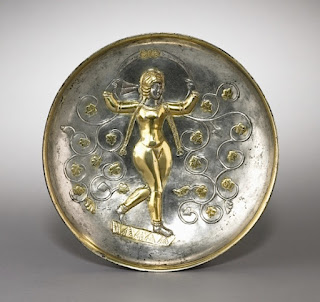
She is most likely either a personification of water or the Iranian river goddess Anahita (This girl. I talked about her in this post)

The scene may have cosmic significance, if indeed the two youths represent the constellation Gemini, called Do Paykar (Two Warriors) in Middle Persian astronomical texts"... 

The end of the official description...

Now this is interesting...Winged horses, winged horses...Have you seen this?

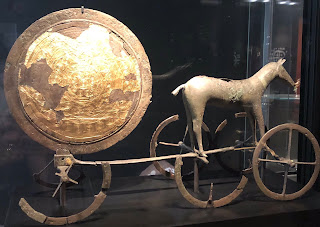
Bronze Age "Sun Chariot" pulled by a horse, Denmark 1400 BC. 

Why are horses so prominent in solar cults?

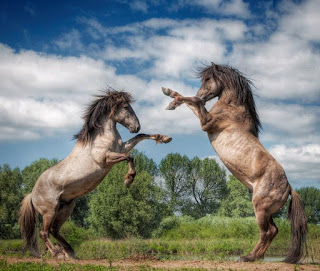
Did you know that horse mating season, which is characterised by vicious stallion fights, is governed by the sun and it peaks on summer solstice. Two horses facing each other as symbols of summer solstice...Hmmmm...

Hence horse pulling sun chariot...I talked about this in my posts "Svetovid", "Trojan horse", "Unicorn", "Re'em"...

So? What does this have to do with this Iranian plate?

Well, have you seen this? 

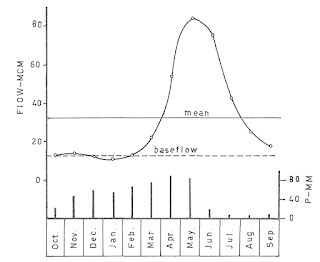
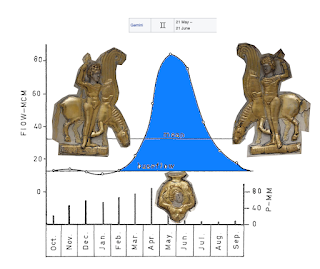
This is the flow chart of the rivers in Western Iran, in the Zagros mountains...The flow is directly dependent on the snowmelt...Which is directly dependent on sun's heat...Symbolised by the horse...Winged horse to make sure we are in heavens...

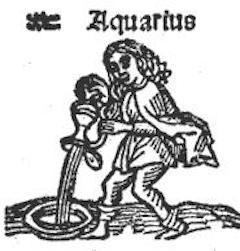
The snowmelt starts at the beginning of Spring (February) which is when the earth starts to warm up...Which is why this part of the Solar year is marked by Aquarius...This is also when the snowmelt starts in Europe by the way...

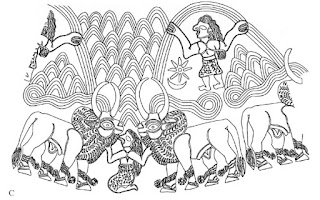
The snowmelt then sharply increases in Taurus, when we have the annual flood depicted on so many Jiroft culture vessels coming out of bulls...Like this one I talked about in my post "Jiroft flood vase"...


The flood peaks during the part of the year marked by Gemini twins. Coinciding with the most fertile period of the mares and the main mating season of the wild horses...

When Anahita, the goddess of water, fills the rivers to the brim...

Party time? Anyone knows how to play a lute?


PS: Sasanian plate depicting two winged horses in the same drinking position facing the tree of life (?) 🙂, currently in the Arthur M. Sackler Gallery...


Thursday, 17 October 2019

Symbols of the seasons

If we look at the zodiac circle, we can see that each of the seasons either starts or ends with a sign representing a large animal:


Spring ends with Aries (ram). In my post "Ram and Bull" I explained that the ram symbol marks the end of the lambing season of the wild Eurasian sheep in Europe. 


Summer starts in Taurus (bull). In my post "Ram and Bull" I explained that the bull symbol marks the beginning of the calving season of the wild Eurasian cattle in Europe. 


Autumn starts in Leo (lion). In my post "Entemena vase" I postulated that this symbol marked the beginning of the mating season of the Eurasian lions in Europe. 


Winter ends in Capricorn (goat). In my post "Goat" I explained that the goat symbol marked the beginning of the mating season of the wild European Alpine ibex goat. 


So these four animals are symbols of the four seasons 


I wonder if this is the reason why the Achaemenids made their rhytons, ceremonial drinking, libation vessels, with the heads of these 4 animals?

Silver rhyton with horned ram head (Spring), Persia, Achaemenid Period, 538-331 BCE, Seattle Art Museum in Seattle, Washington.


Silver rhyton with bull head (Summer), Persia, Achaemenid Period, 600 - 400 BC, Cincinnati Art Museum


Gold rhyton with lion head (Autumn), Persia, Achaemenid Period, 500 BC, Metropolitan Museum of Art in New York


Silver rhyton wih goat head (Winter), Persia, Achaemenid Period, 400 - 100 BC, Met museum, New York


Now interestingly, three out of four of these animals are large wild Eurasian herbivores. There is one more large wild Eurasian herbivore, a deer. Is it possible that it somehow fits into this picture? Well it is. August, the beginning of autumn is the time when Persian fallow deer and European red deer start their mating season. Is this why we also find Achaemenids rhytons, ceremonial drinking, libation vessels with the heads of stags? Or is stag equivalent of the bull, considering that stag is linked with summer solstice and that we find "lion killing stag" scene equivalent to "lion killing bull" scene? I am not sure about this one...

Silver Rhyton with stag's head, Persia, Achaemenid Period, late 400 - 300 B.C. The George Ortiz Collection


What do you think about this?

Interestingly, the same types of rhyta, with the same animal heads, were made in Levant during the second half of the second millennium BC. 

This is a late Bronze Age ivory plaque from Megiddo (Israel) ca. 1200 BC. The ruler, seated on an imposing throne, drinks wine being served from a large krater behind him, using lion and goat headed horns (rhyta)


"...Egyptian armies which reguralrly invaded Retenu or Canaan during LBA, made certain that they brought back animal-headed rhyta and drinking horns as tribute. Two lion-headed examples in silver are depicted on the frescoes inside the Theban tomb of Amenmose, a commander of the infantry under Tuthmosis III and his son Amenothep II. Tuthmosis III raided levant 14 times over the 54 year period of his reign. The records say that "wine flowed like water" and that "have been drunk...every day as if at feast in Egypt". The pharaoh's annals also record that bull-headed, ram-headed and lion-headed vessels were taken as booty. They are said to have been made in Retenu..." From "Ancient Wine: The Search for the Origins of Viniculture" by Patrick E. McGovern