Saturday, 13 February 2016

Lasta


If you have ever looked up during the summer months, you probably would have seen swallows zooming around chasing insects. This is a great video showing swallows in flight. 

Swallows flying

Swallows are a group of birds in the family Hirundinidae that are characterized by their adaptation to aerial feeding. They generally forage for prey that is flying, but they will on occasion snap prey off branches or on the ground. The flight may be fast and involve a rapid succession of turns and banks when actively chasing fast moving prey; less agile prey may be caught with a slower more leisurely flight that includes flying in circles and bursts of flapping mixed with gliding. Swallows have evolved these highly acrobatic flying skills to capture some of nature’s most elusive prey: flies. According to the scientists who studied their flying abilities, "swallows are the absolute extreme when it comes to flight performance. They're at the cutting edge for what can happen with an avian body plan in terms of flight."

So if you had to use one word to describe swallows in a way to distinguish them instantly from all the other birds, that word would probably be "fast".

Now here is a funny thing. 

In Serbian the word for swallow is "lasta" and "lastavica". Official etymology says that this word comes from Proto-Slavic *lasta. Cognates include:  Church Slavonic: ластунъ, ластуна, ластовица, Russian: ла́стка, ла́стовка, ла́стушка, ла́стица, Ukrainian: ластови́ця, ла́стiвка, Bulgarian: ла́стовица, ла́ставица, Slovenian: lástovica, lástovka, Czech: lаštоviсе, Slovakian: lastovička, Polish: łastówka, łastawka, Lusatian Serbian: łаstоjса, Polabian: lostövéica.

The meaning of the Proto-Slavic *lasta is not given. 

In Irish, one of the lesser known meanings of the word "lasta" is "to move at high speed"...

So... Is this the root of all the Slavic words for swallow, "the bird that moves at high speed"? Or did this (obscure) word in Irish meaning "moving at high speed" come from Slavic word for swallow?

One more interesting thing. In many Slavic languages, including Serbian, there are two words for swallow: "lasta" and "lastavica". Lasta means fast. But where does the "vic" (pronounced vits) comes from. Well it could be a diminutive. But there is also another possibility. 

These are three videos in which you can clearly hear the sounds swallows make. It sounds like: 

vicviccvicvic....

Sound of swallows 1
Sound of swallows 2
Sound of swallows 3

So lastavica is lasta (fast moving bird) which says "vic"...

Interesting don't you think? And the most interesting is the question: where and when did this borrowing occur? Considering that the word lasta is present in all the Slavic languages, the borrowing, if the word was borrowed from Gaelic to Slavic languages, had to occur during the Iron or Bronze Age. But where? Central Europe? Balkans? And if the word was borrowed from Slavic languages into Gaelic, when and where did this happen? 

Lots to think about :)

Wednesday, 3 February 2016

Owls

These first six pictures are prosopomorphic (face like) lids from Vinča culture (6th - 5th millennium BC). 


National Museum of Serbia has this to say about these artifacts: 

"Prosopomorphic lids are common in the entire territory of the Vinča culture and are all very similar. Most are of cylindrical shape and have prominent horn-like lugs, a molded nose, conspicuously marked eyes and varied decoration. This type of vessels represents a specific form of Vinča ware and had a double function. It was used as a cover for amphorae with a cylindrical neck. Its other and much more important function was to protect the contents of the vessel from evil spells and unknown powers. The most expressive details on the face are the eyes, which attract particular attention. They are associated with the so-called "mystical eyes", to which special significance was attached. It is a widespread belief that the eyes are "the mirror of the human soul", and that they can also be wicked and capable of casting evil spells. They often have the power to avert negative magic power from the individual or the community, so that they assume an apotropaic function. In addition, the eyes possess the power of constant observation, wakefulness, control, surveillance of the behavior of people, and in this way they have an influence on their magic beliefs and religion. Finally, prosopomorphic lids may represent a mask which has the magic power to protect the ordinary human being or the priest-wizard from the unbounded energy of the deity before which he appears. As such, they cannot be considered in isolation from the other Vinča sculptures, altars and cult objects, for they are all associated with the religious rituals and beliefs of prehistoric communities."

Basically no one knows what these things are and what they represent. This is how they were used: 


This next picture is a picture of the Eurasian eagle-owl...


Do you see any similarity?

Owls are one of the oldest species of vertebrate animal in existence, fossils have been found dating back 60 million years, showing the bird to have changed very little in that time. 

Throughout the history of mankind, the owl has featured significantly in mythology & folklore. They are one of the few birds that have been found in prehistoric cave paintings. This is an engraving of an owl from the the Chauvet-Pont-d'Arc Cave in southern France. The cave has the earliest known and best preserved figurative cave paintings. The dates of the paintings have been a matter of dispute but a study published in 2012 supports placing the art in the Aurignacian period, approximately 32,000–30,000 BP. 

The Owl has been engraved by using a tool on the soft surface of the rock, once this surface had been prepared and scraped clean.


The intriguing aspect of the Owl is that it is depicted with its head seen from the front but its body from the back. It may well be the earliest representation of the birds unique ability to turn its head through 180 degrees, an ability which many cultures associate with supernatural powers.

Owls have been both revered & feared throughout many civilizations from ancient to more recent times. It is probably their ability to see in the darkness that inspired people to associate owls with both prophetic wisdom and particularly the visions of doom and death. In most parts of the world the owl cry heard in or near a home usually meant impending death, sickness, or other misfortune. They are also widely believed to represent the souls of people who have died or that they carry the souls of people to the underworld. 

So, what do you think? Are the above lids representations of owl heads? And if so, what did these lids cover? What did Vinčans associate owls with? 

Monday, 1 February 2016

Stones with narrow bottomed bowls

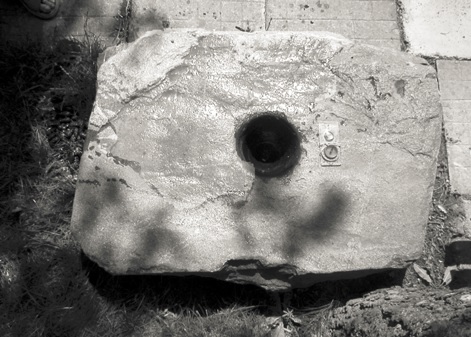
In my post about bullaun stones, the ancient grinding stones, I mentioned that these types of stones are also found in the South Eastern Baltic are. This is one of many old hollowed stones from the Baltic. They are called bowl stones and are, like in Ireland and in Slavic countries, regarded as sacred. The place where the stone is located is used as a place of worship. The diameter of this stone is about 60 cm and a depth - about 15 cm. In the past people considered the accumulated water as sacred and thought that it had healing properties. In the past the stone used to be called the stone of god.


You can see many more of these stones if you run this search. Here are some of them. This one is called "Lielais Daviņu Akmens" which means great stone of giving, offering, great altar. It seems that the stone was linked to harvest rituals.


This stone stands on a hill, where an old oak forest grew until the seventeenth century. The hill was a site of a pagan temple. 


For information about these stones in English look at the pages 27 - 33 of the book "Studies into the Balts’ Sacred Places".

I was just made aware of an article about an interesting half-made bowl-stone from Baltic region. On its top part there's a circular groove of a similar size as the usual bowls on other stones, as if someone had intended to gouge out a bowl there too but stopped half way through the process of gouging the hole. 


We can deduce though that this is how these bowl stones were actually made from their name in Lithuanian. Lithuanian word for bowl is dubuo, dubeni akameni...These words come from Slavic root dub meaning wood, oak but also to gouge. This second meaning comes from the time when utensils were made by gouging bowl like holes in pieces of wood and later stone. In Southern Slavic languages Dubiti means to gouge and Dubeni, Dubeno means gouged, with a gouged hole, bowl in it...Dubeni kameni in South Slavic languages means gouged stones, bowl stones...

But there is a special kind of these bowl stones which are found in the South Eastern Baltic that fall into a class of their own. These are so called "stones with narrow bottomed bowls". 


There are all together 250 narrow-bottomed bowls, but it is quite possible that more once existed, but were destroyed. Majority of these stones are concentrated in two areas: Central and Northern Lithuania / Central Latvia and in Eastern Lithuania. Only a couple of such stones were found in Samogitia.

Historical and archaeological records show that the stones with narrow bottomed bowls are very similar in dimensions and shape, regardless of the area in which they were found. The dimension homogeneity is quite stunning. Processed or unprocessed, the size of the stones varies only slightly. 


They are only in exceptional cases smaller than 60 x 70 cm and never exceed 100 x 120 cm. Stones thickness (height) is also very similar and varies between 25 - 35 cm. Several stones found in-situ protrude above the ground plane from 5 - 15 cm. The diameter of the upper part the bowl is rarely less than 15 - 16 cm and is never more than 23 - 24 cm. The bowls dept varies between 9 and 21 cm.


The stones are usually found on farms: near houses, barns and cattle sheds or inside them, quite often at the base of the building. Often there are 2 to 3 or even 4 to 5 stones with narrow bottomed bowls preserved in every village, for example Montviliskis, Vaiduloniai, Vileikiai. Today most of these stones are used as decorations. Sometimes these stones are used in churches for storing holy water, like in Dotnuva. But it seems that they were once used as corner stones, usually placed under the northern or north western corner of the house. 

Up until the seventeenth century it was customary to build wooden buildings without diging foundations. A layer of stones was placed on the ground and then the wooden house frame was built on top of it. Corner stones were the most important of all as they were placed under the main four supporting vertical beams. The bowl in the corner stone was usually oriented towards the inner side of building. 


The archaeological investigation which was carried near 9 of these stones dated them to the period 16th - 17th century. However, excavation near the Montviliskis stone uncovered two holes of about one meter in diameter full of ashes, cattle bones and potsherds dated to 2nd millennium AD as well as potsherds from the period 16th - 18th century. The bones were all of young animals, indicating that they were sacrificed in a "first fruits" kind of sacrificial fertility ceremony.

There are ethnographic records from Lithuania which show that in the past, when the corner stones were placed in the ground, a special blessing and sacrifice ceremony was performed.  The hole in which the corner stone was to bi placed was dug first. Then the owner of the house would step into the hole and would drink some vodka and then all the workers working on the house would do the same and then they would share some food and continue working. The corner stones were marked with wax crosses and money was placed next to or under them. It was believed that god lived in them. Not only that, but it seems that the stones with narrow bottomed bowls were used as family altars.

At the beginning of the 17th century Jesuits described the stones with narrow bottomed bowls calling them "Deiviu akmenys" meaning "Goddess stones".
The report  from the 1600 says: In stores big stones are kept. They are dug into the ground, with the flat faced facing up. They are covered with straw. They are called "Deyves" (Goddesses) and are faithfully worshiped as the protectors of cereal and cattle.
The report from 1605 says: Some very uneducated village people due to our efforts got rid of the bad habit of worshiping one stone which they thought to be the god of granary, fruitfulness and happiness of home.

Even though it is not specifically stated that the sacred stones were "bowled", there is much in common between the stones described by Jesuits and stones with narrow bottomed bowls: their location in farm buildings, the fact that the top face of the stone was flat, the stones had the function of the cereal, cattle, happiness provider.

There are legends about the stones with narrow bottomed bowls which state that in the old times they were used as mortar stones for milling, grating or pounding. In Veriskiai, the local legends states that the stone was used by the Devil to grind tobacco.

Some stories preserved by old people talk about holy water being stored in the stones and that before that people used to pour milk into the hole for the grass snake, the houses snake, the incarnation of the house protector spirit in Balto Slavic religion.

In the 17th century Jesuits recorded the existence of a god called "Pagirinis", meaning "The one who lives under the quern, under the mortar stone" basically "The one who lives under the stone with narrow bottomed bowl". Knowing this it seems that the most probable function of the stones was as an altar to the god (goddess) protector of home. Another 17th century Jesuit report states that the god "Pagirinis" sometimes comes out of his corner in a shape of a grass snake, but that it spend most of his time buried in the soil, which is kept in a clay or wooden dish or without a dish under the quern (mortar stone, the stone with the narrow bottomed hole).

So this is very interesting. We have:

1. a corner stone
2. which is shaped like an ancient mortar stone
3. which was used as a fertility cult altar.
4. which is referred to as a "Goddesses stone"
5. which is the home of the male deity whose name means "The one who lives under the quern, under the mortar stone"

In some parts of Serbia the " thick wall" made of stone which supports the house is called Baba.


In Bulgaria thick logs which are put under log cabin corners to support the house are called "bа́bka". This gives additional meaning to the Serbian proverb that says that "the house stands on a woman". I wrote about it in the post "Baba - the main column, pole that supports the house". It seems that baba was any supporting structure on which the house stood. 

In Serbian and in other Slavic languages the word Baba also means wich, goddess,  and not just any goddess, the Mother Earth. So it is not surprising that the above corner stones from Lithuania were called "Goddesses" stone. They are basically Baba's stone, as Baba, Mother Earth,  was the fertility goddess to which Lithuanians prayed to. Interestingly

The name of the male deity which is believed to live under the corner stone in Lithuania shows that that these stones were once actually used as grinding stones, as I postulated in my post about bullaun stones.

The fact that the mortar grinding stone was used as a fertility altar dedicated to the Mother Earth is not surprising at all either. A hole in the ground is where the plant seed is planted. A hole (vagina) in the lying woman is where human seed is planted. So a horizontal lying stone with a hole (mortar) is already suggestive enough. Mortar grinding stone and pestle even more. So much so that the mortar and pestle became the symbol of male and female genitalia in Hinduism (Yoni and Lingam).

This is a so called "wet" grinder mortar and pestle from India from this great blog post about making stone ground chutney


And this is Yoni and Lingam 


The union of sky and earth produces (releases) cereal seeds which are then poured into the mortar and pounded into flour with pestle in a motion which greatly resembles coital movement of penis (Lingam) inside vagina (Yoni) which produces (releases) human seeds which are poured into the vagina.... Do you see the link here? The fact that in the Baltic tradition milk was poured into bowl of the corner stone "for the snake to eat" confirms this, milk being symbolic replacement for sperm, milky white liquid containing human seeds. Once the cereal seeds are pounded into the flour flour is made into bread which is bake inside the bread oven which looks like the belly of a pregnant woman. And that bread oven is in Serbia called baba. Ovens were in old Slavic houses placed in north-eastern or north-western corner, just like the Goddess stones. 


The belief that the house protector snake lives in the house foundation does not only exist in the Baltic countries. It is wide spread in Slavic countries and it exist in Serbia too. In Serbia the house protector snake is believe to live in the house heart (stone oven) or the house foundations (the layer of stones which supports the wooden house frame, corner stones originally). It is believed that this snake is the spirit of the founder of the family, some other very distinguished ancestor, or the first male ancestor who died in the house. Either way this snake is the symbol of the male ancestor, just like Lingam. So we have a mortar stone (Yoni) which houses (in a bowl) snake (Lingam)...

And this is it, the story about Lithuanian co called "stones with narrow bottomed bowls". I hope you enjoyed it. Until the next time, stay happy.

References

"Aukštaitiški aukurai" by Vykintas Vaitkevičius
"Studies into the Balts’ Sacred Places" by Vykintas Vaitkevičius
"Pojmovnik Srpske kulture - baba" - Etnografski institut SANU

Sunday, 10 January 2016

Babji mlin - Grandmother's mill

Panjska končnica is the name used for the painted front panel of "kranji" beehives (Carniolan beehives).


This type of folk art, characteristic of Slovenia originally appeared in the Gorenjska and Slovenian Carinthia, and from there it spread to the entire territory of Slovenia. The oldest painted beehive panels date back to the middle of the 18th century and the last ones were painted just before the First World War. During this period, approximately 150 years, more than 50,000 of these painted beehive panels were made. The painting was usually done by self-taught naive painters who used mostly natural pigments and linseed oil, which made the colours more durable. There are more than 600 different known motifs which were painted on the beehive panels of which about half are religious.

One of the most interesting motifs found on the beehive panels is called "Babji mlin" meaning "Grandmother's mill". It depicts an old, ugly woman, being thrown into a grain mill by either a man or a devil. She comes out of the mill transformed into a beautiful young woman.


The history of this motif was explored by Niko Kuret in his work "Babji mlin, Prispevek k motiviki Slovenskih panjskih končnic". In it we can read that the earlier depiction of the "Babji mill" scene is the 1600 Dutch woodcut, depicting the scene taking place in a windmill. The copper engraving from Augsburg which dates to around 1630 and also depicts the scene in a windmill. In 1672 we have the first depiction of the "Babji mlin" in England in the book entitled "The merry Dutch miller and new invented windmill". The Munich museum has an engraving from 1800 depicting the "Babji mlin" scene entitled "The art of turning an old woman into a young one in a mill". There is also an engraving from Nürnberg dated to 1810 depicting the same scene and another engraving from 1810 from Berlin, which is the first known depiction of this scene taking place in the water mill. The color lithographs by Gustav Kühn from Neuruppin made around 1820-1830, in addition to rejuvenation of women also show the rejuvenation of men in a mill. This is also the period to which the oldest depictions of the "Babji mlin" from Slovenija were dated, the oldest being the one on a beehive panel currently kept in an ethnographic museum in Ljubljana, dated to 1861.

The "Babji mlin" motif is not only found depicted as a painting. It is also found in the form of dramatic performances, games, as part of carnival customs. The earliest surviving description of the "Babji mlin" dramatic performance is from the Cologne carnival from from 1850. The same scene was part of carnival procession in Swizerland until 1900, and in Brixlegg in Tirol the "Babji mill" was part of the carnival procession until 1862. The same tradition was recorded in Wipptal, Glurns, Innsbruck and many other parts of Switzerland. In the mid 19th century, "Babji mlin" was also described as being part of the carnival processions in many parts of lower Austria: Salzburg, Leibniz, Štajerska, Gradišće and Frohnleiten, a town in the district of Graz. In Slovenija "Babji mlin" was part of the carnival processions in many areas. Here is a depiction of the "Babji mlin" from Dobropolje, drawn based on the description of an eyewitness from the beginning of the 20th century.


This is a modern version of  the "Babji mlin" carnival scene from Radovljica Slovenija.


What is interesting is that there is actually a folk story about the magic mill which would "turn old women into young and grind (destroy) the evil ones". The same type of story was recorded in Slovenija, Germany, Austria, Switzerland and Czech republic.

I believe that the story depicting the "Babji mlin" scene existed first. The story was then enacted as part of the carnival and it was then depicted as a "curio" on engravings and paintings. But what does this strange scene represent?

As I said already in my posts "Baba - earthen bread oven", in Serbian and other Slavic languages, the word "baba" means baby, mother, grandmother, midwife, birth demon and eventually great goddess, Mother earth the mother of all of us.

I believe that the "Babji mlin" is a depiction of a transformation of the ugly, barren, cold, old hag (winter earth) into a beautiful, fertile, hot, young woman (summer earth). This transformation, the end of winter and beginning of summer according to the old Celtic and Serbian calendar, happens on the St George's day, the day of Jarilo, Beltane, which falls on the 6th of May. I wrote about the significance of this date in my post about the Beltany stone circle. The celebration of the first day of summer was in Christianity replaced with Easter which falls right after the carnival during which the old woman is transformed into a young one in "Babji mlin". The carnival falls into the period just before the first crops are about to arrive. This is the time when the last winter reserves are being eaten and it is an imperative that the earth is rejuvenated, married, impregnated and that she starts giving birth to crops. So when the mother Earth is transformed into a fertile young earth in the the Babji mlin,  it is married to a young sun, Jarilo. This is the sacred marriage between the sun and earth which produces all life and is enacted during carnivals in Serbia and Croatia as the scene knows as "Baba i Djedi" (Grandmother and Grandfathers). 

Baba (Grandmother) and Djedovi (Grandfathers) Dalmatinska zagora mid 20th Century


Baba (Grandmother) and Djedovi (Grandfathers) Serbia mid 20th Century


But why is the regeneration of Baba, Mother Goddess, Mother Earth taking place in the mill?

In Serbia a mill is considered to be a magic place. Mill is said to have been invented by the devil himself. The devil is also believed to be permanently present in mills and that he sometimes takes shape of a miller. During famines and hungry days, like carnival, it is believed that the devils and vampires and ghosts (spirits of ancestors) congregate around mills and granaries. So as a seat of the devil (old god Dabog, the giving god, The Sky Father), a mill is an ideal place to rejuvenate Mother Earth and make her young and beautiful again. In Serbia there is a belief that rainbow draws its water and its beauty from the pool beneath the water mill wheel. The water which drips from the water mill wheel and the water from the pool below the water mill wheel is believed to have special properties. Girls wash themselves in this water which is called "omaja, omaha" because it is believed that it will make them beautiful and irresistible to men. Young people bath in the pool next to the water mill wheel on St George's day, Jarilo's day, the first day of Summer, the day when winter turns into summer, to gain health, fertility and beauty. If a woman can't have children, she goes to the water mill with her husband, he grabs some water from the pool below water mill wheel with rakes, and gives it to her to drink it. It is believed that this will make woman fertile. 

So mill is in South Slavic folklore considered to be the place which contains special powers particularly when it comes to rejuvenating and ensuring fertility. So there is no wander that the mill was chosen as the place where the scene of the the rejuvenation of the Mother Earth takes place. But there is another reason why the rejuvenation scene takes place in a mill. Mill is the place where grain is turned into flour. It is therefore directly linked with the grain fertility magic, and the Mother Earth is in agricultural societies directly linked to grain and bread. She is the Mother of Grain, the Spirit of Grain and the grain and ultimately bread itself.

This link is preserved in Slavic traditions and languages.

bа̏bičiti - to make, to tie grain sheaves
baba - sheaf of grain, wheat


To me a sheaf of wheat even looks like a woman. And if we know that in South Slavic languages baba is a fertile woman, a woman who had children, a mother then there is no wonder why a sheaf full of grain is called baba.

Czech: baba - last sheaf brought from the field
Lower Lusatian: baba - sheafs of linnen
Slovenian: babica - stack of sheafs left on the field
Russian: babka - stack of sheafs, sheaf
Bulgarian: babka - stack of 5,10,15 sheafs
Croatian: baba - top most sheaf on the sheaf stack


In Slovenija in the old times, during the harvest all the neighbors helped each other. First the reapers would come to the field and would begin to reap. The first sheaf of wheat was always raised to the sky, which is a remnant of the old sacrificial ritual of thanksgiving. The last sheaf, called baba, was believed to be the residence of the grain spirit. After the harvest this grain spirit had to be killed. The grain spirit was killed by hitting the baba sheaf with a hand. Men would then load the sheaves on to the cart. The ears of grain left on the field were considered to be sacrificial offerings to the grain spirit.

Harvested grain was then dried on hay-racks called kozolec meaning goat. Sometimes a carved image of a goat made of wood, called God's goat, was affixed on the front of the  hay-rack. Bundles of wheat were hanged on its horns, and were left there until the new harvest. It was believed that such decorated hay-rack would not be struck by lightning. A goat was in fact an animal dedicated to Perun, Slavic god of thunder and lightning.

The last cart was usually loaded higher at the back and lower in front. A tall straw doll called Baba was placed with rakes at the rear of the cart. The cart driver would cup with a whip and cry out: "We brought the baba, give us drink for her."

I will talk more about the significance of the last sheaf in European tradition in one of my next posts. But it is important to note that in South Slavic languages the sheaf, the top sheaf, the last sheaf and the effigy, doll, made from the last harvested grain are all called baba.

I already wrote that baba is also the name for the traditional earthen bread ovenIt is baba (married woman, mother) that carries the baby in her belly (the bread oven). Baby (bread) needs to spend just right amount of time in the belly (oven) of the baba (mother, oven) in order to grow and develop properly. It is baba (mother in law, or any other older woman who has previous experience with birth, later professional midwife, bread making) that deliver the baby (bread). 

In Slavic countries baba is also name used for various ritual breads linked to ancestor worship. 

In Eastern Serbia baba is the name of the second smaller cake baked for Slava, the main ancestor celebration. Babica, Baburica is the cake baked for the soul of the deceased during Zadušnice, a ritual feast organized for the dead ancestors. In some parts of Serbia baba is a cake baked for Christmas, the day dedicated to the father Sun. In some other parts of Serbia baba is any ritual cake (bread)....In Czech republic baba, bapka is "a type of pastry", in Poland baba, babka (Baba wielkanocna), babica is "ritual pastry, round small bread", in Ukraine baba is also "ritual pastry". The fact that ritual breads are called baba shows direct link between the human and agricultural fertility magic and the ancestor worship, in which Mother Earth is the Great mother, Great Goddess, Baba. 

So far we have seen that in Slavic countries baba is the name used for sheaf of wheat, for bread oven and for ritual breads. Baba is also the name used for great goddess, Great Mother, Mother Eearth. Mother Earth who gives birth to wheat, year after year after year. But even Mother earth can get barren and infertile after years of giving birth to harvest after harvest after harvest. Just like an old woman who has given birth to many children eventually becomes exhausted, infertile and barren.

But there are two ways in which an old exhausted barren land can be rejuvenated, made young and fertile again: by water and fire. 

Floods bring and deposit nutrients which have been depleted by crops. Regular yearly floods ensure that the Mother Earth is rejuvenated every year and is fertile and fruitful as if she was a virgin land. It is no wonder then that it was in the alluvial and flood plains that grain agriculture developed and flourished in the early Neolithic times. The soil is sandy and therefore easy to work, it is rich and gives high yields, and it is regularly enriched with new flood deposits preventing soil depletion, which was the main problem for early farmers. I wrote about this in my post about Blagotin archaeological site. 

The vegetation burning is the other way to return the nutrients drawn out by the plants into the soil. By regularly burning of the plants in the autumn returns the nutrients back into the soil and makes it rich again. 

What is interesting is that the "Babji mlin", the scene in which an old woman is thrown into a mill only to emerge as a young woman on the other side, is not the only depiction of the rejuvenation scene. There are, according to Niko Kuret, two more depictions of the rejuvenation scene. In the first an old woman walks into a well only to emerge as a young girl on the other side. Is this a depiction of the floods rejuvenating Mother Earth? In the second, an old woman walks into a forge or an oven only to walk out as a young girl. Is this a depiction of the fire rejuvenating Mother Earth? 

So I believe that here we have discovered something very interesting. I believe that the the scene called "Babji mlin" is a remnant of the ancient fertility ritual related to the annual rejuvenation of the Mother Earth, Great Goddess. Every 4th of February, at the beginning of spring, she is transformed from the old, ugly, cold, barren winter Earth into the young, beautiful, hot, fertile Spring Earth. This transformation happens under the influence of her husband, Father Sky, Great God to whom she is then married on the 6th of May, at the beginning of summer. 

What do you think? 

Friday, 1 January 2016

Partholon and the great flood

Storm Frank causing havoc across the country

This is a headline form one of the Irish newspapers. Storm Frank is the sixth to hit Ireland since the start of the winter. Huge areas or arable land are under water an so are thousands of houses in towns close to coast, rivers and lakes. These are just some of the images that show the extent of devastation caused by the cumulative effect of this winter's bad weather.


I feel so sorry for all the poor people who are currently being literally flooded out of their houses. And this is not the first year that Ireland has been experiencing such bad weather. I think that this is now third or fourth winter in a row that Ireland has been battered by storms and if it continues like this, a lot of areas in Ireland will become unsuitable for human habitation and will have to be evacuated. And there is very little anyone can do....

Looking at the above images reminded me of something I read in the old Irish annals. 

The old Irish annals tell us that the first race that lived in Ireland were Fomorians. Then the flood came. Then, after the flood, came the people of Partholón. 

In the "Annals of four masters" we find these comments regarding the life of Partholon and his people in Ireland:

From the Deluge until Parthalon took possession of Ireland 278 years....

The age of the world, 2520 (2680 BC) Parthalon came into Ireland

The Age of the World, 2545 (2655 BC) Rudhruidhe, son of Parthalon, was drowned in Loch Rudhruidhe, the lake having flowed over him; and from him the lake is called.

The Age of the World, 2546 (2654 BC) An inundation of the sea over the land at Brena in this year, which was the seventh lake eruption that occurred in the time of Parthalon; and this is named Loch Cuan.

The Age of the World, 2820 (2380 BC) Nine thousand of Parthalon's people died in one week on Sean Mhagh Ealta Edair, namely, five thousand men, and four thousand women. Whence is named Taimhleacht Muintire Parthaloin. They had passed three hundred years in Ireland. Ireland was thirty years waste till Nemed's arrival.


The Age of the World, 2850 (2350 BC) Nemed came to Ireland.

Seathrún Céitinn's Foras Feasa ar Érinn says that Patholon arrived to Ireland in 2061 BC, Annals of Four Masters says that they arrived at 2680 BC. So basically Partholon arrived sometimes in the second half of the 3rd millennium. 

It seems that Partholon and his people also perished in another flood 300 years after they arrived to Ireland which was 300 (278) years after the great flood. Maybe this second flood was another local weather event, like what we are seeing this winter in Ireland. But maybe the above descriptions are actually describing "the flood" and the dates and names got somehow mixed up in some of the Irish annals over the millenniums. I believe that the later could be the case considering that the two Irish annals that talk about the arrival of Partholon give drastically different arrival dates. Seathrún Céitinn's Foras Feasa ar Érinn says that Patholon arrived to Ireland in 2061 BC, Annals of Four Masters says that they arrived at 2680 BC. But also because we actually know when the "great flood" actually did hit Ireland. 

In the book "The Secrets of the Irish Landscape" we read that according to the dendrochronological research done in Ireland on Irish bog Oaks in the Lough Neagh area, during the period between 2354 BC and 2345 BC the oaks completely stopped growing and showed bark changes which indicate that they were submerged in water. 


It seems that it started to rain and it didn't stop for 10 years. This probably caused complete collapse of agriculture and famine. And the end of what ever culture existed in Ireland at the time. It is very interesting that the date of this catastrophic weather event falls, according to the Annals or Four Masters, right after the date of the demise of Partholon's people and the date of the arrival of Neimhid. So was this "a flood" or "the flood"?

Believe or not, the Ussher chronology, a chronology of the history of the world, which was written by James Ussher, the Archbishop of Armagh (Church of Ireland) in the 17th-centurygives in its list of dates2348 BC as the date for the biblical flood. This date falls right in the middle of the above major weather event. Ussher claimed that he determined the date of the flood from a literal reading of the Bible. But did he actually use Irish annals instead? And if so did he mistook a local Irish flood for the "biblical" global flood? Is there another record of a great flood that happened around 2348 BC? Well there is actually. 

Ancient Chinese records recorded a "great flood" which occurred at exactly the same time. They say that during the reign of the First Emperor, Yao, who came to the throne in 2357 BC,  there were "huge floods that overtopped the mountains".


The floods started in the 12th year of his reign (2346 BC) and lasted for 9 years. This corresponds almost exactly with the actual dendrochronological records from Ireland.

Now let me make something clear here. One of my friends said in his comment on my article: "there have been innumerable local 'floods' throughout history and pre-history, of course, and they would seem global to those being flooded- but a global flood is a scientifically impossible event. There is simply not enough water on Earth for such a thing to occur, and there never has been."


I actually agree with this. The problem is in what people understand when they read "global flood". The flood can be global if there is a global weather event which causes intensive long term rain which inundates the rivers and lakes. Both Irish, and Chinese sources talk about huge local floods, not global submersion. And for Ireland we actually have dendrochronological records that prove that this actually happened during the period 2354 - 2345 BC. Biblical flood could have been just the description of the same thing in the near east. The weather event was global, and we have proof of this from around the world and we have the records of this event with dating from the Irish and the Chinese annals which correspond to the actual dendrochronological records. So it is possible to have a global weather event which can cause large local floods globally. 

This event was probably caused by the fragmented asteroid or comet impact, which caused a kind of "nuclear winter" which lasted for 9 years. It also caused the emergence of the belief in the stone sky, firmament. I will talk about the belief in the stone sky in one of my next posts.

Anyway back to Irish floods.

Soooo.....

What happened exactly in Ireland around the time of the great flood? 

Well there are two possible scenarios. 

The first scenario is that Partholon and his people did arrive to Ireland in 2680 BC as the Annals of Four Masters says. They spent 300 years in Ireland and perished during the great flood (2354 - 2345 BC). Well maybe not all of them perrished. The Irish annals say that after the people of Partholon died out, Ireland "thirty years waste" until Nemed arrived with his people. Nemed was said to have been the descendant of Tait, Partholon's brother. If the people of Partholon were skilled sailors, miners, metalworkers and traders, they probably kept contact with their old country, probably even regular trade contacts. So maybe when Ireland was devastated during the flood, the refugees from Ireland went back down south, maybe back to Montenegro, or even further back to Pontic region. 

The second scenario is that Partholon and Nemed arrived together, but not in 2680 BC as the Annals of Four Masters says, but in 2061 BC as Seathrún Céitinn's Foras Feasa ar Érinn says. This would then fit the first entry about Partholon: "From the Deluge until Parthalon took possession of Ireland 278 years...."

If "the flood" was in the period 2354 - 2345 BC, then 278 (300) years after "the deluge" is 2076 BC (2054 BC) -  2067 BC (2046 BC) . The date that the Seathrún Céitinn's Foras Feasa ar Érinn gives as the date when Patholon arrived to Ireland, 2061 BC, falls right into this interval. This is very interesting. 


Both scenarios correspond well with the dates of the Montenegrian tumuluses containing the golden cross discs (3000 - 2700 BC) and with the dates of the golden cross discs found in Ireland (2500 - 2200 BC).

So did Partholon arrive to Ireland before or after the great flood? What do you think? The thing is this is not even the most important thing. The most the important thing here is that the Irish annals preserved the date of this flood pretty accurately for almost four and a half thousand years...Think about it. 3500 years of oral history only recorded 1000 years ago...Not myth, history...How many other examples of this do we have around? 

I will talk more about this in my future posts. 

In the meantime I want to recommend the book "Climate Development and History of the North Atlantic Realm" by Gerold Wefer in which he explores these climate events and their causes. It is a very interesting read.