Just came across this interesting paper which states that Fallow deer (both European and Persian) was part of the "Neolithic Package" together with cattle, sheep, goats, and pigs...
This means that Neolithic farmers brought these deer with them when they migrated, like to Mediterranean islands Chios and Rhodes. Interestingly, the deer taken to Neolithic Chios and Rhodes derived not from nearby Anatolia, but from the Balkans...
The paper then goes to say that it was specifically fallow deer, and not just any deer, that was originally associated with the cult of Artemis...
This is explicitly depicted on many artefacts, like this Boeotian red-figure calyx, dated to 450–425 BC, depicting Artemis riding in a chariot pulled by fallow deer does, currently in Louvre...
From the paper: "There is debate about the geographical genesis of the Artemis myth but the possibility she originated in the Balkans is given credence by the density of both fallow deer remains and Artemis-related paraphernalia depicting fallow deer"...
Further on, the paper, citing "Approaches to Artemis in Bronze Age Greece" goes to say that:
"In Late Minoan Crete (c.1550–1100 BCE), Linear B texts mention not only fallow deer but also provide the earliest reference to Artemis (10, 53)"
Hinting that the link between fallow deer and Artemis already existed in Bronze Age Crete...
Possibly this link also existed in Bronze Age Anatolia.
This Beautiful Hittite, fallow deer shaped vessel, dated to ca. 14th–13th century BC, is currently in the Met Museum.
Along the rim of the vessel is an engraved relief depicting some kind of (religious) scene.
There is an ongoing discussion about whether the sitting deity depicted on the stag rhyton is a god or a goddess, unfortunately the hieroglyphs above the deity's head does not help the discussion.
The current consensus leans favourably for it being a female. And I agree it is. Here is why:
Is this a dead fallow deer behind the seated deity separated from the seated deity by two spears? A dead fallow deer lying under a stylised date palm tree with a quiver hanging on the wall above it?
This is why this could be interesting.
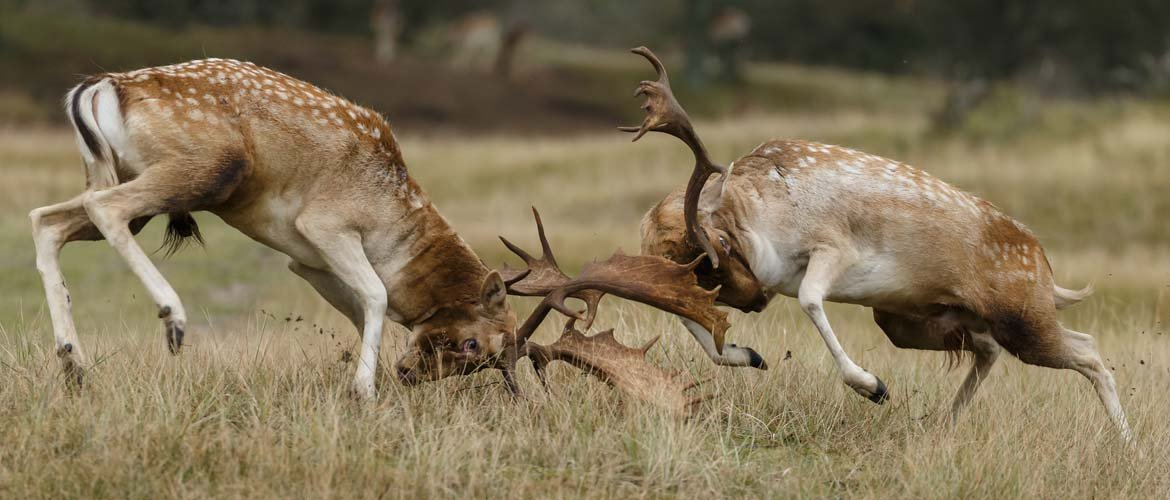
First we need to determine which fallow deer it is, European or Persian. Persian fallow deer (Dama mesopotamica) is today only found in Iran and Israel, but it inhabited parts of Anatolia, particularly the southern regions bordering Syria and the Levant, during the Bronze Age. They were widespread in Southwest Asia at that time and co-existed in Anatolia with the European fallow deer (Dama dama), though their distribution was limited by human activity...
Now the mating season of Persian fallow deer is Jul/Aug - Sep/Oct and the mating season of European fallow deer is Sep/Oct...
This would make fallow deer animal calendar marker for autumn, Jul/Aug - Oct/Nov, in Anatolia. I already talked about this in my post "Deer and bee", in which I analysed this Silver tetradrachm of Ephesos, dated to 390–380 BC.
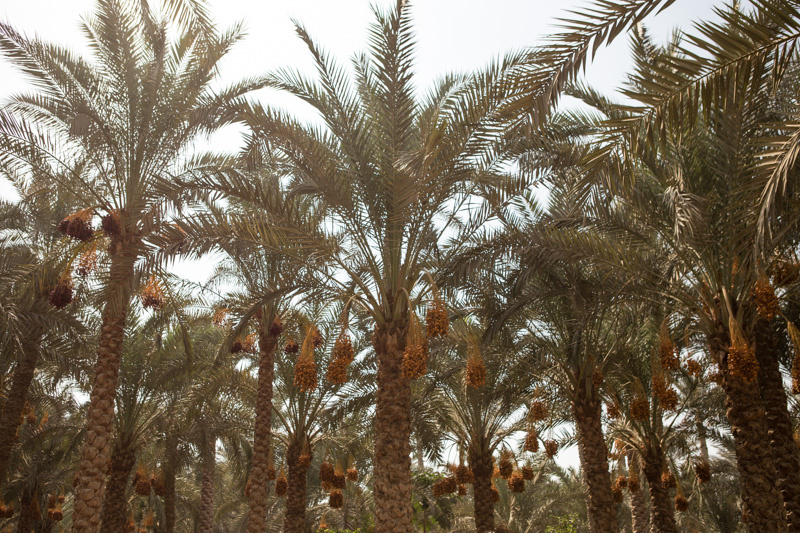
This coin also depicts a fallow deer lying under a date palm tree...Date palm tree is a plant calendar marker for Jul/Aug first appearing in Mesopotamia. Date harvest season starts in Jul/Aug, in Leo, when Lion (autumn) kills (ends) Bull (summer) and lasts until Oct/Nov. I gave full symbolic analysis of this seal in my post "Lion killing bull under palm tree"...
I talked about date palm as a plant calendar marker in many of my posts...
So fallow deer lying (dead) under a date palm tree is an animal calendar marker for Jul/Aug, Leo...
BTW, Leo (Jul/Aug), originally had nothing to do with stars either. It is the ancient animal calendar marker marking the beginning of the main mating season of the Eurasian lions.
Talked about lion as an animal calendar marker in many of my posts...
Now fallow deer was directly linked to Artemis from the Minoan times. And Artemis is also linked with bow and arrow and lions...
I talked about this in many of my posts.
Like my post "Winged Artemis", about this shard of a late 7th c. BC amphora, found on the island of Paros, showing a winged Artemis holding a lion by its tail and ear, surrounding by what looks like sun symbols, swastikas and crosses...Artemis in Leo, Jul/Aug...
Or my post "Artemis Orthia", about this drawing of an archaic carving of a chariot on ivory plaque from the Sanctuary of Artemis Orthia in Sparta. The chariot is pulled by winged (solar) horses and is driven by a female (goddess?) charioteer. A lion is depicted lying behind the horses...Again, Artemis in Leo, Jul/Aug...
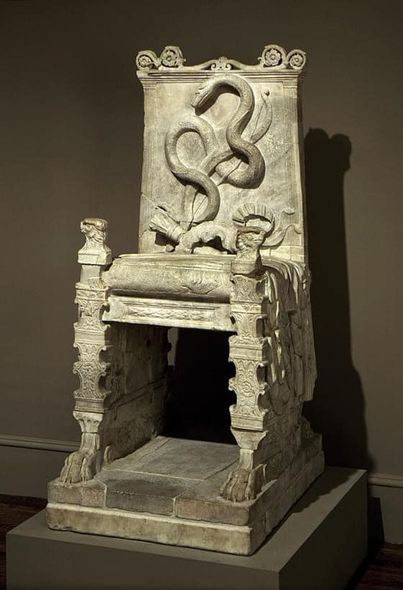
Artemis, the twin sister of Apollo, the destructive sun (dragon) of Jul/Aug, Leo, whose holy month was Jul/Aug and who was also linked to lions...Apollo...The dragon...This dude:
Marble Throne of Apollo, Roman, late 1st c. AD. Currently in the Los Angeles County Museum of Art. Whoever made this, knew who Apollo really was and wanted to show Apollo in his true shape (serpent, dragon), sitting on his throne.
I talked about Apollo, the god of the sun in Leo, Jul/Aug, the Greek equivalent of Mesopotamian Nergal, in this series of posts: "Palil", "Lord of the flies", "Lions of Delos", "Apollo and dolphins", "Marble throne of Apollo", "Apollo and Python", "White raven", "Threshing floor of Apollo", "Apollo the great archer", "Apollo Sminthius"
Artemis, the twin sister of Apollo, who was also the terrifying archer of whom it is said:
"I will remember and not be unmindful of Apollo who shoots afar. As he goes through the house of Zeus, the gods tremble before him and all spring up from their seats when he draws near, as he bends his bright bow..."
Artemis, the feared archer herself, and the girl whom Hera accuses of being "a lioness between women"...Strange...But familiar? At least it should be...Ever heard of the Lioness of heaven? Ishtar? This girl...
I talked about her in my posts "Gisgis relief", "Sirius the mother of Venus", "Apocalypse", "The brightest star", "Inana and Šukaletuda"...
Artemis, who liked showing off by holding two lions, like on this Ancient Greek jug from Louvre, dated to 560-550 BC...
BTW, between two lions means "In Leo"...Oh and do you see how she is flanked by two spear men (two spears)?
The reason why Artemis is standing in Leo, Jul/Aug, is because Artemis is just another name for the ancient Archer Warrior Goddess, Ishtar...Deified Sirius in Leo, Jul/Aug...
For those who will say "Ishtar was the morning star", yes she was, in Leo (Jul/Aug), when Sirius rose in the morning with the sun...Which is why Ishtar stands on a lion (with sun above the lion) and why Ishtar is known as "The Lioness of heaven"...
For those who will still say Ishtar is Venus and not Sirius. This post, "Sirius the mother of Venus", and linked articles might be of interest: You know how everyone thinks that Inanna/Ishtar (Morning Star) is Venus and how I think that it was originally Sirius, and only later became Venus?
Well, it seems that Ancient Egyptians preserved the proof of this switch in their mythology.
Meet Sopdet...
Sopdet, the personification of Sirius, was the consort of Sah, the personification of Orion. And their child was Sopdu, the personification of Venus, "Lord of the East" (Venus as morning star)....
Ta Ta Taaaaaaa!!!!
And the reason why deified Sirius goddesses are archers is this: In Mesopotamia, Sirius was seen as an arrow and the surrounding stars were seen as a bow...And they were stars of Jun/Jul/Aug...
I already talked about this in my post "The brightest star" about the link between Sirius and Inanna...
So Jul/Aug, the time of the year ruled by Nergal/Apollo, and his twin sister Ishtar/Artemis is the time when Sirius (bow and arrow) rises with the sun...
But why did Mesopotamians see Sirius as arrow? Remember my post "Invisible archer"? If arrows are shooting down from the night sky, there must be an [invisible] archer shooting them from up there...
This article was about Orion and Orionids meteorite shower. Orionids shoot down on earth during Sep/Oct/Nov. But there is another meteroite shower that rains light arows down on earth in Jul/Aug. Perseid Meteor shower...
And guess when this meteor shower is most intense? When the most light arrows are being shot down on earth? Right before dawn. You can even see them at dawn, together with Sirius and the sun...Destructive sun of Leo, Nergal, Apollo...
Now knowing all this might help us determine who is actually sitting goddess depicted on our Hittite rhyton...I think it is most likely some Hittite version of Ishtar/Astarte/Asherah/Artemis...
One other thing. I presume the bird sitting on the hand of the seated deity is a Peregrine falcon.
Peregrine falcons migrate over Turkey, following mapped bird migration route used by all the birds migrating over Turkey, northwards in Apr/May/June and southwards in Sep/Oct/Nov.
Interesting, right? The deity standing on the stag is also holding a peregrine falcon...
This means that all the animal calendar markers depicted on this image point at Aug/Sep/Oct...So who is sitting pretty in Sep sipping (what?)...
The grape harvest season in Anatolia, Turkey, generally falls in Aug/Sep/Oct...
BTW, do you see the mushroom shaped thingy in front of the seated deity? The main mushroom season in Anatolia and across Turkey is autumn, specifically Sep/Oct/Nov...How interesting...
Now this is climate chart for Çorum province, the old Hittite heartland. The autumn rains arrive in Sep/Oct/Nov...
Interesting, right? Considering that there is a guy pouring water libation in front of the god standing on a stag and holding a peregrine falcon...
To read more about ancient animal and plant calendar markers, which are at the root of all our mythologies, start here…Then check my twitter threads I still didn't convert to blog post...I am way way behind...