Showing posts with label flamingo symbolism. Show all posts

Friday, 25 October 2024

Jackals from Susa

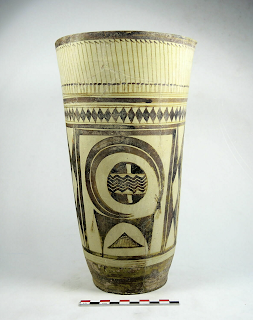
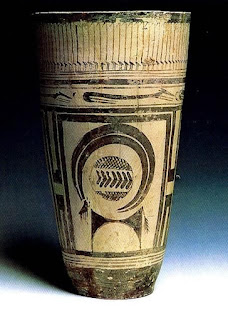
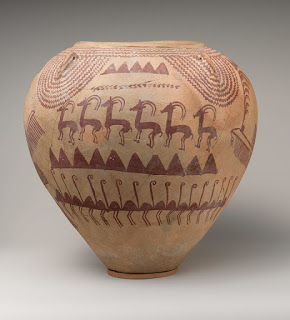
An amazing vase/beaker, made between 4200 and 3500 BC in Susa, an ancient city in the Near East located in modern-day Iran...

Full of animal calendar markers for Oct/Nov, beginning of the rain season in the Susa area...

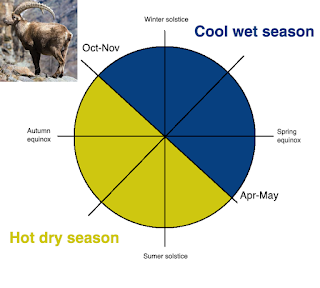
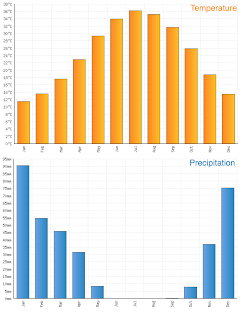
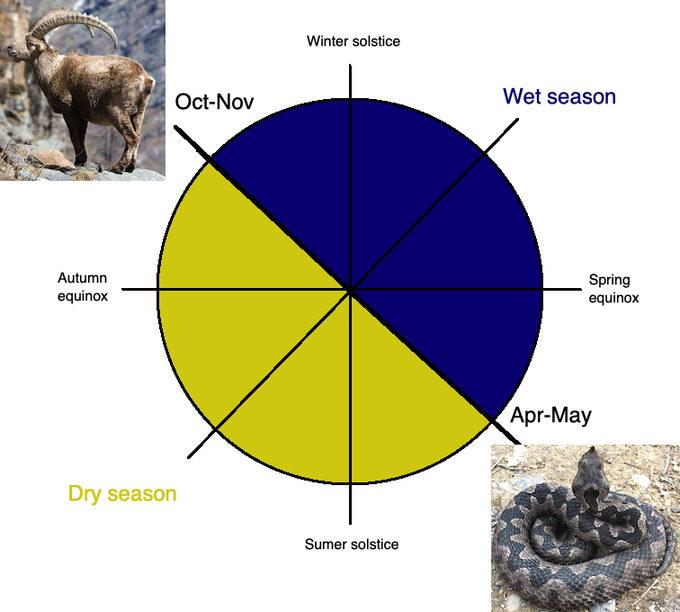
If we look at the climate chart for Susa area, we can see that the climatic year is divided into hot, dry summer and cool, wet winter...
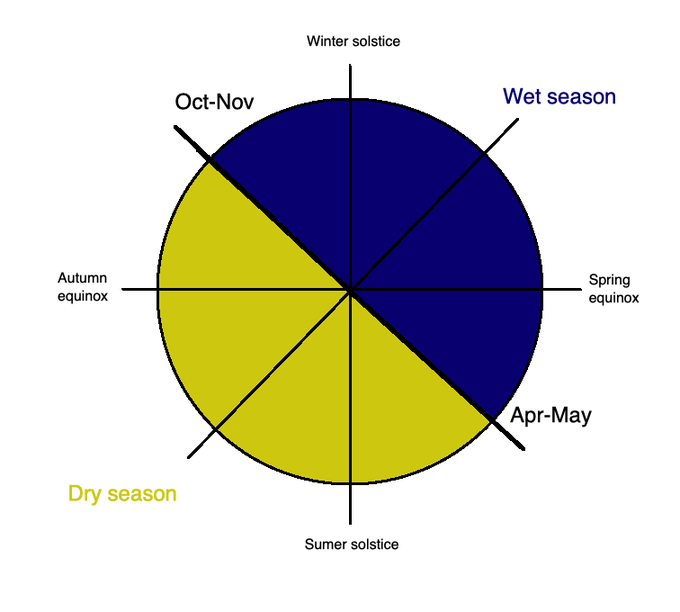

As it happens, in Iran, the beginning of the Ibex mating season (Oct/Nov), overlaps with the beginning of the rain season, which is marked by violent and loud male goat fights for females...
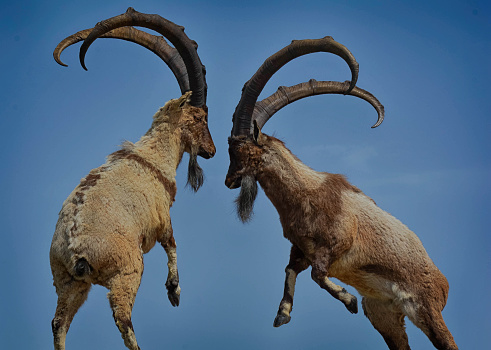
So ibex goat became animal calendar marker for the beginning of the rain season (rains arrive when ibexes start to mate)...

And because rain supports (the tree of) life...

Iran, Sasanian period, 6th-7th century AD silver and gilt plate depicting the tree of life flanked by between two prancing ibex goats...
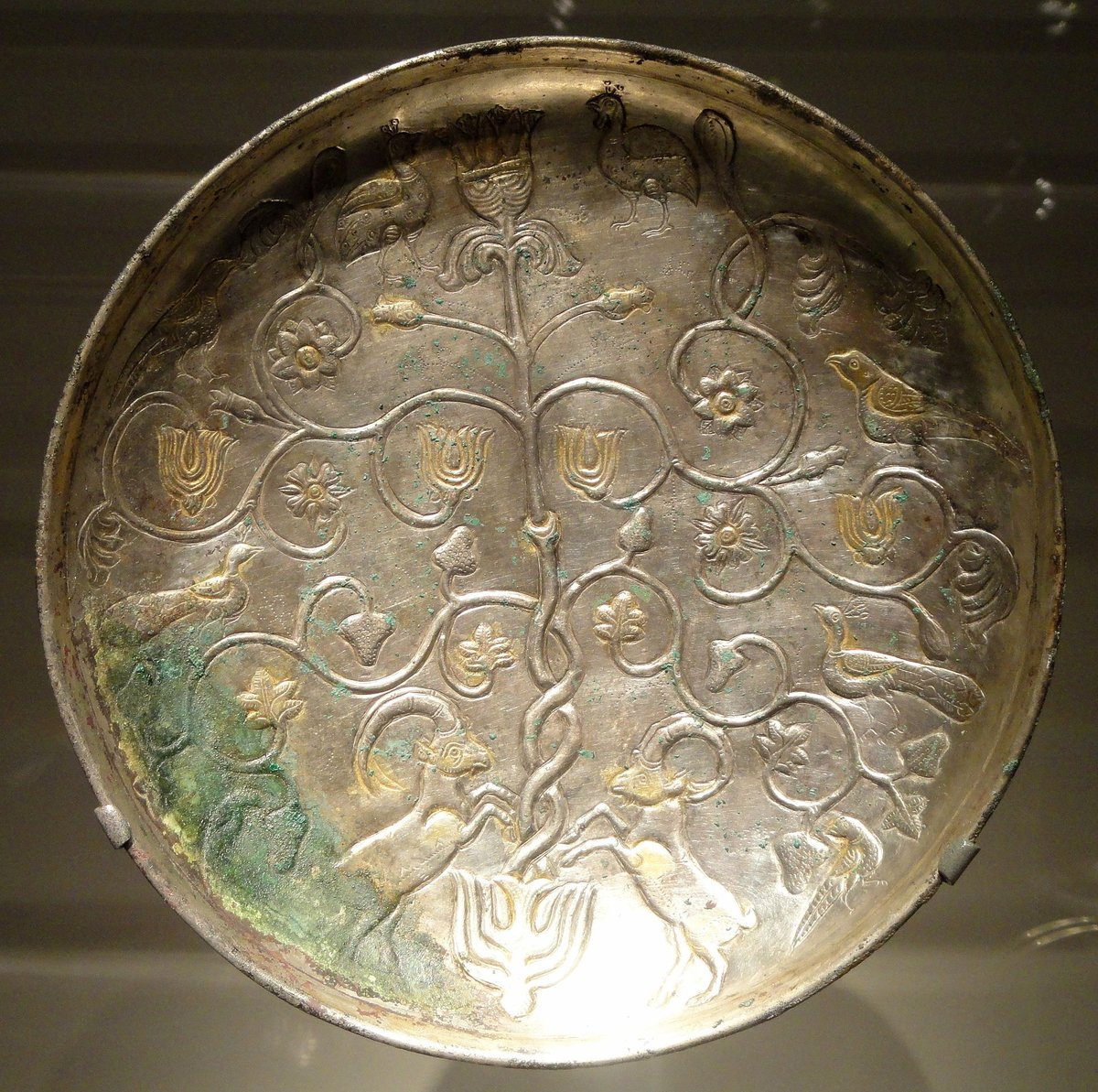

I talked about this in my posts "Anahita" and "Jiroft flood vase"...

Eastern Mediterranean, Levant, Mesopotamia, Iran, Central Asia have the same climate and so we find the same symbol, ibex goats flanking the tree of life, in all these places. Check my post "Bactrian bronze age menorah", in which I talk about this very cool Bactrian bronze stamp, dated to 2400BC-1600BC, for examples

Neolithic Farmers from Iran progressed very quickly from a calendar marker "rains arrive when ibexes start to mate", to "rains are brought by ibexes" to "rains are a gift of the ibex god (anthropomorphised ibex)"...

"Master of Animals" stamp seals, Tepe Giyan, Iran, 5000-4000 BC...


You can read more about the eternal struggle between the rain goat and the sun serpent/dragon in my post "Master of animals from Tepe Giyan"...

As I said once before, all our mythologies are the result of the fact that people are very good at noticing patterns in nature while simultaneously being very bad at distinguishing between correlation and causation 🙂...

As for anthropomorphization...It's hard to pray to goat for rain. It's much easier, psychologically, to pray to a human like god of rain (with goat horns)...

Anyway, back to our amazing beaker from Susa. 

This beautiful vase is not a Modern Art Masterpiece...It is almost 6000 years old, and is currently kept in Louvre, Paris in the "Département des Antiquités orientales"...Analysis of the symbols + lots about sad state of Flamingos in Iraq can be found in my post "Flamingos from Susa"... 

And in it I provided the calendaric link between ibex (beginning of the mating season of ibex goats, Oct/Nov) and flamingoes (arrival of Greater Flamingos to their wintering grounds in the warm Southern Mesopotamian marshes, Oct/Nov)...

So that's two out of three animal calendar markers from the original Susa vase identified. So what about the canine?

Dog...Right?

Wrong...from the animal calendar markers point of view...Dog is a well known animal calendar marker for Jul/Aug, dog days.

When our mythologies were made out of animal calendar markers, Sirius, the Dog Star rose with the sun in Jul/Aug, when mating season of the old dog breeds began...

Egypt: "Dog days"

Mesopotamia: "Tishtrya"

India: "The bitch of the gods"

It would not make sense to put dog on this vessel together with ibex and flamingoes...There must be another kind of canine that lives in Iran and starts mating in Oct/Nov...

And there is. Golden jackal.

Could this be the canine depicted on our Susa vessel?

All the animals are identical calendar markers, all marking Oct/Nov, the arrival of rains to Susa...
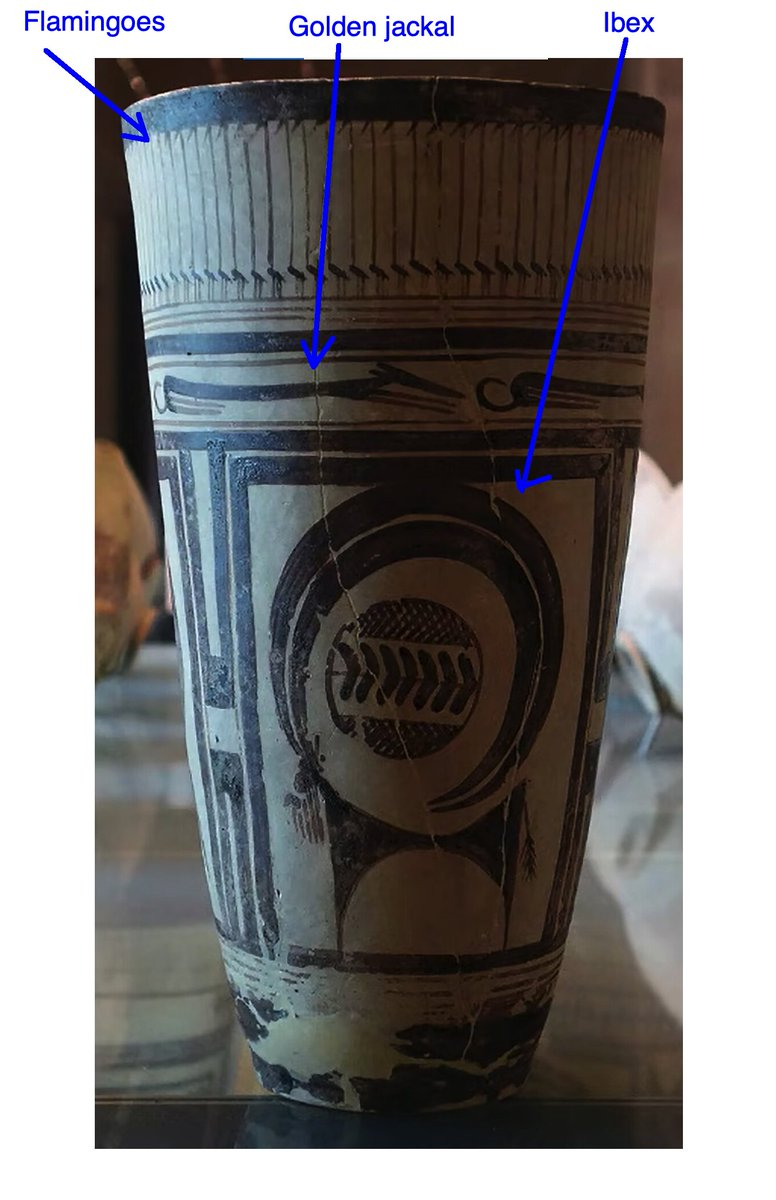
Rains that make grain grow. Kind of a big deal if you are a Neolithic farmer in Iran...Is this grain symbol under the Ibex horns? Grain was planted in Iran in Oct/Nov too...

Some posts about the symbol for grain and the Mother of grain in Neolithic Europe, Central Asia, Mesopotamia, Iran, Levant: "Mother of grain", "Altyn Tepe mother of grain", "A person in a little boat", "Sabi Abyad venus", "Hathor grain pendants"...


That's it. To read more about ancient animal and plant calendar markers, start here…Then check my twitter threads I still didn't convert to blog post...I am way way behind...


Friday, 24 December 2021

Flamingos from Susa

This beautiful vase is not a Modern Art Masterpiece...It is almost 6000 years old, and is currently kept in Louvre, Paris in the "Département des Antiquités orientales"...

It was made between 4000BC and 3000BC by the people who lived in Susa, South Western Iran...


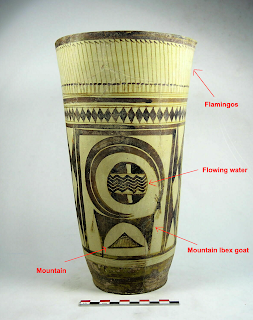
I don't know if you can see what is actually depicted on this vase, cause of amazingly stylised drawing style...So Here is the same vase with annotations...


The goat depicted in the centre of the vase is our old friend, Ibex goat, The Goat of Rain...


The most depicted animal (calendar marker) in Iran...I talked about it in my post "Iranian goat of rain"...

Why was Ibex goat so important to ancient Iranians? Cause the beginning of the mating season of Ibex goats in this part of the world, Oct/Nov, coincides with the arrival of life giving rains, and with the beginning of the cool, wet half of the year...


Susa climate

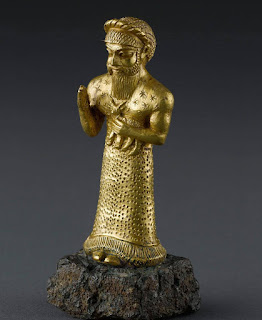
Goats were so symbolically powerful, that kings, when they wanted to look really important, depicted themselves carrying baby goats...

I talked about this in my post "Goat carrier"...Follow the links in the article to read more about the the Goat of Rain...

So, Goat of Rain, animal calendar marker for Oct/Nov...

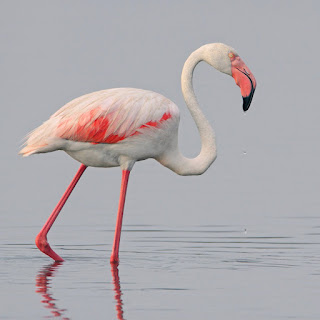
What about flamingos? This is Greater Flamingo

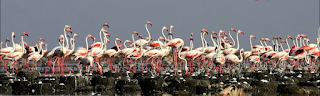
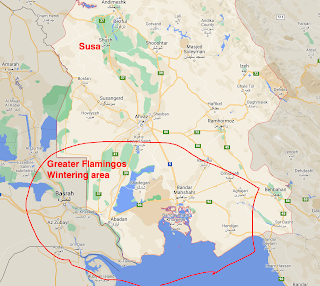
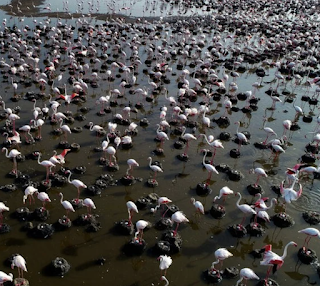
And in Oct/Nov, at the same time when The Goat of Rain starts mating, huge flocks of Greater Flamingos arrive from their northern breeding grounds in Central Asia, to their wintering grounds in the warm Southern Mesopotamian marshes...

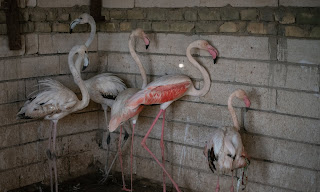
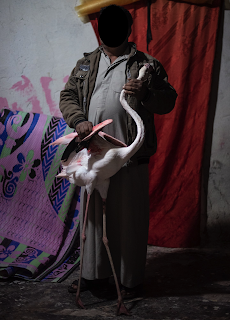
Unfortunately, not for much longer...Thousands are caught every year by poachers in both Iraq and Iran and are sold either "alive, to people who want to decorate their gardens with living Flamingos" or "dead, to people who like eating roast Flamingos"...

Two articles about migratory bird (and flamingo) poaching in: Iraq and Iran...

Now Susa is located in Khuzestan Province. 

When I started looking at the flamingos in Khuzestan, the first article that I came across was this one that talks about a mating colony of Greater Flamingos in Khuzestan Shadegan Ponds...

Flamingos mate there between April and August...So that screws up the interpretation of the Susa vase flamingos as animal calendar marker for Oct/Nov...

Maybe ibex mating season marks the beginning and flamingo mating season marks the end of the cool wet half of the year???


Well...

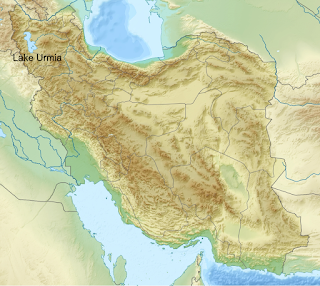
The problem is that all the papers about Flamingos in Iran are citing Lake Urmia as the main Greater Flamingo nesting ground in Iran...


For instance, in "Flamingos" By Janet Kear, Nicole Duplaix-Hall we can read that:

"Lake Rezaiyeh (Urmia) is the main Greater Flamingos breeding ground...Southern marshes (including Khuzestan Shadegan marshes) wintering grounds..."

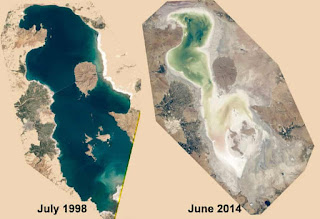
The problem is that the lake Urmia has all but disappeared over last 20 years...

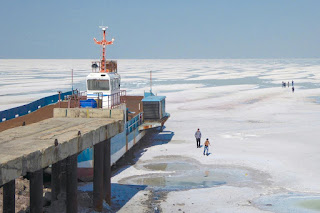
It almost completely dried out...

Which means that the Iranian Greater Flamingos had to find some other place to nest...Or die out...

The 2017 "Birds of Iran: Annotated Checklist of the Species and Subspecies" by Abolghasem Khaleghizadeh, Kees Roselaar, Derek A. Scott, Mohammad Tohidifar, Jiří Mlíkovský, Michael Blair & Pavel Kvartalnov, says:

"Greater Flamingo: Formerly an abundant breeding bird at Lake Urumiyeh, Azarbaijan...common winter visitor to...Khuzestan and entire south coast..."

But:

"recently found breeding in...Khuzestan (at Shadegan)"

So it seems that the birds now nesting in Khuzestan have moved there after their native habitats in Central Asia (listed in "Zoogeographical results of the bicentennial study of the northern part of the asian population of Phoenicopterus roseus" by Boris Yu. Kassal) and the ones in Northern Iran were destroyed...

And that at the time when the Susa vase was made, all the Greater Flamingos found in the Southern Marshes near Susa were winter visitors arriving in huge flocks when Goats of Rain started to mate, in Oct/Nov...

But I might be wrong...BTW this is just one of many vases from the same period depicting Goats and Flamingos...


Most likely not by accident...

BTW, at the same time when people form Susa, Iran, made their Ibex - Flamingos vases, someone in Naqada, Egypt, made this...Looks familiar?

I talked about this in my post "Markhor goat from Naqada"...


Tuesday, 13 July 2021

Markhor goat in Naqada

Ceramic vase - Naqada II, Egyptian Predynastic period 3500 BC. Dim 8,5x7,6 cm. Currently in: Museo Arqueologico Nacional, Madrid, Spain...


Officially depicts a hunting scene...

Have you seen this article called "Nahal Mishmar hoard"? About the treasure throve of bronze objects found at Nahal Mishmar in Israel and dated 4000-3500 BC. 


One of the artifacts found in the treasure is this beautiful staff...

It is topped with the 4 small heads of Ibex goats 

surrounding the big central head of a Markhor goat 

Now Ibex goats are found in Levant. And there they are a symbol of the rainy season, which starts when ibex goats start to mate, in Oct/Nov...Like on this depiction of the mother goddess from Revadim...


The problem is that Markhor goats don't live in Levant. They live in Central Asia, Iran, Iraq, Pakistan...Where they are a symbol of the rainy season, interchangeable with Ibex goat. Because both of their mating seasons start in Oct/Nov, when rains arrive...

I talked about this in my post "Goat in a tree"

So while researching Nahal Mishmar hoard, I proposed that the it must have been made by someone from that part of the world, Central Asia, Iran, Iraq, Pakistan. Cause only they could have seen Markhor goats and had it associated with Ibex goats as a symbol...

It turned out Nahal Mishmar treasure is believed to be made by immigrants from Iran. Because of genetics of the people who made the treasure...And the similarities of artifacts from both areas...

Now the makers of the Nahal Mishmar treasure were expelled by the locals...Those the locals couldn't kill. I thought they went back north to Iran. But what if they went the other way...Down south...To Egypt...

Who else could have made a vase with Markhor goats and Ibexes prancing around the mountains?

By the way, Ibex goats live in Egypt. It is the subspecies known as Nubian Ibex. And Nubian Ibex mating season is from October to December...

Guess what happens in Naqada in October? Rains arrive...

So I think that Ibex was depicted on the above vase for a reason. It is another example of Ibex goat being used as a calendar marker that means: rains arrive when Ibex goats start to mate...

Just like in Levant, Mesopotamia, Arabia, Central Asia, Iran...Amazing...

So I think that  the guy with huge erection standing in the middle of mating Ibex and Bezoar goats is not a hunter. I mean he is unarmed which is usually a dead giveaway for "not a hunter". He is most likely a fertility symbol, fertility god, possibly rain god...

By the way this vase is not an exception. Markhor goats are found on other Naqada vases too. Like this one. Again no explanation how come this goat is here, in Egypt...


Ibex goats are also found all over predynastic artifacts. Here is another vase from Naqada II period. Dated to 3500BC.

It depicts Ibex goats...And Flamingos. 

Why flamingos? Because breeding season of Greater Flamingo, the subspecies found in Egypt, is "Erratic, depending on the rains, but mainly November-February"...Ha!

As a comparison, here is a vase from Susa, Iran, dated to 4000BC...

In its center is a huge Ibex. Its horns surround what looks like a furrow with a plant, most likely grain. Rains make plants grow. And they start falling when Ibexes start mating...It is also "after the first rains" that fields are ploughed and grain is sown...Important!!!

The Susa vase also depicts pile of flamingoes...Flamingoes which arrive to Iran every November from Central Asia, to spend the winter...Interesting...Right?

Guess what happens in Egypt during the Ibex and Flamingos mating? Well grain is planted...The flood has ended, the soil was fertilized, and it's time to plough and plant grain while the first rain is falling...

What is amazing is that once we understand why these animals are depicted on the ancient artifacts, we can then detect anomalies in distribution of these artifacts: pieces that are found in the areas where the animals depicted don't exist...

Or the depicted scene put together makes no sense...When compared with the local climate...Which are all indicators of the foreign influence and possible migrations which brought these influences...

Like these vases. 

Or this for instance

I talked about this in my post "An Ki = Ankh"


PS: Is it possible that the animal with the spiral horns is Kudu antelope? They lived in the North Africa, Levant and Arabia in the early and middle Holocene...Well at least this is what the authors of this paper think the animals with spiral horns depicted on the petroglyphs were...But were they Kudu's or Markhor goats? When did Kudus disappear from these areas? Were they still around in the 4th millennium BC? Did immigrants who came to Egypt from Mesopotamia bring Markhor goats with them? Via Arabia and Levant?