Showing posts with label Romanian culture. Show all posts

Sunday, 5 March 2023

Wheat cross

A ceremonial "wheat cross" from Romania. It was made on the last day of the wheat harvest to carry the "wheat wreath" from the fields to the village. Pic from this great paper about crosses from the Alba county in Romania, "Crucea in patrimoniul spiritual al judetului Alba" (In Romanian)...

The wheat wreath was the most important part of the Romanian end of harvest ceremonies. It was made from the last sheaf of wheat...

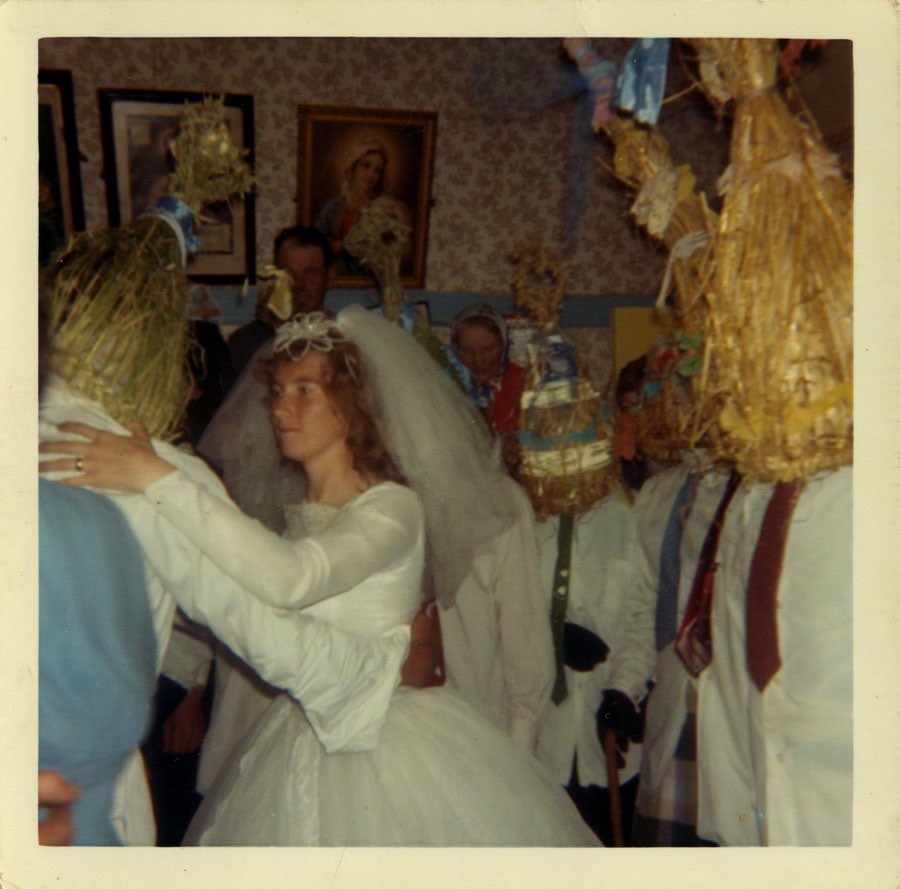
It was normally then used to "crown" the "most beautiful unmarried girl" that participated in the harvest, who then carried it back to the village on her head...Love these pics of the reenactment of this ceremony by Vasile Sarb


The same Wheat wreath ceremony was performed by the Slavs. Wheat wreath, worn by the "corn maidens" and made from the last sheaf of wheat, was the first batch of grain to be threshed on the threshing floor. This grain was then set aside for next year's sowing and was the fist grain to be sawn. I talked about this in my post "Wheat wreath"...

BTW, a lot of Slavs once lived in Romania, which is attested by huge number of Slavic toponyms and hydronyms and by the amount of Slavic words still present in Romanian language...

Romanians, like many other Europeans, believed that the last sheaf of wheat, from which the wreath was made, contained the "spirit of grain"...This spirit was preserved in a "Corn dolly" made from the last sheaf instead or together with the wreath. I talked about this in my post "Corn dolly"...


Who corn dolly represents can be seen from the fact that in Gaelic, the word Cailleach means both an old woman and the last sheaf of wheat and the corn dolly made from it. Corn dolly which represents Mother Earth, the life (grain) giving mother...

I talked about this in my post "The old woman of the mill dust"...

And in Slovenia we find this: Men bringing an old woman in a grain basket into the mill, where she gets transformed through milling into a young girl. An old story about the rebirth (sowing/sprouting) of the Mother Earth (Mother of grain) over winter? I talked about this in my post "Bablji mlin"...

What is very interesting about the "wheat wreath" was placed on the head of the most beautiful unmarried (fertile!!!) girl which participated in harvesting, who then carried it to the village "while everyone else sang wedding songs and performed various wedding rituals"...

This seems to be directly linking female fertility and land fertility, again something found also in Slavic and Gaelic folklore (remnants of old religions)...

In Ireland "grain sheafs appear at weddings and dance with a bride"...

More about walking sheaves of wheat in European folklore can be found in my post "Walking sheafs of wheat"...
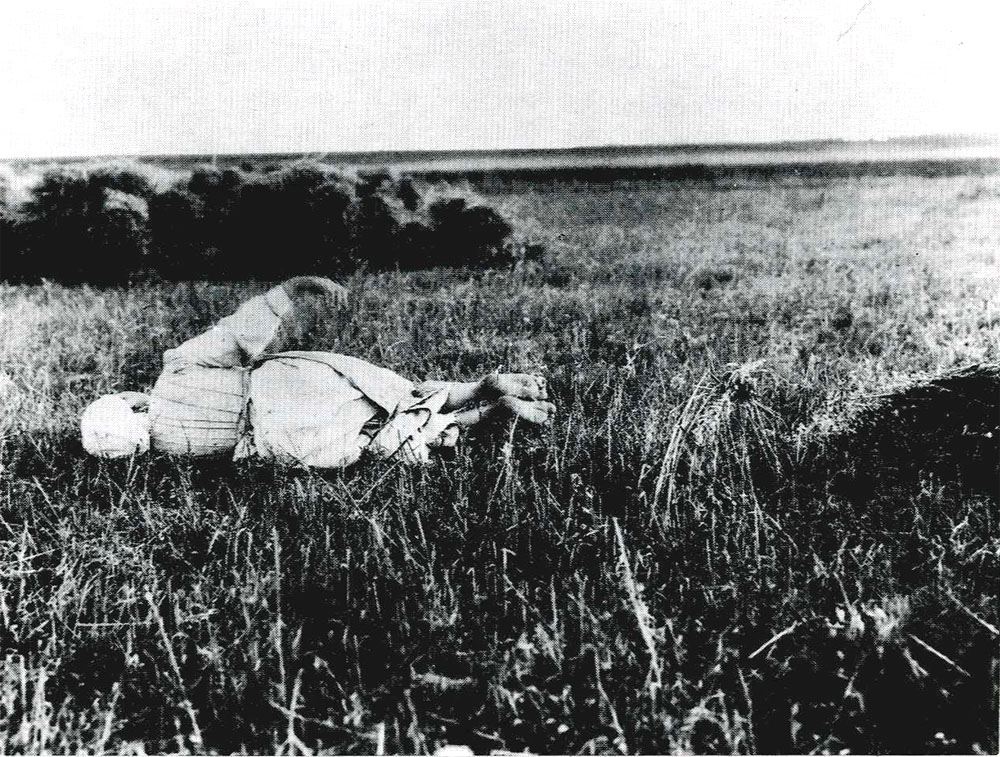
In Russia, in the past, after the last sheaf of grain was cut, women harvesters would lie down on the ground and roll around the field "to return the strength to the earth". 
The Wheat wreath was in Romania always made by women standing in a circle, and originally was made "the way you would plait women's hair"...


Which (thank you @another_barbara) looks like ear of wheat...The girl carrying the wheat wreath was the embodiment of the Corn Maiden...

BTW, this link between female fertility and land, and especially grain field fertility is ancient, and can be traced back to Neolithic Fertile Crescent, from where it spread to Europe...

As I said, all over Europe, The last sheaf of grain represents the living "sprit of grain"...But in Eastern Slavic countries, it also represents The Ancestors...This is Diduch (Grandfather) Christmas sheaf from Ukraine... I talked about this in my post "Diduch"...

And interestingly, the girl carrying the wheat wreath, is sprinkled with water all along her journey from the field to the village...Why? Slavs believed that thirsty ancestors can cause droughts which destroys wheat...I talked about this in my post "White feast"...

Sunday, 1 September 2019

Iovan Iorgovan

This is Iovan Iorgovan, a Romanian mythological Dragon Slayer. He is usually depicted armed with a battle club or with a battle hammer (axe).


The legends featuring Iovan are mainly centred around the Cerna river in souther Carpathian mountains


In one of the legends, a three-headed dragon dared to disturb Iovan who chased the dragon down the Cerna river valley cutting his heads off one by one until he finally killed him close to Sviniţa in Danube gorge. Dying dragon bled so much that the place is still called Red Valley


Another legend is linked to the Retezat mountains.


There a three headed fire breathing dragon kidnapped a shepherdess that Iovan was in love with. Iovan got himself a huge maul (battle hammer, axe) in Transylvania and defeated the dragon. But not before the dragons fiery breath burned all the trees on the mountain making it bare.

The mountain Retezat is linked to another very interesting legend, which explains why the mountain is missing its top.


Now there is a problem with this mythological character: his name. Iovan is Romanised Serbian Jovan. Ethnographers are themselves puzzled by the fact that one of the main Romanian folk heroes has a Serbian name...

You can read more about this in this article: "The Myth of the Hero slaying the Dragon" from the blog dedicated to "Comparative studies in European and Romanian mythology and folklore". 

But the main legend of Iovan actually states that he was originally a Serbian prince who came from the south:


The whole area where the legends about Iovan Iorgovan originated is full of Serbian toponyms and hydronyms. River "Cerna" means Black in Slavic languages. Its main tributary is "Belareca" = Bela Reka = White river in Serbian.

A lot of place names in the same area have Serbian roots. Sviniţa, Sichevița, Camenița, Crușovița, Lucacevăț, Martinovăț, Iablanița, Șumița, Socol, Zlatița, Cruşovăţ, Zbegu, Dolina...My favourite are these two toponyms one close together: studena=cold and topla=hot 🙂.


So the legend about a hero with a Serbian name started in the area which once had (and even today has) a sizeable Serbian population. But that Iovan was Serbian is not the most interesting thing about Iovan Iorgovan...

In the legend, Iovan is named "fiu de Ramlean" which is translated as "son of Rome." But he also came from Serbia. There was a time when Serbia was Rome...Before Romans crossed Danube and invaded Dacia...Is this how old the legend is?

Where does Iorgovan comes from? Iovan is the dragon slayer. This role is usually reserved for St George (Γεώργιος). So Iovan Iorgovan is Iovan Iorgu Iorgos (George), the dragon slayer  🙂.

Dragon represents the destructive power of the burning summer sun. Summer starts on the 6th of May, Slavic God Jarilo (Raging fire) day. So Jarilo is the Dragon. Funnily Jarilo was Christianized into St George, the Dragon killer 🙂.

The Dragon, Summer heat (Veles), is "killed" by Autumn thunderstorms (Perun), every year on 2nd of August, the day of Perun. Perun, Slavic thunder god is armed with a battle axe, battle hammer, just like Iovan.

Now interestingly Iovan, Jovan, just like English John, is said to come from New Testament Greek Ἰωάννης (Iōánnēs), from Hebrew יוֹחָנָן (Yōḥānān). 

But here "Iovan" kills dragon with an axe (hammer). He is a thunder god. And he is "the son of Rome" who came from the south. And in the late Roman empire, the thunder god Jupiter is also known as Jove, Iovis... Is the origin of Iovan Iov(is)?

Iovan is also "young". In Latin, young is "iuvenis". It comes from Proto-Italic *juwenis, from PIE *h₂yuh₁en-. cognates with Sanskrit युवन् (yúvan), Persian جوان (javān) 🙂 And Jarilo, apart from Raging, Brightly burning, also means Young 🙂.


A very interesting fella that Iovan Iorgovan 🙂...