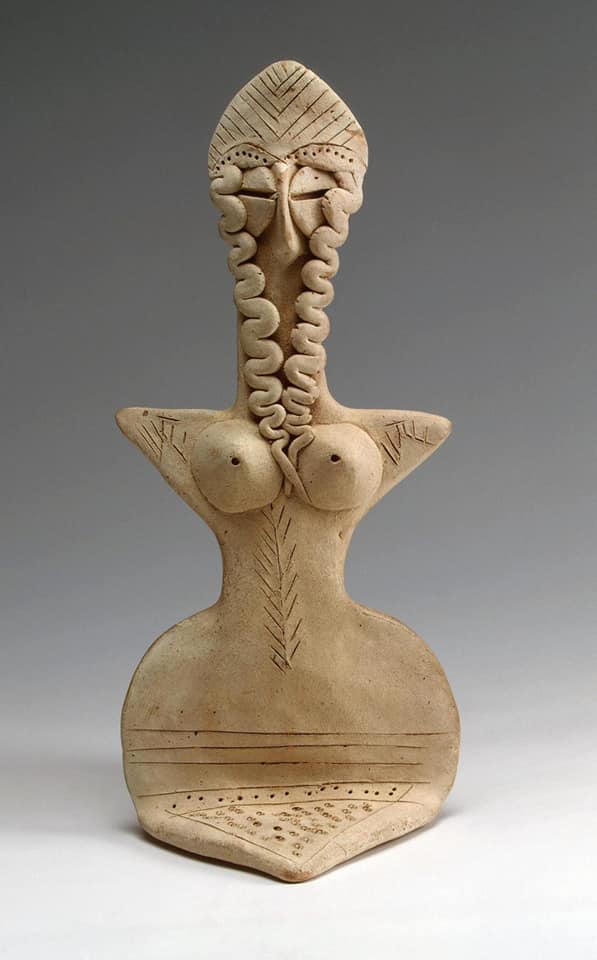
This alabaster stele [my comment: depicting the Mother of Grain, see more further down the thread], was presented in 2012 catalog of the Phoenix Ancient Art, as a cult plaque originating from the Near East and dating from the beginning of the third millennium BC...
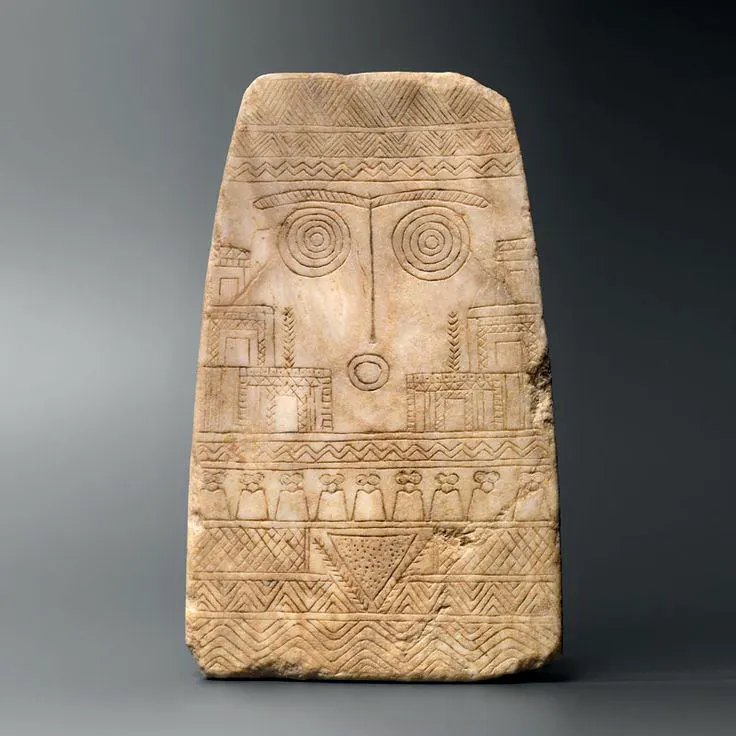
According to Professor Michel Al-Maqdissi, an expert in oriental archaeology at the universities of Damascus and Saint-Joseph des Jésuites in Beirut, this stele almost certainly came from the ancient Mesopotamian city of Mari...
Located in Syria, not far from the Iraqi border, Mari was literally devastated by the wild searches and massive looting that took place before and after Daesh/Isis proclaimed its Islamic caliphate...
The offices of the Phoenix Ancient Art were raided by the customs in 2016 and a number of archaeological objects were seized under the suspicion that they were looted in the Middle East and smuggled into Europe...
The owner of the Phoenix Ancient Art was later sentenced in Switzerland for forging documents in order to disguise the true origin of the artefacts he was selling. You can read more about this here...

Now the interesting bit. The mother of grain? What the hell is the Mother of Grain? Well she is Mother Earth of course...Our stele from Mari also has eyes and vulva as well as water, plants, buildings and people...
What is the best way to symbolically depict "Mother Earth"? Place moutains, plants and animals between eyes and a pubic triangle. Decorated bone depicting slightly bewildered "Mother Earth", 6th - 5th millennium BC, Hagoshrim, Southern Levant. From my post "Eyes"...

But Mother of Grain is a special version of Mother Earth. She is the mother earth of the grain farmers...
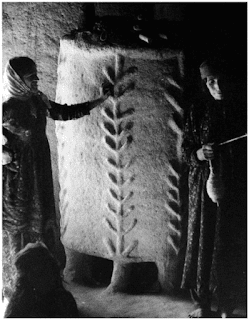
We know this because the plant depicted on the stele from Mari is grain...

I first talked about Mother of Grain in my post "Mother of grain"...
Mother of grain...Grain seed and vulva symbolism from Vinča, Starčevo and Lepenski vir cultures...Link between female fertility and earth/grain field fertility...

The same symbol, grain growing out of a vulva can be seen on these levantine pendants
Golden pendant with the image of Hathor. From Tel el Adjul. Gaza, middle of the 2nd mill BC.

Similar pendants with a depiction of grain growing from the vulva.
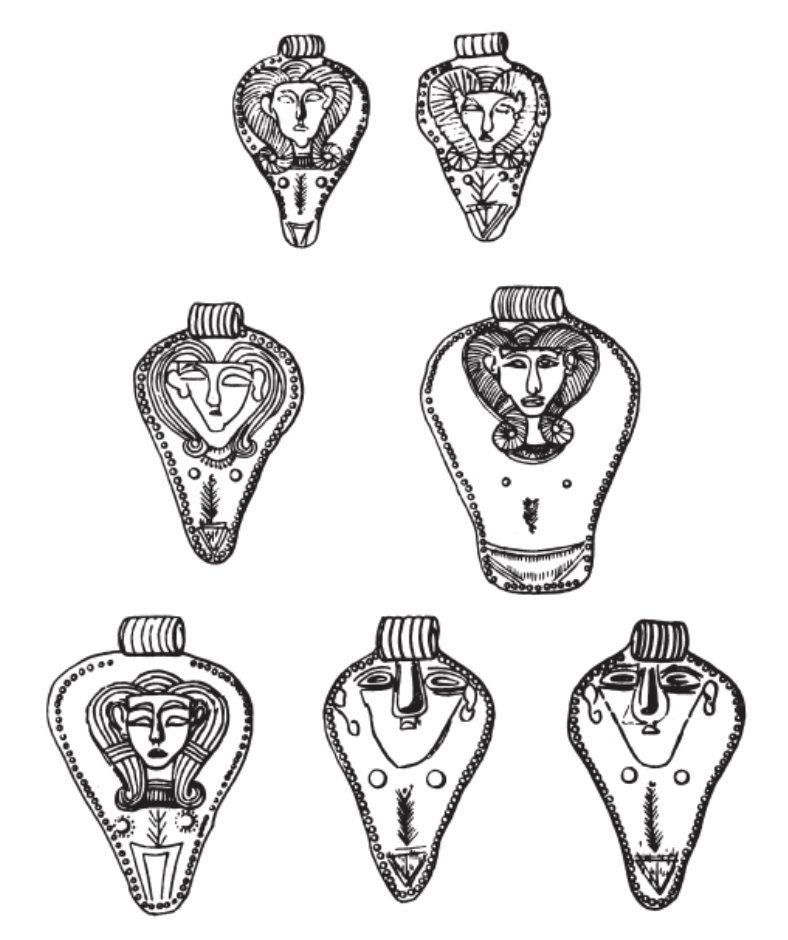
I wrote about them in my post "Hathor grain pendants"...
And then I talked about mother of grain in my post "Sabi Abyad venus"...
A figurine from the Late Neolithic and Early Halaf Village at Sabi Abyad, Northern Syria, part of Fertile Crescent. dated to 7th mill BC...Depicting Mother Earth turning into Mother of Grain...

And then in my post "Altyn Tepe mother of grain"...
How to depict "Mother of Grain"? Like a voluptuous woman (Mother) whose vulva (where new life come from) is horizontal (like Earth, Field) with horizontal lines (furrows) with plant (Grain) growing out of them. Altyn Tepe, BMAC, 3200-2000 BC...

An I talked about the mother of grain in my post "Mother of grain from Yarim Tepe"...
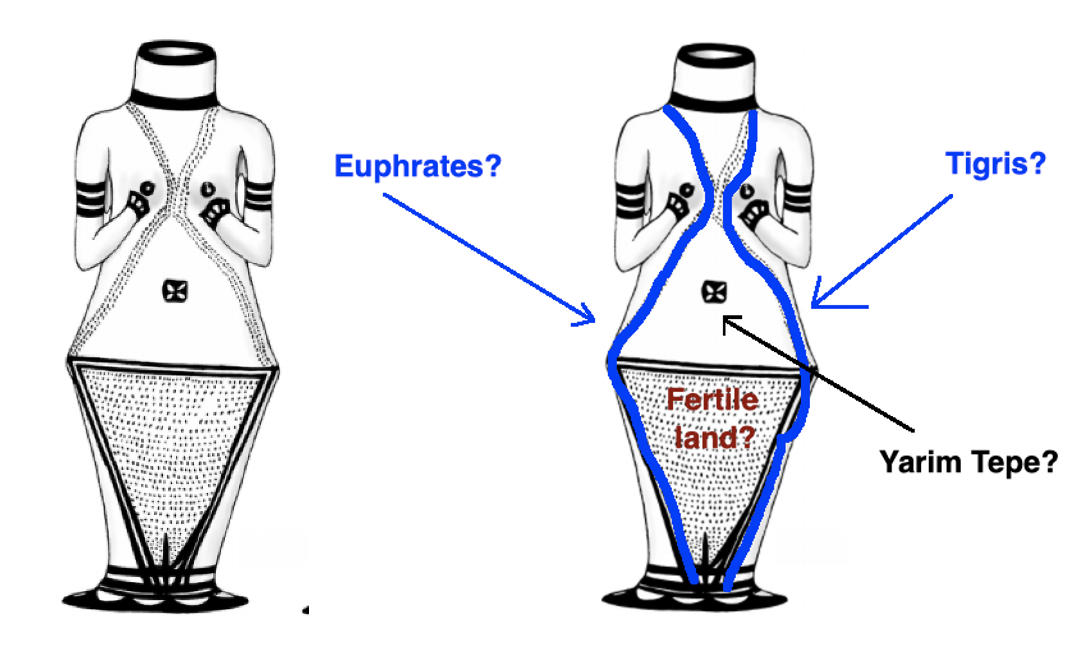
Figurine of a nude "woman"? Or a depiction of the "Mother of grain"? Yarim Tepe, Iraq. Ubaid period, 5000-4000 BCE. Iraq Museum... Interpretation from:

And finally i talked about the mother of grain in my post "Arjoune venus"...
An early Halaf culture figurine from the Arjoune site in Syria. It is made from a natural pebble, and it depicts a female form, with large eyes and long hair. And a square pubic area...Grain field?...Mother of grain?

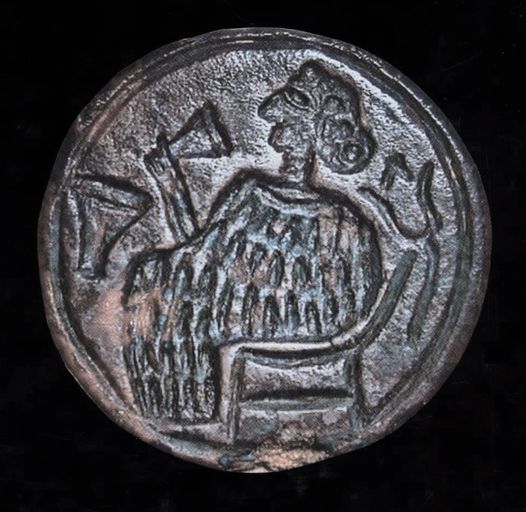
The Mother of Grain had a name in Mesopotamia: Inanna:
As for me, Inanna,
Who will plow my vulva?
Who will plow my high field?
Before my lord, Dumuzi,
...
I poured out grain before him,
I poured out grain before my womb...
From: "The Courtship of Inanna and Dumuzi"
I talked about Inanna and grain in many of my posts...
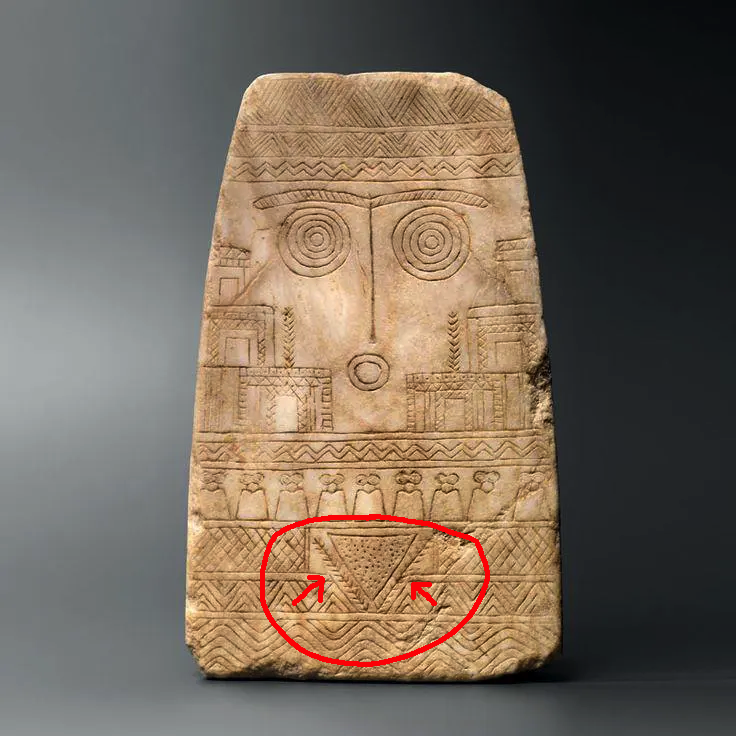
Just as Inanna says herself, we are supposed to see the vulva depicted on the stele from Mari as a grain field. Hence two grain symbols depicted on both sides of it...
We are also supposed to see the buildings as temple granaries, again because of the grain symbols depicted on top of these buildings...
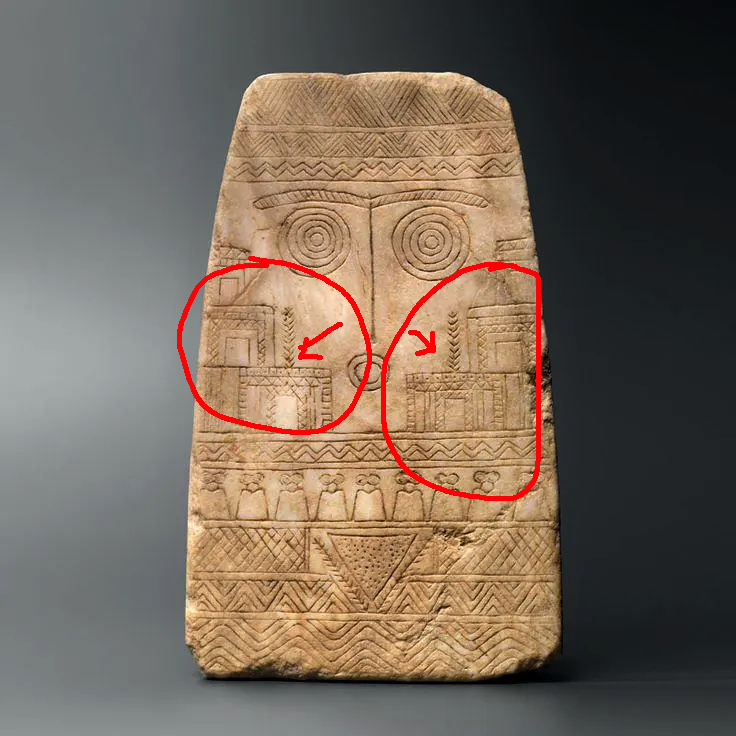
We are also supposed to see this feature as an irrigation canal. People from Mari used canal irrigation extensively...You can read more about it here...

In which case this is feature is supposed to be seen as the Euphrates river...

As for the little minions, they are supposed to be seen as people from Mari...I talked about them in my post "Eye idols from Tell Brak"...

To read more about ancient animal and plant calendar markers, start here…Then check my twitter threads I still didn't convert to blog post...I am way way behind...