Showing posts with label Grain god. Show all posts

Tuesday, 3 February 2026

An angel

@another_barbara alerted me to this cave painting from the La Pileta Cave, Province of Malaga, Andalusia, Spain, dated to c. 20,000BC...

She said: "...There is a mention of an early idea of an angel, but I bet @serbiaireland knows better 馃槆"

I didn't at first, but now:

After quick googling this is what I found out:

This is where Malaga is on the map. It lies at the bottom tip of the Iberian peninsula...

It also lies on the main bird migration route between Europe and Africa. Every autumn, between Jul/Aug and Oct/Nov, millions of birds fill the skies over Malaga heading south...And they did too at the time when the people painted the bird man on the walls of the La Pileta Cave.

The last birds to migrate are the most spectacular: Vultures. Today, they gather in the skies of Andalusia in their thousands and are a spectacle not to be missed. At least according to this page...

During Palaeolithic there were probably hundreds of thousands, or more vultures circling over the heads of the Malaga cave painters, right at the time when the first rains arrived to the region. Well if the climate was in anyways similar to the today climate.

I talked about migratory birds as animal calendar markers in many of my posts...

Interestingly in Mesopotamia vultures are linked with storm, rain gods...I talked about this in my post "Eagle dance"...

Eagle dance...

Montenegro 1963AD

Syria, 1800BC

Eagle (vulture) couples dance above the mountains at the beginning of their mating season, which coincides with the beginning of the rain season in Fertile Crescent...

I also talked about this in my post "Kassite seal with Apkallu", about this Kassite seal (18th-12th centuries BC) from Syria. National Museum of Damascus...

And in my article "Judgement of the birdman"...

So I wonder...

You also might find this interesting...Article "Pero" (feather), in which I proposed that the root of the name of the Slavic thunder god Perun is "pero" = feather, which would make Perun = Feathered one, and not from PIE perkwus, meaning "oak" or "mountain". Zeus, Jupiter, Perun were all linked to eagles. Why?

And I want to thank @another_barbara for alerting me to this amazing rock painting of a (maybe the earliest) "bird man", "eagle man"...vulture turned storm/rain god???

To read more about ancient animal and plant calendar markers, start here…Then check my twitter threads I still didn't convert to blog post...I am way way behind...

Wednesday, 13 November 2024

Grain and lions

A shard from a Hittite vessel with a depiction of a god (?) standing on a lion with a plant above lion's head. Museum of Anatolian Civilisations, Ankara, Turkey. I'd love to know what is the official interpretation of this artefact. Here's mine:

I think that the depicted plant is not just any plant. It's grain. Mesopotamian/Levantine symbol for grain. Some posts about the symbol for grain and the Mother of grain in Neolithic Europe, Central Asia, Mesopotamia, Iran, Levant: "Mother of grain", "Altyn Tepe mother of grain", "A person in a little boat", "Sabi Abyad venus", "Hathor grain pendants"...


Interestingly, in Anatolia, the grain harvest takes place in Jul/Aug, in Leo. Which is why, I think, the grain is depicted above the lion's head...I talked about grain/lion link in Anatolia in my posts "Eagle dude from Aleppo", "Bull god from Arslantepe", "Ulucinar stelae"


I have no idea who the god standing on the lion is...Are there any depictions of the Hittite grain deity, Halki? Considering that the sex of this deity is debated, can this help in any way settle the debate?

BTW, Leo (Jul/Aug), originally had nothing to do with stars either. It is the ancient animal calendar marker marking the beginning of the main mating season of the Asiatic lions. I talked about this in many of my posts...


That's it. To read more about ancient animal and plant calendar markers, start here…Then check my twitter threads I still didn't convert to blog post...I am way way behind...

Saturday, 14 May 2022

Al贸saka

How the hell did I end up here? When I was at school, my two most hated subjects were history/archaeology and biology...And yet today I will talk about animal calendar markers in the Al贸saka cult of the Arizona's Hopi tribe.  

Pic Binoche et Giquello

The above figurine is a rare representation of Al贸saka/Muyingwa, two aspects of the (supreme?) being or deity of the Hopi Kachina pantheon: the God of Germination and God of Growth of Corn...

There is also possibility that Alosaka and Muyingwa were two brothers (soon to see why this is important) and not two aspects of the same god. In any case, he/they lived in the Underworld and was/were the one(s) who made the seeds sown by the Hopi germinate and grow...

This two-horned deity was associated with rain. The symbols on the cheeks and at the base of the two horns are rain clouds. The long black hair at the back of the mask symbolises the curtains of heavy rain that this spirit is supposed to bring to irrigate the fields...

Al贸saka/Muyingwa was the main god of the Aaltu (Two-Horned Priests) sect or secret/sacred society...Photograph by H.R. Voth, from the "Book of the Hopi" by Frank Waters 

Pic H.R. Voth

During the religious ceremonies, these guys wore Headdress of Al贸saka, like this one: Basket head cap with a twine and two imitation horns of rawhide leather. Previous S.N. Los Angeles collection (not further specified)...

Pic by unknown (to me) author...

These ceremonial headdresses with fake leather horns were supposed to help the priests to personify either the horned god Al贸saka, or the animal from whom the god borrowed his horns: the Desert Big Horn sheep...

Pic by Andrew Barna

Some ceremonial headdresses of the Two-Horn priests of Al贸saka were actually made with real Big Horn sheep horns, like this one kept in the College of Eastern Utah Prehistoric Museum...


Pic by Tim Riley

Both Horn God Al贸saka (or his Two-Horned priest wearing Desert Big Horn sheep horns headdress) and Desert Big Horn sheep were found depicted on petroglyphs from the Hopi area. 


Pic by Moki John

Danny Rodman

Soooo...What's all this about? Why do we have a horned god, a deified Desert Big Horn sheep, associated with rain and corn? 

The answer is animal calendar markers...

Now, animal calendar markers are ancient calendar markers derived from the annual mating (most often) or birthing or migrating or hibernating habits of the animal in question...

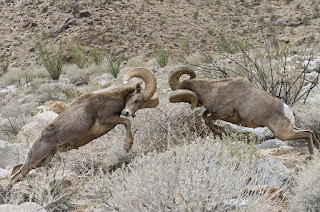
In this case that animal is Desert Big Horn sheep...Their mating season is Jul–Oct. During that time, desert bighorn sheep, which normally live in separate ram and ewe bands, get together in big mixed herds to party baby!!! 馃檪

Well every really good party with loads of horny guys all going for the best girl, eventually ends in fighting...Desert Big Horn rams are no exception. They charge at each other head-on crashing their massive horns together with tremendous impact...And bang...

Pic by Anthony Mercieca

Now this is not something you can miss if you lived anywhere near...Every year at the same time you would start hearing mighty crashing of ram's horns...And so this part of the year became known by Hopis as "the time of the Big Horn Rams"...

This would have been just a very very annoying time of the year, when everyone walked around with cheese in their ears (馃檪) if something else very very very very important didn't happen at the same time...

To understand what I am talking about, let's first have a look at the climate in Arizona...That spike you see in Jul/Aug/Sep is the arrival of monsoon rains...Only the most important annual event, the one that makes corn agriculture (and life) possible in Arizona...


Soooo...The Big Horn rams start banging their horns and spilling their semen at the same time when the sky god starts banging his thunder drums and spilling his heavenly semen, rain...

Pic by mdesigner125

What do you think, how long did it take for Hopis to associate Big Horn Rams with the arrival of rain and to somehow magically correlate these two events? To turn Big Horn Ram into The Ram of Rain? And then to turn The Ram of Rain into The Ram Horned God of Rain?

BTW, you can see here why Al贸saka/Muyingwa could have been one Big Horned God with two faces or two "brothers" Big Horned Gods...It takes two Big Horned Rams to produce the thundering sound that brings rain...馃檪

So why would The Rain God also be The God of Germination and Growth of Corn? The Hopis relied on rains to grow corn, practicing dry farming in desert valleys that stretch between the mesas...No rain, no corn...

Pic by American Indian Magazine

Because of the temperatures in the area, the corn planting in Hopi country may some years start as early as April, but most corn goes into the ground in late May and early June...You can read more about Hopi corn agriculture here 

Pic David Wallace

Corn seeds germinate after about 2 week, and the new corn seeds (cob) start forming after about 10 weeks...Now in order for corn to develop cobs it needs water and sunshine...Which is exactly what The Big Horned God provides when Big Horned Rams start banging their heads...


Pic World Wheel Community

Soooo....There you have it...


I will finish this article with this ceremonial Al贸saka screen. Just to add a cool plant calendar marker to the cool Animal calendar marker...

The pic is from "The Al贸saka Cult of the Hopi Indians" by J. Walter Fewkes...

The entire middle screen is taken up by the depiction of the Horned God, Al贸saka, holding in his right hand a cob of corn...A triple rain cloud symbol is depicted above god's head...So far so The Big Horned God of rain and corn...Nothing new...

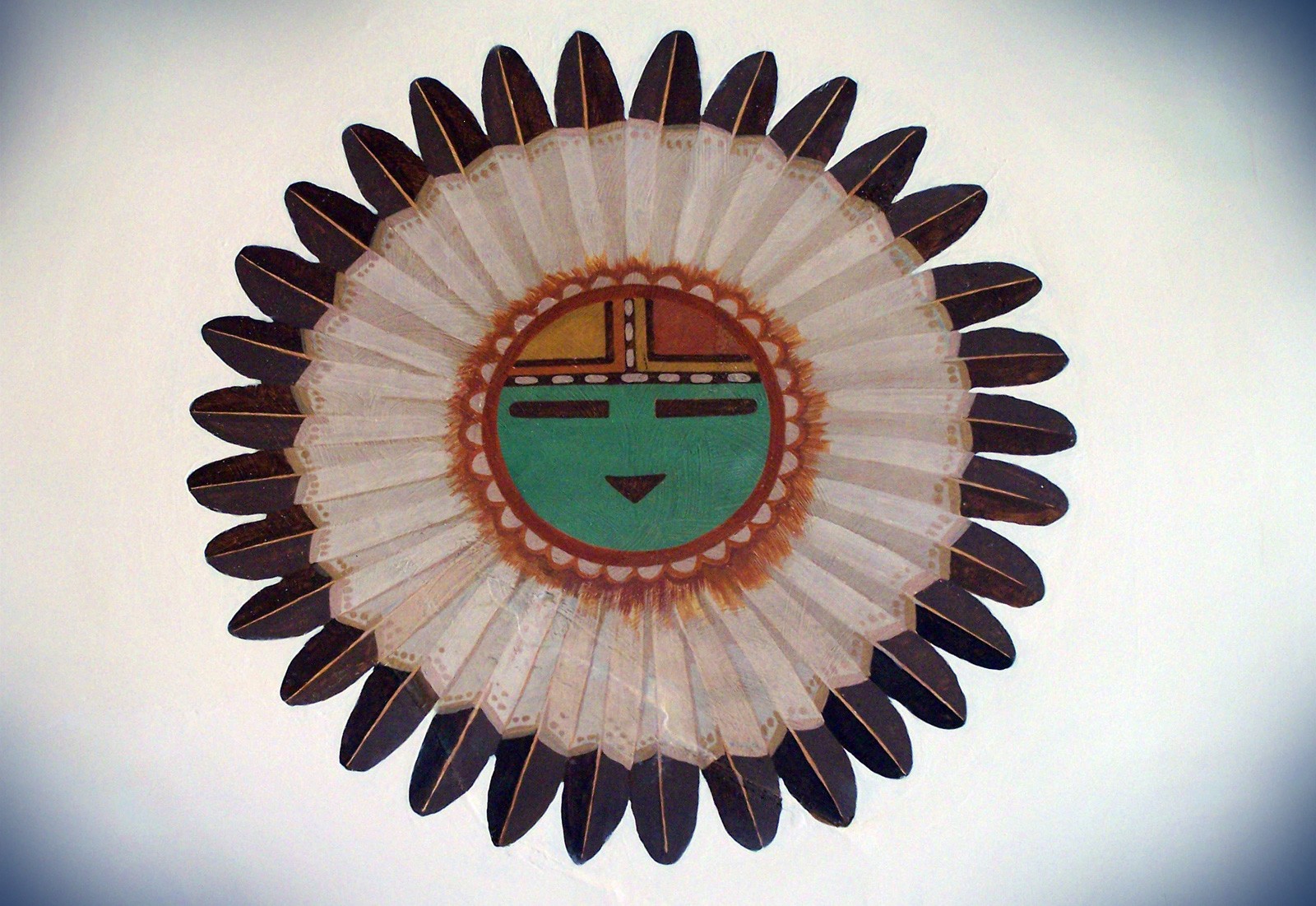
In the lower left corner is the symbol of the sun...This guy minus feathers...

Pic Fred Kabotie

Why? Cause the sunniest, hottest time of the year is also the wettest, the rainiest time of the year...Hence the constant confusion whether the supreme Hopi god was sun or rain god...

On each side of the screens are attached four artificial flowers. And on the right side of the screen, is what??? Well, J. Walter Fewkes didn't know...Let me see if I can help identify this "mysterious" 馃檪 object...

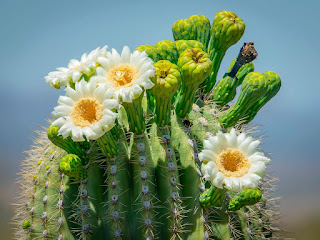
Ever heard of Saguaro cactus? Only the most recognisable thing from the Hopi land...Is the Horned God, Al贸saka looking at a cactus? And if so, why would the God of Grain be looking at a cactus while holding a corn cob?

Pic by Learn more every day

Saguaro flowering begins around the last two weeks of April, and peak flowering occurs during the last week of May through the first week in June. 

Pic by unknown (to me) author

Pic by unknown (to me) author

Saguaro flowering is triggered by winter rain as well as the increased day length, and warmer temperatures of spring.

This is exactly when Hopis planted their corn...For corn to germinate, it needs soil soaked with water and warm temperature...Exactly what Saguaro cactus needs to start flowering...Hence Corn god looking at a cactus surrounded with flowers?

To read more about ancient animal and plant calendar markers, start here…then check the rest of the blog posts related to animal calendar markers I still didn't add to this page, and finally check my twitter threads I still didn't convert to blog post...I am 9 months behind now...

But you can start here, with "The Goat of Rain" from Iran...Why goat of rain? Cause: 

Ibex goats...

Pic by unknown (to me) author

in Iran start banging their heads in Oct/Nov...

Pic by Cheryl Ann Quigley

at exactly the same time when rain (god) arrives in that part of the world...

Which is why Ibex goat is the most depicted animal in Iran...

Pic by Bradshaw foundation

And we find dudes walking around Iran with caps with Ibex horns...

Pic by Met Museum

But before someone start talking about "Ancient Trans-Oceanic connections" and such stuff, I don't think that these two examples of Big Horned gods is a result of any such connection...It is an inevitable product of the hunter gatherers turning into farmers...

And farming needs some kind of calendar to tell you when to plough, when to sow, when to reap...A calendar which is in tune with the local climatic and vegetative cycle...

Now these hunter gatherers didn't know stars and such stuff to create stellar calendars...What they knew were plants and animals...And if you have animals that do the same thing every year, at the same time, then you can use them as calendar markers...

As agriculture become more and more important, and people start depending on it more and more, the animals related to the most important annual agricultural events become more and more important. To the point where they become deified...

And turned into gods...With characteristics of the original animal calendar markers animal...Or with the original calendar markers animal as their sacred animal...And this seems to have happen everywhere...And I believe totally independently...

It is just the way our brains work...It seems...

PS:

From "The Distribution of Rock Art Elements and Styles in Utah" by KENNETH B. CASTLETON, DAVID B. MADSEN 


Saturday, 24 April 2021

Jupiter from Ibrahimovci

Altar dedicated to Jupiter, Juno und Minerva, Macedonia


In his 1925 paper "The Ring of Nestor", Sir Arthur Evans, the excavator of Knossos, mentions a curious rain-making ritual which was performed in Ibrahimovci, near Skoplje, Macedonia, during droughts.

This is 1925 we are talking about. At least 1500 years since Jupiter was officially a god of rain...And yet, uneducated, illiterate SLAVIC villagers in Macedonia still remembered him in times of desperation...

What is very interesting is that this altar "was lying face down normally but was lifted when the rain was needed". Compare this with this Slavic rain making ritual from Belarus in which Dabog's stone (Dabog was Slavic Sky god) is ceremonially lifted during droughts...


I talked about Slavic "Weather stones" rituals in my posts "The last megalithic ritual in Europe" and "Weather stones"...


Saturday, 27 March 2021

Bull god from Arslantepe

The other day, Wa拧拧ukanni (@dutpekmezi3), one of my favourite twitter accounts, and someone I would definitely recommend you to follow if you like archaeology, published a picture of this orthostat (engraved stone block) from Arslantepe, dated to 1200-700BC...


Here is the drawing of the same orthostat where the actual features are even clearer to see

The description under this artefact contains few "mistakes": 

First: the god is not holding a boomerang 馃檪 in his raised right arm, he is holding a sickle. That this is not a boomerang is is kind of obvious...Why it is a sickle, not so obvious...But it will become obvious...

Second: the god is also not holding a "lightning bundle" 馃檪 in his left arm, he is holding a sheaf of wheat...


The reason why I don't think this is a "lightning bundle" is because on another stone monument from the same period, Ulu莽inar stela, we can see what the "lightning bundle" of the Anatolian storm gods actually looks like: it's a trident...


I analysied the Ulu莽inar stelae in this article… What I have found during that analysis can help us understand the meaning of the scene from the Aslantepe orthostat too...

It is all to do with Anatolian climate and with the grain agriculture which was the most important activity in the Hittite kingdom...

The late April early May (Taurus, Beginning of summer) is the time of maximum precipitation and maximum thunderstorms in the land of the Hittites.


Which is why the Thunder god on the Ulu莽inar stelae stands on the bull...

And which is why on the Aslantepe orthostat, the first image on the left depicts the Thunder god arriving on the chariot pulled by a bull...


It is this rain that fills the wells, rivers and canals and waters the grain and makes it grow. It is also this rain that can completely destroy the grain...So if you were a Hittite grain farmer, you were at the complete mercy of the Storm god...

If it was his will, and he brought just enough rain, at just the right time, the harvest time, late July early August (Leo, End of summer) will be the time of celebration and thanksgiving...

This is what the second, central picture on the Aslantepe orthostat depicts: a merciful Storm god giving a sheaf of wheat to a grateful king...


The fact that both "gods" on the Aslantepe orthostat are carrying a sickle is basically telling us two things: that this is actually one and the same god, in two different periods of the year: beginning and end of summer...And that the Storm god is also the Grain god...

The king in response pours a water libation. The harvest time in the Hittite land was the driest part of the year. The time of drought. The time of water shortages...Which is why a water libation was a deliberately chosen as the sacrifice...

The last picture on the right depicts "a man holding a bull ready to be sacrificed"...


This is very interesting. In Serbia and in Ireland, bulls were sacrificed in August to the storm gods who were also associated with grain agriculture...As thanksgiving for bountiful harvest...

I talked about this in my posts "Bull of Crom Dubh" and "Bull of Grom Div"

Also in Serbia and in Ireland, these gods were actually both Storm and Sun, Sky gods and grain gods...And in both places their day was celebrated at the time of maximum drought, the hottest part of the year, the beginning of August...

Beginning of August, which marked the end of summer, the season symbolised by a bull...So it was fitting that on that day Serbs and Irish sacrificed a bull, a sacred animal of the sky god, symbolically killing summer...

It seems that the Hittites did that too...

By the way the reason why summer, May, Jun, Jul, is symbolised by a bull is because it starts with the calving of Aurochs, wild Eurasian cattle, and ends with the mating of Aurochs, wild Eurasian cattle...You can read more about this in my post "Ram and Bull"...


The reason why autumn is symbolised by a lion, is because Eurasian lions main mating season started in August and spanned Aug, Sep, Oct...You can read more about this in my post "Musth"...

You can read more about the symbols of the seasons in my posts "Symbols of the seasons"...

So these Aslantepe orthostats are another great example of the use of animal calendar markers in agricultural calendars...These markers, based on the timing of the main events from the reproductive cycles of the animals used as symbols, are found everywhere in Eurasia...

To read more about ancient animal and plant calendar markers, start here…then check the rest of the blog posts related to animal calendar markers I still didn't add to this page, and finally check my twitter threads I still didn't convert to blog post...I am 9 months behind now...