Showing posts with label Nile flood. Show all posts

Sunday, 10 May 2026

Nut

This is my 4th Horus post...

Ra-Horakhty (Ra as Horus) in his Solar Barque, traversing the horizon on a Heavenly Nile, during the day (the time when we can see the world) from east, dawn (left eye) to west, dusk (right eye). From a Book of the Dead dated to 1552–1069 BC, Currently in Louvre, Paris...

The same scene, from another Book of the Dead, dated to 1387–1350 BC, currently in Egyptian Museum, Cairo. Except here instead of Heavenly Nile, the Solar Barque of Ra-Horakhty (Ra as Horus) is traversing the horizon on the Milky Way...

I talked about the (symbolic) link between sun (light) and eye (sight) first in my post "Svetovid"...

Utu, Sun: 𒀭𒌓

According to this table, this means god, heaven + day = sun...

Did the god sign originally mean shiny thing? Did the day sign originally mean "eye"? 

If so: shiny thing + eye = to see = sun? 

Like Slavic Svetovid = light + to see  

And then in my post "Sun eyes"...

Skull with amber discs on clay in eye-sockets. Dated to the 4th mill BC. Latvia. One of many amber "sun" disc (obverse (sun cross), reverse (sun rays) and cross-section) made by the same culture...


Rememeber, the Sumerian symbol for sun was Sun + Eye = Sight

Ancient Egyptians believed in a "Heavenly Nile" that mirrored the earthly Nile and flowed through the sky as its divine counterpart. and they linked this celestial Nile with Nut, the Sky Goddess...

She is typically depicted as a  naked woman, arched over the earth god Geb...Like on the outer coffin of  Butehamun dated to 1076–944 BC and currently in the Turin Museum....

She was believed to stretch across the sky from eastern horizon to western horizon, and that she swallows the sun every evening and gives birth to it every morning...

This is why on this papyrus from the Bibliothèque nationale de France, the sun god Ra was depicted as sailing across her body in his solar barque...

Nut was often depicted with stars in her body. There's been suspicion that she might have been in some way linked to the Milky Way, and recent discovery of this depiction of Nut from the outer coffin of Nesitaudjatakhet (I think) has finally confirmed this...

You can see that Nut’s body is covered in stars as well as a thick, undulating black curve that runs from the soles of her feet to the tips of her fingers. This curve, surrounded by stars on both sides, is reminiscent of the Milky Way’s Great Rift...

You can read more about this in the latest study by Dr. Or Graur, Professor of Astrophysics at University of Portsmouth

In which he builds on his previous work, in which he cross-referenced ancient Egyptian texts with astrophysical simulations...

And had concluded that references to Nut found in the Pyramid Texts, Coffin Texts, and the Book of Nut are descriptions of seasonal changes of the sky in correlation with Nut which can only be understood if Nut was in some way linked to Milky Way...

There is (I think) one more proof that Nut was (linked with) Milky Way and Heavenly Nile.

In the Egypt, the brightest part of the Milky Way, its galactic core, is visible towards the south, from Feb to Oct...

During Apr/May/Jun it can be seen in the southeast/south as a bright (roughly) East - West oriented arch stretching across the sky...

Going across and above the Nile river...


During Jul/Aug/Sep it can be seen in the south/southwest, as towering vertical "river" in the sky...

Running parallel to the Nile and touching it far down south/southwest, at it's source...

Which is very interesting because Jul/Aug/Sep is the time of the annual Nile flood, and this is the same time when the Milky Way, the Heavenly Nile truly becomes the reflection of the Terrestrial Nile. Or is it the other way round? As above so below?

In the this paper we can read that in the Book of Nut,  the centre of Nut’s torso was marked with "I Akhet when Sothis rises".

The heliacal rising of Sirius, known in Egypt as Sothis or Sopdet in the month of I Akhet, Jul/Aug, marks the beginning of the annual Nile flood...

So it is not surprising then that Nut was one of the Sycamore goddesses (Hathor and Isis, both linked to the annual flood were the other ones)...

Texts from the Book of the Dead directly invoke this aspect: "Hail, thou Sycamore Tree of the Goddess Nut! Give me of the water...which is in thee..."

Here is Nut, standing upright (just like Milky Way during the peak of the annual flood), pouring "the water of life", the flood water of both terrestrial and heavenly Nile, and giving bread (of life) which is the result of the flood which makes agriculture in the Nile valley, Egypt, possible...

I talked about this in my post "Sycamore tree goddess"...

Nut was also directly linked to the annual Nile flood through the celestial cow goddess Mehet-Weret whose name means "Great Flood" and, in some cases, the two were equated...

Nut herself was sometimes depicted as a Heavenly Cow, eating the stars each morning and giving birth to them at twilight...

I talked about celestial cows in my posts "Holy cow", "Cow and calf ivory" and "Inanna in Egypt", in which I explained why is Hathor as Mehet Weret (flood) was depicted as a cow and why she was depicted emerging out of papyris thickets...

But at the time when I wrote these posts, I didn't think of this:

Auroch calving season starts in Apr/May. After calving, cows would begin producing milk, with milk production rising until it reaches peak after 40 - 60 days, with peak lasting 20 days...

That's Jun/Jul, just before Jul/Aug, the beginning of the Akhet season, the season of the annual Flood...The milk of the celestial cow, who was the Milky Way, and the Celestial Nile, filling the Terrestrial Nile and causing the annual flood...

Now this is all super cool, but it gets cooler. Here is something I have stumbled across while reading this article:

"...birds [with] human faces [that speak] in human language [come from] Nut's northwest side to her northeast side, from the primeval darkness, the ḳbḥw of the gods [from] Duat, located on [Nut's] northern side..."

These "birds with human faces" are Ba birds. 

I talked about the link between birds as carriers of souls in European and Mesopotamian cultures in several of my articles:

In my post "Nav", in which I talked about how in Slavic mythology, souls of the dead entered birds, like these cranes, who brought them to Irij, paradise. Birds then brought the souls back when they were ready to be reborn...

And in my post "Soul birds" about the Ancient Greek depictions of human souls as birds with human heads...


And in my post "Bes" in which I explained why a
mong the Lake Onega petroglyphs, Russia, made c. 4000BC, the only two petroglyphs which were Christianised were "The Devil" and a swan... 


The term "qbḥw", often-abbreviated in writing to only the sign representing a tall water-jug with liquid pouring from it, is generally translated as "cool waters"...

This term was also used as a designation of the celestial vault, because of the belief that the sky is a liquid surface between the atmosphere and outer space, on which the celestial bodies were imagined to navigate during the day and the night...

Additionally, "qbḥw" is used to mean the source of Nile and its inundation, which issued directly from the Nun, the primordial ocean, which lay on the other side of Nut...

Dr Graur interprets the above depiction of the arrival of the Ba birds from Duat as the autumn bird migration into Egypt, which starts in Aug and ends in Nov. During this time the Milky Way orientation flips from northeast - southwest to northwest - southeast...

Dr Graur then goes to say that "the [above] passage, however, notes that the entrance to the Duat is 'on Nut's northern side', not the west, where the Sun sets daily"...

And then he suggests, "this tension may be due to evolving perceptions of the Duat between the era of the Old Kingdom and the era(s) when the Fundamentals (The Book of Nut) and its commentaries were written"...

But I think that this is just another proof that when Ancient Egyptians are talking about Nut, they are indeed talking about the Milky Way. Remember, Jul/Aug/Sep/Oct is when Milky Way assumes vertical, North - South position over Egypt...

Which means that if the Duat is at the end of Nut, then the position of Duat is not fixed, but instead it moves as Nut moves across the sky. And when the autumn bird migration starts in Aug, Duat is indeed North of Nut, because Nut is now pointing North - South...

How cool is this? But there is something even cooler.

There are two bird migration seasons during which millions of birds fly along the river Nile over Egypt:

Northward spring migration to Duat, Feb/Mar - Apr/May

Southward autumn migration from Duat, Aug/Sep - Oct/Nov


The beginning of the spring migration and the end of the autumn migration mark the beginning and the end of the period during which the galactic core, Nut's body, can be seen in the skies over Egypt...

This would explain Nut’s role in the transition of the deceased to the afterlife (as described in spells from the Pyramid Texts and  Coffin Texts)...

Cool? I think so...But there is something even even cooler:

Now on the corner of this map found in in this paper, which depicts the northern portion of the cosmos, the same area where the Book of Nut situates an opening of the Duat, we find the phrase "Qbḥw Ḥrw" meaning "the cool waters/firmament of Horus"...

How cool is this? The North, the direction from which migratory birds come to Egypt in the Autumn following the "Path of Birds", the Milky Way, Celestial Nile as well as Terrestrial Nile is marked as "The part of the sky of Horus"??? Why?

Well...Because of animal calendar markers...Deified animal calendar markers...Of course...I will talk about this soon...I promise...

In the meantime you might want to also read my first Horus post "Great duel", my second Horus post "Horus the Elder", and my third Horus post "Horizon...

That's it. If you are interested in reading more about ancient animal and plant calendar markers, which are at the root of all our mythologies, start here…Then check my twitter threads I still didn't convert to blog post...I am way way behind...

Friday, 27 May 2022

Watering papyrus

Here is another very interesting object I've stumbled across in Louvre last weekend 

It is a Hellenistic stela dated to the 4th-3rd c. BC, found in Umm al-Amad, Lebanon. The important bit of the description is circled in red


So...A ritual "watering of papyrus" by two (semi?) naked women...Anyone heard of this ritual? 

I can bet that this is a fertility related ritual considering papyrus is watered by (semi?) naked women 🙂 That and the fact that it "recalls the Egyptian motif of annual renewal"...

But what does "Egyptian motif of annual renewal" mean? Well check this article: "Cow and calf ivory", in which I talk about the importance of papyrus in Egyptian mythology. Why it is directly linked to the annual flood. It is basically a plant calendar marker that marks the beginning of the rising of the water level in the river Nile, because the papyrus start flowering at that exact time...

Here is Hathor/Mehet Weret (Great Flood), emerging from the flowering papyrus...


Hence "annual renewal"...

Hence "ritual watering of papyrus"...The ritual imitation of the flood...Very interesting indeed...

I wonder if people in Umm al-Amad knew what this all meant? This stela is definitely not an import from Egypt. It was made locally. Depicting local people performing ritual papyrus watering...Which makes no sense in Lebanon...

Anyway another great example of a transplanted deified calendar marker. This time plant calendar marker...

To read more about ancient animal and plant calendar markers, start here…then check the rest of the blog posts related to animal calendar markers I still didn't add to this page, and finally check my twitter threads I still didn't convert to blog post...I am 9 months behind now...

Monday, 11 May 2020

Dog days


Ahhh. I always wandered why the Egyptian "Dog days" were located on the solar year at the hottest part of the year, the end of July, beginning of August...So I looked at the Ancient Egyptian dog breeds...

First thing I found out that the Ancient Egyptian loved hunting dogs. 


And that their word for "hunting dog" was "Tesem". And that it was written in hieroglyphics using the image of a prick-eared, leggy dog with a curled tail from the early Egyptian age...


There were three main types of dogs in Ancient Egypt: pariah dog (basenji), two kinds of greyhound-like dogs and a molosser-type dog....And the one shown on Tesem hieroglyph is definitely the "pariah dog" known in Egypt as basenji.


The "pariah dog" is the name given to the half wild dog species still found around the world. They are the closest we still have to the old wild dogs...And they have preserved one important characteristic of wild dogs: They have one breading season...

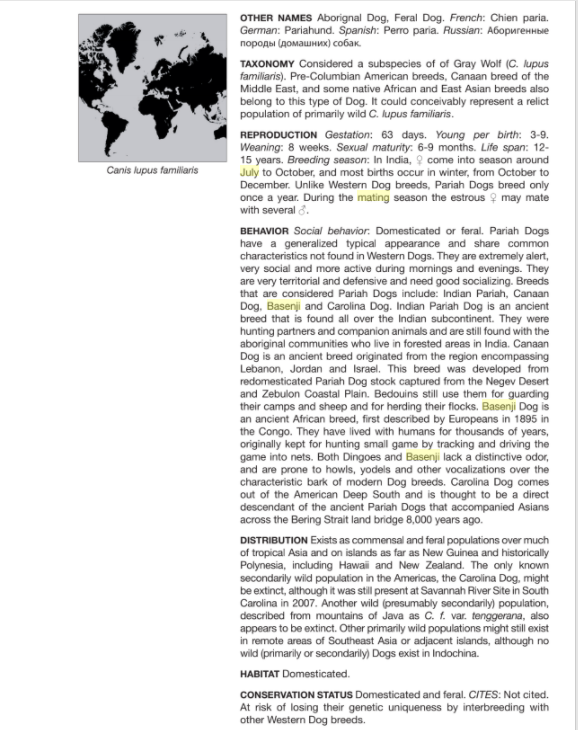
And guess when that breeding season starts? You guessed correctly. During dog days, end of July beginning of August, the hottest part of the year in the Northern hemisphere...Here is the page about the "pariah dogs" from Princeton "Canids of the world".


Basenji dogs are close cousins of Canaan dogs also known as Egyptian desert dogs, Bedouin Sheepdogs and Palestinian Pariah Dogs...


For the Egyptians the sight of these doggies dogging must have been a very pleasing sight indeed. Because the start of the Basenji breeding season coincided with Nile flood maximum...


I talked about this in my post "Holy cow". 

No wonder then that it is the Dog headed god Set who "defends Ra from the Serpent of Chaos Apep". The serpent is the symbol of sun's heat. And the dog days mark that maximum. After that the northern hemisphere starts cooling (the serpent is dying)...I talked about this in my post "Apep". 


Of course Set (Dog) is helped in his valiant fight against Apep (The Dragon) by Bastet (Lion, Cat). No wonder. Dog days fall in the middle of Leo...And Leo is where it is because it marks the beginning of the mating season of the Eurasian lions...I talked about this too in my post "Apep". 


And that's that...

Oh almost forgot. The time when in Ancient Egypt the Pariah dogs started getting frisky and when the Nile flood arrived, at that same time, Sirius, the brightest star in the night sky, was also rising...Is his why the star was eventually, when Greeks, who called that part of the year "Dog days" arrived to Egypt, called The Dog Star? The star that rises during Dog Days? The days when Pariah dogs are mating? 

This link between this ancient dog breed, Dog Days and Dog Star seems to have once been widespread. North America, China, India, Mesopotamia, Ancient Greece, Rome...Finally Egypt...I think this is a very interesting theme which requires more research and which will most likely point at the common prehistoric system of symbols and beliefs linked to the common dog breed, with common single breeding season, dog days, found in all these areas... 

If we look at the oldest known depictions of dogs, they all show Pariah dogs. 

Prehistoric rock art found in Saudi Arabia shows humans hunting with Pariah dogs on leashes. These pictures could be at least 8,000 years old, making them the earliest art depicting dogs. 


Before the discovery of this rock art from Saudi Arabia, it was was believed that the oldest depictions of dogs were the ones found on pottery shards from Tepe Sabz in Iran, which are almost 8000 years old. They depict the same Pariah dog breed... 


The domestication of dogs happened at the European edges of the Eurasian steppe. 30,000 years old dog fossils from Palaeolithic sites in Belgium, the Ukraine and Russia are the earliest proof we have of canids which are different from wolves...

The earliest proof of dogs actually being part of human society are the remains of a dog found buried with two humans, dating back 14,700 years, in Germany... 

So, it seems that the dogs spread throughout the world from Europe. And because domesticated dogs stay with humans, they must have spread with the humans who originally domesticated them...Which haplogroup was responsible for the dog diffusion? Was that dog the Pariah dog? Did Pariah dog always have a single mating season which started at the same time (July-August)? And is it during this expansion of the Mesolithic-Neolithic hunters and their Pariah dogs, that the link between the mating period of Pariah dogs (Dog Days) and the Dog Star - Sirius was forged in all these places around the world? 

Sunday, 8 March 2020

Menat


Have a look at this object.


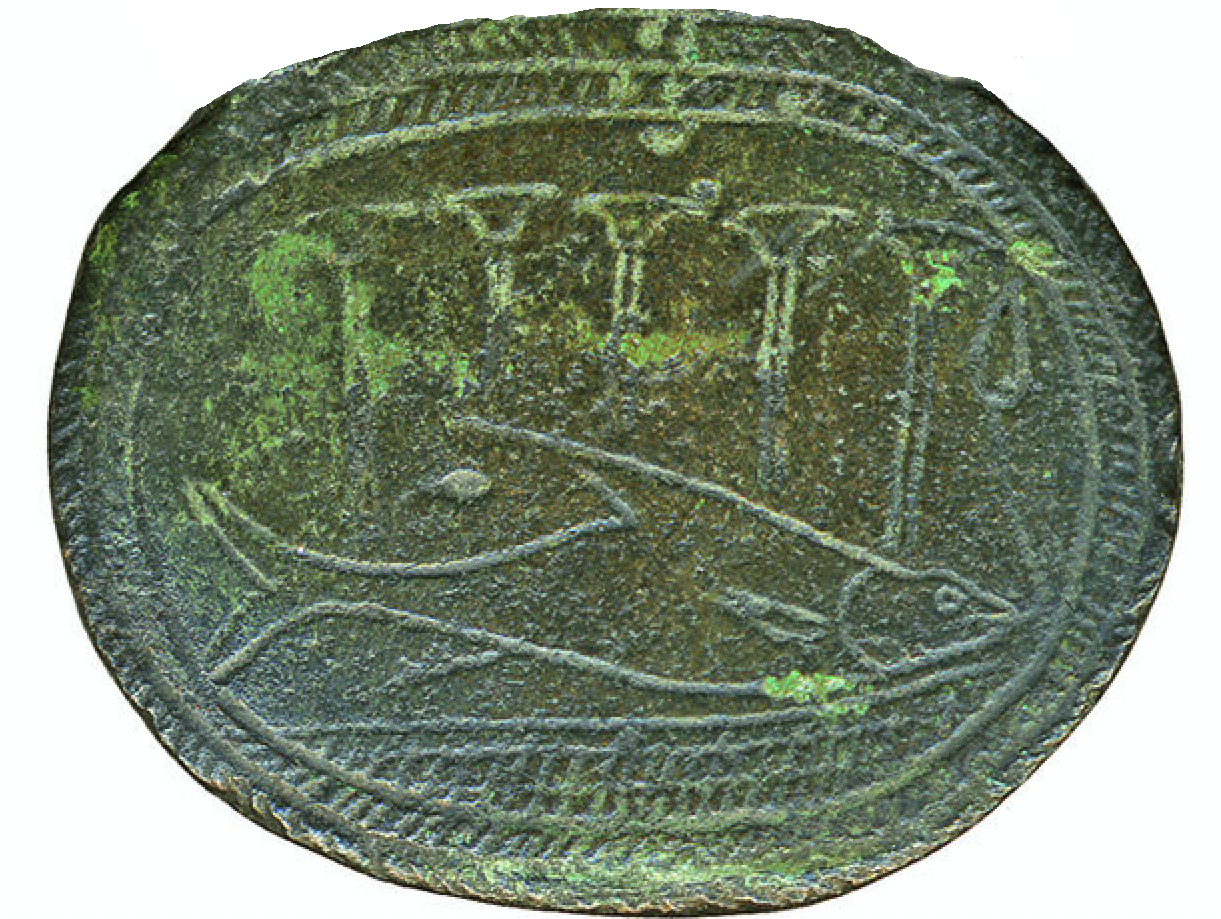
This is a "menat" (a musical instrument/amulet) which consists of this strange phallic thingy to which a bunch of beads were attached to.


This instrument/amulet was worn by the Holy Cow Hathor/Mehet-Weret. In fact Menat was another name for Hathor. 


The above one, was made between 664 and 380 BC. On top of it we see the lion headed goddess Tefnut (another face of Hekhmet, another face of Hathor) on the left, with a solar disc and cobra on her head, and her husband-twin brother Shu on the right, with ostrich feathers on his head. 

Tefnut carries the solar disc and the snake because the sun's heat, represented by a snake, is the strongest at the end of July beginning of August, during Leo. 

But why is Shu carrying ostrich feathers on his head? 

Well ostrich mating season begins in March or April and ends sometime before September. During that time male ostriches become aggressive, fight with each other for harems and make loud booming mating sounds...

This is exactly the period when rain season starts in Ethiopian highlands. We see increase in rainfall starting from March, and then the arrival of the full blown monsoon starting from April/May/June, depending on the season...


So at the top of the Menat we have wind and moisture producing monsoon. 

This monsoon empties on Ethiopian highlands during the ostrich mating season. The rain water accumulates in the catchment area of the Lake Tana, the largest lake in Ethiopia, and it flows out as Blue Nile...


It then flows down towards Egypt as the Great Flood...

I think that the circular bit at the bottom represents the Great Flood. The circle is the summer sun which fills the Nile with water...

What is interesting is what is depicted inside the circle:

A strange looking fish with a huge dorsal fin, swimming at the bottom of the river or lake, near a flowering papyrus marsh. 


The strange fish is not just a bad fish doodle. It is a very precise depiction of a  Labeobarbus bynni, the Niger barb, Nile barb, a relatively large fish, up to 82 cm in total length and with a distinctive top fin. It is found all over the Nile river. 


This was one of three main fish species caught and eaten by Ancient Egyptians, together with Nile perch and Nile tilapia.

This fish was not chosen randomly. The Nile barb spawning (mating) season is March-April, right at the time when the first rains start falling in Ethiopian highlands. And flowering papyrus? 

So why was papyrus so important? As I explained in my post "Holy Cow" the main papyrus flowering season is April...Right at the time when Nile Barb spawns (swims along the bottom burying eggs into the gravel)


Another interesting detail on this Manet is the "squatting figure of the ram-headed sun god" (according to the official description) figure just above the circular part. 


The description alludes at Amun. The god of wind and the creator god. Following Amun's ascendancy during the New Kingdom, he was hailed as "The Self-created One" and "King of the Gods" who had created all things, including himself. But I don't think this is Amun. Before there was Amun, there was another ram headed god. Another creator god who created everything including other gods. Khnum


He was one of the oldest Egyptian deities. And guess what: he was venerated as the god of the source of the Nile ðŸ™‚ Is this cool or what? I talked about this good in my post "Khnum" and there I explained why he was depicted as a "ram" (???) headed deity. 

The horizontally twisted horns show that we are dealing with a ram of the species "ovis longipes palaeoaegyptiacus".


This was the earliest type to be domesticated in Egypt, but became extinct sometime in the New Kingdom. Nevertheless, the shape of the horns was preserved even in later depictions of Khnum. Now here is the interesting bit. We have no idea what this "ovis longipes palaeoaegyptiacus" was or whether it was even a sheep or a goat. Regardless, the only two potential candidates, for the place of the "ovis longipes palaeoaegyptiacus" both have their young during April. The time when the first rains, represented by Tefnut and Shu, arrive to Ethiopian highlands. Right when papyrus flowers and right when Nile barb spawns...

Tefnut and Shu, the creators of all life...


Interesting artefact indeed ðŸ™‚