Showing posts with label Akkadian culture. Show all posts

Thursday, 27 January 2022

Bribing Shamash

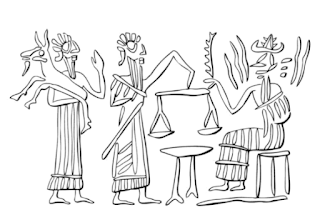
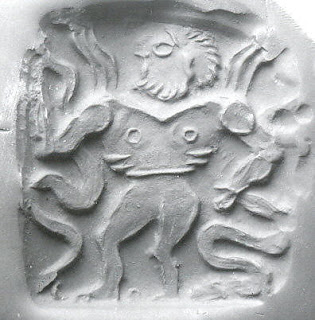
Very interesting. Akkadian seal, 2350-2100BC. From "Gods, demons and symbols of ancient Mesopotamia: an illustrated dictionary" by Jeremy Black and Anthony Green...

Sun god Shamash sitting on his throne, holding a cerated knife, saw, sickle, called "shasharu" with which he is often depicted...I talked about this in my post "Canals"...

You can see heat rays coming out of his shoulders, his trademark...You can read more about Shamash and the heat rays in my post about "Shamash young and old"...


And in my post "Lion radiating heat"...


And "Nude winged hero dominating snakes"...


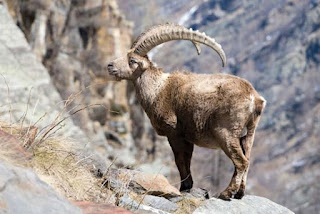
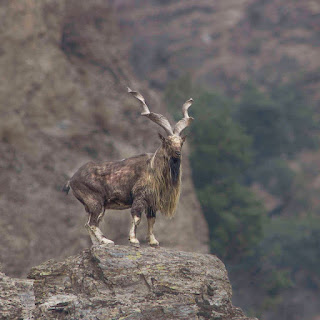
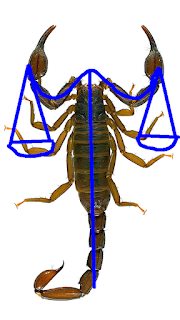
In front of him are two "men". First one carries a weighing scales, and the second carries a goat, Markhor goat...Now Shamahs was not just the sun god, he was also the god of justice...Probably because he was the scariest of all the Mesopotamian gods...

Sumerian proverb says: "May you hold a baby goat in your right arm and may you hold a bribe in your left arm". Meaning: Bring a baby goat as an offering when asking for a favor from the god. But if that doesn't work, bribe the priest, who can implore the god on your behalf...

So this image can be interpreted as bribing the god of justice. Nice...But I don't think this is what this image depicts...

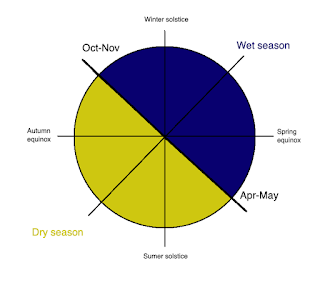
Sumerian year was divided into two seasons: the hot dry half (summer, autumn), which starts in Apr/May and ends in Oct/Nov and cool and wet half (winter, spring) which starts in Oct/Nov and ends in Apr/May...


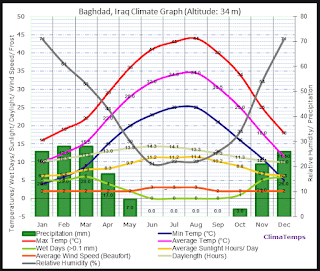
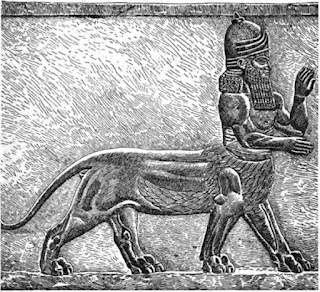
Shamash is most powerful in the middle of the Sumerian hot and dry season, at the end of summer beginning of autumn, Jul/Aug, Leo. This is the hottest and driest part of the year in Mesopotamia. The time of death, when Shamash turns into Nergal, the god of death...Who is even depicted as man-lion...I talked about this in my post "Winged superhuman hero"...

Now, look at this: 

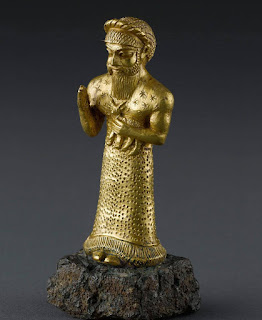
2 of Aug, beginning of autumn, Shamash on his throne

21 of Sep, middle of autumn, autumn equinox, equilibrium, Libra

4th of Nov, end of autumn, beginning of the mating season of wild goats, end of hot and dry half of the year, beginning of the rain season...


But maybe this is not about climate...Maybe it's just bribing the god of justice...

You can read more about Leo animal calendar marker in my post "Lion killing bull under a palm tree"...

You can read more about Sumerian Libra (balance of heaven) in my post "Zib ba na"...

You can read more about goats as one of the symbols of the beginning of the rain season in my posts "Goat Carrier", "Green pastures"...and many others...

Tuesday, 14 September 2021

Lions vs buffalos


"This cylinder seal and rolling show a pair of lions holding a bull at each end, while a hero is attacking one of the lions! A26312: limestone, Iraq, Akkadian period". From a tweet by @orientalinst (Oriental Institute of the University of Chicago)

The two kitties are identified correctly as lions. But I don't think this is an ordinary bull...This looks like a buffalo to me...Do you see the ribbed horns? And that makes all the difference...Here are some buffalos:

Now remember this post in which I talked about water buffaloes being already present in south western Iran (Jiroft) 2000 years earlier than people thought? In this article I talked about this artifact depicting buffalos, dated to the early 3rd millennium BC. 


You want proof of Indus Valley civilisation - Mesopotamia links, there you go. These buffaloes didn't wander into Iraq all the way from Indus Valley by themselves...Someone had to bring them there...Via Iran of course...

Now about the seal...It is another example of a complex animal calendar marker.

Buffalos start mating at the beginning of the the rain season...Beginning of winter...November...

While Eurasian lions main mating period starts at the beginning of the drought season...Beginning of Autumn...August...


This is why Leo is where it is on the zodiac circle. It is an ancient animal calendar marker for Jul/Aug, the beginning of the main mating season of the Eurasian lions...

Leo is the hottest and driest part of the year in Mesopotamia. The time when water levels in the two great rivers and the irrigation canals that they feed is the lowest. Leo is the time when canals were repaired...See, sun god, in an empty canal (river bed) between lions (in Leo)...


I talked about this in my post "Canals"...

This time of the year was the time of droughts and death...Which is why the god of death in Mesopotamia, Nergal, was actually a "destructive sun of the late summer"...And was depicted as a lion...


I talked about Nergal in my post "Winged superhuman hero"...

Also, because the Eurasian lion mating covers the whole of Autumn (Aug,Sep,Oct), lion was in the past a symbol for autumn

I talked about this in my post "Symbols of the seasons"...

But I wonder if Lions vs Buffalo here means dry vs wet season? Where Lion represents the whole of the hot, dry season (May-October), season of the sun, while Buffalo represents the whole of the cool, wet season (Nov-April), season of rain???

Is this why Mesopotamian dragons have lion's bodies??? I mean 7 heads here represent the 7 months of "summer" (the whole dry and hot season, not just autumn)...


I talked about this in my post "Seven headed dragon"...

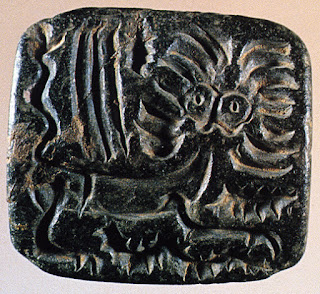
How's this for a symbol of hot dry season? Cute Bactrian lion, whose head looks like a blazing sun, and whose body radiates heat, just like the body of the sun god Shamash/Utu...From the same period, 3rd millennium BC...


I talked about this in my post "Lion radiating heat"...

So if lions represent the dry, drought season, and buffalo represents the wet, rain season, then what's that over buffalo's head, two crescent moons pointing up...Why?


The same moon is placed on other Mesopotamian seals over sowing ploughs, next to scorpions, which also symbolise the start of winter and grain sowing season...Scorpions disappear when weather gets too cold...At the start of winter.


I talked about this in my posts "Seven stars of scorpio" and "Ploughing"

But what about the crescent moon pointing up? When the crescent moon points upward and looks like a dish gathering rain water...And when the buffalos start mating...And when the scorpions disappear...Then the rains will start falling...After which, it's time to sow grain...


The last thing: Who's the dude with the axe? Looks suspiciously like a storm god...Ishkur / Adad...He loved axes...


Well, all storm gods used to love axes. And especially stone axes...

I talked about this in my post "Kataibates"

So is the dude from the Akkadian seal "a hero" or a storm god ending drought and bringing rain? 

Have a look at this:


I was planning to do a lot of boring stuff, but then you posted this tweet and ruined my plan...🙂 Thank god...

To read more about ancient animal and plant calendar markers, start here…then check the rest of the blog posts related to animal calendar markers I still didn't add to this page, and finally check my twitter threads I still didn't convert to blog post...I am 9 months behind now...

Saturday, 1 May 2021

Shamash young and old

"When Utu/Shamash steps up into heaven, fresh waters shall run out of the ground for you..." from "Enki and Ninhursanga"


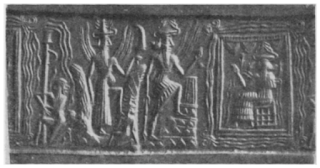
Cylinder seal discovered at Ur and dated to the time of Sargon (2340-2160 BC) or to the time of Shar-kali-sharri (2224-2199 BC). De Clercq collection...

The description found in the Notes on the Sargonid Cylinder Seal, Ur 364 by Edith Porada: 

The seal depicts three gods:

First god in a "shrine" surrounded by streams of flowing water

Second god with rays issuing from one shoulder, wearing a flounced kilt, holding a mace and ascending a stepped mountain topped by a gate or a temple

Third god with rays issuing from both shoulders, wearing a long pleated skirt, holding a curved notched weapon or a saw dagger, standing with one foot on a back of a lion with upcurving wings, the other foot on a small god who kneels with one foot on the ground...

Very interesting indeed...But I would disagree with some of the stuff said above. 

These are not three gods. These are two gods, one of them depicted in two "stages" a young and old.

First god is Enki, the Sumerian god of sweet water. He is depicted sitting imprisoned inside abzu, the source of the two great rivers...


That source is the snow that falls on the "holy mountains" located North East of Mesopotamia during the winter...Anatolian highlands and Zagros Mountains...


I can hear pretty much every Sumerologist screaming at this point: Abzu means "the underground waters of the Aquifer"!!! This commonly accepted meaning of the term Abzu is actually a result of a mistranslation...We have Sumerian ab=water and zu=knowledge, deep, far...Abzu can then mean both deep water and far away water...Considering that the source of Tigris and Euphrates is far away from Mesopotamia, in the Anatolian highlands and Zagros Mountains, the proper translation of the term Abzu is far away water...

I mean this is actually spelled for us in the Early Dynastic Za-me hymns where we read:

"Abzu ki kur-gal men-nun-an-ki den-nu-de4-mud zà-me": Abzu, place that is a big mountain, princely crown of the heaven and earth. To the lord Nudimmud (Enki), (give) praise! 


Anyway I am going to write another post specifically about Enki and Abzu, so watch this space...

So the first god is Enki/Ea.

The second god is young Utu/Shamash, the young sun. See how he has sun heat rays emanating only from one of his shoulders??? He is depicted on this seal in a short tunic climbing the sacred mountain towards imprisoned Enki...To free him...


This climbing of the mountain by the sun god represents the heating up of the higher and higher regions of the holy mountains in the spring. The heating up which results in the snowmelt, which is the main source of the water in the Tigris and Euphrates rivers...This is the "freeing of Enki" and it happens during the spring. You can see how the water levels in Tigris and Euphrates river system are suddenly sharply rising starting from Feb...Water level charts for

Tigris


Euphrates


Enki is finally free (the water levels peak) in Apr/May, at the beginning of summer.  In Taurus...Which is why Shamash is depicted as a golden bull with long flowing "lapis lazuli" (water stone) beard...

"Enki placed in charge of the whole of heaven and earth the hero, the youth Utu (Shamash), the bull standing triumphantly, audaciously, majestically...the great herald in the east of holy An...with a lapis-lazuli beard, rising from the horizon..." from "Enki and the world order"

Shamash/Utu is also depicted as a bull with a tail made of wheat...

Because it is in Taurus, the water bull, that the grain harvest begins in Mesopotamia...

Summer, which starts in Taurus, is symbolised by a bull, because both calving (begins in Apr/May) and mating (begins in Jul/Aug) of Wild Eurasian cattle takes place during the summer, May to August...I talked about this in my post "Ram and bull"...

Which is why, in "Enki and the world order" we read: "...Father Enki...he stood up full of lust like a rampant bull, lifted his penis, ejaculated and filled the Tigris with flowing water. He was like a wild cow mooing for its young in the wild grass..."

So Enki, the god of fresh water, gets freed by Shamash, "the triumphant bull with lapis lazuli beard". And the first thing he does, he starts wanking 🙂 And the moment of his ejaculation, the moment of his climax, the moment of the peak water levels in the rivers he fills with his heavenly semen, is also the moment when "wild cows moo for their young in the wild grass"...In Taurus...

It is interesting that the Young Utu/Shamash carries a scepter...Why is this interesting? Have a look at this:

Modern impression from a greenstone cylinder seal from Sippar, c. 2300 BC...Currently in The British Museum... 

Here is Shamash (the sun god), in full power (represented by sun heat rays emanating from both shoulders), standing "between two columns with a lioness and a lion". 

The same scepter carried by the Young Utu/Shamash can be seen abandoned to the left of the left column with the lion...Instead of the scepter, Old Utu/Shamash is holding a serrated knife...A reed cutting knife...That is very important...And I explain why in this post about Mesopotamian irrigation "Canals"...

Here is the same dude, Old Utu/Shamash on our original seal, "standing with one foot on a back of a lion with upcurving wings..."


If someone is standing "between the lions" or "on a lion", that just means that he is standing in Leo, end of July, beginning of August...

And, Leo is a solar year calendar marker which marks the beginning of the main mating season of the Eurasian lions. 

Leo is the hottest and driest part of the year in Mesopotamia. The time of maximum heat, maximum drought. Which is why the Old Utu/Shamash has sun heat rays emanating from both of his shoulders.


This is also the time of the lowest water levels in Tigris and Euphrates river system...Water level charts for

Tigris


Euphrates

Which is why the Old Utu/Shamash is standing in an empty river (canal) bed...Perfect time to cut reeds and repair irrigation canals...Hence serrated reed cutting knife...For full discussion check my post about Mesopotamian irrigation "Canals"...

So this is what I think is depicted on our Ur seal...What do you think?

Saturday, 24 April 2021

Canals

Cylinder seal depicting he sun god Shamash,  Akkad (Iraq), 3rd millennium BCE, Chert. Currently in the collection of the Israel Antiquities Authority...

Official description:  Shamash emerging through a pair of mountains flanked by columns, perhaps heaven’s door...🙂 Maybe, but I doubt it. Here is why:

Modern impression from a greenstone cylinder seal from Sippar, c. 2300 BC...Currently in The British Museum... 

Here is Shamash (the sun god), in full power (represented by sun heat rays emanating from both shoulders), standing "between two columns with a lioness and a lion". "Between the lions" means that he is standing in Leo, end of July, beginning of August...

And, Leo is a solar year calendar marker which marks the beginning of the mating season of the Eurasian lions. 

Hence lioness and lion...

Leo is the hottest and driest part of the year in Mesopotamia. The time of maximum heat, maximum drought. 


This is also the time of the lowest water levels in Tigris and Euphrates river system...Water level charts for

Tigris


Euphrates

Which is why Shamash is standing in an empty river (canal) bed...And not between two mountains. 

What about the gates of heaven?  Well to understand what these "columns" really are, we need to know a bit about the Mesopotamian agriculture year and their irrigation practices. 

Have a look at the first seal. The image is to be read right to left. The first thing we see is a sheaf of grain. The harvest in ancient Mesopotamia started in April with barley cutting and ended in July with barley storing...

Right after that starts the hottest and driest part of the year dominated by Shamash, who is depicted standing in an empty river (canal) bed. In the "Traditional Dam Construction in Modern Iraq: A Possible Analogy for Ancient Mesopotamian Irrigation Practices" we can read that

Here is what this canal system looks like

Here is what the head dam looks like

And here is how the head dams are made:

The head-dam is built at the final stage of the construction of the primary canal, which is dug from tail to head toward the water source. The head-dam may reach a height of three to five metres, depending on the size of the primary canal and the difference in elevation between the canal bed and the river. 

The construction of a head-dam usually takes place between July and September, during the agricultural off-season and when water levels in the rivers are generally low. This allows for the construction of the dam to take place on relatively dry ground. 

Prior to construction, any loose silt and/or organic material is removed from the canal bed in order to provide a firm foundation for the dam. The foundation for the mud and reed part of the head-dam is built from either baked or unbaked bricks (compressed mud) or stone. On top of the foundation, a number of terracotta pipes are put in place to serve as the water inlet (A). The amount of water entering the primary canals can be regulated by closing the pipes with clay on either side. 

Several rows of palm-trunks or fruit-tree trunks are placed on top of the terracotta pipes in a criss-cross fashion (B). Depending on the length of the head-dam, a number of palm-trunks are sunk vertically into deep holes. More tree-trunks are then placed horizontally against the row of standing logs. The layer of horizontally placed tree-trunks may be up to three rows high. 

Alternating layers of mud (C), reed bundles13 and reed mats (D) and occasionally stones are placed on top of the rows of tree-trunks. The reed bundles, thinner at one end, are woven together to increase the head-dam’s stability.

So what are reed bundles? Only the most important building material in Mesopotamia. Used for building everything, from houses to irrigation canal dams...


Now look again at "the gates of heaven" from the above seals...Vertical bundles of reed tied together with horizontal reed ropes...And how do you cut reeds? With a serrated knife, which Shamash holds in his hand...By the way, the knife still used for cutting reeds is still serrated and curved...

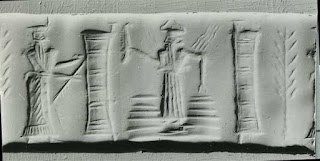
Here is another seal depicting the sun god Shamahs. Cylinder seal, Akkad, 2340 B.C. and 2150 B.C. God carrying mace -- Sun god with rays, ascending between two mountains -- At either side, attendant opening wing of gate the gate of heaven...Currently in the collection of the Morgan Library and Museum...

More gates of heaven 🙂...Let's ignore this...This seal adds another interesting detail to the scene. Shamash is facing (walking towards) another god holding a mace...Well that can only be Hadad (Ishkur), the storm god...The rains arrive to Mesopotamia at the end of the hot dry half of the year, in Oct/Nov...


So the sun god Shamash, standing in the middle (Jul/Aug) of the hot, dry part of the year (Apr/May-Oct/Nov), is facing (walking towards) the Storm God Hadad, who comes at the beginning (Oct/Nov) of the cool, wet part of the year (Oct/Nov-Apr/May)...

Finally, here is something I discovered only the other day. I was looking at the reed boat building technology in Mesopotamia. I first read this paper "Building the reed-boat prototype: problems, solutions, and implications for the organization and structure of third-millennium shipbuilding" which documents building of a replica Bronze Age Mesopotamian reed boat. You can see that the main building block is again a reed bundle.


This lead me to this web page "Connecting Mesopotamia with Indus Valley and Egypt: The Tigris Expedition", which describes another experiment in reed boat building. While reading this second text, I came across this chapter:

In Iraq, Heyerdahl gathered evidence for the ancient use of maritime vessels made from a tall freshwater reed called "berdi".  There was more information, as well, on coatings the ancients may have used to protect these reeds against water absorption.  Asphalt in some kind of mixture with pitch and oil was mentioned.  

Much more importantly, Heyerdahl learned from the marsh Arabs of Iraq a vital piece of data on the performance of "berdi" that would influence the entire outcome of his planned experiment. Berdi, they said, must be cut in August, and only in August, or it absorbs water quickly and sinks.  The berdi cut in August was dried for two or three weeks and then used for the reed houses in which the Arabs dwelled.  Estimations of the buoyancy of properly harvested berdi ranged to upwards of a year.  This was a new, seasonal aspect of reed boat construction that no one had considered before.

Cut your reed for construction in August, in Leo...This is what Shamash is telling his people on the above seals...

No heavens gates...Just climate, biology, agriculture and technology...

PS: Part of a model chariot, with an impression of the sun god Shamash, not "rising over the mountains" as the official description says, but standing on top of the main canal dam (see the hole), telling people that it's time to go cutting reeds (see the knife he is holding) to repair the dams...

Old Babylonian, ca. 2000–1600 BC. currently in the Met Museum