Saturday, 29 January 2022

Theseus ring

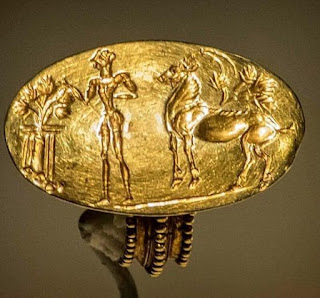
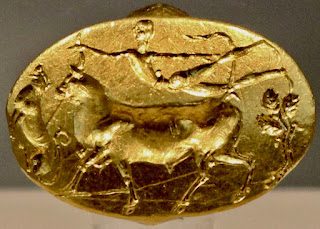
The "Theseus ring". Gold Mycenaean signed ring from the Acropolis of Athens, 15th c. BC. Currently in NAMAthens.


First I doubt this ring was made on the Mainland...It was most likely made on Minoan Crete, based on what is depicted on it...Was bull leaping a popular activity in Mycenae? Or is this just another looted Minoan treasure? I talked about this in my post about the legendary battle depicted on the Combat Agate...

But this is not what makes this ring interesting...

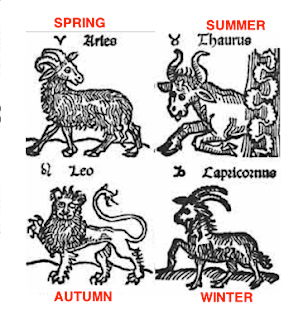
You know how summer (May/Jun/Jul) starts in Taurus (Apr/May)? And how bull is the symbol of summer, because summer starts with calving of wild Eurasian cattle and ends with mating of wild Eurasian cattle?

And you know how autumn (Aug/Sep/Oct) starts in Leo (Jul/Aug)? And how lion is the symbol of autumn, because main mating season of Eurasian lions starts in Leo and spans the whole of autumn?

I talked about symbols of the seasons in this post


Both Taurus and Leo are ancient animal calendar markers which originally had nothing to do with stars, and have been used to mark the same times of the year since Neolithic...More about ancient animal and plant calendar markers, start here then check the rest of the blog posts I still didn't add to this page, and finally to to @serbiaireland and check my twitter threads I still didn't convert to blog post...I am 9 months behind now...

Now if we look at the scene depicted on the ring, the bull is walking away from a green branch and towards a lioness...Why?

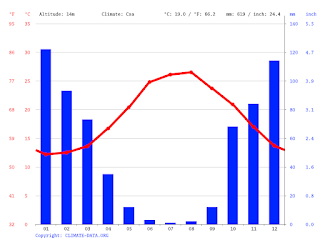
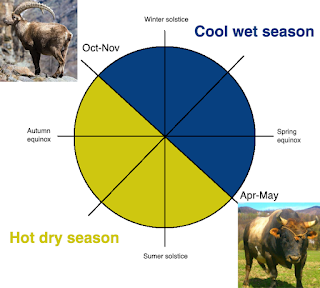
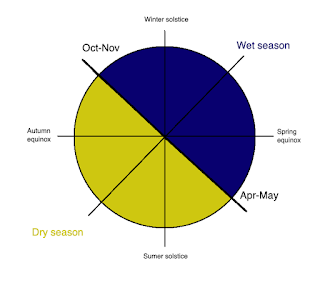
Well green branches usually depict spring, or wet season in general, the old winter which in Crete starts in Oct/Nov and ends in Apr/May...

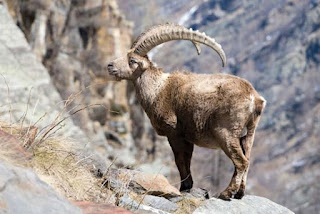
Now in Crete, Oct/Nov is also the time when wild ibex goats start mating....

Hence ibex goats featuring so prominently on Minoan and "Mycenaean" artefacts...as Goat of Rain which makes Crete green...Like on this ring, another one most likely pilfered from Crete...

Officially: "Golden ring depicting goat sacrifice", Mycenaean, 1500BC. I don't think so. Ibex was in Minoan, and later Mycenaean culture linked to rain season and regeneration of nature. This could be sacrificing to the Goat (of rain) which makes Crete green (see green branches growing from the goat's back?), not of a goat...

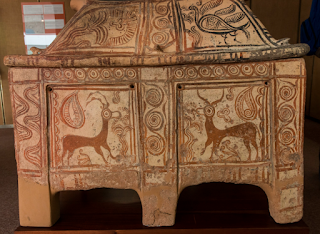
So in Minoan Crete, and later Mycenaean continuation of Minoan culture, we find goat and bull as two opposing symbols. Like on this larnax


Because they symbolise beginning of cool, wet season (goat) and hot dry season (bull)...


Anyway, so what we have depicted on the Theseus ring is bull, walking away from the green branch (symbol of the cool wet half of the year), towards lion, symbol of the hottest part of the hot, dry half of the year, Jul/Aug, and symbol of autumn...Nice...

Thursday, 27 January 2022

Bribing Shamash

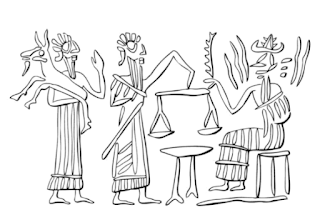
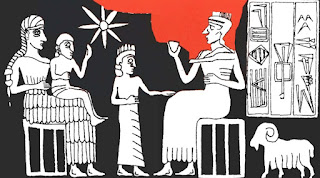
Very interesting. Akkadian seal, 2350-2100BC. From "Gods, demons and symbols of ancient Mesopotamia: an illustrated dictionary" by Jeremy Black and Anthony Green...

Sun god Shamash sitting on his throne, holding a cerated knife, saw, sickle, called "shasharu" with which he is often depicted...I talked about this in my post "Canals"...

You can see heat rays coming out of his shoulders, his trademark...You can read more about Shamash and the heat rays in my post about "Shamash young and old"...


And in my post "Lion radiating heat"...


And "Nude winged hero dominating snakes"...


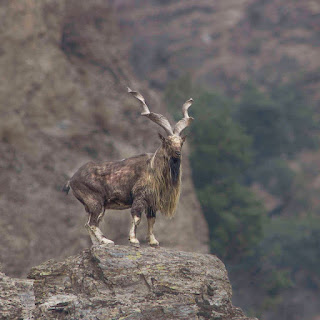
In front of him are two "men". First one carries a weighing scales, and the second carries a goat, Markhor goat...Now Shamahs was not just the sun god, he was also the god of justice...Probably because he was the scariest of all the Mesopotamian gods...

Sumerian proverb says: "May you hold a baby goat in your right arm and may you hold a bribe in your left arm". Meaning: Bring a baby goat as an offering when asking for a favor from the god. But if that doesn't work, bribe the priest, who can implore the god on your behalf...

So this image can be interpreted as bribing the god of justice. Nice...But I don't think this is what this image depicts...

Sumerian year was divided into two seasons: the hot dry half (summer, autumn), which starts in Apr/May and ends in Oct/Nov and cool and wet half (winter, spring) which starts in Oct/Nov and ends in Apr/May...


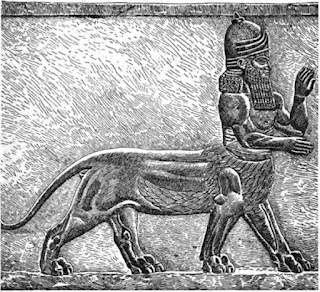
Shamash is most powerful in the middle of the Sumerian hot and dry season, at the end of summer beginning of autumn, Jul/Aug, Leo. This is the hottest and driest part of the year in Mesopotamia. The time of death, when Shamash turns into Nergal, the god of death...Who is even depicted as man-lion...I talked about this in my post "Winged superhuman hero"...

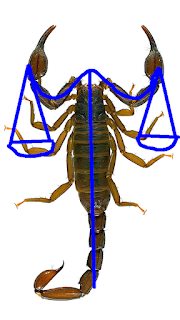
Now, look at this: 

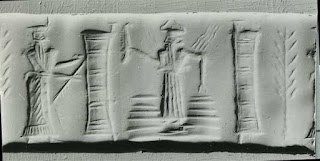
2 of Aug, beginning of autumn, Shamash on his throne

21 of Sep, middle of autumn, autumn equinox, equilibrium, Libra

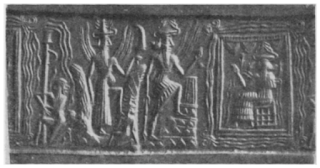
4th of Nov, end of autumn, beginning of the mating season of wild goats, end of hot and dry half of the year, beginning of the rain season...


But maybe this is not about climate...Maybe it's just bribing the god of justice...

You can read more about Leo animal calendar marker in my post "Lion killing bull under a palm tree"...

You can read more about Sumerian Libra (balance of heaven) in my post "Zib ba na"...

You can read more about goats as one of the symbols of the beginning of the rain season in my posts "Goat Carrier", "Green pastures"...and many others...

Tartaria tablets

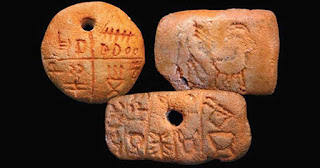
Tărtăria tablets are three clay tablets discovered in a Vinča-Turdaș culture settlement near the village of Tărtăria in Romania...

The tablets were discovered in a sacrificial pit with many other clay objects and human bones. The radio carbon dating of the bones produced the dates 6310 ± 65 yr BP (calibrated 5370-5140 BC)... 
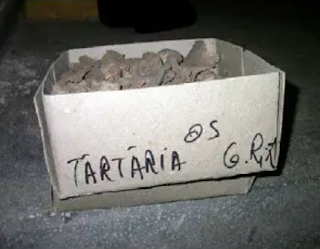
The reason why these tablets are so important is that they contain the Vinča (Old European) symbols


But on Tărtăria tablets they are engraved in such a way as to imply that these symbols can be interpreted as groups...Like a script??? Script which predates Sumerian proto-writing by thousands of years...

By the way, Tărtăria tablets are not the only objects where we find these symbols engraved in sequences...Hence the proposal that this is indeed a kind of script...

Which is why everyone is so edgy about this and why so many people put so much effort into discrediting these tablets...Surely it can't be that proto-writing originated in the Balkans...

And "if" indeed these "so called" Vinča symbols are genuine, "they are surely a local isolated development and have nothing to do with the development of writing in Mesopotamia"..."The similarities are purely coincidental"...

Those who still see Sumerian culture as an isolate without any external influences won't like this post from my blog, or any of the other blog posts linked from it...

But here I would like to pour some really really cold water on the "who invented the first symbolic script" debate...I would like to look closely at one of the Tărtăria tablets. Not one of the two "cool" ones with holes, which seem to have been made to be used together...
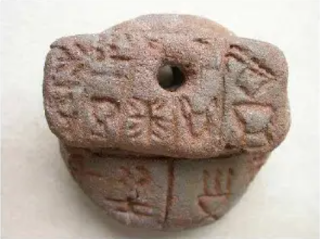
I would like to look at the often ignored third tablet...This one...And I would like to say this: O MY GOD!!! How could I have been so blind!
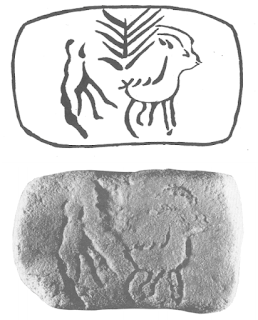
What I think is depicted on this tablet is from right to left: 1. Ibex goat 

2. Grain

3. A person who looks like he is bent forward...like as if he is working the land...maybe planting grain???

Now if this tablet was found anywhere within the fertile Early Neolithic Fertile Crescent, I would have immediately interpret this tablet like this: When Ibex start to mate, and the first rains arrive, plough and sow your grain...
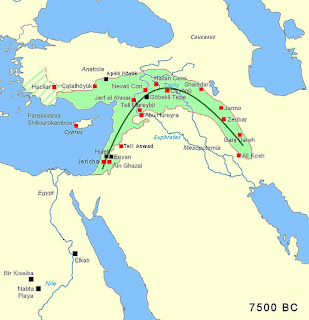

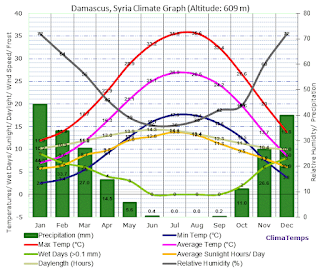
Because in Fertile Crescent the climatic year is divided into two halves: dry and hot, summer (May-Oct) and wet and cool, winter (Nov-Apr). 


And the beginning of the rainy season coincides with the beginning of the mating season of the Ibex goats (Goats of rain). 
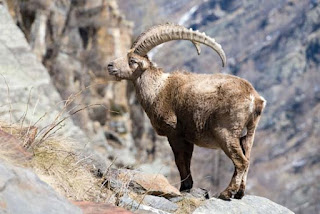


It is because of this link between Ibex goats, rain, and agriculture, that Ibex is the most depicted thing on early decorated objects from this region...You can read about "The Goat of Rain" (Ibex) in my posts "Goat carrier", "Rain and flood", "Queen Puabi's cylinder seal"...and many others...

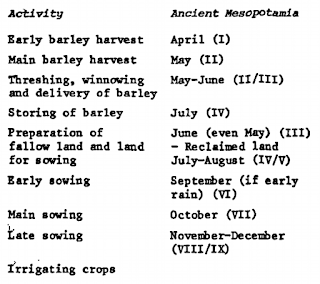
One other thing happens in Fertile Crescent, when ibex goats start to mate and when first rains arrive...It's time to plough the land and plant grain. 


Storm (rain) god Ninurta, was, in the earliest records, also agriculture god...Whose symbol was the the plough...Which he gave to the people...Here is a god (Ninurta) giving plough to the people...With goat of rain next to the throne...
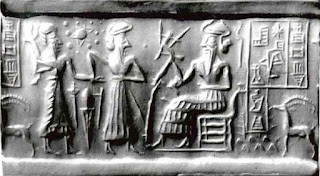
So is this what this Tărtăria tablet means? Plant your grain when Ibex goats mate?

That's amazing!!! Now did Ibex goats ever live in Romania? I don't know. The only info I could find about Ibex goats in South Eastern Europe, is this article "Past and present distribution of the genus Capra in Greece", and in it we can read that: "...The Alpine ibex Capra ibex and the wild goat Capra aegagrus are the only caprids known to have existed in the Balkan Peninsula, from where it disappeared after 5600 BC due to hunting..."

The Tartaria tablets, which are dated to calibrated 5370-5140 BC were made from a small quantity of clay and a lot of sand. According to geological analysis, the sand in the tablet has crystals of quartz typical of the mountain 20-25km west of Tărtăria and very well known in Neolithic times for the gold mines...

So the tablets were most likely made in Romania...So I wonder if the above paper is wrong, and Ibex goats actually still lived in the Balkans at the time when these tablets were made?

The winter grain planting in the Balkans happens in October. I don't know when the ibex root took place in the Balkans. In Most of their range, Ibex goats start mating in Oct/Nov. So it is possible that in the south eastern Balkans their mating season also started during that time of the year. which would have made them a good animal calendar marker for grain planting season, just like in Fertile Crescent.


But, maybe, as someone suggested, the animal depicted on the Tartaria tablet is not an Ibex goat, but a Deer, Deer mating season is October, ideal period for planting wheat in south Eastern Europe...

Maybe, except the animal depicted on the Tartaria tablet looks much more like depictions of an Ibex...And we find both deer and goat among Vinča (Old European) symbols...
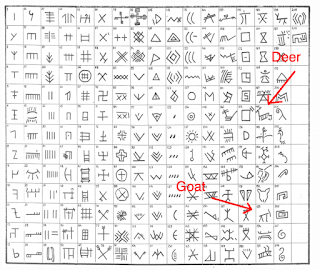
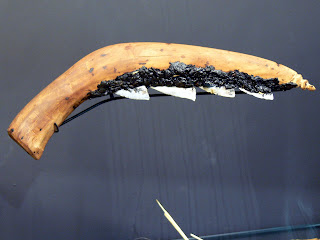
The thing is, the Early Balkan farmers could have found other animal calendar markers that correspond to the main events of the grain agriculture season...Deer would fit. If they were planting grain in autumn...Deer mandibles, like these ones, were found at the bottom of the sacrificial pit of the 7th millennium grain temple in Blagotin...Why? Deer must have been in some way linked to the agricultural cult.
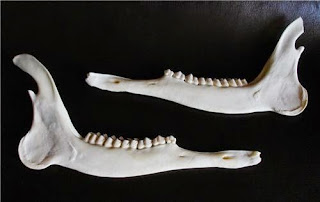
I wrote about it in my post "Blagotin" where I pointed at the fact that deer mandibles and wood/antler + flint imitations of deer mandibles were used as sickles by Neolithic farmers...
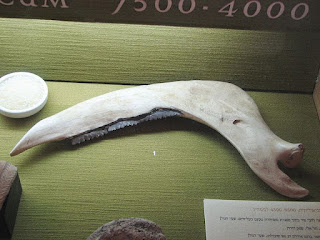

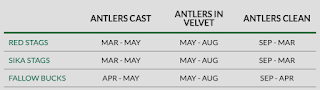
So it is possible that deer replaced goat as calendar marker for grain planting season in the Balkans...The thing is that some archaeologists believe the early Balkan farmers grew spring grain varieties, which are planted after the first spring floods...In Apr...I talked about this in my post "How to kill a witch"...Interestingly, this is the time when deer shed their antlers


Not something that you could miss easily if you were a hunter gatherer turned farmer...


So it is possible that deer was used as an animal calendar marker for planting, both winter and spring grain...

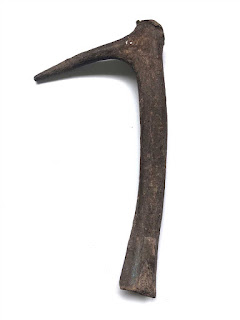
It gets better. Antler pick was used in both farming and mining as early as the Neolithic period. In farming it was used for making furrows for planting grain...


So let me see

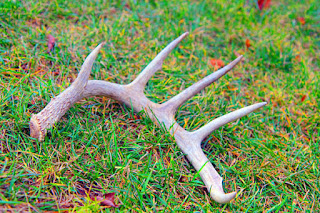
1. You find a deer antler shed by a red deer (Mar-May)

2. You make a pick out of it

3. You use it to make a furrow and plant your grain in Apr

4. You use a sickle made out of a deer mandible to harvest your grain

Interesting...

But there is another possibility. That Tartaria tablets were not actually made in the Balkans, but somewhere in Western Asia. 

Did the Neolithic farmers arrive all in one "package tour"? Or did they, like all the immigrants anywhere do, keep coming and going between "the old home" and the "new home". Bringing relatives to "see the Balkans, the land of opportunities"...

Were these artefacts brought to Europe from Western Asia, where Ibex goats still live today? And where during the Neolithic, Ibex was the number one animal calendar marker, linked with agriculture? 

The fact that we find artefacts depicting Ibex goats in huge amounts everywhere in the Neolithic Fertile Crescent, whereas we only find few isolated depictions of Ibex goats in the Neolithic South Eastern Europe, leads me to believe that these were isolated imports...

It is possible that these tablets are much older than calibrated 5370-5140 BC, and they were used during the time when Ibex goats still lived in the Balkans...And were passed as a treasured heirloom from generation to generation... 

By the time they were deposited in the grave where they were found, they were possibly completely meaningless if there were no Ibexes living and mating in South Eastern Europe, around the time when you were supposed to plant your grain...

Oh yeah, I forgot another possible explanation. This one favoured by most archaeologists. 

This is just meaningless bunch of scribbles without an explanation...
Sunday, 23 January 2022

Killer deer from Qasr

Love this. Fallow deer killing a snake. One of many amazing 6th c. AD mosaics from Theodorias (Qasr Libya)...


Snake is an animal calendar marker of the beginning of summer, Apr/May, because this when the most common Eurasian snakes,  vipers, begin their mating season... 
Persian fallow deer is an animal calendar marker for the beginning of autumn, Jul/Aug, because this is when Persian fallow deer begin their mating season... 
Persian fallow deer don't eat snakes...
So if we look at this image as a calendar marker, we see autumn ending summer? No idea if this is what the author wanted to show or is this drug induced nightmare?

It is very interesting that among the various scenes depicted on the mosaics, we see depictions of deified Tigris and Euphrates??? In 6th century AD Libya? 


So there is definitely some kind of link to Mesopotamia here, where we find Persian fallow deer...

By the way, these mosaics were all found in a church...

Si-Amun

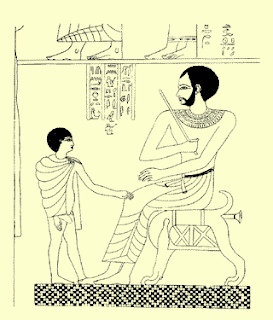
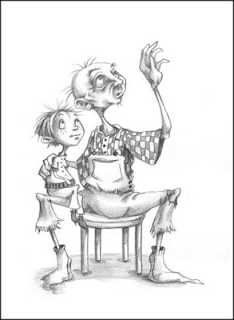
This is a wall painting from the 3rd century BC tomb of Si-Amun at Gebel al-Mawta in the Siwa Oasis in Egypt...It depicts seated Si-Amun, and his son, standing before him and touching his father's knee... 

Now have a look at this: "Seal depicting...Queen Uqnitum & King Tupkish of the Hurrian kingdom of Urkesh (late 3rd millennium BC) with...the young prince touching his father's knee". 

I talked about this in my post "Queen Uqnitum

What's with touching the knee? Remember the article about the Serbian expression "From knee to knee" meaning "From generation to generation", "From father to son". 

In it I talked about the fact that the word for generation and the word for knee have the same root in many languages. Why?

Because of this: The English etymological dictionary says something interesting about the etymology of the word genus: "...could come from Latin genu (knee) from a supposed ancient custom of a father acknowledging paternity of a newborn by placing it on his knee..."

How widespread was this ancient custom?


Market Cross at Kells

This Sunday started quite well...

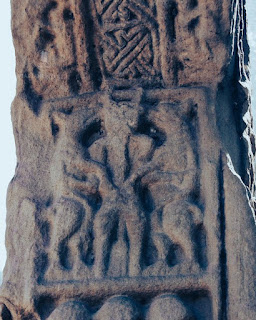
Archaeologist Neil Jackman @JackmanNeil posted this very interesting picture on his twitter account:


With these comments:

An unusual, and a little unsettling, depiction on the c.9/10th century Market Cross at Kells, County Meath.

It features a human-like bearded figure with horns, flanked by two beasts (wolves or lions?) on their hind legs. Could it be a rare depiction of the devil?

Early Irish high crosses usually (though not exclusively) depict religious scenes, along with the beautiful ornamentation.

Dr Francis Young @DrFrancisYoung, Historian of religion & beliefs then commented that:

The iconography of Satan hadn't yet settled down by that point; I don't think there are c9th representations of Satan with horns. If I had to guess, I'd say this is a Classical reference and the figure is most likely Pan/Faunus, representing wild untamed nature. As a rule of thumb, if in doubt about early medieval iconography, it's usually a garbled Classical reference...

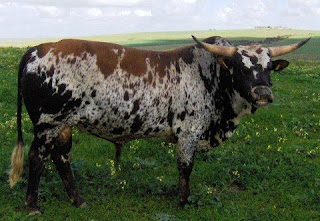
Eeee wasn't there some fella called Crom Dubh, whom pretty much all early Irish saints defeated at some point or another, who was linked to bulls, and who could even turn to a bull himself? Particularly a speckled one...

The horns on the "devil" from the Market Cross at Kells look very much like bull horns to me...

I talked about Crom Dubh bull folklore in my post "Bull of Crom Dubh"...

Crom Dubh apparently lived all over Ireland...Including Dun Briste. 

And guess what: "Crom Dubh (also) had two hounds of dogs...and if ever there were [wicked] mastiffs these two dogs were they..." 

I talked about this legend in my post "Dun Briste"...

So here we have a "bull god flanked by two hounds"...Is this enough to identify this image as a depiction of Crom Dubh? Of course not. But it is a possibility that we can't ignore...Especially because this would be the only known depiction of Crom Dubh ever found that matches the folklore depictions of this old Irish god...

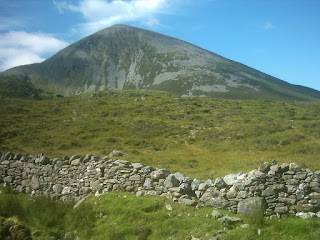
Croagh Patrick, the Irish "Holy mountain". 


Once "the holy mountain of Crom Dubh" the old Irish Sun/Sky god and god of agriculture, it became "the holy mountain of St Patrick", after he "defeated" Crom Dubh... The day of the annual pilgrimage to the top of the mountain is still known locally as "Domhnach Crom Dubh" which means "Crom Dubh's Sunday"...