Saturday, 14 January 2023

Lapis manalis

While I was looking for a suitable illustration for this post about "lapis manalis", the sacred stone used as part of a Roman "aquaelicium" (calling of the waters), rain making ceremony performed during droughts, I suddenly realised what cup and ring marks look like...


I'll just leave this here...

Anyway, we have no ideas what this magic Roman "weather stone" looked like...What we know is that it was kept inside the Temple of Mars in Clivo near the Porta Capena...

From there, the stone was brought into the Senate, where offerings were made to Jupiter petitioning for rain, and water was ceremonially poured over the stone...

Now, have a look at this: In his 1925 paper "The Ring of Nestor", Sir Arthur Evans, mentions a curious rain-making ritual which was performed in Ibrahimovci, near Skoplje, Macedonia, during droughts. Pic: Altar dedicated to Jupiter, Macedonia


This is 1925 we are talking about. At least 1500 years since Jupiter was officially a god of rain...And yet, uneducated, illiterate SLAVIC villagers in Macedonia still remembered him in times of desperation...

What is very interesting is that this altar "was lying face down normally but was lifted when the rain was needed". 

Compare this with this Slavic rain making ritual from Belarus in which Dabog's stone is ceremonially lifted (and water is poured on it 🙂). I talked about it in my post "Last megalithic ritual in Europe"...


And compare this with other weather controlling Slavic rituals involving stones and rocks. I talked about this in my post "Water stones"...


Have a look at this article too, "White cross", about weather control "temple" from Slovenia...


And now compare all this with the Roman "calling the waters" (Latin: aquaelicium) ritual with the "lapis manalis" sacred stone...Interesting, right? It gets better...

This was not the only sacred "lapis manalis" stone Romans played with...There was one more...This one covered the "mundus Cereris" (The world of Ceres), a pit thought to contain an entrance to the underworld...

This "lapis manalis" was removed on August 24, October 5 and November 8 and the pit was opened with the official announcement "mundus patet" ("the mundus is open")...

Its opening offered the spirits of the dead temporary leave from the underworld, to roam lawfully among the living...This is very interesting...You'll see soon why...

Anyway after the pit was opened, offerings were thrown into it for "the underworld deities" and "the agricultural deities", including Ceres the goddess of grain "and guardian of underworld portals"...This is also very interesting...You'll see soon why...

Roman tradition held that the "mundus Cereris" had been dug and sealed by Romulus as part of Rome's foundation...

There are some suggestions that the "mundus Cereris" was the Rome's first storehouse (penus) for seed-grain, which later become the symbolic penus of the Roman state...Which makes sense cause the pit was called "mundus Cereris" (The world of Ceres)...

However, most cities of Latium and Etruria contained a similar pit or ditch...Plutarch suggests that the custom of the "mundus Cereris" was of Etruscan origin...

He compares it to pits dug by Etruscan colonists, containing soil brought from their parent city, and into which they sacrificed the first fruits of the harvest...

Sooo...Here we have two stones with the same name, one used in rain making ritual, the most important agricultural ritual that there is, and the other one used in a thanksgiving agricultural ritual involving "the dead" and grain...

Apparently, grammarian Festus, who worked  in the later 2nd century AD, "held the cover to the gate of the underworld and the rainmaking stone to be two distinct stones"....

Possibly...But they were functionally and mythologically definitely related...Except, by the time of Festus, Romans probably had forgotten that fact...Well, not everyone forgot the link between the dead, the grain, the stones and the rain...Check this:

In the Balkans people believed that if the dead were not given water, they would drink it from the clouds, and would cause drought. More about the eternal thirst of the dead can be found in my post "Thirst"...
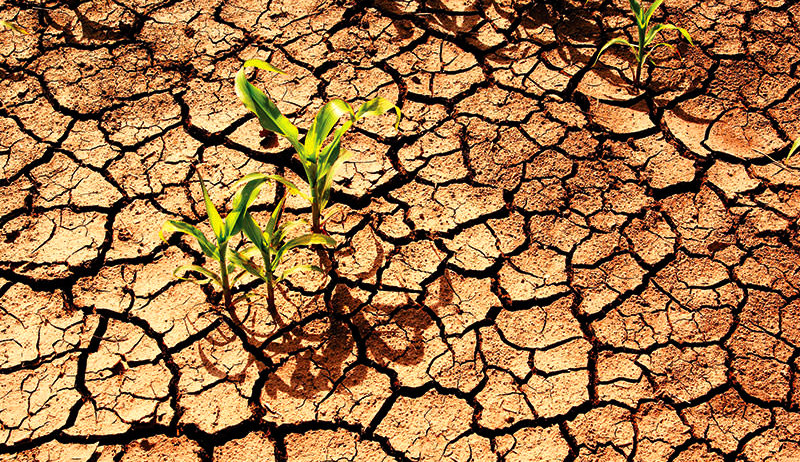
This is why Bosnian Muslim Slavs would during droughts throw stones in the air making sure they fall in a river. The reason why a stone was thrown up in the air was "to bring the thirsty souls down from the clouds"...

Slavs believed that stones can capture the spirits of deceased...

Slavs used to place stones in, on and around graves to prevent the dead from rising. I talked about this in my post "Tombstones"...I this why suspected vampires were buried with stones in their mouths...

Hence why Romans also believed that their "lapis manalis" stone would keep the souls of their "blessed dead" inside the "mundus Cereris"...

This belief in thirsty ancestors most likely originates in Neolithic...In this post, "One for the road", I talk about the possibility that vessels placed in graves since Neolithic were not left there empty, but originally contained drink for the thirsty dead...

We find the same belief among the Hittites, who blamed the effects of the climate change which eventually led to the collapse of the Bronze Age empires around Mediterranean, on themselves. Because they have forgotten to honour their ancestors.  I talked about this in my post "House of bones"...

BTW, Slavs didn't just believe that the ancestors controlled only rain. They firmly believed that it was their ancestors who were the source of all the good and all the bad in their lives. And particularly grain...

Making Diduch or Did from grain, meaning grandfather, ancestor, the most important decoration made in the Carpathian villages in Western Ukraine during the traditional winter holidays...I talked about this in my post "Diduch"...
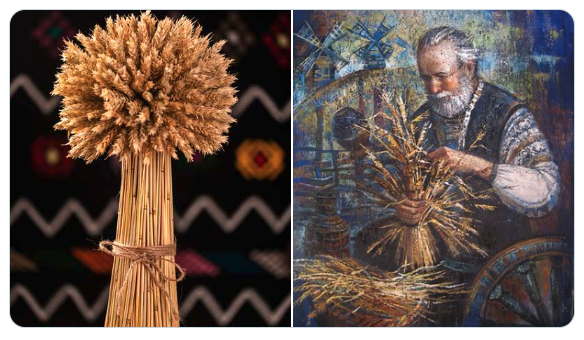
Greeks believed that too, BTW. It is this life giving power of the dead, which Pluto (Hades), the giver of wealth, appropriated for himself. And this is why Hades and Persephone are depicted sitting on their throne in the land of the dead, with sheafs of wheat and flowers...I talked about this in my post "Pluto"

So...Back to Romans and their sacred "lapis manalis" stones. Were they named the same because they were both linked with the worship of the ancestors? Doesn't "lapis manalis" mean "Manes (blessed dead) stone"?

Was the water poured on the rain making "lapis manalis"  during the rain making ceremony, because it contained "thirsty souls of the ancestors"?

You know,  Manes, the blessed dead, who lived in the pit covered with the other "lapis manalis"...The pit which Romans opened so they can sacrifice to "the underworld deities" and "the agricultural deities"...

The pit which could have originally been the grain seed store...Thankfully, Slavs still remembered who to blame for the drought, and who to thank for rain and grain until recently: the ancestors...So we can now understand these ancient "obscure" Roman rituals a bit better...

Oh, forgot. Slavs also prayed to and sacrificed to Dabog. Don't forget Dabog, The Giving god. Dabog, The Sky god, Sun and Rain god, to whom Slavs prayed for just enough rain and sunshine, so their grain fields would yield plenty of grain...

Also Dabog, the god of the dead...Whom Serbs considered their ancestral deity, the first, original ancestor...And whom other Slavs knew as "Djed" (Grandfather)...So we are still in the realm of the ancestor cult...

So there you have it...

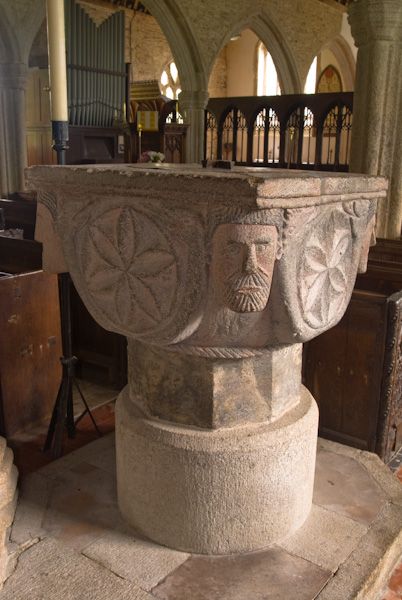
Finally, have a look at this: 

Food for thought...

Norman font from St Nonna's Church at Altarnun. Decorated with Perunikas, Perun's flowers,  also known as thunder marks...and water marks...and flowers of life...Because it is rain that makes life possible??? What is the origin of stone fonts? Maybe rain filled ancient stone mortars? I talked about this link between holy water fonts and mortars in my post "Knocking stones"...
Sunday, 8 January 2023

Zapis

Excerpt from "Srpski mitološki rečnik" (Serbian mythological dictionary) 

"Holy oak - In the recent past, Kuči (Tribe from Montenegro) did not have a single whole church. The people had no place to gather or perform religious rites..."

"...Feeling the need for a consecrated place they turned to oaks, a practice common among other Serbs and which, in all likelihood, has its origins in a very ancient, pre-Christian veneration of oaks, and trees in general, among the Slavs..."

"...Any large oak growing in a conspicuous place in or near the village became the village temple. The priest performed church rites under it. People gathered around it for village assemblies and celebrations... "

"...The ground around these holy oaks was considered consecrated too, so people buried their dead around some of these holy oaks too...

Cemetery from Gornja Morača region in Montenegro inhabited by Serbs, with an ancient oak growing in its centre. I talked about this in my post "Mountain Serbs from Montenegro"...

"...Even now, very old oaks can be seen growing in many old Kuči cemeteries. And in Kuči villages that do not have their own churches, in the middle of the village there is a consecrated oak, around which stone slabs are arranged for sitting..."

These holy trees were once indeed found in every Serbian village. A large cross, often made of stone, may be erected beside the holy tree, and the surrounding area may be fenced...


The most common name people use for these holy trees, is "zapis" literally "inscription", the name most likely derived from the fact that all these sacred trees were at some stage Christianised by a cross "inscribed", cut into, the tree trunk...

People believed that these trees protected the village on whose land they grew. In settlements without a church, ceremonies such as weddings and baptisms were once conducted under the tree...

Even in villages which had churches, the village church ceremonies, like celebrations of the village Saint, the protector of the village, were held under these holy trees...

Particularly prayers to God for protection against destructive weather conditions were always held under the village holy tree. Interestingly, most of these trees were large oaks, the holy trees of the Slavic Thunder God Perun...

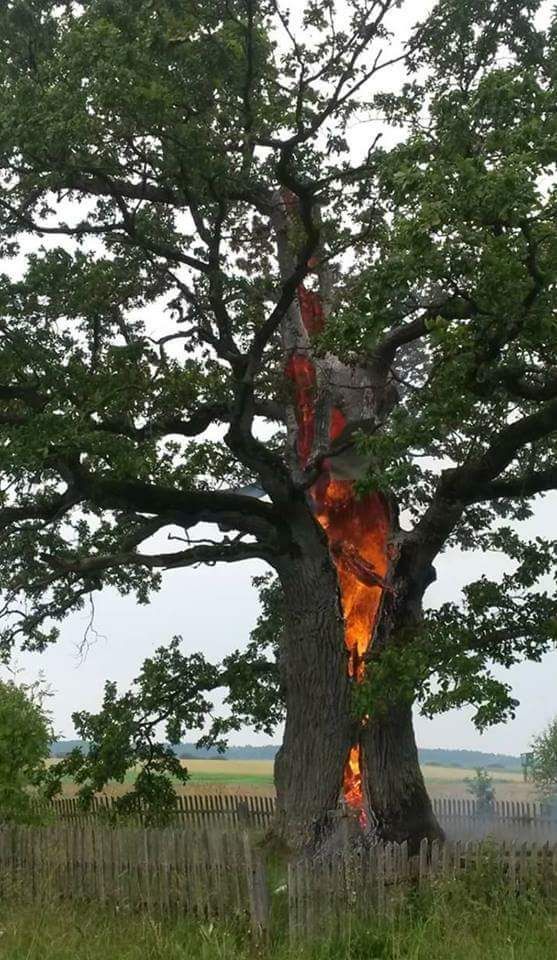
An old oak struck by lightning burning from the inside. For Pomeranian, South Baltic, Slavs, trees struck by lightning have a special status, believed to guard off demonic forces and possess purifying power. This was probably because "Perun, The thunder god, now resided in them"


Some of these hollow oaks were converted to chapels...I talked about this in my post "Oak chapel"...

People firmly believed that a great misfortune will befall anyone that dares fell a zapis (sacred tree). Climbing it, sleeping under it, and picking its fruits and twigs, were also forbidden. Even the branches and fruits that fell from the tree were never collected...

A village may have had more than one zapis: the main one in the settlement or near it, and several others in the village's fields, usually chosen so that they mark the village boundaries...

This was done both to insure magical protection of the village land, but also to protect the village land boundaries from being changed, as there was a taboo about cutting these trees...Hence they preserved borders between villages and peace...

In that way holy trees played the role similar to ancient boundary stakes, which eventually became standing stones and totems. I talked about them in my posts "Stake" and "Colossus"

According to Serbian scholar Veselin Čajkanović, the veneration of the "zapis" holy trees is inherited from the pre-Christian religion of the Serbs, in which it had been used as a temple...

The proof for that can be found in reports left by Christian missionaries in all Slavic land. One of the main accusations against Slavs found in all of them was that "Slavs venerated trees, stones and wells (springs), to which they prayed and sacrificed"...

How the Pagan Slavs saw and respected trees, particularly oak, can be seen from Serbian Yule log rituals, during which an oak tree is addressed as god, prayed to and sacrificed to. In Serbia, when a young oak tree is about to be cut for a Yule log, it is addressed in the way you would address a living god: "Good morning and happy Christmas Eve to you o Holy Badnjak. I have come to take you to my home..."  I talked about this in my post "Badnjak"...

You can find these church reports accusing Slavs of tree worship listed in this article (Serbo-Croatian): "Pogled u Slovensku botaničku mitologiju" (A look at Slavic botanical mythology) 

These church reports also state the measures undertaken to "Christianise" Slavic peasant population, which involved cutting holy trees and groves, with the intention to eradicate the vile tree worship...

This was obviously only partially successful, as you can see from this article... 🙂

Anyway, you might find this article, "The shushing place", interesting...It talks about the most common words for forest in Slavic languages...

You also might find this article, "Lesnik", interesting too. It is discussing how old this tree worship could be. 


You also might find this post, "Hazel", interesting too. It talks about veneration of hazel trees among the Slavs...In some places, they were considered even more sacred than oaks..

And this article, "Willow in Slavic folklore", could be of interest too...

Lord of the flies

Beelzebub, the lord of the flies was identified by Jews and Christians with Satan...From בַּעַל (baʿal, "lord, master") + זְבוּב (zvuv, "fly"), appearing in the Hebrew Scriptures as the purported name of a deity worshipped by the Philistines in Ekron...

Wiktionary says this about Beelzebub:

"It's likely this was not the god's actual name and instead was a polemic against the deity, a derogatory term used by Hebrews for an enemy god, possibly by associating the figure with defecation (hence flies)"...

I will in this article like to argue that this was indeed not a name of the Philistine deity, but the deity's attribute...I will also argue that even though we don't know what Philistines called this deity themselves, we know who that deity was: Nergal, the destructive sun...I talked abut him in my post "Winged superhuman hero"...

Nergal was not just "The destructive sun of the late summer early autumn (Jul/Aug)", he was also the god of plague. As the God of Pestilence, Nergal set loose the plague among the peoples. Not a Biblical one...A regular, annual one...

One of his symbols was the fly, the insect that brings pestilence to whole populations...And in Mesopotamia, like everywhere else, the annual peak in the fly population causes the annual peak of infectious diseases that they spread...

And that peak falls in Jul/Aug, in Leo, the seat of Nergal, The Lion Man, the Destructive Sun of the drought season at the end of summer beginning of autumn, the god of death and disease, The Lord of Flies...


Here are some stats for you:

Blow fly and house fly numbers in Mesopotamia peak in Jul/Aug/Sep.

These flies transmit at least 65 diseases to humans, including typhoid fever, dysentery, cholera, poliomyelitis, tularemia...

Typhoid fever in Iraq is a seasonal disease, with the majority of cases occurring starting from Jul...

Dysentery and cholera outbreaks typically follow seasonal increase in water contamination starting from Jul with the peak in Sep...

The reason why these diseases peak in Jul/Aug, Leo, is because this is the time of the year of maximum heat and minimum precipitation...The time of the year when Nergal, The Lion Man, The Destructive Sun, causes droughts and dries up the wells and causes water contamination...

Polio season starts in May, peaks in Jul, Aug, Sep...

Tularemia appears to have a clear seasonal pattern, with most cases occurring in the summer and early autumn months, Jul, Aug, Sep...

All of these diseases spread by ordinary flies...But, don't forget Sandflies. 

Sandfly numbers peak in Jul/Aug...In Iraq, a bite from an infected sand fly transmits Leishmania infantum, the parasite that causes Sandfly fever. Symptoms include fever, rash, diffuse muscle pain, headache, loss of appetite, nausea and vomiting...

Malaria Transmission is confined almost exclusively to the northern region of Iraq. The season running from May to October, with the peak in July and August...


And so...Back to our friend Beelzebub, The Lord of Flies of the Philistines...I Levant, the climate is very much the same as in Mesopotamia...And the lifecycle of the flies is the same too...Meaning the sick season in Levant is also Jul/Aug...The time of droughts...


That Beelzebub is indeed the nickname of the Destructive Sun God, who is also the god of plague, diseases, can be seen from the fact that there is an Ugaritic text which depicts Ba'al expelling flies, which are the cause of a person's sickness...

Ba'al being the Rain god, the enemy of the God of Death, Mot, who btw was equated to the sun...So, rain comes, the well water gets clean and safe for drinking again, the sickness season ends...

I talked Baal (Rain) - Mot (Sun) in my articles "The oldest Arabic poem" and "Anat"

BTW, if you are wondering why would people anywhere worship a god of death...Millennia of hardship, suffering, wars, deceases, droughts, deaths, destruction...

Ethnographer interviewing an old peasant woman, Serbia first half of 20th century.

Gran, do you believe in god?

Of course I do my son. Who wouldn't believe in god?

And are you afraid of god, gran?

Of course I am my son. Who wouldn't be afraid of an evil force? 


The same hottest, "driest time of the year = fly population peak = disease peak" correlation exists in Greece...Where we find Apollo, The Sun God, tho was also the God of Plague...And who was, possibly 🙂 derived from Nergal...Check my article "Palil" out for more details...

Greeks tell us that it is the rising of the Dog Star that brings sickness:

Sirius rises late in the dark, liquid sky

On summer nights, star of stars,

Orion's Dog they call it, brightest

Of all, but an evil portent, bringing heat

And fevers to suffering humanity.

This is the excerpt from Homer's Iliad. When this poem was written, Sirius, the Dog Star, used to rise in Leo, Jul/Aug, during Dog Days, the time of the year ruled by the Destructive Sun, Nergal...Apollo...

Why dog star? Why dog days?

Cause when our mythologies were made out of animal calendar markers, Sirius, the Dog Star rose with the sun in Jul/Aug, the time when mating season of the old primitive dog breeds began...Mythologised dog calendar markers:

Egypt: "Dog days", Mesopotamia: "Tishtrya", India: "The bitch of the gods"

Why Leo?

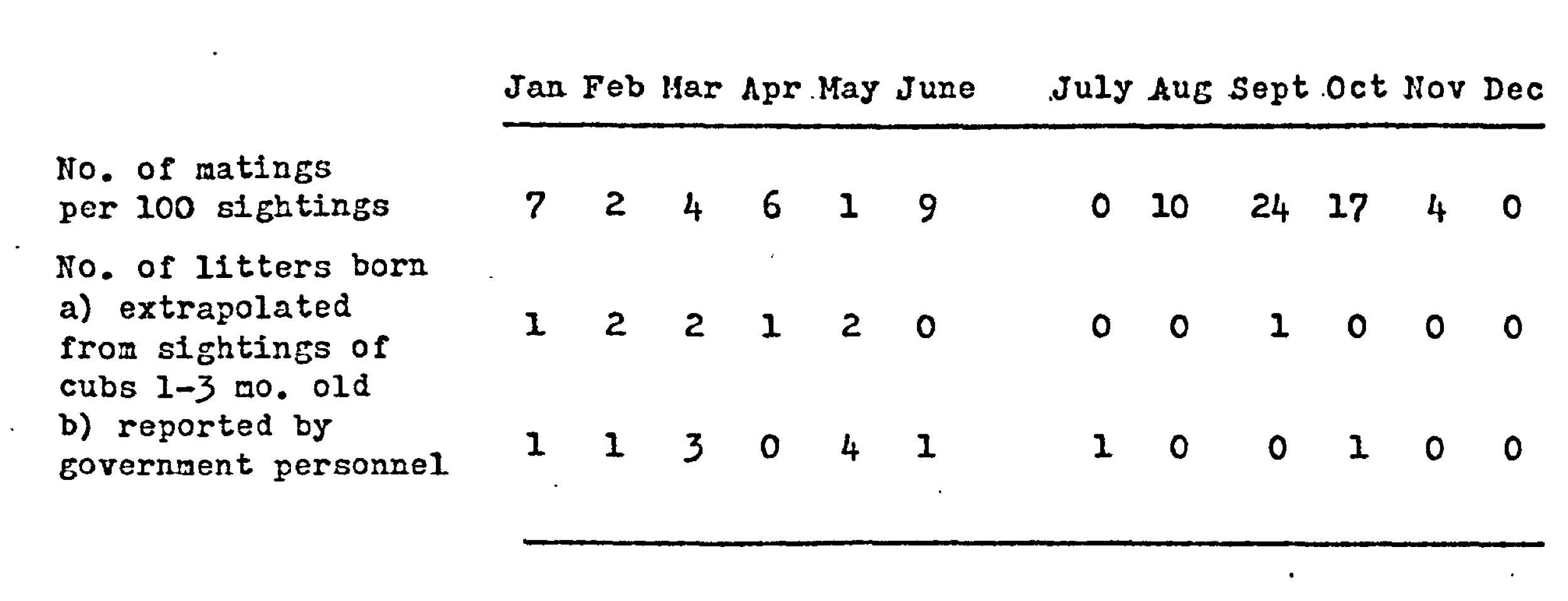
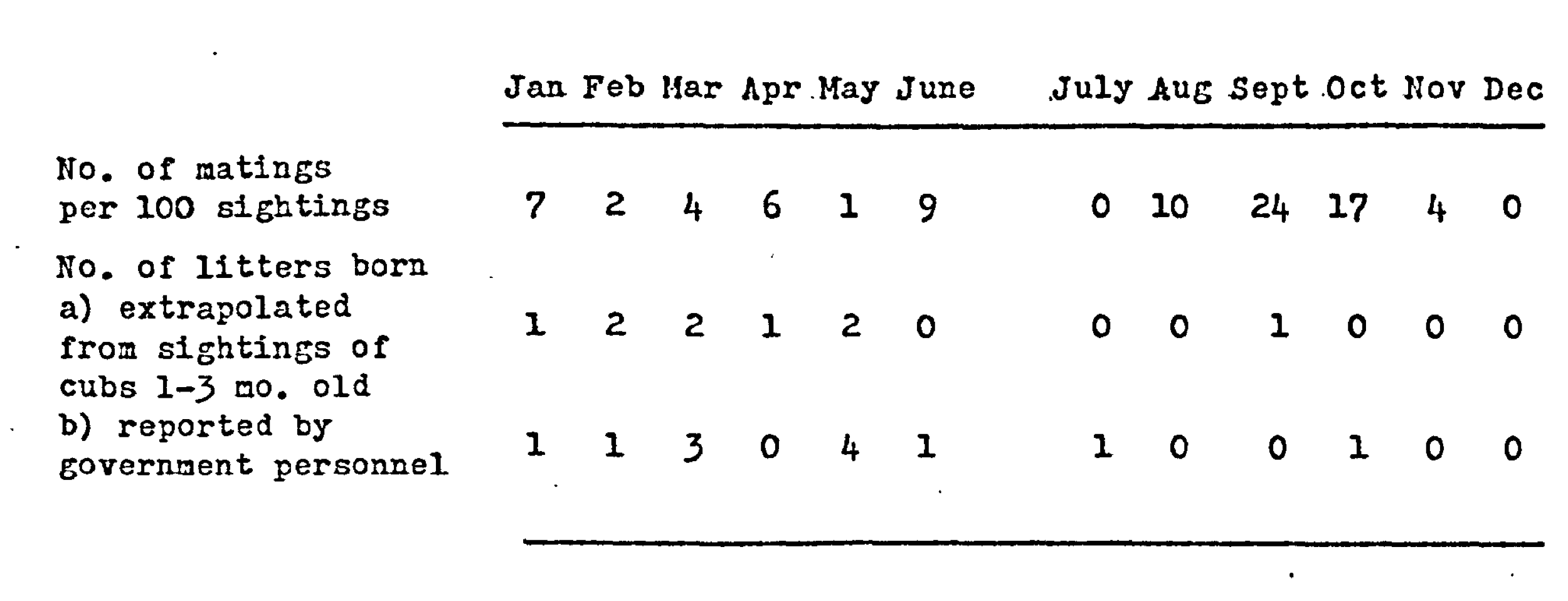
Cause when our mythologies were made out of animal calendar markers, Asiatic lions mating season started in Jul/Aug and spanned the whole of Autumn (Aug/Sep/Oct)...Which is why autumn starts in Leo (Jul/Aug). I talked about this in my post "Angra Mainyu"...


And why lion is the symbol of autumn...I talked about this in my post "Symbols of seasons"...

Basically, dog and lion are equivalent animal calendar markers, both marking Jul/Aug...The seat of Nergal, the god of death...Who was associated with dogs 🙂 But I will talk about this in one of my future articles...I think this is quite enough for today...

To read more about ancient animal and plant calendar markers, start here…then check the rest of the blog posts related to animal calendar markers I still didn't add to this page, and finally check my twitter threads I still didn't convert to blog post...I am 9 months behind now...

Palil

Today I came across this paper: "Kissik, Düru and Udannu" and in it, I read this: "deities worshipped in the city Udannu: the god Nergal (always written in the form diGi.DU, which also suggests an alternative reading Palil)..."

This is very interesting... Nergal, the deified destructive "burning" sun, was depicted as a lion man, because Jul/Aug, Leo, is the hottest and driest part of the year in Mesopotamia...Talked abut him in my post "Winged superhuman hero"...

Btw, Leo marks Jul/Aug, cause this is when Eurasian lions main mating season starts...


In Slavic folklore (remnants of old mythologies), middle of Leo, a week at the end of Jul, beginning of Aug, the hottest part of the hottest part of the year is called "kresovi' (fires)...This is because the sun during this period is so hot, that it burns the the land...

Now here is the interesting bit: in Slavic languages the word "pali" means "burns"...

So Palil, the alternative name for Nergal, the destructive, burning sun in Leo, in Slavic languages means "The one that burns", "The burning one (sun)"...

Weird, right? Also, did you know that Aplu was the Late Bronze Age Hittite and Hurrian god of plague, just like Nergal...And that Aplu was also a title given to the god Nergal, the destructive, burning sun, himself...

And even though we can read that Aplu means "the son of" (whom???), I think that much better meaning of this name is "The one that ignites, burns"...Found in Slavic languages, where "upali" means "ignites"...

And did you know that this Aplu was proposed to be one of the possible roots of the Greek Apollo, The "Terrible", "Feared" Sun god...Whose name in Slavic languages would mean "The one that burns"...Just like Nergal/Palil...

But this is surely a complete coincidence, right? Hmmm...It should be. But...Did you know that "there was an Akkadian god Erra who was syncretised with Nergal at an early date, and, especially in literary texts, they functioned as synonyms of each other"?

Also did you know that Erra is derived from the Semitic root HRR, and was etymologically related to the Akkadian verb ereru, "to scorch"? And that this means that Erra meant "The Scorching one"...

Where are you going with this, I can hear you ask...Here: did you know that Slavic word Jara (pronounced Yahrah) means "scorching heat"?

And that this word is the root of the Slavic Sun god Jarilo, The Scorching one...The Dragon...The Feared one...

Sooo...Not sure what to think of this...Amazing "coincidence"...If it was the only one...

Sumerian is a language isolate, without any known descendants or related languages...but...Interestingly, in it we find some very important words which (look like they) are direct cognates with Words from Balto-Slavic branch of IE languages...

Like words for:

KingScribe and TabletMindBreath, Life, GrainWeevil (Grain eating insect), TeethSickle, Fly

BTW, Akkadian, a Semitic language, also has some very interesting words with (what look like direct) cognates in Balto-Slavic languages...

Like words for:

AxeBalance (This could actually be a Sumerian word, we don't know), GownAcorn and OakBlood and Sacrifice

There is no explanation for how these words can be found in Sumerian and Akkadian, some of the oldest known Non IE languages, and in Balto-Slavic languages, allegedly "the youngest branch of IE languages"...

So what happened here? Is this just a giant pile of coincidences? I mean it must be, right? 

Or maybe we should look at Hurrians of the Mitanni and their Indo-Iranian elite as a possible link here???

As I said, I don't know...I am just documenting all this here...

To read more about ancient animal and plant calendar markers, start here…then check the rest of the blog posts related to animal calendar markers I still didn't add to this page, and finally check my twitter threads I still didn't convert to blog post...I am 9 months behind now...

Fly

(In Mesopotamia) "There are flies that bite like bulldogs everywhere. . . The flies are awful; one black web of them this morning; in one's hair and eyes and mouth, in one's bath and shaving-water, in one's tea and in one's towel..." From: "Mons, Anzac & Kut" by Aubrey Herbert

Why am I talking about biting flies of Mesopotamia? 

Cause in the Sumerian lexicon we can find this entry:

"muš4: a biting insect"

Which is very interesting...

Cause of this: 


Serbo-Croatian: mušica = fly, from Proto-Balto-Slavic *máušāˀ, from Proto-Indo-European *mus- 

Cognate with Lithuanian mùsė, dialectal musià, Latvian muša, Latin musca...

Sumerian is a language isolate, without any known descendants or related languages...but...Interestingly, in it we find some very important words which (look like they) are direct cognates with Words from Balto-Slavic branch of IE languages...

Like words for:

King, Scribe and Tablet, Mind, Breath, Life, Grain, Weevil (Grain eating insect), Teeth, Sickle

And now fly???

BTW, Akkadian, a Semitic language, also has some very interesting words with (what look like direct) cognates in Balto-Slavic languages...

Like words for:

Axe, Balance (This could actually be a Sumerian word, we don't know), Gown, Acorn and Oak, Blood and Sacrifice

There is no explanation for how these words can be found in Sumerian and Akkadian, some of the oldest known Non IE languages, and in Balto-Slavic languages, allegedly "the youngest branch of IE languages"...

So what happened here? Is this just a giant pile of coincidences? I mean it must be, right? 

Or maybe we should look at Hurrians of the Mitanni and their Indo-Iranian elite as a possible link here???

As I said, I don't know...I am just documenting all this here...

BTW, there are more interesting words to be added to this list...Soon...

Wednesday, 4 January 2023

Euphrates poplar

Diadem of the Sumerian Queen Puabi who was buried in the royal cemetery in Ur, Iraq, around 2600BC. Currently in the Pen Museum... 


Diadem central parts are these wreaths made of golden leaves...Identified as: 

wide poplar leaves (correct) 


narrow willow leaves (incorrect)


Here's why:

This is Euphrates poplar. It is the only poplar that grows in deserts and has great vitality and amazing ability to find water and resist heat, droughts, winds, including sand storms...

Euphrates poplar has two different leaf shapes. 

As a sapling, the leaves are shaped like willow leaves in order to reduce evaporation.

When it grows taller and more energy is needed to support the trunk, the leaves become bigger, turning into a round shape.

So both types of leaves on the Queen Puabi's headdress wreaths can be, and most likely are, Euphrates poplar leaves: young poplar (narrow) and old poplar (wide)...And not willow (narrow) and poplar (wide) leaves...

These amazing golden trees are also Euphrates poplar trees. Their leaves are green during spring summer and autumn. But turn golden yellow at the beginning of winter, when the temperature drops to 5°C to 10°C...Which in Iraq happens in Oct/Nov. Beginning of the rain season...

Kind of significant in Mesopotamia...I can bet that the choice of leaves used for the Queen Puabi's headdress was not accidental...Every other animal/plant shaped object found in her grave has religious significance (read is an animal/plant calendar marker)...For instance the diadem of Queen Puabi depicts 4 seasons...I talked about this in my post "Diadem of Queen Puabi"...

Anyway, Euphrates poplar also a tree under which Inanna falls asleep and is subsequently raped (Inanna and Shukaletuda)...I will talk about this legend soon. But I can bet that the choice of the tree that plays central role in this legend was not accidental either...

And maybe the fact that the Queen Puabi's headdress, which we know now is made only of Euphrates poplar leaves, turns Puabi (symbolically) into a living golden Euphrates Poplar tree is kind of important (symbolically)...🙂 What do you think?

To read more about ancient animal and plant calendar markers, start here…then check the rest of the blog posts related to animal calendar markers I still didn't add to this page, and finally check my twitter threads I still didn't convert to blog post...I am 9 months behind now...