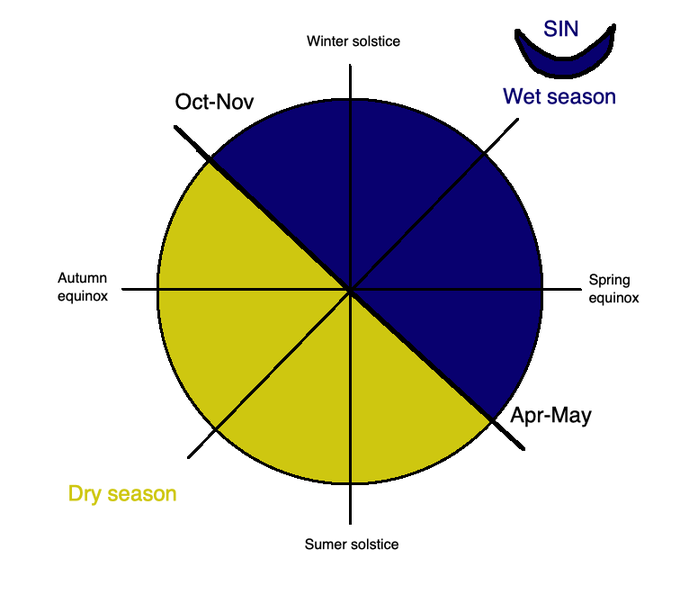
Showing posts with label Sin. Show all posts

Sunday, 6 September 2026

A toast to Inanna

A small lapis lazuli disc, 2100-1900 BC, Trans-Elamite period, Southeastern Iran. Currently in Louvre...

What does it depict? Some say "a pair of lovers sharing a drink"...I would disagree. Here is why:

One side of the disc depicts a bare chested woman seating on a stool. She wears a skirt with a hatching pattern. Facing her, a kneeling bare chested man wearing a plain skirt who presents her with a cup...

Crescent moon and star above...

The other side of the disc depicts the man, now seating on a stool. Facing him is the same woman, kneeling on the ground and drinking from the same cup...

Star and crescent moon above...

Now what is interesting is that as the star is always above the woman and the crescent moon is always above the man. Which I think identifies these figures as 

Star - (Elamite version of) Inanna

Crescent moon - (Elamite version of) Sin

Another interesting thing is that the man (Sin) gives the cup to the woman (Inanna) and that she then drinks from it...What could that mean?

To figure this out we need to look at the climate in Mesopotamia/Iran and the way crescent moon sets during the year. 

In Mesopotamia/Iran the climatic year is divided into a hot dry half (Apr/May - Oct/Nov) and cool wet half (Oct/Nov - Apr/May)...

During the winter, the ecliptic plane intersects the western horizon at its steepest, most vertical angle at sunset. Because a waxing crescent Moon follows right behind the Sun along this steep line, it sits directly above the Sun. This makes the crescent look like a upright bowl (the "wet moon") that sinks straight down into the horizon...

So basically, in Mesopotamia/Iran, the crescent moon points upwards during the wet season, the season which turns parched, dry wasteland into fertile grazing and farm land. This is why Moon god Sin was so venerated. I talked about this originally in my post "Moon god Nana - Sin"

BTW, Jan/Feb, when the Wet Moon starts approaching it's most vertical position is also the beginning of the snowmelt in the Iranian mountains...And snowmelt is the main contributor to the annual flood of Tigris and Euphrates...

I talk about the Wet Moon and why Moon Gods were so important in places where winter is the rainy part of the year in many of my other posts too...

Inanna was directly linked to land fertility, particularly with cattle, grain, date fertility. I talked about this in my posts "Inanna in Egypt", "Chalcedony stamp", "Rhomb", "Mother of grain", "Sacred marriage on the threshing floor"...and many others...

"Man — despite his artistic pretensions, his sophistication, and his many accomplishments — owes his existence to a six-inch layer of topsoil and the fact that it rains."

So, for (Mother) earth to become fertile and to produce grain and grass/cattle it needs (to drink) water (rain/snow melt). And I think that this is what is symbolically depicted through "the woman (Inanna) drinking from the cup given to her by the man (Sin)"...

I already talked about this symbolism of drinking from a cup in my post "Tulip goddess", in which I give symbolic analysis of this cool seal depicting a seated female figure (goddess? ) drinking out of a goblet - next to a tulip, bronze seal, late 3rd - early 2nd mill BC, (BMAC), Afghanistan. Currently in a Private collection Linenthal, San Francisco. Tulips as calendar markers for snowmelt/flood season in Central Asia... 

And in my post "Lapis lazuli water seal", in which I analyse the scene depicted on this amazing Lapis lazuli seal from the point of view of the local climate and animal calendar markers. The seal was made between 2400BC and 2000BC in Eastern Iran. Currently in the British Museum...


Oh and the fact that the disc we are talking about was made from lapis lazuli (water stone) is another indicator that the scene we are seeing depicted on it is not just a depiction of a couple having few casual drinks...

Tigris and Euphrates annual flood (fed by snowmelt caused by the sun) peaks in Taurus, beginning of summer...

So golden bull's head (sun) with lapis beard (flowing water)  

I talked about this in my posts "Shamash young and old", "When Utu steps up to heaven", "Problems of Abzu", "Butt chewing", "Maran", "Lyres of Ur", "Solar bull"...


So, to conclude, the disc depicts the symbolic drinking of the cup (rain, snowmelt) by Inanna (Earth) filled by Sin (Wet Moon)...

PS: The goddess is probably Proto Anahita who was linked to Isthar/Inanna. Talked about her in my post "Rainbows and peacocks", in which I provide symbolic analysis of this Sassanian dish, 400-600AD, Iran, Currently in Al Thani collection


Half way down the post you will see the same Elamite goddess in a skirt with a hatching pattern resembling sheep skin kaunakes holding a rainbow...Proving (at least) 3000 years cultural continuity in Iran...


That's it. To read more about ancient animal and plant calendar markers, start here…Then check my twitter threads I still didn't convert to blog post...I am way way behind...

Monday, 27 April 2026

Chalcedony stamp

Neo Babylonian, 625-539BC, blue chalcedony pyramidal stamp seal with a goat-fish. Before it a rhomb and above its back a crescent. Currently in The Museum of Fine Arts Boston...

And no one knows what all these symbols together mean...So let me try to decipher this quickly:

Rhomb is a symbol for a date fruit. Date harvest season starts in Jul/Aug, in Leo, when Lion (autumn) kills (ends) Bull (summer) and lasts until Oct/Nov. I first encountered this symbol when I talked about date harvest in my post "Lion killing bull under date palm", but at that time I didn't know what rhomb means...


Rhomb also symbolises the womb of the Mother of Grain (Inanna/Ishtar) which produces food when "the seed of the Sky Father" (rain) fertilises her. I talked about this in my post "Rhomb"...


Sumerians actually explicitly state that Inanna is the "Mother of grain". In "The Courtship of Inanna and Dumuzi" we read:

As for me, Inanna

Who will plow my vulva?

Who will plow my high field?

Before my lord, Dumuzi ...

I poured out grain before him

I poured out grain before my womb...

I talk about "Mother of Grain" from various cultures in many of my posts...

Inanna/Ishtar was also deified Sirius, which rises with the sun (morning star) in Leo, Jul/Aug, the hottest time of the year. Which is why she is depicted standing on a lion with the sun above lion's head and is known as "The Lioness of heaven"...


I talked about deified Sirius in many of my posts...

You can start here: You know how everyone thinks that Inanna/Ishtar (Morning Star) is Venus and how I think that it was originally Sirius, and only later became Venus?

Well, it seems that Ancient Egyptians preserved the proof of this switch in their myths about Sopdet...


I talked about this in my post "Sirius mother of Venus"...

Now Sirius is visible in the night sky from Oct/Nov to Apr/May...

Oct/Nov, when rains arrive to Mesopotamia. 
Apr/May, when flood arrives to Mesopotamia.

Goatfish, the sacred animal of Enki, is a complex animal calendar marker for the wet season in Mesopotamia...Between the mating season of wild goats and the mating season of giant Mesopotamian carps...I talked about this in my post "Goatfish"...


In Mesopotamia, during the harvest which started in Apr/May, a man and a woman performed ritual sexual act on a threshing floor, imitating Inanna (earth, womb) and Enki (sweet water, seed) consummating their holy marriage to produce grain. I talked about it in my post "Sacred marriage on the threshing floor"...

So that was rhomb, goatfish...What about the crescent? In Mesopotamia, the crescent moon points upwards during the wet half of the year...Which is why it became the symbol of the moon god Nana/Sin. The most important Mesopotamian god linked with rain, water, green pastures and (cattle) fertility...I talked about this in my post "Moon god Nana/Sin"...


The same wet half of the year also marked by the rhomb and by the goatfish...

I love that they used blue (water) stone to depict all this...

To read more about ancient animal and plant calendar markers, start here…Then check my twitter threads I still didn't convert to blog post...I am way way behind...


Friday, 13 February 2026

Alchemical and rosicrucian compendium

Alchemical and rosicrucian compendium, c. 1760...

Very very interesting scene...Which proves that (at least some) people in 1760 knew the real meaning of griffin: complex animal calendar marker for autumn...

Let me explain why I think so:

On the left we see an adult sun (god) riding on a lion. I would suggest that this is Sun in Leo, Jul/Aug...Apollo...

If you want to know why I think so, check my article "Lions of Delos" first. It talks about the Lions of Delos, the burning destructive sun in Jul/Aug, Leo, and the fact that both Nergal and Apollo are linked to lions...

And then the rest of these articles about Apollo and his links to Nergal:

"Palil". About "Palil" a nickname of Nergal, the terrible, burning, destructive sun of Jul/Aug, Leo...And about the origin of the name Apollo and its meaning...

"Lord of the flies". About Nergal and Apollo as "The lords of the flies"...And about Jul/Aug, Leo, being the peak of the fly and fly born diseases season in Northern Hemisphere...

"Lions of Delos". About the Lions of Delos, the burning destructive sun in Jul/Aug, Leo, and the fact that both Nergal and Apollo are linked to lions. 

"Apollo and dolphins". About Jul/Aug, Leo being the "best time to sail in Eastern Mediterranean", and the link between dolphins and Lions...and Apollo...

"Marble throne of Apollo". About snakes (symbols of sun's heat), dragons (symbols of burning sun's heat) and terrible sun gods, Nergal and Apollo who are dragons themselves...

"Apollo and Python". About why Python followed Apollo after his birth? Cause snakes are solar animals...According to the Delphian tradition, Apollo was born on the 7th day of the month of Bysios (Jan/Feb)

"White raven". About the black and white raven legend which is found in both Nergal and Apollo mythology, Egyptian vultures and the twins that guard the gates of hell. And some other weird stuff...

"Threshing floor of Apollo". About the threshing floors as solar observatories/temples, about the threshing floor of Apollo from Delphi, about Jul/Aug, Leo, being the holy month of Apollo, and about solar bonfires...

"Apollo the great archer". About why Apollo was the terrible "far shooting" archer...About arrow and bow constellation from Mesopotamia, Ishtar, Sirius, and Jul/Aug, the season of Perseid meteor shower...

"Apollo Sminthius". About Apollo and peak infectious diseases season, Jul/Aug

Lion marks the period Jul/Aug because this is when the main mating season of Eurasian lions starts...Talked about lion as an animal calendar marker in many of my posts...

Lion/Leo marks the hottest time of the year on the northern hemisphere. After that the weather starts getting cooler. I talked about this in my post "Lion eating sun", in which I analysed this detail from the Alchemical and Rosicrucian compendium - c.1760...

Now back to our original image. 

On the right we see a baby with two faces, one looking forward and one looking backward, holding a shield with  the sun head identical to the one the lion rider has. He is riding on a griffin, whose front half is an eagle and the back half is a lion...

I would suggest that this is Janus, sun on Winter Solstice/New Year, at the time of death of the old Sun (Solar year) and the time of birth of the new Sun (Solar Year)...

I talked about Janus in my post "Janus"...

And I talked about his Sumerian predecessor Isimud in my post "Adda seal"...

The two faced one arrives in Europe after the end of autumn, Jul/Aug - Oct/Nov. This is what griffin represents, Autumn, the time between the mating of Eurasian lions (starts in Jul/Aug)


and mating of Eurasian Vultures (starts in Oct/Nov).

The oldest griffin that I know of is depicted on this 3000 BC Proto-Elamite seal.  

I talk about griffin as an animal calendar marker in many of my posts...

The riders point their lances at each other, Apollo points at the Janus's sun shield, and Janus points at Apollo's head, basically indicating that they are one and the same, just at two different points in time...

I am not sure what why Apollo carries moon shield...Maybe it is to depict the cooling which starts in Jul/Aug and which "brings" rains at the end of autumn? I talked about the link between moon and rain in my post "Moon god Nana Sin":

Why was moon (god) so important to Mesopotamians? This article tries to answer this question. Spoiler: Cause the moon that was worshiped was not just any moon. The moon that was worshipped was the crescent moon that points upwards, aka "wet moon"...

 Or maybe just to symbolise summer moons...

Anyway, I just thought this was interesting. What do you think? 

To read more about ancient animal and plant calendar markers, start here…Then check my twitter threads I still didn't convert to blog post...I am way way behind...

Sunday, 19 May 2024

Moon god Nana/Sin

Old Akkadian Cylinder Seal, date to 2294-2270 BC. This is an amazing seal, because it actually confirms something I suspected for a while, but wasn't 100% sure until now: why was the moon god so important to the people from Ancient Mesopotamia...

Here is the seal description:

On the left "a warlike god in slash-skirt, armed with a barrow in the left hand and a mace in his right hand" otherwise known as Ningirsu, Ninurta, the storm, rain god...If you are interested in why archer, check my post "Invisible archer"...

If arrows are shooting down from the night sky, there must be an [invisible] archer standing somewhere up there shooting them out of his bow...

Orionid meteorite shower

Orion

An example of an ancient "scientific" explanation for an annual natural event...

On the right is the god of the source of the fresh water, Enki (Ea) with two streams of water flowing from the shoulders, representing Tigris and Euphrates...If you want to understand why are fish swimming towards Enki, and why he is standing on a calf, read my posts "Adda seal", "Goatfish", "Nanshe", "Foundation peg of goddess nanshe"

Crescent between the gods;

Now that crescent is the symbol of the Mesopotamian moon god Nanna (Sumerian)/Sin (Akkadian) and the main way this god is actually depicted on artefacts: as a recumbent (pointing upwards) crescent moon.

Symbols representing Sin (centre), Ishtar (left) and Shamash (right), as depicted on the upper half of a kudurru of Meli-Shipak II. BTW, Ishtar and Shamash were thought to be Nanna/Sin's children...

When depicted in his anthropomorphic form, Sin was depicted with the crescent either placed on his tiara or atop a standard he held. Like on this 8th Century BC Assyrian limestone stela from Tell Ahmar, Syria, (hopefully still) in the Aleppo Archaeological Museum...
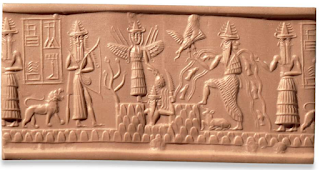
A number of sources attest the existence of a tradition in which Sin was regarded as the sole head of the Mesopotamian pantheon. 

Why would a moon god be so important? Well, because sin was not just a moon god. He was the "wet moon" god. 

Eeeee what?

Those who have been following me for a while have probably noticed that I have been talking about something called "winter moon" quite a lot. I first talked about it in my post about Mesopotamian ploughing seals "Seven stars of scorpio"

I noticed that all the ploughing seals depicted a crescent moon pointing upwards right above the plough...The main ploughing and sowing was done in Oct/Nov, around the time of the first rains. At the beginning of winter.


I then checked if the angle of the crescent moon depends on the season and...So I proposed that this upward pointing crescent moon was the calendar marker for "winter"...

BTW, the "winter moon was depicted" right next to a scorpion, which because it disappears at the beginning of the cool, wet half of the year, in Oct/Nov, was a calendar marker for the beginning of winter...Talked about it in many posts, for instance "Scorpion king", which asks if Scorpion King actually ever existed? Or is this just a misinterpreted animal calendar marker (scorpion) which marks the time when scorpions go to hibernation, the rains arrive, and the the grain planting season begins?


I again talked about the "winter moon" in my post "Pissing gazelles" about this mad Assyrian wall painting. Because of their mating season which starts in Oct/Nov, gazelles are an animal calendar marker for Oct/Nov, beginning of the rain season...and winter...

The next time I talked about the "winter moon" was in my post "Khafajeh vase", in which I talked about the relief decorating this amazing object, dated to 3000BC, relief which, through a very complex animal calendar, depicts the seasons... 

And in this post I said this:


"...The sun is shown next to both the young and the old sun god. As the identification mark. The moon pointing up, which I postulated to mean winter, wet season, is only shown next to the young sun, the one which causes water to flow..."

Young sun

Old sun

"...Which makes me wonder if this is moon, which points upward during winter, or vessel which collect precipitation which falls during winter wet season, river bed...Or both...Still thinking..."

Now, with everything that I have learned since about Sirius, and which I presented in my post "Inanna and Sukaletuda", I don't think that this is sun at all. I think that this is Sirius...And this is not a sun god, but Inanna... Also, I am now 100% convinced that the "winter moon" definitely also had a meaning of a "water collecting vessel"...

I then continued talking about the "winter moon" and its symbolic relationship with other winter calendar markers:

Buffalo, in my post "Lions vs buffalos"

Griffin vulture, in my post "Eagle dance"

Ibex goat, in my post "Bull leaping in Syria"

Scorpion, in my post "Angra Mainyu"

Believe or not, when I first proposed that this crescent moon was a symbol for "Oct/Nov", "Winter", "Wet/rainy half of the year" I didn't know who Nanna/Sin was...I know...Mad...Or how important he was, for no (obvious) reason that anyone can think of...

Nanna/Sin was linked to water and fertility...Why? No one seems to know. The only thing I found is "the obvious link between the moon and the tides"...But this really has nothing to do with fertility...Or "springs" with which the moon god was also associated...

In Mesopotamia crescent moon points upwards during the wet season, the season which turns parched, dry wasteland into green pastures needed for grazing cattle...I talked about green pastures and rain gods in my post "Green pastures"...

Funnily, Sin's other main role, apart from being the moon god, was the protector of the cattle. In that role, he was responsible for the growth of the green pastures 🙂. Of course no one knows why...

Anyway, here he is, on this bronze plaque from Mesopotamia, dated to 500 - 400 BC, depicted with bull horns "because crescent moon pointing upwards resembles horns"...

His association with cattle and with dairy products is reflected in his nicknames Abkar, "shining cow", and Ablulu, "the one who makes the cows abundant"...

He was also associated with wild grazing animals inhabiting steppes, especially ibexes and gazelles (both animal calendar markers for the start of the wet half of the year).

He was also connected to the pastoral god Tammuz, who was the consort of his daughter Ishtar...

Nanna/Sin was seen as a herdsman in astral context, with stars being poetically described as his herd.

But interestingly, the term "heavenly cows full of heavenly milk" was also used for clouds full of rain...So he could have also been seen as herding the rain clouds...

I talked about heavenly cows in my posts "Lords of divination", "Holy cow", "Michael from Pavia"

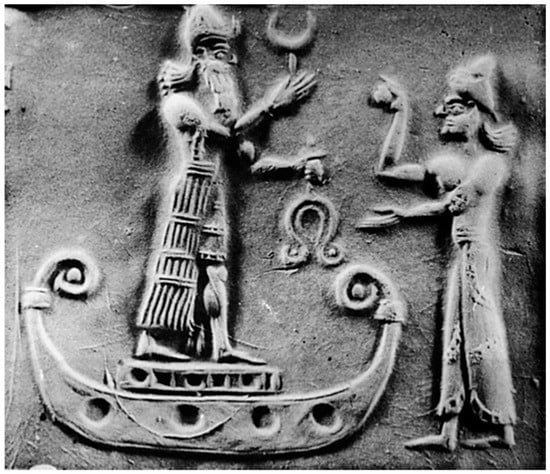
This is really cool: Sin was also linked to fertility and pregnancy of the animals, especially women and cows. Middle Assyrian seal found at Samsat, depicting the moon god in a boat, holding a crescent standard and an omega symbol, connecting him with conception and childbirth...

This "omega" symbol is otherwise known as the hairdo of Hathor, "The Holy Cow" from Egyptian mythology, who was directly linked with water and fertility...I talked about Hathor in my posts "Holy cow", "White calf", "Cow and calf ivory", "Lotus and papyrus"

BTW, the reason why Nanna/Sin was often depicted in a crescent shaped boat, is because he marked the wet half of the year, Oct/Nov-Apr/May, the time when rivers had water in them...I talked about the boat symbolism in my posts "Rain and flood"...

It was also believed that Nanna/Sin could provide people with offspring, as evidenced by prayer in which he is asked for that by childless worshipers, both men and women...

This link between Nanna/Sin and conception is kind of obvious, considering that the rain was seen as a "heavenly semen" which makes the land fertile and pregnant...

In Ancient Mesopotamia and Iran, this symbolic link between rain and semen was well known, and was depicted on this 5th mill. BC vessel from Tepe Hissar. Ibex starts mating in Oct/Nov (winter) + Leopard starts mating in Jan/Feb (spring) = Rain season

Both animals are thus linked to rain and fertility...Their mating, semen, brings rain, heavenly semen, which fertilises the land...I talked about this in my post "A vessel from Tepe Hissar"

But Nanna/Sin was also believed to aid pregnant women during pregnancy and labour. Women who had problems giving birth should recite the incantation called "Cow of Sin", which would help them deliver their baby...

Eeee....Through an incantaion called "Cow of Sin"? Yup...The incantation “Cow of Sin”, which goes back to the Ur III period...relates that: "Moon god Sin lusted for a cow, mounted her and impregnated her..."

"...When the cow was due to give birth, labor pangs gripped her and became too exhausted and unable to deliver the calf until the moon god sent two spirits to assist her and she finally gave birth...". Seal depicting calving season, Tell Barak...

In this article "Moon, Rain, Womb, Mercy The Imagery of The Shrine Model from Tell el-Far‛ah North—Biblical Tirzah For Othmar Keel", Irit Ziffer claims that: "Calving became a metaphor for human delivery", and that "The supplication is that like the cow in the incantation, the woman in labor should give birth easily"...

But, but, why would the moon god be linked with cattle pregnancy and delivery? Because the wet half of the year is also the time when the wild cows were getting heavily pregnant. And they all started calving in Apr/May, the time of the year marked with Taurus...

Today Taurus means bull, but originally it most likely meant Cow and Calf...I talked about this in many of my articles, for instance "Cow and calf ivory", "Foundation peg of the goddess Nanshe", "Elamite water bull", "Human bull hybrid", "White calf", "Calydonian boar"


In Mesopotamia, Apr/May, the time when wild cows started calving (and producing milk) was also the time when Tigris and Euphrates reached their water level peaks and flooded. The time when all the water accumulated by the "winter moon" seemed to "spill out"...And guess what:

One of the names used for the moon god in Mesopotamia during the Early Dynastic period, was Dilimbabbar, which means "the shining bowl"...No one knows why. But if this is the bowl used to collect all the rain/snow (water) that falls from the sky during the wet half of the year...

As I already said, the "winter moon" marks the "wet half of the year"...So it should really be called the "wet moon". And believe or not, yesterday I found out that "wet moon", is the actual thing...

"A wet moon is the visual phenomenon when the "horns" of the crescent Moon point up at an angle, away from the horizon, so that the crescent takes on the appearance of a bowl. By contrast, a dry moon is one where the crescent of the moon is at any other angle"...

This is very important: "As summer comes, the crescent shape shifts, pouring out the water..."

Which is exactly what happens in Mesopotamia. Half way through the spring, the water starts pouring down the mountains into the great rivers...Due to combined rain and snowmelt...


Look at this: Stella of Ur-Nammu, the founder of the Third Dynasty of Ur, 2193BC. The king stands worshipping before the enthroned Moon god. The two flying angels brings from heaven a vase overflowing with rain water...Yet no one knows what Nanna/Sin is? Pics from this page on the Penn museum website...


This same vase is most often being held by the fresh water god Enki, the god of the source of Tigris and Euphrates...And represents the source of these two great rivers...The rain (and snow) that falls during the "wet moon" time of the year...

If you are interested in Enki, who is (in) Abzu, (the mountain) that is the source of Tigris and Euphrates, you should start with this article, "Kassite seal with Apkallu", about this mad 18th-12th centuries BC Kassite seal from Syria, and follow the links...

Anyway, now we know why on this plaque Enki is depicted in Abzu with the "wet moon" of Nanna/Sin above him...I talked about what Abzu really is many of my posts. For instance start with "Problems of Abzu" and follow the links...

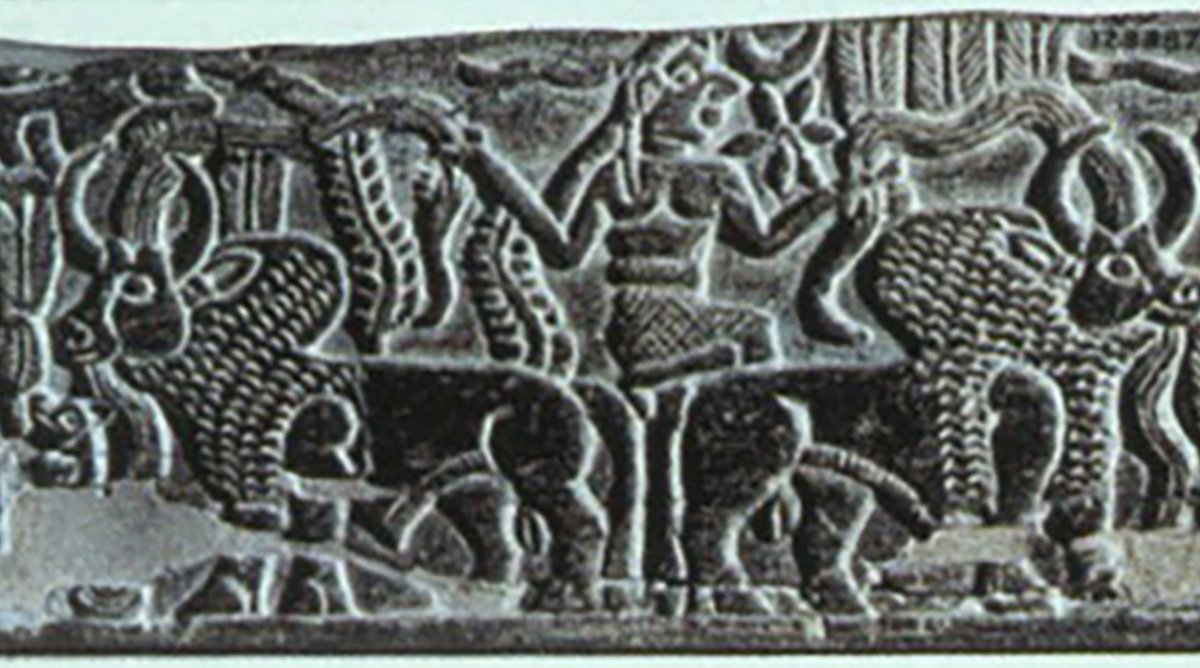
And we now know why this plaque depicts a pair of bulls, with a crescent symbolising the moon god Sin atop a mountain-like pedestal on their backs. Old Babylonian Period, first half of the 2nd millennium BC, The Israel Museum, Jerusalem...

Sooo...Back to the original Old Akkadian Cylinder Seal with which we started this article. The "winter, wet moon" depicted between (Oct/Nov), arrival of rains, when the "the shining bowl" starts filling up, and Apr/May, arrival of flood, when "the shining bowl" empties...


That's that...Hope you liked it...Have a nice evening...

To read more about ancient animal and plant calendar markers, start here…then check the rest of the blog posts related to animal calendar markers I still didn't add to this page, and finally check my twitter threads I still didn't convert to blog post...I am 9 months behind now...