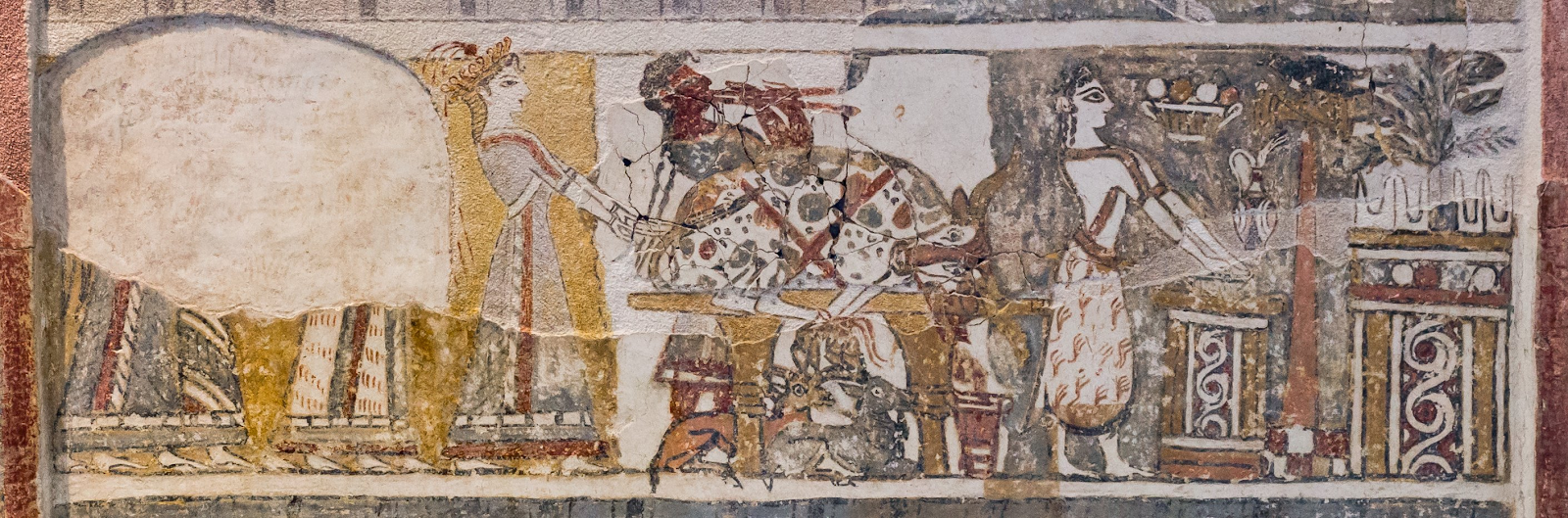
The other day I posted this article, "Minoan bull sacrifice", with the analysis of the bull sacrifice scene from the Minoan Hagia Triada Sarcophagus, a late Minoan limestone sarcophagus, dated to around 1400 BC, excavated from a chamber tomb at Hagia Triada, Crete.
And it went completely unnoticed???
In this article I want to present the full analysis of all 4 sides of this sarcophagus. Honestly this is as cool an example of symbolic religious calendar art as they come.
First, I definitely don't think that these panels depict funerary rituals, which is the most common interpretation of the scene, like in this article.
I think that they could be depicting religious rituals related to Proto Demeter, Persephone and Poseidon. The "two queens and the king" mentioned In the Mycenean Greek tablets dated 1400–1200 BC.
They are also a religious calendar closely linked to the climatic calendar.
So let start with this panel. It is clearly divided into two halves, with two sets of people, facing opposite directions performing two different (and I would say opposite) ceremonies.
I would start with the right side of this panel, with the calf and boat offering ceremony.
The climatic year on Crete is divided into two halves: Hot/Dry half, Summer, Apr/May - Oct/Nov and and Cool/Wet half, Winter, Oct/Nov - Apr/May. Which is why we find bull associated with the sun (gods). I talk about this in my articles "Solar bull", "Water bull", "Bactrian snakes and dragons", "Shamash young and old", "Butt chewing", "When Utu steps up into heaven", "Maran", "Sun god tablet", "Gisgis relief", "Lyres of Ur"...
The hot dry season in Crete starts in Apr/May, in Taurus, when wild Eurasian cattle used to start calving. I talked about this in my articles "Cow and calf ivory", "Foundation peg of the goddess Nanshe", "Elamite water bull", "Human bull hybrid", "White calf", "Calydonian boar", "Cypriot stamp seal with cow and calf"...
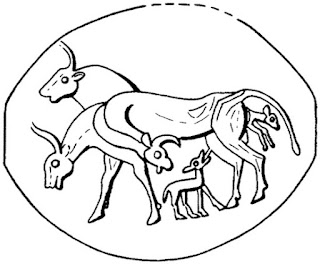
Hence the offering of calves.
Apr/May is also the beginning of the sailing season in the Eastern Mediterranean. I talked about this in these articles "To sail - To harvest", "Coin from Byzantion", "Tetradrachm from Byblos", "Swallow tattoo", "Tuna boats", "Anat"...
Hence the offering of a boat model.
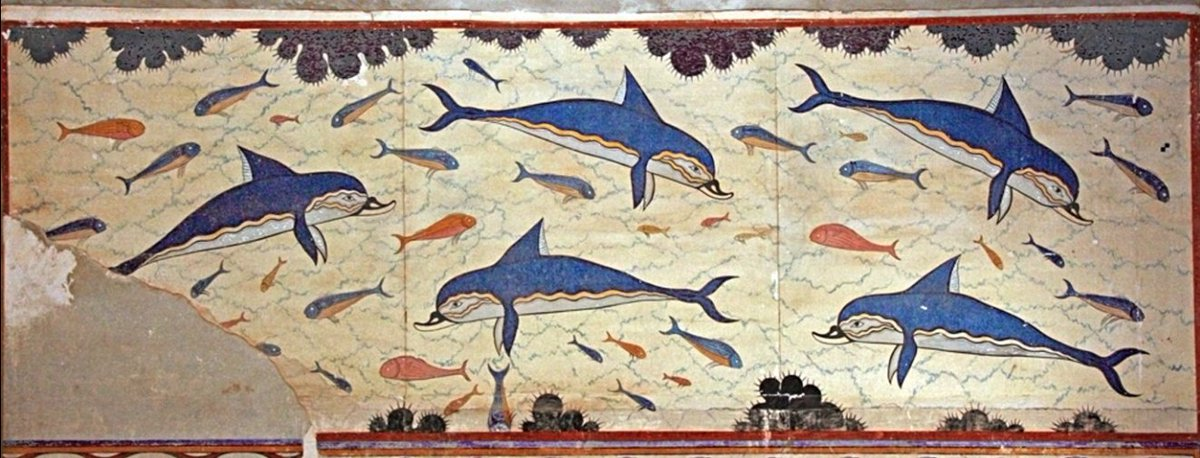
I talked about Minoan sailing calendar in my article "Minoan dolphin fresco", about the famous Minoan "dolphins fresco" from Knossos, Crete, dated to 1500BC...
Who is the dude to whom these offerings of calves and boat models were made? The most common interpretation is that this is the dead person whose funeral ceremony is depicted???
I would say that it is much more likely that this dude is some kind of deity, and he could be Proto Poseidon...
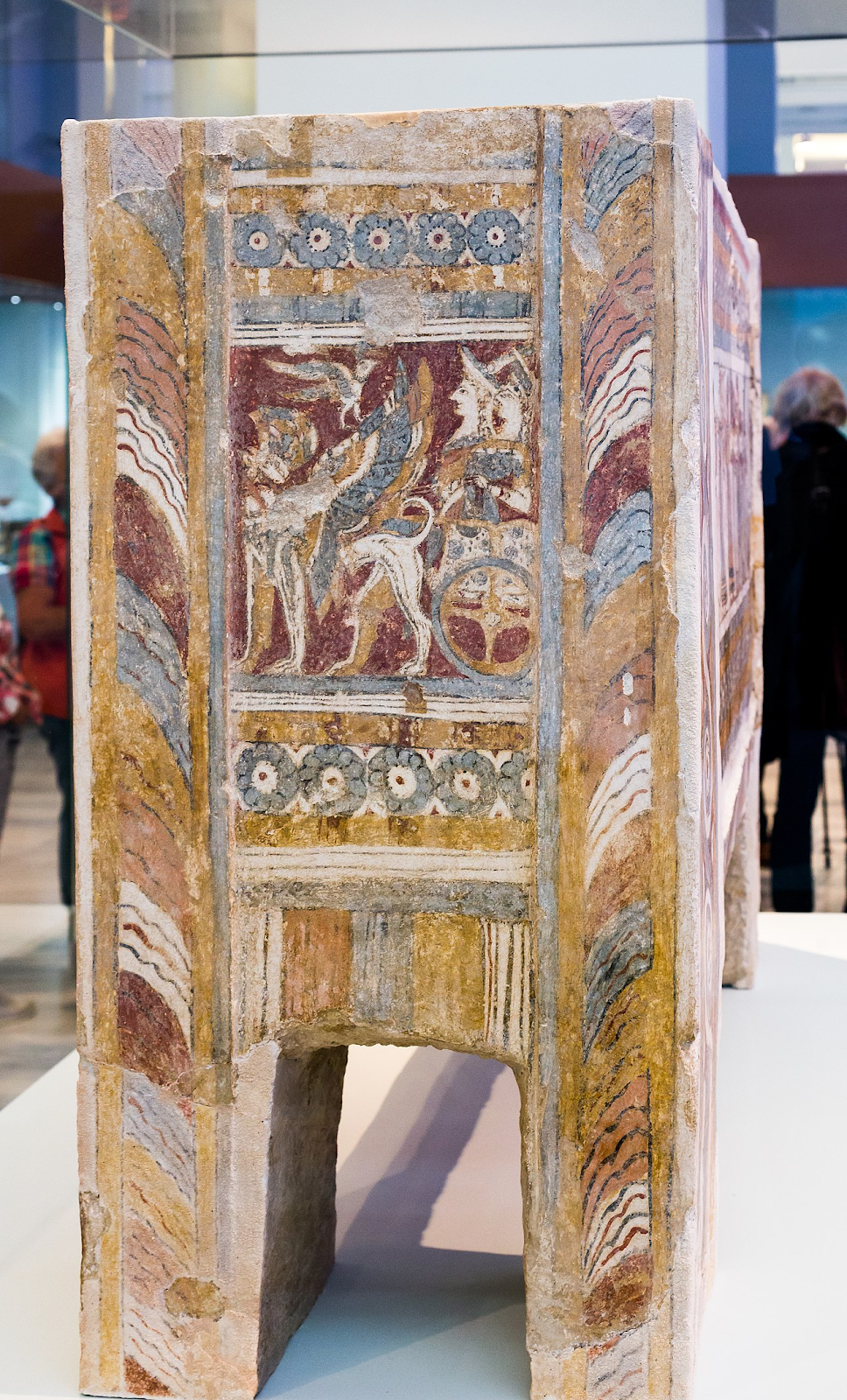
From here we proceed to the small panel depicting the two goddesses riding in a chariot pulled by a horse...
There is a reason why horse was the sacred animal of Poseidon (Greek) and Yamm (Phoenician) sea gods. Horse mating season overlaps with the sailing season in Eastern Medterranean.
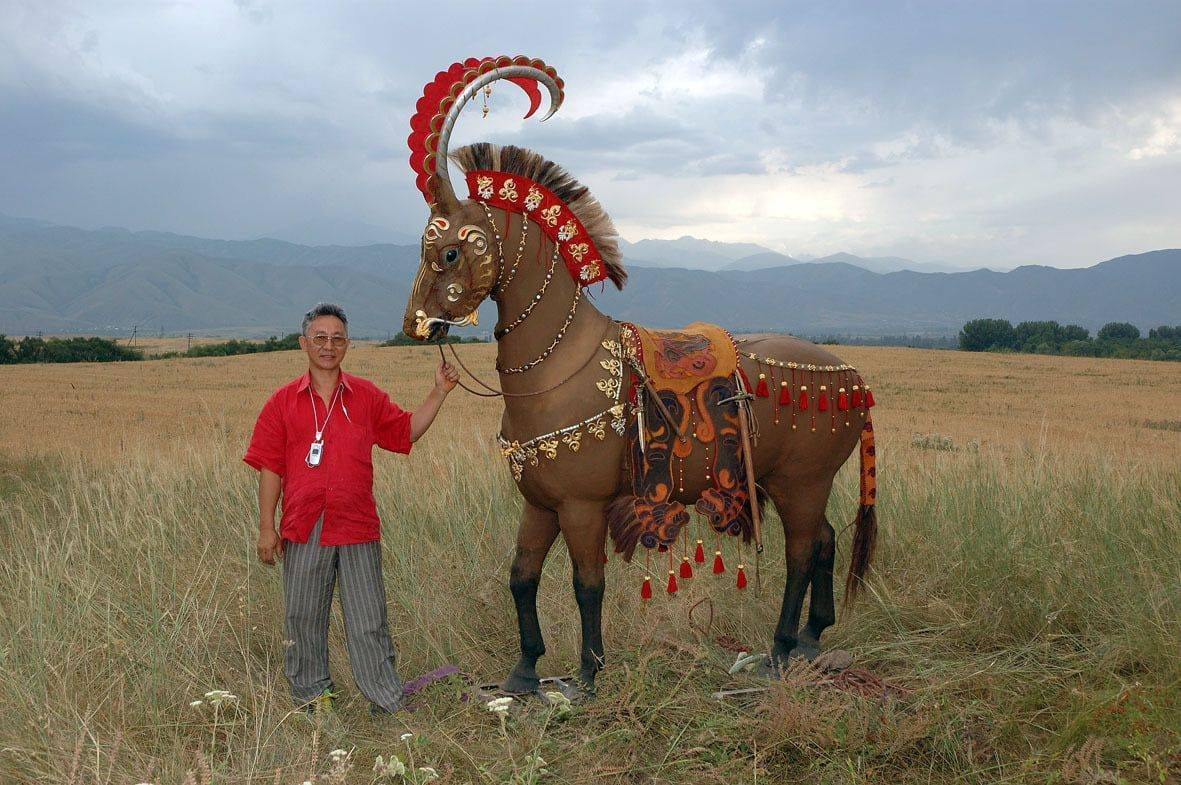
I talked about this in my articles "Trojan horse", "Three sacrifices", "Seahorse ring", "Tetradrachm from Byblos", "Poseidon pursuing Demeter"Apparently, the horse pulling the chariots with two goddesses could actually have ibex horns??? Check the image, it does look like it does...Like this one from Scythia???
A horse wearing reconstructed 2,500 year-old Scythian horse decorations which were unearthed in the Altai Mountains in Siberia.
Why horse with ibex horns? Maybe a complex calendar marker for the period between Apr/May (beginning of the horse mating season) and Oct/Nov (beginning of the ibex mating season). Which is the sailing season in Eastern Mediterranean.
BTW, I already talked about these kind of complex animal calendar markers in my article "Mythical beast from Xian", in which I presented the analysis of the symbolism of this "mythical beast", stag with eagle's head, and ten further eagle heads in the antlers. 4th-3rd century BC. Nalinggaotu, Shenmu County, Xi'an, China...
But maybe, this horse with ibex horns actually depicts the grain agricultural season. Which starts with grain sowing in Oct/Nov, when ibex goats start to mate, and ends with grain harvests in Apr/May, when horses start to mate???
Are these two women riding on the horse pulled chariot then Proto Demeter and Proto Persephone? I think so...I talked about the link between Poseidon, Demeter, Persephone and horses in my article "Poseidon pursuing Demeter"...
The same grain agricultural calendar depicted using plant calendar markers. I talked about this in my article "Poppies and pomegranates", in which I answered the question: Why are opium poppies sacred to Demeter, goddess of grain harvest, while pomegranates are sacred to her daughter, Persephone?
Anyway, where are the two goddesses driving to? Well, towards the other main panel, which depicts bull being sacrificed on a table above two ibex goats...
In "Aegean Prehistory: A Review", in in the chapter, "Neopalatial, Final Palatial, and Postpalatial Crete", Paul Rehak and John G. Younger note that:"A major development of the Final Palatial Period is the evidence for bull sacrifice..."
"It is possible that the killing of the animal became the final feature of the Minoan bull-games, perhaps under Mycenaean influence. It also may be significant that the bull sacrifice is attested at exactly the moment when Minotaur appears on Minoan/Mycenaean stamp seals."
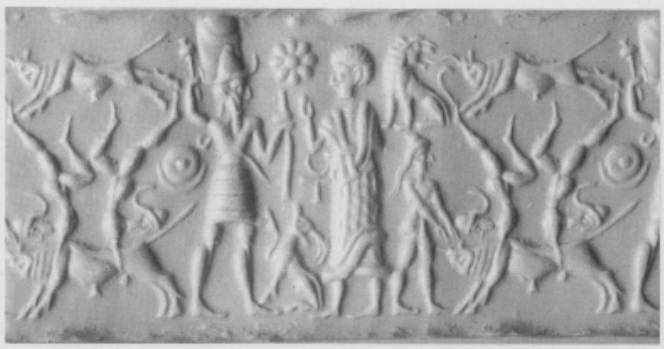
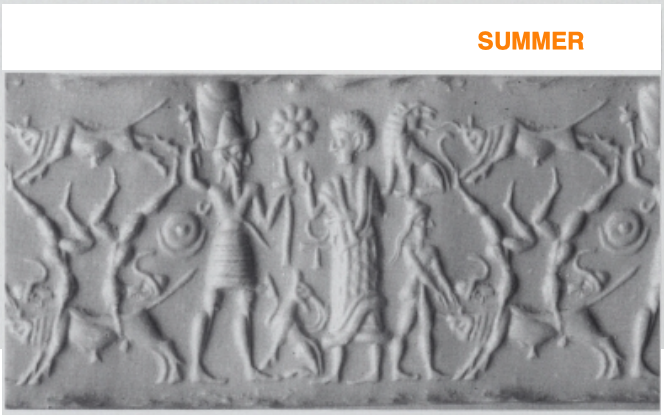
Hmmm...Amazing. But when did the bull-games, which ended in the bull sacrifice, take place? I think that this 1700BC Levantine seal can help us determine that. You can find the full symbolic analysis of this seal in my article "Bull leaping in Syria"...
Summer, which started with the calving of Wild Eurasian cattle, ended with mating of Wild Eurasian cattle...Mating which was marked by vicious bull fights...Where bulls charged at each other...Like this...
On this levantine seal, the bull leaping is depicted right under the charging bull, which means that the ceremony was most likely performed in Jul/Aug, at the time of charging bulls, the beginning of the Wild Eurasian cattle mating season...
The charging bull is charging towards the lion, Leo, Jul/Aug...
Leo (Jul/Aug), originally had nothing to do with stars either. It is the ancient animal calendar marker marking the beginning of the mating season of the Eurasian lions.
In the "THE ASIATIC LION: A study of ecology and behaviour" by Paul Joslin we can read that based on the observation of the large number of wild lions, the mating season of the Asiatic lions starts in August and lasts until October.
Which is why autumn starts in Leo (Jul/Aug). And why lion is the symbol of autumn...I talked about this in my article "Symbols of the seasons"...
Another clue that bull leaping was performed in Jul/Aug can be found on the so called Theseus ring, gold "Mycenaean" signed ring from the Acropolis of Athens, 15th c. BC. Currently in NAM Athens. where we also see that a charging bull is charging towards a lioness...
Was bull leaping a popular activity in Mycenae? Or is this just another looted Minoan treasure? I talked about this ring in my article "Theseus ring"...
So if the bull sacrifice was performed in Jul/Aug, in Leo, maybe it was performed as part of this sailing ceremony depicted on Minoan frescoes. I talked about it in my article "Minoan dolphin fresco".
In this article, I explained why lions were depicted on the sides of Minoan ceremonial ships:
Writing in the 8th century BC, Hesiod says that:
"Fifty days after the solstice,
when the season of wearisome heat is come to an end,
is the right (best) time for men to go sailing"
This is at the end of July beginning of August. In Leo...At the beginning of the mating seasons of lions 🙂
This is the time when Romans celebrated the Neptunalia. Apparently the authorities are not sure why Romans celebrated Neptune at exactly that time of the year. I will let authorities ponder this further...
Here I will propose that maybe Minoans also celebrated sea god in Leo...And that they sacrificed bulls to their sea god, Proto Poseidon...
That the bull sacrifice was indeed performed in Jul/Aug, at the beginning of autumn, can be seen from the fact that the next panel depicts the two goddesses riding on a chariot pulled by a griffin.
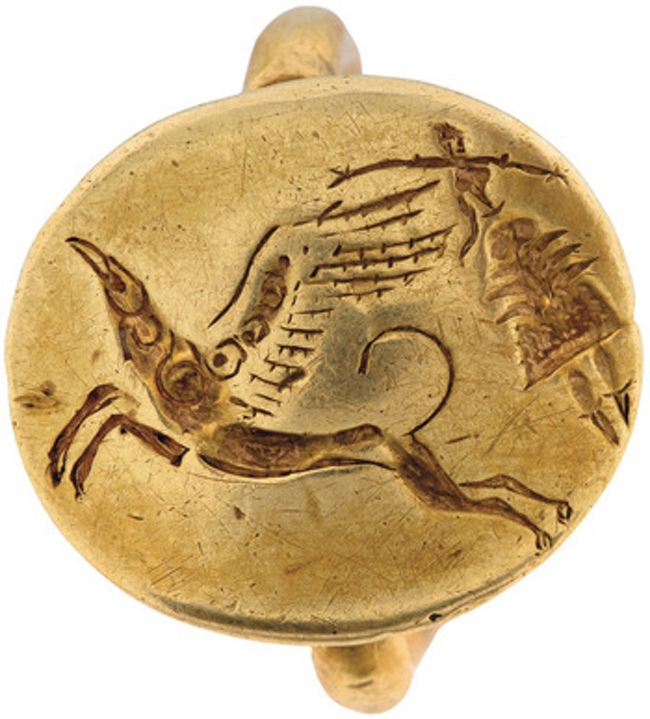
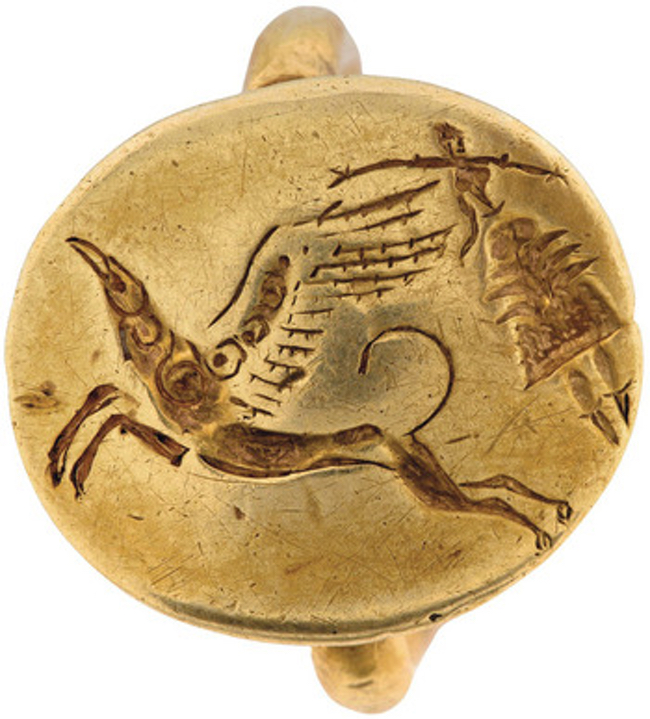
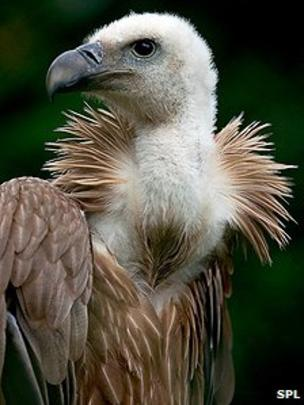
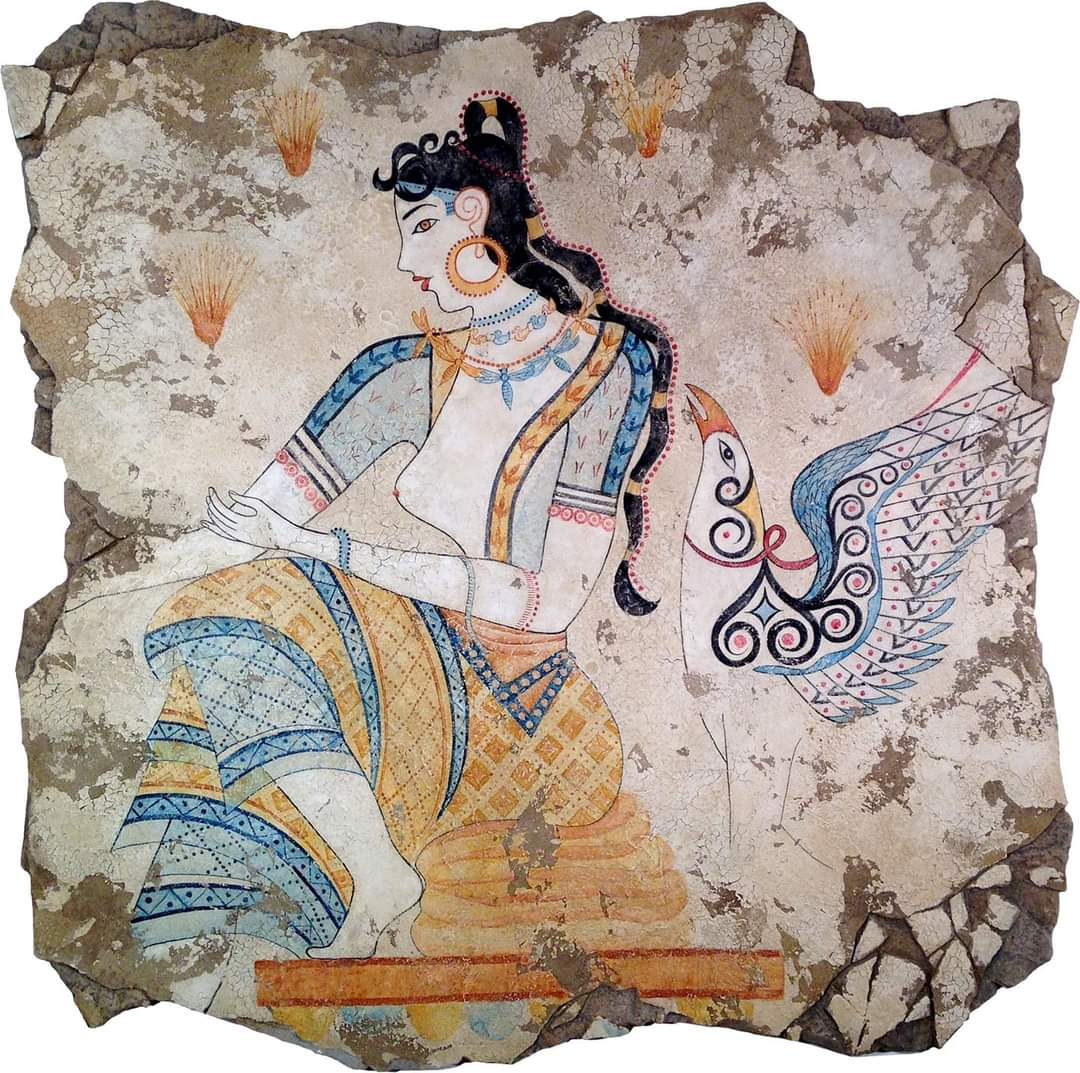
Now griffin is a complex animal calendar marker for autumn. I talked about this in my article "Minoan flying goddess with griffin", in which I analyse this Minoan gold signature ring depicting a flying griffon and goddess, from cemetery at Archanes, Phourni, in Crete, 1700-1450 BC.
After this small panel, we arrive back to the original panel where according to the common interpretation, we see "what could be continuation of the bull sacrifice scene, where the bull's blood is poured into a cauldron, standing between two poles, topped with labris and a bird".
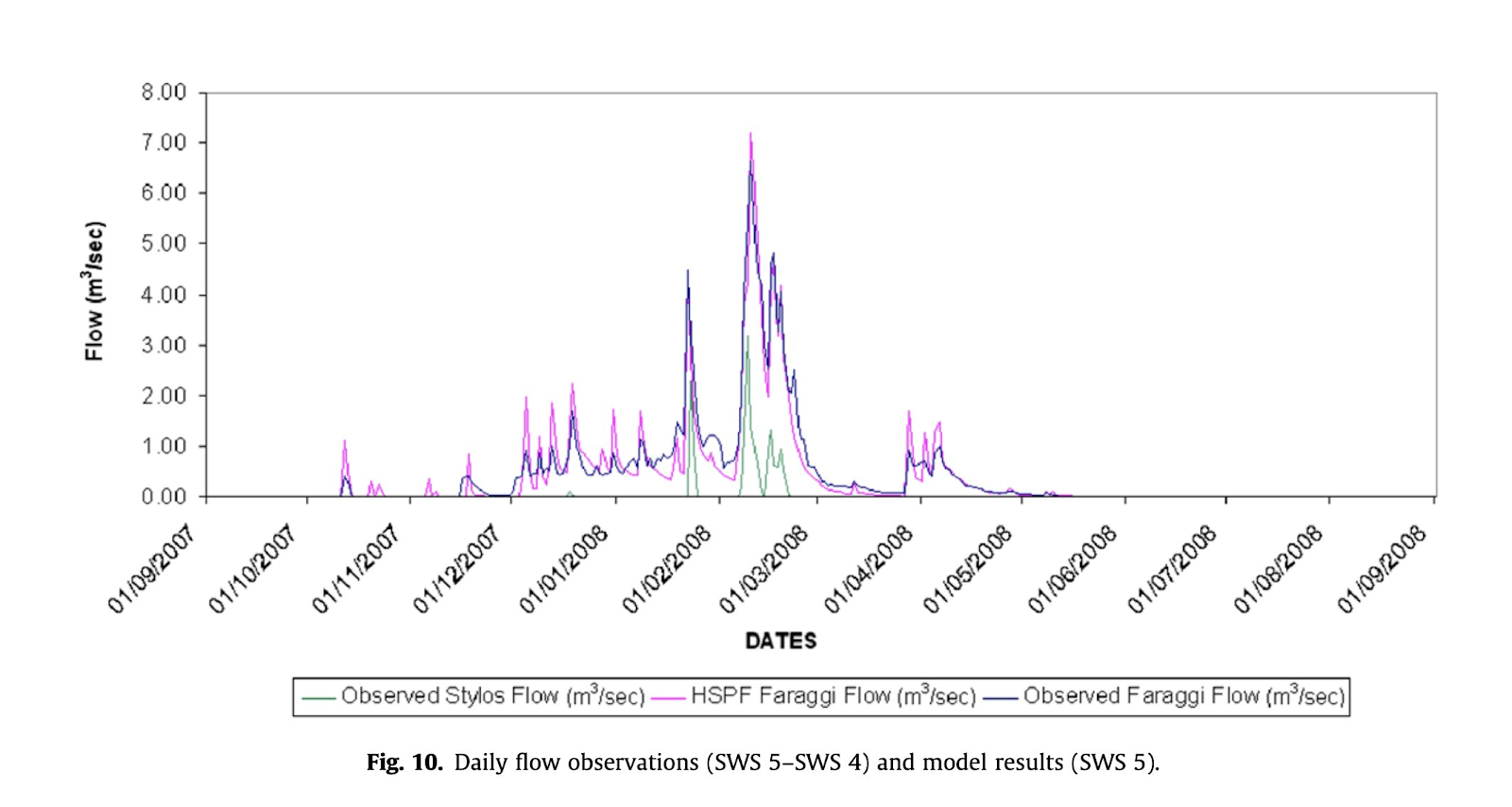
This could be the case, but this could also be symbolic closing of the water flowing season in Crete, which takes place a the end of the wet season in Apr/May. This is an annual flow rate chart for the Koiliaris River Basin near Chania, Crete from this article...
You can see that the water flows through the river during the wet season. The flow suddenly increases in Oct/Nov, when the first rains arrive and suddenly decreases in Apr/May, when the rains stop.
After that the only water that is available is the water that comes out of the low elevation karst springs, or the water that was collected in cisterns, like this one...Pic from this article...
I wonder if the horns of consecration are actually bull horns at all, or more precisely, if they are only bull horns? Could they be symbolic depiction of dry river beds during the hot dry half of the year which starts in Taurus, Apr/May?The Cretan gorges, like Samaria gorge, are open for hiking only during the period May to Oct, when they are completely dry...
I wonder if this pouring of blood ritual is symbolically sacrificing the (summer) bull (blood) for winter rain?
BTW, a guy playing a 7 string lyre is also another calendar marker for Apr/May, Taurus. And another symbol for the hot dry season, which according to Sumerians lasted 7 monts...I talked about it in my article "Lyre of Apollo", about animal and plant calendar markers, tortoise, bull, ram, snake, embedded into the story about the birth of Hermes, particularly the part related to him making the first lyre, which he later swapped with Apollo for the caduceus...
And in my article "Lyres of ur" in which I analysed the symbolic significance of the ceremonial Sumerian bull headed lyres. A lyre player from "The Standard of Ur", a Sumerian artefact found in one of the largest royal tombs in the Royal Cemetery at Ur, associated with Ur-Pabilsag, a king who died around 2550 BC. Now in the British Museum...
This concludes my analysis of the sarcophagus. What do you think? Cool? I think so...
To read more about ancient animal and plant calendar markers, start here…Then check my twitter threads I still didn't convert to blog post...I am way way behind...