Showing posts with label Ankh. Show all posts

Saturday, 9 May 2026

Crux Ansata

5th-century relief featuring the Coptic "crux ansata" (Christianised ankh), from a 5th Century AD Coptic Church. 


According to Socrates of Constantinople (380 – 439 AD), when Christians were dismantling Alexandria's greatest temple, the Serapeum, in 391 AD, they noticed cross-like signs inscribed on the stone blocks. Pagans who were present said the sign meant "life to come", an indication that the sign Socrates referred to was the ankh; Christians claimed the sign was their own, indicating that they could easily regard the ankh as a Crux Ansata.

This is Crux Ansata:


The explanation that the Ankh symbol meant "life to come" is very interesting indeed. Here is why:

In my 2018 post "Square and compasses" and in my 2019 posts "Etemenanki" and "An-Ki-Ankh" discussed the origin of the Ankh symbol. 


And I proposed that the ankh symbol came from Mesopotamia where it originally looked like this:

A hand (of god, the great architect) holding measuring line (for measuring domed sky, An) and measuring rod (for measuring flat earth, Ki). 


Basically, primitive Square and Compasses...


There is actually Serbian saying "Pomoću štapa i kanapa" (Using stick and rope) meaning "in the old primitive way"...

This symbol, meaning An (Sky) - Ki (earth) eventually became Ankh...

In these old posts I also wrote that: 

Early examples of the ankh sign date to the First Dynasty (c. 30th to 29th century BC). There is little agreement on what physical object the sign originally represented. Most scholars believe the sign is a knot formed of a flexible material such as cloth or reeds or rope... The below stone ankh was actually made to resemble ankh made from reeds.


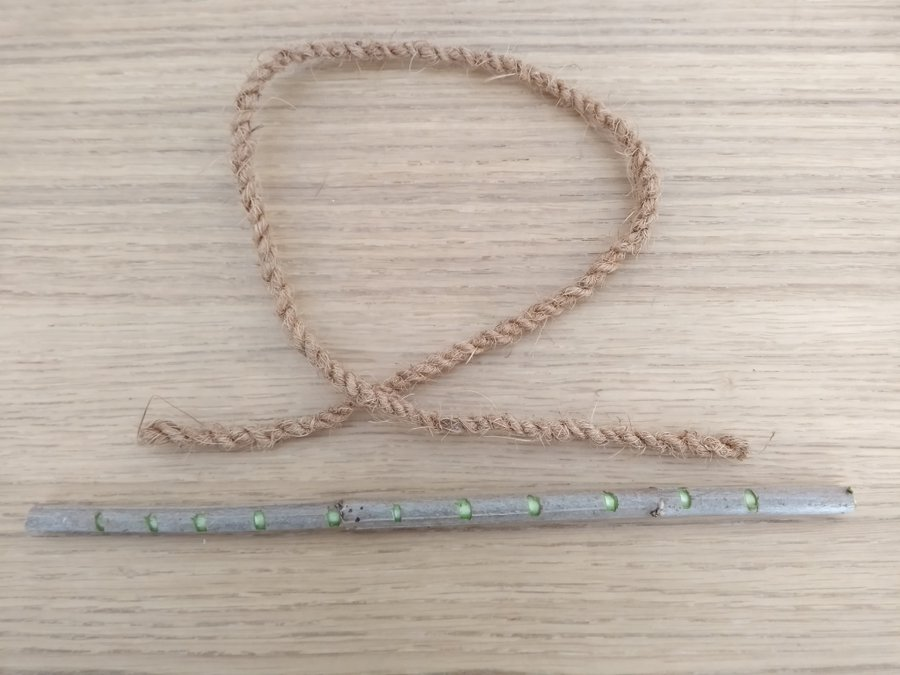
This ankh is made by bending one piece of reed into a loop, and then tying it to a handle created from  another piece of reed bent to form T shape. Like this:


Here is one I made today :)


What does the intercourse between the Father Sky and Mother Earth produce? Life. Living nature including us humans...Life is materialised divine, (sky) god who became (earth) matter...

So An+Ki = Father+Mother = Life... 

What did the intercourse between God (Father Sky) and Mary (basically symbolical replacement for Mother Earth) produce? Christ who is God who became Man. God materialised. So based on the above analogy, Christ is just a symbol. Symbol of life itself. 

I wrote about Christ as Life in my post "Living nature", but I will repeat it here...


If Christ is life, living nature, then his immaculate conception and virgin birth become easy to understand...

If Christ is life, living nature, then his death and resurrection become easy to understand...

If Christ is life, living nature, and we are part of life, living nature, then we are Christ. We truly live and move and have our being in Christ...This too then becomes easy to understand...

If Christ is life, living nature, then god who became matter is easy to understand too...

If Christ is life, living nature, then we are all Christ, we are all god. Just like the mystics the world over have been teaching for millennia...

Apparently this is too "Pagan" for "Christians" and too "Christian" for "Pagans"...So everyone gets offended...

This is Christ on the cross from "Plaque from the Maskell ivories", AD 420-30, Rome 


This is also crux ansata, Ankh, AnKi, life...

On the original Coptic relief, the priest (saint?) is using ankh to point at the green plants, symbol of life. Which can't grow without (rain, flood) water...It is (rain, flood) water that makes life possible. It is the (rain, flood) water that contains the essence of life...

I recently wrote an article "Sycamore tree goddess" in which I talked about the link between ankh (life) and (Nile flood) water (the source of life) in Egypt...


Which is why (rain, flood) water is holy. Cause, despite all our accomplishments, we owe our existence to a six-inch layer of topsoil and the fact it rains (floods)...

This link between the Nile flood, life and Ankh is symbolically depicted through this, most likely the oldest, the original Egyptian Ankh: A hand holding a knot made from Papyrus (flowers during and therefore marks the beginning of the the Nile flood) and Lotus (flowers during and therefore marks the peak of the Nile flood). I talked about this first in my post "Goddess on a horse"...


Which is why this is super interesting: A relief from the ancient Egyptian Temple of Hatshepsut. It shows a platter with food arranged to look like a duck by making an (ankh) knot using lotus, the symbol of the Nile flood without which there will be no food in Egypt...

I talked about the blue lotus as the plant calendar marker for the Nile Flood in many of posts. For instance "Lotus and papyrus" in which I explain why the Egyptian god Hapi, who was the god of the annual flooding of the Nile in ancient Egyptian religion, was associated with papyrus and lotus flowers, and is often depicted as twins, tying papyrus and lotus flowers together...

And my post "Beautiful boy", about Nefertem, the Egyptian Beautiful Boy, originally a lotus flower at the creation of the world, who had arisen from the primal waters...Nefertem emerging from the lotus blossom, from the tomb of Tutankhamun...


PS: Now I understand why the Innana knot, the symbol of fertility and plenty, made from reeds and directly linked to the annual Tigris and Euphrates flood...Will write more about this soon...


BTW, I already talked about some other aspects of the Inanna cult found in Egypt in my post "Inanna in Egypt"... 

That's it. If you are interested in reading more about ancient animal and plant calendar markers, which are at the root of all our mythologies, start here…Then check my twitter threads I still didn't convert to blog post...I am way way behind...

Friday, 8 May 2026

Sycamore tree goddess

Sycamore tree goddess, originally Hathor, and later Isis, both goddess of flood, or Nut, goddess of Heavenly Nile (Milky Way), pouring water which is depicted with ankh (life) symbols inside it...Tomb, Siwa Oasis, 400-600 BC. Egypt...

Why would a goddess of flood be depicted as a sycamore fig tree?

Most likely because sycamore bears fruit between May and Sep...

The time of the rise of the water level in the Nile. Which means that the sycamore full of fruit announces the arrival of the flood, the thing that makes life possible in Egypt...

I talked about Hather, the sycamore tree and the Nile flood in my post "Holy cow"...

And in my post "The white calf", in which I tried to answer the question why is this white calf standing between two sycamore trees under a red sun? 

Why was Nile Flood water depicted containing ankh (life) symbols? Cause the Annual Nile flood is what makes life possible in the Nile Valley, what originally created Egypt and what recreates it every year...Without the annual Nile flood there would be no Egypt...I talk about this in my post "Beautiful boy"...

BTW, Speaking about Ankh = Water, check my post "Goddess on a horse"...

Post in which I talk about the link between ankh, papyrus (flowers at the beginning of the Nile flood), lotus (flowers at the peak of the Nile flood) and the flood...And few other related things...

You also might like this: Baboons feed on figs in a sycamore tree on a painting in the tomb of Khnumhotep at Beni Hasan c. 1950 BC…

Both Sycamore tree and Baboons were animal calendar markers found imbedded in parts of Egyptian mythology related to water and flood. I talk about this in my post "Baboon"...

Finally I think that it's very interesting that we find "sacred fig goddess" in both Ancient Egypt and Ancient Indus Valley civilisations...


Check my post "Sacred fig goddess", in which I talk about the Indian one (different fig same link to water, this time monsoon rain water) with references to the Egyptian one...And about plant and animal calendar markers in both cultures...

That's that. 

If you are interested in reading more about ancient animal and plant calendar markers, which are at the root of all our mythologies, start here…Then check my twitter threads I still didn't convert to blog post...I am way way behind...

Friday, 17 May 2024

Sun God Tablet

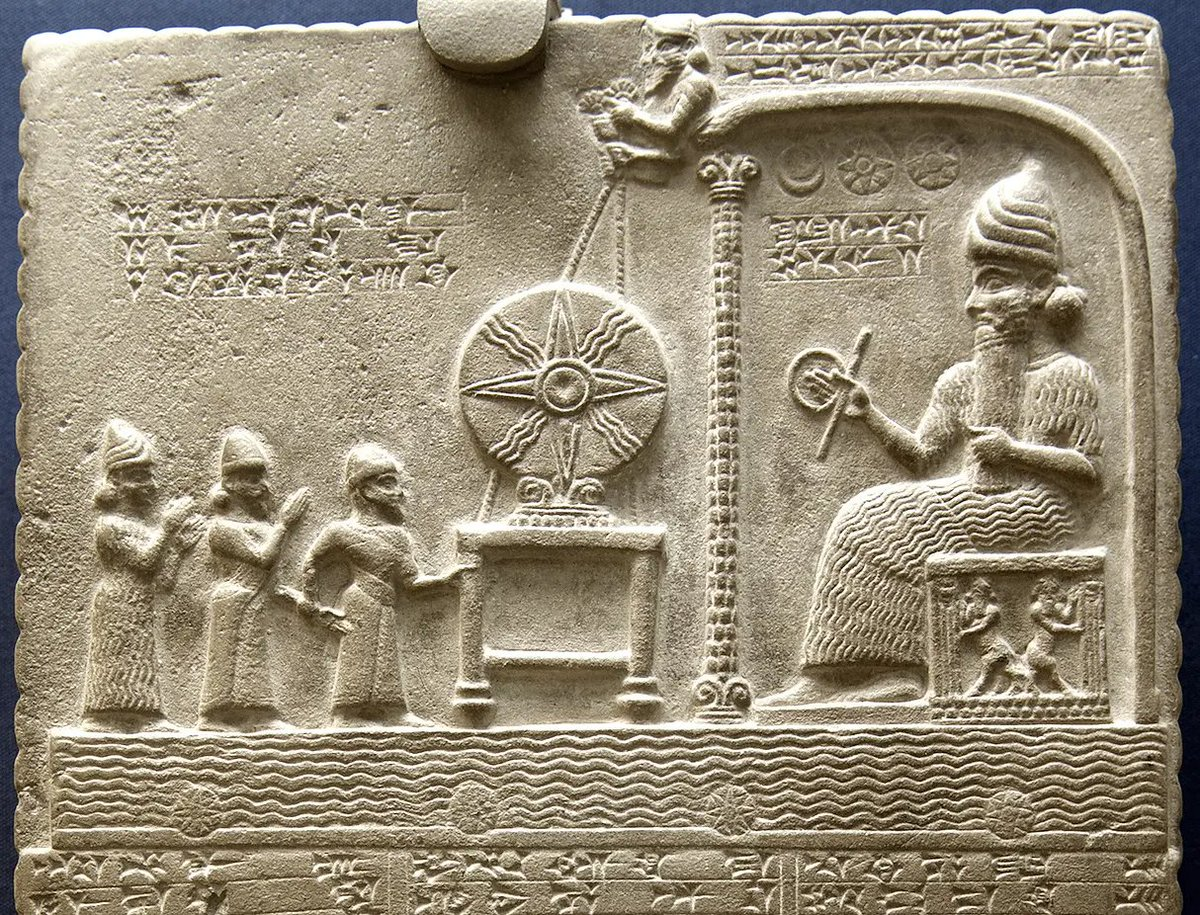
This is the 860BC-850BC Middle Babylonian limestone "Sun God Tablet", currently in the British Museum.

In this post, I would like to add few bits of information that will help us understand some of the symbols depicted on this tablet.

From the museum description:

"The tablet depicts the king being led by a priest and a goddess into the presence of the Sun-god Shamash, who is seated in his shrine. Before the god is the Solar Disc, resting upon an altar which is supported by ropes held by attendant deities..."

The symbol on the Solar Disc is the Solar Cross, The Shamash Cross. It combines a sun, cross (solstices and equinoxes???), and wavy lines representing sun (heat) rays...

I talked about this in this post "The cross of Shamash"...

The same wavy lines can be seen on this seal depicting Sun God Utu/Shamash with sun (heat) rays emanating from his shoulders, standing in in an empty canal, in Leo (between the lions), the hottest, driest time of the year in Mesopotamia, and the time when canals were repaired, holding reed cutting knife...

I talked about it in my post "Canals", "Lion radiating heat", "Nude winged hero dominating snakes", "Utu and Enki"...

Also, did you know that the central candle of the Hanukah Menorah, the source of light, is called Shamash...I talked about this in my post "Menorah from Nipur"...

Anyway, the museum description continues with: "The god wears a horned headdress and carries the ringed rod in his right hand. The shrine is represented as resting on the heavenly ocean..."

Uuuuu so much to talk about here...

Ever thought why in Mesopotamia gods wore (bull) horned headdresses to indicate that they are important? And the more important they were, more pairs of horns they had on their headdress?

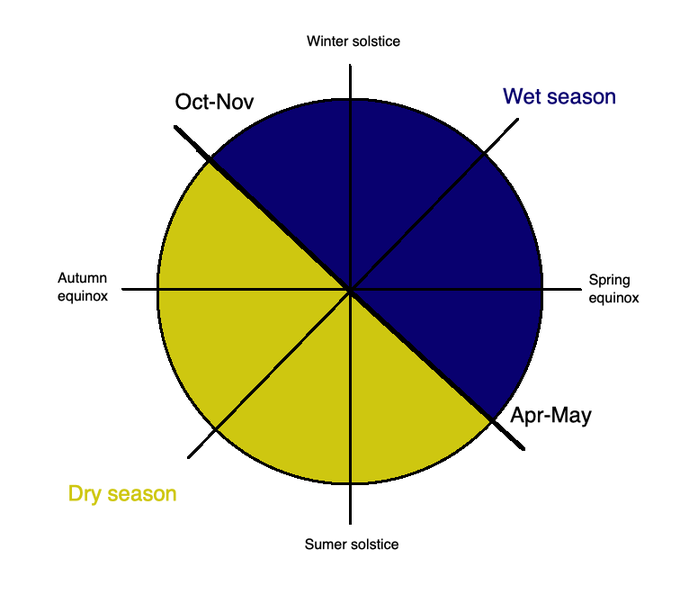
Well, this is because the most important annual event in Mesopotamia, the annual flood of the Tigris and Euphrates happens in Apr/May, in Taurus...

Taurus here is The Old Taurus, the animal calendar marker for the beginning of the calving season of wild eurasian cattle...I talked about this in my post "Cow and calf ivory"...

The annual flood is the result of the snowmelt on the mountains north-east of Mesopotamia, which are the source of Tigris and Euphrates, Abzu. 

Snowmelt contributes more than 70% to the annual water flow of these great rivers. And this snowmelt peaks in Apr/May...

And so, symbolically, every spring, the sun god Utu / Shamash climbs the holy mountain (Abzu, source of water) to free Enki / Ea, the god of sweet water from his icy prison and release the waters...

I talked about this my posts "Shamash young and old" and "When Utu steps up into heaven"... 

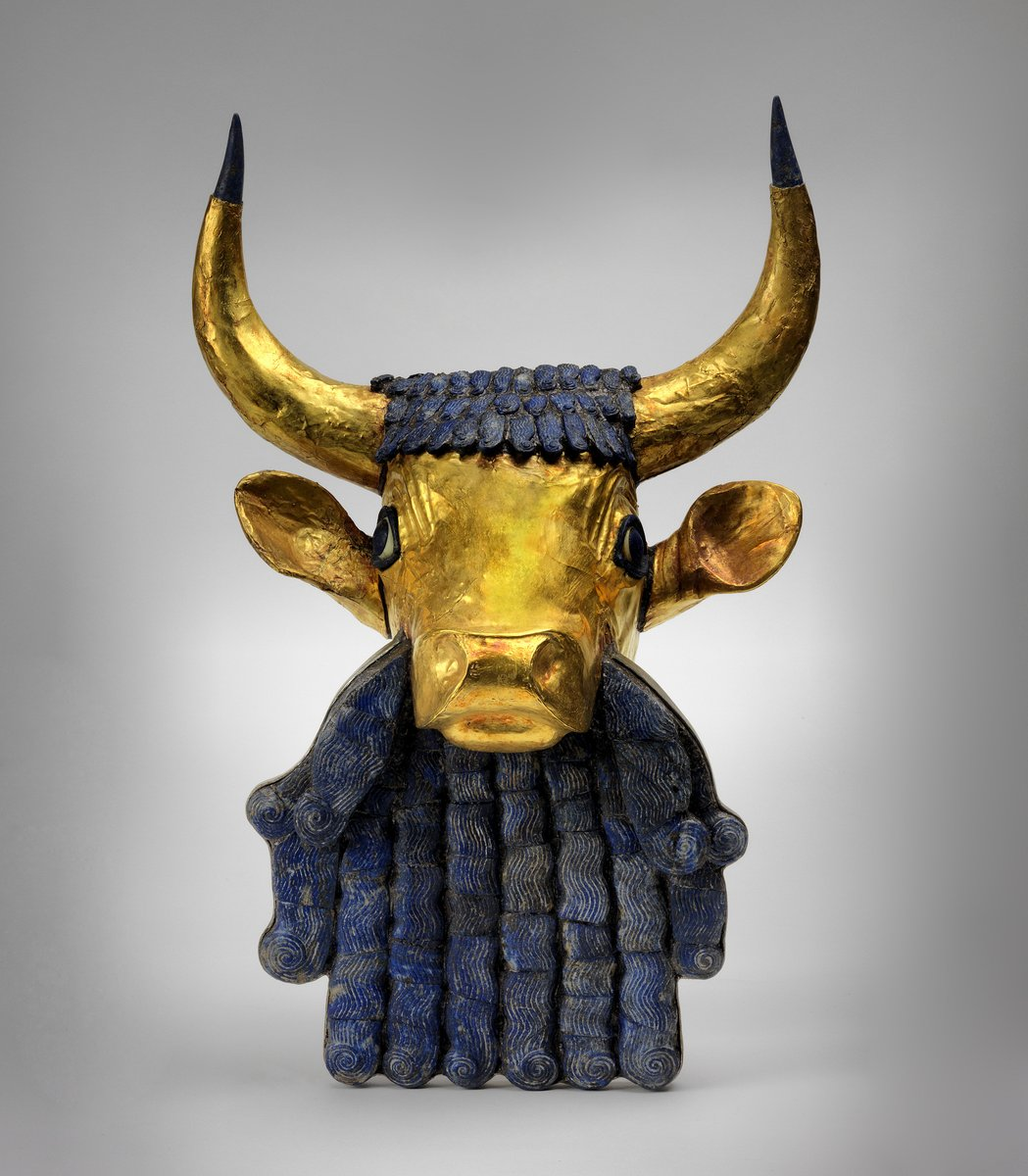
This is also the reason why the Mesopotamian sun god Utu/Shamash was depicted as a golden bull (Sun in Taurus) with flowing lapis lazuli beard (flowing water)...

This object was found in Ur and dates to 2450 BC. Pen Museum https://penn.museum/collections/object/9347

And this is the reason why on the Sun God Tablet, the Sun God Shamash was depicted sitting on a throne supported by two bearded bull-men...Symbol for "Sun in Taurus". 

I talked about bearded bull men, sun and rivers in my post "Achelous"...

And why on the Sun God Tablet, the shrine of the Sun God Shamash is resting not on the heavenly ocean, but on the overflowing waters of the Tigris and Euphrates which flood in Apr/May, when the sun is in Taurus...

The annual flood is the source of life in Mesopotamia. And the source of the annual flood is the Sun God Shamash, because he is the one that releases the life giving water into the rivers through snowmelt...

So Shamash is the source of life, and this is depicted through Shamash holding not "the ringed rod" but the original, most primitive form of ANKH (life) symbol. 

I talked about it first in my posts "Etemenanki" and "An-Ki Ankh"...


It consists of a measuring rope (compasses, sky) and a measuring stick (square, earth)...So I proposed: AN (sky, father) + KI (earth, mother) = AN-KI = Life = Ankh...I talked more about it in my posts "An-Ki Ankh" and" Square and compases":


At that time I could not understand why it was Shamash that is holding the ankh...Now that I know more about the climate, hydrology and agriculture in Mesopotamia, it is obvious why the sun is the source of Life in Mesopotamia...

The same "Water=Life=Ankh" link is found in Ancient Egypt. Sycamore tree goddess, originally Hathor, and later Isis, both goddess of flood, pouring water which is depicted with ankh (life) symbols inside it...Tomb, Siwa Oasis, 400-600 BC. Egypt...

And the same primitive ankh symbol (the loop) is also found in Ancient Egypt

Ankh = Life = Water...I talk about the link between Ankh, symbol for Life and papyrus (flowers at the beginning of the Nile flood) and lotus (flowers at the peak of the Nile flood) and the flood, and few other related things, in my post "Goddess on horse" and "Lotus and papyrus"...

Sooooo....Shamash (Young Sun) the giver of life sitting on his throne in Taurus (Apr/May) holding Ankh symbol of life...

But once Shamash becomes old, and moves his throne to Leo (Jul/Aug) he turns to Nergal...


Nergal, the deified destructive "burning" sun, was depicted as a lion man, because Jul/Aug, Leo, is the hottest and driest part of the year in Mesopotamia...

Talked abut him in my post "Winged superhuman hero"...

So Shamash has a dual nature, the life giver and life taker...

To read more about ancient animal and plant calendar markers, start here…then check the rest of the blog posts related to animal calendar markers I still didn't add to this page, and finally check my twitter threads I still didn't convert to blog post...I am 9 months behind now...