Showing posts with label Monkey symbolism. Show all posts

Friday, 28 August 2026

Monkey from the Erin forest

Babylonian baked clay tablet found in Iraq and dated to 2000-1600 BC. It depicts a man, with an assistant kneeling behind him, shooting with a composite bow at a monkey sitting in a tree. On the right, is a wild boar facing the base of the tree. Interesting. Here is why:

Monkeys are often depicted on Sumerian clay plaques. Like this one from Ur III (2200-2100BC), depicting a monkey wallah, a performer who trains monkeys to dance or perform tricks for an audience...

One of the most interesting things about this plaque is that on all of them a monkey is playing the flute, something it would not be likely to do in real life...

According to this paper "More Monkey Business" by Carole Mendleson, this may illustrate a fable, now lost, perhaps Elamite, perhaps Indian or perhaps even Sumerian...

Further on, the paper also says that monkeys and a word for monkeys came to Mesopotamia from Indian via Elam (Iran) during the Ur III period...

And that originally "monkey" was used as a derogatory term for Elamites. When describing an Elamite incursion, a Sumerian text states that "monkeys descended from their mountain", meaning they came from the east, from Elam, Iran...

So monkeys and a word for monkeys came to Mesopotamia from Elam (Iran) during the Ur III period...

And originally "monkey" was used as a derogatory term for Elamites. When describing an Elamite incursion, a Sumerian text states that "monkeys descended from their mountain", meaning they came from the east, from Elam, Iran...

Is it because Elam was "The land of the monkeys" figuratively but also literally? Did monkeys live in the forests of Elam during the 3rd millennium BC?

I think so. 

Ever heard of a mythical Erin forest?

My friend!  We have reduced the forest to a wasteland...How shall we answer God Enlil in Nippur?

Enkidu talking to Gilgamesh, after they have killed Humbaba, the guardian of the Erin forest, and have cut all the trees down...

I while ago I wrote this article "Humbaba" about the identity of Humbaba, the guardian of the Erin forest. I postulated that Humbaba (left) was a deified tiger who once lived in this forest...

Based on the known tiger habitats and where they intersect with Euphrates river, I proposed that the original location of the Erin forest was in Armenian highlands...

After they have cut the Erin trees down, Gilgamesh and Enkidu and their men lashed the trees together into rafts to transport them down the Euphrates river back to Nipur...

Rafts? Like this? Cool...

Then later, new data I found, suggested I might have been wrong about the Erin forest location. It looks like tigers once lived in Elam, Iran, and it is therefore possible that the mythical forest might have been located there:

How far south in Iran did tigers live during Neolithic...This article, "Tigers tigers everywhere", asks his question...And few others...

A Neo Assyrian tablet currently in the Museum of Suleimaniyah, Iraqi Kurdistan, contains a passage from the Gilgamesh Epic with the description of the Erin Forest, which is the most detailed description of nature and its soundscape in the literature of Mesopotamia...

And guess what, the description, published in this paper, contains the following lines:


The Erin Forest had monkeys living in its trees. And Elam was the monkey land...

Sooo...

The monkey hunt tablet could actually be describing an actual monkey hunt in the Erin forest...

And so the two men could be Enkidu and Gilgamesh...

Cool, right?

But this tablet is also interesting from the animal calendar markers point of view.

"Now seriously, why do you always think about animal calendar markers when you see depictions of animals?" I can hear you say. "Couldn't this be just a depiction of a hunting scene?"

Of course it could. But hear me out.

If the forest was indeed located in Elam, then the monkey has to be macaque, the only species that once lived in "areas with cold winters"...

And in the areas with cold winters macaque mating season starts in Oct/Nov...

Ok, so? Question: why did the maker of this tabled decide to depict a wild boar, just casually standing under the monkey tree? Considering that wild boar mating season is also starts in Oct/Nov?

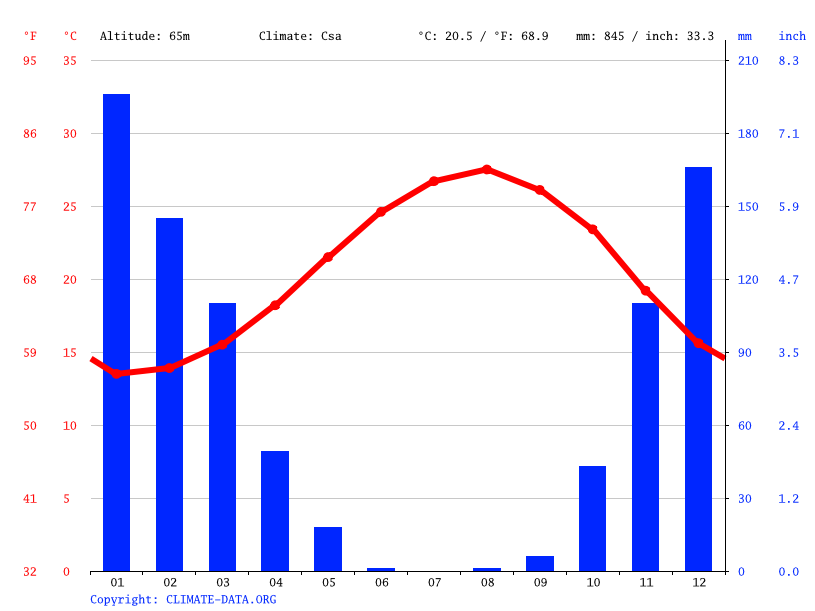
This could of course be just a random choice of animals.  But look at this: This is the climatic year in Iraq/Iran.

The rains arrive in Oct/Nov, when macaques and wild boar start to mate, making both of them animal calendar markers for the rain season...


I talked about wild boar, archer and rain in my post "Achaemenid lion boar seal", where I give symbolic analysis of this Achaemenid cylinder seal, found in Iran and dated to the 6th–4th century BC is currently kept in the Met Museum...

BTW, in Iraq/Iran, the beginning of the rain (cool, wet) season that ends (kills) sun (hot, dry) season, coincides with the Orionid meteor shower...

Just before the rains arrive to Mesopotamia, the rains that end the drought, the arrows start shooting from the sky announcing the arrival of the Sky/Rain god, the great archer...I talked about this in my post "The invisible archer"...

Hence archer? And monkey and boar? But who knows. I am just putting it all out there, and you can decide for yourself. We'll never know.

I want to thank @NkayaMuhittin for posting the picture and the info about this tablet. Great account worth following if you like archaeology...

That's it. To read more about ancient animal and plant calendar markers, start here…Then check my twitter threads I still didn't convert to blog post...I am way way behind...

Friday, 21 October 2022

Monkey man mirror

I want to thank @realgavinlee for posting this pic of a very interesting, 1-3 C. AD Eastern Han Empire, bronze mirror. 

The mirror is decorated with repeated scenes of "a tiger following a goat" and "a dragon facing a monkey". Except these are not ordinary decorations...

These are animal calendar markers for 

winter -  "a tiger following a goat"


and 

summer - "a dragon facing a monkey"

Tiger (winter) and Dragon (summer) are found as two opposing symbols in China since Neolithic Yangshao culture. I talked about this in my post "Tiger and Dragon"..

The reason for this kind of symbolic division of the calendar year is because of the climate in the North Eastern china: The climatic year is divided into cold, dry winter (tiger) and hot, wet summer (dragon)...Xian climate. But the climate for the whole Han area is very similar.

Ibex is a winter symbol because Siberian ibex, which lives in North Eastern China starts mating in Oct/Nov and mates throughout the winter...I talked about this in my posts "Tasmola talisman", "Combs from Tuva", "Mythical beast from Xian"...

Tiger is a winter symbol because the mating season of the Siberian / Amur tiger, which once lived in the North Eastern China, is Dec/Jan...Midwinter...I talked about this in my posts "Crouching tiger", "Leopard and tiger"...


Which is why "tiger" (Dec/Jan) follows (comes after) goat (Oct/Nov)...

Snake is the only true solar animal. It is in our world when sun is in our world (day and hot part of the year) and it is in the underworld when sun is in the underworld (night and cold part of the year)...Hence snake as a symbol of the sun and more specifically of sun's heat...

Now summer (Apr/May - Jul/Aug), the domain of the sun, starts with the beginning of the mating season of Eurasian viper snakes and ends with the beginning of the mating season of Eurasian lions...

Dragon is also a symbol of sun, and sun's heat during the hottest time of the year, Jul/Aug...Which is why dragon is just "an old snake which looked at the sun for a long time".  I talked about this in my posts "Letnitsa treasure", "Enemy of the sun", "The Chthonic animal", "Dragon who stole rain"...

Jul/Aug, Leo, is the time when Eurasian lions mating season starts...


And why dragon was depicted as lion with snakes heads...Or snake with lion's head...I talked about this in my posts "Seven headed dragon", "Bactrian snakes and dragons", "Winged superhuman hero", "Lion killing snake", "You will trample the great lion and the serpent", "Pegasus and Chimera"...

In Western Asia, North Africa, Europe, Jul/Aug is also the driest part of the year...

The time of droughts...


Which is why in these parts of the world dragons breath fire, steal water and cause droughts and death...

And we have all the thunder gods chasing them away...

But in China, the hottest part of the year is also the wettest part of the year...Xian climate again...

Hence in China, the fire breathing dragons bring rain...I talked about this in my post "Chinese dragon"...

According to the Chinese mythology, dragon was helped in its water fetching duties by Kui, a "one-legged mountain demon or rain-god, variously said to resemble a Chinese dragon, a drum made of a skin of a water ox with no horns, or a monkey with a human face".

At first I wasn't sure what the dragon was facing on the Eastern Han mirror, but have a look at this: 

Archaic oracle script symbol for "nao" (monkey)

Monkey from the Eastern Han mirror facing the dragon

The most common identification of this "monkey with the human face" is golden snub nosed monkey

Which is in China known as "Sichuan golden hair monkey" cause it lives in the mountains of Sichuan...Which was, I think, within the area of the core Han land...

Now I think it is interesting that the monkey is facing, stopping the rain bringing dragon...Why? Have a look at the climate in Sichuan...

The rain stops in October...And the mating season of the "Golden snub-nosed monkey" is...October...

Oh yeah. Why "one legged mountain monkey/dragon rain god"? Apparently no one knows..."The Confucianists, detested the idea that K'ui had only one leg..." Cause they couldn't explain it. Maybe because...

Or maybe because dragon, which is the symbol of the sun's heat during the hottest part of the year, late summer, is "just an old snake" which is the symbol of the sun's heat in general...And snakes only have "one leg", or none, depending how you look at it...

To see that I am not barking mad: Groot infers that the in "one-legged dragon" Kui, "which was amphibious, and caused wind and rain", "we immediately recognize the Dragon, China’s god of Water and Rain". Carr interprets this as "a crocodile-dragon with its tail seen as 'one leg'"

And, why was the thunder drum made from the hide of an "blue ox with no horns who comes out of the eastern sea"? Well, remember that the bull, ox, cow and calf, are animal calendar markers that mark the beginning of the calving season of the wild Eurasian cattle, Apr/May...I talked about this in my posts "Cow and calf ivory", "When Utu steps up into heaven", "Butt chewing", "Green Pastures", "Adda seal", "Elamite water bull", "Solar bull", "How grain came to Sumer"

Ox with no horns is a wild cattle calf...Which start being born in Apr/May...Which is when the summer monsoon winds arrive from the eastern sea carrying the clouds full of rain and thunder and lighting...Hence blue ox with no horns...


Oh BTW, I talked about the link between bull and dragon symbols in my posts "Water bull", "Bactrian snakes and dragons"...

So...This is it...As I said, a very interesting mirror indeed...

To read more about ancient animal and plant calendar markers, start here…then check the rest of the blog posts related to animal calendar markers I still didn't add to this page, and finally check my twitter threads I still didn't convert to blog post...I am 9 months behind now...