Showing posts with label Monkey mythology. Show all posts

Friday, 28 August 2026

Monkey from the Erin forest

Babylonian baked clay tablet found in Iraq and dated to 2000-1600 BC. It depicts a man, with an assistant kneeling behind him, shooting with a composite bow at a monkey sitting in a tree. On the right, is a wild boar facing the base of the tree. Interesting. Here is why:

Monkeys are often depicted on Sumerian clay plaques. Like this one from Ur III (2200-2100BC), depicting a monkey wallah, a performer who trains monkeys to dance or perform tricks for an audience...

One of the most interesting things about this plaque is that on all of them a monkey is playing the flute, something it would not be likely to do in real life...

According to this paper "More Monkey Business" by Carole Mendleson, this may illustrate a fable, now lost, perhaps Elamite, perhaps Indian or perhaps even Sumerian...

Further on, the paper also says that monkeys and a word for monkeys came to Mesopotamia from Indian via Elam (Iran) during the Ur III period...

And that originally "monkey" was used as a derogatory term for Elamites. When describing an Elamite incursion, a Sumerian text states that "monkeys descended from their mountain", meaning they came from the east, from Elam, Iran...

So monkeys and a word for monkeys came to Mesopotamia from Elam (Iran) during the Ur III period...

And originally "monkey" was used as a derogatory term for Elamites. When describing an Elamite incursion, a Sumerian text states that "monkeys descended from their mountain", meaning they came from the east, from Elam, Iran...

Is it because Elam was "The land of the monkeys" figuratively but also literally? Did monkeys live in the forests of Elam during the 3rd millennium BC?

I think so. 

Ever heard of a mythical Erin forest?

My friend!  We have reduced the forest to a wasteland...How shall we answer God Enlil in Nippur?

Enkidu talking to Gilgamesh, after they have killed Humbaba, the guardian of the Erin forest, and have cut all the trees down...

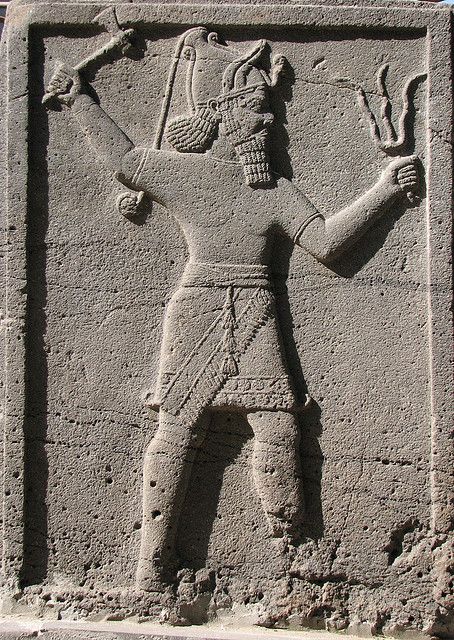
I while ago I wrote this article "Humbaba" about the identity of Humbaba, the guardian of the Erin forest. I postulated that Humbaba (left) was a deified tiger who once lived in this forest...

Based on the known tiger habitats and where they intersect with Euphrates river, I proposed that the original location of the Erin forest was in Armenian highlands...

After they have cut the Erin trees down, Gilgamesh and Enkidu and their men lashed the trees together into rafts to transport them down the Euphrates river back to Nipur...

Rafts? Like this? Cool...

Then later, new data I found, suggested I might have been wrong about the Erin forest location. It looks like tigers once lived in Elam, Iran, and it is therefore possible that the mythical forest might have been located there:

How far south in Iran did tigers live during Neolithic...This article, "Tigers tigers everywhere", asks his question...And few others...

A Neo Assyrian tablet currently in the Museum of Suleimaniyah, Iraqi Kurdistan, contains a passage from the Gilgamesh Epic with the description of the Erin Forest, which is the most detailed description of nature and its soundscape in the literature of Mesopotamia...

And guess what, the description, published in this paper, contains the following lines:


The Erin Forest had monkeys living in its trees. And Elam was the monkey land...

Sooo...

The monkey hunt tablet could actually be describing an actual monkey hunt in the Erin forest...

And so the two men could be Enkidu and Gilgamesh...

Cool, right?

But this tablet is also interesting from the animal calendar markers point of view.

"Now seriously, why do you always think about animal calendar markers when you see depictions of animals?" I can hear you say. "Couldn't this be just a depiction of a hunting scene?"

Of course it could. But hear me out.

If the forest was indeed located in Elam, then the monkey has to be macaque, the only species that once lived in "areas with cold winters"...

And in the areas with cold winters macaque mating season starts in Oct/Nov...

Ok, so? Question: why did the maker of this tabled decide to depict a wild boar, just casually standing under the monkey tree? Considering that wild boar mating season is also starts in Oct/Nov?

This could of course be just a random choice of animals.  But look at this: This is the climatic year in Iraq/Iran.

The rains arrive in Oct/Nov, when macaques and wild boar start to mate, making both of them animal calendar markers for the rain season...


I talked about wild boar, archer and rain in my post "Achaemenid lion boar seal", where I give symbolic analysis of this Achaemenid cylinder seal, found in Iran and dated to the 6th–4th century BC is currently kept in the Met Museum...

BTW, in Iraq/Iran, the beginning of the rain (cool, wet) season that ends (kills) sun (hot, dry) season, coincides with the Orionid meteor shower...

Just before the rains arrive to Mesopotamia, the rains that end the drought, the arrows start shooting from the sky announcing the arrival of the Sky/Rain god, the great archer...I talked about this in my post "The invisible archer"...

Hence archer? And monkey and boar? But who knows. I am just putting it all out there, and you can decide for yourself. We'll never know.

I want to thank @NkayaMuhittin for posting the picture and the info about this tablet. Great account worth following if you like archaeology...

That's it. To read more about ancient animal and plant calendar markers, start here…Then check my twitter threads I still didn't convert to blog post...I am way way behind...

Friday, 28 October 2022

Lei Kung

Meet Lei Kung (Lei Gong), the Lord (God) of Thunder in Chinese folk religion, Chinese mythology and Taoism... 

He is usually depicted holding a chisel and a mallet.

Sometimes he is depicted holding a chisel and a mallet while standing on a drum...

And sometimes he is depicted holding a chisel and a mallet surrounded with a "necklace of drums"...

He uses mallet to strike the drum(s) which is how he makes thunder. According to the geographical book Shanhaijing 山海經 from the Han period 漢 (206 BCE-220 CE), the drum(s) were made from the skin of the "Kui", the "thunder beast"...

One of the depictions of the "thunder beast" was that it resembled a "monkey with a human face"...Interestingly, some descriptions of the Lord of Thunder also say that he "looked like a monkey, or that he had a human body and a head of a monkey"...

I talked about "Kui" in my post "Monkey man mirror", about this interesting Eastern Han Empire bronze mirror...


In this article, I proposed that the figure depicted together with the dragon, was a monkey.


A golden snub-nosed monkey... 

Now, I think that this could actually be Kui, or Lei Kung...Same thing really...

One thing I have to say is that maybe I was wrong when I said that the monkey was the animal calendar marker for the mating season of golden snub-nosed monkey, Which is in Oct, at the end of the rain and thunderstorm season in China...

Knowing now that The Lord of Thunder was imagined as a monkey or a human with a face of monkey, I think that whatever monkey animal calendar marker marked, it had to be linked to either the beginning (Apr/May) or the peak (Jul/Aug) of the thunderstorm season in China...

And, as mating peaks in the month of October, and gestation takes 6–7 months, the majority of the golden snub-nosed monkeys gives birth from in Apr/May...

Sudden appearance of mothers with babies is not something you can not notice...Right at the beginning of the thunderstorm season...Hence Thunder Monkey God???

"Kui" the "thunder beast" from whose skin the Yellow Emperor made the "thunder drum", was also described as a "one legged ox with no horns". Interestingly, in "Journal Of The North China Branch Of The R S A 1923 Vol Liv" we read that the Lord of Thunder was "sometimes depicted with cow's horns, although they were sometimes omitted"...

Considering the identical depictions of the Lord of Thunder and the "thunder beast", there's no wonder that Guo Pu 郭普, a Jin period 晉 (265-420) commentator to the Shanhaijing, explained that the thunder beast "Kui" was nothing else than the thunder god...

The "ox like thunder beast" and The Lord of Thunder with "cow's horns" fit well with early depictions of Qilin, the Chinese Unicorn, the mount of the Minister of Thunder, which very much resemble a winged bull...

I talked about Qilin in my post about "The Minister of Thunder"...


In it I explained that the reason why Thunder God(s) in China are linked to cattle, is because the main thunderstorm season in China starts in Taurus...

Taurus being the ancient animal calendar marker, found through out Eurasian and North Africa, since Neolithic, used to mark Apr/May, the beginning of the calving season of the Eurasian wild cattle...You can read more about the original meaning of Taurus in my post "Cow and calf ivory"...


Anyway, Shanhaijing also says that in Lake Leize 雷澤 (Zhenze 震澤, modern Taihu 太湖) there were dragon gods. They had the body of a dragon and the head of a human. They used their bellies as drums to produce the sound of thunder...

Dragon's in China are linked to rain and thunder...I wrote about this in my post "White thundercloud"...

And Lei Kung is sometimes depicted riding on a Dragon...

As you can see, The Lord of Thunder is sometimes depicted with an axe instead of a hammer...

Now axe has been linked with thunder gods in Eurasia since at Neolithic...This could have something to do with the fact that flint, the material early axes were made of, produces sparks when struck...I talked about this in my post "Kataibates"...

Now I wonder how far back can this link between thunder gods and stone axes be found in China...

My friend @realgavinlee posted the pic of this Neolithic Yangshao culture pot "decorated" with a fish and a stone axe...

Why? You don't use axes to kill fish...But fish, carp, is directly linked with rain and thunder in China...I talked about this in my post "Dragon gate"...

So is this a symbolic depiction of the link between thunderstorm season and carp?

Anyway, if you haven't noticed by now, The Lord of Thunder has a beak...And wings...And claws...Apparently these are raptor beak, wings and claws, "which resemble those of the Indian divine bird Garuda"...

But actually I believe that these are beak, wings and claws of a cockerel...Apparently, Lei Kung was "sometimes depicted with a cock’s head, wings and claws"...

There is a legend that can be found in the book Sanjiao soushen daquan 三教搜神大全. dating from the Ming period 明 (1368-1644), that "explains" why the Lord of Thunder would look like a cockerel:

A man was preparing a chicken as a meal for his mother. Suddenly he was slain by a thunder strike, whereupon he transformed into a divine cock, that was no one else than the Master (Lord) of Thunder, Lei Kung.

Straight our of Marvel comics 🙂

The real reason why The Lord of Thunder, was depicted as a cockerel is because of the China's latitude and the reproductive cycle of wild chickens, which is governed by the amount of sunlight, and at China's latitude starts when the thunderstorm season starts, in Apr/May...

I wrote about this my post about "The Son of Thunder", the guy who was either Lei Kung's son, or Lei King's alter ego...


He was born out of an egg, and liked to hide inside hens...For some reason...

Now about the wings, the early descriptions say that The Lord of Thunder had "leathery bat wings"...

There is even a Taoist legend that says that "after many days of meditation, Deng Bowen suddenly turned into a bat like demon, The God of Thunder". You can read about it in "China: A Religious State"...

What is the link between thunder (god) and bats? Temperate zone bat year is divided into two halves: active (Apr/May-Oct/Nov) and hibernation (Oct/Nov-Apr/May). The most noticeable event during the active period, bat swarming, starts in the middle of the active period, in Aug.

This is climatic year in China in Xian, Hunan, Sechuan...


And this is the thunderstorm frequency chart...

We can see that this is also the peak of the thunderstorm and rain season...So no wonder Thunder God was seen as the "bat like demon"...

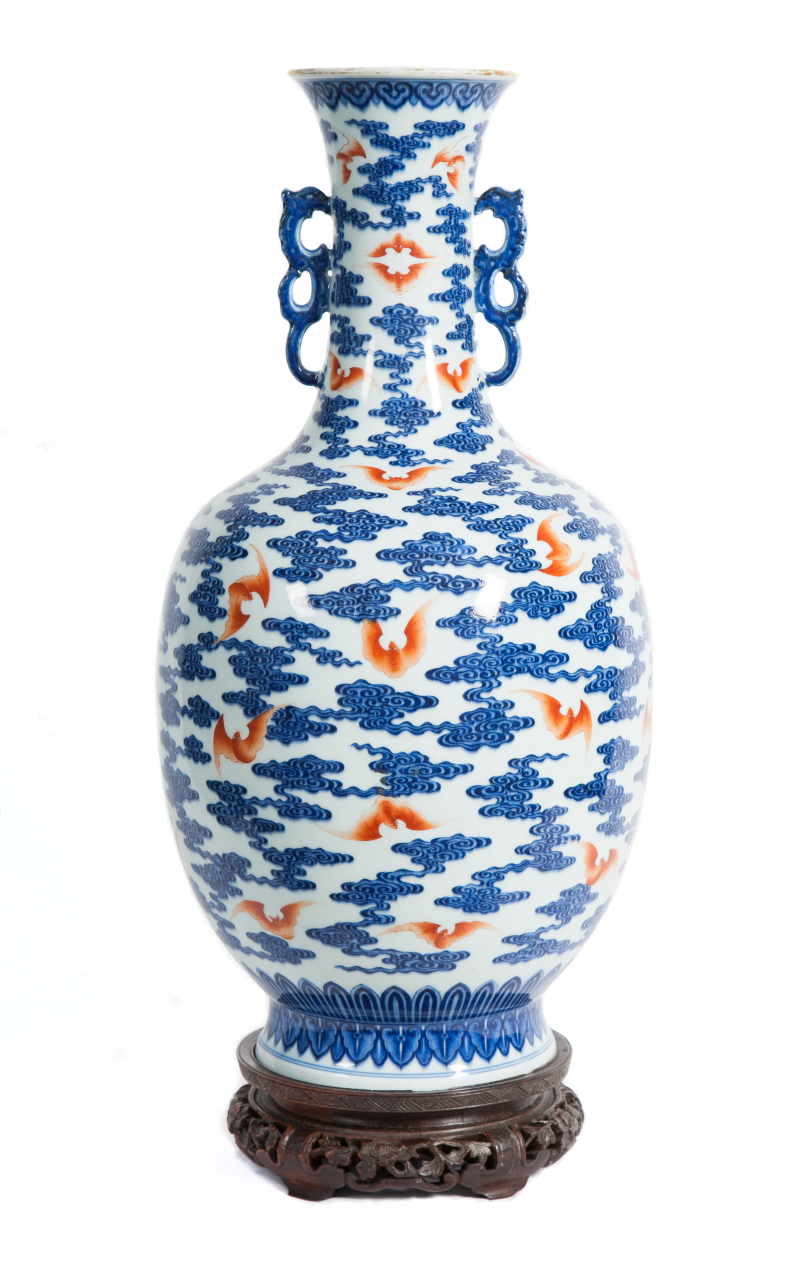
BTW, did you know that in China, "bats flying in clouds" is a symbol of prosperity...I wonder why? 🙂 18th c. Chinese Imperial Vase with Bats and Clouds...

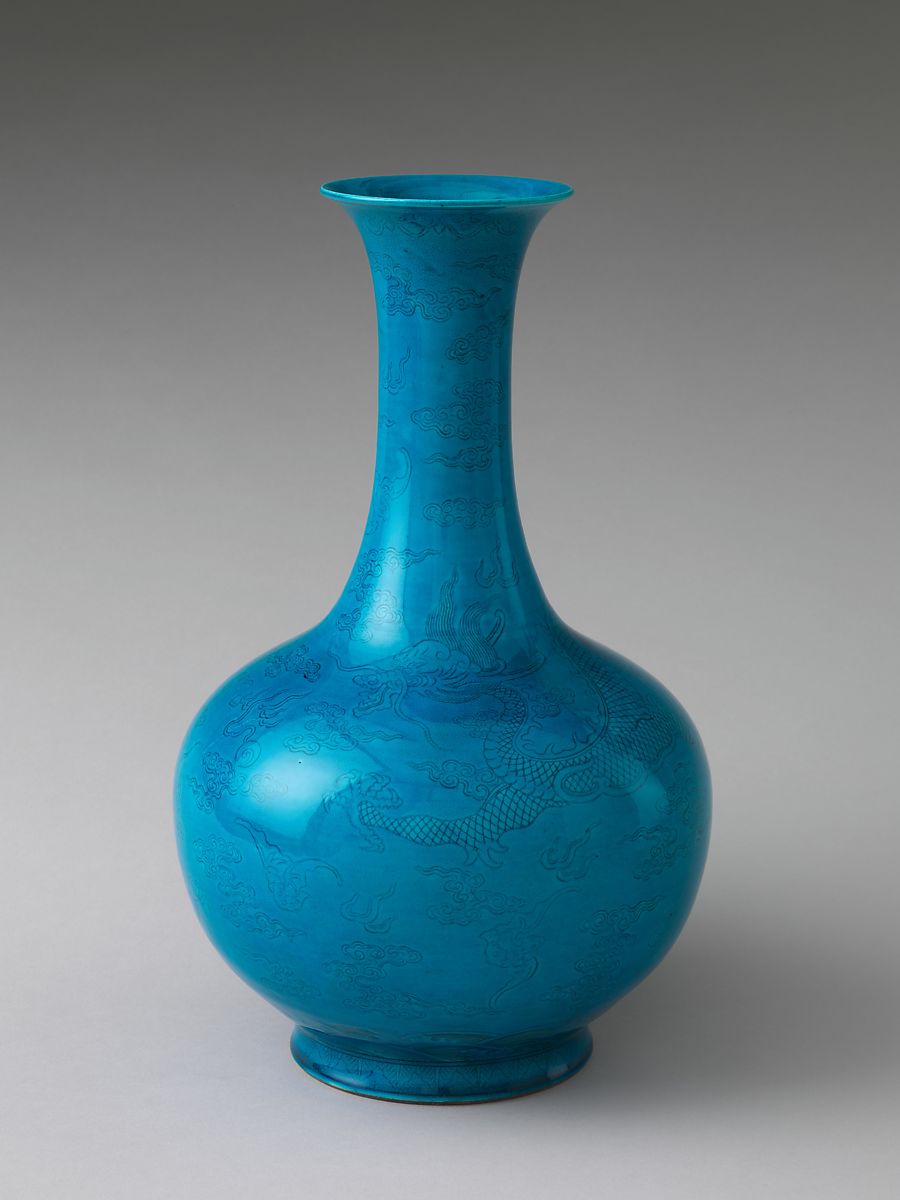
And I guess "bats flying in clouds with dragons" is even more auspicious...17th c. Vase with Dragons and Bats amid Clouds...

Now there is another animal that the Lord of Thunder was imagined as: pig. Sources from the Tang period describes him as a creature with the "appearance of a pig"...

Now there are two possible explanations for this, from the animal calendar markers point of view. First is the obvious one: this has something to do with the mating or birthing of wild boar...

Wild boar mates during the winter, Nov-Jan...Hmmm....And wild boar piglets are born between March and May...The rain and thunderstorm season in China starts in Apr/May...

So I think that here we are looking at the pig animal calendar marker marking peak wild boar birthing season...Lots of little piglets everywhere...Important in a place where we believe pigs were domesticated...By presumably catching piglets and raising them in captivity...

And considering that this invasion of piglets coincides with the beginning of the rain and thunderstorm season, we have Thunder god looking like a pig...Simple...But...

But there is another possible explanation for the "Thunder god has a head of a pig" statement...And it has nothing to do with pigs, but with bats...Remember, The Lord of Thunder was a "bat like demon"...Left, bat head, Right, wild boar head...

This is a website that lists all the bat species living in China...How many have heads that look like pig's heads?

Is it possible that this "looks like a pig" is a misunderstanding, misinterpretation of looks like a bat? Or am I just seeing things?

Anyway, Lei Kung (Lei Gong) started his life as a mortal and only became the God of Thunder after eating a magic peach (apricot) after which he grew wings and got supernatural strength...

You can read about it in "29 Chinese Mysteries"...Just like "The Son of Thunder", his alter ego...

Makes no sense, right? Well, as I explained in my post about "The Son of Thunder", apricots and peaches picking season starts in May, beginning of the thunderstorm season...And the time when bats emerge from hibernation...

Anyway, once the Lord of Thunder acquired his powers, he became a strongman, tasked by the Jade Emperor to punish people who have committed crimes, so to scare people shitless into being good...You can read about this in "Waiting for a Thunderbolt"... 

For a comic relief (but not just for that), I will paste here a brilliant retelling of a story about the Jade Emperor and the Lord of Thunder, from the site entitled "Fuck Yeah, Chinese myths!" 🙂 It's a classic:

One day, the Jade Emperor was chillin’ in Heaven and he was all, “Hmm, I think I totally gotta check out what’s goin’ on in the world, 'cause I have to like, totally make sure that no one is bein’ a douche.”

But when he saw what was happenin’ on earth, he was like, so freakin’ pissed 'cause errbody was bein’ a douche to one another.

The worst part was, he saw two robbers robbin’ stuff from a travelling salesman, and he was like, “K, that’s it. I’ve had enough with this shit. Lei Gong! I totally summon you!”

Lei Gong was all, “Wassup Chief?” And when he heard what had happened, he was really pissed off too. The sky turned black and Lei Gong used his hammer and chisel to warn the robbers, but it wasn’t enough.

Then, he used his iron spear which shot out electricity and killed them. All the peeps saw, and they were like, scared shitless and didn’t dare rob from anyone else no more.

And so Lei Gong was patrolling the city, striking villains down, doing his thang, and he saw this woman throw a bowl of rice into a ditch. 

And Lei Gong was upset 'cause this woman was so clearly wasting food, and he struck her dead. That was the end of that, right? Wrong!

See, Lei Gong made a big mistake. The woman who threw out the rice wasn’t throwing out rice at all - she was throwing out the husks of rice, which was pretty useless anyway.

In fact, this woman was a really filial daughter-in-law, and she was drinkin’ rice husk soup or somethin’ 'cause the rice that was previously in the soup was given to her mother-in-law to eat as porridge!

The Jade Emperor was all, “Lei Gong, dude, seriously - you gotta check this stuff out before you strike peeps down, man!”

Lei Gong was all, “Yeah, I know. Sorry.”

“Don’t worry, I got this,” the Jade Emperor said, and he swept his hand, and the girl Lei Gong killed was in front of them! To compensate for Lei Gong’s blunder, she became his wife and was called Dian Mu or the Goddess of Lightning.

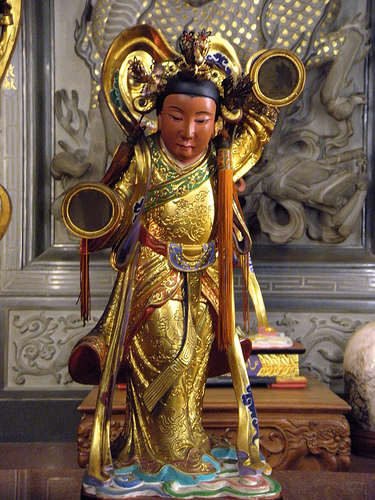
Dian Mu was bestowed with the power of lightning. She made lightning with the two mirrors she held in her hands. And to prevent Lei Gong from making more mistakes, she would use her lightning flashes to brighten up errything.

This let her husband have a proper look at who he should strike, and then thunder would soon follow.

Aaaaaand this is why lightning comes first before thunder.

The end....

That's how you retell mythological stories...

Now this last bit about Dian Mu "being killed by Lei Gong after throwing rice husk" is very interesting...

In the main rice growing areas of China, rice harvest spans Jun, Jul, Aug, Sep...This is the peak of the rain and thunderstorm season...


In this paper "Variation of Rainfall Over South China Through the Wet Season" we can read that in Southern China, according to the agricultural calendar, which hasn't changed for thousands of years, the first rice harvest took place during the rainfall dip, at the end of Jun...

Rice harvest is followed by threshing and winnowing, separation of husks from seed...After which the husks are thrown away...

And so it is possible, that the story about Dian Mu being killed by overzealous Lei Kung, while she was throwing rice husks into the river, is another, this time plant calendar marker for the thunderstorm season...The domain of The Lord of Thunder...

That's it for now. Hope you enjoyed it...

To read more about ancient animal and plant calendar markers, start here…then check the rest of the blog posts related to animal calendar markers I still didn't add to this page, and finally check my twitter threads I still didn't convert to blog post...I am 9 months behind now...