Saturday, 11 May 2019

Bird torcs

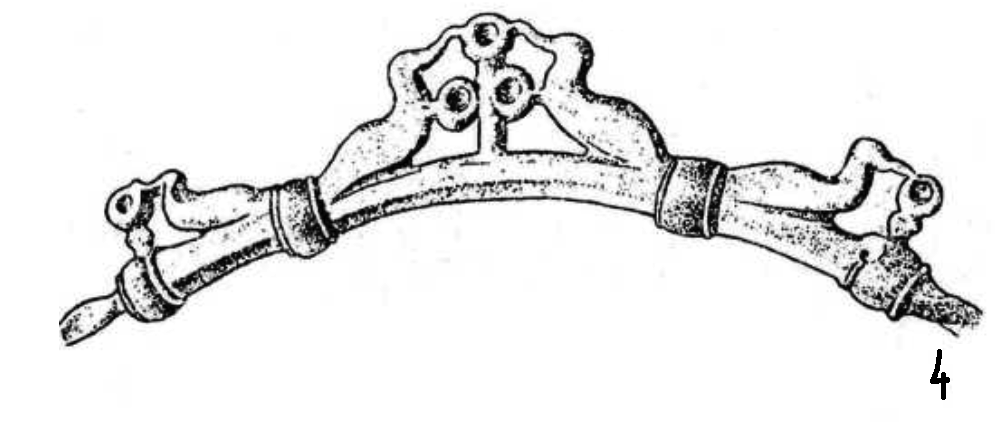
Very interesting La Tène bronze torcs from Marne region of France. 

The first two are decorated with two birds, most likely ducks, holding a disc. Solar disc? 

Tthe third one is again decorated with birds (ducks?). And triskele (trinity) between them?  


The fourth one is decorated with two birds holding a tree of life?

What is the meaning of these decorations?

Arrival and departure of the migratory birds demarcate the "sunny" part of the year in Europe. Which is also the part of the year when plants grow and give fruit...


This is reflected in Slavic languages. The word for summer "leto" is derived from the word for flight "let" precisely because the summer, the sunny part of the year is demarcated by the arrival and departure of migratory birds. You can read more about in my post "Leto".

Is this what the above torcs are symbolically depicting?

Friday, 10 May 2019

Day star


In Serbian mythology Venus is known as Danica (Day star). She is the daughter of the sun god, known as Vid, Svetovid but also as Dabog. I wrote about Svetovid in my post "The Horseman". Every morning under the name of Zornjača (Morning star) she opens the eastern gate of Sun's palace to let his chariots out. And every evening under the name of Večernjača (Evening star) she opens the western gate of Sun's palace to let his chariots in.

Where is this Sun's palace?

Interestingly Dabog is also the god of the Dead to whom all the Ancestor cult ceremonies are dedicated. Why?

Tuesday, 7 May 2019

Fire breathing goblin


Aillen or Áillen is a legendary being from Irish mythology. He played the harp and was known to sing beautiful songs. He was also called "the burner", because of his "fiery breath". He was a member of the Tuatha Dé Danann. 

Here is the story about Aillén Mac Midgna – The Fire Breathing Goblin, which was described in the Fenian Cycle of Irish Mythology under The Boyhood Deeds of Fionn.

Aillén Mac Midgna was a fire breathing goblin from the other world, Mag Mell. for 23 years Aillén brought terror to Ireland’s most sacred location, the hill of Tara, the seat of Ireland’s High King.

Each year, on the eve of Samhain, Aillén would arrive at Tara and play the Irish harp with such enthusiasm causing everyone in the immediate area to fall asleep under his spell.

Once Aillén had cast all of the kings guards asleep he would use his fiery breath to set fire to the great halls of Tara with his fire breathing, leaving nothing but burning cinders behind. When done Aillén would return to his fairy mound at sídh Finnachaid leaving the people to rebuild the great halls.

Nobody could kill the fire breathing goblin because as soon as anyone got close to him they fell asleep under his spell which is why he was able to continue year after year. That is, until the Irish hero Fionn Mac Cumhaill learned about the disastrous deeds of Aillén.

A few months after Fionn succeeded in becoming a Fian warrior and chieftain of Clan Baiscne he was told of the fire breathing goblin who was causing chaos at the hill of Tara every Samhain. As Fionn had all the knowledge in the world gained from the Salmon of Knowledge, he made a request to the High King. For leadership of the Fianna, a band of warriors, he would kill Aillén Mac Midgna the fire breathing goblin. With all the warriors in Ireland unable to stop Aillén the burner the Irish King agreed to Fionn’s request.

Like everyone else, Fionn was not immune to the musical spell from Aillén so he needed a way to avoid falling victim to the goblins magic but how? 

Another Irish warrior by the name of Fiacha had a poisoned spear but he lacked the knowledge on how to use it. Fionn mac Cumhaill on the other hand knew exactly how to use it after all, he had all the knowledge in the world.

On Samhain’s Eve Fionn held the spear to his head and inhaled its magical fumes, making him immune to the musical spell  from Aillén’s harp. He lay in wait for Aillén to get closer and within reaching distance he stabbed him with the spear killing the goblin to everyone’s joy.

The King, true to his word, gave Fionn captaincy over the Fianna warriors. Its leader at the time, Goll Mac Morna who was Fionn’s enemy, stood down and swore loyalty to Fionn.

So what is this story actually about?

Well as I already explained in my post "Two crosses", in the Irish calendar the year was divided into the white and dark part, summer and winter. The white part of the year was the part dominated by the sun (Heat, Light, Yang, Male principal). The dark part of the year was the part dominated by the earth (Cold, Dark, Yin, Female principal). This division of the year described by the Celtic calendar is also perfectly described by the Yin-Yang symbol. I talked about it in my post "Yin and Yang". The white part of the year, the summer, started on Beltane and ended on Samhain. The dark part of the year started on Samhain and ended on Beltane. 


The fire of the sun is symbolised by a snake and a fire breathing dragon...I already talked about it in many of my posts, like "Apep", "Water bull", "St Austell font", "The sunny part of the year"... And interestingly, the fire breathing goblin gets killed on the day when the sun's dominance ends, when the sun's fire is finally extinguished and the winter starts...And the day when traditional in Ireland all the house fires were extinguished and rekindled again...

Is this a coincidence?

Sunday, 5 May 2019

Northern Etruscans

The Pomeranian culture, was an Iron Age culture with origins in parts of the area south of the Baltic Sea, from the 7th c. to the 3rd c. BC, which eventually covered most of today's Poland


People of the Pomeranian culture made these amazing bronze collars.


These collars are commonly thought of being jewellery but it is possible that they were a type of a neck armour. These are depiction of warriors from Tiryns Peloponnese (c. 1500-1200 BC). Bronze statuettes of warrior from Sardinia Italy (c. 1900 BC). Both wearing ring neck amour.


This type of armour was found in Italy (c. 2000-1600 BC).


From Greek age of Bronze.

Pomeranian culture is also known as face urn culture. Reason for that is that they put ashes of the deceased in urns with sculpted faces, possibly resembling the faces of the deceased.


Now interestingly, at the same time, or a bit earlier (they first appear during the 8th centuries BC. ) in Italy, Etruscans also made urns with faces.


I love the more stylised design of the older versions of these Etruscan face urns, like these 4.


One of the most striking examples, to me anyway, is this one. It could have been made in 1930s...


At the same time when both people in Etruria and in South Baltic made face urns, the people in both places also made house urns.

The House Urns culture was an early Iron Age culture of the 7th century BC in central Germany, in the Region between Harz Mountains and the junction of river Saale to river Elbe. It was the western periphery of the bronze and Iron Age Lusatian culture.


At the same time (actually slightly earlier) in Italy, we find Villanova culture, (Early Etruscan culture) which also made house shaped urns


The most elaborate house urns made in Italy come from the Etruscan city of Vulci and date to the 9th century BC. They are made of bronze.


One of my favourite Etruscan house urns is this one, today kept in Vatican museum. Some people will find symbols adorning this urn interesting. I particularly like this one:


Etruscans loved amber, and amber comes from South Baltic. So the trade connection between the two places definitively existed during the time when these two urn traditions developed in both Italy and South Baltic.


Villanovans, early Etruscans, were master amber carvers


What is interesting is that both urn traditions are developed earlier and to the much higher level in Etruria. This points to the corresponding North European traditions being cultural exports from Etruria.


Cultural exports brought along the amber road? The shortest route directly connects these two cultural areas.


These cultural traits are not present along the whole length of the Amber Road. Does this indicate the presence of the Etruscan settlers in the South Baltic area? Maybe to control the amber trade?


Latest Etruscan genetic data shows that they were a very mixed population...But "...the finding of the Central European lineage G2a-L497 (7.1%) at considerable frequency would rather support a Northern European origin of Etruscans"...

Interesting...

Sunday, 28 April 2019

Khnum

The flooding of the Nile is the result of the yearly monsoon between May and August causing enormous precipitations on the Ethiopian Highlands whose summits reach heights of up to 4550 m. Most of this rainwater is taken by the Blue Nile and by the Atbarah River into the Nile, while a less important amount flows through the Sobat and the White Nile into the Nile. During this short period, those rivers contribute up to ninety percent of the water of the Nile and most of the sedimentation carried by it, but after the rainy season, dwindle to minor rivers.
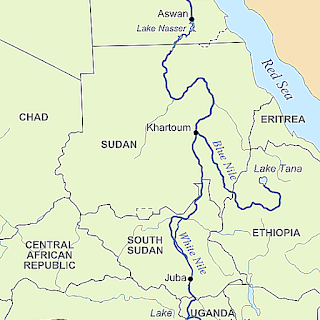

Apparently, these facts were unknown to the ancient Egyptians who could only observe the rise and fall of the Nile waters. The flooding as such was foreseeable, though its exact dates and levels could only be forecast on a short term basis by transmitting the gauge readings at Aswan to the lower parts of the kingdom where the data had to be converted to the local circumstances.

The Egyptian year was divided into the three seasons of Akhet (Inundation), Peret (Growth), and Shemu (Harvest). Akhet covered the Egyptian flood cycle. This cycle was so consistent that the Egyptians timed its onset using the heliacal rising of Sirius, the key event used to set their calendar.

The first indications of the rise of the river could be seen at the first of the cataracts of the Nile (at Aswan) as early as the beginning of June, and a steady increase went on until the middle of July, when the increase of water became very great. The Nile continued to rise until the beginning of September, when the level remained stationary for a period of about three weeks, sometimes a little less. In October it often rose again, and reached its highest level. From this period it began to subside, and usually sank steadily until the month of June when it reached its lowest level, again.

Now meet Khnum.


Khnum was one of the earliest-known Egyptian deities, originally the God of the source of the Nile. In art, Khnum was usually depicted as a ram-headed man holding a jar from which flowed a stream of water.


I particularly love this depiction of Khnum, with water pouring out of a snake mouth. As I explained in my post "Apep", snake is the symbol of the sun's heat, the symbol of the sun's fire, which swallows the water (moisture). And here the snake seems to be offered to Khnum  as a sacrifice. At the same time Khnum is holding the Was staff (the weapon that kills Apep, The Dragon, The destroyer of life) and Ankh (symbol of life).  A very very interesting relief. If anyone knows where this relief is and if you have the full image, please let me know. 


Since the annual flooding of the Nile brought with it silt and clay, and its water brought life to its surroundings, he was thought to be the creator of the bodies of human children, which he made at a potter's wheel, from clay, and placed in their mothers' uteruses. He later was described as having moulded the other deities, and he had the titles "Divine Potter" and "Lord of created things from himself". So he was also depicted working at a potter's wheel, with recently created children's bodies standing on the wheel...

The horizontally twisted horns show that we are dealing with a ram of the species "ovis longipes palaeoaegyptiacus".


This was the earliest type to be domesticated in Egypt, but became extinct sometime in the New Kingdom. Nevertheless, the shape of the horns was preserved even in later depictions of Khnum.


Now this type of sheep is a bit of a mystery. There are two thing you can find about its origin. 

One says that it came from wild Barbery Sheep, which came from Numbia. The problem with this is that Barbery Sheep is not a sheep but a goat...And it doesn't look anything like the Egyptian sheep, Khnom's sheep. Look at the horns


The other says that it came from Iranian Red Sheep, and that it came to Egypt via Sinai. This sheep is indeed a wild sheep of a Muflon family. But this sheep also doesn't look anything like the Egyptian sheep, Khnom's sheep. Look at the horns


I don't know if any genetic analysis was done on the remains of "ovis longipes palaeoaegyptiacus", or if such remains were ever found. But considering that these two animals, one goat and the other sheep, neither of which looks like the depictions of the "ovis longipes palaeoaegyptiacus" were proposed as its ancestors, I could bet that we have no clue what "ovis longipes palaeoaegyptiacus" actually was...

If we disregard the horns, what is interesting is that both of these animals mate in late autumn and give birth to their young in late spring, finishing their birthing season in April...You will see why this is important in a sec. But first, have a look at this:


This is "Balkanska koza" (Balkan goat) also known as "Hrvatska šarena koza" (Croatian colored goat), direct descendants of wild goats. And like many other old Southern European goat breeds it has horizontal horns. 

Balearic goat

Balkan black goat

Kalofer goat

Old Irish goat

What all goats have in common is that their natural mating season is in the autumn and that their kidding season is in the spring, ending in April...

Did such goat once live in Egypt too?

As I said, we don't have any data for the ancient Egyptian goats, but I would bet that their kidding season also ended in April...As is normal for most Northern Hemisphere wild goats and sheep...

And coincidentally, the monsoon that is the source of the nile flood, begins during the birthing season of the above animals (March/April). These are rain charts for two areas of the Ethiopian highlands... 


I talked about this in my post "Menat"...

It is this rain that is the source of the Nile...And interestingly, the rise of the nile water level, the beginning of the annual inundation of the Nile starts right after that, in May. 


Do you think that this is why Khnum, the God of the source of the Nile, has a head of the "ovis longipes palaeoaegyptiacus" ram (or male goat)???

Are there any other goats or sheep that look like this in Africa or Asia? This definitely needs more investigation...

Well I just found this representation of Khnum, harvesting wheat. 


Harvest time in the Nile River Valley occurred between April and June, depending on the weather. So the harvest also starts after Aries (Ram) ends. 

Interesting...


PS: 

I came across this interesting article today: "EVOSHEEP: the makeup of sheep breeds in the ancient Near East". An in it, I read this:

In northern Mesopotamia, an important increase in sheep husbandry during the fourth millennium BC (Uruk period) can be identified. Zooarchaeological studies have shown that these animals are larger than earlier sheep. Their horns form horizontal spirals, which are similar in shape to those of contemporaneous Levantine and Egyptian sheep. At the beginning of the third millennium BC (Early Bronze Age), the average sheep size was smaller, and the horns were coiled.


I went and I checked the modem sheep breeds, and I came across this one, Damara sheep, which can today be found in Central and Southern Africa, but which arrived there from Egypt. Is this Khnom's sheep?


I also found out that sheep that were a result of back breeding with wild sheep, mouflon, have horizontal spiral horns...Like this Hawaiian black sheep...


Very interesting. So Khnum could have been a deified ram after all...

The thing is, that the reason why a deified ram would be worshiped as the god of the source of Nile stil stands, as these old sheep are also seasonal breeders, which mate in autumn and lamb in spring...

PPS: Both Barbery sheep and Mouflon mate in Oct/Nov and give birth Mar/Apr...