Showing posts with label Thyrsus. Show all posts

Saturday, 3 May 2025

Dance of the Panes

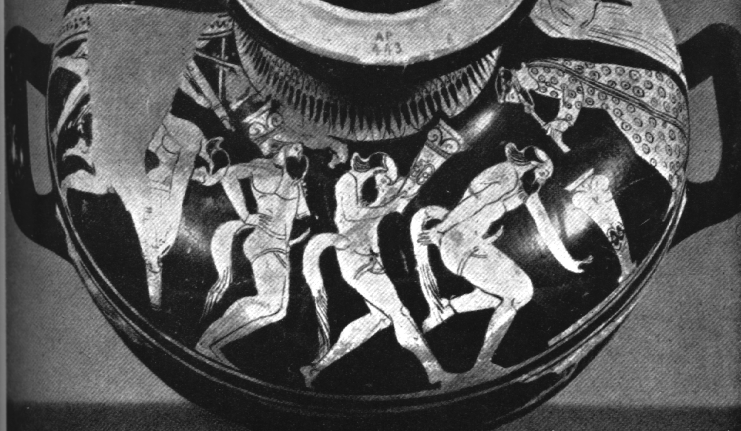
Athenian red-figure skyphos (wine cup) dated to 5th BC, currently in the Museum of Fine Arts Boston depicting: "Goddess emerging from the ground between two [dancing/prancing] Pans"...


Which goddess?

I would suggest Persephone. Here's why:

Abduction of Persephone by Hades. Fresco from, Vergina, 340 BC, Macedonia, Greece. Based on the animal and plant calendar markers found in the story about the abduction of Persephone, which I presented in my post "Abduction of Persephone", this abduction took place in Oct/Nov...

This is interesting because it is at the precise moment when Persephone (the grain seed) is abducted and taken to the "underworld", in Oct/Nov, that winter grains, barley and wheat, were sown in Ancient Greece...

Here comes one of my favourite bits of the legend of the abduction of Persephone.

"Demeter, when she found her daughter had disappeared, disguised herself as an old woman and with lighted torched in her hands roamed the Earth looking for her daughter..."

How long was she doing this? Well the Homeric Hymn of Demeter says: 

"Thereafter, for nine days did the Lady Demeter wander all over the earth, holding torches ablaze in her hands."

On the tenth day, Hekate came to Demeter and told her that Helios (the sun) knows where her daughter was...

Why nine days?

If we see Persephone as grain seed, then she indeed spend only 9 days in The Underworld, Under The Ground...

This diagram shows the life cycle of the winter grains (wheat and barley). You can see that after sowing, the seed germinates and sprouts within 10 days...After 10 days the first grain leafs appear above the ground...

Is this why the Homeric Hymn to Demeter is so precise about number of days Demeter was looking for her daughter? I think so...

Anyway, just before Persephone was released from the underworld, Hades tricked her, giving her some pomegranate seeds to eat. And because she had tasted "food in The Underworld", she was obliged to return to underworld every year...

The pomegranate picking season starts in Oct/Nov and lasts until January, basically spanning the whole of winter. It is no wonder then that pomegranate is considered a symbol of Winter and Christmas in Greece...

So if Hades did give Persephone pomegranate to eat, he could only have given it to her in Oct/Nov, after she has spend 9 days in the underworld...

Guess what else happens in Oct/Nov, at the time when Persephone emerges from the underworld, her lips still sticky with pomegranate (fertility symbol) juice? 

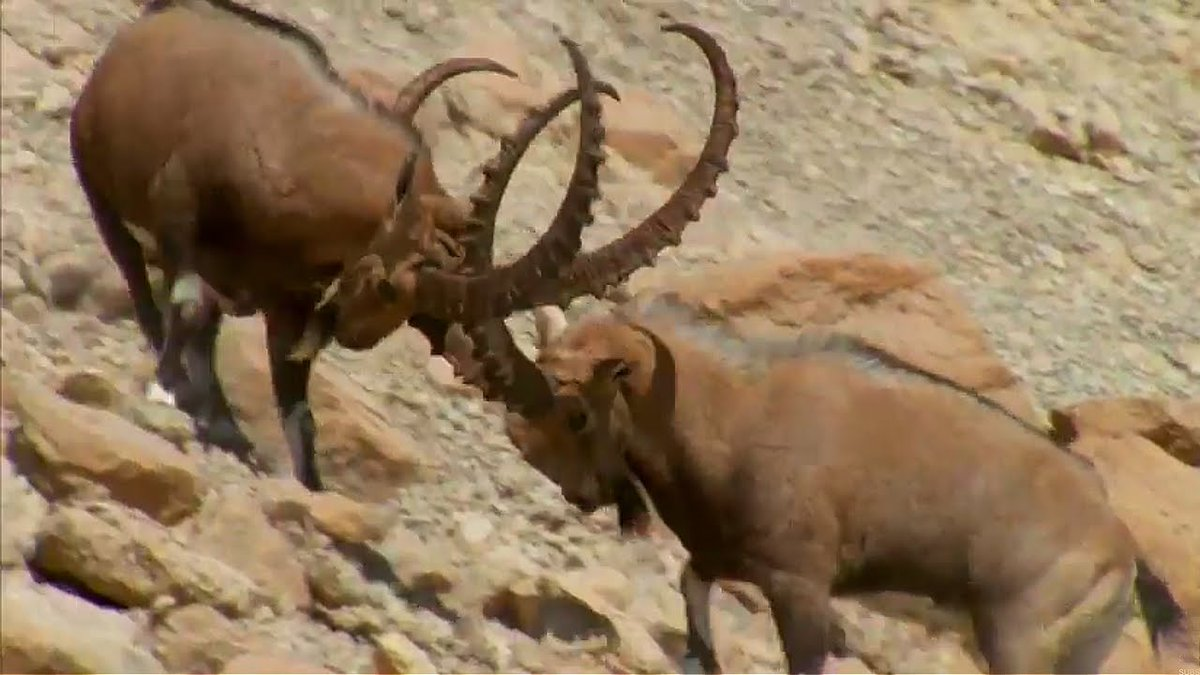
The mating season of Ibex goats starts. Matins season during which bucks "dance/prance", actually fight for females...

Ibex mating (dancing/prancing) season spans the whole of winter...This is why goat is the symbol of winter.

An illustration by Yuri Vasnetsov from 1956 entitled "Goat". It depicts the scene from Slavic folklore in which goat (of winter) brings spring (basket with flowers) and summer (baby goat).    

You can read more about goat (calendar marker) in European folklore and mythology in my post "Goat in European culture"...

Back to our skyphos....The two dancing/prancing panes flanking the emerging goddess have goat heads...Sooo...Is this what is depicted on this vase? Grain sprouting from the ground in Oct/Nov, during goat mating season? I think so...But there is more...

This is the other side of the same skyphos. On it we see the same goddess, this time fully out of the ground, holding a skyphos and a thyrsus, holy staff of Dionysus, flanked by two Panes, this time with human heads and horse tails, one of whom also holds a thyrsus...

The fact that it is horse Panes and not goat Panes that flank fully emerged, moving goddess, indicate that here we are looking at Summer Persephone, Demeter, the harvested grain...

Actually I would even suggest that we are looking at threshed and winnowed grain...

According to Hesiod in Ancient Greece, grain harvest was done in Apr/May/Jun, and threshing and winnowing was done in Jun/Jul around the time of the summer solstice...I talked about this in my post "Hesiod on grain"...


Guess what starts in Apr/May (start of grain harvest in Ancient Greece) and peaks in Jun/Jul (end of grain winnowing in Ancient Greece)? Horse matings season, during which stallions "dance/prance", actually fight for females...


The horse fertility is governed by the sunlight and peaks on summer solstice. 

Hence solar horses all over Eurasia...

Articles about solar horse (equid):

Iran "Water carrier equid", "Dioscuri plate from Iran"

Mesopotamia "Shamash playing with the solar horse", "Sun god from Tell Brak"

India "Hayagriva"

China "Longma", "Three legged crow", "Mythical beast from Xian"

Levant "Alexamenos graffito", "Goddess on a horse", "Unicorn"

Europe "Archaic rider", "Beotian solar pyxis", "Pegasus and chimera", "King John", "The horseman"

Which is why horses are an animal calendar marker for summer, and summer solstice. Horse is hidden among zodiac symbols as The Devine Horse Twins...Dioscuri...


I talked about this in my posts "Hayagriva", "Dioscuri plate from Iran"...

The peak of the horse dancing/prancing, Summer Solstice, is the time when giant fennel, a wild flowering plant that can grow up to 2.5 meters tall, flowers in Greece, producing huge number of large bright yellow globular "sun like" flowers...

Giant fennel whose stalk is used as a shaft of Thyrsus, the sacred staff of Dionysus. I talked about this in my post "Thyrsus"...

Thyrsus carried by both moving Persephone (winnowing grain seed) and dancing/prancing horse Panes who flank her...

Isn't this interesting? So is this what the other side of the skyphos depicts? Moving Persephone (grain being winnowed) holding thyrsus (giant fennels) while dancing/prancing (mating) horses Panes are flanking her, in Jun/Jul...I think so...

That's it. To read more about ancient animal and plant calendar markers, start here…Then check my twitter threads I still didn't convert to blog post...I am way way behind...

Sunday, 19 May 2024

Eros riding ibex

Ancient Greek gold earring, c. 4th-3rd c. BC. A winged Eros, riding an Ibex goat and holding a Thrysus staff, symbol of Dionysus...


Sold by Christies 

Full of animal and plant calendar markers pointing to Oct/Nov, beginning of winter...

So let's start with Ibex goat. Across their range, Ibex goats start mating in Oct/Nov...At the beginning of winter...And they announce that to the world by loudly banging their heads...Not something you can easily miss...

In Eastern Mediterranean (Crete, Cyprus, Levant), Mesopotamia, Central Asia, Iran), where climatic year is divided into hot dry half and cool wet half, Oct/Nov is also the beginning of the cool wet half of the year. 

The time when the first rains arrive...

Crete


Levant


The rains which bring rebirth of nature...

Officially: "Golden ring depicting goat sacrifice", Mycenaean, 1500BC. I don't think so. Ibex was in Minoan, and later Mycenaean culture linked to rain season and regeneration of nature. This could be sacrificing to the Goat (of rain), not of a goat...I talked about this in my post "Theseus ring"...

The observed overlap between the beginning of the Ibex goat mating season and the arrival of the rains, turned Ibex goat into The Goat of Rain...I talked about this in my post about this Neolithic vessel from Tepe Hissar, Iran


Which is why in Iran, Ibex goat is one of the most depicted animals...

And one of the first deified animal calendar markers...I talked about this in my post "Goat petroglyphs from Iran"...


As for Europe, what do you think Pan is? Ever thought why Pan is "The Old God"...Pan riding a goat. Boscotrecase, Italy, 45–50 CE, plaster and pigment, The Bible Lands Museum, Jerusalem

I talked about this in my post "Pan, god of rain"...

Here is Pan depicted with Dionysus on a sarcophagus fragment, Ashkelon, ca. 1st–3rd century CE, marble, Israel Antiquities Authority...The god of resurrection welcomes the arrival of the Goat God...

Why do you think cornucopia was originally an actual goat horn which belonged to Amalthea, the Ibex goat that suckled infant Zeus (god or rain) on Crete...Goat of rain suckled God of rain...Cool...Dionysus and Plutos with cornucopia...

I talked about this in my post "Cornucopia"...

More about deified goat of winter (and rain) in Europe can be found in my post "Goat in European culture"

Ok...That's goat sorted...It is an animal calendar marker that points to Oct/Nov...What else is there that points to Oct/Nov, beginning of winter? 

Thyrsus, the staff of Dionysus...I talked about it in my post "Thyrsus"


Thyrsus stick was made from a stalk of a giant fennel. It had a pine cone stuck to its top. The stick was then wrapped with ivy and grape vines...

In Ancient Greek mythology, when Prometheus stole fire from Zeus, he brought it to people by hiding it in the hollow stalk of the giant fennel...

Here he is, with fennel torches...

So am I wrong to think that the Thyrsus fennel stick symbolizes the power of Zeus, thunder (and rain) god? I mean, fire stolen by Prometheus was the product of Zeus's lightning...

And as I said, in Eastern Mediterranean (Crete, Cyprus, Levant), Mesopotamia, Central Asia, Iran) the Goat (sorry God) of rain arrives in Oct/Nov...

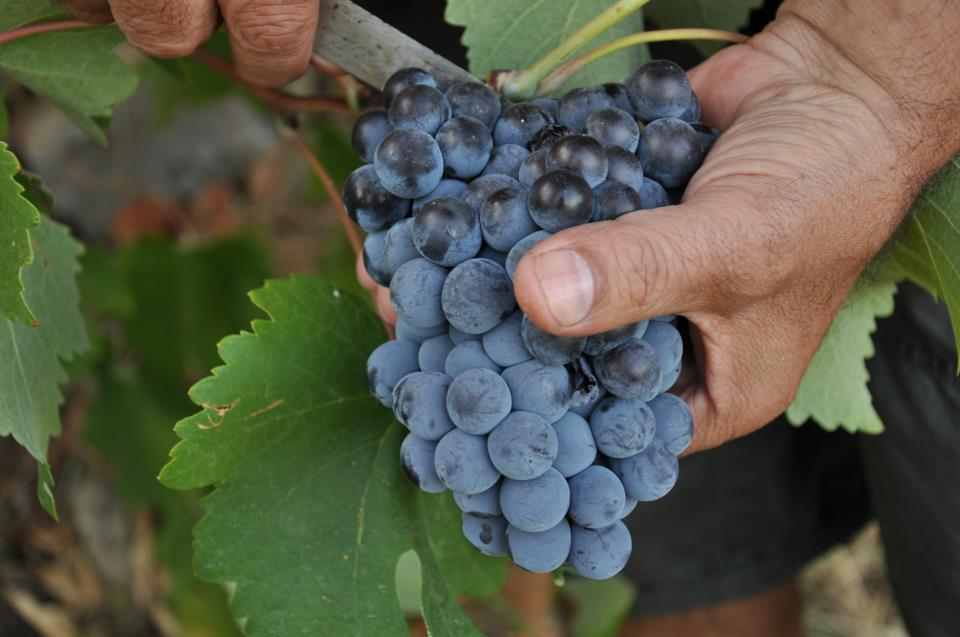
So a lightning fire stick...Wrapped with grape vines...Grape vines without grapes...You know how Dionysus is a god of wine...Which is made after the grape harvest...Which lasts from Aug to Oct...

So grape vines on the Thyrsus staff of Dionysus mark the end of the grape harvest Oct/Nov...And beginning of wine making...And the time when saffron crocuses, another symbol of winter, start flowering...I talked about this in my post "Crocus fairy"...

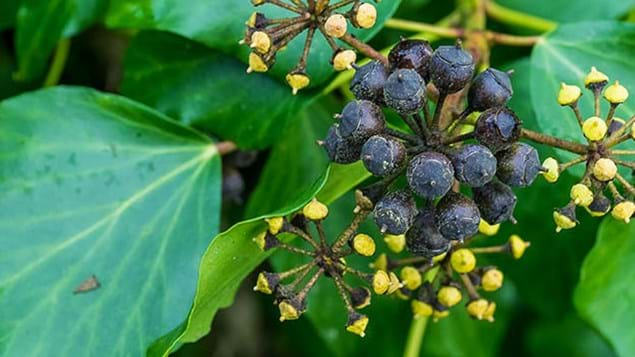
So a lightning fire stick...Wrapped with grape and ivy vines...Ivy with fruits...See these little dots between the ivy leaves? I talked about this in my post "Furious maenads"...

Interestingly, Ivy flowers in September to November, after the grapes are harvested, and its fruits ripen in November to January...So the ivy fruit season spans the whole of winter. The time of Dionysus...I talked about this in my post "Woman and pitcher"...


So a lightning fire stick......Wrapped with grape and ivy vines...And topped with a pine cone...Pine cones which are ripe and ready to harvest from Oct/Nov... I talked about this in my post "Eagle dude from Aleppo"...

So I think that all this would make Thyrsus a very good symbol of the arriving winter rain season...The season of Dionysus...Which in Eastern Mediterranean (Crete, Cyprus, Levant), Mesopotamia, Central Asia, Iran) brings resurrection of nature...

Which is also the time when Ibex goats have loads of sex...Minoan seal depicting mating ibex goats...

Here is a good article talking about the link between goats and Dionysus, "Patera of Rennes", which analysis the Dionysia scenes depicted on this beautiful Roman gold bowl dated to c. 210 AD. found in France and currently kept in the Bibliothèque nationale de France...


Oh, and why is it Eros who is riding on an ibex goat and holding a thyrsus? Apparently, the Orphics thought that Dionysus was an incarnation of the primordial Eros, the first ruler of the universe...Is this why?

2nd century AD Roman marble sculptured of Dionysus and Eros...


To read more about ancient animal and plant calendar markers, start here…then check the rest of the blog posts related to animal calendar markers I still didn't add to this page, and finally check my twitter threads I still didn't convert to blog post...I am 9 months behind now...

Saturday, 2 January 2021

Furious Maenad

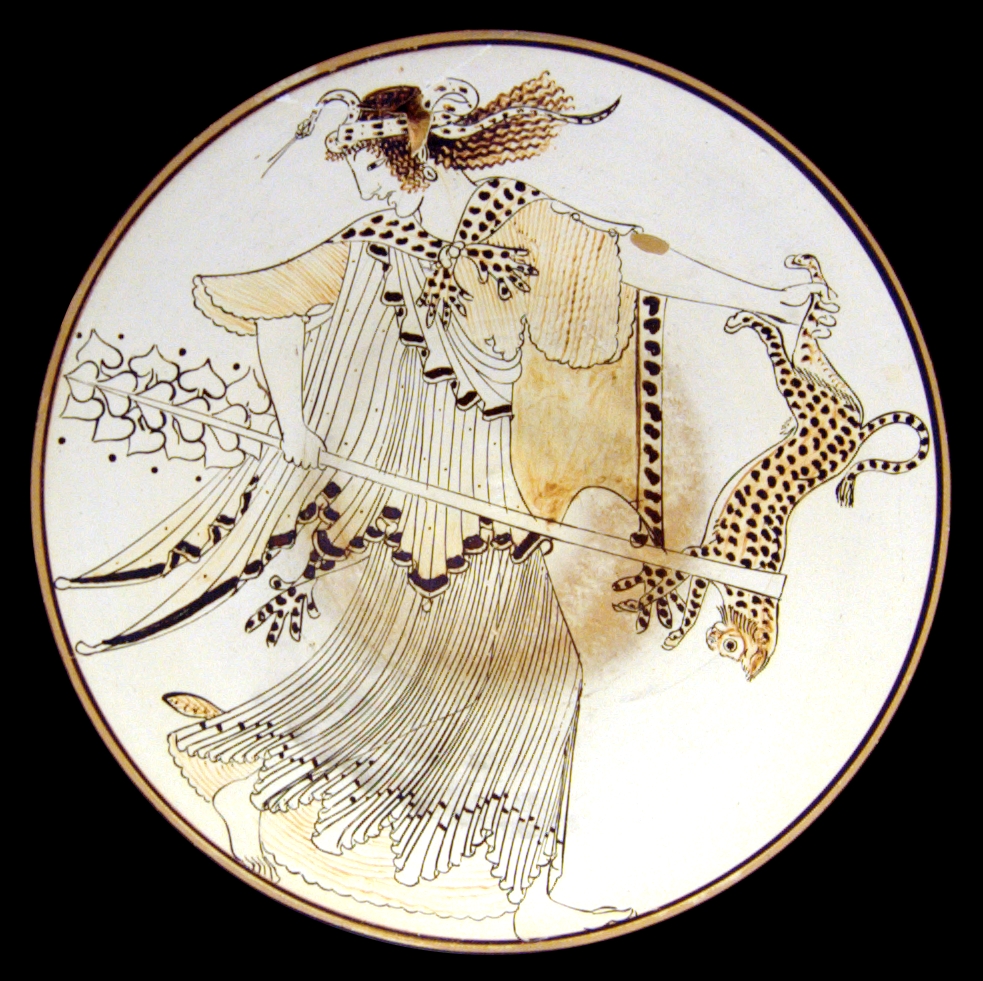
Furious Maenad holding a thyrsus in her right hand and a leopard in her left hand. She wears a leopard skin as a cloak and a snake around her head like a diadem. Tondo of an Attic white-ground kylix, 490–480 BC. From Vulci, Italy...

Very beautiful and very interesting...

Maenads were the female followers of Dionysus and the most significant members of the god's retinue. Their name literally translates as "raving ones"...

The oldest festival dedicated to Dionysus, was Rural Donysia, which took place around Winter Solstice. The main part of the festival was the procession. The god’s entourage during the procession consisted of the male satyrs and the female maenads...

I love this depiction of reveling dancers (satyrs???) lead by the piper dressed in leopard skin (Dionysus???)...Why leopard? Well, I talked about this in my post "Leopards and tigers"

Asian leopards are very secretive creatures. Very little is known about their lives. The general belief of the local population in the areas where Leopards are still found today, is that Leopards mate during "midwinter", right at the time of Rural Dionysia...

Is this why Dionysos was associated with leopards? 

Recent studies have however shown that the actual mating starts in January, soon after the Rural Dionysia, and peaks at the beginning of February...At the the end of winter beginning of spring...

It is interesting that in Anatolia, Central Asia, Mesopotamia, leopard was, with ibex goat, associated with rain season. Rain season which covers winter (starts with ibex mating season) and spring (starts with leopard mating season)...

Leopard hunts (follows) ibex...Spring, which starts with leopard mating season, follows winter which starts with ibex mating season...And this "hunt" revives nature and brings fertility to the land...I talked about this in my post "Goat and leopard"...

Rain, which is brought by mating ibexes and leopards, brings fertility...Ibex and leopard semen turns to rain which turns to flowing water...I talked about this in my post "A vessel from Tepe Hissar"...

Wasn't Dionysus associated with goats? Wasn't goat sacrificed to him? Wasn't tragedy, which translates in Greek as "goat-song", originally an improvised hymn sung and danced in praise of Dionysus? Was't Dionysus turned into a baby goat by god of rain, Zeus, his father? Who was in turn suckled by a goat??? I talked about the link between Zeus and a goat in my post "Goat riding thunder god"...

Now I am beginning to believe that Dionysus, the god of resurrection of nature, is associated with leopards because the end of leopard mating season is when "the resurrection of nature" actually happens: the end of winter and beginning of spring...Well in Greece anyway...

I think that this is why Dionysus, the god who dies and gets resurrected, rides on a leopard (arrives during leopard mating season), wears leopard skin (is identified with the end of the leopard mating season)...

And I also believe that this is why this Maenad not only holds a leopard by his hind leg (the end of leopard mating season) but also wears a leopard skin (dead leopard, again the end of leopard mating season)

So kind of cool...

It's actually even cooler...

Maenad's snake diadem. Snake is the animal which symbolises sun's heat, fire. Snakes are in our world when sun is in our world, spring, summer, autumn...And in underworld when sun is there, in winter. I talked about this in my posts "Enemy of the sun", "The chthonic animal",  "Bactrian snakes and dragons" and many others...

Maenad's thyrsus. The stick used by Prometheus to steal fire from the gods and smuggle it into human hearths. Probably also symbolic torch as well as penis...I talked about this in my post "Thyrsus"...

Finally Maenad's fury = internal fire, heat

The three main attributes of the Maenad represent fire, heat...And she is out dancing, for Dionysus, "the polar opposite of Apollo" in the middle of cold, dark, winter...Maenad kills leopard, winter ends, spring begins. Resurrection...

Finally finally, here is a Maenad carrying a thyrsus and a flaming torch...

To read more about ancient animal and plant calendar markers, start here…then check the rest of the blog posts related to animal calendar markers I still didn't add to this page, and finally check my twitter threads I still didn't convert to blog post...I am 9 months behind now...