Showing posts with label Mot. Show all posts

Sunday, 8 January 2023

Lord of the flies

Beelzebub, the lord of the flies was identified by Jews and Christians with Satan...From בַּעַל (baʿal, "lord, master") + זְבוּב (zvuv, "fly"), appearing in the Hebrew Scriptures as the purported name of a deity worshipped by the Philistines in Ekron...

Wiktionary says this about Beelzebub:

"It's likely this was not the god's actual name and instead was a polemic against the deity, a derogatory term used by Hebrews for an enemy god, possibly by associating the figure with defecation (hence flies)"...

I will in this article like to argue that this was indeed not a name of the Philistine deity, but the deity's attribute...I will also argue that even though we don't know what Philistines called this deity themselves, we know who that deity was: Nergal, the destructive sun...I talked abut him in my post "Winged superhuman hero"...

Nergal was not just "The destructive sun of the late summer early autumn (Jul/Aug)", he was also the god of plague. As the God of Pestilence, Nergal set loose the plague among the peoples. Not a Biblical one...A regular, annual one...

One of his symbols was the fly, the insect that brings pestilence to whole populations...And in Mesopotamia, like everywhere else, the annual peak in the fly population causes the annual peak of infectious diseases that they spread...

And that peak falls in Jul/Aug, in Leo, the seat of Nergal, The Lion Man, the Destructive Sun of the drought season at the end of summer beginning of autumn, the god of death and disease, The Lord of Flies...


Here are some stats for you:

Blow fly and house fly numbers in Mesopotamia peak in Jul/Aug/Sep.

These flies transmit at least 65 diseases to humans, including typhoid fever, dysentery, cholera, poliomyelitis, tularemia...

Typhoid fever in Iraq is a seasonal disease, with the majority of cases occurring starting from Jul...

Dysentery and cholera outbreaks typically follow seasonal increase in water contamination starting from Jul with the peak in Sep...

The reason why these diseases peak in Jul/Aug, Leo, is because this is the time of the year of maximum heat and minimum precipitation...The time of the year when Nergal, The Lion Man, The Destructive Sun, causes droughts and dries up the wells and causes water contamination...

Polio season starts in May, peaks in Jul, Aug, Sep...

Tularemia appears to have a clear seasonal pattern, with most cases occurring in the summer and early autumn months, Jul, Aug, Sep...

All of these diseases spread by ordinary flies...But, don't forget Sandflies. 

Sandfly numbers peak in Jul/Aug...In Iraq, a bite from an infected sand fly transmits Leishmania infantum, the parasite that causes Sandfly fever. Symptoms include fever, rash, diffuse muscle pain, headache, loss of appetite, nausea and vomiting...

Malaria Transmission is confined almost exclusively to the northern region of Iraq. The season running from May to October, with the peak in July and August...


And so...Back to our friend Beelzebub, The Lord of Flies of the Philistines...I Levant, the climate is very much the same as in Mesopotamia...And the lifecycle of the flies is the same too...Meaning the sick season in Levant is also Jul/Aug...The time of droughts...


That Beelzebub is indeed the nickname of the Destructive Sun God, who is also the god of plague, diseases, can be seen from the fact that there is an Ugaritic text which depicts Ba'al expelling flies, which are the cause of a person's sickness...

Ba'al being the Rain god, the enemy of the God of Death, Mot, who btw was equated to the sun...So, rain comes, the well water gets clean and safe for drinking again, the sickness season ends...

I talked Baal (Rain) - Mot (Sun) in my articles "The oldest Arabic poem" and "Anat"

BTW, if you are wondering why would people anywhere worship a god of death...Millennia of hardship, suffering, wars, deceases, droughts, deaths, destruction...

Ethnographer interviewing an old peasant woman, Serbia first half of 20th century.

Gran, do you believe in god?

Of course I do my son. Who wouldn't believe in god?

And are you afraid of god, gran?

Of course I am my son. Who wouldn't be afraid of an evil force? 


The same hottest, "driest time of the year = fly population peak = disease peak" correlation exists in Greece...Where we find Apollo, The Sun God, tho was also the God of Plague...And who was, possibly 🙂 derived from Nergal...Check my article "Palil" out for more details...

Greeks tell us that it is the rising of the Dog Star that brings sickness:

Sirius rises late in the dark, liquid sky

On summer nights, star of stars,

Orion's Dog they call it, brightest

Of all, but an evil portent, bringing heat

And fevers to suffering humanity.

This is the excerpt from Homer's Iliad. When this poem was written, Sirius, the Dog Star, used to rise in Leo, Jul/Aug, during Dog Days, the time of the year ruled by the Destructive Sun, Nergal...Apollo...

Why dog star? Why dog days?

Cause when our mythologies were made out of animal calendar markers, Sirius, the Dog Star rose with the sun in Jul/Aug, the time when mating season of the old primitive dog breeds began...Mythologised dog calendar markers:

Egypt: "Dog days", Mesopotamia: "Tishtrya", India: "The bitch of the gods"

Why Leo?

Cause when our mythologies were made out of animal calendar markers, Asiatic lions mating season started in Jul/Aug and spanned the whole of Autumn (Aug/Sep/Oct)...Which is why autumn starts in Leo (Jul/Aug). I talked about this in my post "Angra Mainyu"...
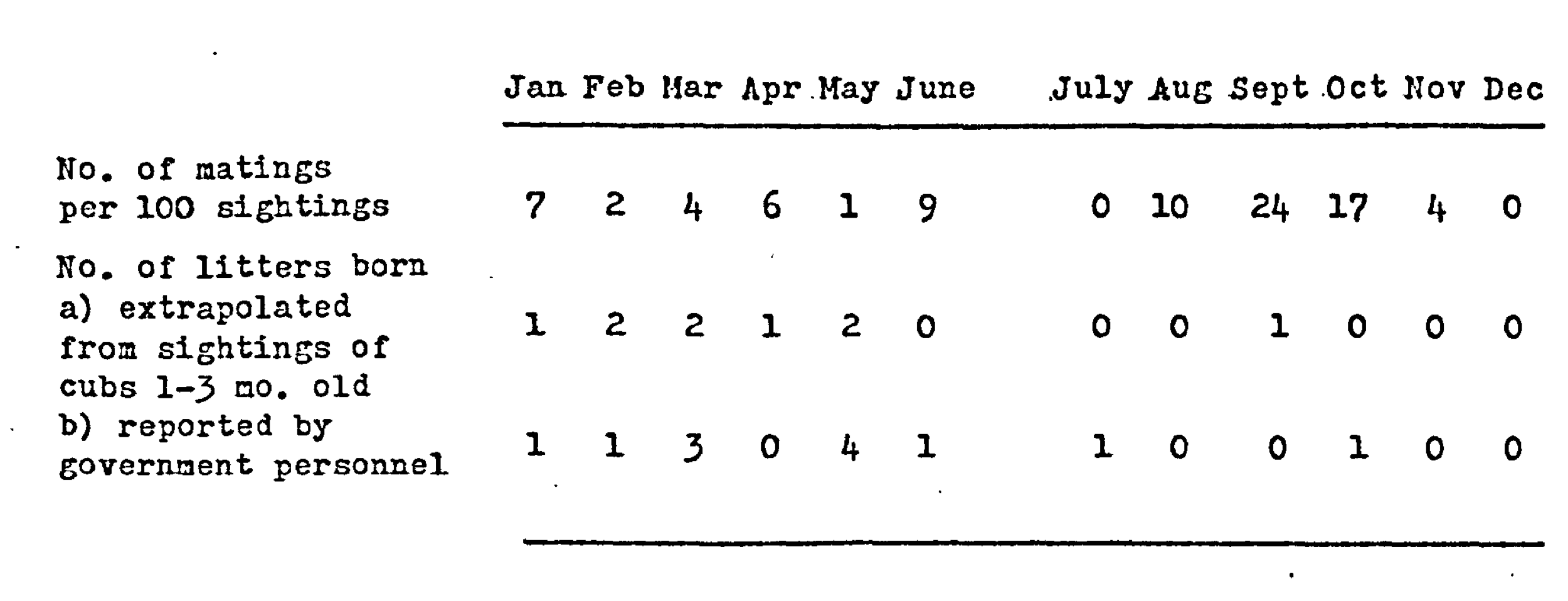


And why lion is the symbol of autumn...I talked about this in my post "Symbols of seasons"...

Basically, dog and lion are equivalent animal calendar markers, both marking Jul/Aug...The seat of Nergal, the god of death...Who was associated with dogs 🙂 But I will talk about this in one of my future articles...I think this is quite enough for today...

To read more about ancient animal and plant calendar markers, start here…then check the rest of the blog posts related to animal calendar markers I still didn't add to this page, and finally check my twitter threads I still didn't convert to blog post...I am 9 months behind now...

Thursday, 5 August 2021

Anat

Anat was a Semitic goddess worshipped by the Canaanites & Egyptians during the Bronze and Iron Ages. 


Depicted as violent, delighting in war, she was also establisher of peace. She was also portrayed as highly sexual & fertile, but also referred to as virgin & maiden. Fiercely loyal to her brother Baal, she takes revenge against Mot, god of the underworld, for (briefly) taking Baal's life. According to the Ugaritic text, "She seized divine Mot, with a knife she split him...with fire she burnt him; with millstones she ground him; with a sieve she sifted him; on the steppe she abandoned him.."

She was imported into Egypt by the Hyksos rulers. So who was Anat?

According to old poems from the area, Mot was equated to the sun. I talked about this in my post "Oldest Arabic poem"...


This is the climatic year in Levant. You can see that it is divided into two halves: the wet season (Nov-Apr) and the dry season (May-Oct) dominated by the blazing sun...

In ancient Levant, the wet season was the time when Baal/Hadad ruled the world. But every year, in May, Mot would usurps the throne of Baal/Hadad, kill Baal, and turn the world into hell...

Mot had a brother, Yam, the sea god, also enemy of Baal. The seafaring season in Levant (Apr-Sep) corresponds with the dry season, the season ruled by Mot...Also with mating season of horses, which were the symbol of Yam. 

I talked about this in my post "Trojan horse"...

Anat "put an end to Yam, the beloved of El, and to other enemies of Baal including a 7 headed serpent"...

Interesting...

Like this 7 headed serpent (dragon) from Mesopotamia? Which has the body of a lion (Leo is the symbol of the the hottest part of the year)...And seven snake heads (snake is the symbol of the sun's heat, and 7 heads represent 7 months of the Mesopotamian summer)...With Shamash (sun god) sun rays rising from his back?

I talked about this cylinder seal in my post "Seven headed dragon"...

Who's the girl standing under the star, looking at "heroes killing the 4th snake head of the dragon with 7 snake heads"? Well Ishtar/Inanna of course...The warrior goddess standing on a lion...Under a star...Sirius rising with the sun in Leo...

I talked about her in my post "Ninshubur"...

'The yellow ones of Mot' Mot's henchmen who are slain by Baal/Hadad upon his return...Who are these "yellow ones"?

Look at these pictures: 

Summer (May-Oct), ruled by Mot, the time of death in Levant. 

Winter (Nov-Apr), ruled by Baal/Hadad, the time of life in Levant

Anat also kills: Arsh, a monstrous attendant of Yam, the sea god and "the darling of the gods"...Apparently his name means "towards the land"...Who is Arsh? Who does Anat kill? 

I would suggest that Arsh is the deified "etesian winds" season. 

The etesian winds are the prevailing annually recurring summer winds, blowing over large parts of Greece, the Aegean Sea and eastern Mediterranean. The name derives from the Greek 'etesios', annual. They blow steadily from northern to northwestern directions, bringing cold continental air and clear skies between end of May and beginning of October...

They blow from the north "towards the land" in Levant and Egypt...During the sailing season...When this "monstrous attendant of Yam, the sea god" is killed, the dry season dominated by the sun, Mot, ends too...And Baal/Hadad comes back to power...The storms and rains return...

Anat also kills Atik, the calf of El, and the enemy of Baal/Hadad...

The calving season of wild Eurasian cattle, Aurochs starts in Apr/May...

This period is marked by a bull, calf, cow with calf...Taurus. This is one of the oldest animal calendar markers, which is found all over Eurasia and North Africa. I talked about this in my post "Ram and Bull".. 

Taurus announces the beginning of the hot, dry season, dominated by the sun, Mot and the end of the cool, wet season dominated by rain, Baal/Hadad.


Anat also kills Ishat (Light, Fire) and Zabib (Flame) the Goddesses of fire or flame, the daughters of El, the king of the Gods and servants of Yam/Mot, the enemy of Ba'al, the storm God. Naturally...The fire, flame (heat) of the sun scorches the land and turns it into this: Mot's hell.

I love the fact that Ishat (fire), the goddess of fire and drought, is known as "the bitch of the gods"...In Slavic folklore, the hottest part of the year, end of Jul beginning of Aug, is knows as "kresovi" (fires)...This is also the mating season of the old Canaan dogs...

You know, dog days...When Dog Star, Sirius, rises with the sun...In Leo...Sounds familiar? 

I talked about this in my post "Dog days"...

Anat kills Mot after "seven years of drought"...This is a "poetic" version of "seven months of drought"...This story originates in Mesopotamia, and there, summer, dry season says  "In my working term of duty, which is seven months of the year"...I talked about this in my post "Seven headed dragon"...

Anat finds Mot, and cuts, winnows, and sows him like grain. Have a look at this:

Mesopotamian agricultural calendar. 

Levantine agricultural calendar. 

Mot's reign, dry season, starts with grain harvest, in Apr/May...In the middle of that period, in Leo, Jul/Aug, after harvest, threshing, winnowing, storing...of the grain is all done, Anat arrives...Mot's reign, the dry season, ends with grain sowing, in Oct/Nov...

Which is when Anat kills Mot and Baal rules again...For a while...

And you know what also spans 7 months? The time between the sowing and harvesting of grain. During which time you open 7 sealed grain storage pithos jars...7 seals...

Interestingly, the opening of the 7th seal happens in Aries, the end of the lambing season of wild sheep...So the lamb opens the 7th seal...I talked about this in my post "Seven seals"...

After Anat kills Mot and his goons, Baal/Hadad, the Rain god, ascends back to the throne...

Accompanied by his daughters:

Pidray - daughter of the mist, daughter of light (lightning)...

Tallay - she of dew, daughter of drizzle...

Arsay - she of the earth, daughter of [ample flows]...

Ybrdmy - she/he who serves up water...

How mythological...
To read more about ancient animal and plant calendar markers, start here…then check the rest of the blog posts related to animal calendar markers I still didn't add to this page, and finally check my twitter threads I still didn't convert to blog post...I am 9 months behind now...

Saturday, 19 December 2020

Bull-Lion

This is truly incredible object. Composite Lion and Bull, bronze, Iran, 1500-1000 BC. It is currently kept in the Cleveland Art Museum. The meaning of this object is unknown. It is presumed that it has served as an object of worship in a temple or shrine...

Worship of who? Who else. The beast of course. 

The beast in this case is The Sun during hot, dry season, which in Mesopotamia starts at the beginning of May, beginning of summer and ends at the end of October, the end of autumn.


The hot, dry season spans summer (symbolised by bull) and autumn (symbolised by lion). 

I talked about the animal symbols of the seasons and why these particular animals were chosen to be the symbols of the seasons in my article "Symbols of seasons"

The dry season in Mesopotamia is the season of drought and death...Completely dominated by the blazing summer and autumn sun....The god of death: Nergal...The Late Summer Sun was equated with the God of Death, Mot, in Levant too. 

I talked about this in my post "Oldest Arabic poem"...

And the hottest and driest part of the year in Mesopotamia is the end of July beginning of August, the end of summer, beginning of autumn. The moment when lion (symbol of autumn) finally catches bull (symbol of summer)...  This moment is "marked" by all those "lion killing bull" images, like this one from Persepolis...Lion (autumn) killing (ending) Bull (summer)...

This is the lair of the fire breathing dragon...Like the one depicted on this seal from Tel Asmar. 


This, hottest and driest part of the year, Leo, is the seat of the beast...I talked about this in my article "Seven headed dragon"...

This Iranian two headed figurine is showing us that Bull (summer) and Lion (autumn) are just two heads of the same beast. The two phases of the dry season which follow each other...They are just calendar markers...

Monday, 1 June 2020

Oldest Arabic poem

I love that in this ancient poem, Mot, a personification of Death from the Ancient Canaanite religion, the enemy of Baal, the Thunder, Rain God, is explicitly identified as Sun...Another proof that climate indeed has major influence on the development of religious symbolism...

This is the oldest poem in Arabic: a 3-line text recounting the cosmic battle between Mōt, the god of death, and Baʿal, the storm god as described in the Baal Cycle


It is carved in an ancient script close to Safaitic and is at least 2000 years old. The reconstructed pronunciation of the Old Arabic: the verses form a final rhyme in *ām*, with an otiose syllable in the second verse.

1) ḥagga mōtu wal-lāẓẓu ṯarām
2) fa-muyakānu layālay-uh wa-ʾaywām-uh
3) wa-hāʾ baʿalu yabītu wa-lā-hu bāta wa-mā nām

Here is what is says:

1)Mōt has held a feast; the scorner eats
2)Established is the alternation of his nights and days
3)Behold Baʿal slumbers; he slumbers indeed, but is not dead…

The transliteration and translation was done by Ahmad Al-Jallad @safaitic, Epigraphist, Philologist, Historian of Language, Ancient Near East and Pre-Islamic Arabia. 

This is what he says about the actual inscription:

"This inscription (KRS 2453) was discovered in northern Jordan by Geraldine King in 1989, published online with a preliminary reading and no translation. The text is undated but certainly pre-Islamic. Mythological material can survive millennia. The letter shapes are rather archaic, differing from both Safaitic and Hismaic in their details. I safe guess: the text is at least 2000 years old but perhaps much older"


Here is the explanation of each of the verses:

1) "Mōt has held a feast; the scorner eats"

Mōt is the West Semitic god of infertility, drought, literally "death". This line explains that Mōt reigns. Holding a feast is a mark of kingship. (Ahmad Al-Jallad)

2) "Established is the alternation of his nights and days"

This verse affirms Mōt’s dominion through a connection with this cosmic phenomenon. A similar phrase occurs in the Quran (23:80): "And it is He (Allah) who gives life and causes death, and His is the alternation of the night and the day. Then will you not reason?" (Ahmad Al-Jallad)


3) "Behold Baʿal slumbers, he slumbers indeed, but not dead…" 

A similar phrase occurs in Quran (2:255) "Allah, the Ever-Living, the Self-Subsisting by Whom all subsist, there is no god but He.  Neither slumber seizes Him, nor sleep; to Him belongs all that is in the heavens and all that is in the earth. Who is there who might intercede with Him save with His leave?" (Ahmad Al-Jallad)

It is very interesting that the same things attributed to Mōt (Sun god, god of death in the desert) in this Pre Islamic poem are in Quran attributed to Allah...

Mot gained dominion by ‘killing’ Baal, the Storm, Rain god. But according to the Baal Cycle, Mot only killed a substitute. Baal went into hiding in fear of Mōt’s power, only to return to life at a later point....

This is the way to indicate seasonal, cyclical character of this "battle"...

Here is Baal holding a thunder hammer in his right hand and a lightning spear from which the tree (of life) is sprouting...In deserts it is the rain that creates life...


The ultimate triumph of Baal (Rain, Life) over Mot (Sun, Death) can be seen on these pictures of the Dead Sea area, one of the driest places on earth, taken in February (mid winter) 2020...Larger than usual amounts of rain have transformed normally barren shores of the Dead Sea into a meadow... 


This poem is definitely related to the Baal Cycle as known from Ugarit. In its Arabian context, it appears to be a seasonal myth, symbolising the struggle between the dry summer months (Mōt) and the rainy seasons (Baʿal). A few texts record Baʿal in times of drought. (Ahmad Al-Jallad)

I would argue that the original Baal Cycle is the seasonal myth. In Eastern Mediterranean, Anatolia, Levant, Mesopotamia and Arabia, the climatic year is divided into two parts, two seasons: Dry season (May-October) and Wet season (November to April). Dry season is the domain of Mot, Sun...And Wet season is the domain of Baal, Rain...

No memory of these myths makes it into Islamic-period sources...(Ahmad Al-Jallad)

Well...As you can see from the above Quran quotes, it does, except both Sun and Rain gods were amalgamated into one god, Allah, the Sky god...Serbian Dabog is the same kind of Sky god, being both Sun god and Bringer of rain, Storm god...

Baʿal survives in local dialectal expressions. In Lebanon, one can say: "ḫallī ʿalā ba‘al" 'leave it to Baʿal', referring to plants that are watered by the rain! (Ahmad Al-Jallad)

Bibliography:

"Echoes of the Baal Cycle in a Safaito-Hismaic Inscription" by Ahmad Al-Jallad