Showing posts with label Goitered gazelle. Show all posts

Saturday, 23 October 2021

Combs from Tuva

Combs found in Tuvan burial ground Khemchik-Bom, Russia dated to 5th-4th centuries. BC. From this amazing resource (in Russian) "Язык звериных образов"

The right comb is one of the oldest examples of the so called Composite Animal Style...

The archaeologist who discovered the combs described the one on the right like this: it "...is a complex multi-figured composition, the central figure of which is a hoofed animal with the body of a mountain goat and the horns of a gazelle...

On the back of this animal lies the figure of a mountain goat, smaller in scale. The chest and part of the front leg of the central figure are inscribed in the outline of a rearing mountain goat...

In the composition, one can identify two more heads of mountain goats, one of which is inscribed in the contour of the head of a rearing goat, and the second in the croup of the central figure..."

The animals depicted on the combs are 

Siberian ibex (mountain goat)

Goitered gazelle (gazelle)

The mating season of both animals starts in November, at the beginning of winter, making them interchangeable animal calendar markers for beginning of winter and winter itself...This is what the composition on the right comb is trying to tell us...

In nature, ibex lives in the mountains and gazelle live in plains and steppe. So people who lived in the mountains or near mountains used Ibex as the winter calendar marker more. And people who lived in the plains and steppe used Gazelle as the winter calendar marker more...

But they are often found depicted together and in such a way as to point at their symbolic link. Like on this (I think Assyrian, but would love to know for sure) seal on which a winged goddess standing between two Bezoar goats and holding two Goitered gazelles...

These animal calendar markers originate in the Fertile Crescent. From there they spread with the first farmers all over the area where the climatic year was divided into dry and hot part (summer) and wet and cool part (winter)...

In all these areas, farmers used Ibex goats and Goitered gazelles as symbols not just for the beginning of winter, but for the beginning of the wet season, the most important event in the agricultural year...The marker for the beginning of the dry season being bull, cow & calf...

The reason why Ibex became calendar marker for the start of the wet season is because in East Anatolia, Levant, Cyprus, Crete, Naqada (Egypt), Arabia, Mesopotamia, Iran, Bactria...both the rain season and the mating season of Ibex goats and Goitered gazelles starts in Oct/Nov...


The rain season ends when Wild Eurasian cattle, Aurochs, start calving...In Apr/May, today known as Taurus, Bull, but originally marked with cow and calf...Like on this Mesopotamian seal showing two seasons: goat and bull (cow and calf) season...

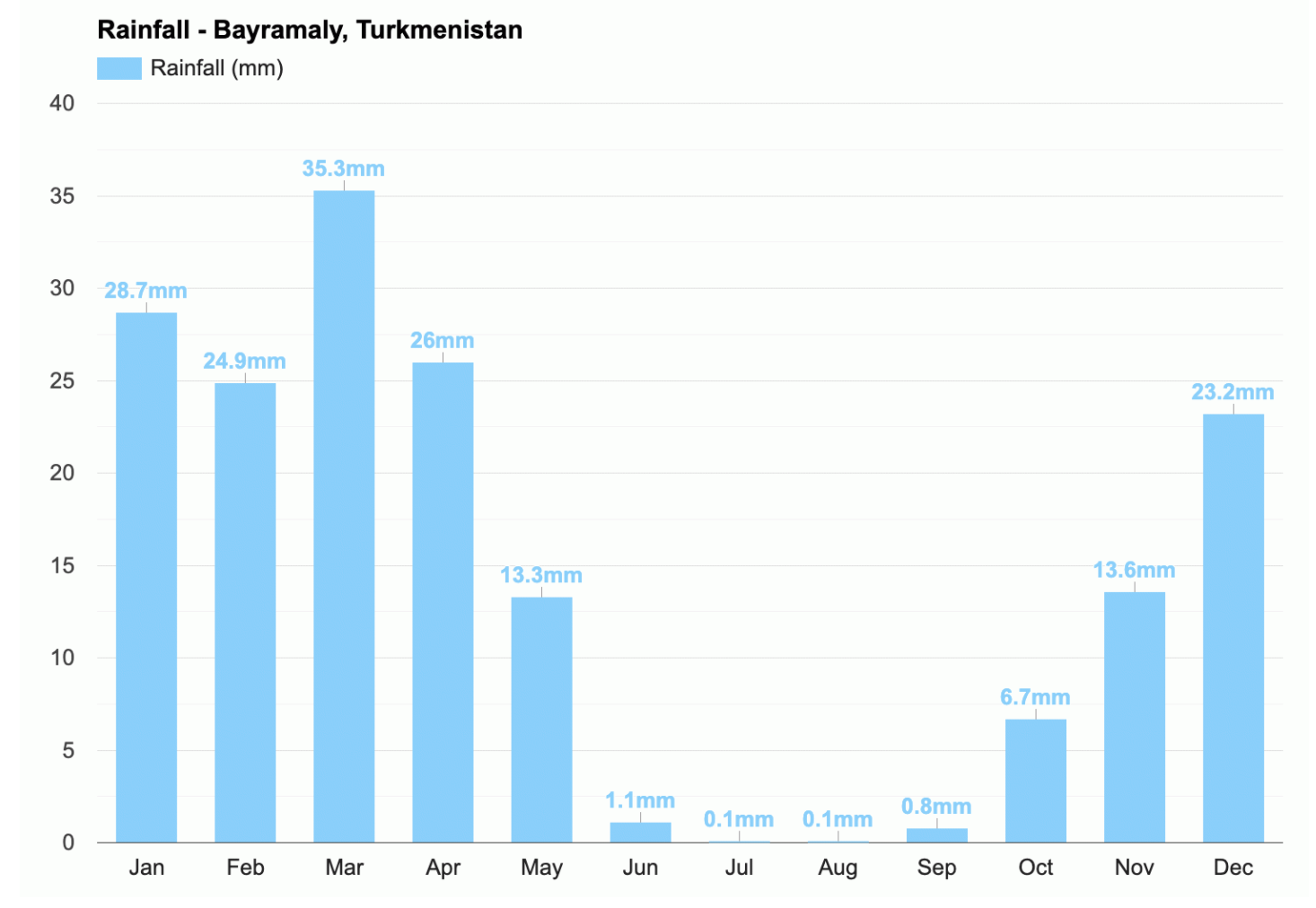
In Tuva the climate is different. The main rain season is summer, not winter. 


Interestingly, we can see that snowfall and rainfall seasons are demarcated by Apr/May (Bull) and Oct/Nov (Goat). Because of the average temperature, which is above freezing during summer Bull-Goat and below freezing during winter Goat-Bull


I think this is the reason why Goat and Gazelle feature prominently on Tuvan artifacts. But I believe that the symbolism belongs to an imported ritual (belief) system, which came most likely from BMAC or Iran...

You can read about "The Goat of Rain" (Ibex) and its sidekick (Goitered Gazelle) in Bactria in my post "Fluffy"...

You can read about "The Goat of Rain" (Ibex) in Mesopotamia in my posts "Diadem of queen Puabi", "Pissing gazelles", "Larsa goat", "Assur", "Rain and flood"

You can read about "The Goat of Rain" (Ibex) and its sidekick (Goitered Gazelle) in Iran in my posts "Two headed dragon", "Goat petroglyphs from Iran", "Winged bull with ibex horns", "Strider", "A vessel from Tepe Hissar"

You can read more about "The Goat of Rain" (Ibex) in Crete in my posts "Goat riding thunder god", "Sanctuary rhyton", "Cornucopia"

You can read more about "The Goat of Rain" (Ibex) in Cyprus in my post "Goats and partridges"

You can read more about "The Goat of Rain" (Ibex and Markhor) in Egypt in my post "Markhor goat in Naqada"

You can read more about "The Goat of Rain" (Ibex and Markhor) in Levant in my post "Nahal Mishmar hoard"

You can read more about "The Goat of Rain" (Ibex) in Asia Minor in my post "Griffin killing lizard"

You can read more about "The Goat of Rain" (Ibex and Markhor) in Indus Valley in my posts "Seal with narrative scene", "Kharif and Rabi seasons"

Finally you can read more about "The Goat of Rain (Winter)" (Ibex) in Europe in my post "Goat in European culture" and the posts linked from this post...

To read more about ancient animal and plant calendar markers, start here…then check the rest of the blog posts related to animal calendar markers I still didn't add to this page, and finally check my twitter threads I still didn't convert to blog post...I am 9 months behind now...

Thursday, 19 November 2020

Pantikapaion coins


If I was to pick my favorite ancient coins, these would be way up there...Gold staters from Pantikapaion, c. 340 BC. 

Obverse: Bearded head of Pan with a wreath of ivy leaves.  

Reverse: Π-Α-Ν - griffin standing on a stalk of grain, holding spear in its mouth.

Pantikapaion (today's Kerch on Krimea), was founded in the 7th century BC by the Greek colonists from Miletus.  By the 480 BC it became a capital of the Kingdom of Bosporus.

The city located at the intersection of trade roads between Asia and Europe, and surrounded by fertile land and sea, grew rapidly and amassed fabulous wealth, which is attested by its large gold coins whose obverse always depicted Pan, the protector of the Pantikapaion.


Now back to the original coins. I love the wild Pan frowning from the obverse . But I love the reverse with the griffin even more. Why? Because I believe that this is a great example of the use of animal solar calendar markers in Europe...

In many of my posts I showed that the ancient Eurasians and North Africans used animals as calendar markers. The animal markers were derived from a significant lifecycle event (usually the beginning of a mating season) of the animal in question...

For instance, Eurasian lion mating season started in August. Which is why throughout Eurasia, Lion was the the symbol of the end of Jul beginning of Aug, the end of summer - beginning of autumn...I talked about this in my posts "Entemena vase", "Musth"...

On the other hand, Ibex Goat and Goitered gazelle were used as a calendar markers for the end of Oct beginning of Nov, end of autumn - beginning of winter. Because this is when their mating season started throughout Eurasia...I talked about this in my post "The pissing gazelle" and many other...


All zodiac animal signs are such solar calendar markers, marking significant lifecycle events of the depicted animals in Europe. 

So if you wanted to represent autumn (Aug,Sep,Oct) using animal solar calendar markers, you could do it by using the back half of a Lion and the front half of an Ibex or a Goitered gazelle...Right?

You could also add wings to that composite creature. Just so people understand that this is a solar calendar marker...Just like on the reverse of the Pantikapaion coin...

But I don't think that the griffin on the revers of this coin represents autumn. The head of the gazelle does mark the end of autumn. And the back of the lion does represent the beginning of autumn. That's all fine...

But as the head --> tail direction indicates, the progression of time goes: the end of autumn -> winter -> spring -> summer -> beginning of autumn. I believe that the direction in which the spear points also indicates that this is what this "griffin" marks...From head to tail...

But why would you want to mark this time period on a coin? Well the clue is under the "griffin"...The sheaf of grain...

In the Azov sea area, Southern Ukraine/Russia, winter wheat is the main grain crop. It is planted in Oct/Nov (the end of autumn, Gazelle), it grows over winter, spring, summer, and is harvested in Jul/Aug (beginning of autumn, Lion)...

So from gazelle's head (sowing, beginning) to lion's butt (harvest, end)...Exactly as the spear direction indicates...

And if you are a grain farmer, it is the golden grain, which grows during the time marked by the golden "griffin" that turns to gold...

Again, maybe I am reading too much into this...But maybe not...

Friday, 24 July 2020

Fluffy

Few weeks ago I published an article about the solar snake symbolism found on 2000BC Bactrian seals...  In this article I will analyse some other Bactrian seals, whose symbolism is explainable through local climate and animal behaviour in that climatic area..

Bactria is the area located on the border between Turkmenistan, Tajikistan and Afghanistan...


The climatic year is divided into dry part (May-Oct,Nov) and wet part (Oct,Nov-May)...


Rain was the most important thing in the lives of farmers in Bactria...It turned desert into a garden...They must have been constantly on the lookout for  any sign that could announce its arrival, and anything that coincided with it soon got turned into a calendar marker...

Like for instance disappearance of snakes, which go under ground to escape incoming cold and wet weather...And the beginning of the mating season of the Goitered gazelle which starts in November, right when the rains arrive...


And so here is the first Bactrian seal for today: Mother earth flowering next to the flowing river. The snake is under ground and the Goitered gazelle is looking at the amazing effect of "the rain it has brought"...


One of the main animal calendar markers in the area between Eastern Mediterranean and Central Asia, is of course Ibex (Bezoar) goat...Which is why we find it on artefacts from Crete to Indus Valley. It's wild mating season starts in Oct-Nov and announces the arrival of winter...


In Bactria, the beginning of winter is also the beginning of the rain season...Winter - wet and cold - Bezoar is opposed to Summer - dry and hot - Snake...Snake is the symbol of sun's heat which "swallows all the water" which Bezoar goat brings to Bactria...Hence this seal...


One other animal that announces the arrival of the rain season in Central and Western Asia is the vulture...


Storms arrive when local vultures start their mating flying routines...I talked about the root of the double headed eagle symbol in my article "Double headed eagle". 

Hence this seal...A vulture guy holding Bezoar goats...


In the old days, before the animal calendar markers were discovered 🙂 this would have been interpreted as the "master of the animals" 🙂 or a "demon" 🙂 But we now know better...This is the storm god (hight flying vultures are directly associated with the sky) brining rain when Bezoar goats mate...

I find these next seals very cute 🙂  Look at the way the bodies are drawn...Fluffy...


These are clouds... With Goitered gazelle horns...Just so we know when the clouds arrive...In November when Goitered gazelles start their mating season...Rally cool...

Another fluffy dude...

This guy has two vulture heads pointing to two opposite directions...The way a couple of vultures looks like during their mating synchronised flying from the ground...In November, when rain clouds arrive. Bezoar cloud is there too. 

I will finish with this amazing object. The Goat of Rain. Limestone Ibex, with horns, beard and eyes made from lapis lazuli, the water stone, late 3rd - early 2nd mil. BC. Bactria (BMAC). Pic from "Battriana una antica civiltà delle oasi dalle sabbie dell'Afghanistan" by Giancarlo Ligabue and Sandro Salvatori...


Anyway, enough for today...Have fun...

To read more about ancient animal and plant calendar markers, start here…then check the rest of the blog posts related to animal calendar markers I still didn't add to this page, and finally check my twitter threads I still didn't convert to blog post...I am 9 months behind now...