Showing posts with label European Bronze Age. Show all posts

Wednesday, 13 November 2024

Sun eyes

Skull with plain amber discs on clay in eye-sockets Grave 275. Dated to the 4th millennium BC. Zvejnieki cemetery, Latvia. Researched by F. Zagorskis. Photo by A. Butrimas...

On the skulls with red ochre and clay round amber discs (sometimes rings) were found stuck intentionally into eye sockets as "replacements" for the eyes. In all those cases, the amber pieces have a large, centrally placed hole...

Obviously to resemble eyes...

The graves of the same culture also contained perforated amber disc with "sun cross" design...

Amber disc (obverse (sun cross), reverse (sun rays) and cross-section) from Daktariškė 5 Neolithic settlement...

In 1956 Eduard Šturms presented the first overview of Amber artefacts in Eastern Globular Amphora Culture and interpreted them as symbols of the sun and (male) sun god, as they were (apparently) found in men's graves...

All the researchers agree that amber was regarded as a "sun stone", because of its colour and the way it reflects light...


So, to me it is obvious that the perforated amber "sun" discs that were inserted into diseased eye sockets directly linked sun and sight...

I talked about the same idea here:

Utu, Sun: 𒀭𒌓

According to this table, this means god, heaven + day = sun...

Did the god sign originally mean shiny thing? Did the day sign originally mean "eye"? 

If so: shiny thing + eye = to see = sun? 

Like Slavic Svetovid = light + to see  

I talked about this in my post "Svetovid"...

Now, check this out:

Irish "súil" (eye), from Old Irish súil (eye), from Proto-Celtic "sūle" ("two suns"), dual of "*sāwūl" (sun), from Proto-Indo-European "*sóh₂wl̥" (sun). 

Officially: The change in meaning in Irish is apparently due to the mythological view of the sun as the "eye of the sky"...Or maybe because sun (light) gives us sight...

More info on amber sun discs can be found in this article...

This sun cross thing can explain this petroglyph The Sun in the ship. Rock engraving. Sweden (after R. Rimantienė)...

How? The sailing season in the Baltic Sea and White Sea starts in Apr/May...At the beginning of summer...I talked about this in my post "Bes", about petroglyphs from Lake Onega in Russia...

BTW, while the Globular Amphora guys were making their amber sun discs, the guys from Late Neolithic Vasagård archaeological site located on the southern side of the island of Bornholm, Denmark, were making these: sun stones...I talked about this in my post "Sun stones"...

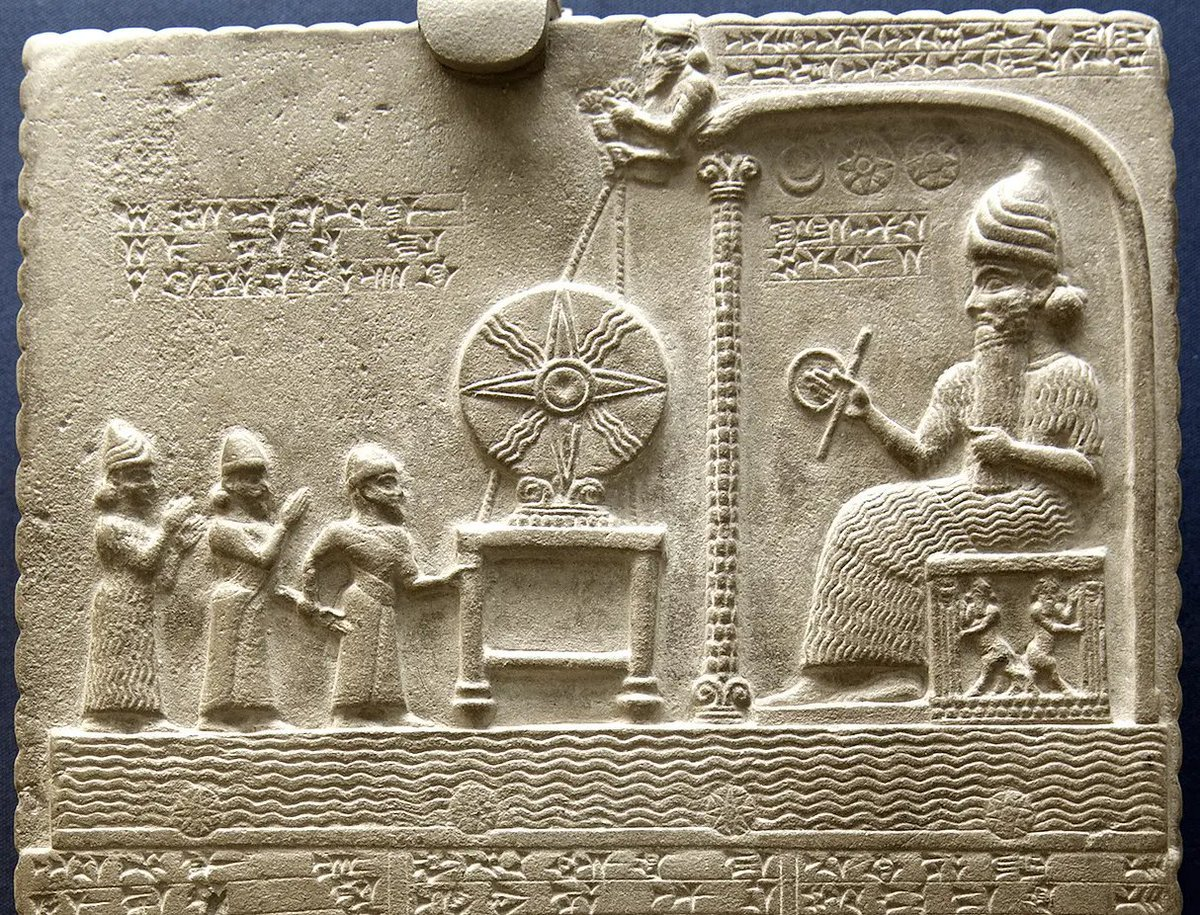
Oh yeah, and guess who also had a cross as his symbol...Mesopotamian sun god...

This is the 860BC-850BC Middle Babylonian limestone "Sun God Tablet", currently in the British Museum.

And in this article, "Sun god tablet", I tried to add few bits of information that will help us understand some of the symbols depicted on this tablet...
Finally don't forget this...I almost did. I should have posted this right after the post about the eye-sun link in the Irish language...

Basalt Idol (?) depicting a humanoid figure with spiky hair (sun rays?) and torcs (gold lunula like this one from Ireland?) around the neck. 


Ciudad Rodrigo, Spain. Early-Middle Bronze Age. Museo Archaeologico National in Madrid. Pic: Mark Vyvyan-Penney...I talked about the Irish gold sun bling in my post "Or Ireland's gold"...

I will talk more about sun crosses soon. Just discovered something interesting related to this on Malta...For people who are wondering why I omitted Bell Beakers and their golden sun crosses...
Almost forgot this. Christ as the sun-god Helios/Sol, 3rd c. AD, Vatican. Christ is born on Winter Solstice, (re)birth day of the sun (god), he enters Jerusalem on a donkey, "animal of the (sun) gods and kings", and gets put on a cross, symbol of the sun (god). Interesting. I talked about this in my post "Alexamenos graffito"...


Finally, I promise 🙂 According to Slavic folklore, west is where the entrance to the other(under)world is. Why? Cause this is where sun enters the other(under)world. Hmmm...Did the "sun disc eye for the dead" dudes also have a notion of this?

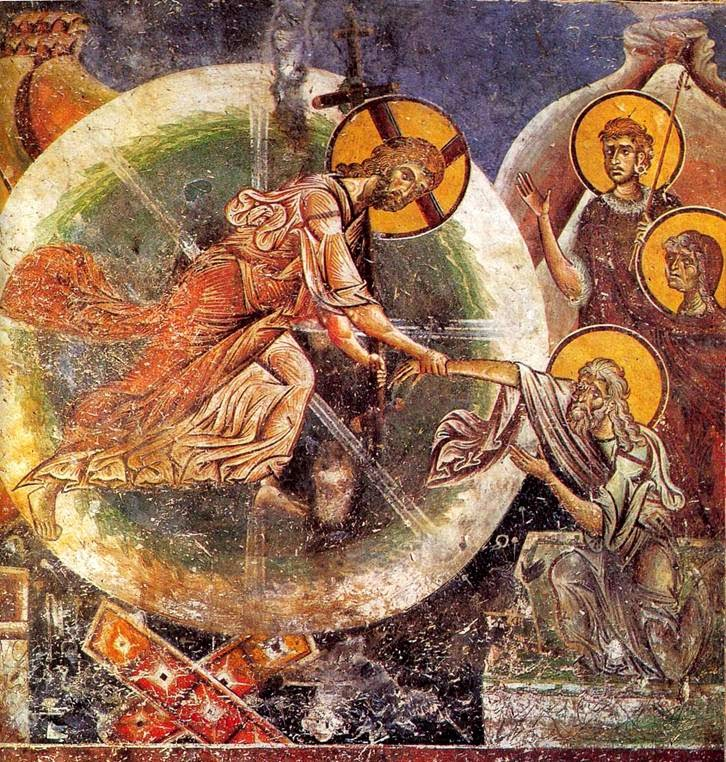
One of my favourite frescoes: Christ's descent into Hades, fresco from the 12th c. Church of St. George, Kurbinovo, Macedonia...Stunningly beautiful, it is also super unusual and interesting.

Article "Descending to Hades", about the Sun God as the ruler of the land of the dead.


Sunday, 3 March 2024

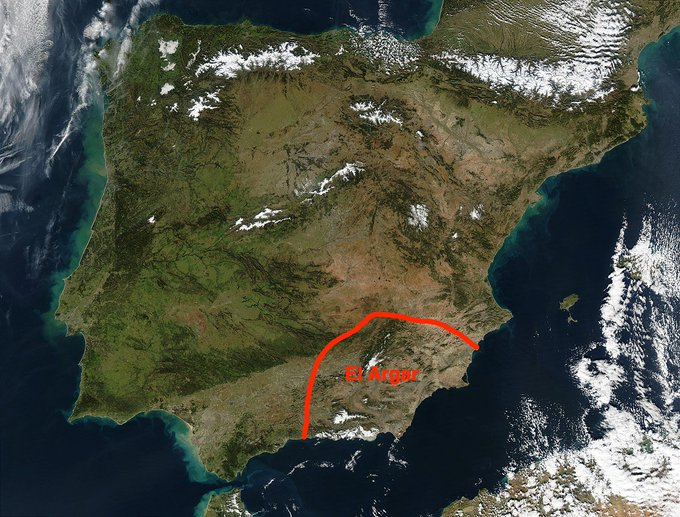
El Argar culture

The late 3rd millennium BC, was a time of huge upheaval in Iberia. The existing social structures collapsed...When the dust settled, around 2200BC, a new civilisation, known as El Argar culture, emerged in this area...

People of this culture built amazing hillforts, like the La Almoloya citadel...Which were at the time also built in Eastern Mediterranean (including Greece)...And nowhere in between...


They were metalworkers and warriors...Who were buried in single graves...Located under the floors of houses...Again feature of the cultures in Eastern Mediterranean (including Greece)...And nowhere in between, and nowhere else in Iberia...

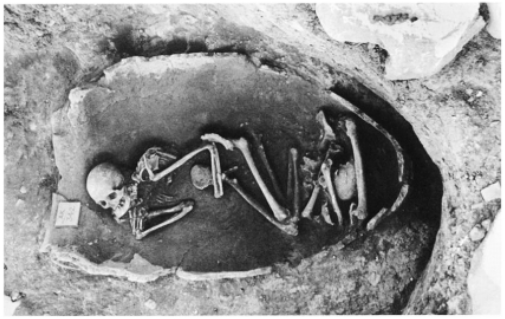
Eventually they started burying their dead in pithoi (large grain jars)...Again feature of the cultures in Eastern Mediterranean (Greece)...And nowhere in between, and nowhere else in Iberia...


This is only possible if there was a direct maritime link between somehow culturally related groups of people in Greece and Southern Spain...We know that these kind of maritime links existed since Neolithic, so no surprises there...I talked about this in my post "Neolithic seafarers"...

BTW, these maritime routes probably facilitated extremely fast spread of Megalithic culture throughout Europe. I talked about this in my post "Childe was right"...And they stayed in use ever since...

You also might want to have a look at this post, "Giants ring", about the arrival of the first farmers to Ireland...By boat of course...

These warriors used deadly halberds as their titular weapons...Warrior grave with halberd...You can read about this in "Halberdiers and Combat Systems in the Argaric" and "The absolute chronology of Argaric halberds"...


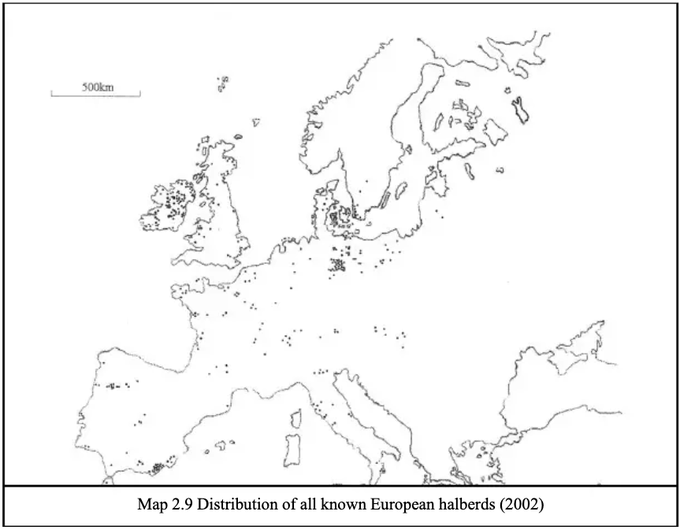
Halberds, the scull slicers I talked about in my post "Halberds" about the reconstruction of the Bronze Age halberds from Ireland, which seem to have been propagated through a maritime trade links going along Atlantic and North Mediterranean coast.

Interestingly, El Argar warriors (apparently) could have been either ruled by women, or there was a group of elite women who could have played some significant role in the society (priestesses)...

Archaeologists came to this conclusion based on the same type of diadems found on the heads of women buried in the El Algar culture graves with extremely rich burial offerings...

For instance, burial from La Almoloya, with remains of a man aged 35-40, and a woman aged 25-30, buried with over 30 prestigious objects, many of which were made or embellished with silver and almost all belonging to the female. Including the diadem...

Hmmm...Bronze Age warrior society with high status women...This sounds so Old Europe...

My favourite bit: El Algar culture marks the beginning of complete male genes replacement in Iberia. All males found in El Algar burials are R1b, Yamna related...

Ancient human DNA from southern Iberia reveals social and genomic changes during the emergence of the Bronze Age in Europe.

Sooo...You know the story about bad macho warrior Indo-Europeans who killed all the peaceful farmer Old-European, and replaced Neolithic matriarchate with Bronze Age patriarchate and ruined everything...Things were a bit more complicated than that, it seems...

But we already saw that Indo-European vs Old-European thing is pretty much dead and buried by genetic data...I talked about this here in my post about Lengyel vs Baden culture...I talked about this in my post "So Indoeuropean"...

So more reason to laugh at the whole Indo-European vs Old-European thingy. BTW, I started laughing here, in my post "Vinca culture fortifications" about Vinča warriors (Army figurine group from Stubline)...

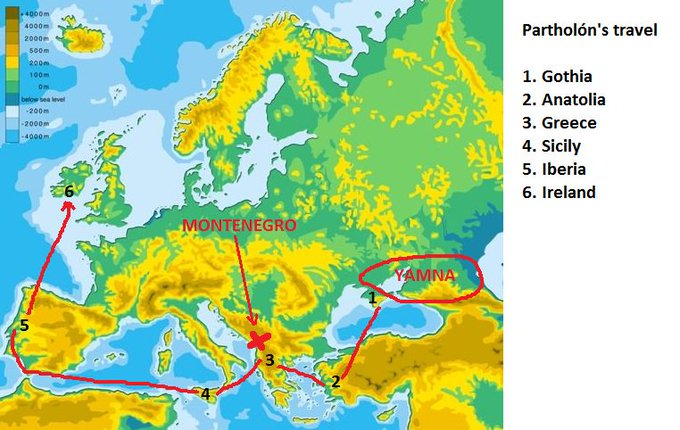
But the important thing for me, is that here again we have proof of long distance maritime links in Bronze Age, this time between Eastern Mediterranean and South Iberia...

Which is important when we know about Irish legends talking about Bronze age immigrants (the guys who brought R1b genes, metalwork, single cyst burials, bling...) arriving to Ireland using this maritime route...


I talked about the Irish oral histories and archaeology which seems to support them in "Montenegrian tumuluses"...

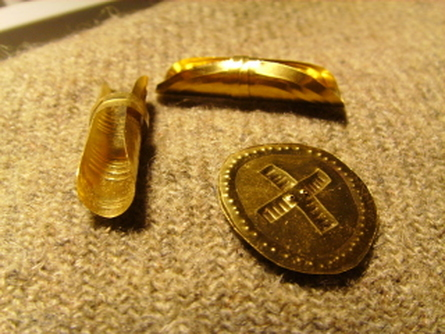
See these gold discs with crosses? These ones are from the Balkans, dated first half of the 3rd mill. BC. They appear in Ireland in the second half of the 3rd mill. BC.


Halberds

One of many Bronze Age halberds found in Ireland...

You know when you were a kid, and you were told that you can't play until you finish your homework? 

This must have been how Ronan O'Flaherty felt when he started work on his archaeology PhD in UCD, Ireland...

The title of his thesis was "The Early Bronze Age Halberd in Ireland - Function and Context" and in it he tried to see if he could disprove this:

"Irish halberds have traditionally been regarded as non functional, ceremonial artefacts. In particular, the mode of hafting and the slightness of the haft head have been cited as reasons why this artefact could not have been put to any practical use"...

I know that all he wanted to do was: 

1. Cast replicas (Left) of the Bronze Age halberds from the National museum (Right), using the same copper with a very low arsenic level of 0.2%, and without cold-hammering or sharpening of the blades...


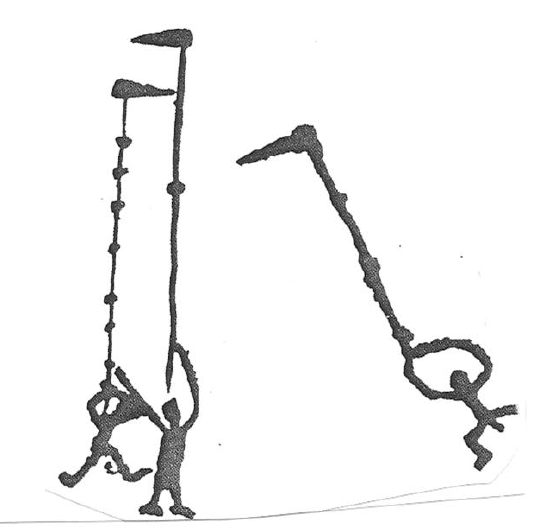
2. Haft the halberd replica (Left) based on rock carvings from Mt. Bego, Italy (Right), showing people using (well at least holding high above their heads) the original Bronze Age halberds...


3. Whack some sculls, of the same strength as human sculls, like sheep ones, repeatedly, with the replica halberds, to see what happens...

But before Ronan could do all this fun stuff, he had to do the homework...He collected all the available data about all the so far discovered European Bronze Age halberds...


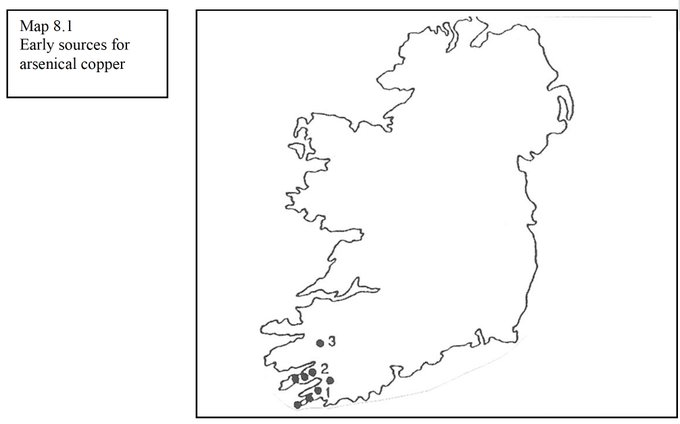
He then investigated the Early Bronze Age mining and metalworking industry in Ireland and the type of metal and metal artefacts produced during that time, so that he could try to replicate the material and the production of the Bronze Age halberds as closely as possible...

Then he investigated the hafting of Bronze Age halberds...


And finally the use of halberds in battle (from available medieval sources)...

Once he did his homework, Ronan went out to play...

And this is his report:

The replica halberd...revealed itself to be a frighteningly effective weapon, slicing skulls open with disturbing ease and proving very comfortable to handle. A short (couple of feet) chopping blow, was sufficient to pierce the skull, often very deeply indeed...

[The weapon would have been even more efficient] "if it was used by an expert", and "if it wasn't for a certain 21st century distaste of committing such violence in the first place"...Love this 🙂

Repeated blows against twenty sheep skulls, of similar strength to a human skull, failed to inflict all but the most minor damage to the halberd and there was no indication that it could not continue in such use for a prolonged period of time.

The small rounded end of the blade ensured that the full force of the blow is administered to a tiny area of the skull first, virtually guaranteeing a puncture each time.

The fact that the end of the blade was rounded rather than brought to a sharp point added strength to this area, which otherwise might have bent or even snapped on first impact.

This suggests that the blade was designed for impact on bone rather than muscle, where a sharp pointed weapon would seem more appropriate than a blunt-nosed one.

Ronan conclusion: There is no doubt in my mind that the Irish halberd is very carefully designed as a most effective weapon. [Maybe not all] Irish halberds were used in this way, but they certainly could have been and it certainly appears to be the basis for their design.

In addition, the replica halberd survives in a condition which I would categorise as "perfect" in a museum example, suggesting that even these perfect halberds could have seen some use.

Ronan's papers:

"The Early Bronze Age Halberd in Ireland - Function and Context"

"Up close and personal - impact damage on Irish helberds"

To me, most interesting bit of his work is found in boring homework section: the distribution of high concentration halberds sites  indicates that they were connected by a well established maritime trading route...

Central European Unetice culture was built around navigable rivers which empty into Baltic sea...From there you can navigate around Scotland to Ireland, Wales and England and along the French coast to Brittany, and then to Iberia, Italy, Greece...

I can bet that all the other inland sites with halberds lie on navigable rivers which empty into the seas along this route...

The existence of maritime trading routes along Mediterranean and Atlantic coast has been attested since Neolithic. 

And it was always linked with mining, first for material for stone tools and weapons and then metal for metal tools and weapons...I talked about this in my post "Neolithic seafarers"...

These maritime routes probably facilitated extremely fast spread of Megalithic culture throughout Europe. I talked about this in my post "Childe was right"...

I think this is very very interesting...Particularly when we look at the Irish oral histories, first time recorded in Medieval time, which talk about the existence of such maritime routes along Mediterranean and Atlantic coast during Bronze Age...

I talked about the Irish oral histories and archaeology which seems to support them in the posts linked from this jump page "Montenegrian tumuluses"...

That's it for today...

Monday, 24 April 2023

Female pots from Europe

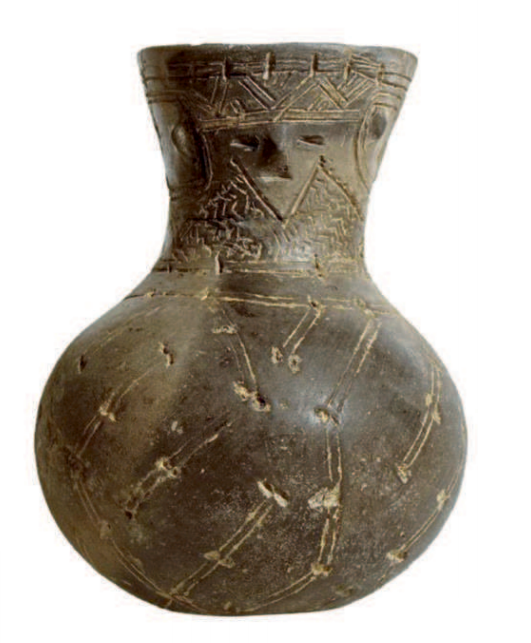
Anthropomorphic vessel with breasts, Neolithic Lengyel culture (5000-3400 BC)

Anthropomorphic vessel with breasts and grain ears (?) instead of hands, Chalcholitic Baden culture (3600–2800 BC) which developed from Lengyel culture

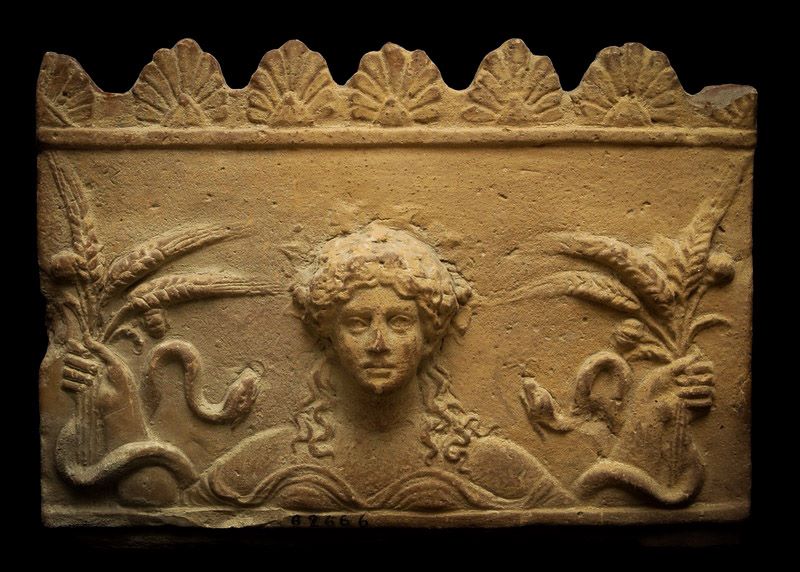
I wrote about these two vessels in these posts, "Baden culture grain maiden" and "So Indoeuropean" and I asked the question: are we looking at this, grain goddess, later known as Demeter/Persephone? See the posture?

If you are interested in Demeter/Persephone you might also find this article "Who are Persephone's parents" interesting. It talks about snakes in Persephone/Demeter cult...

Now have a look at this:

Left: Anthropomorphic vessel with breasts, 3000-2000BC Troy, Turkey

Right: Anthropomorphic vessel with breasts and vagina, 3000-2000BC Lemnos, Greece

Interesting, right? This is obviously the same cultural trait, which first appeared in Neolithic Central Europe and then traveled down to Anatolia and Greece during Chalcolithic and Bronze Age...

We know that these areas were connected. The same type of butter churners was found from Central Europe, through Greece (Lemnos), Asia Minor (Troy) to Levant (Gilat) during the period 5000-1000BC...I talked about this in my post "Milk, butter, cheese"...

The distribution of butter churns could be just a sign of technological exchange along trade routes, if it wasn't for the fact that milk consumption was rare during this time, as it depended on milk tolerance, which is a genetic trait passed from parents to their children...

Does this mean then that these cultures were somehow related? I mean not just culturally, as seen by the female vessels found in both Central Europe and Greece and Anatolia, but also genetically? I know Lengyel and Baden genes (I2a, G2a). What about Troy, Lemnos, Gilat?

Maybe there are other examples of these "female pots" with raised arms? I didn't spend much time looking into this so any additional info would be appreciated...

Female pots...Female pots...Have you seen these female pots from Late Neolithic Chalcolithic Central Europe? With birth diver "M"(ama) symbol depicted on them? I talked about these pots in my post "Mama"...

Female pots...Female pots...Did you read my post "The female pots from Sudan", about the female pots with boobs used as granaries and the (likely) remnants of the Neolithic grain goddess cult found in Sudan?

Interestingly the female pots we are talking about served as urns...Remember the link between the pot and the "womb (of the mother goddess)" preserved in Nigeria, also (likely) remnant of the Neolithic grain goddess cult?

The same Neilithic grain goddess cult found all over Eurasia too. This cult probably originated in the Fertile Crescent in the first farming communities, and was from there spread to Europe, Asia and Africa...

The female pots symbolising the body of the grain goddess, mother earth, would explain all the pithos (large storage vessels used as granaries) burials found all over Western Anatolia in the 3rd millennium BC. You can read more about it in "Early Bronze Age Burial Customs in Western Anatolia"...

When and where did this custom appear first?